They Stripped the Worn Green Paint From This 1898 Staircase, Then Painted It Green Again


Green paint covered the steps of this 1898 staircase, but years of wear had exposed the wood beneath it. The curved handrail had a dark brown finish, several balusters needed replacement, and the large carved newel post showed signs of damage. The staircase belonged to a Denver house that had been marketed as a potential teardown.
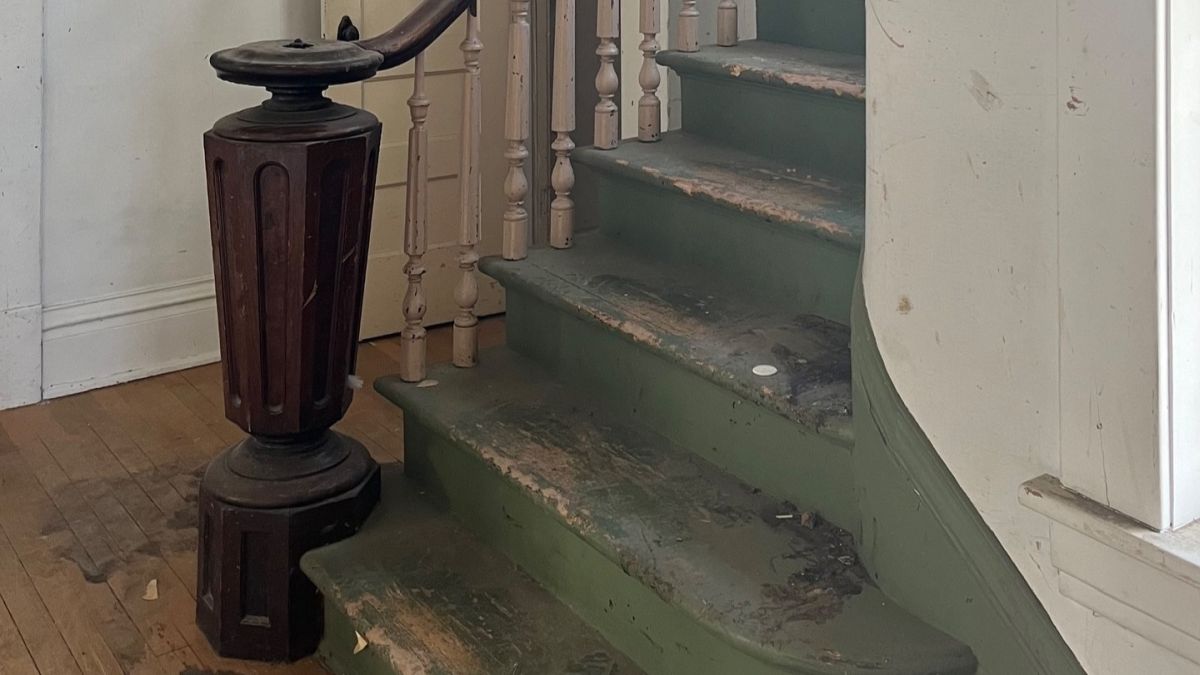
Instead of replacing the staircase, the restoration team repaired the wooden treads, refinished the railing, and brought the steps back to green. The new paint followed the original color scheme, while the curved woodwork and turned balusters remained part of the design.
The work was part of the Clayton Hill House restoration shared by Instagram creator @larapin__. The project also included salvaged wood details, new molding, and changes to the space beneath the stairs, where a small closet was enlarged into a powder room.
Green Paint Had Worn Away Across the Steps
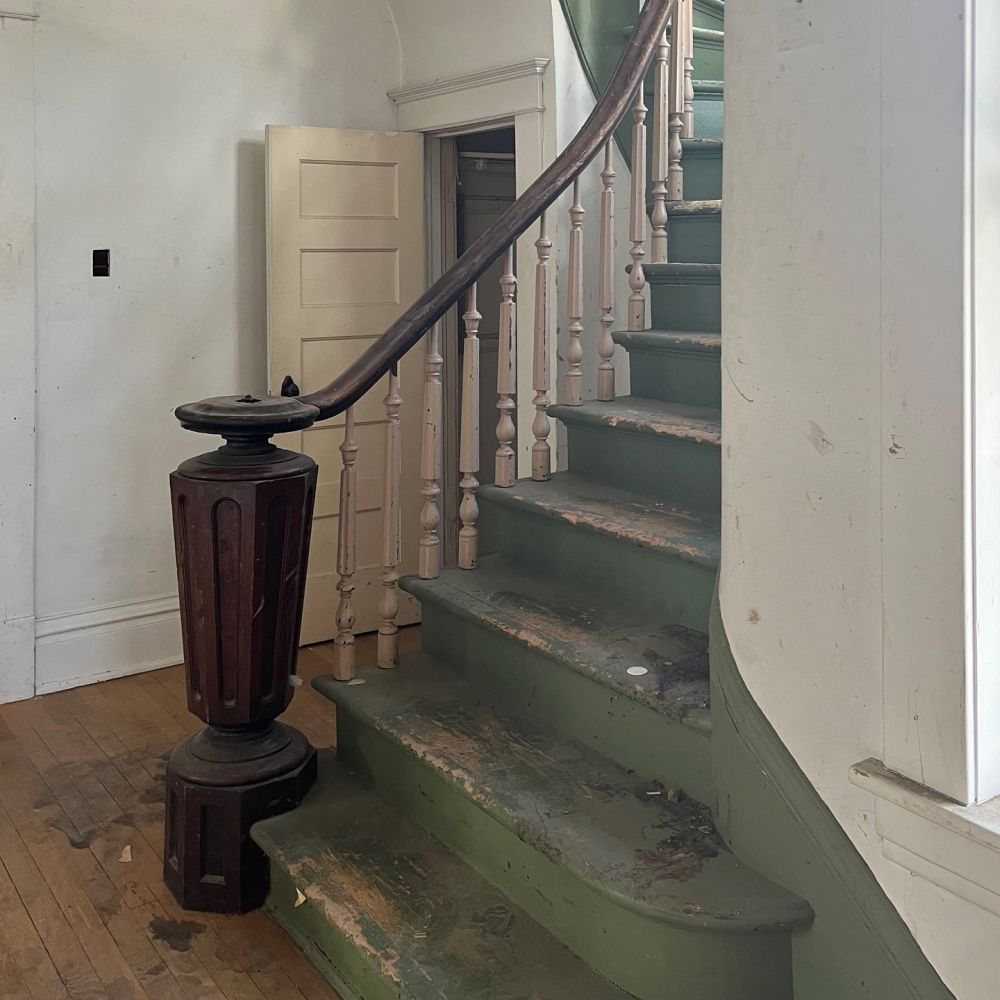
The original steps had green paint across the treads and risers, with exposed wood appearing along the front edges and walking surfaces. Dark marks and scratches covered several steps, while the white balusters showed chipped paint near their bases.
The railing curved around a large carved newel post at the bottom of the staircase. Its dark finish contrasted with the green steps and white woodwork.
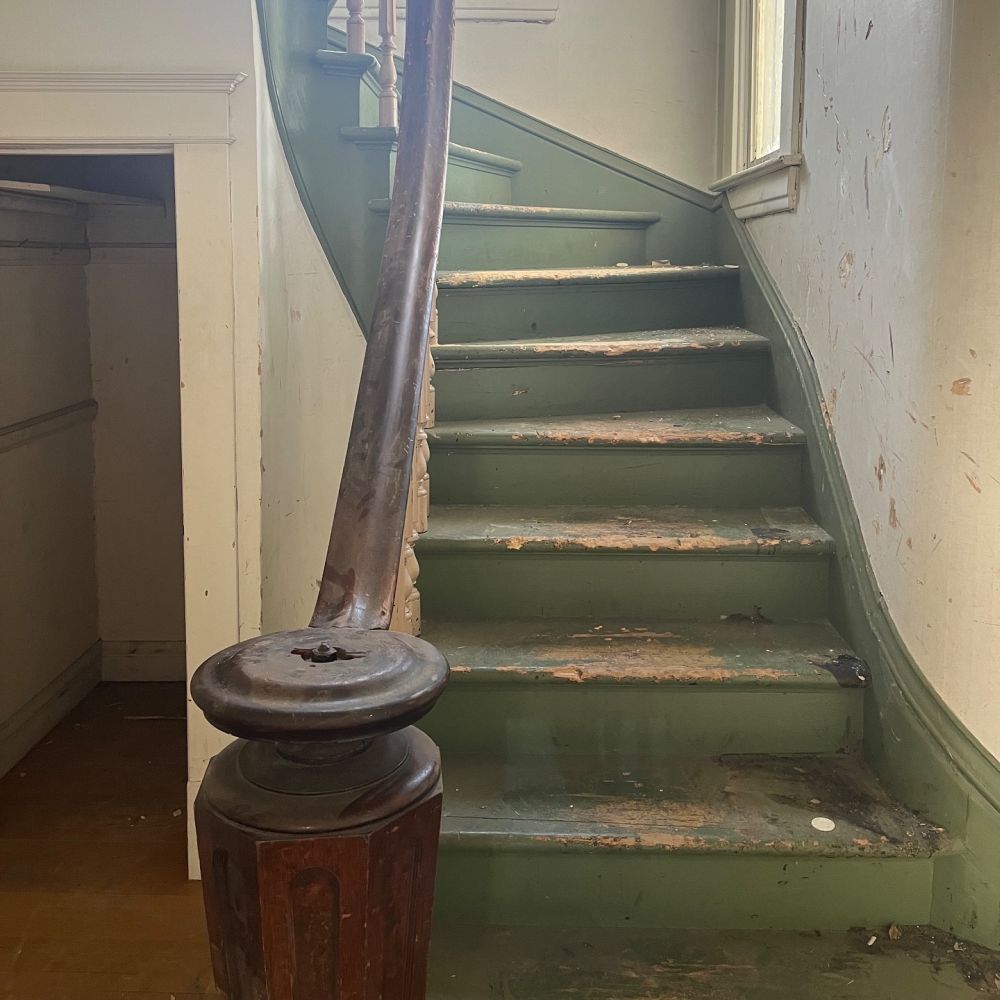
From the bottom looking upward, the damaged paint extended across most of the visible treads. The staircase narrowed as it rose toward a landing beside a window, with the handrail following the turn.
The Curved Staircase Was Part of an 1898 Home
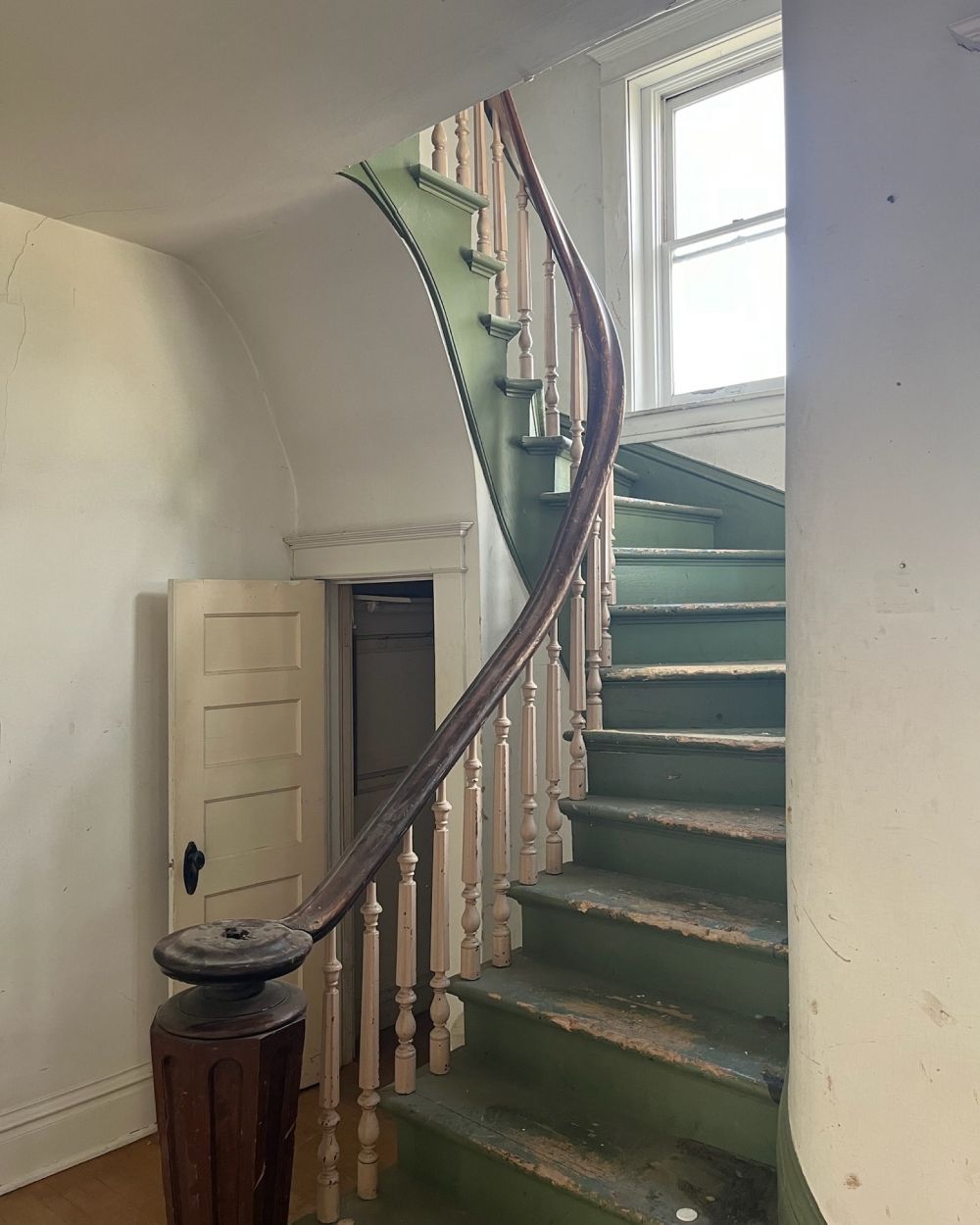
The staircase stood beside a small doorway beneath the upper flight. Its lower steps curved toward the entrance hall, while the railing followed the same shape without a straight break between the newel post and the upper stairs.
Larapin described Clayton Hill House as a property built in 1898 that had been marketed as a potential teardown. The restoration retained the staircase rather than removing the original construction.
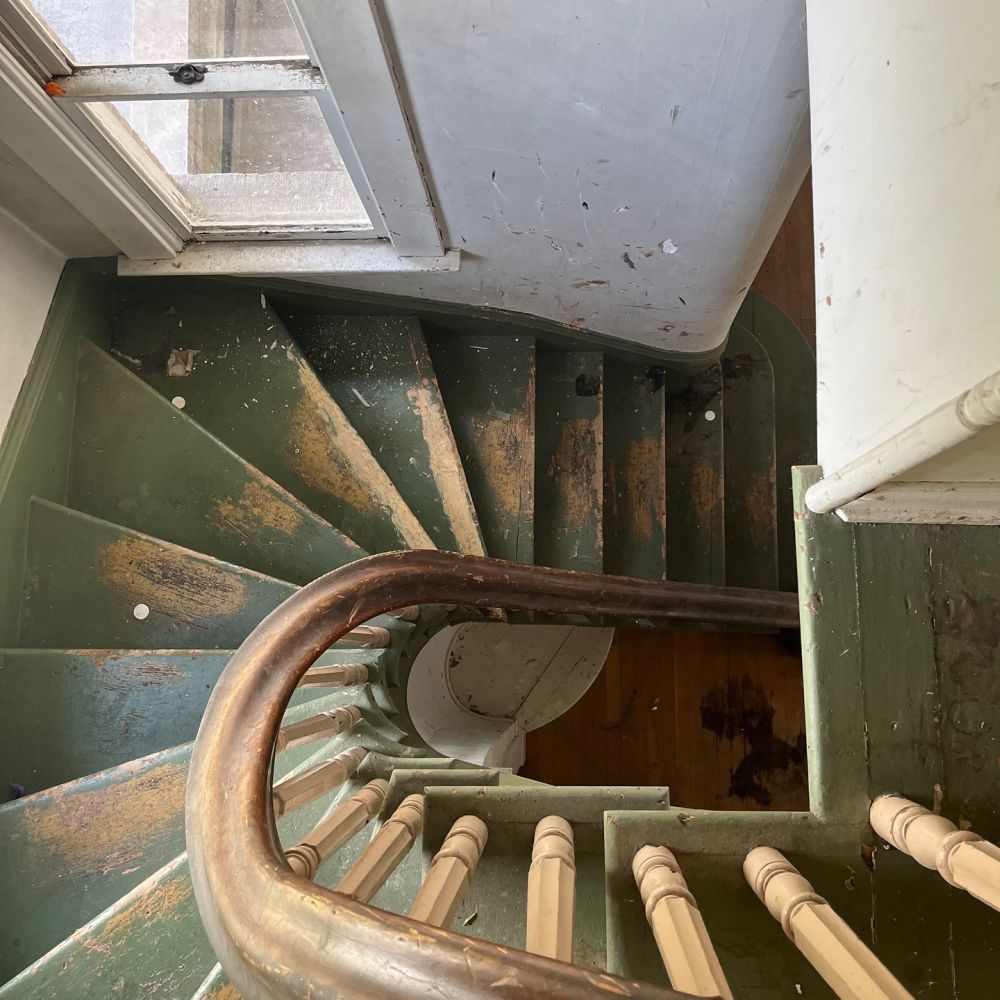
The view from above shows the turning steps around the landing, with different tread widths following the curve. Paint loss was visible across the wider steps and along the narrow sections near the inside wall.
Preserving this arrangement meant repairing the existing wood rather than rebuilding the stairs with a different shape.
The Newel Post and Handrail Were Refinished
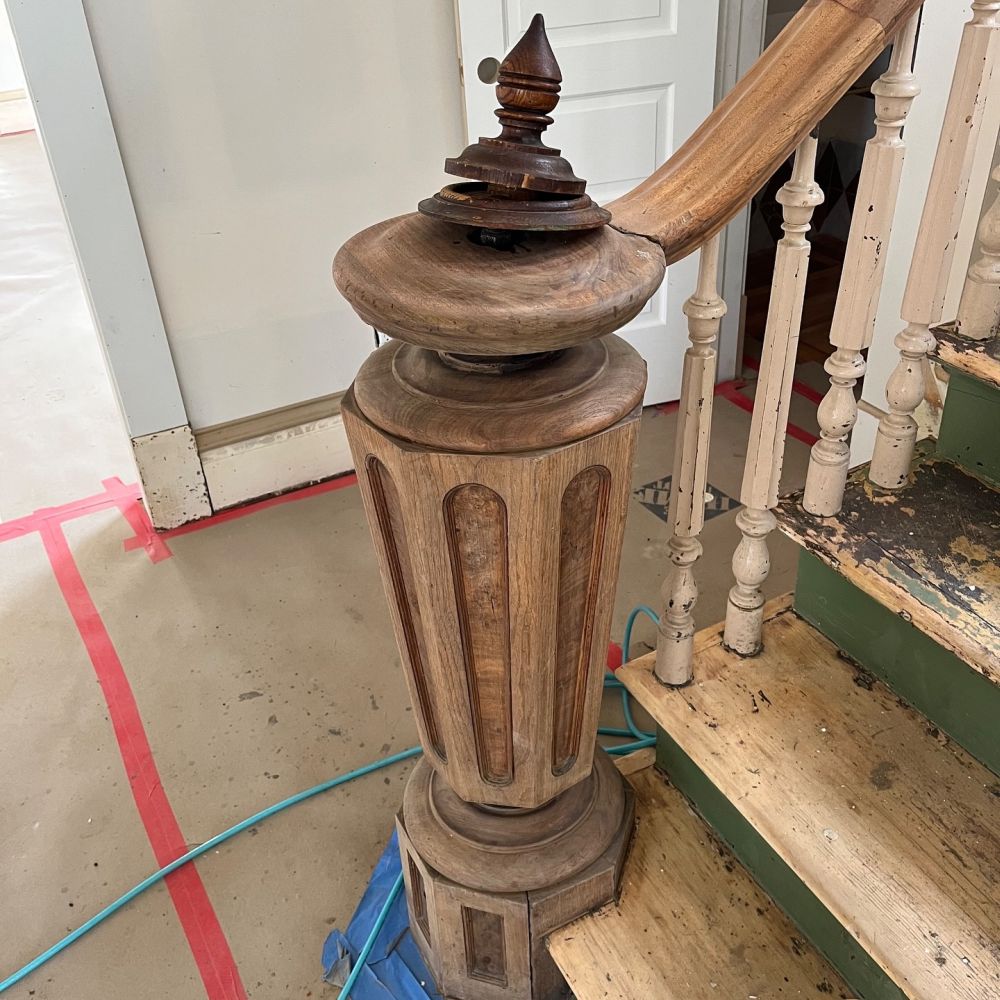
The restoration included work on the large wooden newel post and the curved handrail. The photograph shows the post after much of its dark surface finish had been removed, exposing the wood grain and carved recesses.
The team repaired and refinished the solid wood railing, replaced missing balusters with matching wooden pieces, and sourced a salvaged finial for the top of the newel post.
The Steps Were Repaired Before Repainting
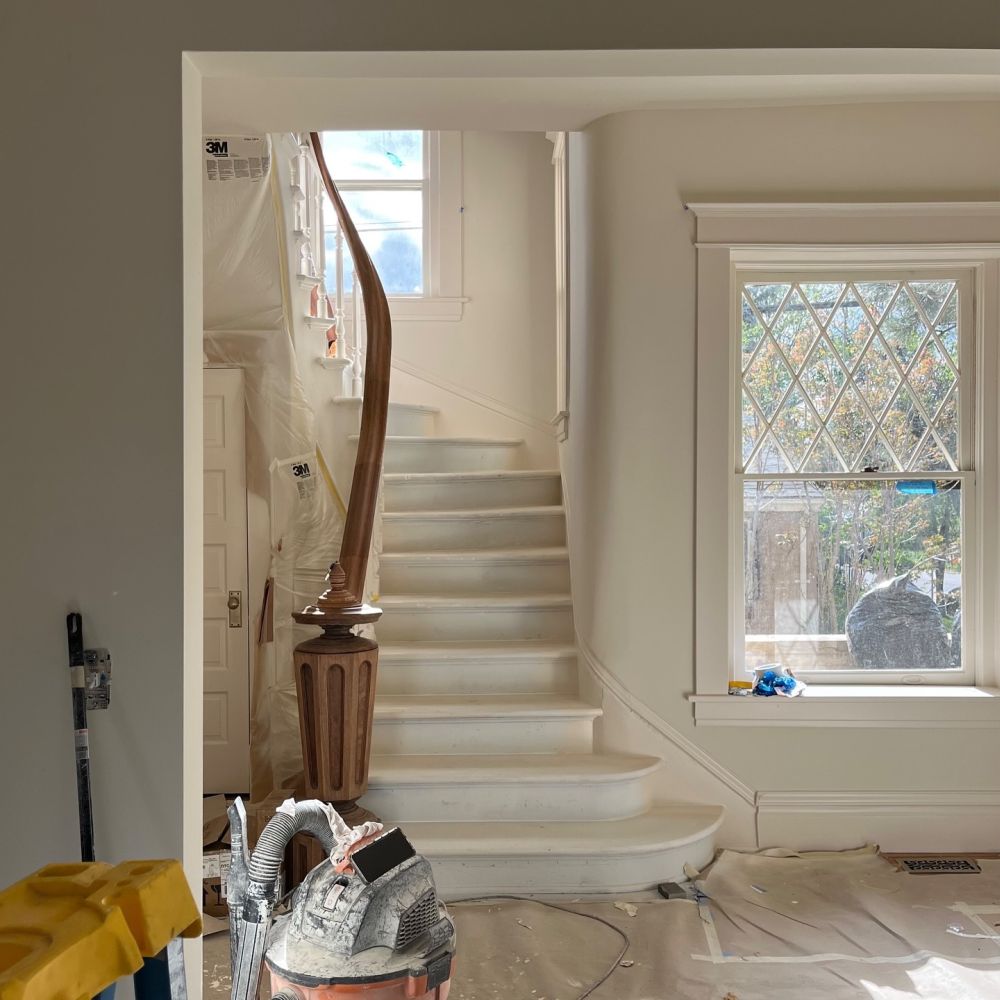
During the renovation, the staircase received a white finish before the final green paint was applied. The surrounding walls, trim, and balusters were also painted, while the wooden railing and newel post remained exposed.
The small doorway beneath the staircase was enlarged as part of the conversion from a closet into a powder room. New molding and a replacement wooden door were selected to match the house’s existing trim.
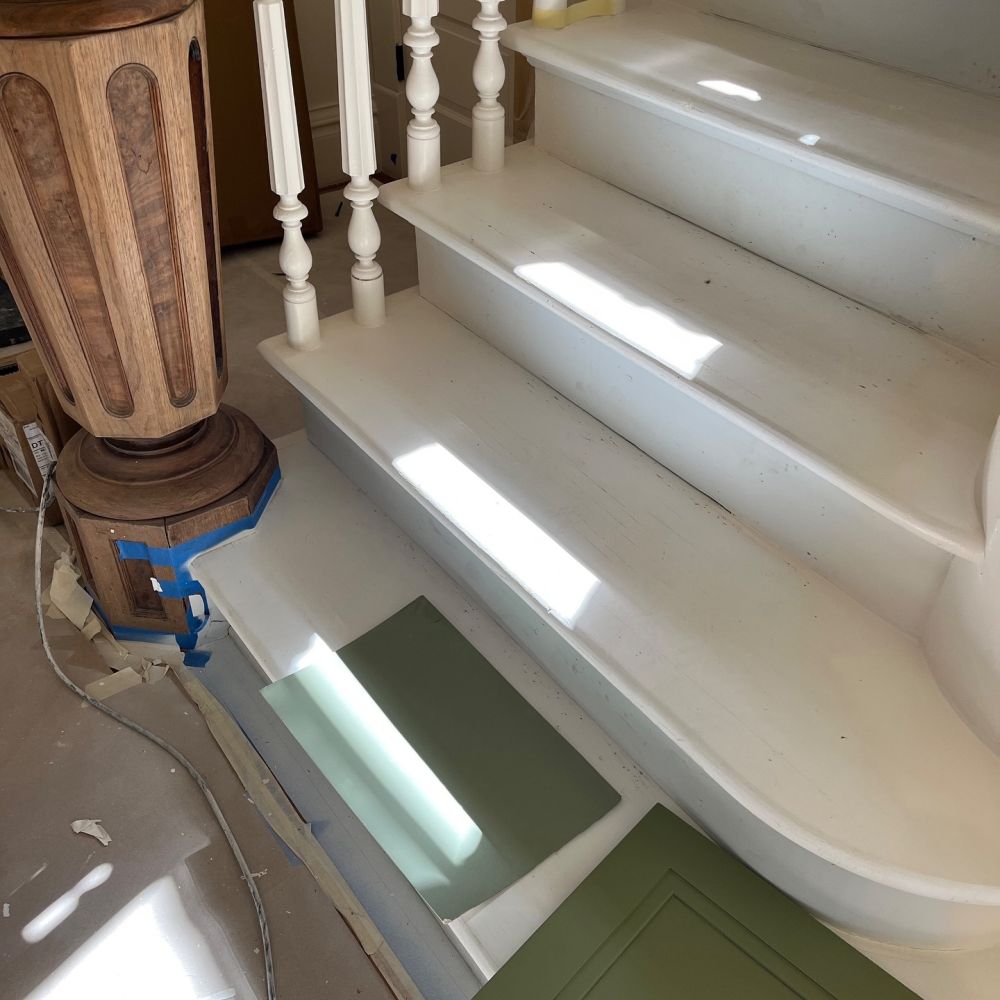
Two green paint samples were placed against the white steps before the final color was chosen. One appeared darker, while the other had a softer gray-green tone.
Rather than replacing the original green with white or another contrasting color, the team selected a green finish that referenced the staircase’s previous appearance.
The Wood Railing Was Protected During Painting
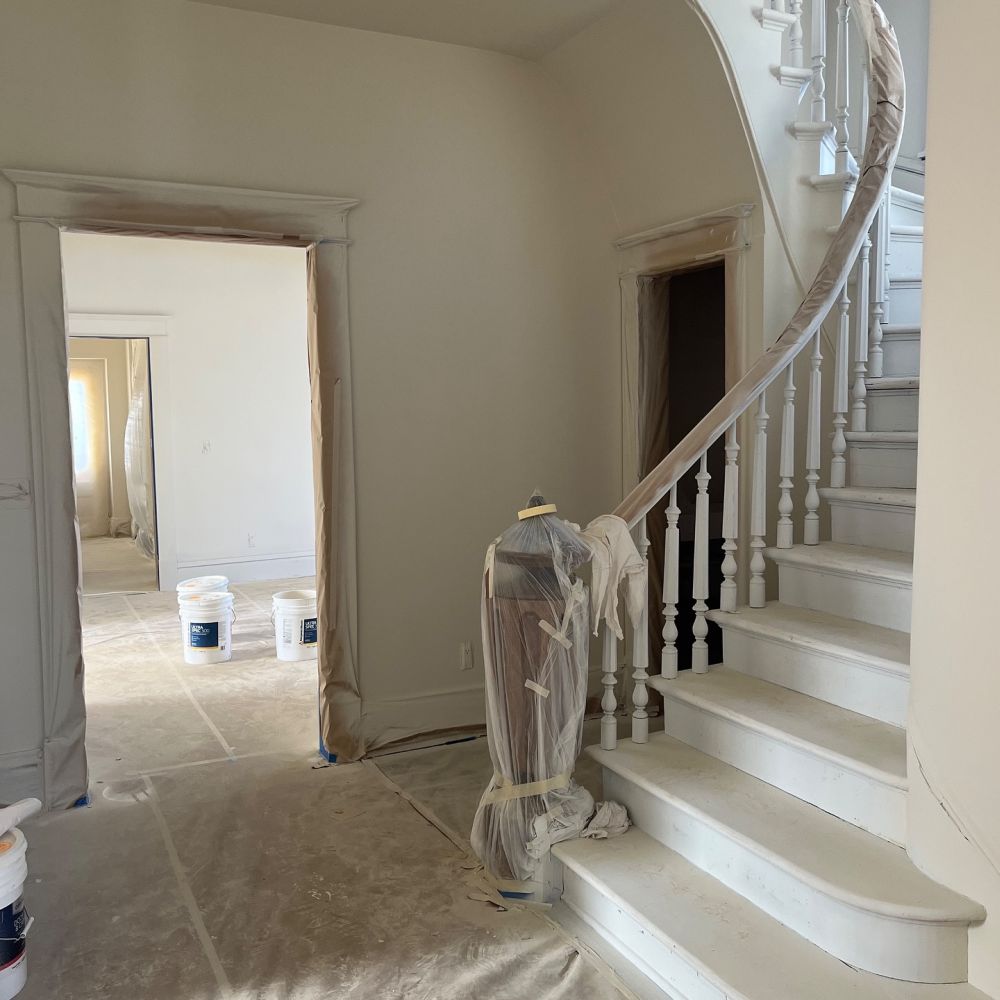
Protective covering surrounded the curved handrail and newel post while the staircase and surrounding trim received paint. The balusters and stairs were white at this stage, with the lower treads exposed for work.
Keeping the wood railing separate from the painted sections preserved its grain and distinguished it from the white balusters.
The Finished Staircase Returned to Green
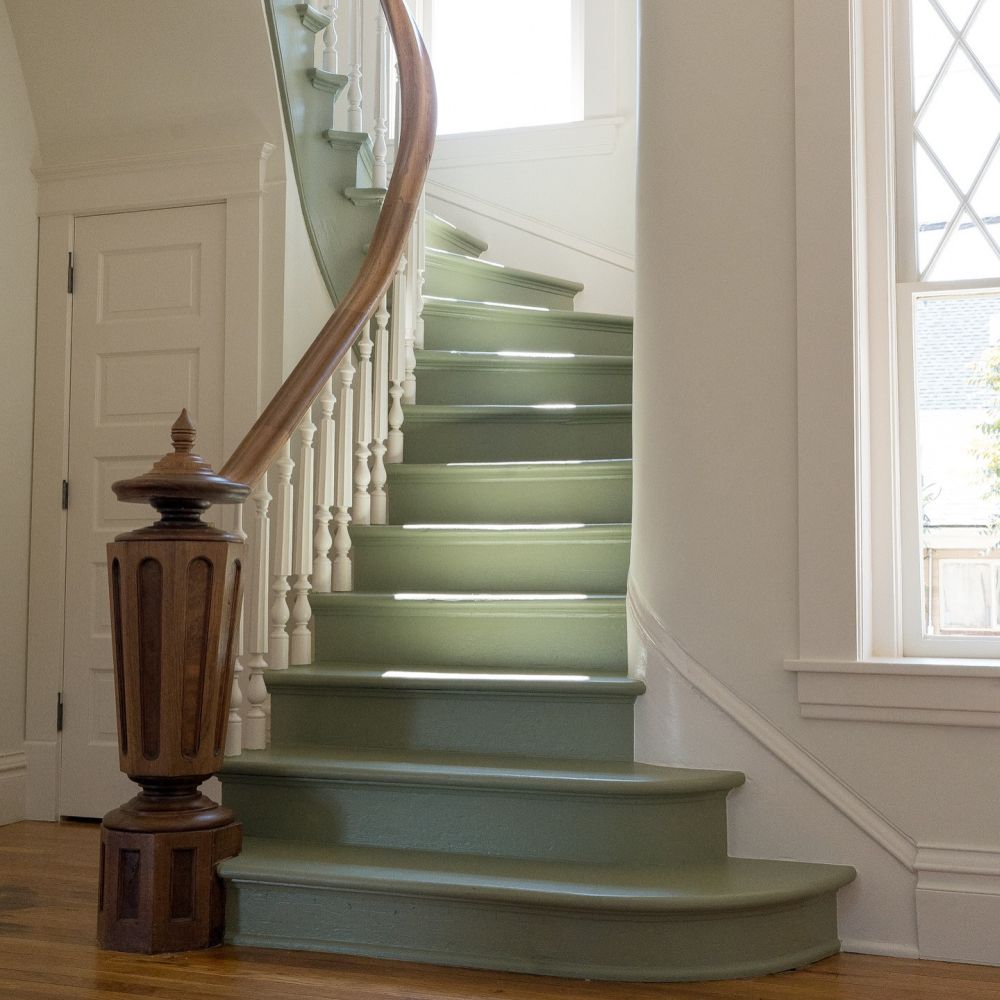
The completed staircase has green-painted treads and risers, with the damage visible in the original photographs repaired. White balusters line the outside edge, while the restored wood handrail follows the curve toward the upper landing.
The newel post has a wood finish with visible grain, and a carved finial sits above its rounded top.
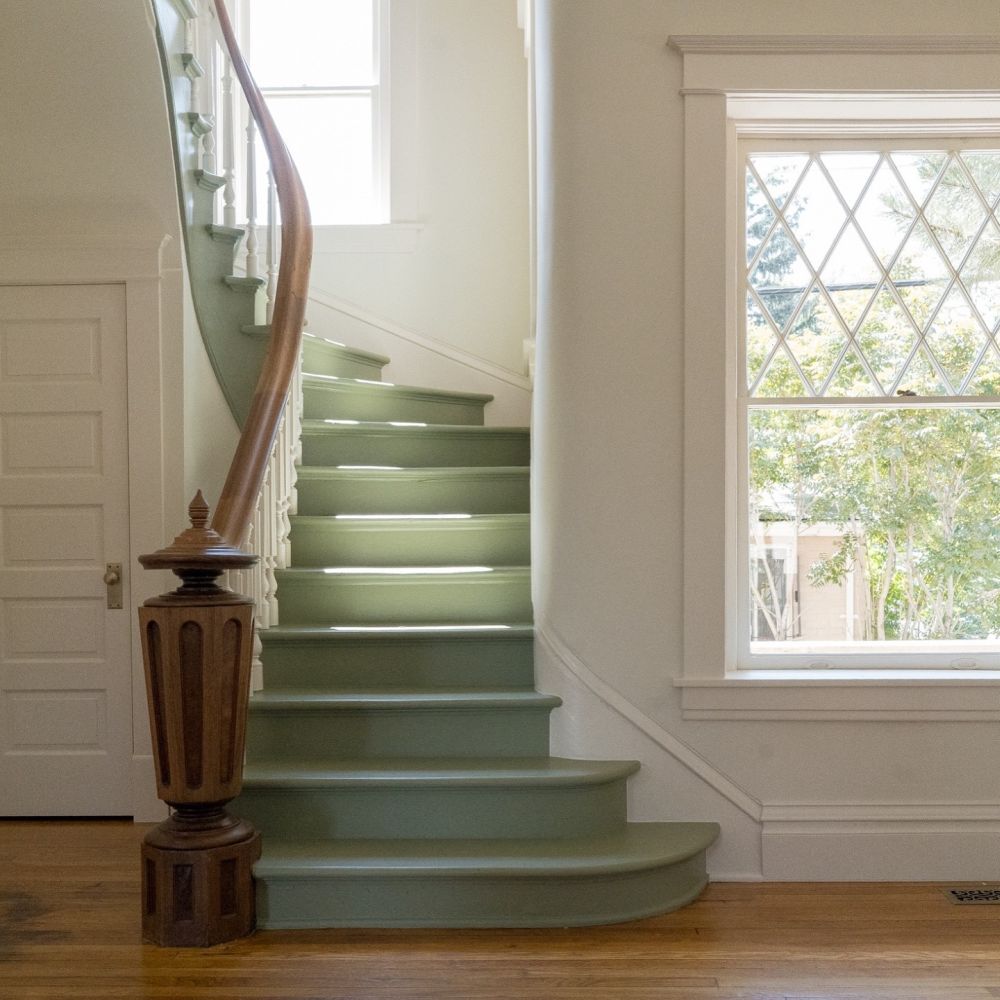
The restoration kept the original staircase profile, including the broad lower steps and narrowing turn. The green finish extends across the treads and risers, while the floor at the base retains its natural wood appearance.
Sunlight from the nearby windows crosses the steps, making the painted surfaces and repaired edges visible from the entrance hall.
Before and After Shows How Much of the Staircase Was Saved
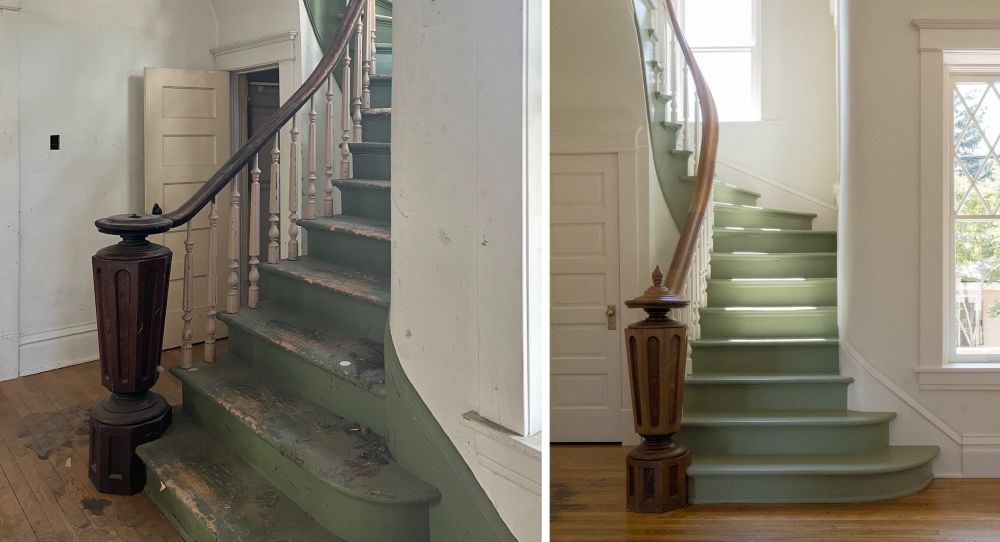
The original staircase had worn green paint, exposed wood across the treads, and damaged sections around the railing. After restoration, the same curved steps have a new green finish, with repaired woodwork, white balusters, and a refinished handrail.
The staircase still follows its 1898 design, including the carved newel post and curved lower steps. Instead of replacing the structure, the project returned the existing woodwork to use while preserving the details that made it part of the house.
Another staircase restoration featured on Homedit shows how much can change without removing the original construction. In that project, an old wooden staircase received a new look without replacing a single step, with the existing woodwork retained throughout the makeover.
Would you have kept the green paint on this 1898 staircase or chosen a different color after restoring the wood?
Restoration and interior design: @larapin__. Finished photographs credited to @ashleysawtelle.