Two sisters painted their 1918 farmhouse Soot, and neighbors drove by slowly to look


White siding, a yellowish off-white on the gable, the trim and the front door, and two overgrown barberry bushes crowding the front. A house can be more than a century old, sturdy and full of character, and still look like nobody has cared about it in years.
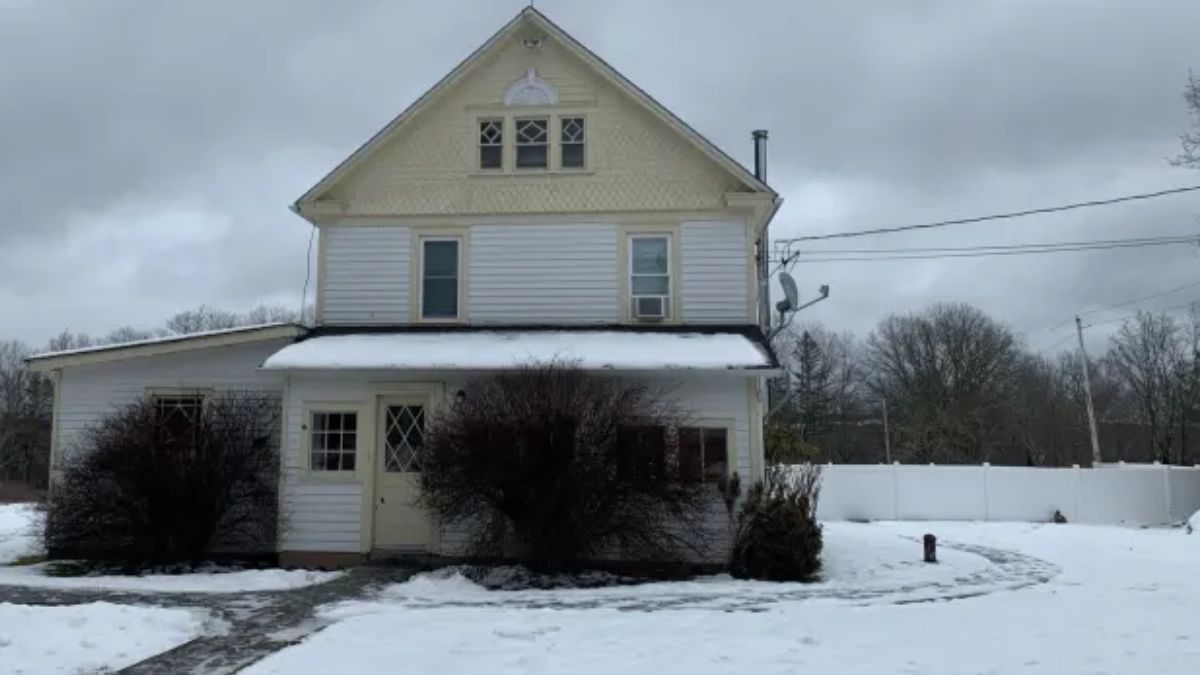
The house wasn’t the problem, the tired palette was. Sisters Marni and Willa Blank, who share their work as @theblankfarmhouse, bought a 1918 farmhouse in winter to restore inside and out and to host vacationers. “There were outdated colors and fixtures throughout the home,” Marni says. “Our intention was always to honor the original character of the home while giving it a modern refresh.”
Why a dark color can keep an old house classic ?
Voir cette publication sur Instagram
The sisters didn’t want a trendy color that would date the house again in a few years. “Going dark with the color felt like it would keep the home classic,” Marni says. A deep charcoal replaced both the white siding and the yellowed off-white, so nothing on the front looked faded anymore.
They didn’t pick it from a chip. They painted four charcoal shades on the sides of the house and looked at them at different times of day before choosing Benjamin Moore Soot, 2129-20.
Testing on the real surface works on a smaller scale too. A small indoor chip can’t show how a color looks against stone, trim and daylight, which is why one homeowner taped several paint samples to her front door and ended up with a pale blue-green that set the door apart from her brown stone.
Four charcoals, one painter and a weekend crew
- Test on the siding. Four charcoal shades went up on the sides of the house and were checked at different times of day.
- Choose the color. Soot won over the three other charcoals.
- Find a painter. This was the hardest part. Pandemic-era demand for home projects made painters hard to book, but once they found one, the work went quickly.
- Fix what the snow hid. “We also bought the home in the winter when things like rotten decking were covered in snow,” Marni says. The deck repair used much of their budget, which left the rest tight.
- Edit the yard. They removed the barberry bush in front, which Marni says “made it look a little haunted,” trimmed the one at the side and kept the stamped concrete walkway. New plants from a local farm, chosen for look and texture, plus fruit and evergreen trees, went in next. “Our dad would come up on weekends and help plant,” Marni says.
The street noticed. “Everyone in the neighborhood would drive by slowly and stop to comment on how much they loved the color and what a difference it made,” Marni says. “It really brought new life to this home that had remained unloved for some time.”
Voir cette publication sur Instagram
Plan B, if repainting the whole house isn’t in this year’s budget: start with the yard. Pulling one overgrown shrub and trimming another changed the front of this house before the first brush came out.
What a house built in 1918 asks before the scraper comes out
Old exterior paint is the first thing to check. The EPA says about three-quarters of homes in the United States built before 1978 still contain some lead-based paint, and under its Renovation, Repair and Painting Program, anyone paid to disturb painted surfaces in those homes must be certified in lead-safe work practices. The sisters’ story doesn’t say whether the old paint was tested, so ask any painter you hire for their certification before they scrape.
Look under the paint, too. A rotted deck, like theirs, is a repair to make before guests walk on it, and soft wood on siding or trim should be replaced, not painted over.
Leave the high gable to a pro with the right ladders or scaffolding. Test the dark color on the house itself, at every hour of the day, before you paint a single wall. That’s the trick.