They Bought a White-Painted Dixie Dresser and Spent Hours Stripping It: The Wood Beneath Was Worth Saving


Buying painted furniture can be a gamble. Beneath a thick coat of paint might be damaged veneer, old repairs, or wood that won’t take stain. One dresser found on Facebook Marketplace came with that risk, its original finish hidden beneath white shabby-chic paint and a distressed topcoat.
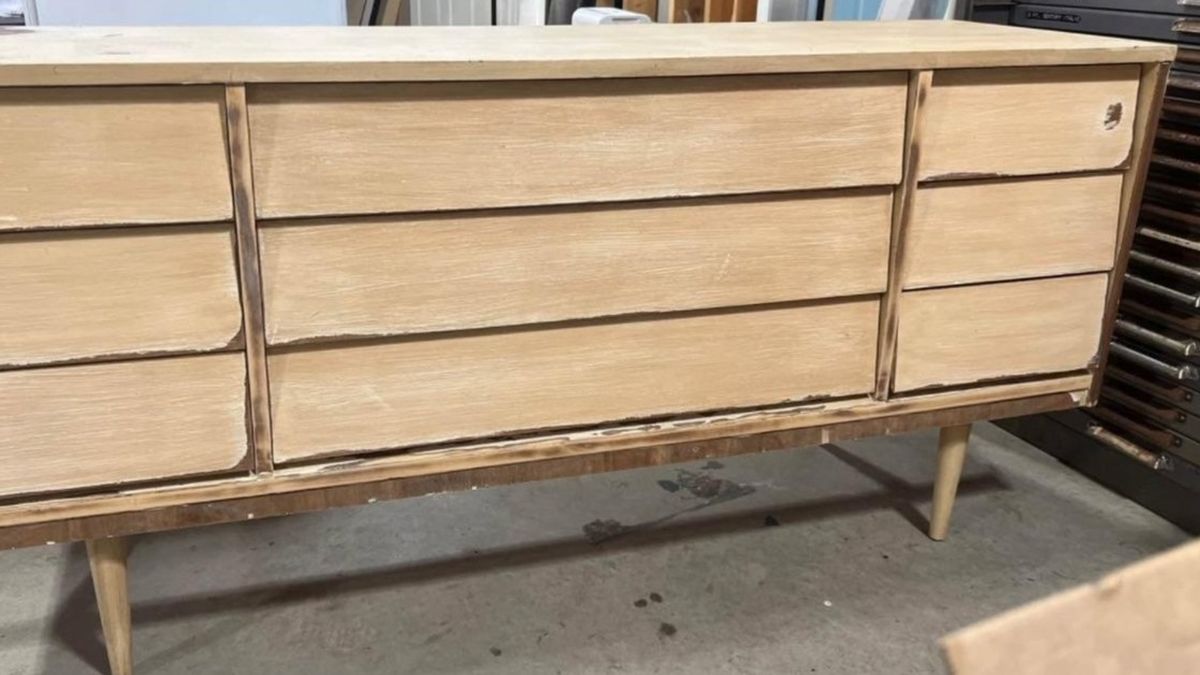
Reddit user u/Lonely_Bread6017 noticed a faded Dixie mark on the back and searched for photographs of the dresser before its makeover. The buyer liked what the original furniture might look like, but there was no way to know whether the veneer had survived.
Removing the paint took hours of scraping, wire brushing, and sanding. Beneath the coating, the restorer found wood worth saving. The project ended with walnut gel stain instead of another painted finish.
White Paint Was Still Trapped in the Wood
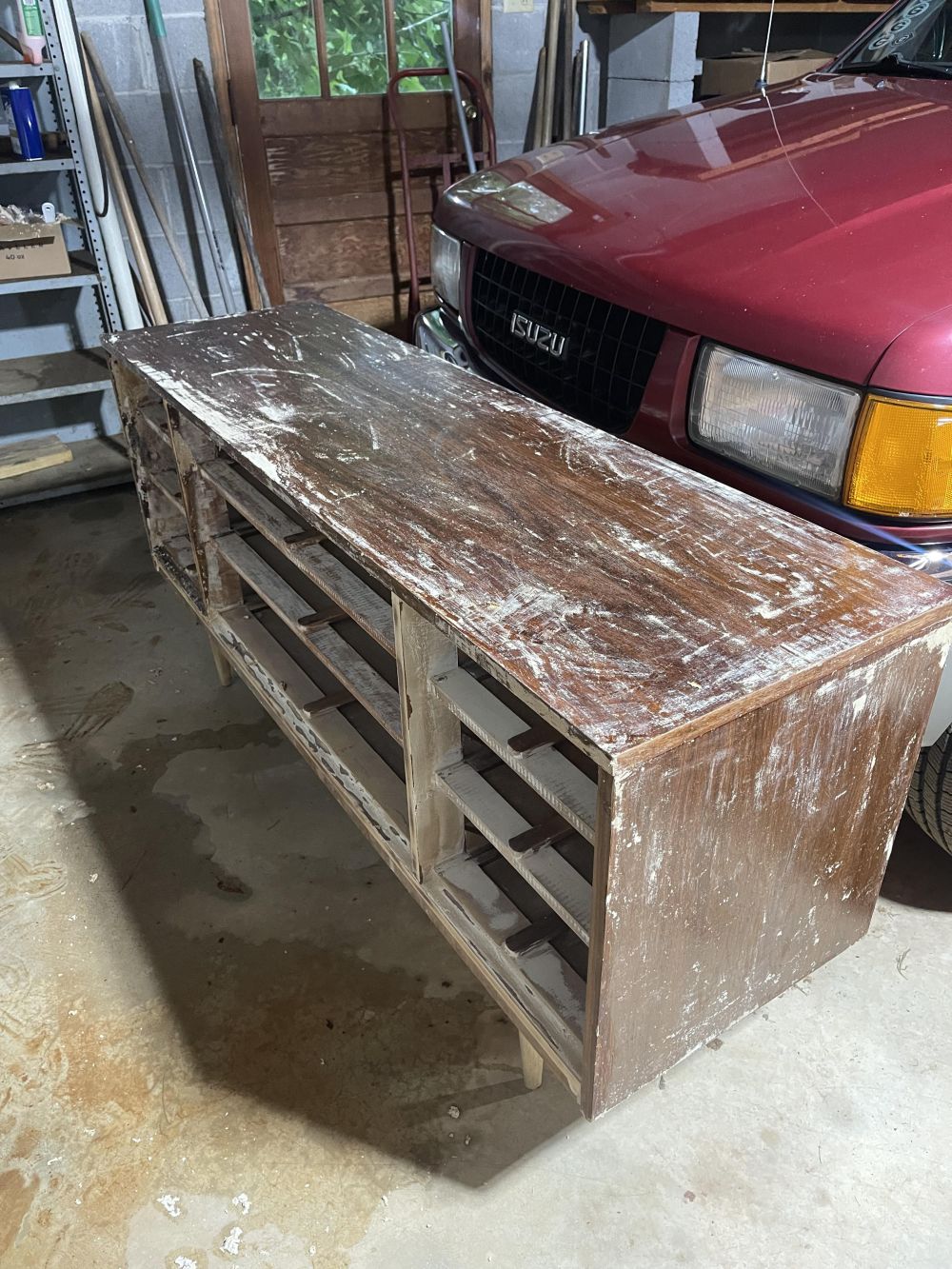
The dresser had a long, low frame with tapered legs and three groups of drawers. By the time these photographs were taken, much of the old white paint had been removed.
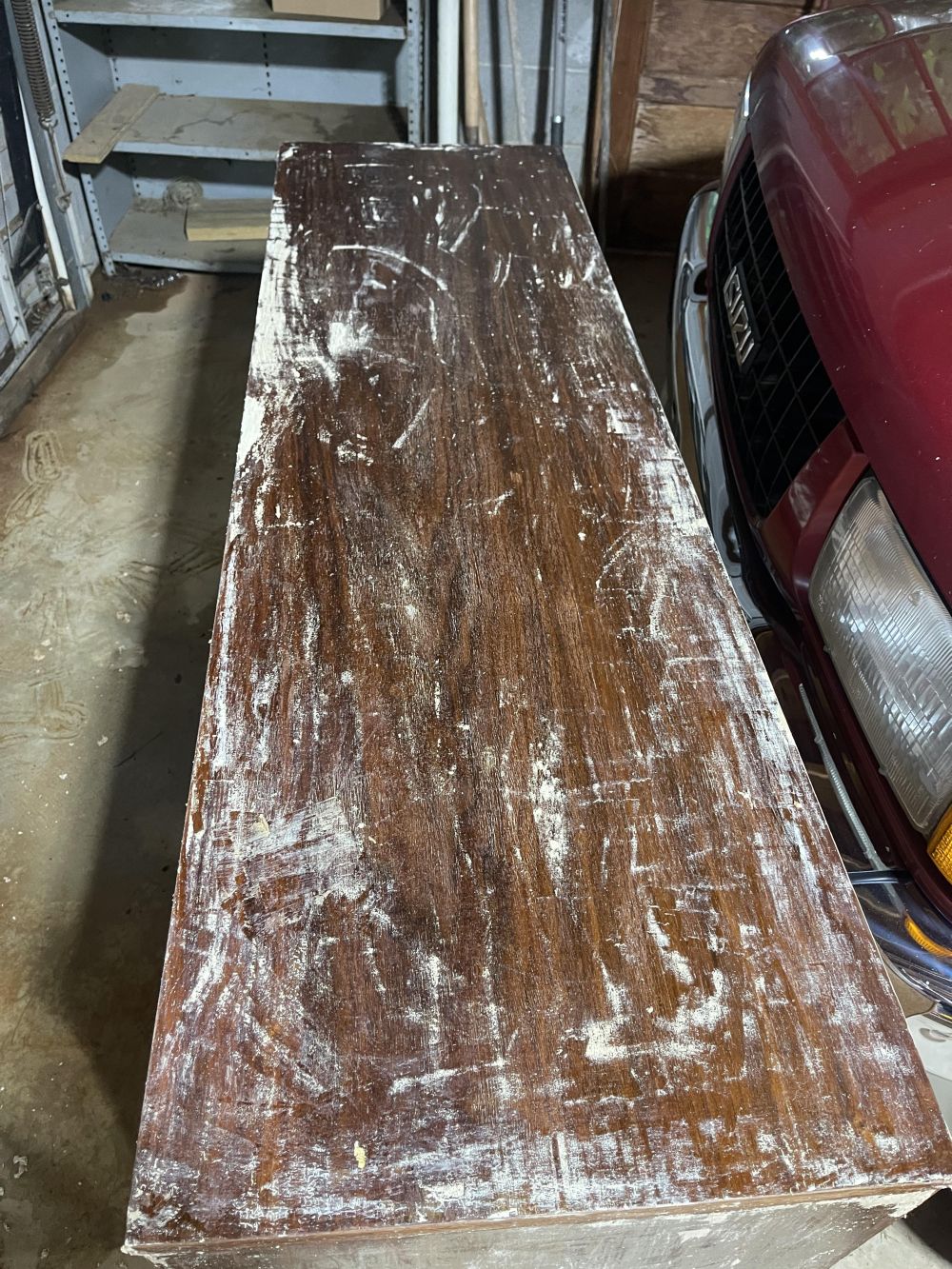
Streaks of paint remained across the dark wood top, edges, and side panel. Scratches and patches of exposed grain showed how much work was needed before a new finish could go on.
The restorer used a wire brush to remove paint caught in the wood grain after scraping the surface.
Stripping Exposed the Dresser’s Original Wood
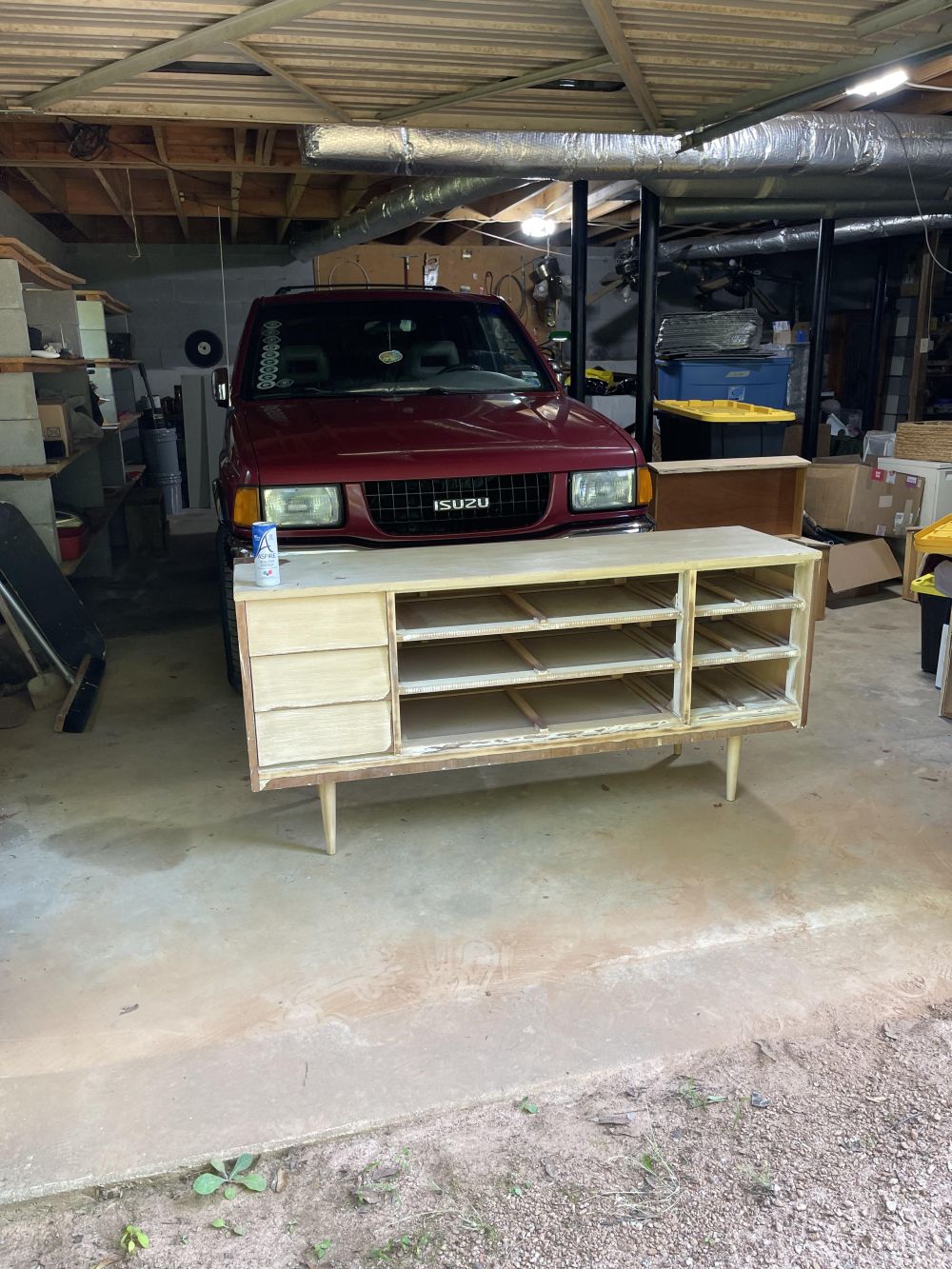
The cabinet frame was stripped with its drawers removed, exposing the wooden runners inside. The long top had a pale, sanded appearance, while traces of the former finish remained around the openings.
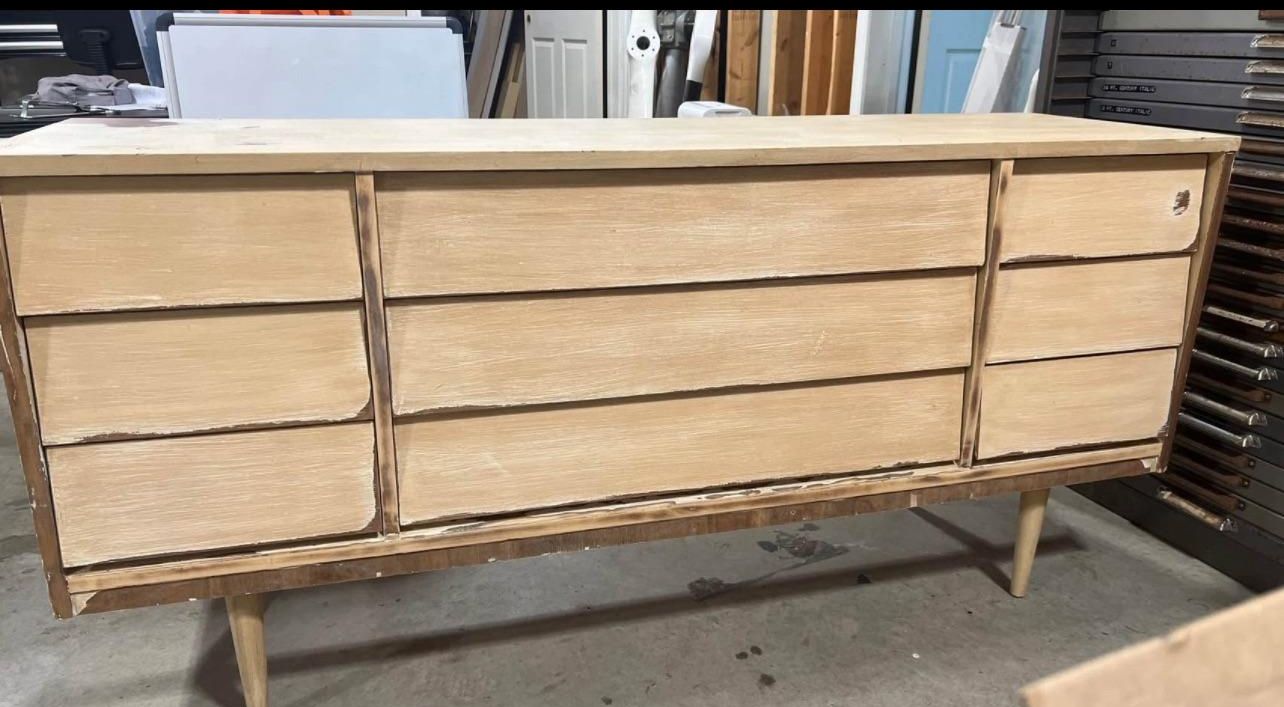
With the drawers back in place, the front showed a more even surface. The dresser retained its flat drawer faces, narrow vertical dividers, and tapered wooden legs.
The pale finish at this stage was exposed, prepared wood—not the completed restoration.
Each Drawer Was Prepared Apart From the Cabinet
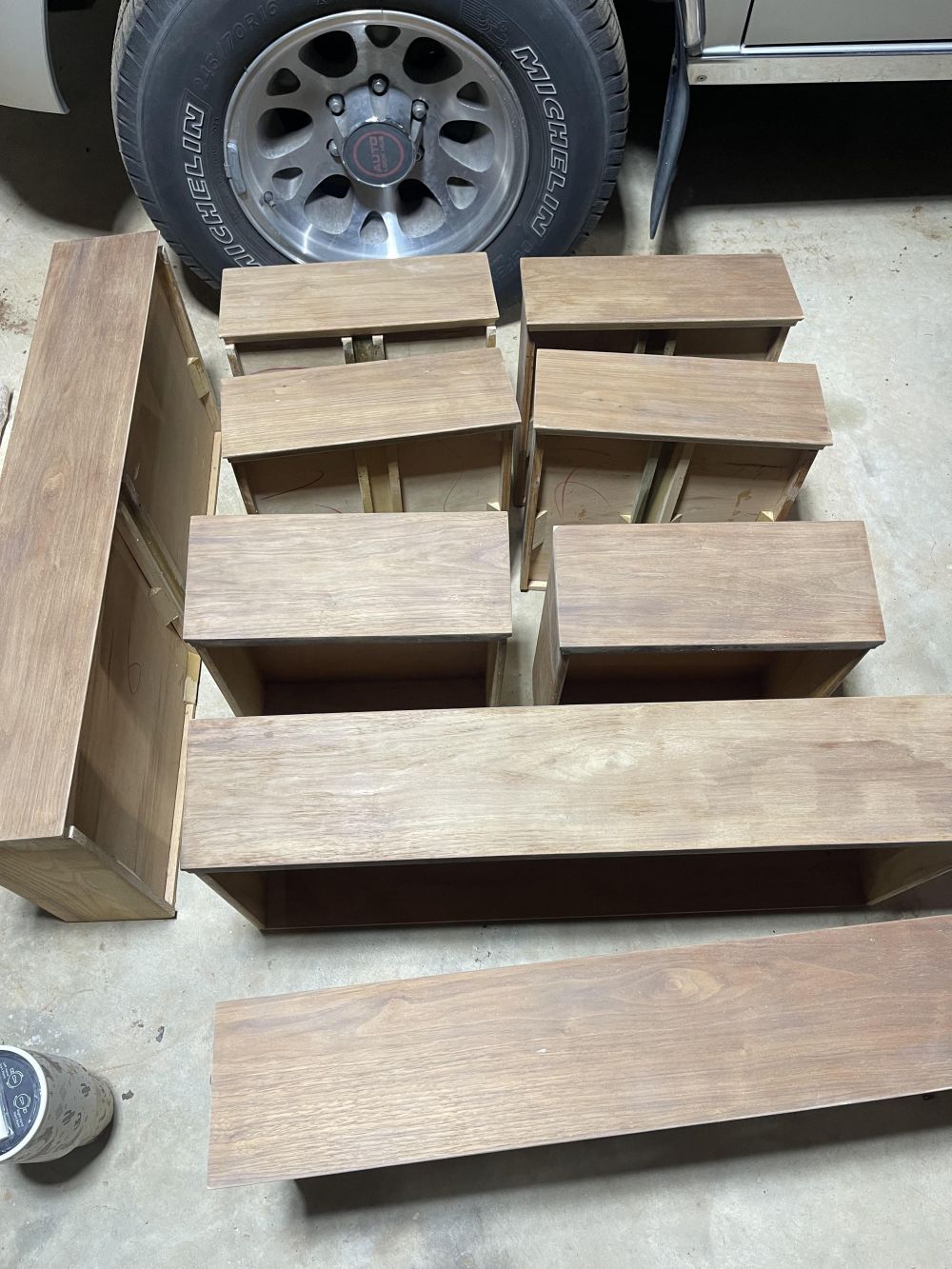
Seven detached drawers and a long wooden panel were arranged on the garage floor. Their outer surfaces had been sanded, with the grain exposed across the fronts.
Removing the drawers gave the restorer access to edges and corners where paint residue could remain. The drawer boxes and internal construction were retained.
Walnut Stain Restored the Wood Finish
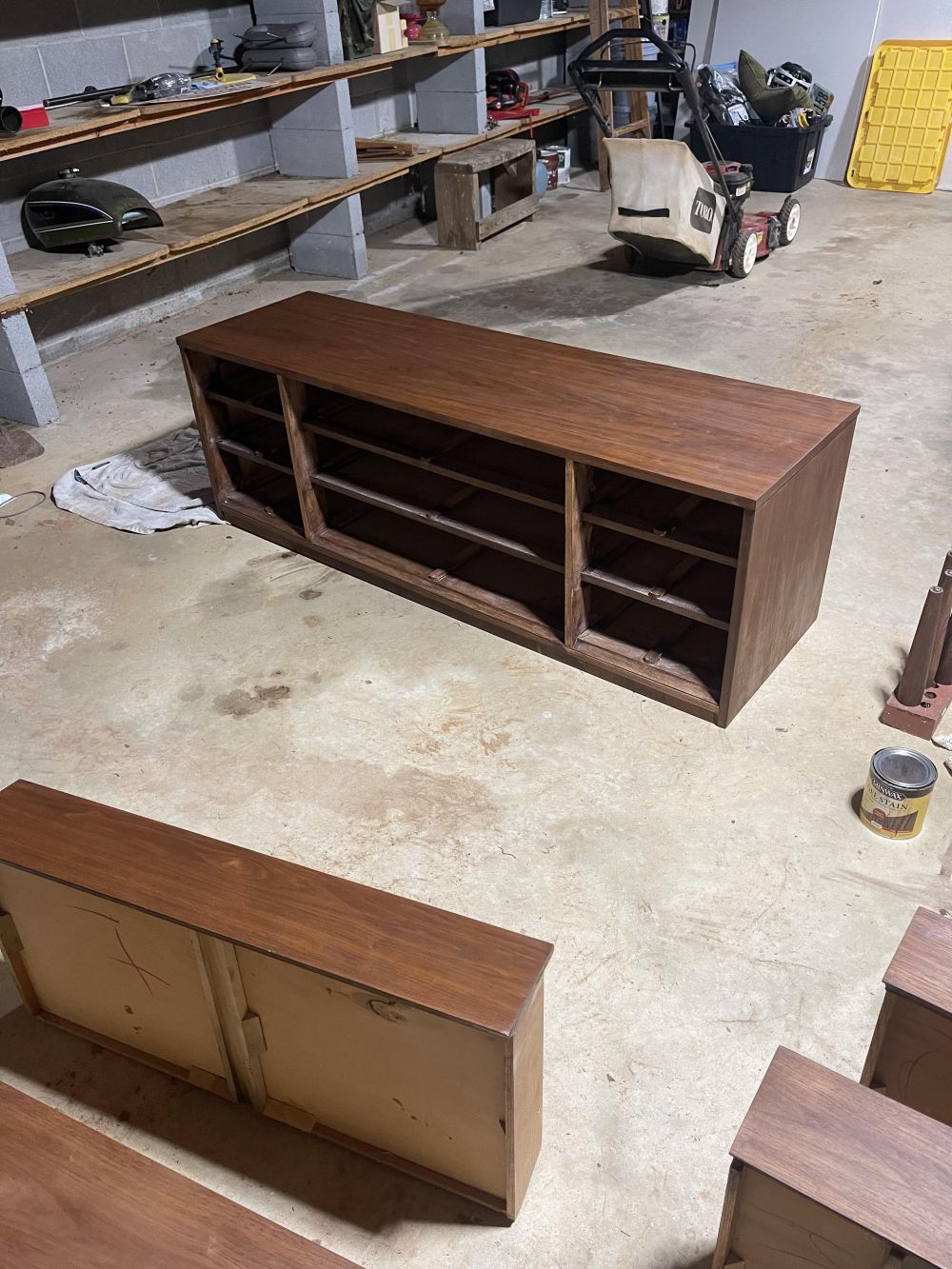
The cabinet received a darker wood finish after the stripping and sanding work. With its drawers removed, the grain across the top and side panels became visible.
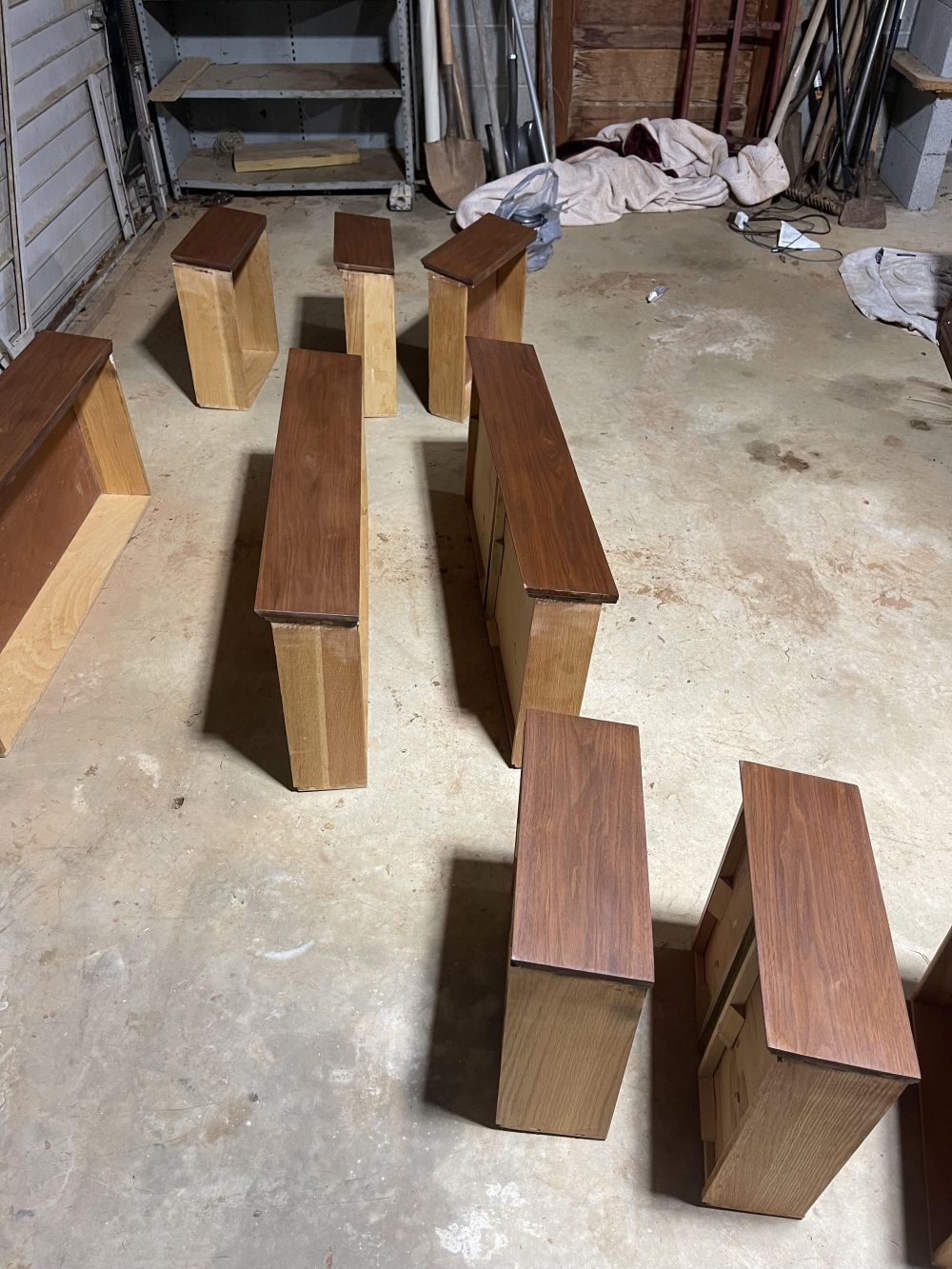
The detached drawer fronts received the same treatment. The original pale wood had taken on a warm brown tone, with darker lines following the grain.
According to the creator, the restoration used two coats of walnut gel stain followed by two coats of flat topcoat.
The Dixie Dresser Was Reassembled Without White Paint
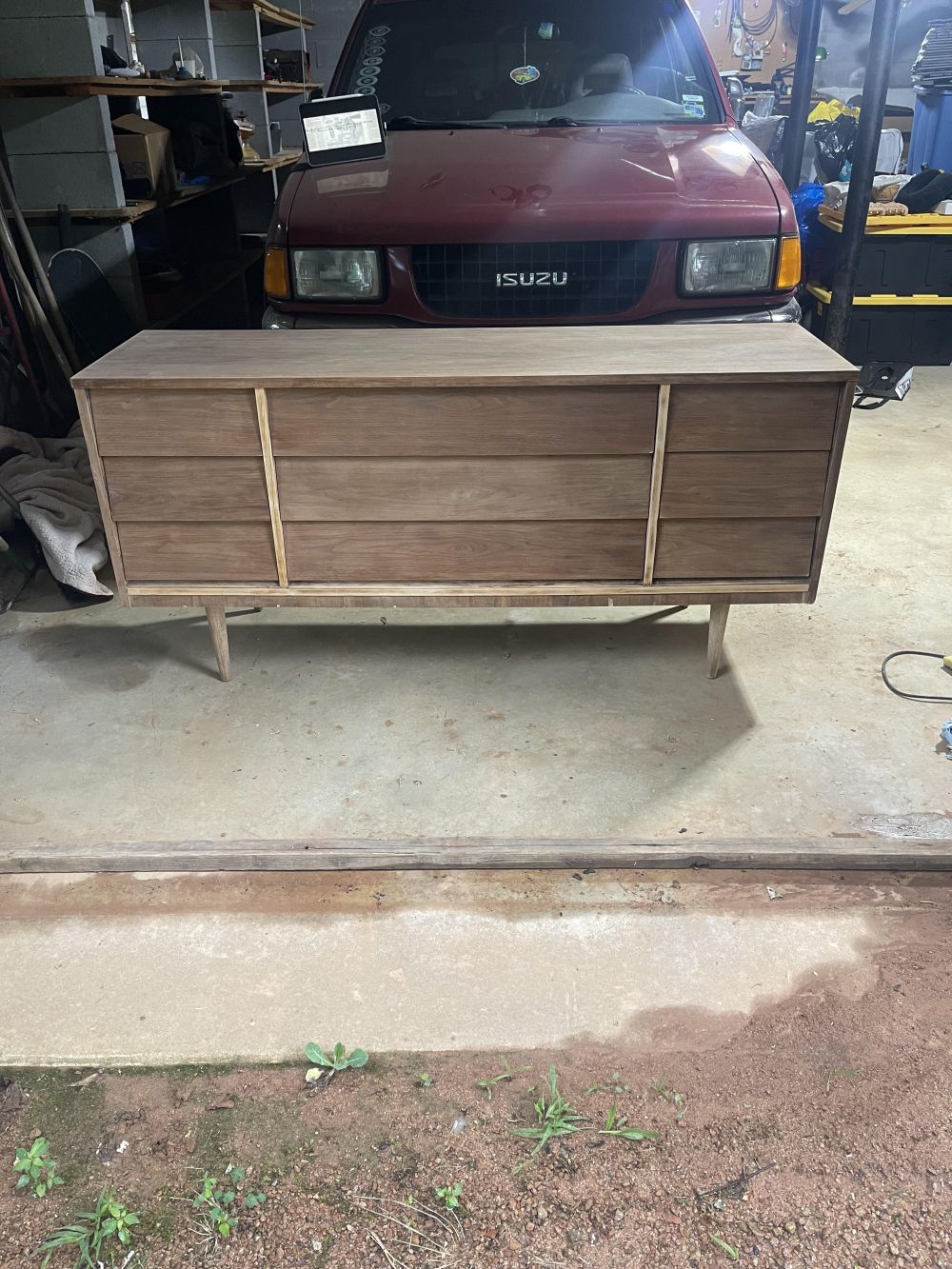
The reassembled dresser shows a uniform wood finish across the top, drawers, and side panels. Its simple mid-century design remains intact, without the distressed white patches that covered the earlier surface.
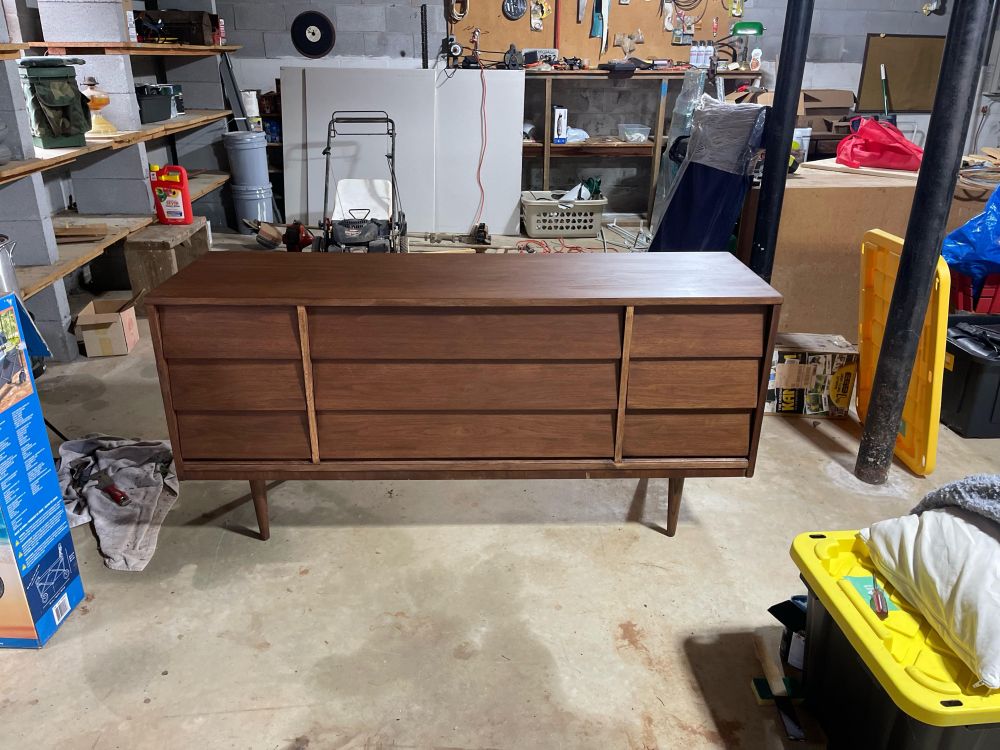
The completed piece has a deep walnut-brown finish, with wood grain extending across the full width of the dresser. Its original low profile and tapered legs remain.
The restorer later explained that the white coating had protected the veneer beneath it. What began as a risk on a Facebook Marketplace purchase became a restoration of the wood rather than another furniture repaint.
The Wood Was Worth the Hours of Work
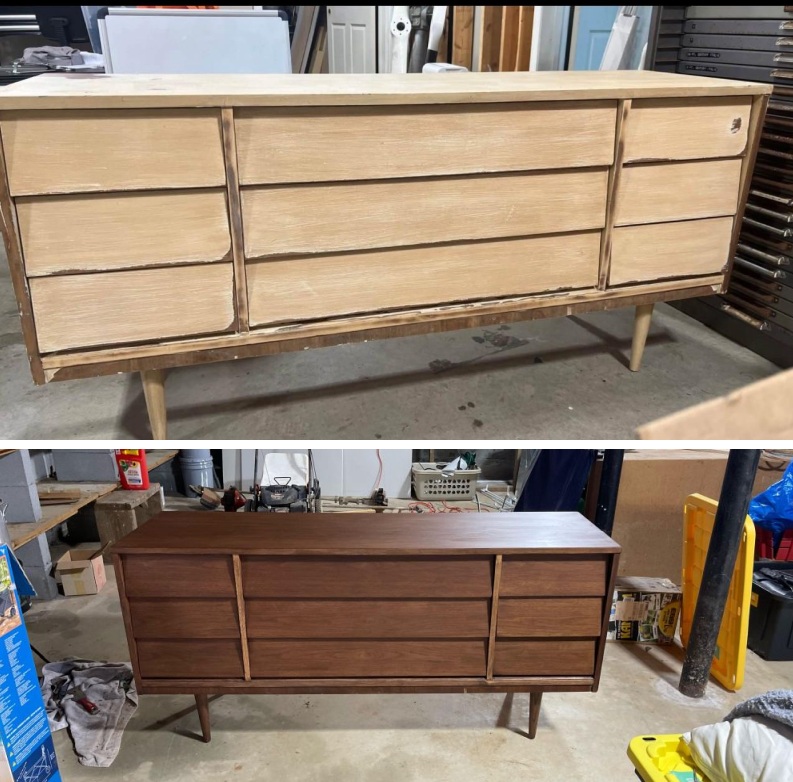
The comparison places the pale, stripped dresser beside the walnut-stained result. The difference comes from removing the old coating and restoring the finish, not changing the cabinet structure.
Would you have taken the risk of stripping this dresser, or painted over the old finish? I prefer the restored wood grain.
Project and photographs: Reddit user u/Lonely_Bread6017, r/ReversePinterest.