She Folded One Sheet of Green Paper Into a Christmas Tree That Stands Up Without Glue


Christmas table decorations often include miniature trees, candles, and ornaments purchased for the season. But one sheet of green paper can become a standing Christmas tree with a few folds and cuts, without glue, tape, or a separate base.

The paper starts as a flat rectangle before being folded into a compact triangle. Small cuts along the sides form the branches, and opening the folded sections creates a three-dimensional tree with a pointed top and a wide base.
This paper-folding tutorial shows how to make several trees in different sizes using green craft paper and scissors. The finished decorations stand on a table beside red ribbons and battery-operated candles, with small colored beads attached to their tips.
Green Paper Becomes the Starting Point
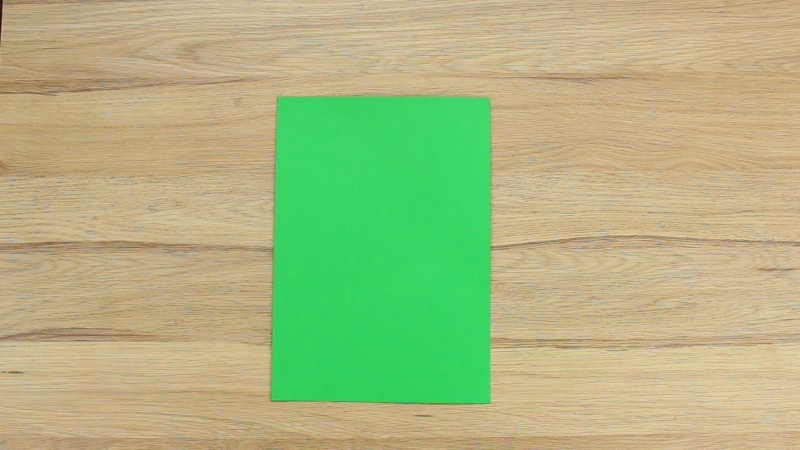
The project begins with a rectangular sheet of green craft paper placed on a flat surface. The paper needs enough structure to hold creases after folding, since the finished tree stands without a supporting frame.
Scissors are the main tool used after the folding is complete.
Folding the Paper Creates a Smaller Square
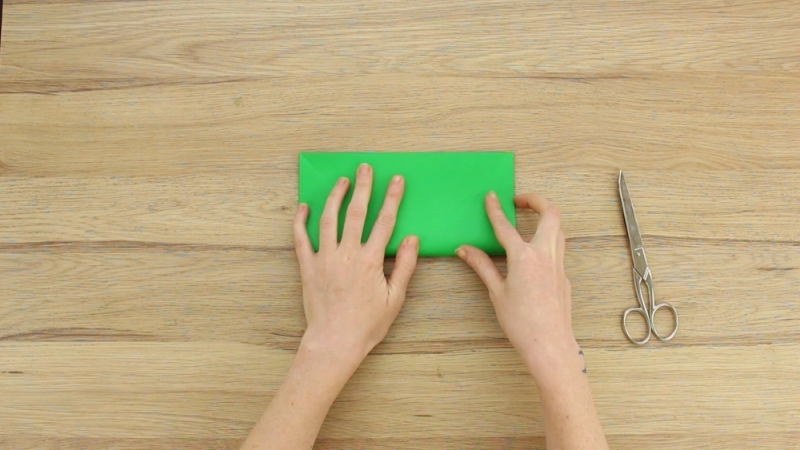
The sheet is folded in half, with the edges aligned and the crease pressed flat. Additional folds reduce the paper into a smaller shape that can be rotated before the triangular sections are formed.
Keeping the edges aligned helps the branches match when the finished tree is opened.
The Folded Paper Takes on a Diamond Shape
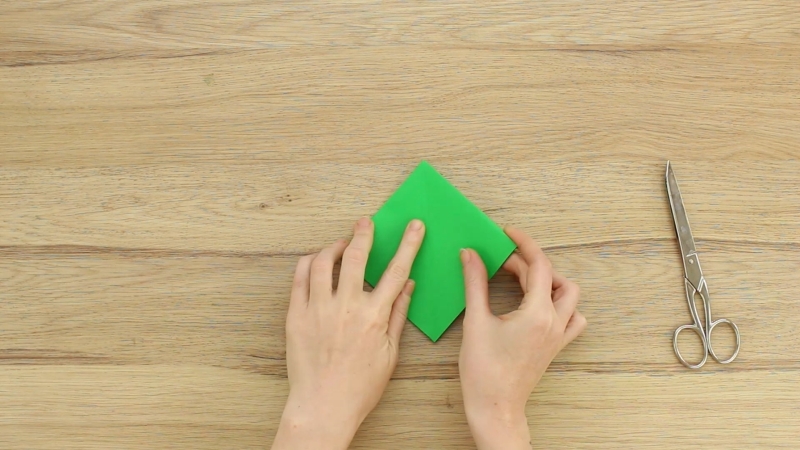
The compact paper is turned so one corner points downward. Its side sections are folded toward the center, creating triangular flaps that overlap.
Each crease brings the paper closer to the narrow form needed for cutting the branches.
Repeated Folds Form a Narrow Triangle
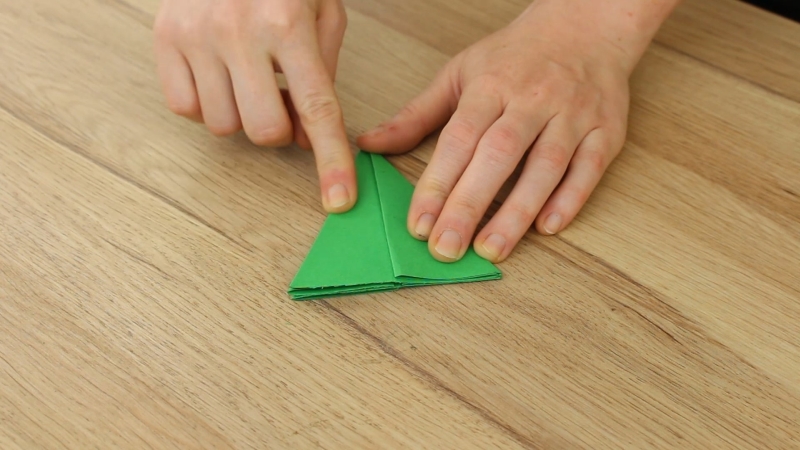
The remaining side flaps are folded inward and pressed flat, reducing the paper to a narrow triangle with several layers.
The pointed end will become the top of the Christmas tree, while the wider end forms its base.
Scissors Create the Christmas Tree Branches
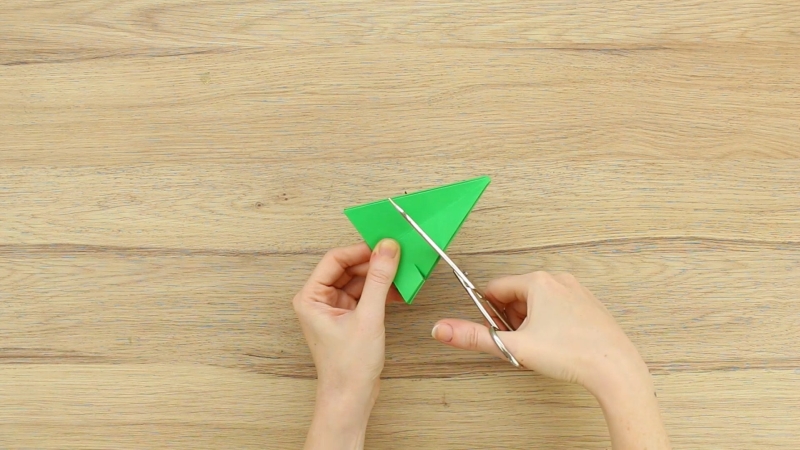
The folded triangle is trimmed with scissors to establish the tree’s outline. Small cuts are then made along the sloping sides, creating sections that can be folded into individual branches.
The paper remains connected through its center, allowing the layers to open into one decoration rather than separate pieces.
Folding the Cut Sections Creates the Branches
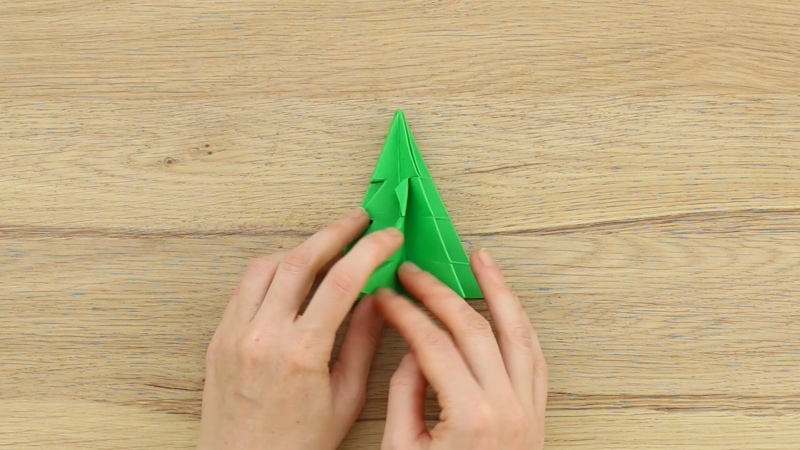
The cut sections are folded along their edges, forming small triangular points. As the layers are separated, the folded pieces extend outward and create rows of branches.
The repeated folds give the tree its shape without using glue to attach individual pieces.
The Finished Paper Christmas Trees Stand Without Glue
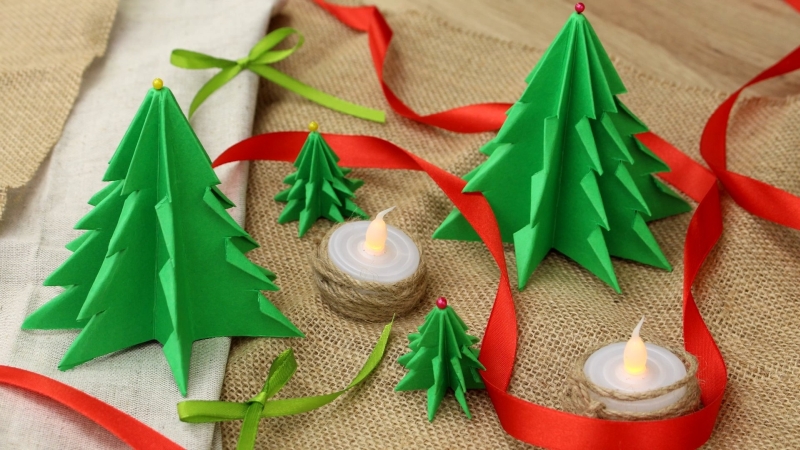
The finished display includes green paper Christmas trees in several sizes, each with tiered branches and a pointed top. Small red and yellow beads decorate the tips, while red ribbons and battery-operated candles sit around the trees on a burlap-covered table.
The wide folded bases allow the decorations to stand without pots, wooden supports, or adhesive.
For another Christmas table decoration made through folding, see how a red cloth napkin becomes a Christmas tree for each dinner plate. Unlike the paper version, the napkin remains intact and can be unfolded for use during dinner.
Would you make standing Christmas trees from green paper for your holiday table or choose store-bought miniature trees?
Image credits Homedit.com