She Folded a Red Cloth Napkin Into a Christmas Tree and Put One on Every Dinner Plate


Christmas dinner tables often include candles, ornaments, greenery, and decorations purchased for the occasion. But one item already placed beside every plate can become part of the holiday display. A square cloth napkin can be folded into a small Christmas tree without cutting fabric, sewing, or using glue.
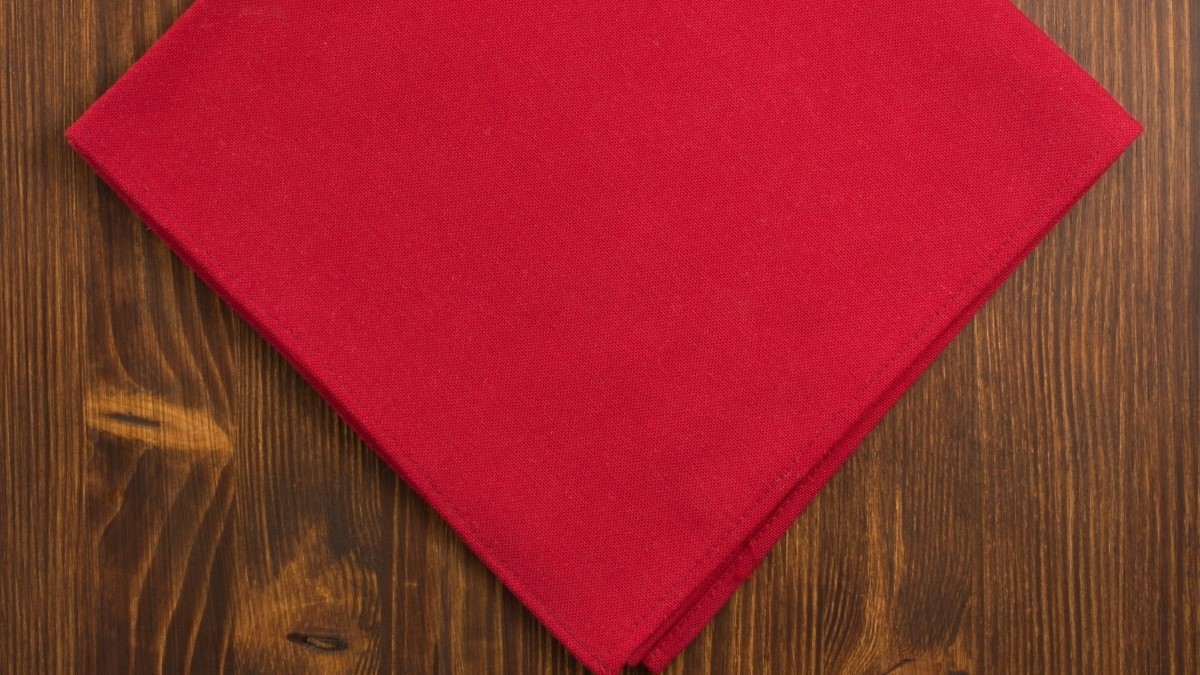
The design starts with a red napkin folded into a square, followed by a series of overlapping corners that form the tree’s branches. After turning and tucking the fabric, the finished shape has several tiers, a pointed top, and enough structure to rest on a dinner plate.
This Christmas napkin-folding tutorial demonstrates how the same piece of fabric can serve as both a napkin and a table decoration. The finished tree has a small white bow at its tip and sits on a white dinner plate, surrounded by a woven charger, silverware, and holiday table accessories.
A Red Cloth Napkin Becomes the Starting Point
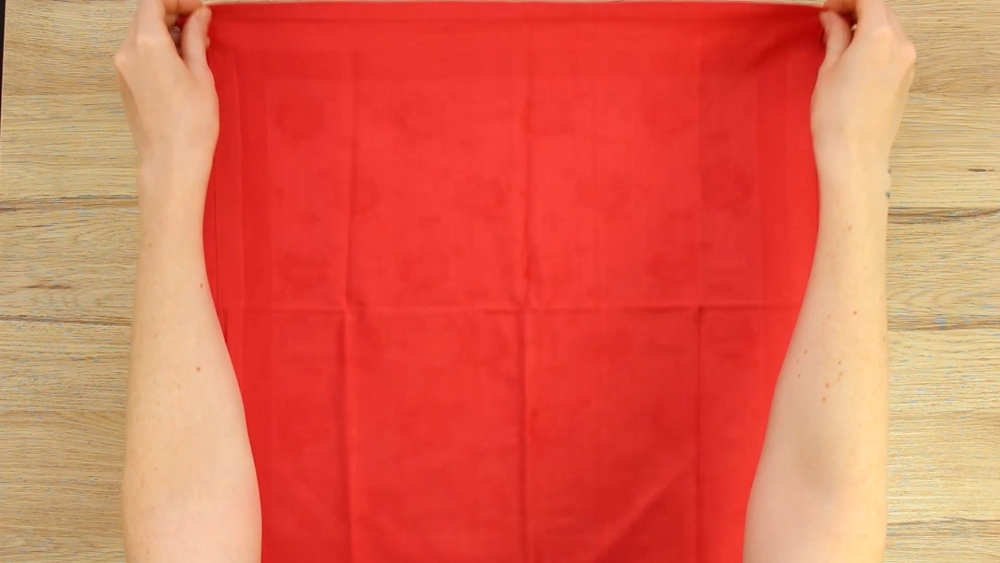
The project begins with a square red cloth napkin spread across a flat surface. Fabric with some structure helps the folds hold their shape, while the solid color makes the finished tiers visible once the tree is assembled.
No additional fabric is needed, and the napkin remains intact throughout the process.
Folding the Napkin Creates a Smaller Square
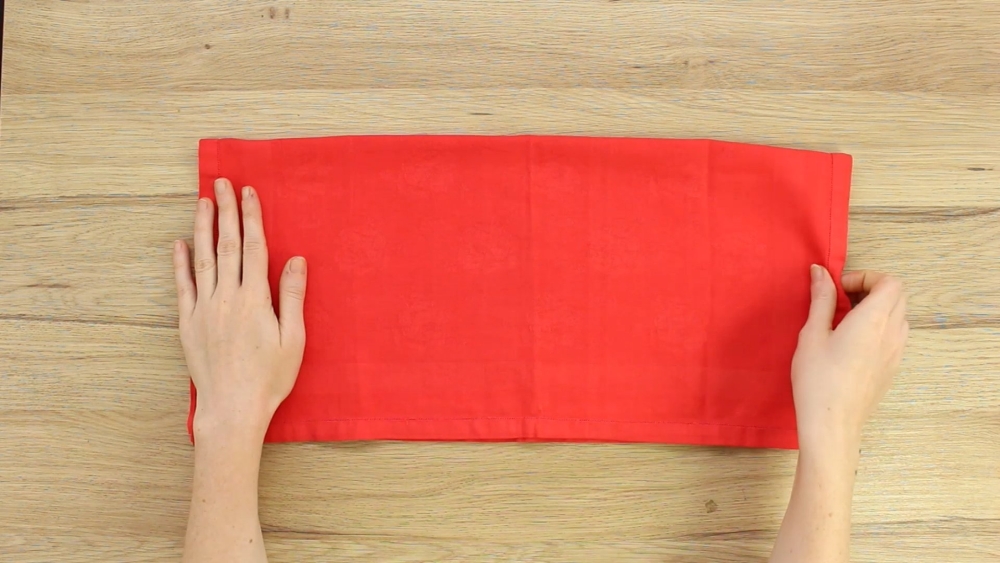
The napkin is folded in half to create a rectangle, with the edges aligned before the next fold. The fabric is then folded again to form a smaller square, leaving several loose corners along one side.
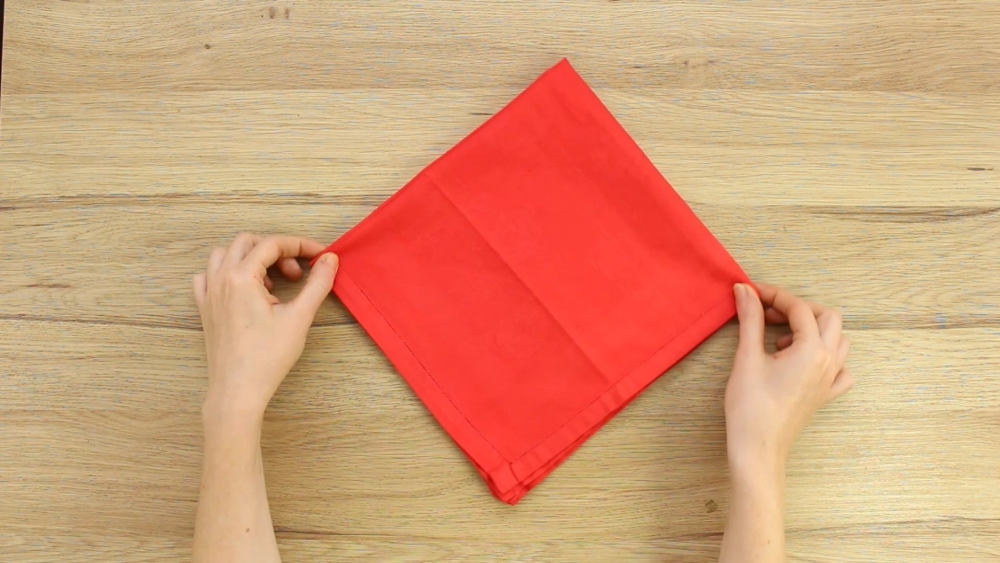
The folded square is rotated into a diamond position, with the loose corners pointing toward the person making the tree. This arrangement allows each fabric layer to be folded upward without disturbing the layers underneath.
The Loose Corners Form the Christmas Tree’s Branches
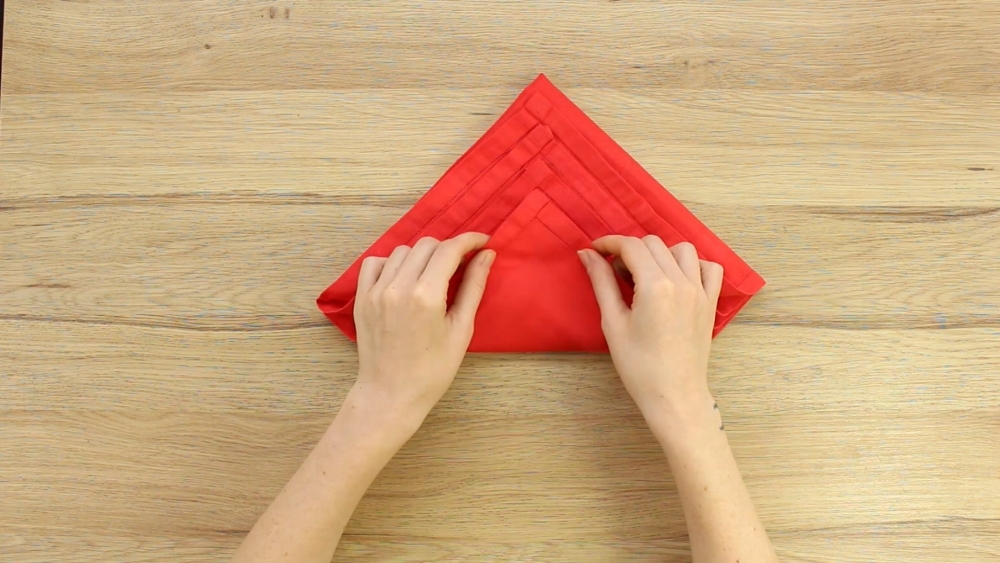
Starting with the uppermost loose corner, the fabric is folded toward the opposite point. Each remaining corner follows the same direction, stopping below the preceding fold to create a series of visible triangular sections.
The overlapping edges establish the tree’s tiered appearance before the final shaping begins.
Turning and Tucking the Fabric Creates the Tree Shape
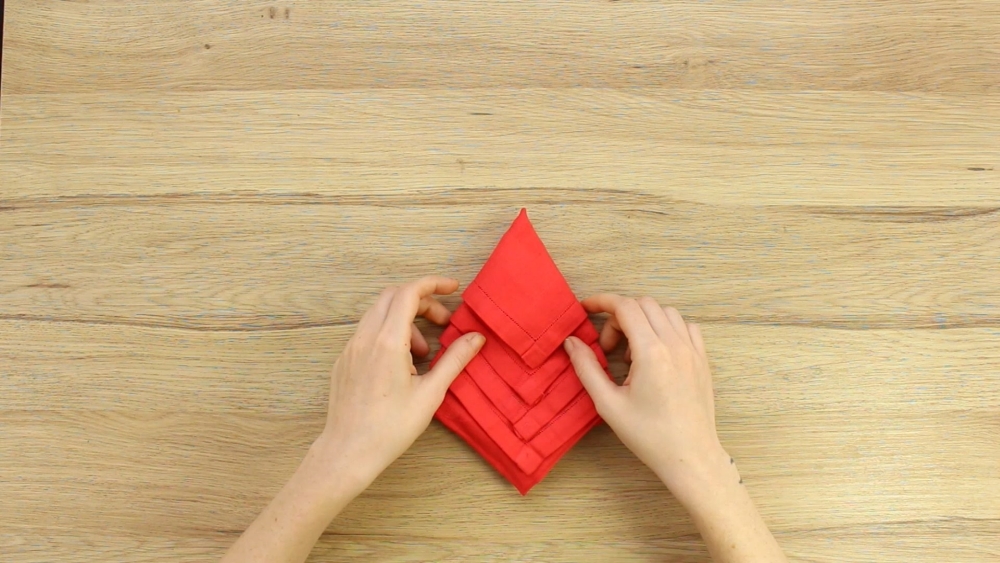
The folded napkin is turned over, its side corners are brought inward, and the fabric is turned back to reveal the stacked layers. The widest section sits at the bottom, while the upper point becomes the top of the tree.
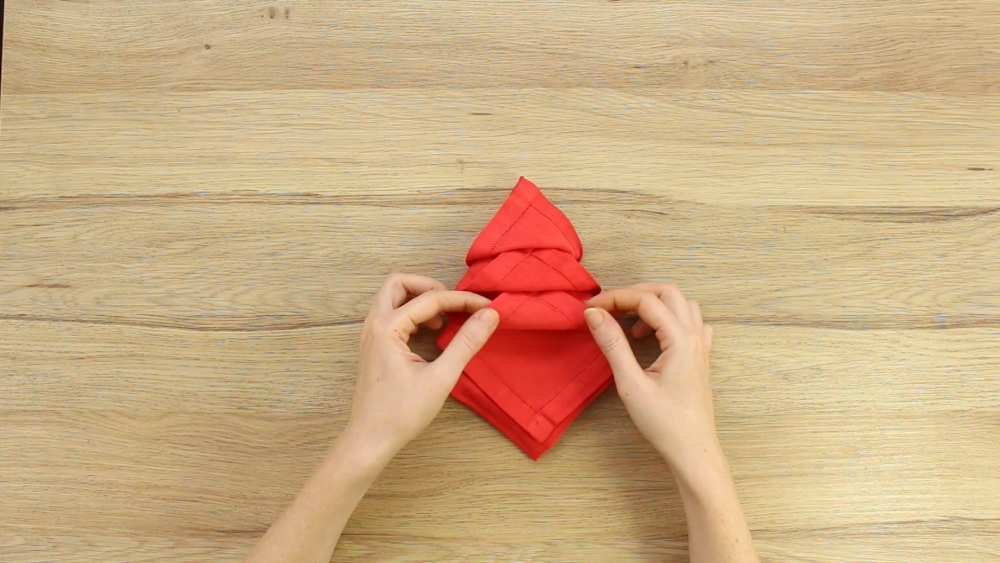
Each loose triangular point is tucked beneath the fold above it, causing the fabric to form raised tiers. The resulting shape has a narrow tip and a wider base, resembling the branches of a Christmas tree.
The Finished Napkin Becomes a Christmas Place Setting
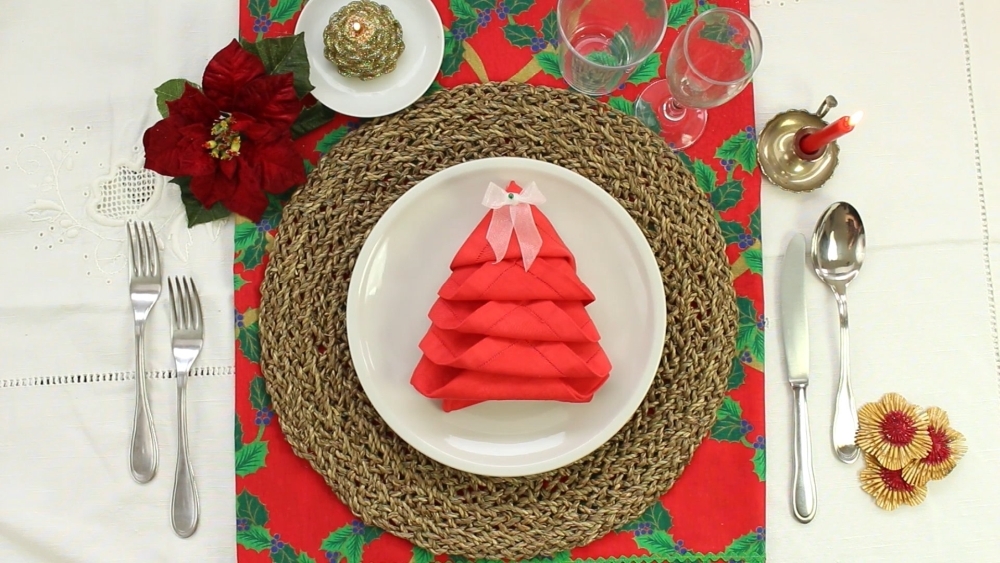
The completed napkin sits at the center of a white dinner plate, with five overlapping fabric tiers forming the tree. A small white bow finishes the tip, while the red fabric contrasts with the plate and woven charger beneath it.
The surrounding place setting includes a Christmas-patterned runner, silverware, glassware, a candle, and a red poinsettia. The folded napkin adds another holiday detail without requiring a separate decoration for each guest.
Guests can unfold the tree and use the napkin during dinner, making the design suitable for Christmas meals where table space is limited.
Would you fold cloth napkins into Christmas trees for each dinner plate or keep your holiday place settings simple?