The Old-Fashioned Sideboard Is Back for 2027, but It Looks Nothing Like the One Your Grandparents Owned


Sideboards once belonged in formal dining rooms, where they stored table linens, serving dishes, and cutlery behind heavy wooden doors. For years, simpler storage cabinets took their place, but the furniture is finding another role as homeowners look for pieces that provide storage without resembling standard kitchen cabinetry.
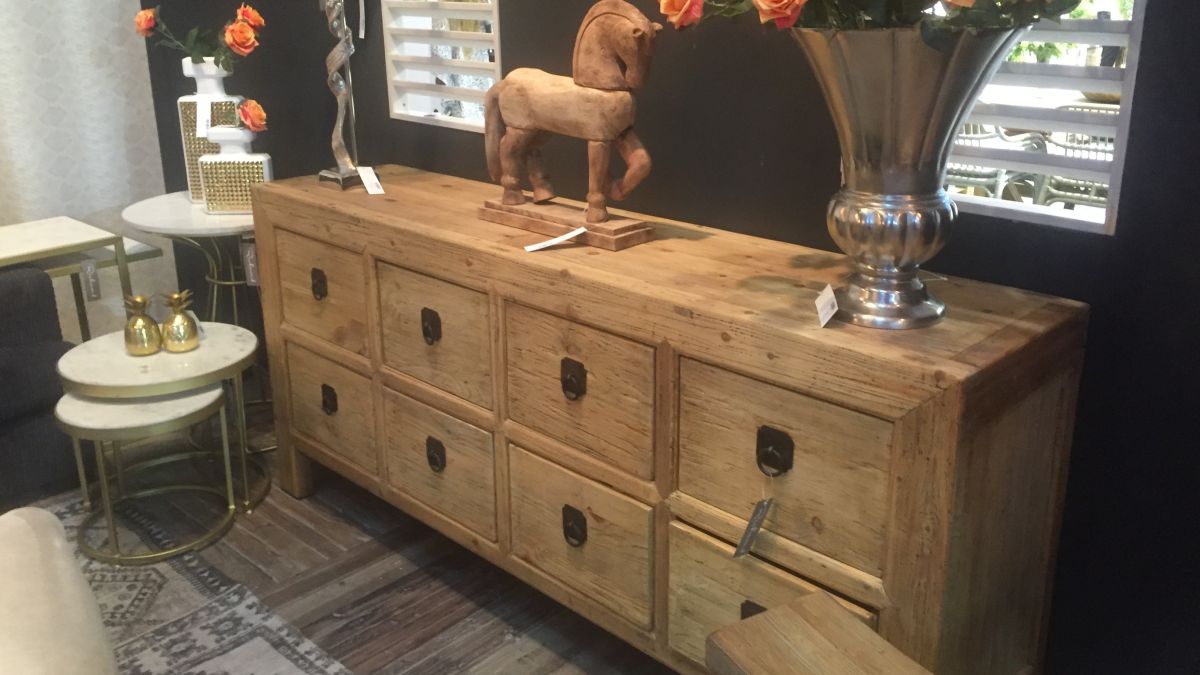
The sideboards emerging for 2027 have curved ends, oversized handles, geometric wood fronts, carved surfaces, and doors that conceal their openings. Some look closer to furniture made for an art gallery than the traditional dining room buffet, while others use natural wood grain instead of decorative hardware.
These sideboard designs photographed by Homedit show different approaches to the returning furniture category, from pale wood cabinets with raised geometric fronts to long, low storage units that work in living rooms, hallways, and dining rooms.
Geometric Wood Doors Replace Flat Cabinet Fronts
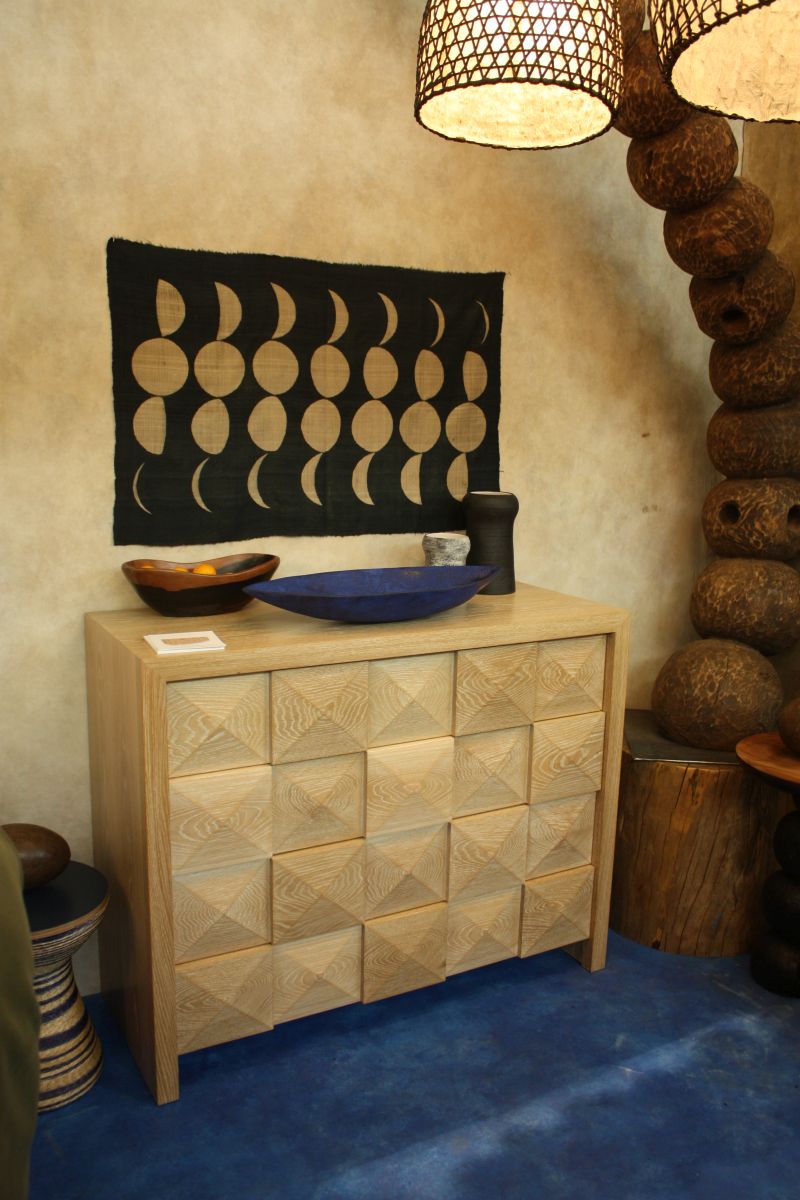
The front of this pale wood sideboard consists of repeated square panels, each divided into raised triangular sections. The wood grain changes direction across the angled surfaces, creating a three-dimensional effect without paint or contrasting materials.
Its rectangular body and short legs retain the proportions of a traditional storage cabinet, but the geometric doors give the piece an appearance closer to carved wall art.
Curved Sideboards Bring Back Rounded Furniture
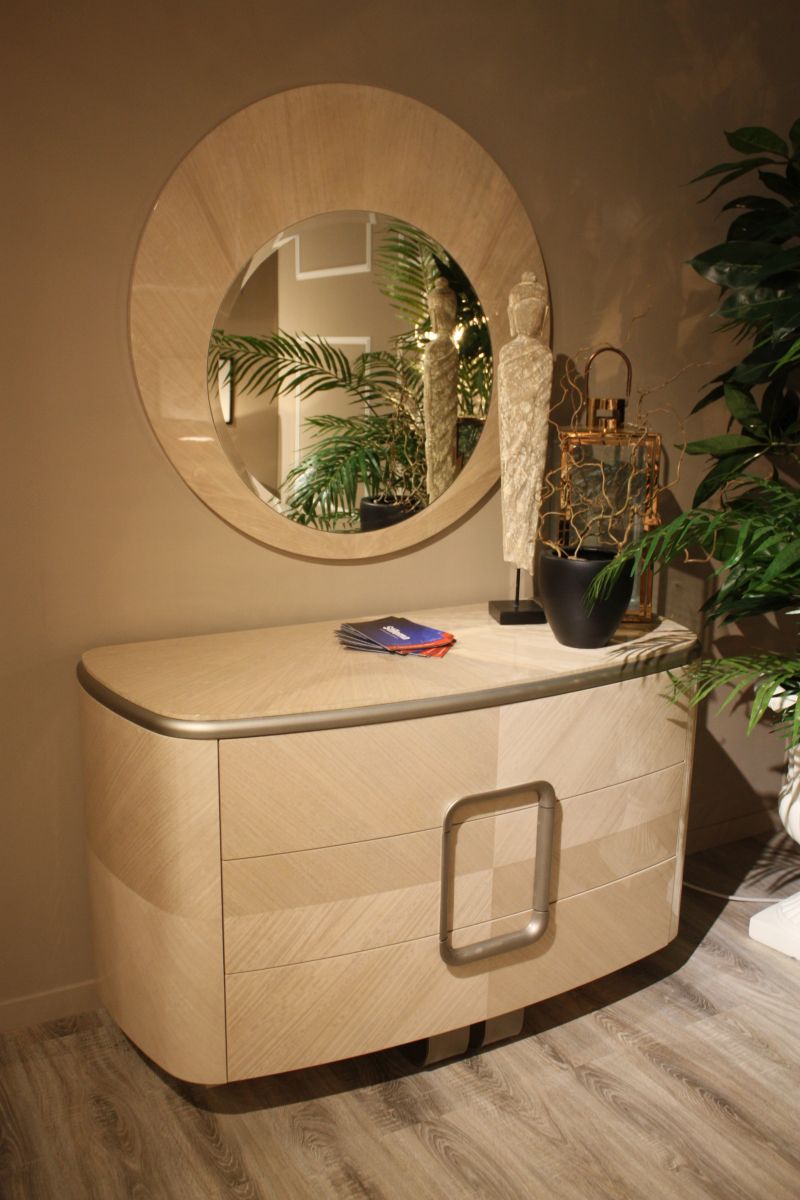
This sideboard has rounded corners, a pale wood finish, and a large square metal handle positioned across the front drawers. The curved ends continue through the cabinet body rather than stopping at the top.
A matching round mirror repeats the wood finish above the cabinet, showing how the shape can become part of a coordinated furniture arrangement.
Dark Wood Sideboards Combine Open and Closed Storage
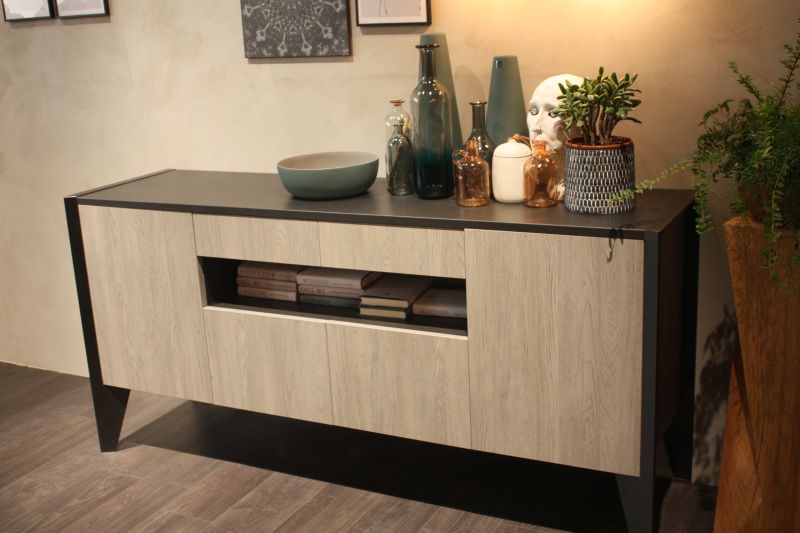
A dark outer frame surrounds pale wood cabinet fronts, with an open shelf running through the upper center. The combination provides concealed storage on both sides while leaving space for books or objects that remain visible.
Instead of traditional knobs and decorative molding, the cabinet uses broad surfaces and contrasting wood tones to define its sections.
Long Sideboards Replace Rows of Small Storage Cabinets
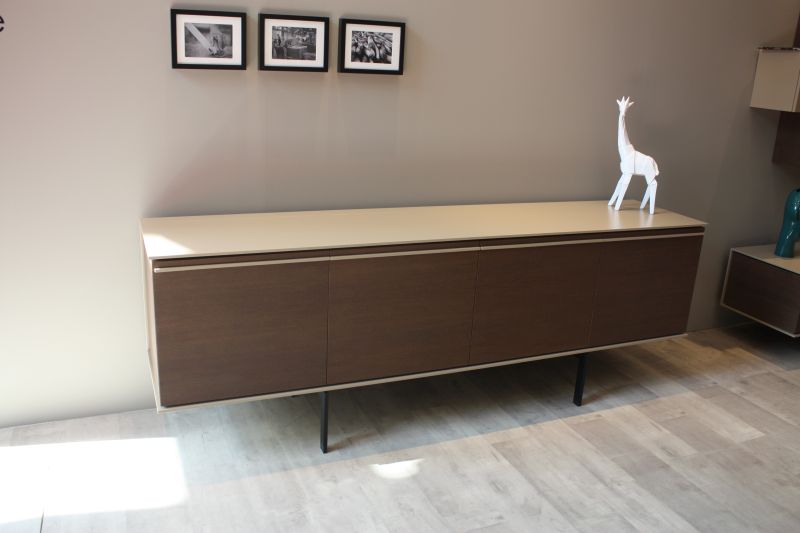
This low cabinet extends across much of the wall, supported by narrow black legs. Dark wood doors sit within a pale outer frame, with a thin horizontal opening beneath the countertop serving as the handle detail.
Its proportions make it suitable for a living room or dining room where a long storage surface is needed without the height of a traditional hutch.
Wood Grain Becomes the Main Feature
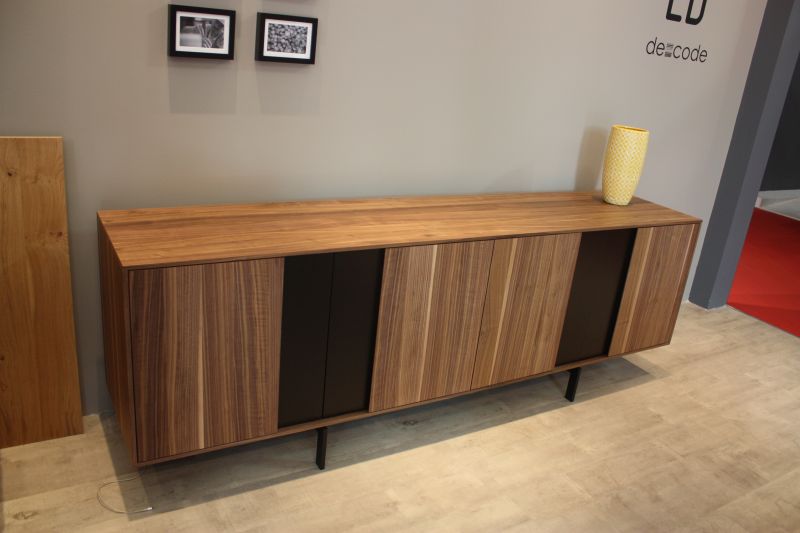
The walnut sideboard combines vertical wood grain on its sliding fronts with dark recessed sections behind them. The doors overlap the openings, creating a changing arrangement of wood and black surfaces.
The top retains a broad natural wood finish, while slender legs lift the long cabinet above the floor.
Handle-Free Sideboards Use Contrasting Finishes
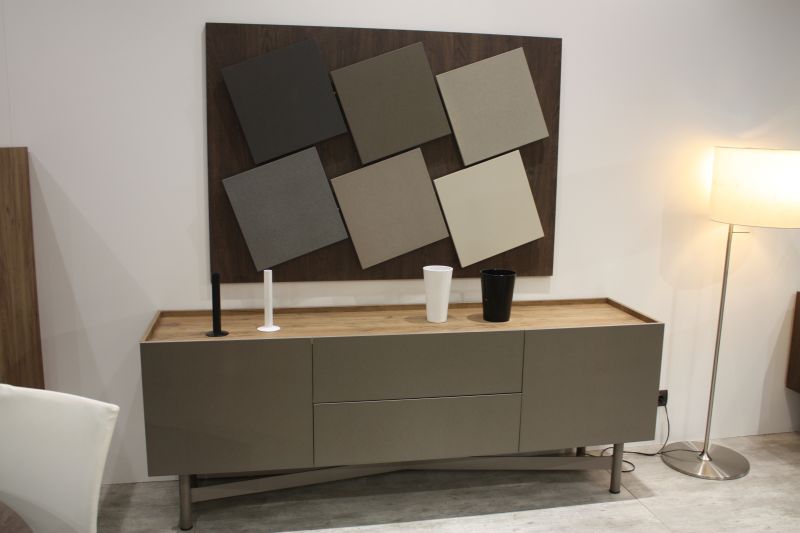
This gray sideboard has broad cabinet fronts without visible handles, with a natural wood countertop framed by a narrow raised edge. The center drawers and outer doors form a continuous front, interrupted by thin joints.
The design uses the contrast between the gray finish and wood surface rather than applied moldings or decorative metal hardware.
Natural Wood Cabinets Keep the Front Uninterrupted
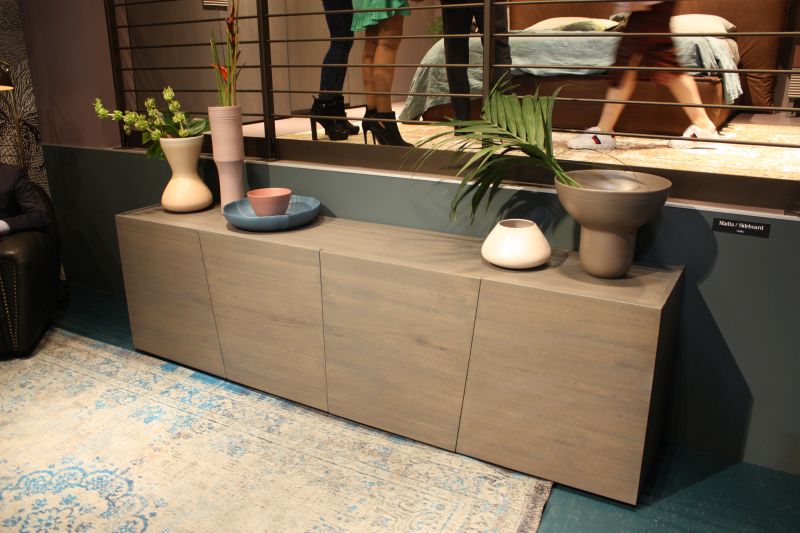
Four broad doors cover the front of this pale wood sideboard, with no handles or raised panels interrupting the grain. The cabinet sits close to the floor and has a rectangular body with straight edges.
The flat fronts create a continuous wood surface, making the furniture an alternative to cabinets with visible pulls, framed doors, and separate decorative sections.
Color and Ribbed Wood Turn Storage Into a Design Feature
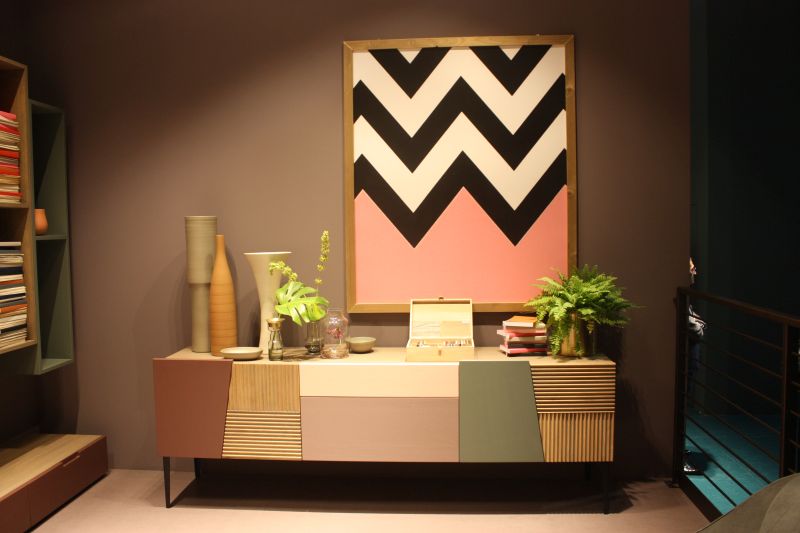
This sideboard combines terracotta, cream, muted green, and ribbed wood across its front. The different sections form an irregular geometric arrangement, with contrasting horizontal and vertical grooves.
The mixed finish changes the appearance of each cabinet door, making the piece suitable for a room where storage furniture is intended to stand out rather than match the walls.
Oversized Graphic Designs Appear on Sideboard Doors
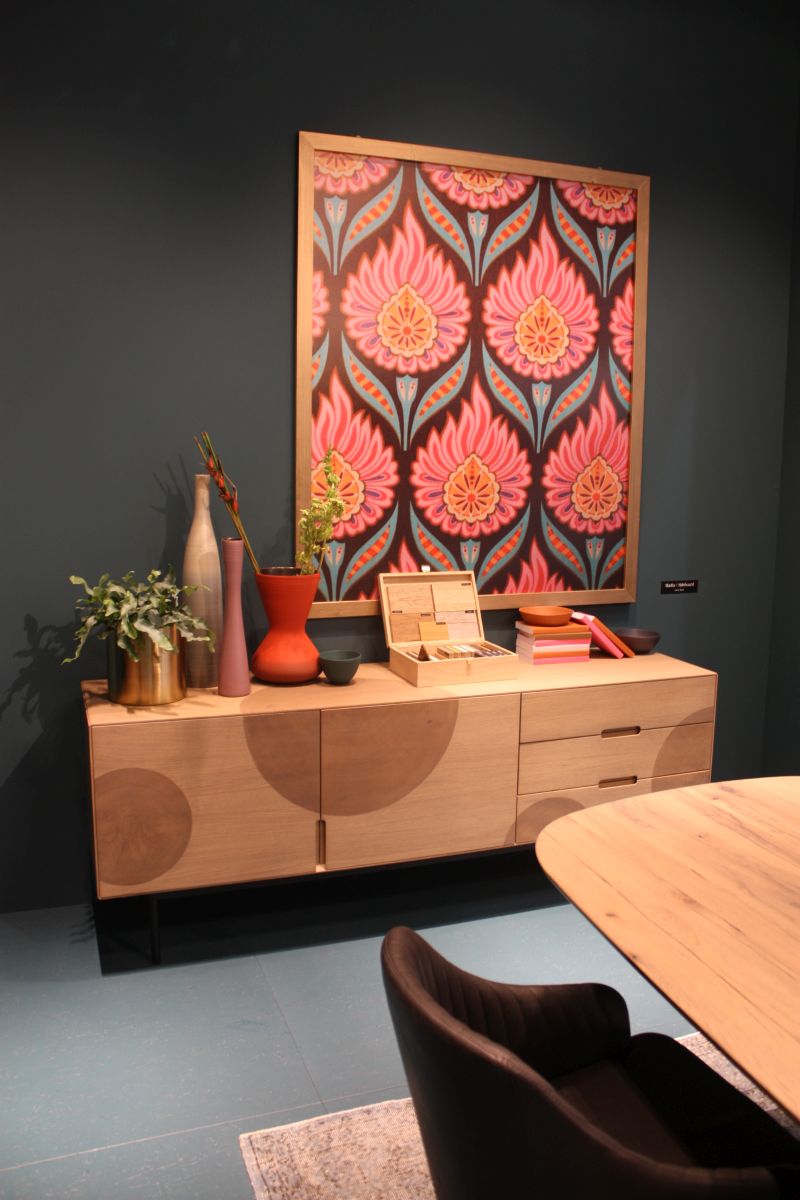
The pale wood sideboard has large circular shapes extending across its doors, paired with narrow horizontal pulls on the drawers. The circles contrast with the straight cabinet edges and the dark legs beneath.
A framed floral artwork above the piece introduces another geometric composition, showing how a sideboard can sit alongside large decorative prints without using a traditional carved finish.
Carved Wood Creates a Three-Dimensional Cabinet Front
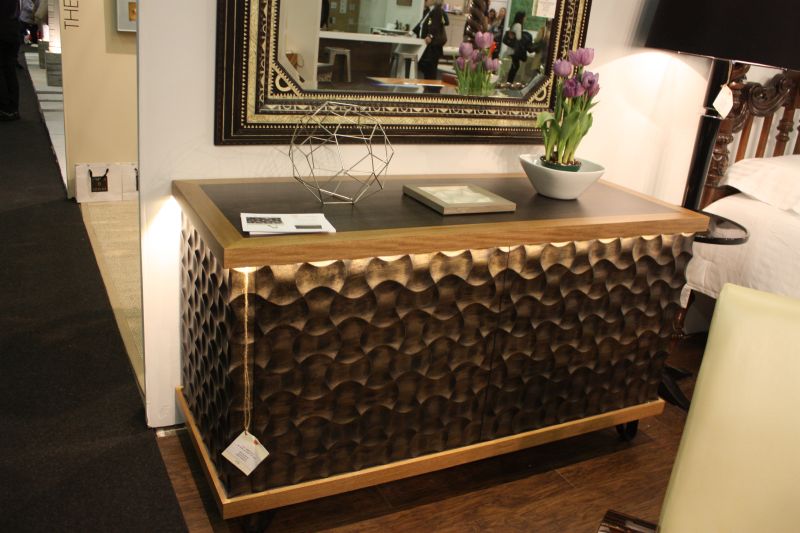
The dark wood credenza uses repeated carved forms across its front and side panels. Each section has curved recesses that catch light along the edges, while the cabinet doors blend into the carved surface.
The contrast between the dark textured base and the flat wood-framed top gives this piece a different appearance from a conventional dining room buffet.
Sideboards may have started as dining room storage, but these designs show why the category has room to return in 2027. Curved profiles, concealed openings, unusual woodwork, and geometric fronts allow the furniture to serve as both storage and a visual feature.
Vertical Wood Strips Give the Sideboard a Different Front
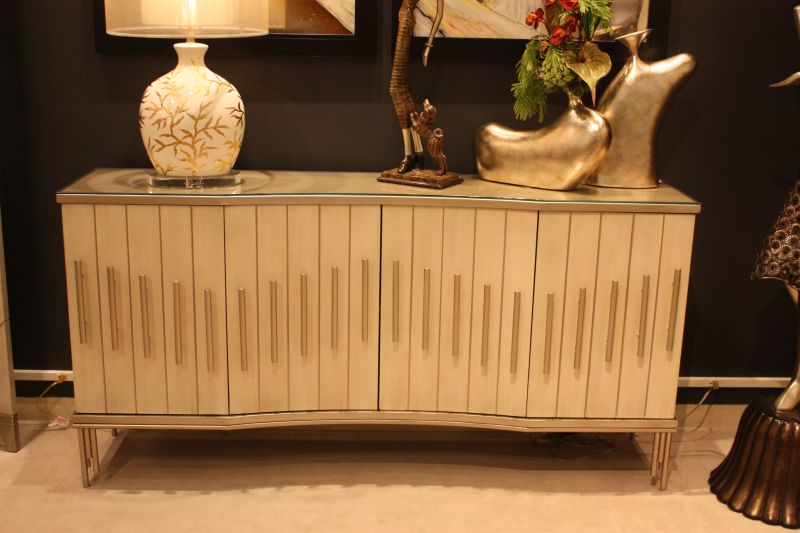
This cream sideboard has narrow vertical wood strips across its doors, paired with long metal handles that follow the same direction. The cabinet front curves along the lower edge, while slender legs lift the body off the floor.
The repeated vertical lines make the door divisions less noticeable, offering an alternative to flat panels or conventional framed doors.
Staggered Wood Blocks Replace Conventional Drawer Fronts
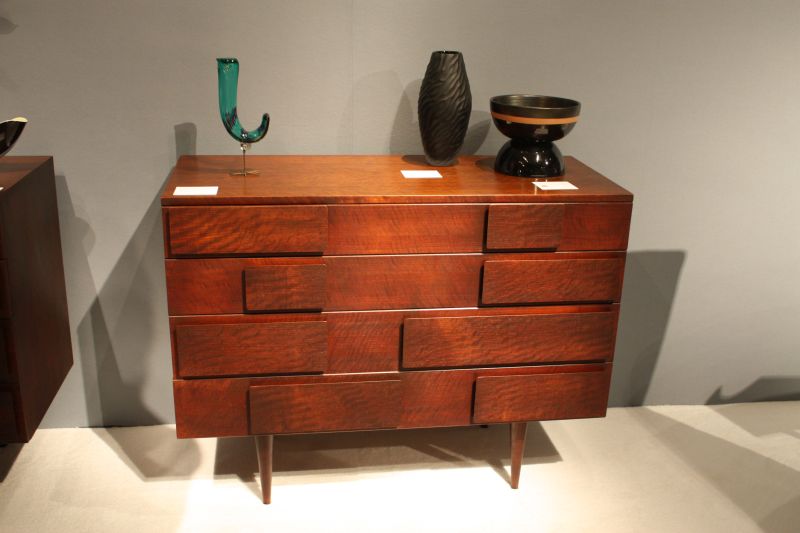
The reddish-brown cabinet uses rectangular wood blocks arranged at different lengths and depths across the front. The offset pieces create horizontal divisions that resemble stacked wooden bricks, with no conventional handles interrupting the surface.
Four tapered legs support the cabinet, connecting the geometric front with midcentury furniture proportions.
Curved Wood Slats Conceal a Glass Storage Compartment
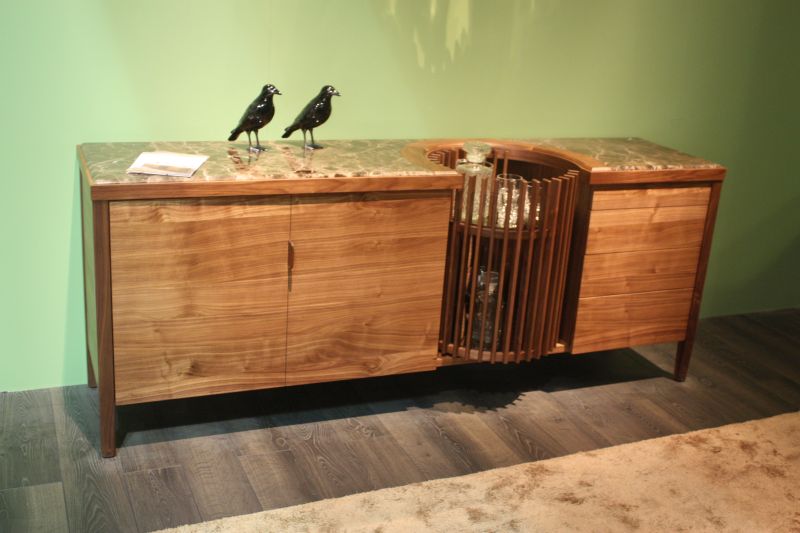
Two broad walnut cabinet fronts flank a curved section made from narrow vertical wooden slats. Behind the slats, glassware remains visible, while a veined stone top extends across the cabinet.
The curved center breaks up the long rectangular form and introduces open display storage between the closed compartments.
Reclaimed Wood Becomes the Entire Cabinet Front
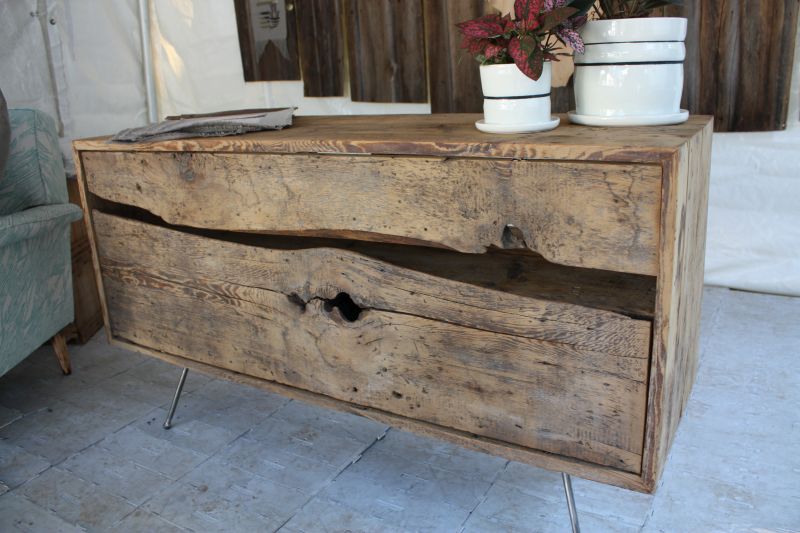
This cabinet uses thick weathered wood slabs with knots, cracks, and irregular edges across its front. The dark opening between the horizontal pieces follows the natural shape of the timber rather than a straight cabinet joint.
A rectangular wood frame contains the rough surfaces, while thin metal legs contrast with the weight of the reclaimed boards.
Would you bring back a sideboard with carved or geometric doors, or choose a traditional wooden buffet?
Image credits: Homedit.