This Old Wood Staircase Got a New Look Without Replacing a Single Step


The staircase in this home had wood covering almost every surface, from the steps and turned spindles to the handrail and panels underneath. The honey-brown finish extended across the upper landing, where matching railings surrounded the stairwell.
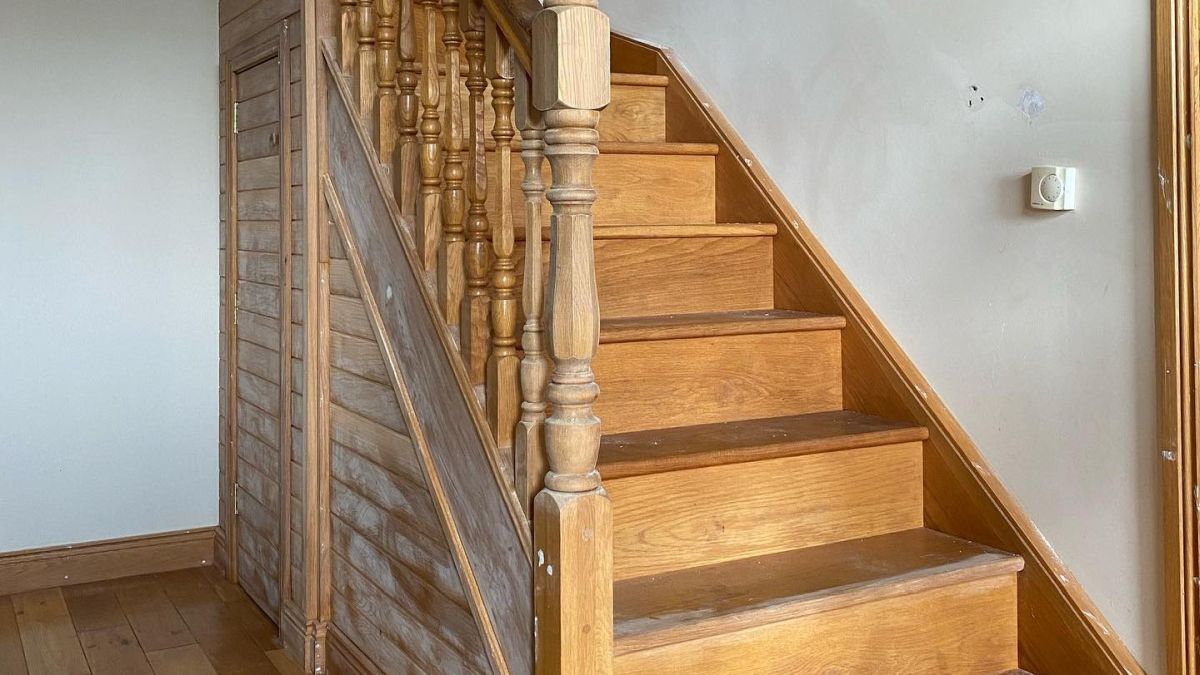
Replacing the staircase would have meant removing woodwork that remained in good condition. The homeowners chose to keep the existing structure and change its appearance with paint, retaining the exposed wood on the steps.
Painter Mariusz Plesner shared the hall, stairs, and landing transformation from Enniskillen, Northern Ireland. The project combined white-painted woodwork with gray-green walls, changing the appearance of both floors without rebuilding the stairs.
Brown Wood Covered the Original Staircase
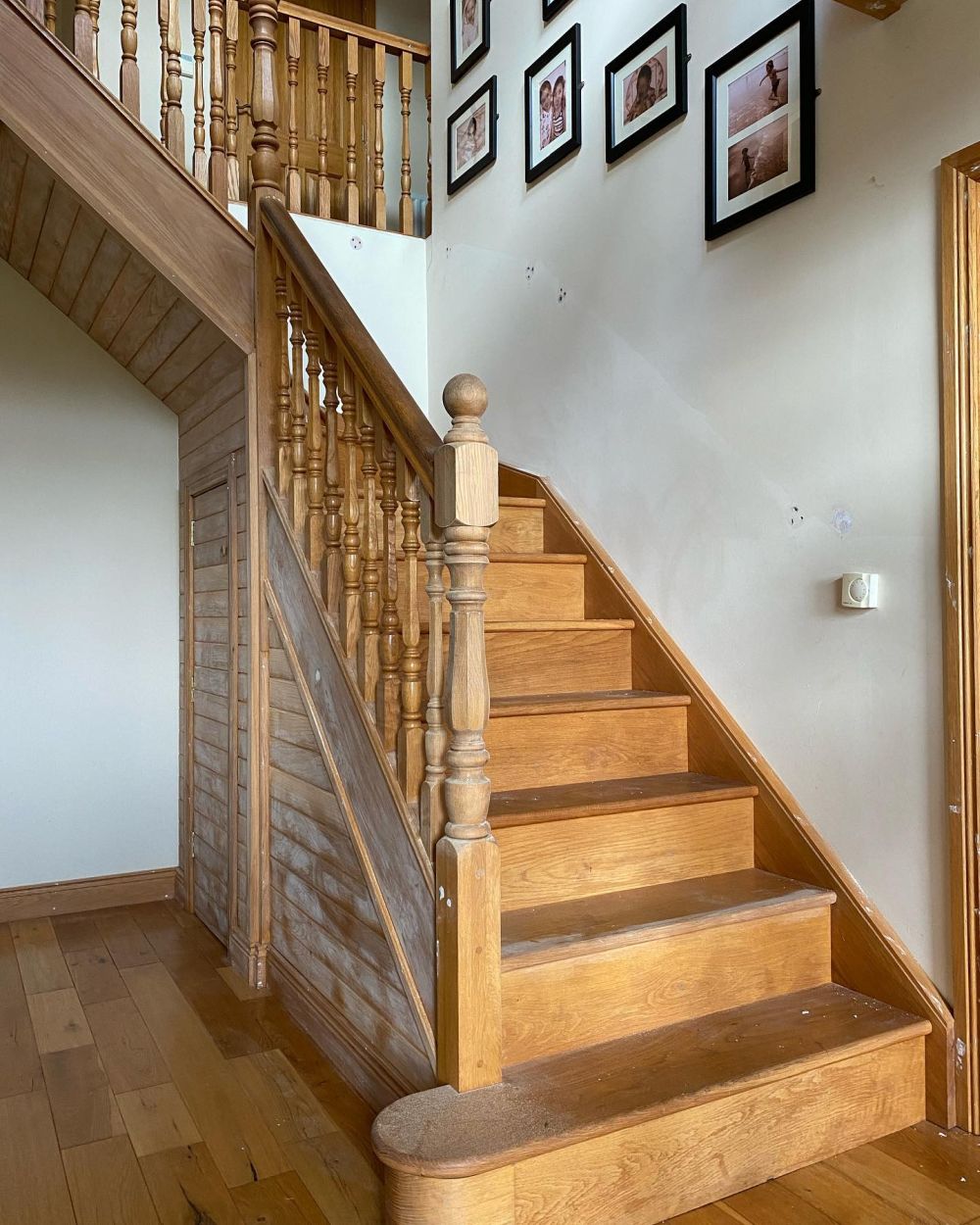
The staircase featured turned spindles, large newel posts with round finials, and wooden panels beneath the upper flight. The treads showed wear, with darker patches along the edges and marks on the risers.
A gallery of black-framed family photographs covered the tall wall beside the stairs. Beige paint and matching wood trim surrounded the staircase, while oak flooring continued through the hallway.
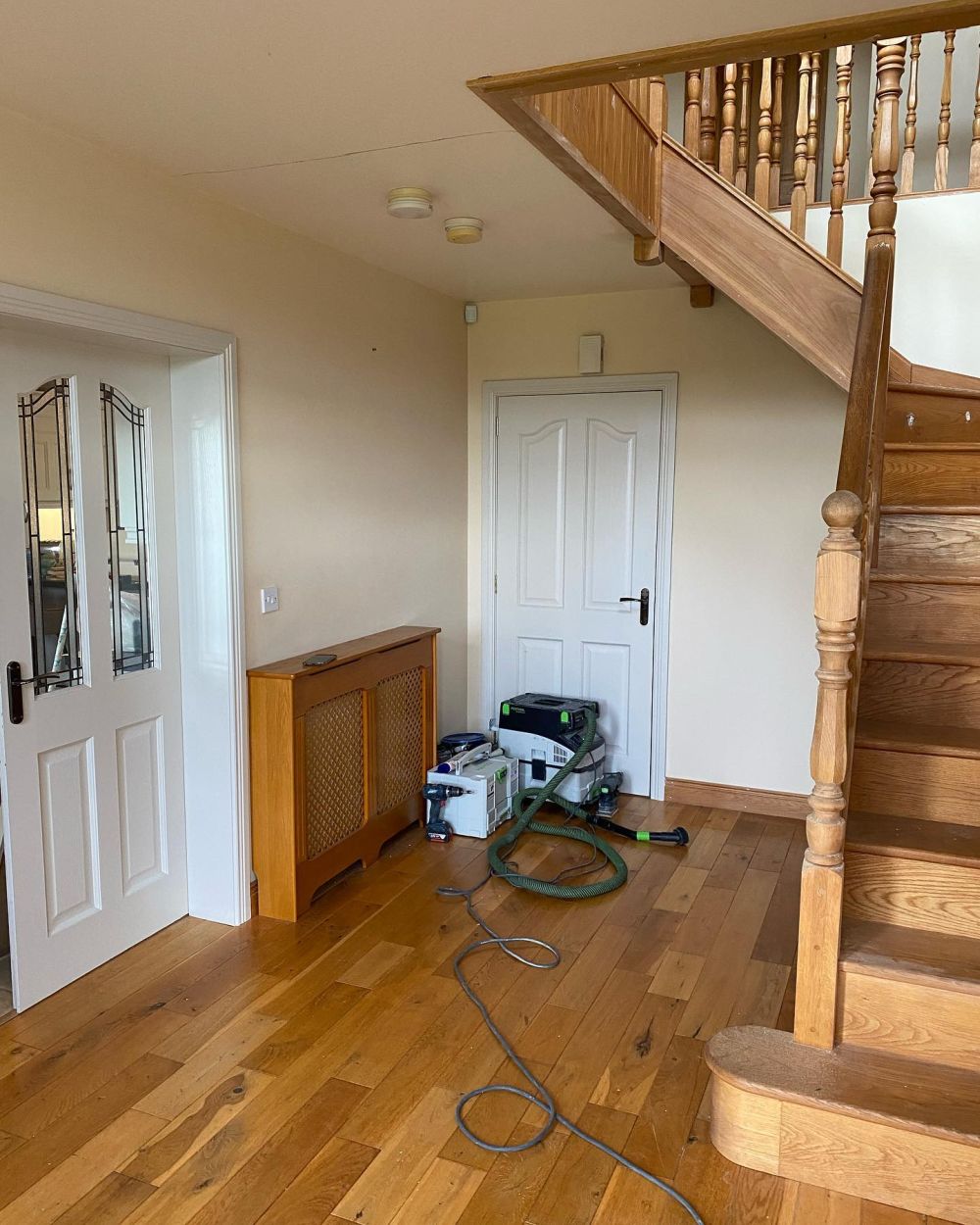
From the entrance, the railing extended above the doorway and across the first-floor opening. A wooden radiator cover stood against the opposite wall, adding another brown surface to the room.
The Upper Landing Had the Same Wood Finish
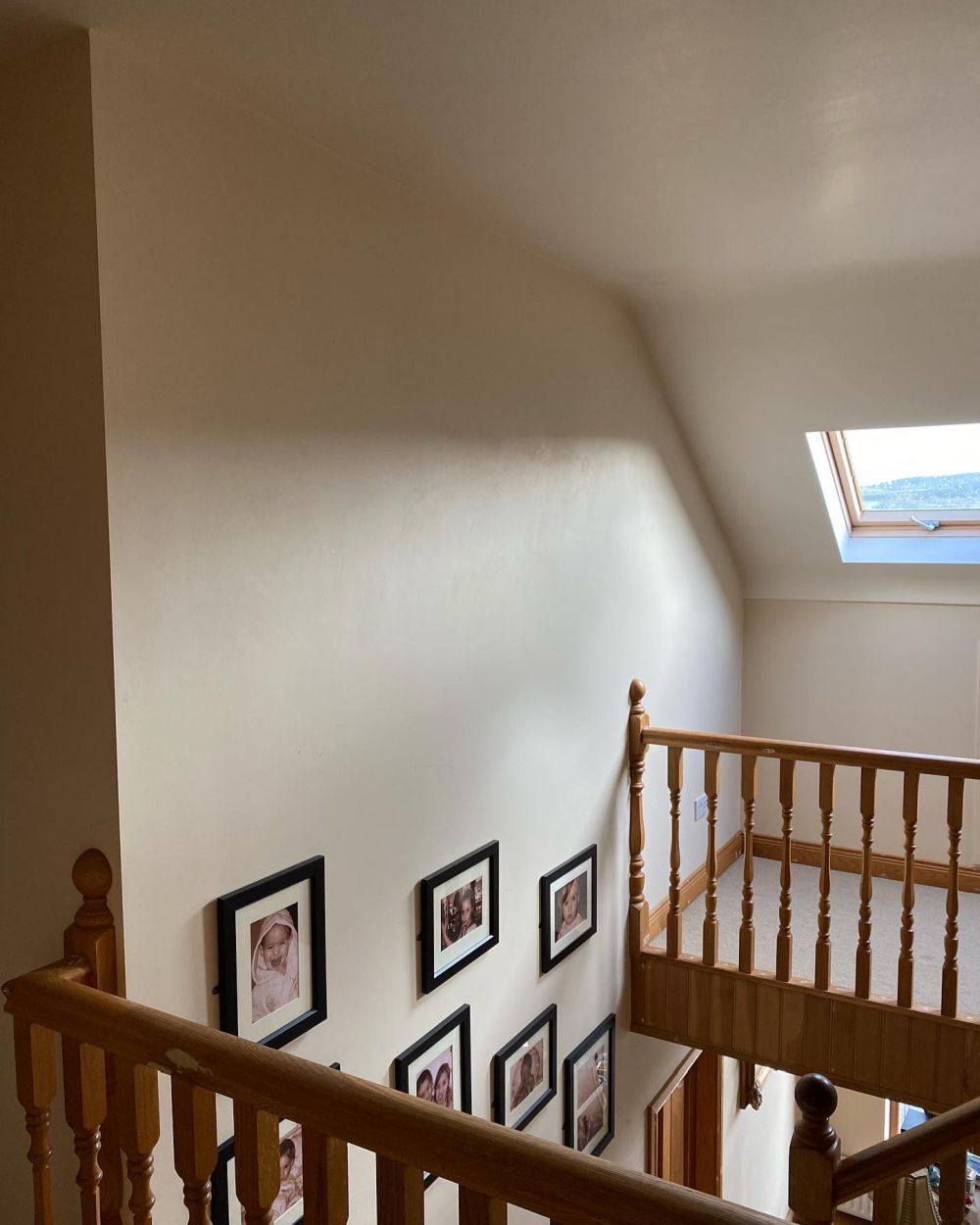
The wood balustrade continued across the landing beneath a sloped ceiling and roof window. Its spindles and posts matched those downstairs, while the walls remained pale cream.
The landing also had beige carpet, creating a different floor finish from the oak boards in the entrance hall.
White Paint Replaced the Brown Finish on the Railings and Risers
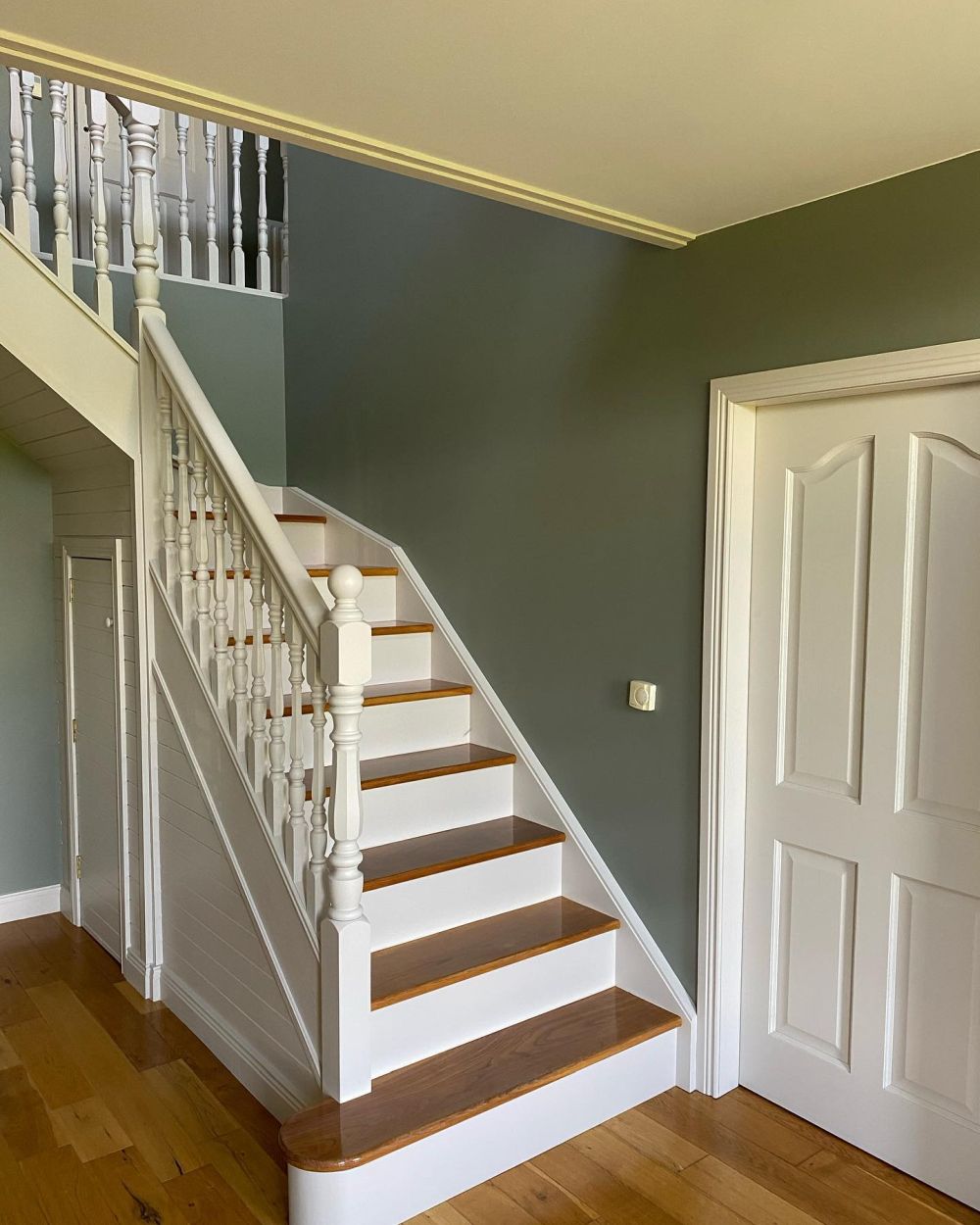
The painter covered the turned spindles, newel posts, handrail, and stair risers in white. Wood remained exposed across the horizontal treads, creating a contrast between the painted parts and the original steps.
The panels beneath the staircase received the same white finish, including the small door built into the space below the stairs.
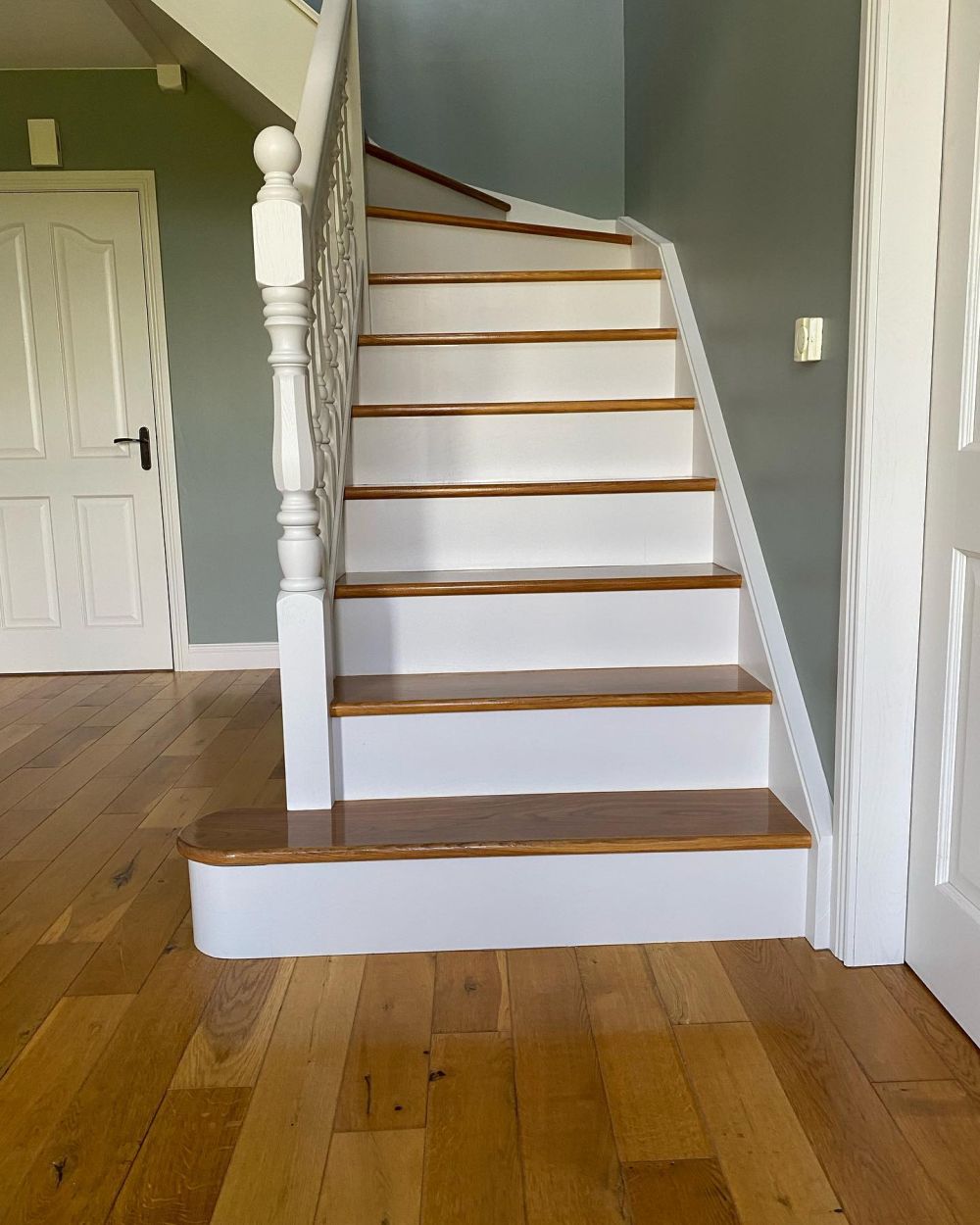
The rounded bottom step retained its wooden surface, while the newel post and the side trim changed from brown to white.
The treads also show a darker finish than before, with the grain visible across each step.
Gray-Green Walls Replaced the Beige Hallway
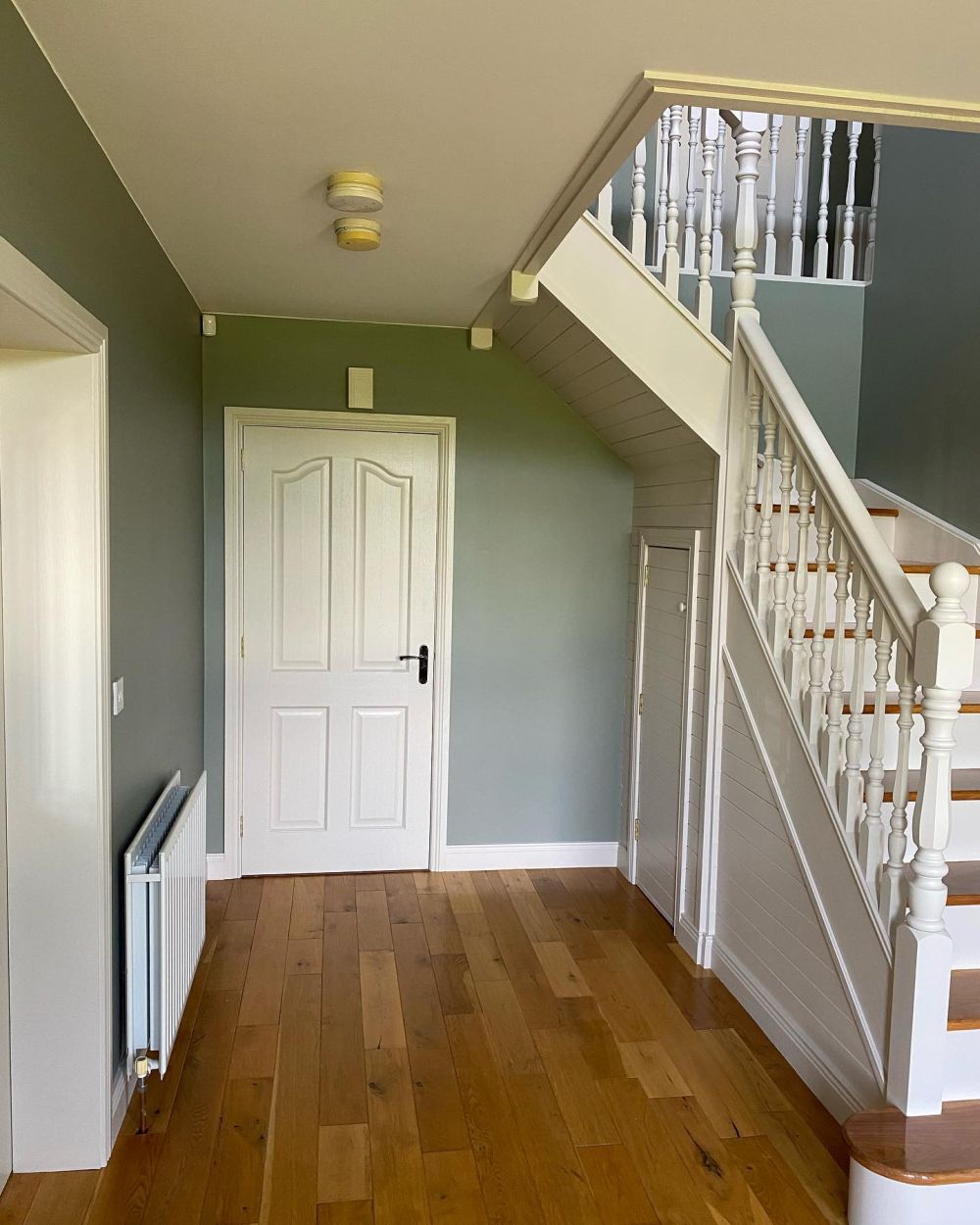
The walls received a gray-green paint color, creating contrast against the white balustrade and doors. White crown molding and skirting boards frame the new wall finish.
Across the hall, the former wooden radiator cover is gone, exposing a white wall-mounted radiator. The oak floorboards remained in place.
The Landing Received Matching Paint and a New Pendant
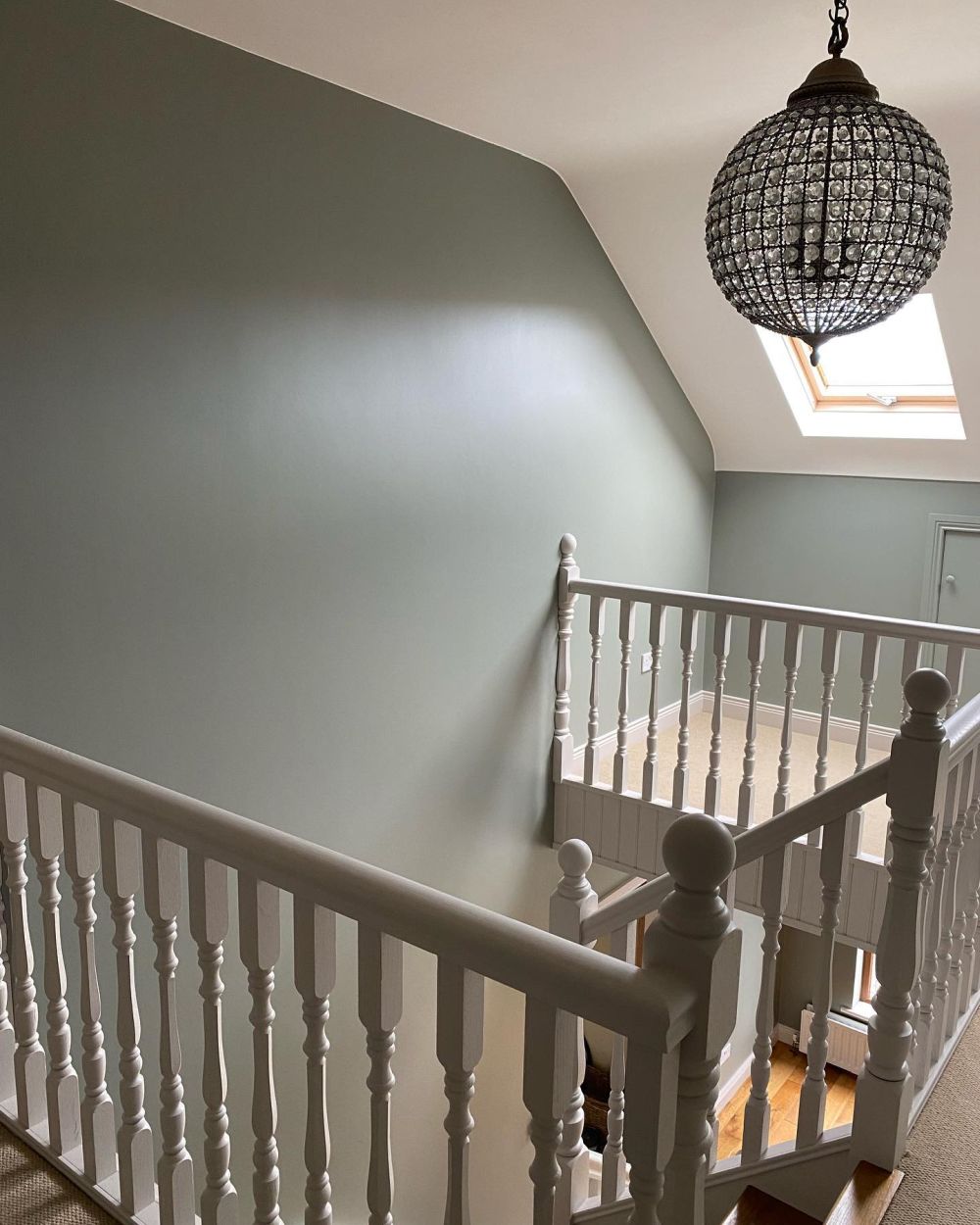
Upstairs, the brown railing was painted white to match the staircase below. The gray-green color continues across the tall stairwell wall and beneath the sloped ceiling.
A dark spherical pendant with a beaded design hangs near the roof window, bringing another contrasting element to the landing.
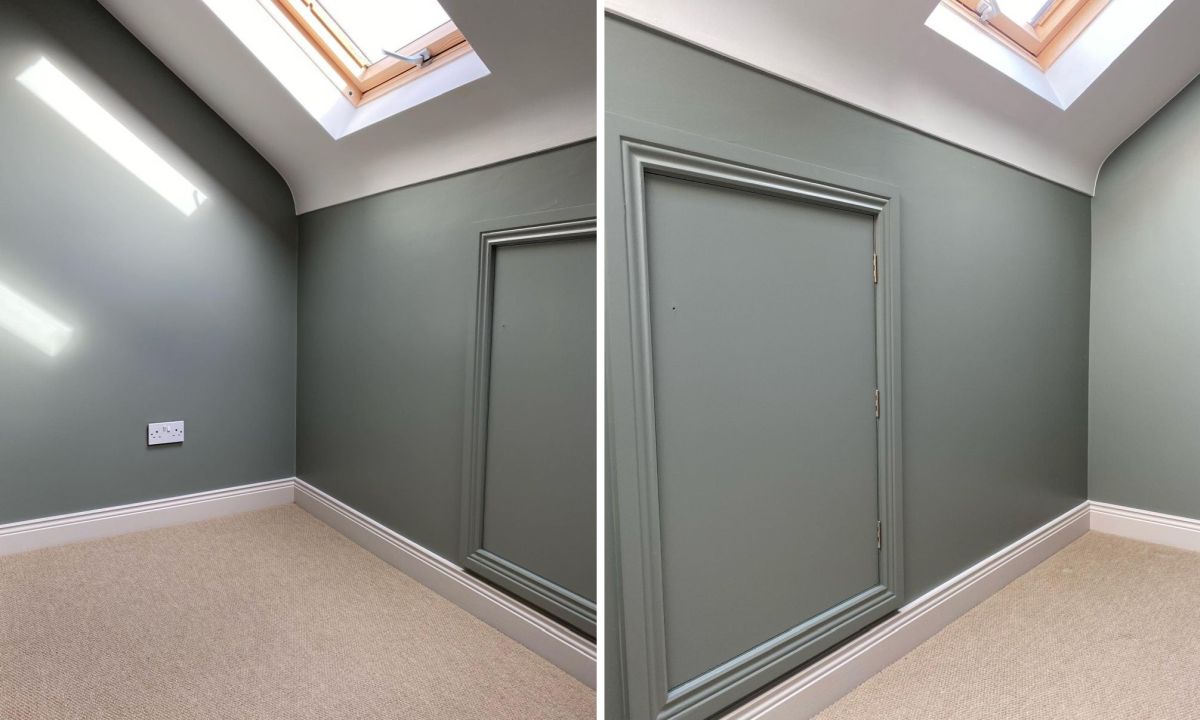
The small access door beneath the sloped ceiling has been painted the same color as the wall. Its frame also matches, while white skirting boards separate the painted surfaces from the beige carpet.
The Original Wooden Steps Remain Between White Risers
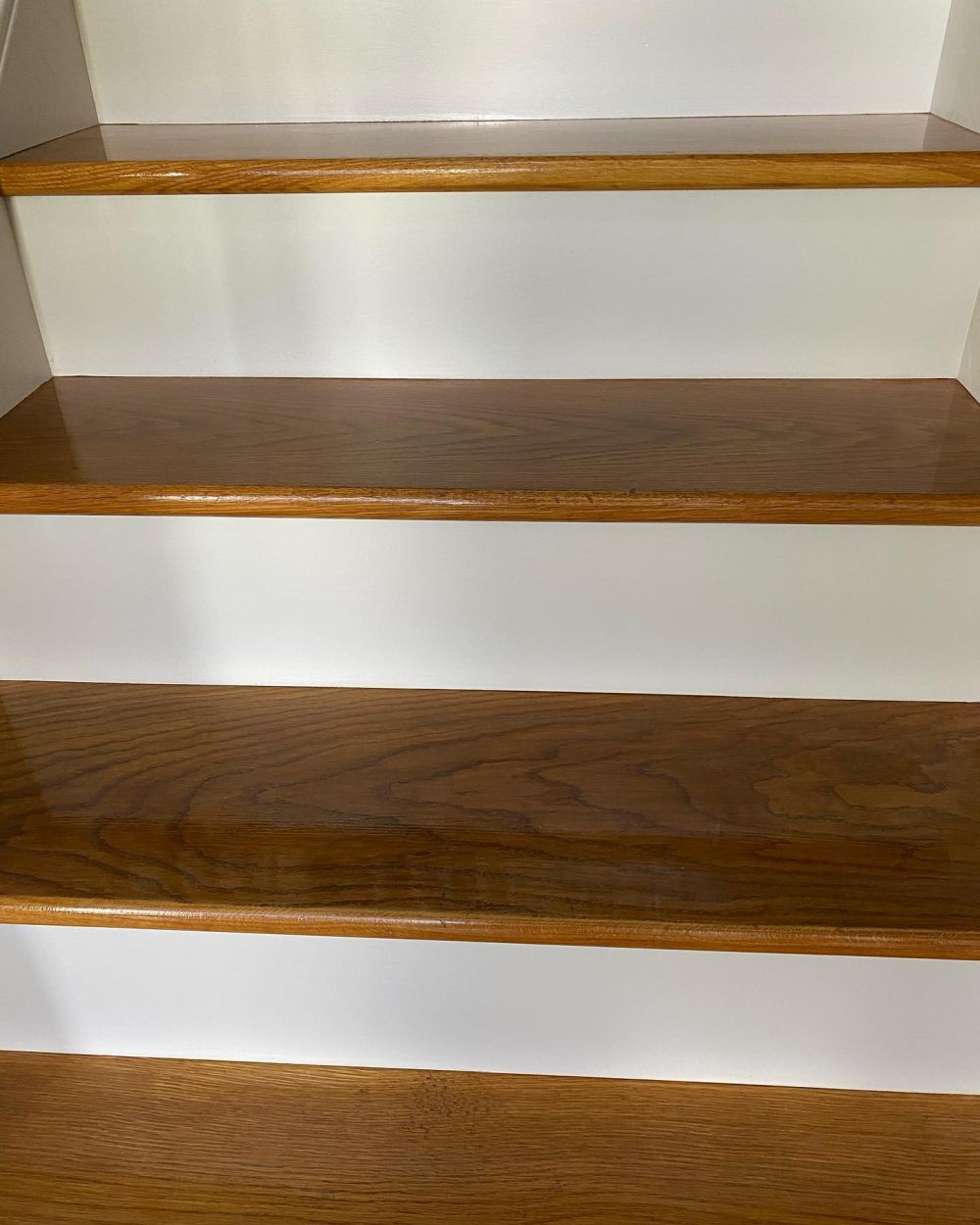
The close-up shows the retained wood grain across the treads, with white risers between them. The rounded front edges have a brown finish that matches the exposed step surfaces.
The two finishes distinguish the steps from the painted staircase frame without covering the wood beneathfoot.
The Finished Staircase Has a Different Look Without New Steps
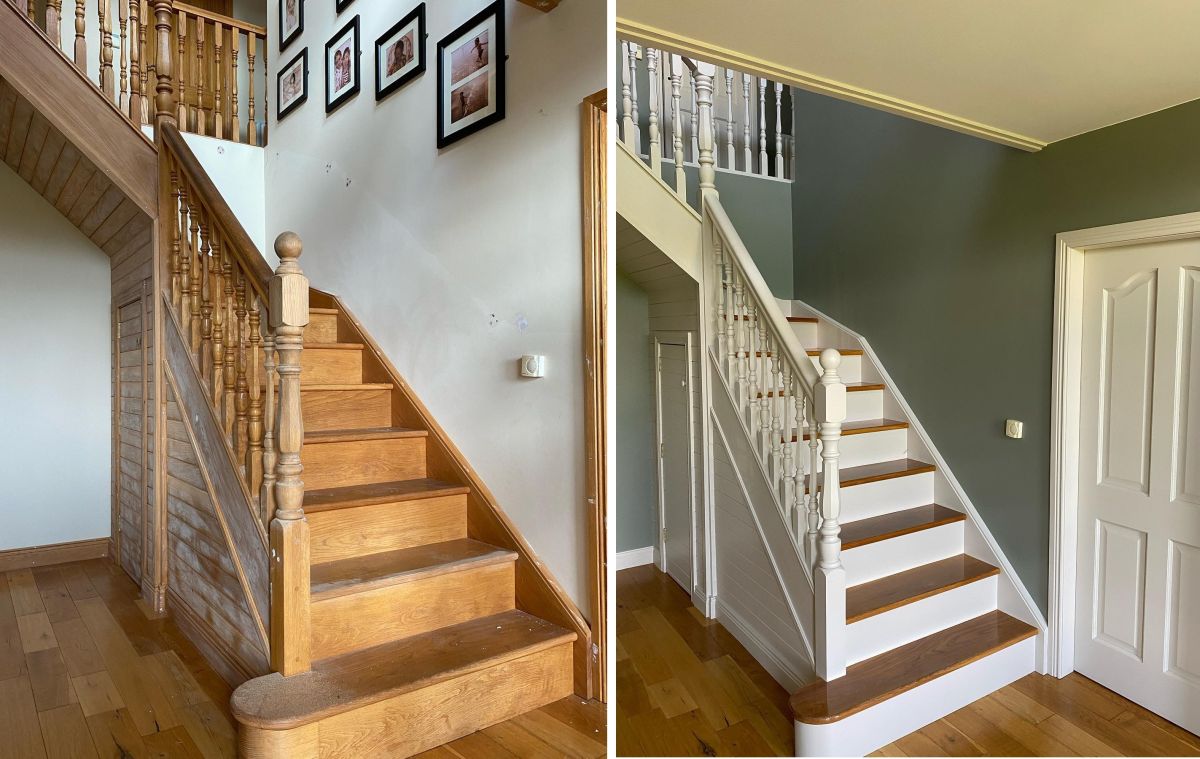
The before-and-after photographs show the change from brown railings, risers, and paneling to white-painted woodwork. The original staircase shape, turned posts, spindles, and wooden treads remain, while the gray-green walls replace the former beige background.
Would you keep the wood treads and paint the rest of an old staircase white?
Image credits go to @mariusz_plesner.