Putting Coffee Grounds on a Christmas Cactus in November: What It Does to the Plant and Its Winter Blooms


A Christmas cactus can spend months growing green stems without producing a single flower. As November arrives, many plant owners turn to kitchen leftovers for help, including used coffee grounds sprinkled over the potting soil. The idea is that coffee can provide nutrients and encourage the plant to bloom before Christmas.
Coffee grounds contain nitrogen and small amounts of other nutrients, but adding them to a potted cactus in November is not the same as feeding it with a balanced fertilizer. The plant’s flowering cycle depends on shorter days, cooler nights, and the conditions around its roots. Adding coffee grounds at the wrong time may create more problems than benefits.
What Coffee Grounds Do to Christmas Cactus Soil
Used coffee grounds contain organic matter, nitrogen, and small amounts of potassium and phosphorus. These nutrients support plant growth, but they are not released at the same rate as those in commercial liquid fertilizers.
According to the University of Maine Cooperative Extension, coffee grounds contain plant nutrients in small quantities and are better suited to composting than serving as a direct fertilizer.
A thick layer of grounds can also change how water moves through the potting mix. Christmas cacti need drainage, and keeping their roots in wet soil increases the risk of rot.
Research summarized by Oregon State University Extension warns that excess uncomposted grounds may restrict nitrogen availability for a time and inhibit plant growth because of remaining compounds, including caffeine.
Why November Is Not the Best Time to Add Coffee Grounds
November is part of the flower-bud development period for many holiday cacti. At this stage, the plant responds to changing daylight and nighttime temperatures rather than an extra supply of nitrogen.
Clemson University Cooperative Extension recommends stopping fertilizer applications to Thanksgiving and Christmas cacti in September and resuming after flowering. Feeding during the autumn rest period is not recommended as a way to produce more buds.
Coffee grounds can also encourage the wrong type of growth if used as an attempt to increase nitrogen while the plant is preparing to flower.
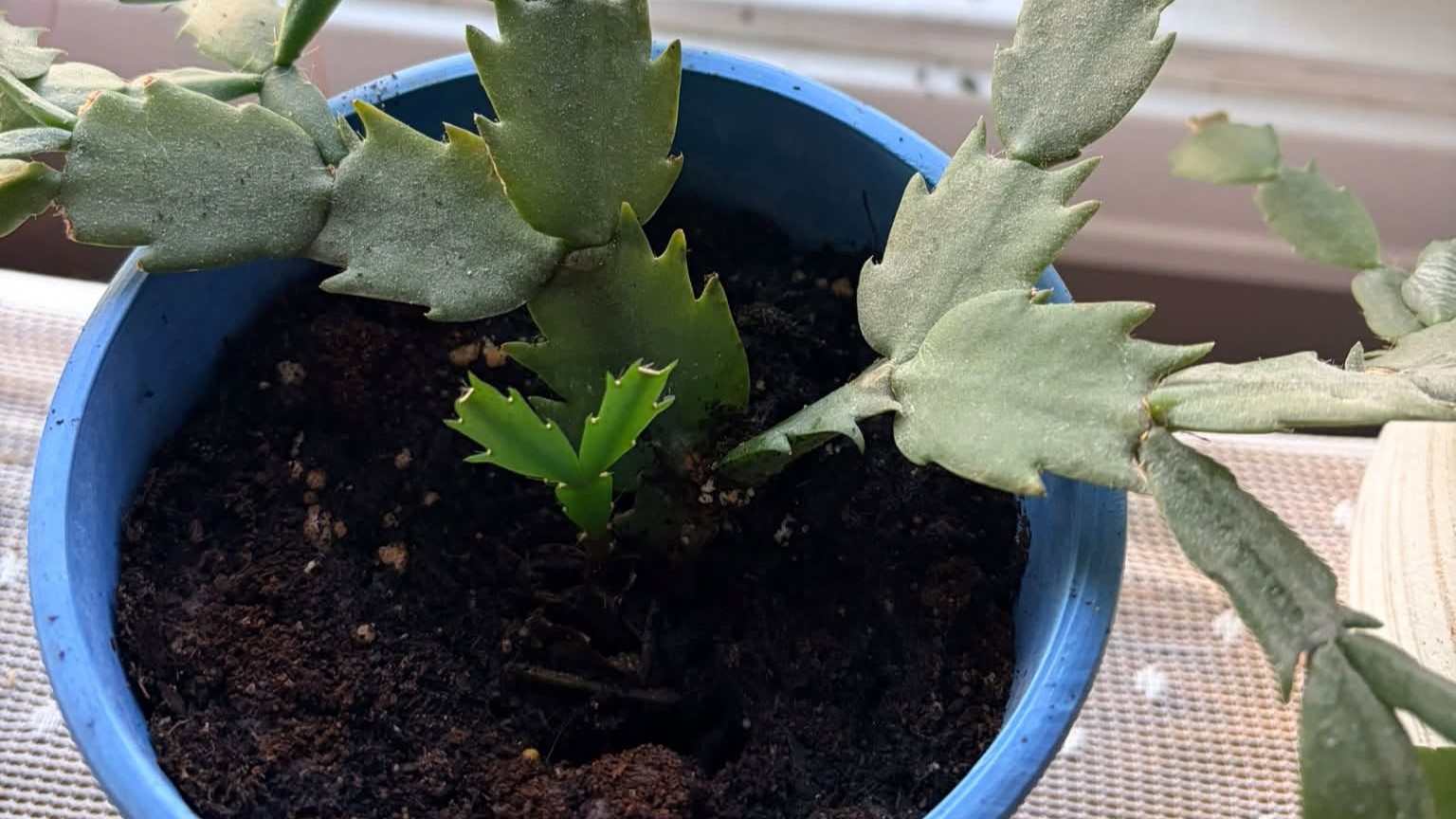
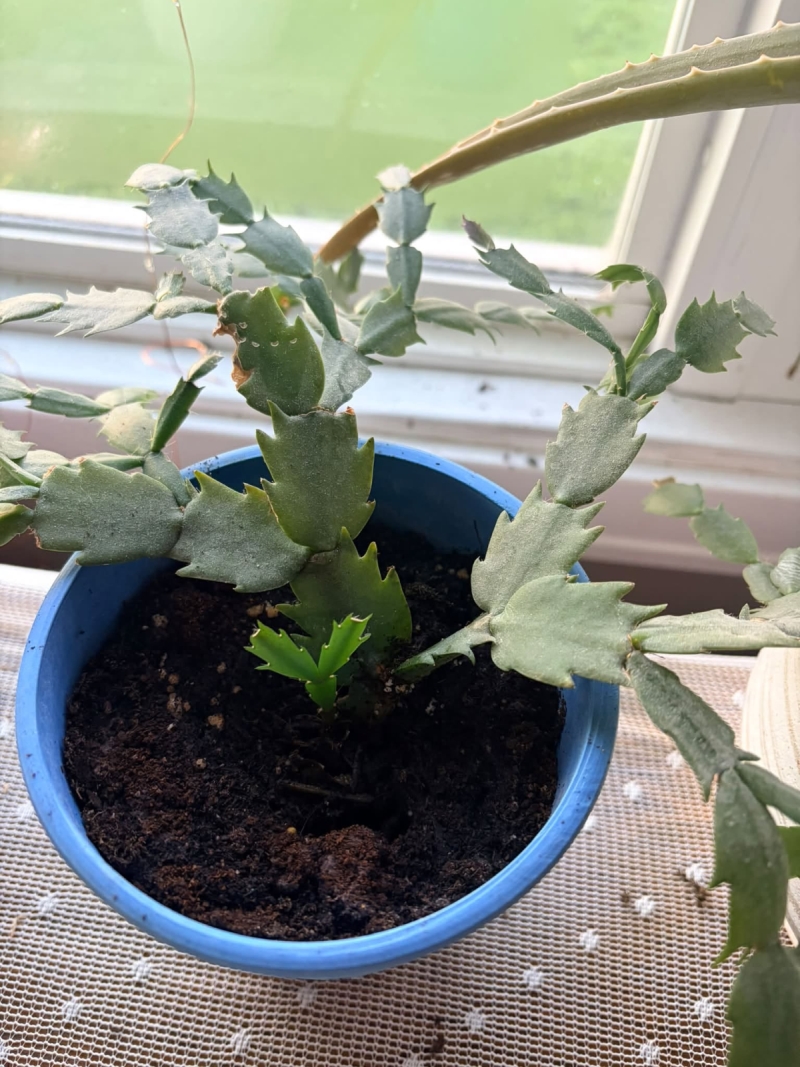
The plant in the photographs has pointed, toothed stem segments, a feature associated with Thanksgiving cactus (Schlumbergera truncata). Thanksgiving and Christmas cacti are close relatives, and both depend on seasonal changes in light and temperature for flowering.
What Helps a Christmas Cactus Produce Winter Flowers
The University of Minnesota Extension explains that holiday cacti develop flower buds in response to shorter days and cooler nighttime temperatures.
For plants kept indoors, nights around 55–65°F (13–18°C) and uninterrupted darkness can help trigger bud formation. A room with lights switched on late into the night may prevent the plant from receiving the dark period it needs.
Water also matters. The potting mix should drain between waterings, but once buds form, the plant should not be allowed to dry out to the point of stress. Sudden changes in temperature, light, or moisture can cause buds to drop before opening.
Should You Put Coffee Grounds on a Christmas Cactus?
Coffee grounds are not a proven November bloom booster for Christmas cacti. Their nutrients may have value after composting, but applying raw grounds to a small pot offers no established advantage over a suitable houseplant fertilizer used during the growing season.
For a Christmas cactus preparing to flower, keep the light schedule consistent, provide cooler nights, and avoid excess water. Save the coffee grounds for the compost pile rather than spreading them across the pot.
Another homeowner showed how cooler outdoor conditions can encourage holiday cactus blooms when she left her Thanksgiving cactus outside for two months and it became covered in pink flowers.
Would you try coffee grounds on your Christmas cactus, or leave the soil alone while the flower buds form?