She Left Her Thanksgiving Cactus Outside for Two Months: Now It’s Covered in Pink Flowers


Leaving a Thanksgiving cactus outdoors for the last two months of summer might seem like an odd way to prepare it for November. Most people keep these plants near a window, then wonder why the flower buds never appear or drop before opening.
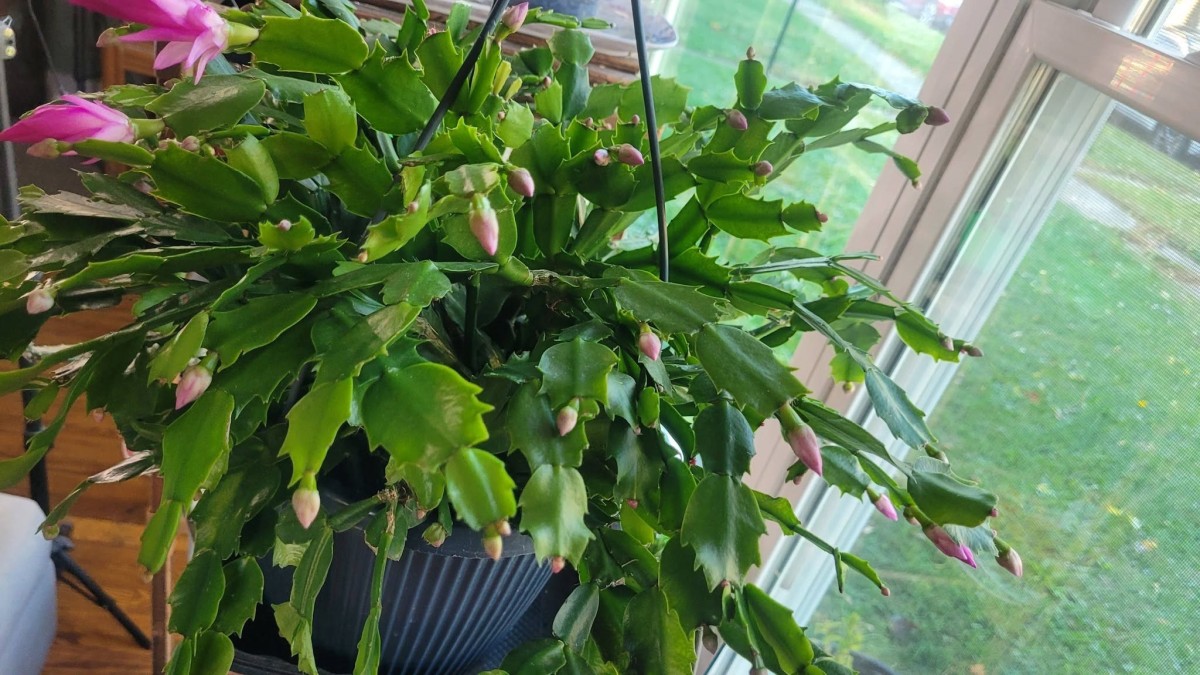
Marcia Schopf tried a different approach. After two months outside and a short stay on her back porch, her cactus produced pink flowers across its sprawling branches. The change wasn’t just about sunlight. Cooler nights and longer periods of darkness played a part in what happened next.
Two Months Outside Came Before the Pink Flowers
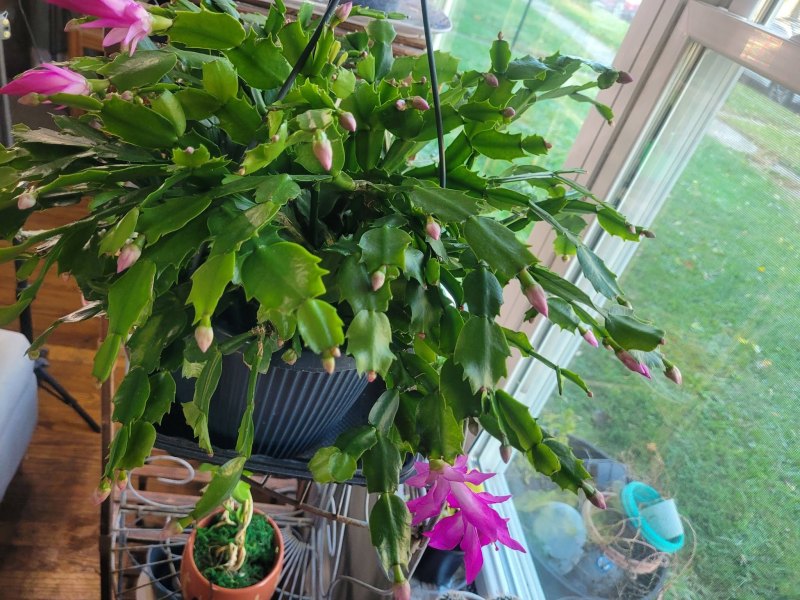
The plant has a dense crown of flat, segmented stems, with pink flowers hanging from several branches. More buds are forming at the tips, suggesting the display has not reached its end.
During the last two months of summer, the owner kept the cactus outdoors rather than leaving it in its usual indoor position.
The University of Minnesota Extension recommends placing holiday cacti outside during summer in partial shade, where filtered sunlight protects their stems from scorching. As fall approaches, shorter days and cooler nights help trigger flower formation.
Two Weeks on the Back Porch Followed
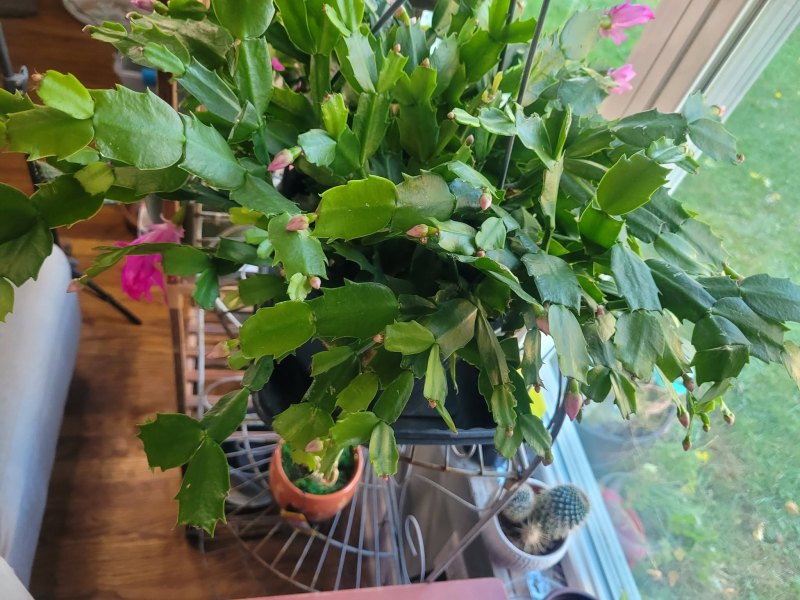
After the outdoor period, the cactus spent two weeks on a back porch that received early morning sunlight. The owner described this as her way of giving the plant a rest before bringing it inside.
Thanksgiving cacti are short-day plants, meaning their flowering cycle responds to long periods of darkness. According to Clemson University Extension, these plants need about six weeks of long nights to initiate flower buds under typical fall conditions.
Cool temperatures can also encourage flowering. Clemson reports that nighttime temperatures between 50°F and 59°F can trigger bud formation regardless of day length, although plants should not remain outdoors when temperatures fall below 50°F.
The two-week porch period was part of this homeowner’s routine, not a proven requirement for every Thanksgiving cactus.
A Good Watering Came Before the Move Indoors
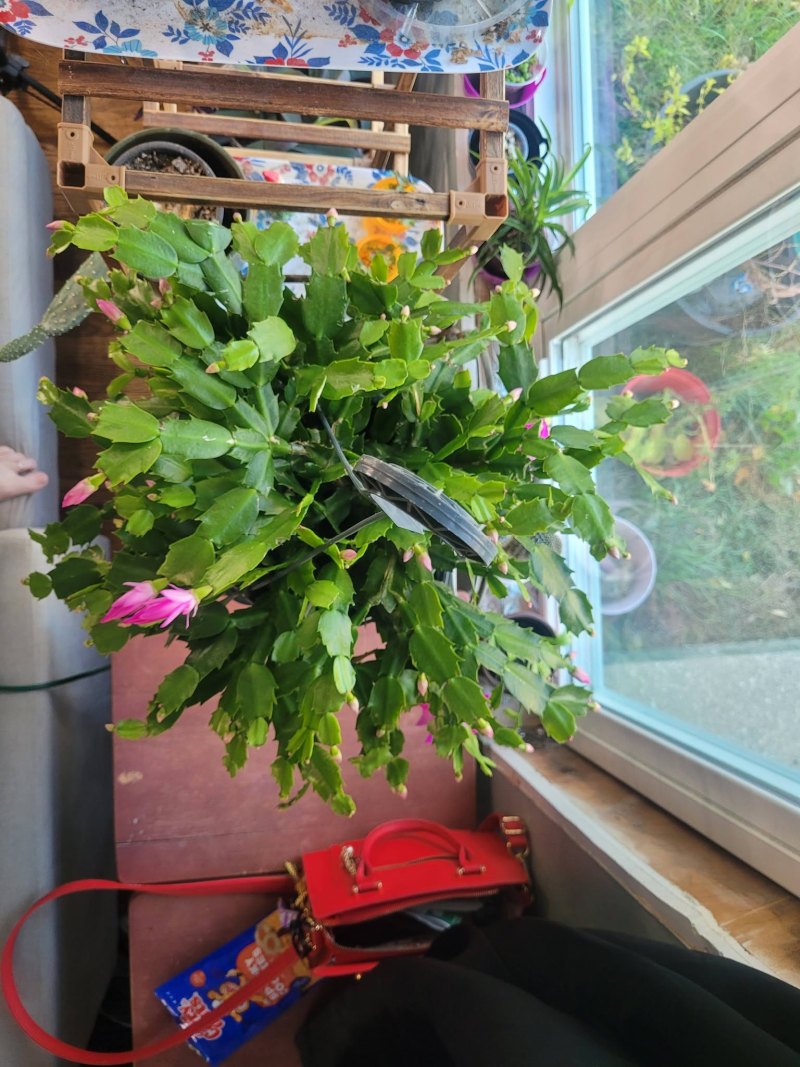
Before moving the plant indoors, the owner gave it a thorough watering and placed it beside a window. The large pot now sits among other houseplants, with branches extending over the surrounding plant stand.
Holiday cacti need more moisture than desert cacti, but their roots should not sit in water. The Penn State Extension holiday cactus care guide recommends watering the soil until it is wet, then allowing the growing medium to dry before watering again.
A pot with drainage holes helps prevent excess water from accumulating around the roots.
Turning the Pot Exposed Buds on Every Side
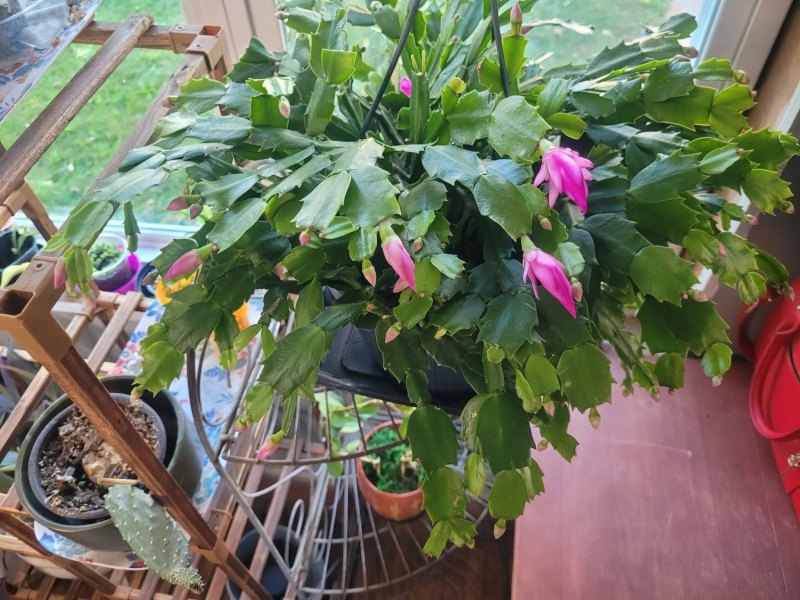
The homeowner turned the pot to photograph the buds and flowers around the plant. Pink buds appear across the outer branches, with some still closed and others opening into long, pointed petals.
Rotating a Thanksgiving cactus during its growth period can help distribute light across the stems. Once flower buds form, however, the plant becomes more sensitive to changes in its surroundings.
The University of Minnesota Extension warns that changes in light, temperature, or humidity can cause buds to drop. A bright position away from heating vents and cold drafts is a better choice once flowering begins.
What Helps a Thanksgiving Cactus Bloom Again
The University of Minnesota Extension identifies shorter days and cooler nights as key triggers for flower buds. For the next blooming season, keep these points in mind:
- Summer outdoors: Place the cactus in partial shade, away from harsh afternoon sun.
- Cool fall nights: Temperatures around 50–59°F can encourage bud formation, according to Clemson University Extension.
- Long periods of darkness: Provide about 14 hours of uninterrupted darkness each night for at least six weeks if temperatures remain warm.
- Once buds appear: Keep the soil moist without waterlogging it, and avoid sudden temperature changes.
- After flowering: Trim stem tips to encourage branching and repot when needed, rather than as an annual routine.
The two months outdoors worked for this homeowner, but the timing depends on local temperatures and daylight conditions.
Is your Thanksgiving cactus showing flower buds yet, or are you still waiting for it to bloom this November?