Mixing White Vinegar With Salt in a Spray Bottle: What It’s For and Why People Recommend It


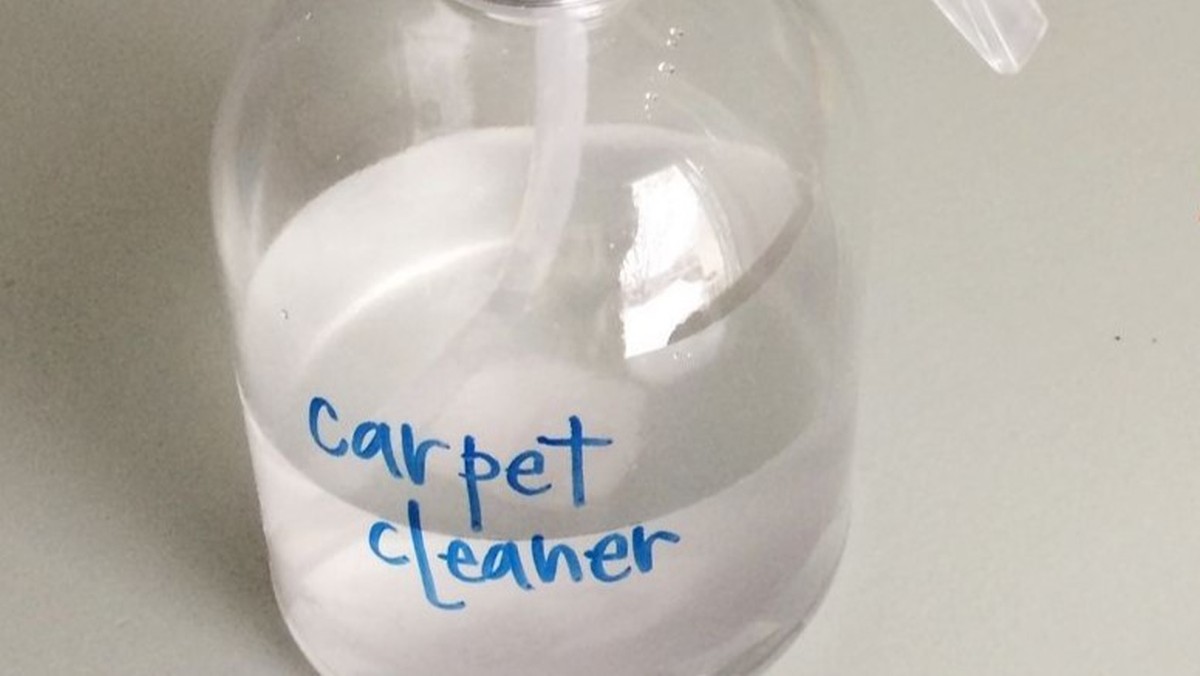 A bottle of white vinegar, a spoonful of salt, and an empty spray bottle. Some homeowners combine these kitchen staples and spray the mixture onto carpets instead of reaching for a commercial cleaner. The idea is simple, costs very little, and uses ingredients found in most homes.
But what does mixing vinegar with salt do to carpet fibers? Here’s why people recommend this homemade spray, what each ingredient contributes, and what carpet-care experts say about using it.
What Goes Into the Vinegar and Salt Mixture
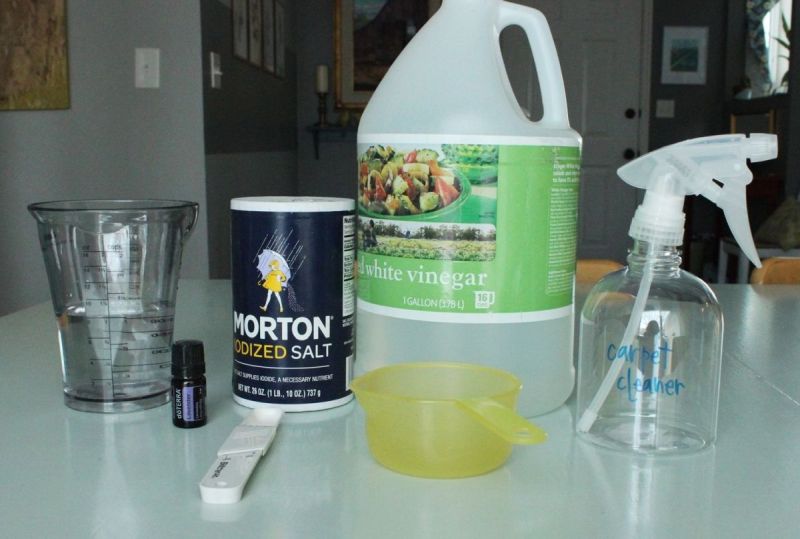
The recipe starts with white vinegar, iodized table salt, water, and lavender essential oil. A measuring cup, funnel, and empty spray bottle are used to combine the ingredients.
Vinegar provides the acidic component, while salt is included in the homemade recipe. Lavender oil adds fragrance rather than a proven cleaning benefit. Water dilutes the vinegar before it reaches the carpet fibers.
Unlike baking soda carpet powder, this preparation is a liquid spray intended for spot treatment rather than a dry product spread across the entire floor.
Water Goes Into the Spray Bottle First
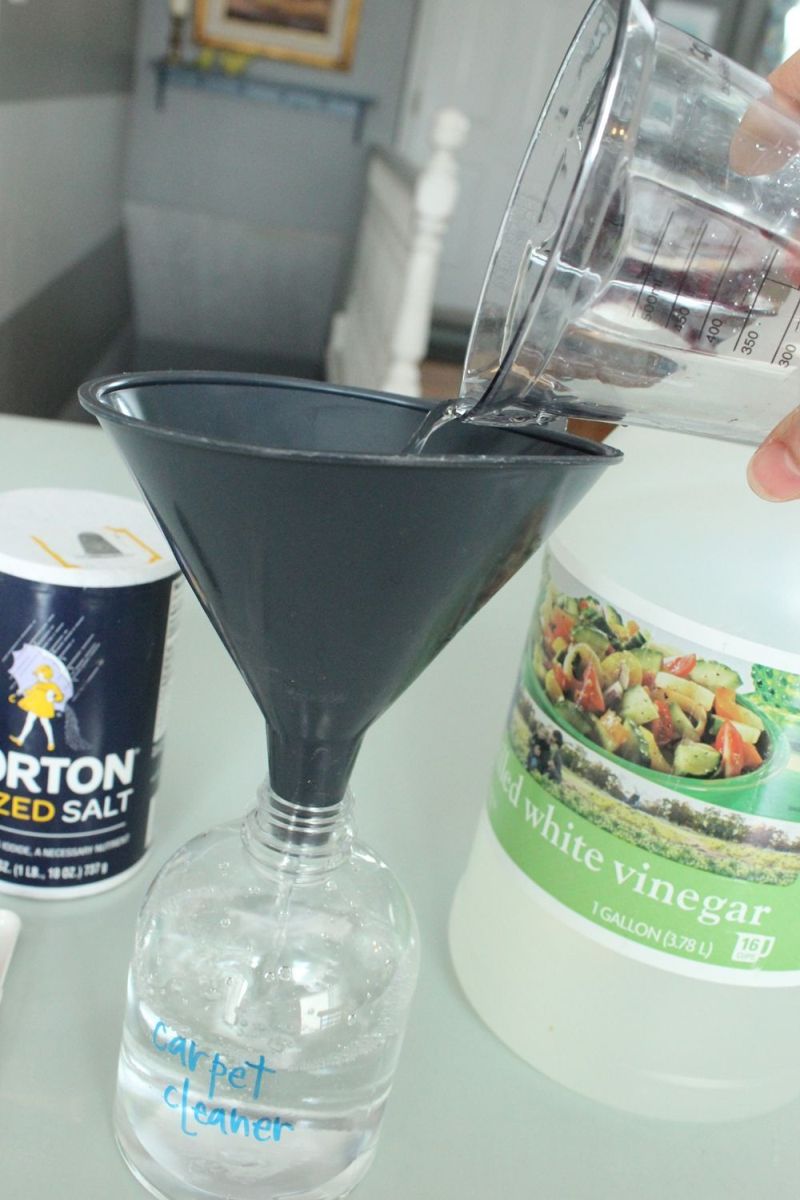
A funnel sits inside the bottle opening as water is poured from a measuring cup. The funnel keeps the liquid from spilling around the narrow neck.
The vinegar is added to make the diluted solution. Dilution reduces the acid concentration, but it does not make the mixture suitable for every carpet material or stain.
Salt Is Added to the Carpet Cleaner
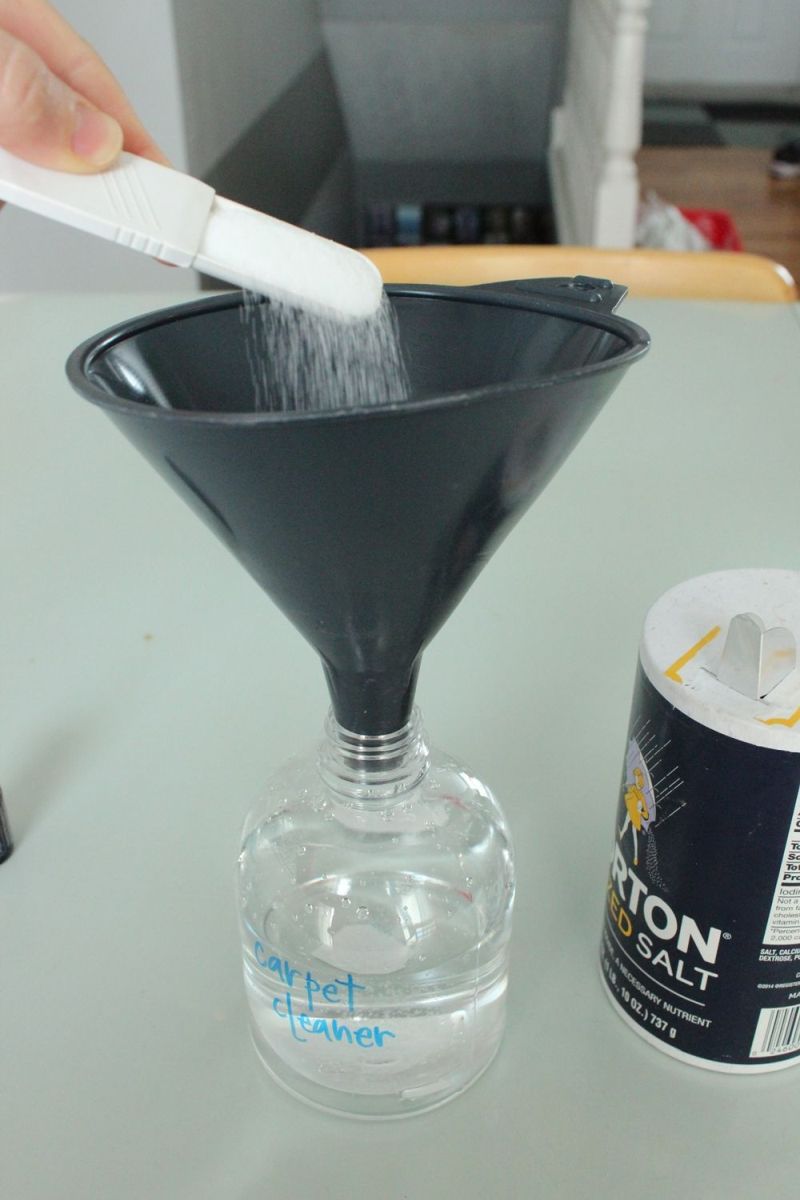
Table salt goes into the bottle through the funnel. The salt needs to dissolve in the liquid rather than remain as grains that could settle at the bottom or obstruct the spray nozzle.
Salt is sometimes included in homemade stain-removal recipes, but there is no established benefit to adding it to a vinegar carpet spray. If the water evaporates, dissolved salt can leave residue in the fibers.
Lavender Oil Adds a Scent to the Mixture
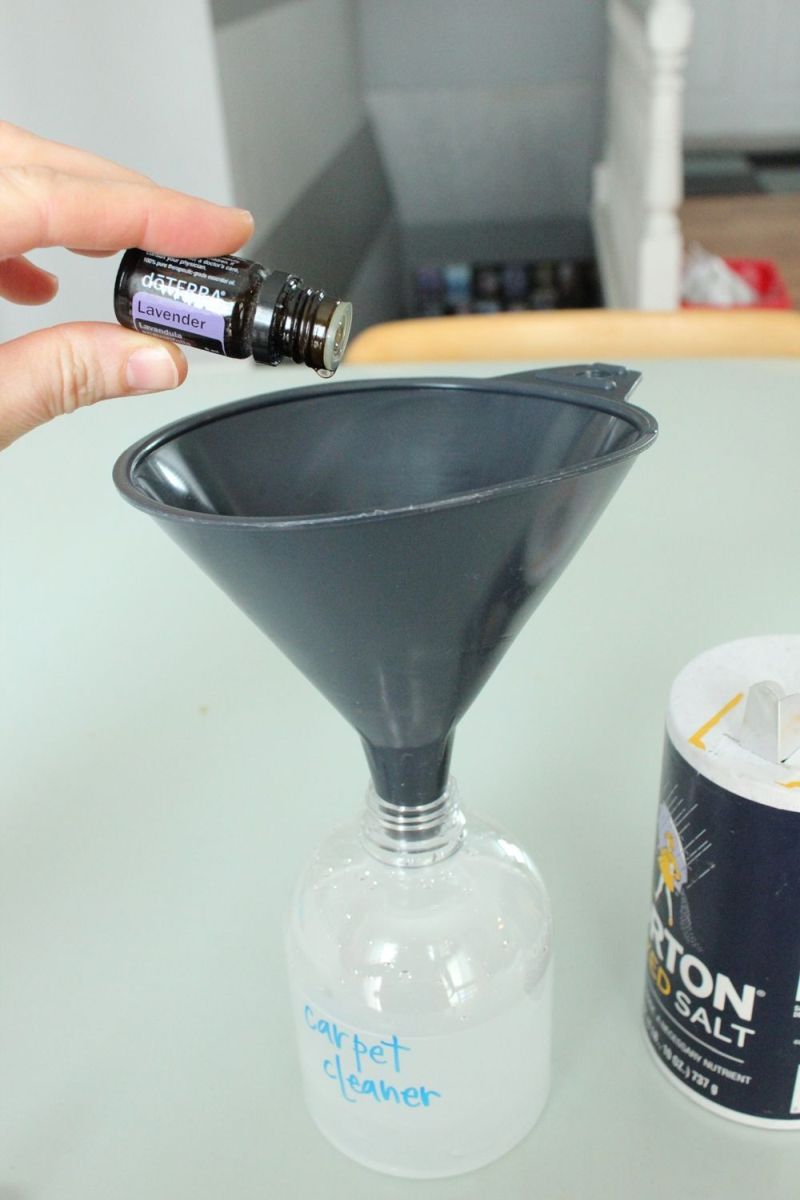
The demonstration also includes lavender essential oil, added in drops from a small bottle. Its purpose is fragrance, not stain removal.
Essential oils can leave oily marks on some fabrics. The ASPCA warns that concentrated essential oils can pose risks to pets, particularly through direct contact, ingestion, or exposure to concentrated products. Leaving lavender oil out avoids introducing another substance into the carpet.
The Ingredients Are Combined in a Spray Bottle
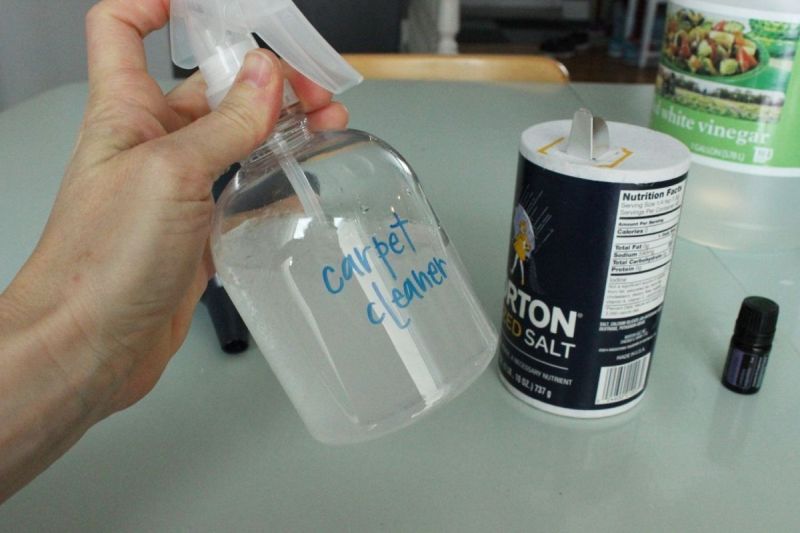
Once the ingredients are added, the spray top is attached to the bottle and the contents are mixed. The finished liquid can be applied through the spray nozzle instead of being poured onto the carpet.
The labeled bottle helps distinguish the homemade mixture from other household cleaners. It should not be combined with bleach or additional cleaning chemicals.
Why Some People Spray Vinegar and Salt on Carpets
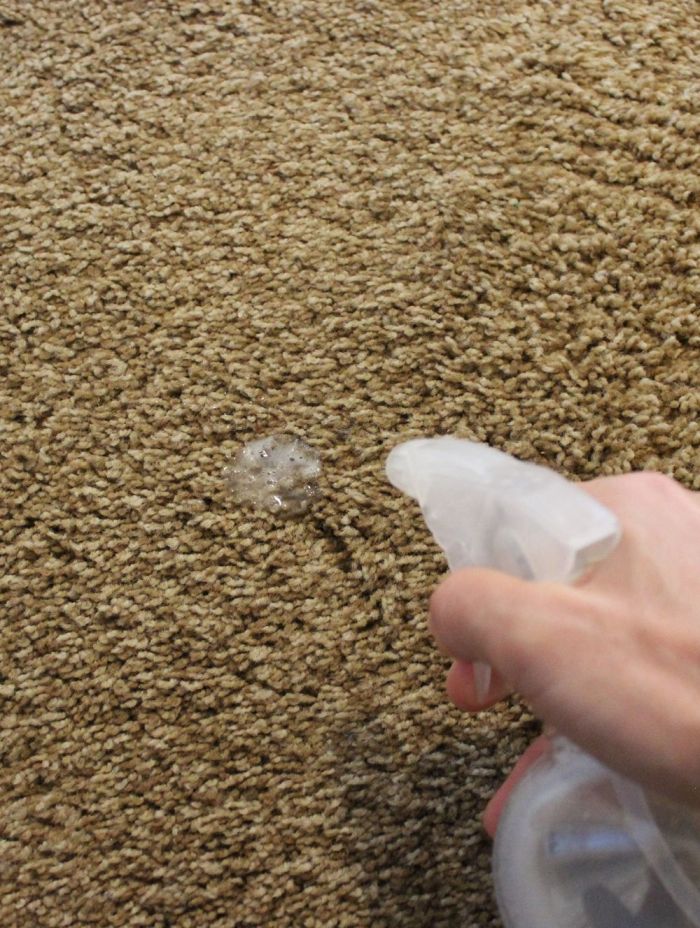
The demonstration shows the mixture being sprayed onto a small section of brown carpet. The idea is to treat a localized area without soaking the surrounding floor.
Diluted vinegar can help address some residues, but its effectiveness depends on the stain and carpet material. Salt does not make the solution a proven carpet cleaner, and the spray should not be expected to remove grease, set-in stains, or deep dirt.
Spraying the carpet is also not the same as extracting the dirt. A suitable cleaning method may require blotting, rinsing, and removing the remaining moisture.
What to Know Before Spraying Vinegar on Carpet
The Carpet and Rug Institute includes diluted white vinegar in its spot-cleaning guidance, using one part vinegar to two parts water for certain alkaline residues. It also recommends rinsing to remove leftover cleaning solution that could attract dirt.
That guidance does not endorse adding salt or essential oils. Vinegar may affect carpet dyes or fibers, including wool and other natural materials, while salt can leave deposits after the liquid evaporates.
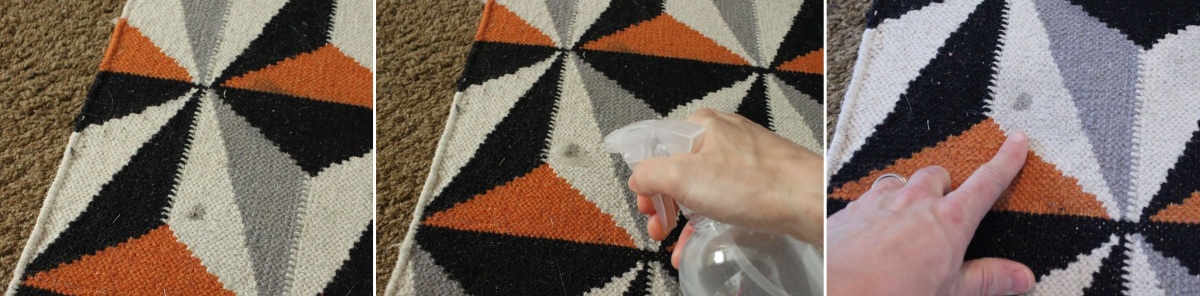
Check the carpet manufacturer’s care instructions before using a homemade mixture. Test an inconspicuous area for color changes or fiber damage, and avoid soaking the carpet backing or padding.
For routine cleaning and stain treatment, products approved for the carpet’s fiber type offer a more dependable option. The vinegar-and-salt mixture is a homemade method, not a replacement for a tested carpet cleaner.
Would you try a homemade carpet spray or stick with a carpet cleaning product?