This Pantry Has a Basket for Everything: So Why Did the Clutter Keep Coming Back?

Baskets gave this pantry separate places for snacks, baking supplies, grains, and cooking ingredients, but sorting food into containers did not keep the shelves organized on its own. Items still ended up in the wrong baskets after groceries came into the house.
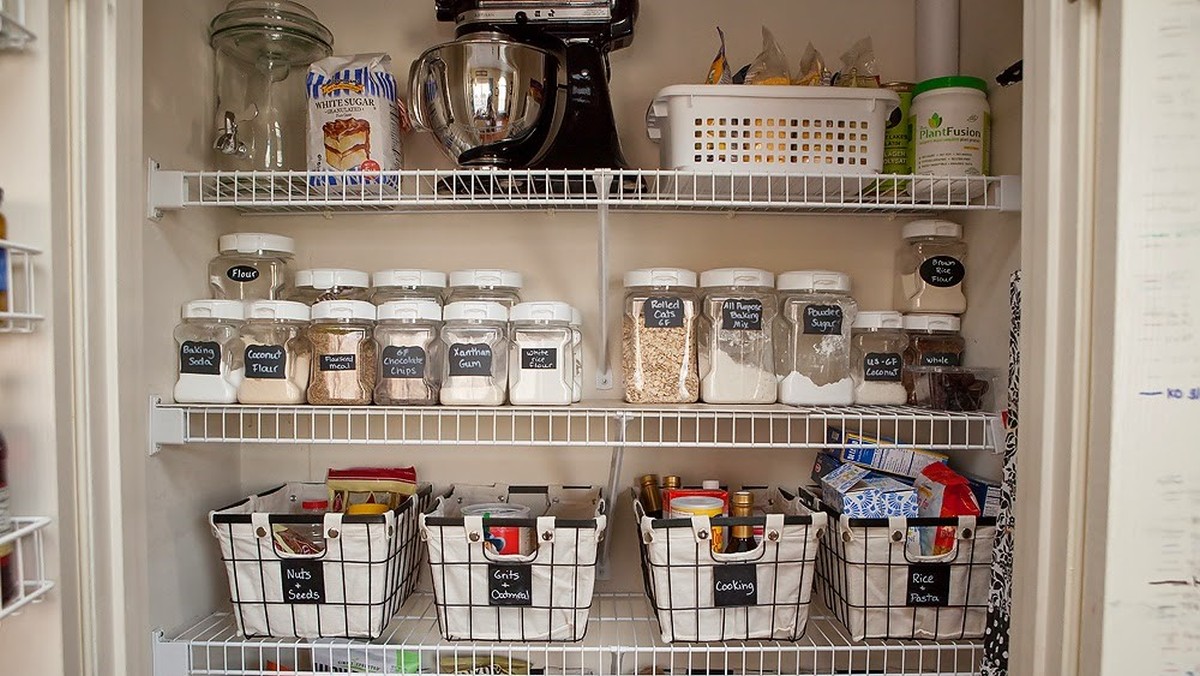
Labels became the part of the system that told everyone where each item belonged. Chalkboard tags identify categories on baskets, clear containers identify individual dry ingredients, and another label marks the bin reserved for bottled water.
Heather O’Steen of Timeless and Treasured had tried using baskets without labels before adding them throughout this pantry. She found that labeled storage made it easier to put misplaced groceries back where they belonged when the pantry started getting disorganized again.
Labeled Baskets Give Each Food Category Its Own Place
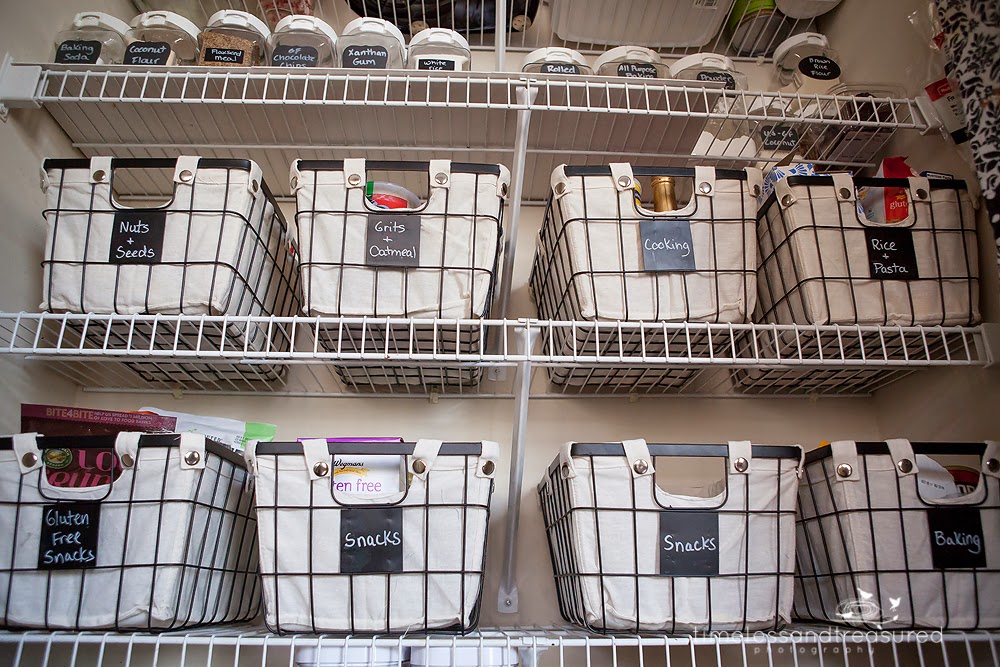
Wire baskets with fabric liners divide one shelf into categories instead of holding a mix of packages. Chalkboard labels identify nuts and seeds, grits and oatmeal, cooking ingredients, and rice and pasta across the upper row.
More baskets below separate gluten-free snacks, other snacks, and baking supplies. Packages can stay in their original boxes and bags while the labels determine which basket they return to after use.
Clear Containers Make Baking Ingredients Easy to Identify
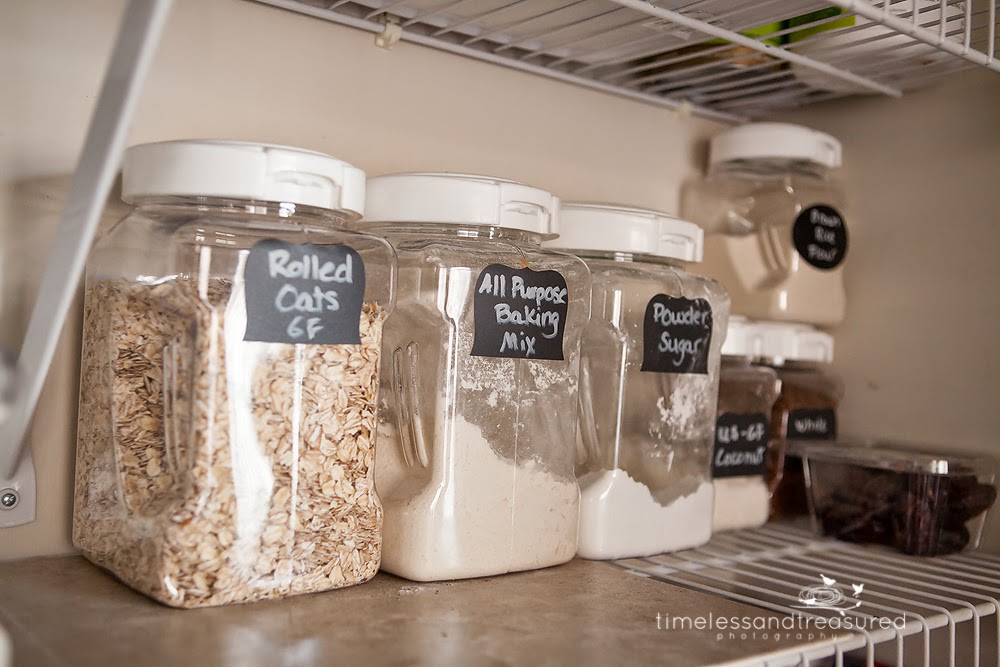
Dry ingredients move out of their original packages and into clear containers with white lids. Individual chalkboard labels identify rolled oats, all-purpose baking mix, powdered sugar, brown rice flour, coconut flour, flaxseed meal, xanthan gum, and other baking staples.
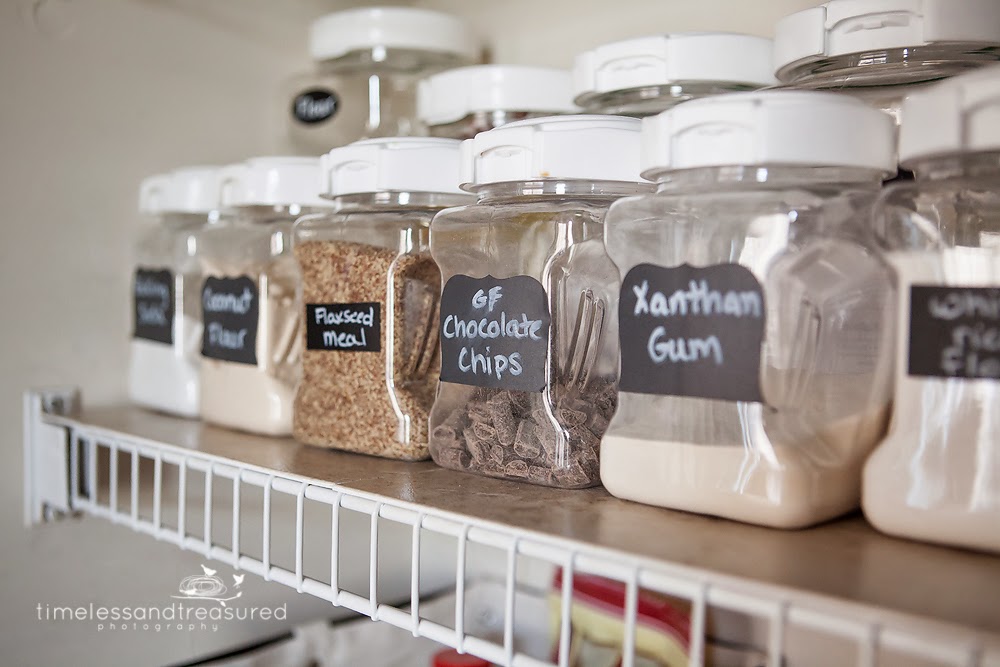
Clear containers hold foods stored over longer periods, with expiration dates written on tape placed on the back or bottom. Transparent sides also show how much remains before the next grocery trip.
Snack Labels Work Without Emptying Food Into Matching Containers
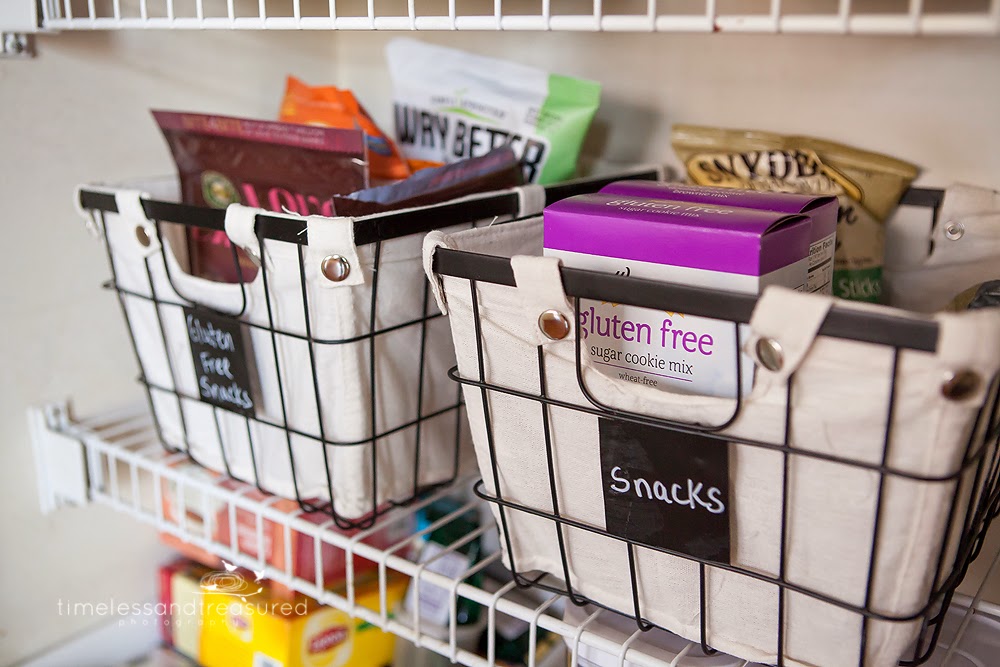
Not every pantry item was decanted. Bags, boxes, and packaged snacks stay in their original containers but sit inside larger wire baskets marked with category labels.
That creates one storage boundary around packages with different shapes and colors. Instead of finding a specific spot for every snack package, the system gives the entire category one labeled basket.
Door Baskets Keep Bottles and Small Packages in Rows
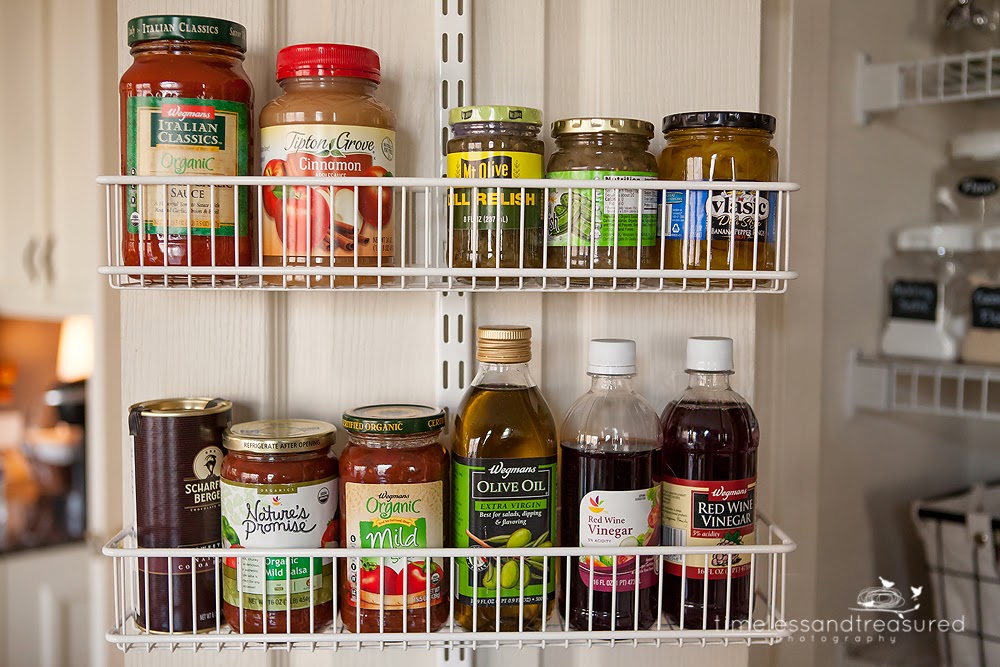
Narrow wire baskets mounted inside the pantry door hold jars, oils, vinegars, boxes, and other items that fit within their shallow depth. Multiple levels use vertical door space without taking room from the main shelves.
Door-mounted storage attaches without screws, adding several rows of baskets for jars, bottles, and boxed items. Using the back of the door keeps those smaller items from taking up space on the main pantry shelves.
Floor Storage Gets Labels Too
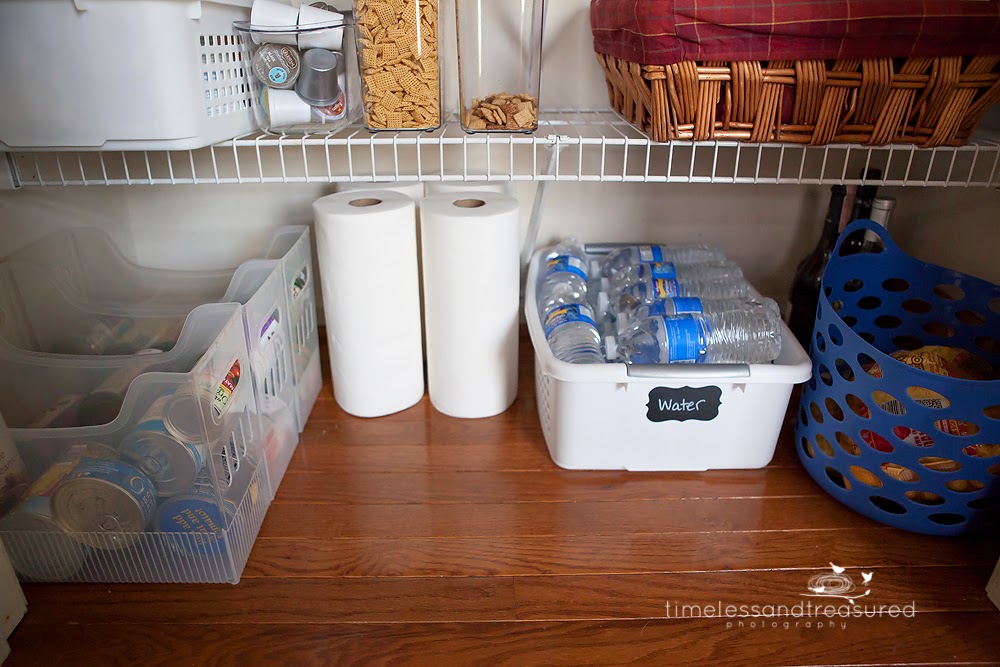
Organization continues below the lowest wire shelf, where larger items use the pantry floor. Paper towels stand upright while bins and baskets hold bottled water and other supplies.
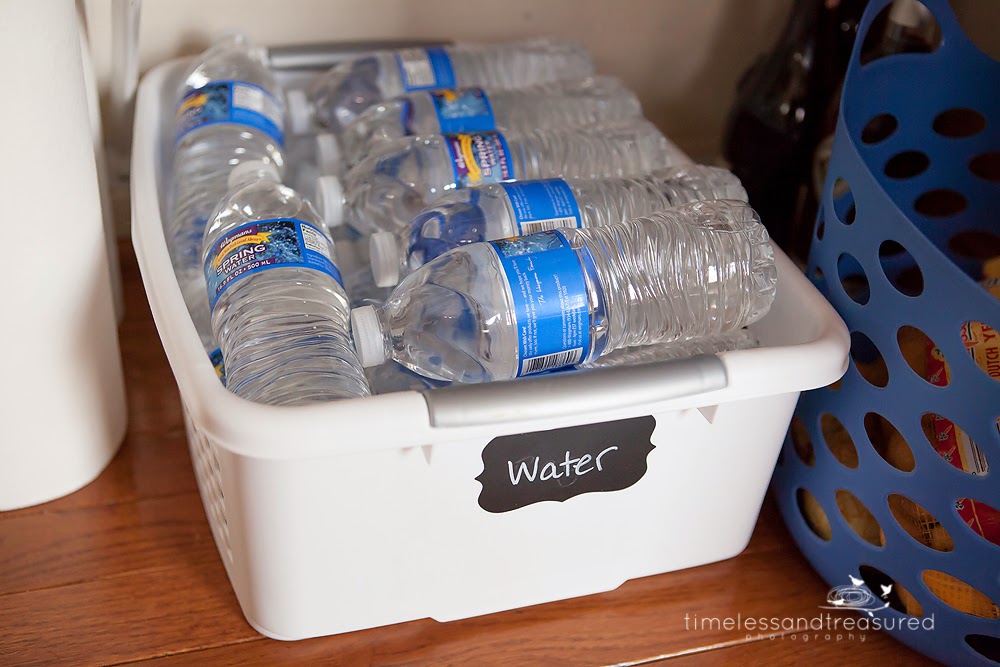
Bottled water goes into a white handled bin marked “Water,” giving the multipacks a defined place instead of leaving loose bottles across the floor. Floor space also holds canned goods, wine, onions, and potatoes.
Pantry Door Doubles as a Family Growth Chart
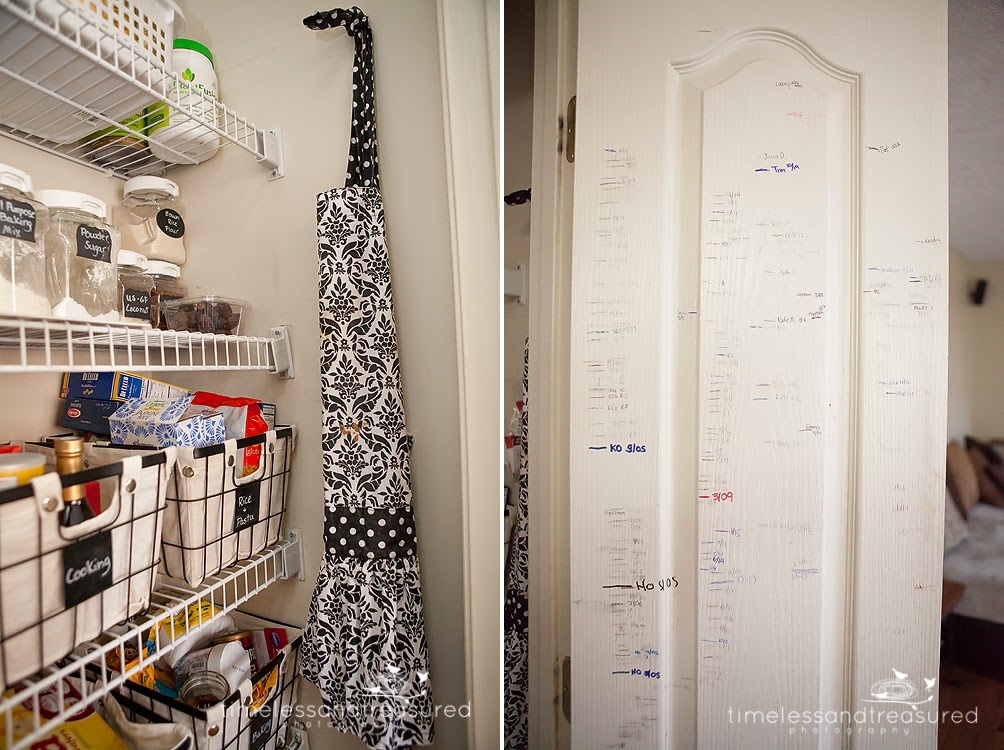
Food storage takes up most of the pantry, but one section of the door serves another purpose. Names, dates, and height marks cover the back of the door, creating a growth chart without adding a separate board to the wall.
The family has recorded their children’s heights there since moving into the house and added measurements for visiting friends and adults over time. The marks turn an unused door surface into a record that stays alongside the pantry organization system.
Would you use the back of a pantry door for a family growth chart like this?