Few People Know Why Aluminum Foil Has a Shiny Side and a Dull Side, or Which One to Use for Cooking

Pull a sheet of aluminum foil from the box, and one surface catches the light while the other looks flat and gray. The difference appears on almost every roll, whether you’re covering a casserole, wrapping potatoes, or lining a baking tray. Some cooks put the shiny side toward the food, while others insist it should face outward.
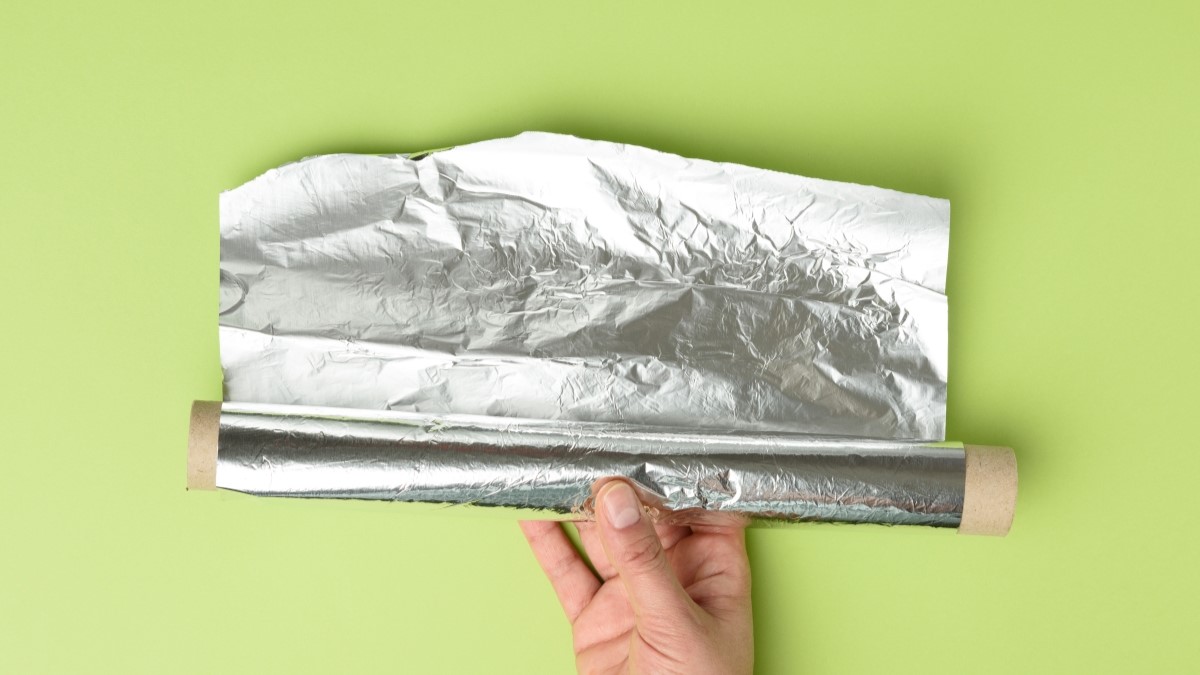
The question sparked a Reddit discussion when user u/genoooooo asked what separates the shiny and dull sides beyond their appearance. The post drew around 21,000 upvotes, with readers debating heat reflection, cooking performance, and whether one surface has a special coating.
The two finishes come from a manufacturing step that has nothing to do with choosing which side faces dinner. For standard foil, the difference makes little practical difference in cooking, but one type of aluminum foil has a coating that changes the rule.
Why Aluminum Foil Has Two Different Sides
Aluminum foil begins as thick metal sheets that pass through industrial rollers until they become thin enough for household use. During the final stage, manufacturers roll two sheets together because a single thin sheet could tear under the pressure.
The outer surfaces touch the polished steel rollers, giving them a smooth, reflective finish. The inner surfaces press against each other instead, producing the dull appearance.
Once the sheets reach the required thickness, manufacturers separate them and wind them onto rolls. Each sheet has one shiny surface and one matte surface without needing two different metals or a special coating.
The process is shown in this video from History of Simple Things, which explains how foil gets its two finishes and why the distinction matters in the kitchen.
Which Side of Aluminum Foil Should Face the Food?
For standard household foil, either side can face the food. The shiny surface reflects light in a more uniform direction, while the dull surface scatters more of it, but the difference has no meaningful effect on ordinary cooking results.
Covering a roasting pan with the shiny side outward won’t make dinner cook faster, and wrapping leftovers with the dull side inside won’t change how the foil preserves moisture.
Aluminum conducts heat through both surfaces, while the foil covering also reduces moisture loss and changes how heat and steam move around the food.
“Reynolds Kitchens” confirms that standard aluminum foil performs the same regardless of which side faces the food.
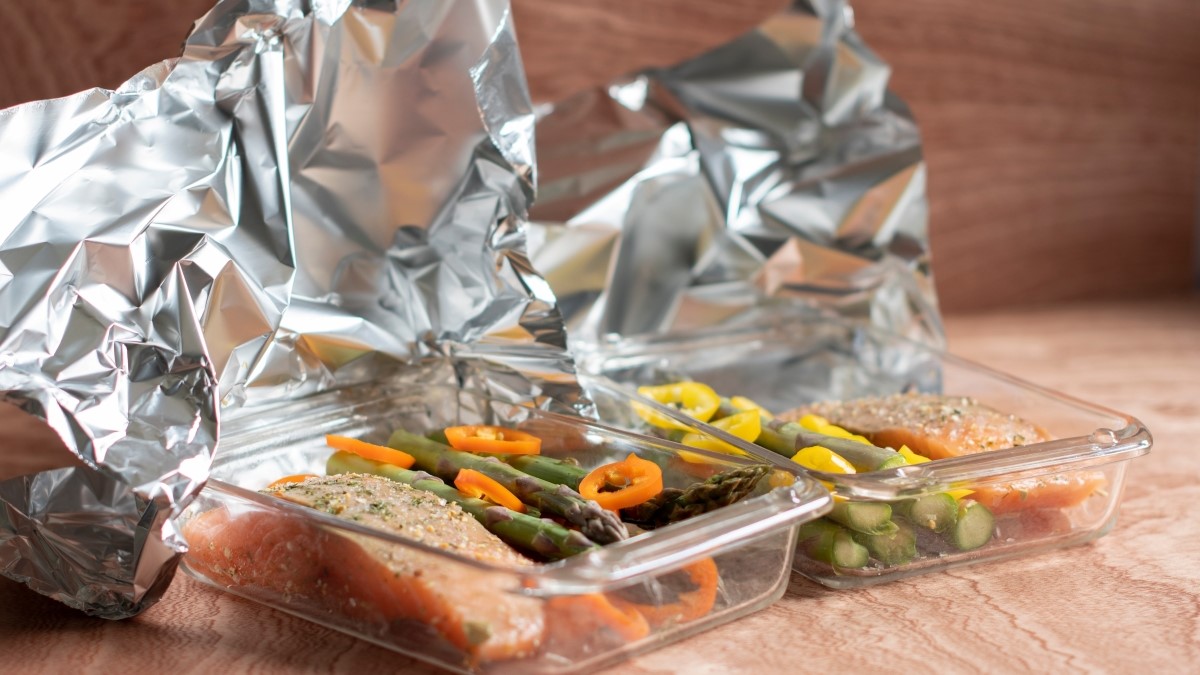
Nonstick Aluminum Foil Is the Exception
Nonstick foil has a food-release coating applied to one surface, making the direction important when cooking foods that tend to stick.
On Reynolds nonstick aluminum foil, the dull side carries the nonstick coating and should face the food. Placing the shiny side against the food means the coated surface isn’t being used as intended.
The same rule shouldn’t be assumed for every foil product. Check the packaging to identify the food-contact side, since coatings and manufacturer instructions can differ.
Standard foil has no such directional requirement. Its shiny and dull finishes come from the rolling process, not separate cooking functions.
Why the Shiny Side Doesn’t Make Food Cook Faster
The shiny surface reflects radiant heat differently from the matte surface, but the effect is too small to produce a meaningful change in most household cooking.
Inside an oven, food receives heat through moving hot air, radiation from hot surfaces, and contact with cookware. The orientation of standard foil has little influence compared with oven temperature, cooking time, and how the food is covered.
The important distinction is between standard and nonstick foil, not between shiny and dull finishes. For ordinary aluminum foil, either side works; for coated products, the manufacturer’s food-contact instructions determine which surface belongs against the meal.
Sources: Reddit discussion by u/genoooooo, and History of Simple Things on YouTube.