Putting baking soda in the oven: what it’s for and why people leave it overnight

Brown grease stains can remain on oven walls and door glass long after food crumbs have been removed. Repeated exposure to heat turns cooking oil and splatters into stubborn deposits that resist a damp cloth and dish soap.
Homedit’s Brittney Smart tested a method that involves covering the oven interior with baking soda paste and leaving it for 4 to 12 hours. Instead of scrubbing the stains as soon as the mixture touches them, she lets it sit against the baked-on residue before wiping.
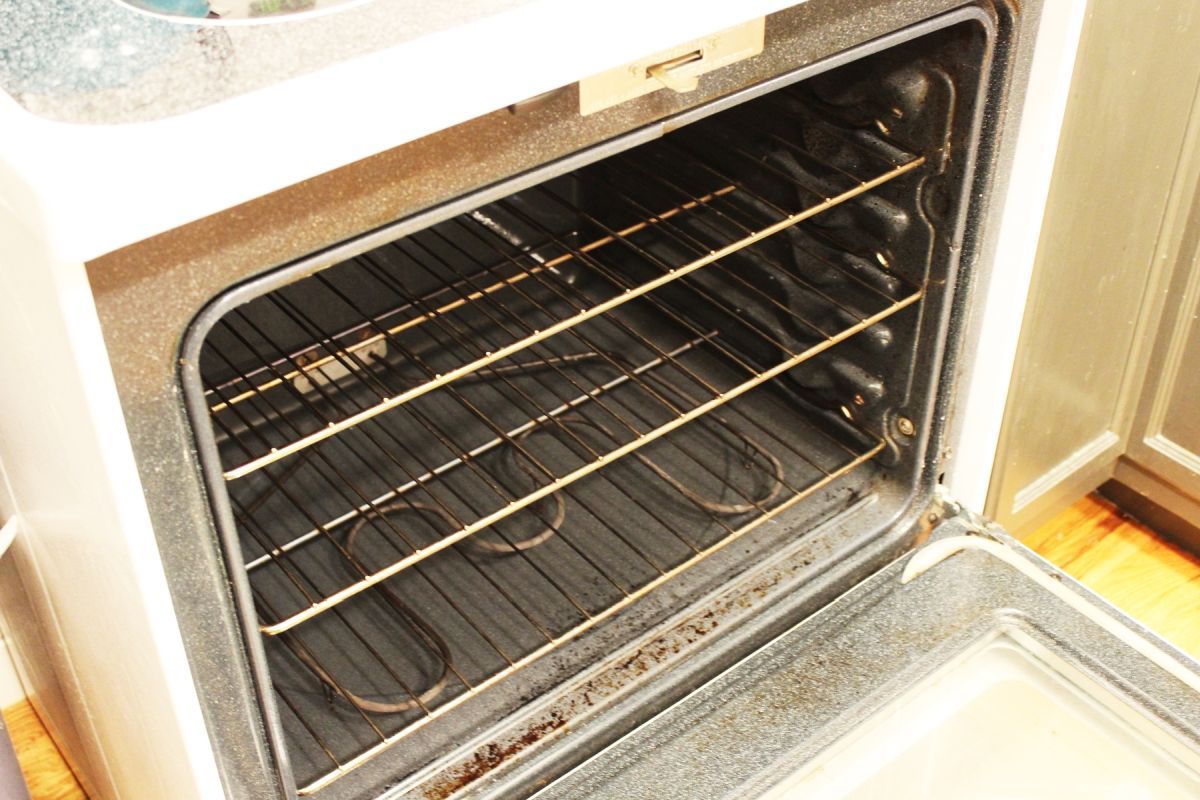
Baking soda, or sodium bicarbonate, is a mild alkaline compound that can help loosen some greasy deposits. Mixed with water, it forms a paste that clings to oven surfaces, keeping moisture in contact with the buildup. Its fine particles can also help lift softened residue during wiping.
But the waiting period is only part of the process. Once the paste comes off, another household ingredient enters the picture, raising a question about what happens when vinegar meets the baking soda left behind.
Why people leave the paste overnight
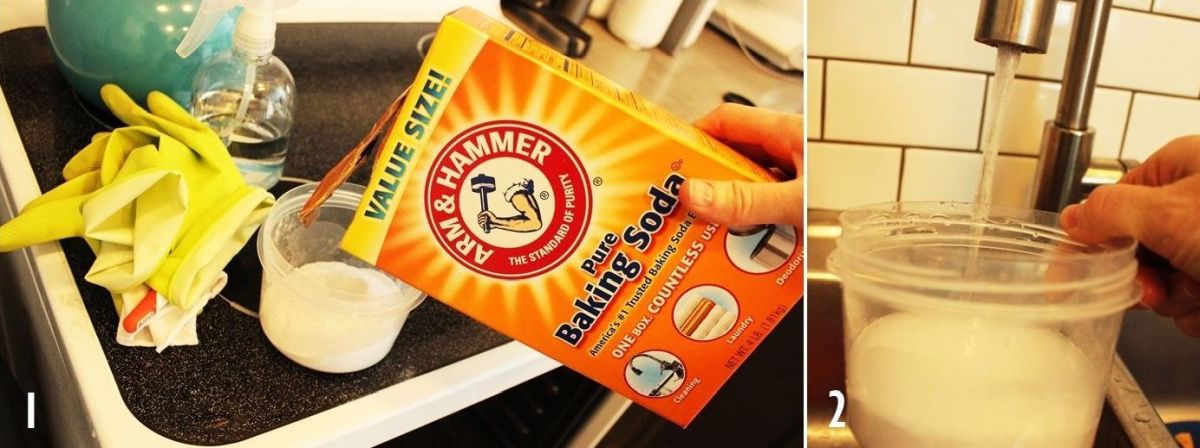
Baking soda starts as a dry powder, but adding water changes how it can be used inside the oven. The resulting mixture stays on surfaces rather than falling away or running down the walls.
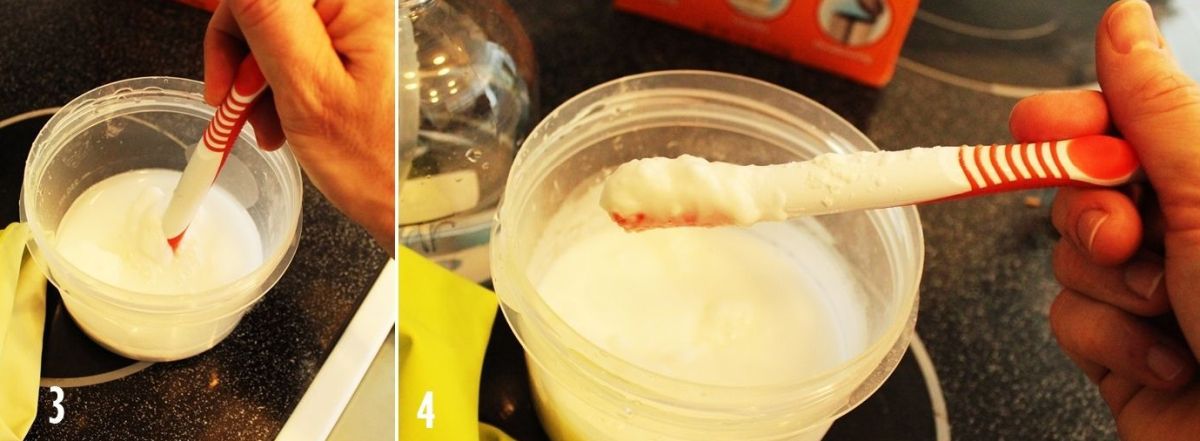
A thick consistency keeps the paste in place across the oven interior and glass. The purpose isn’t to create a strong chemical reaction but to maintain contact with the deposits for several hours.
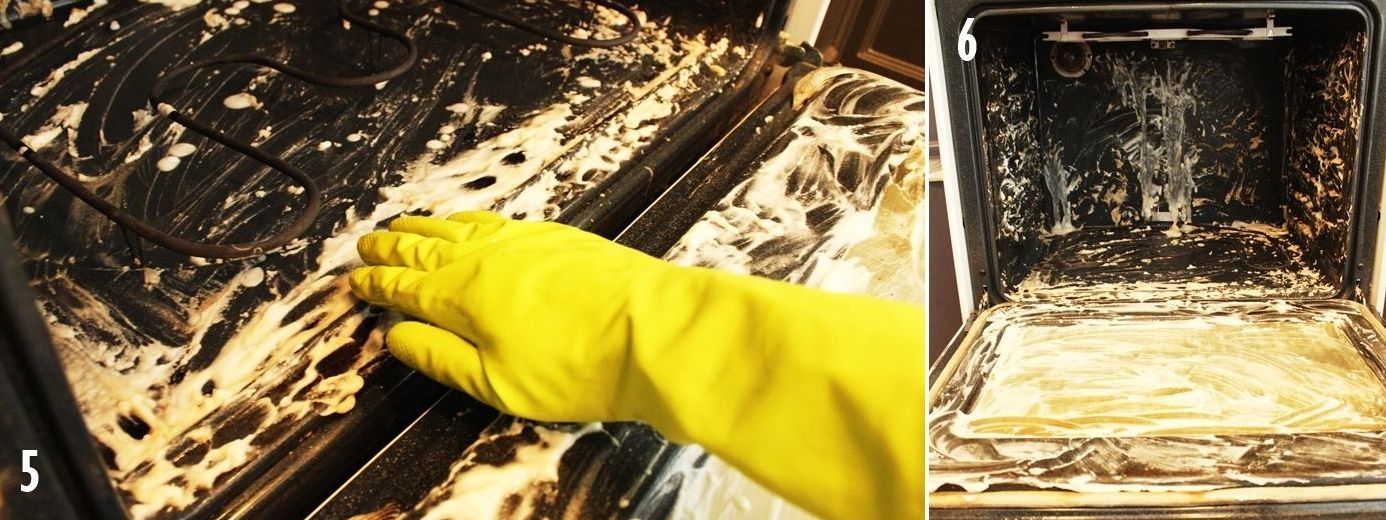
White paste covers the accessible oven surfaces, including the inside of the door. The extended waiting period gives damp residue time to soften before removal, reducing the need for forceful scrubbing.
The oven must remain off and cool, with heating elements, vents, fans, and sensitive components kept clear. Manufacturer instructions determine which surfaces can be treated.
Why vinegar is used after the waiting period
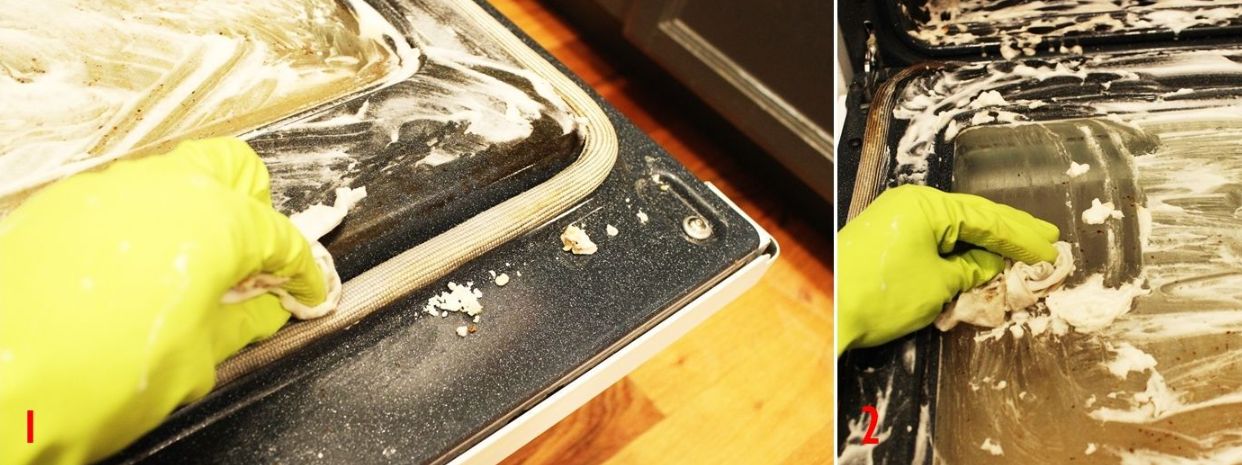
Removing the paste exposes the oven glass beneath, but a white film can remain after the first wipe. Baking soda residue may cling to corners and textured areas even after much of the grease has been lifted.
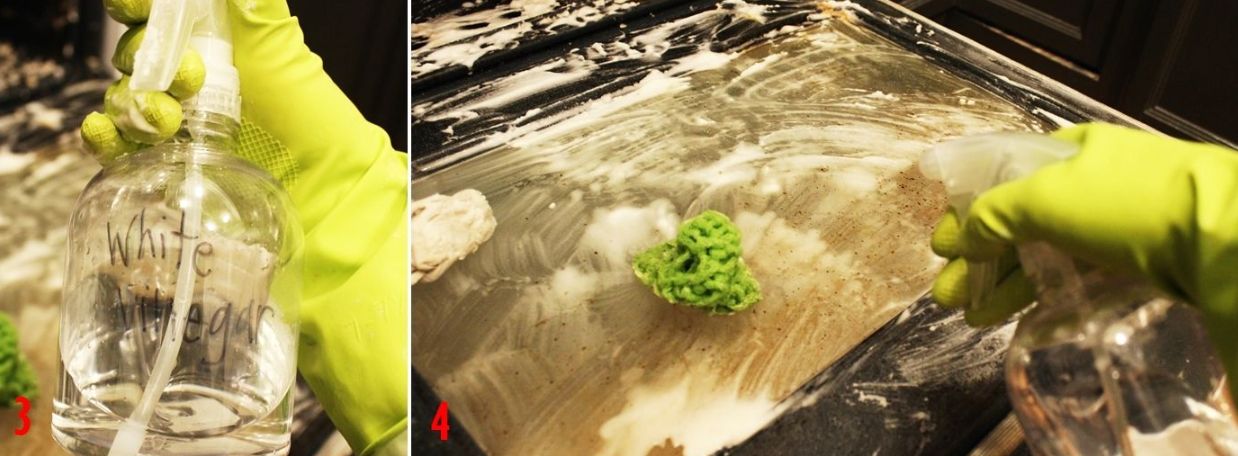
White vinegar reacts with leftover baking soda, producing carbon dioxide bubbles. The reaction can help disturb remaining powder, making the chalky film easier to wipe away.
The fizz doesn’t create a stronger degreaser. Vinegar neutralizes some of the baking soda, so the two ingredients serve different purposes when used in separate stages.
What the oven looks like after the residue comes off
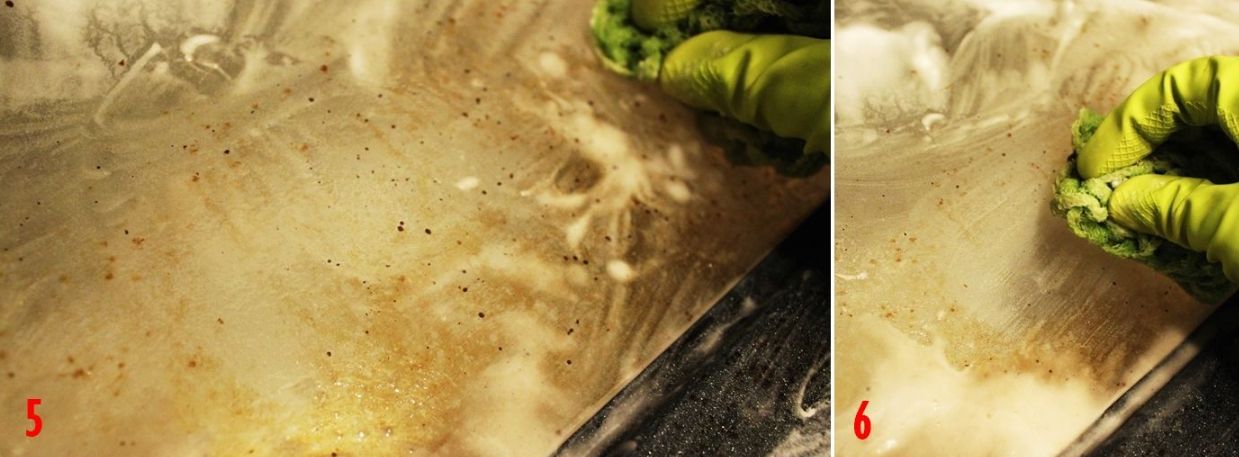
Brown deposits and streaks become visible as the paste lifts from the glass. The contrast between the cleaned sections and remaining residue shows why more than one wipe may be needed.
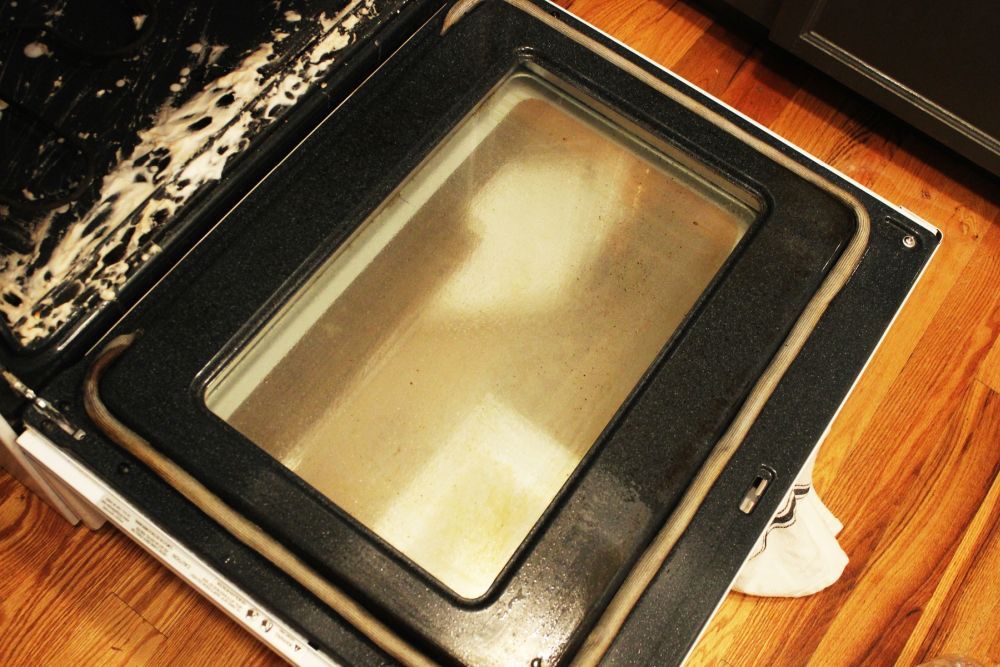
The oven window appears much clearer after the paste and loosened grime have been removed. The dark door surround is also free of the thick white coating seen during treatment.
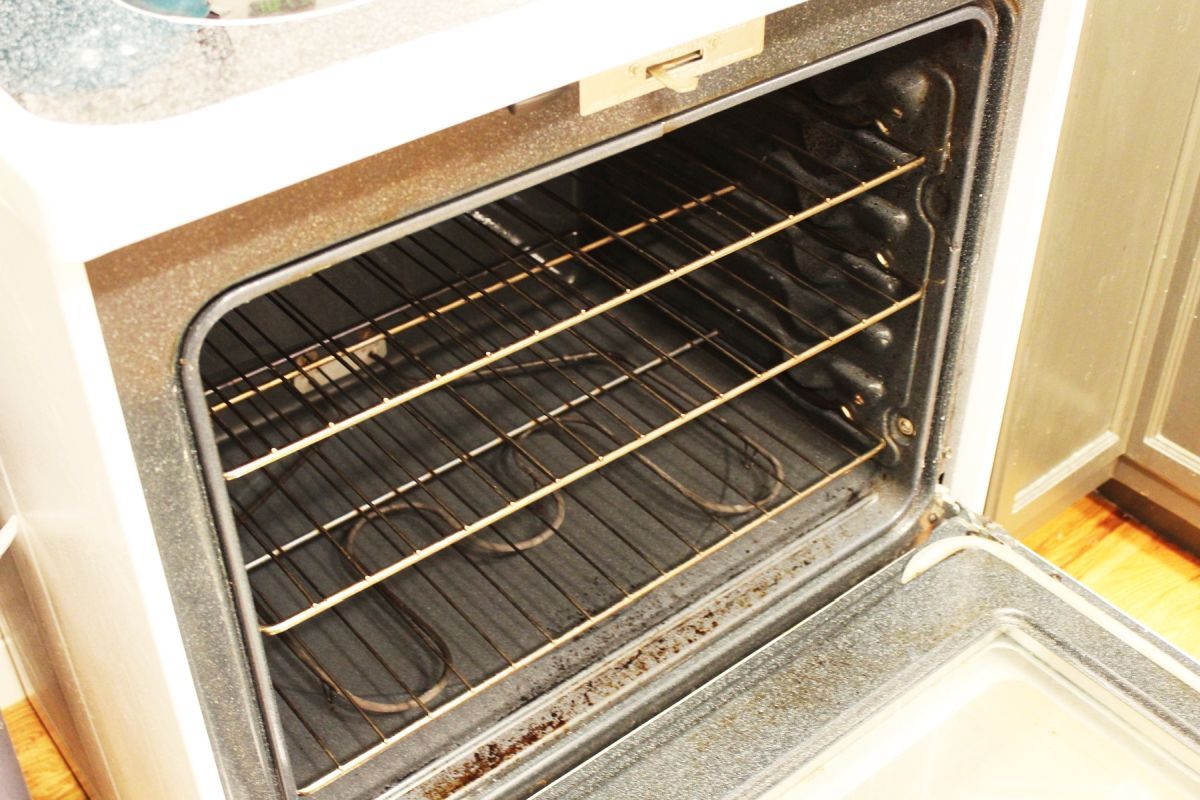
With the interior cleaned and racks returned, the oven no longer has the same visible buildup across its accessible surfaces. The result comes from contact time and residue removal, not from leaving baking soda inside during cooking.
The distinction matters: baking soda is applied while the oven is cool, left against the deposits, and removed before the appliance is used again. Vinegar helps with the remaining powder, but neither ingredient guarantees removal of every baked-on stain.
Have you tried cleaning your oven with baking soda and vinegar, or do you prefer a commercial oven cleaner?