This Hickory Kitchen Table Started With Glued Boards: The Most Interesting Part Isn’t the Top

Hickory boards held together with clamps look like the beginning of an ordinary kitchen table. The wood grain runs across the joined pieces, forming a solid surface with no sign of the storage that will become part of the finished furniture.
Reddit woodworker u/Real-Report-1272 built the table with tapered legs and a broad wooden frame beneath the top. What appears to be a fixed section of that frame serves another purpose, concealing a compartment without a visible handle.
The surprise comes when part of the front slides forward, exposing a drawer for kitchen utensils and dovetail joints at its corners. The maker’s first attempt at building a drawer became the feature that sets this hickory table apart from an ordinary work surface.
The Closed Drawer Blends Into the Table’s Apron
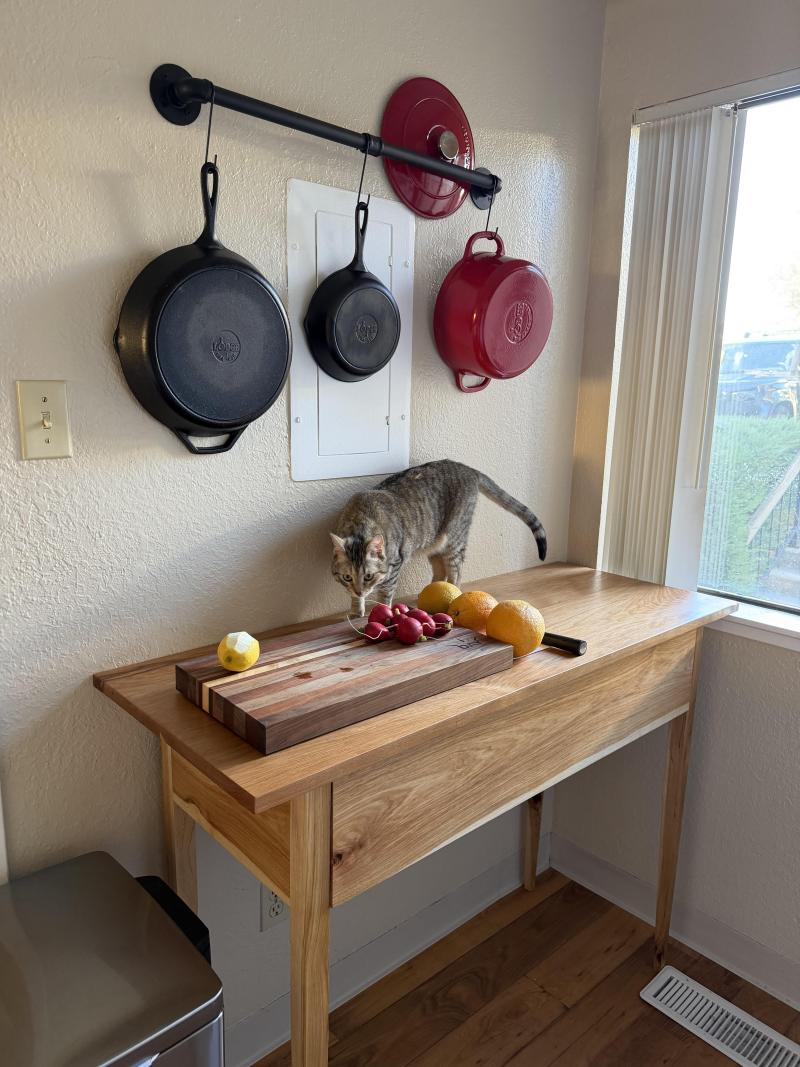
Against the kitchen wall, the table provides a work surface beneath a hanging cookware rail. Its top extends beyond the legs, while the deep apron beneath it conceals the drawer’s height.
Narrow seams beside the drawer front offer the main clue that the band of wood can move. Without a knob or bar pull, the front preserves the outline of a plain kitchen table.
Separate Boards Become One Hickory Top
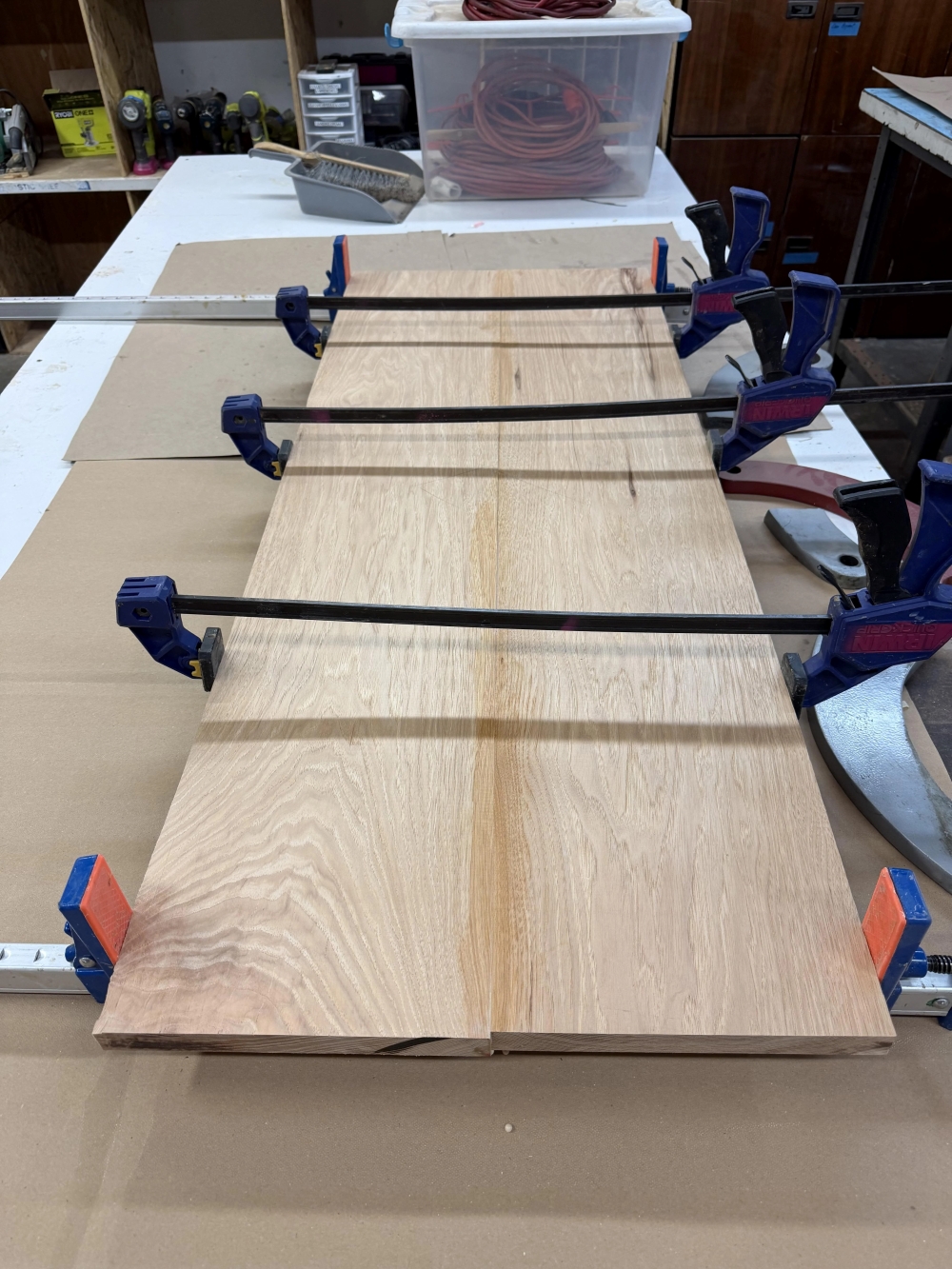
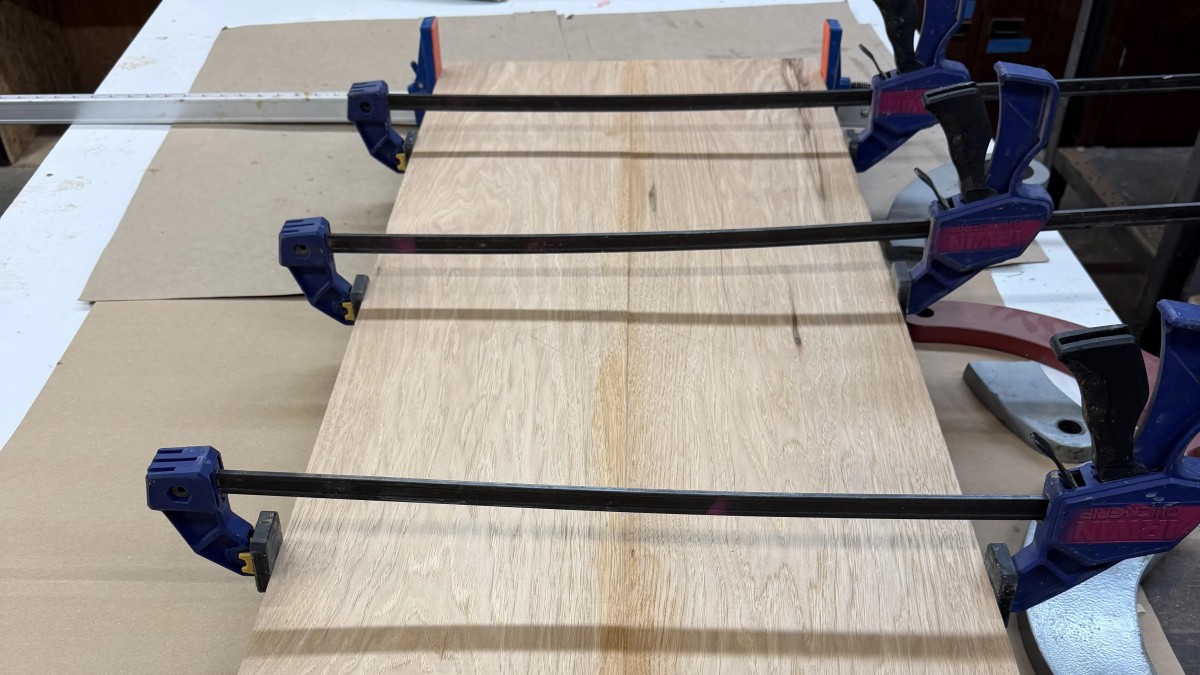
The maker confirmed that the tabletop is a glue-up, and the workshop photograph shows the boards held together with clamps. Grain changes across the adjoining pieces, including a darker streak near one end that remains part of the finished surface.
Joining the boards creates the width needed for the top without hiding those variations beneath paint. The finished table keeps the grain exposed across both the work surface and the apron.
Tapered Legs Keep the Space Beneath It Open
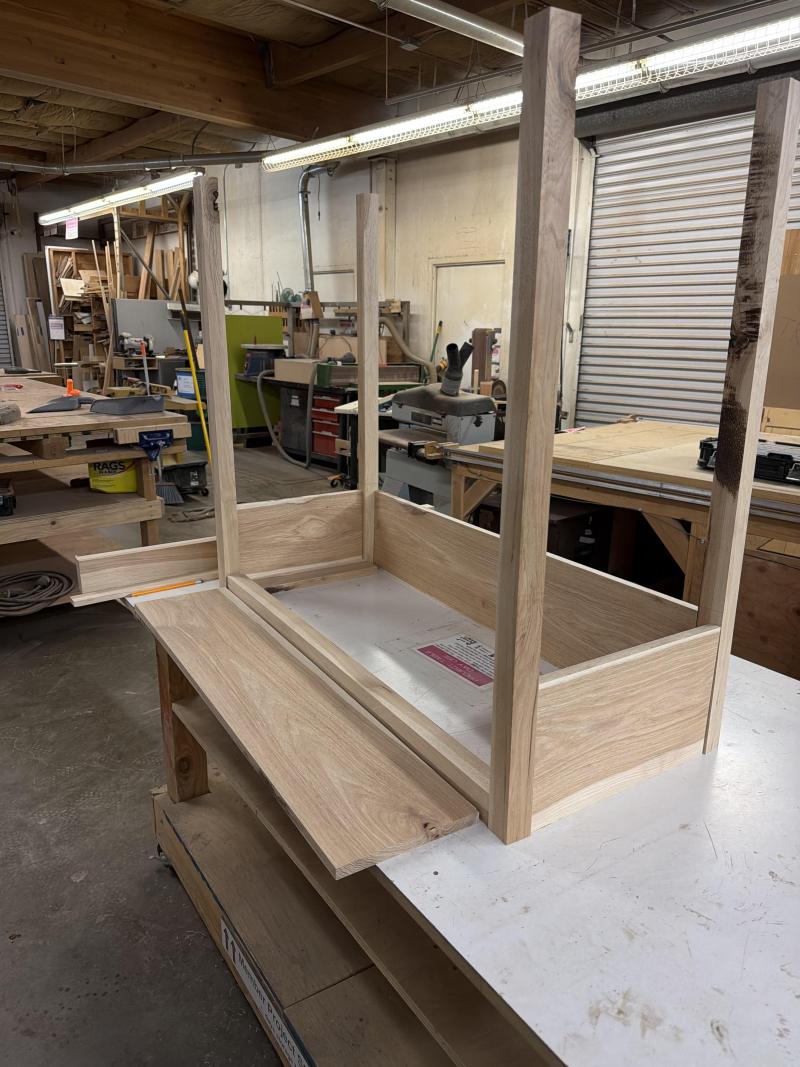
An upside-down view exposes the frame beneath the tabletop, with four legs connected by apron boards. Each leg narrows toward the floor, reducing its width below the deeper upper frame.
No lower shelf or stretcher fills the opening between the legs. Storage occupies the band beneath the top instead, leaving the table with an open base.
The Drawer Box Takes Shape Apart From the Table
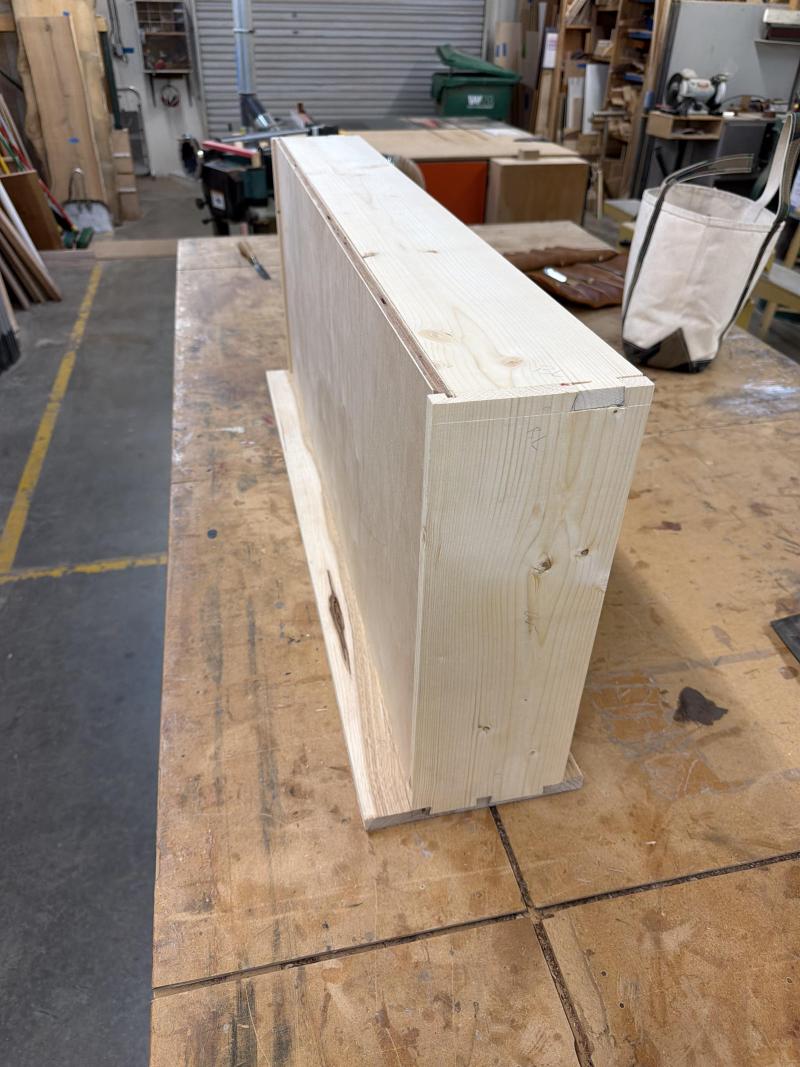
On the workshop bench, the unfinished drawer rests on its side, exposing the bottom panel and corner construction. Pencil marks remain near the joints, recording the layout work before the box reaches its finished position.
This view separates the storage component from the surrounding hickory frame. The drawer needs its own sides, bottom, and fitted corners before its front can become part of the table’s exterior.
Opening the Drawer Exposes the Dovetails
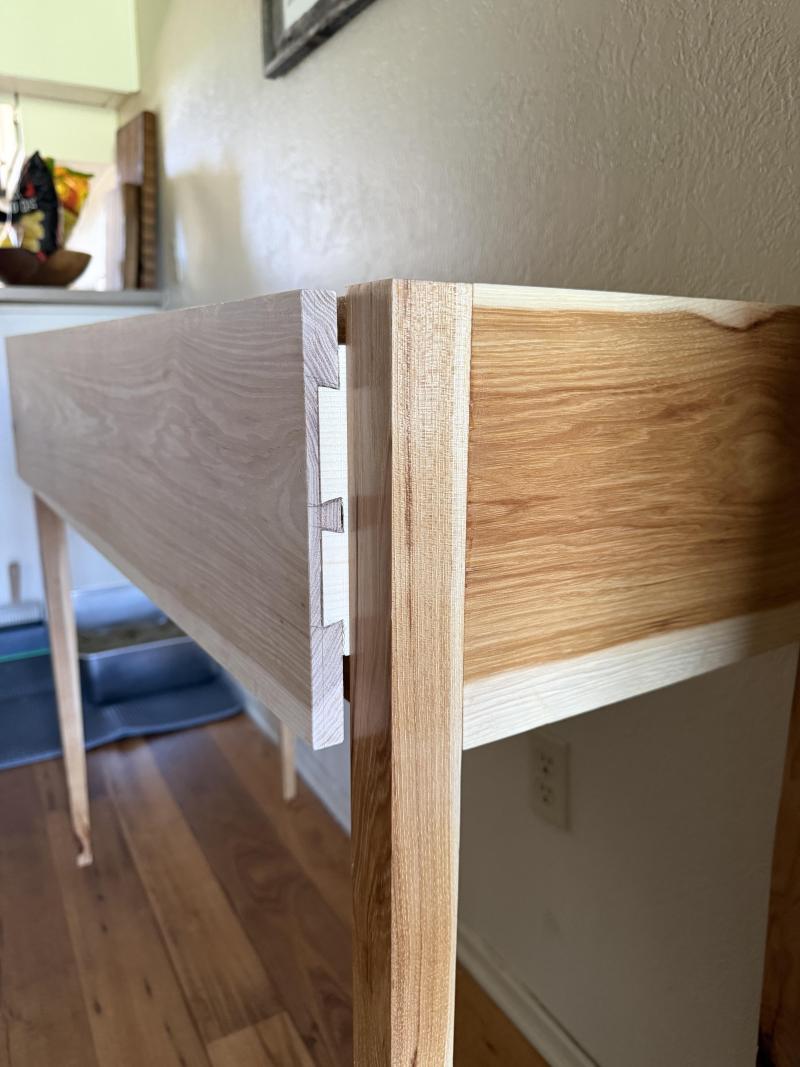
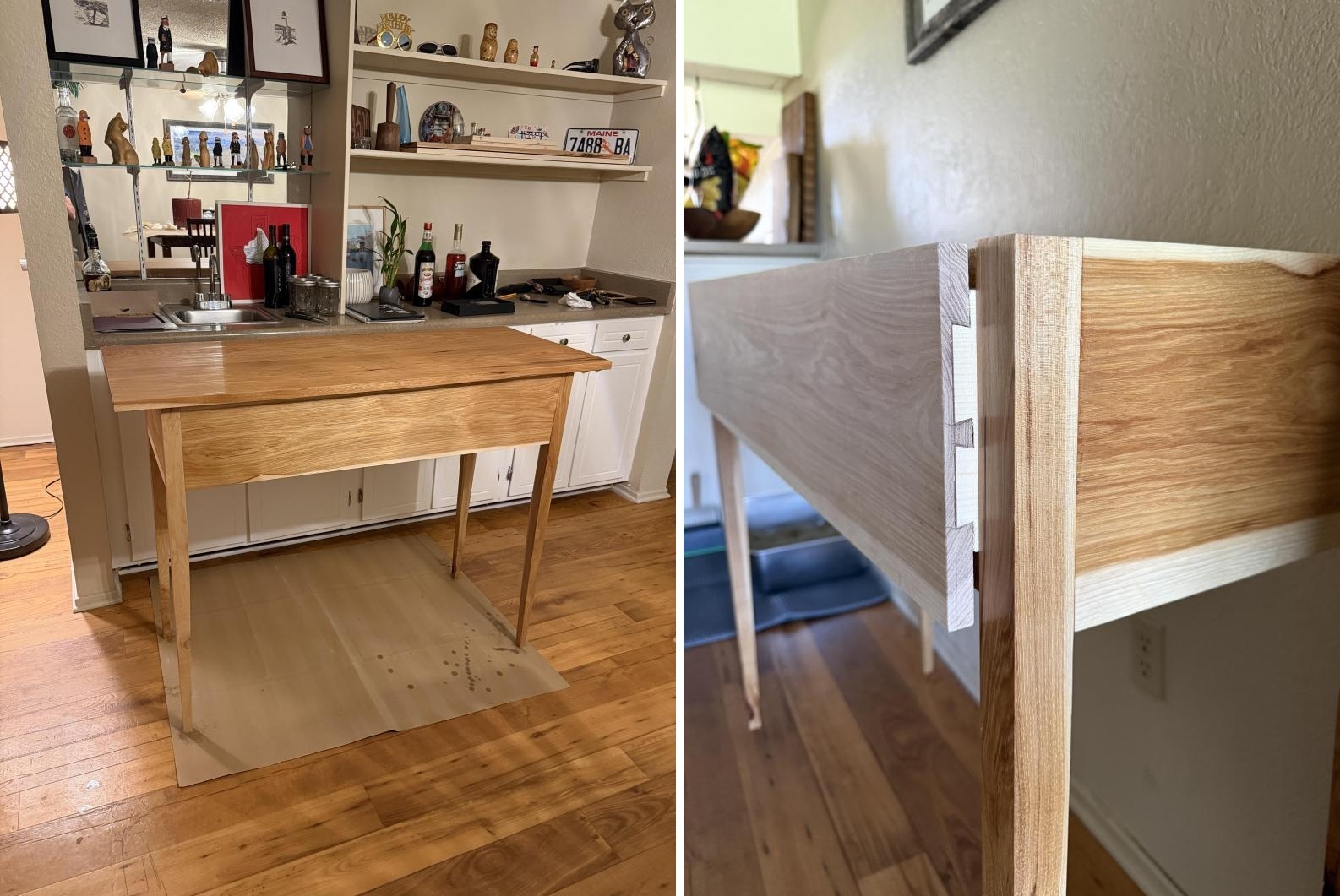
The close-up reveals interlocking joints at the drawer’s front corner, a construction detail found in dovetail drawer boxes made for daily use. These shaped connections remain concealed when the drawer slides back into the frame.
The maker presented this as a first attempt, and the photograph shows small gaps along parts of the joinery. That detail gives readers a view of the work behind the finished furniture rather than hiding the learning process.
Kitchen Tools Fit Behind the Broad Wood Front
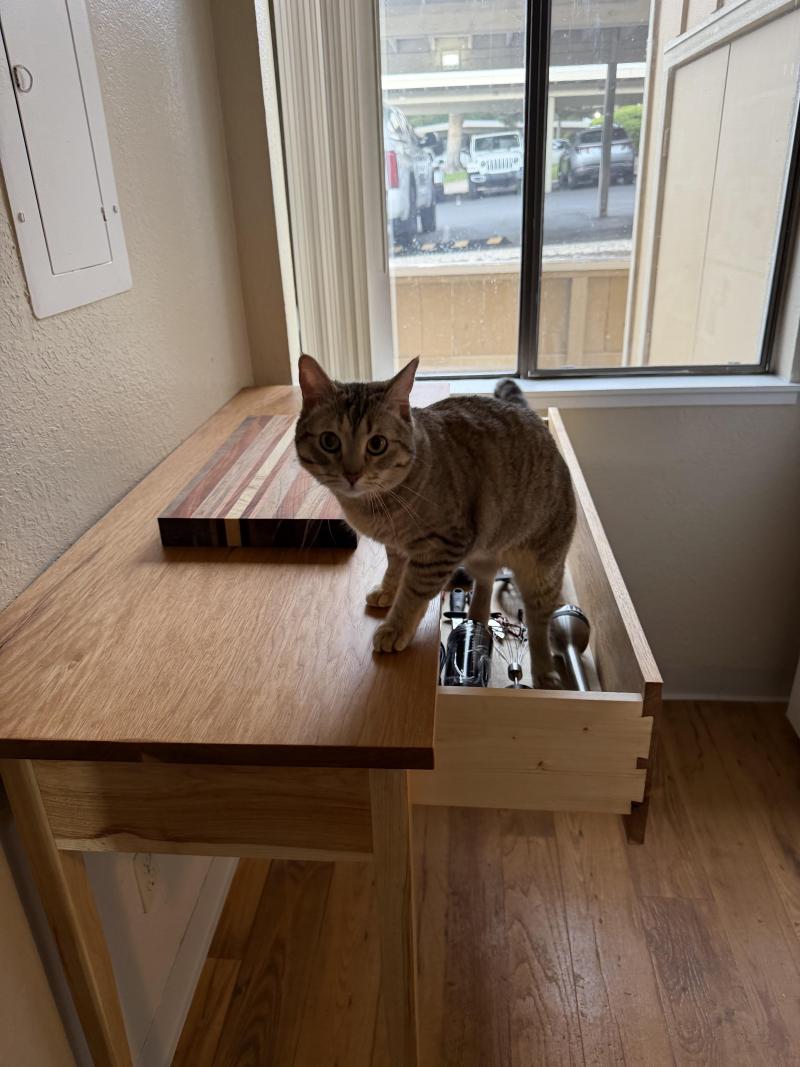
With the drawer extended, utensils occupy the shallow box beneath the worktop. The top remains available for a cutting board while the storage moves out from below it, putting tools within reach without leaving them across the surface.
The open view also explains the depth of the apron seen in the first photograph. That broad wood band accommodates the drawer while concealing its contents when closed.
The Finished Piece Keeps Its Furniture Shape
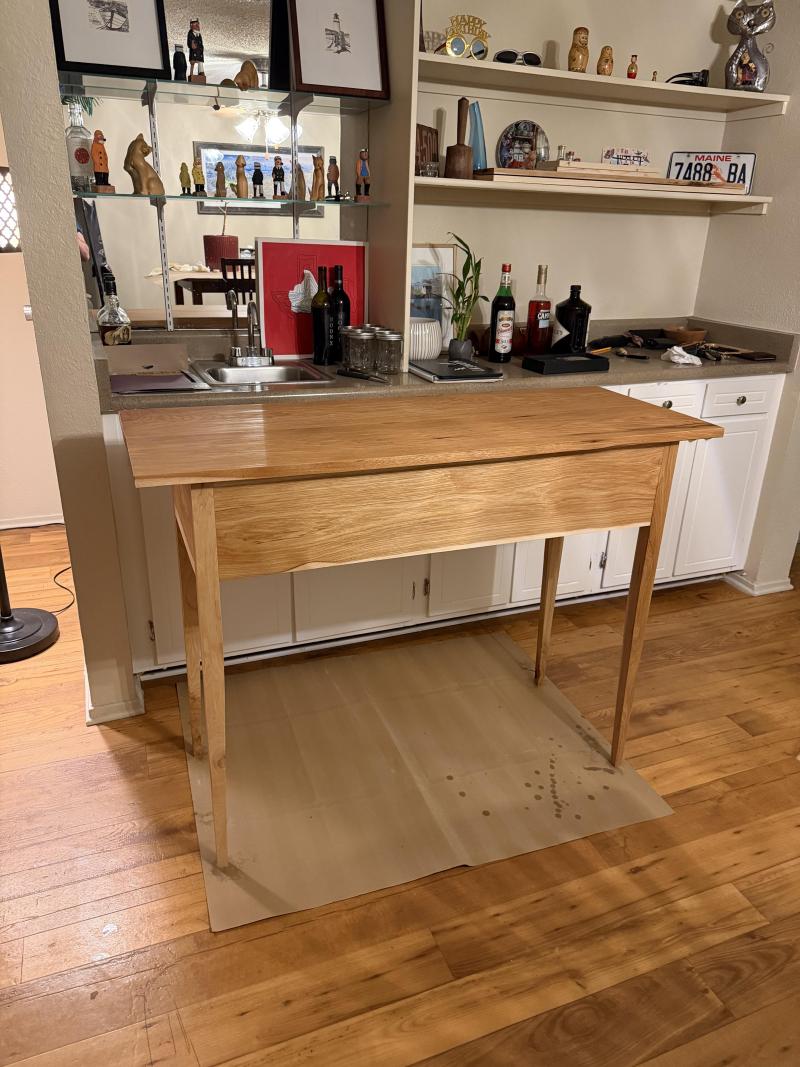
Another finished view shows the table standing in front of a separate built-in, with the drawer shut and the full length of the tapered legs exposed. The projecting top and uninterrupted front give it the outline of a freestanding table, even with storage incorporated beneath the surface.
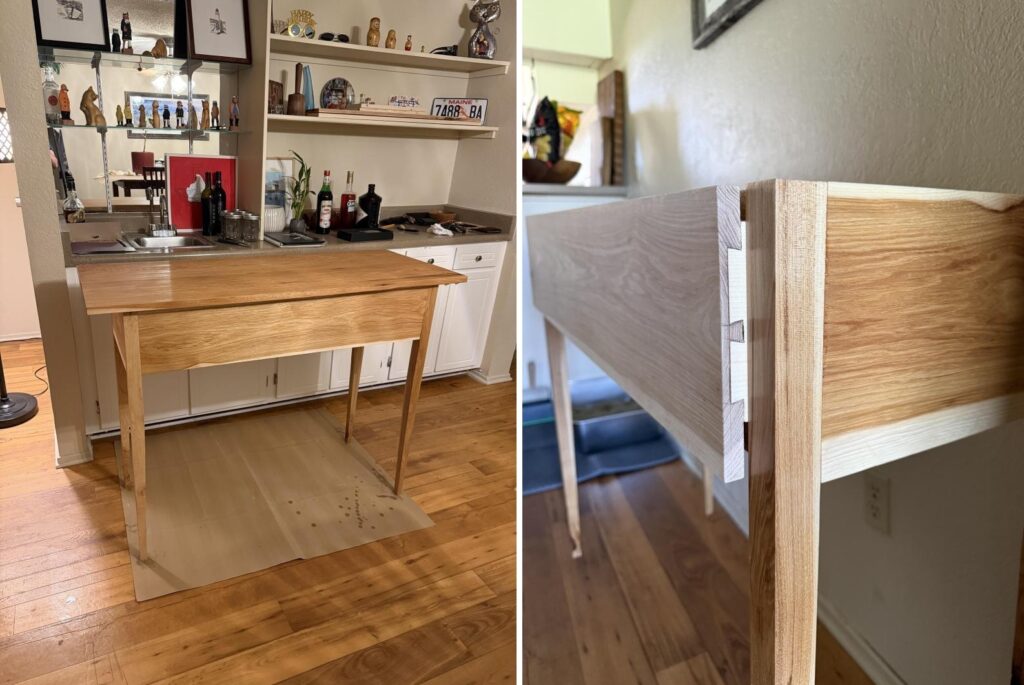
Pulled partway open, the drawer reveals how its front meets the table’s upright corner post. The close-up shows the dovetail ends along the drawer side, with the front panel extending toward the outer edge of the frame.
The narrow clearance between the moving drawer and the fixed post allows the two pieces to sit beside each other without a projecting handle or decorative trim.
Would you keep the drawer front free of hardware, or add a small pull to make the storage easier to find?
Images courtesy of the project’s creator u/Real-Report-1272 on r/woodworking.