She Painted Two Old Maple Dressers Navy Blue Without Covering Their Wood Drawers


Orange-toned maple, dark brass handles, and a glossy varnish gave two matching 1950s dressers a dated appearance. Both pieces had solid wood construction, framed drawer fronts, and shaped bases, but their yellow-orange finish was far from the gray-and-navy color scheme planned for their new home.
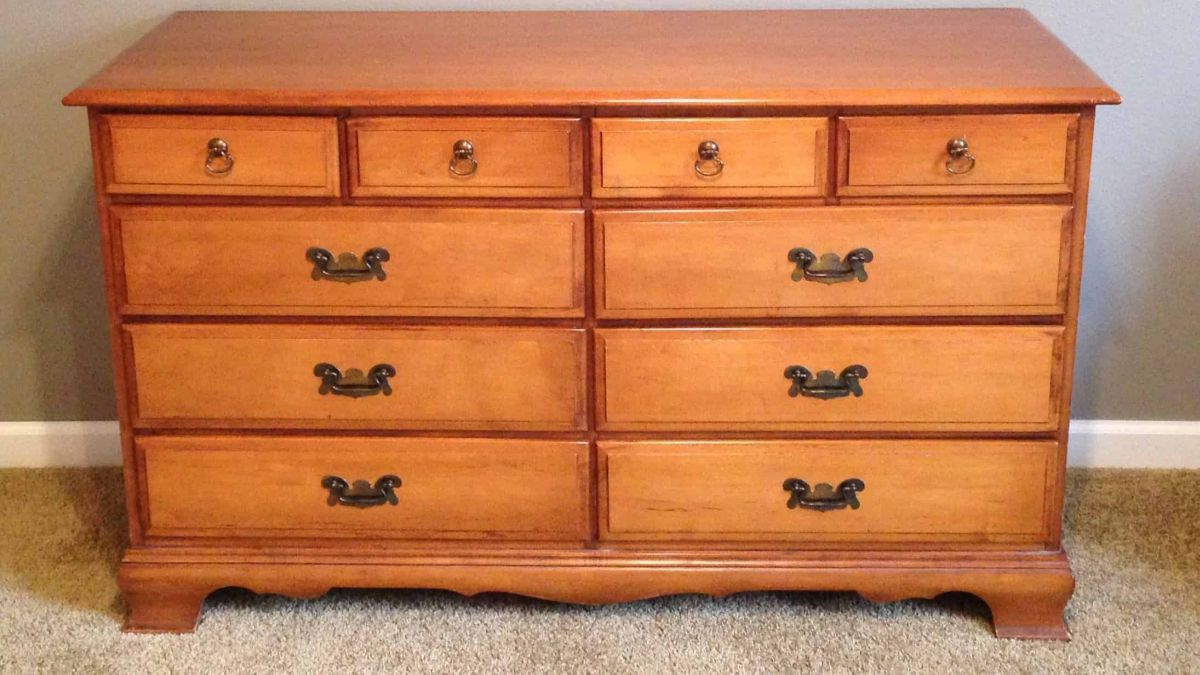
Furniture painter Kayla Payne of Painted by Kayla Payne found the matching dresser, tall chest, and nightstand on Craigslist for a friend furnishing her baby boy’s nursery. The furniture was in excellent condition, so replacing drawers or rebuilding the frames wasn’t necessary.
Instead of covering everything with paint, she chose a two-tone finish that would change the appearance of the set while leaving its wood grain visible. Getting the colors to work together required more than choosing a shade of navy.
Orange Maple Covered Both Pieces From Top to Bottom
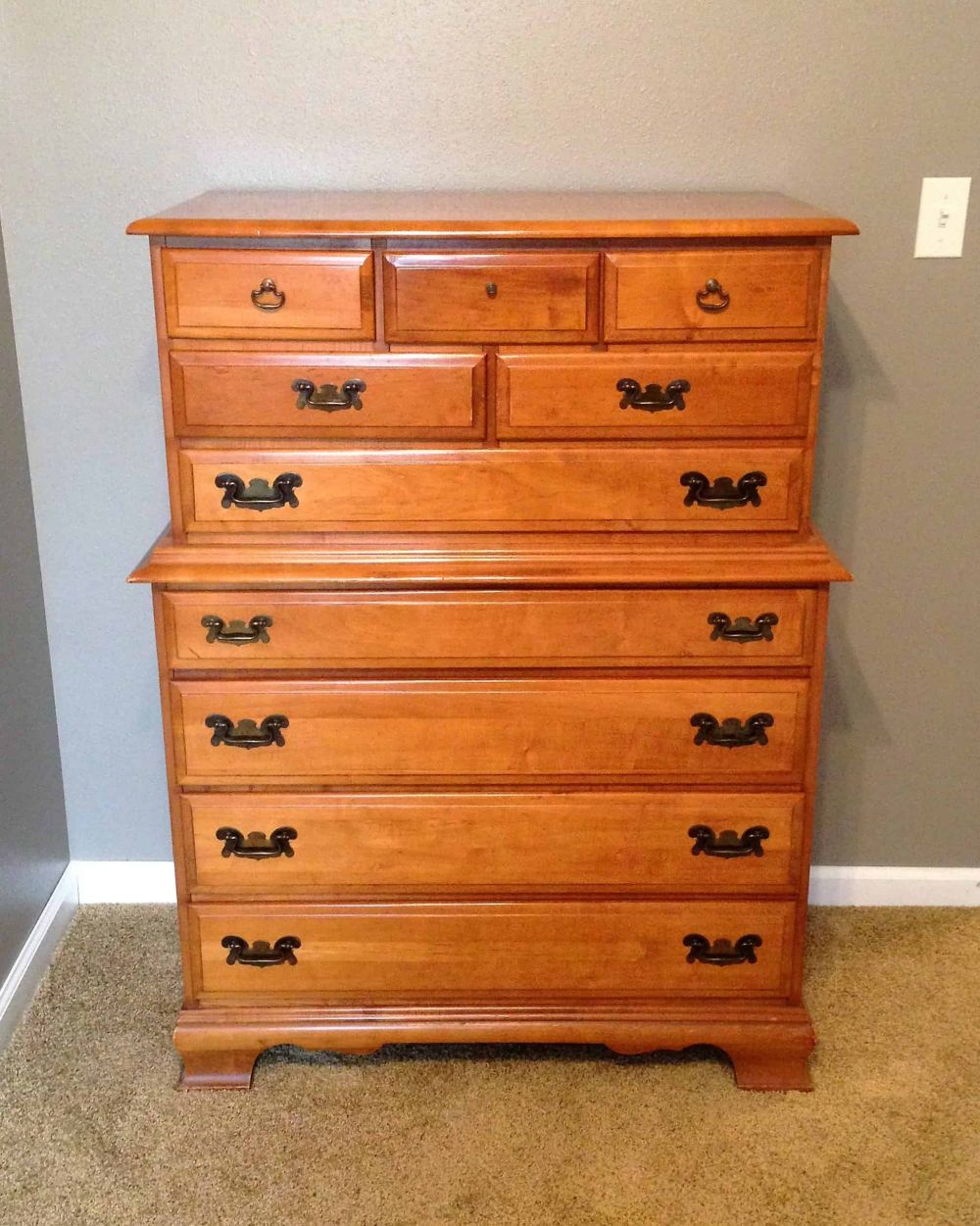
The tall chest had three small drawers across the top, two beneath them, and a wider center drawer above four deep storage drawers. A projecting ledge divided its upper and lower sections, while the wide dresser featured four small top drawers and six larger drawers arranged in pairs.
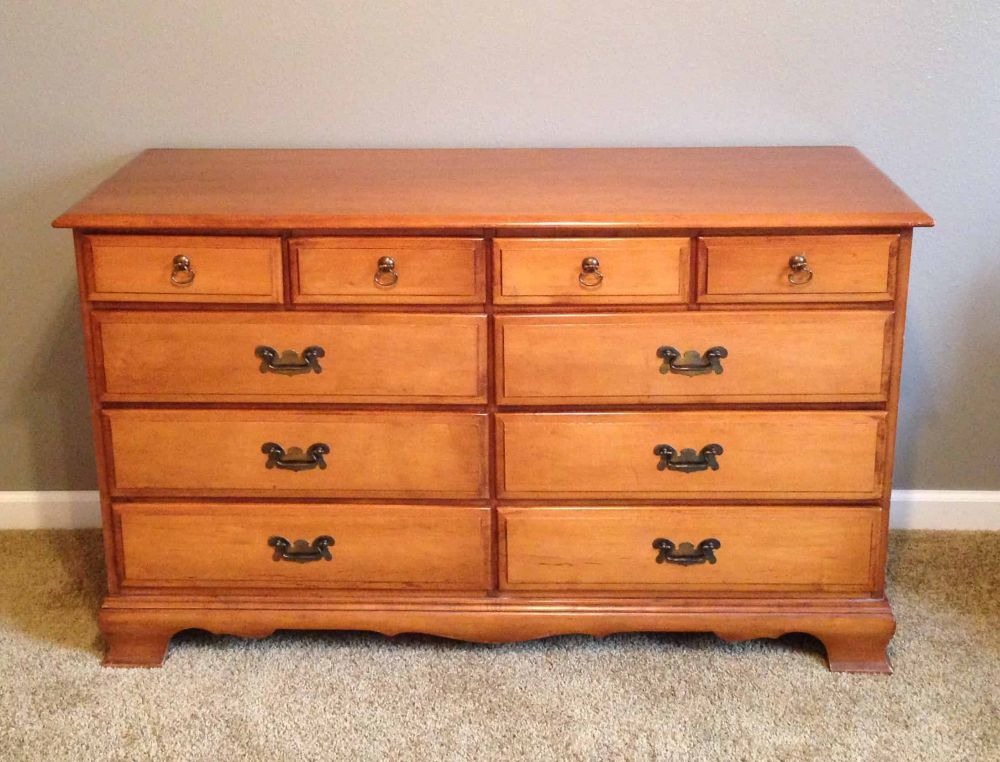
Both pieces had raised-panel drawer fronts, dark metal hardware, and curved cutouts along their bases. Years of use had left the furniture with a warm orange finish that emphasized its traditional appearance. The matching construction made them a good candidate for the same treatment, despite their different proportions.
Java Gel Stain Removed Some of the Yellow From the Maple
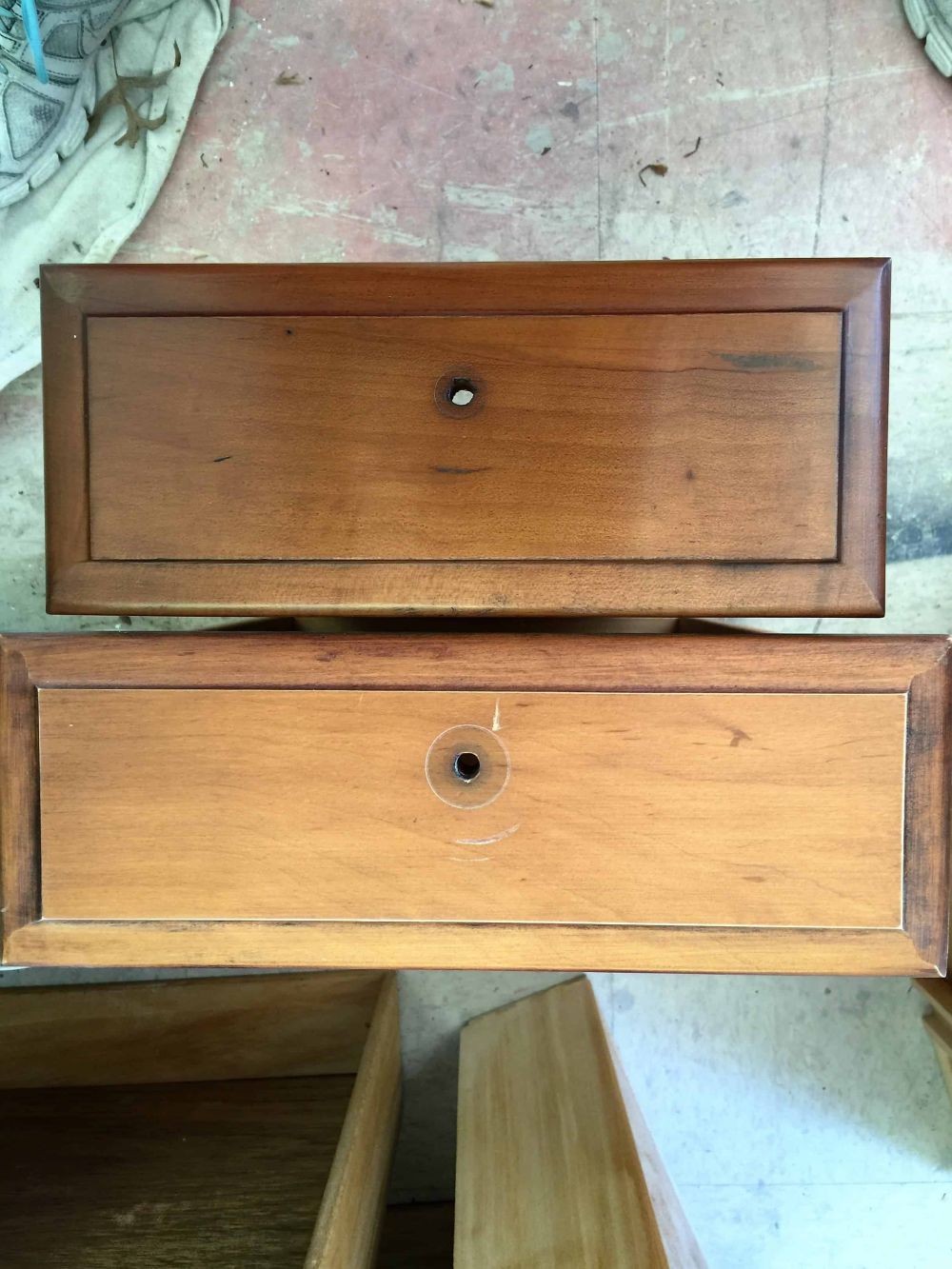
Rather than stripping the wood to bare timber, she sanded the drawer fronts and tops by hand with 220-grit sandpaper, applying enough pressure to dull the existing varnish without cutting through it. Sanding through the finish in isolated spots could have caused the new stain to absorb at different rates, leaving uneven patches.
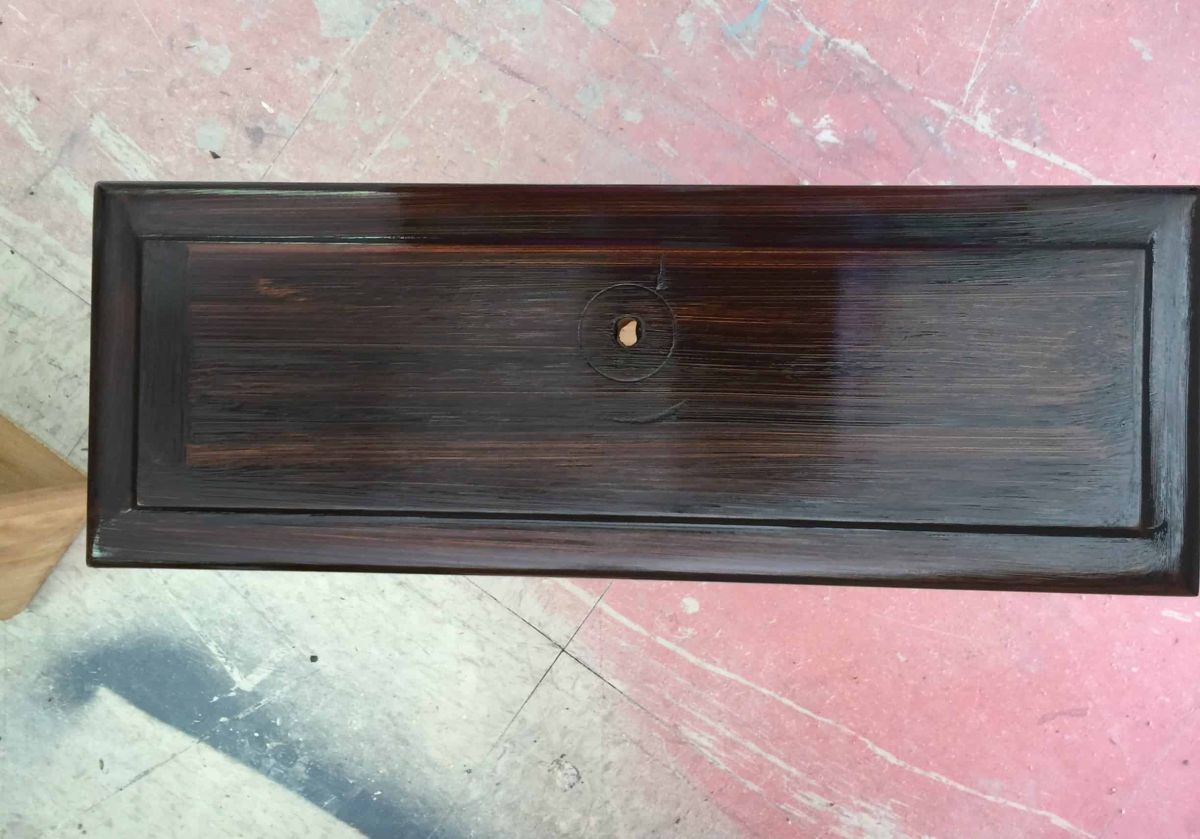
General Finishes Java Gel stain went onto the prepared surfaces in the direction of the grain. After about 30 seconds, she wiped off the excess, leaving a deeper brown tone without concealing the wood underneath.
The progress photograph compares two drawer fronts. The upper drawer has received the stain and appears darker, while the untreated drawer beneath it retains more of its yellow-orange color. She repeated the process across the exposed wood surfaces and allowed them to dry overnight before masking them for painting.
White Primer Prepared the Frames for Hale Navy
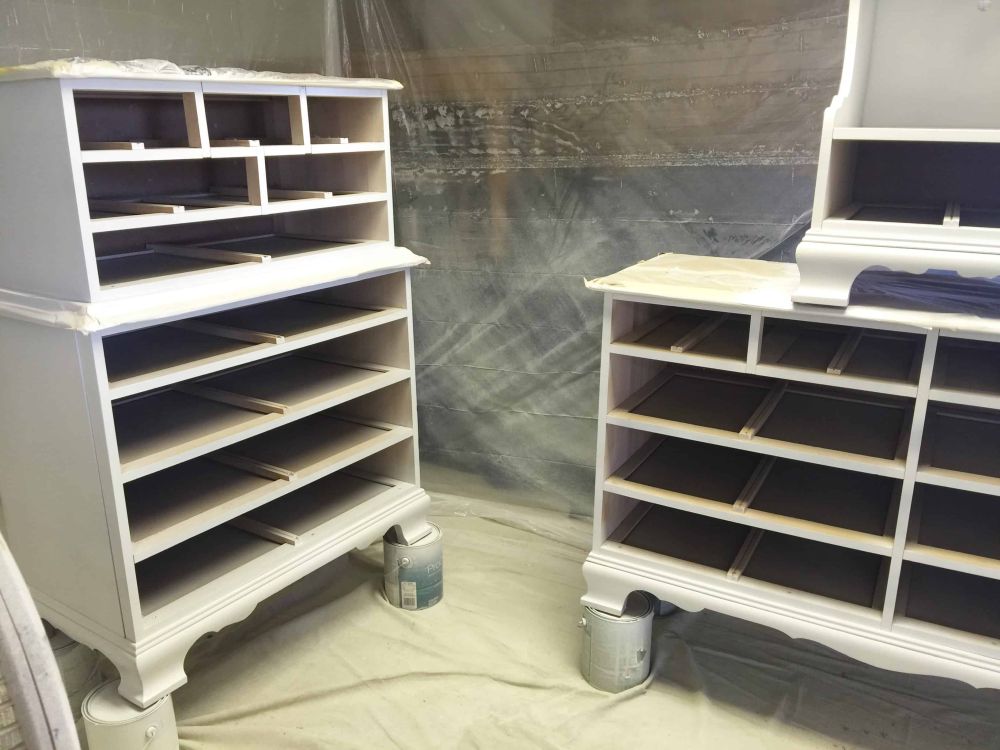
Removing the drawers exposed the interior rails and compartments, giving access to the sections that needed paint. With the stained tops protected, she sprayed Sherwin-Williams ProBlock Oil Primer onto both frames using a DeVilbiss FinishLine HVLP spray gun. The photograph shows the two empty dressers in the spray area, raised off the covered floor while the white primer coats their exterior surfaces.
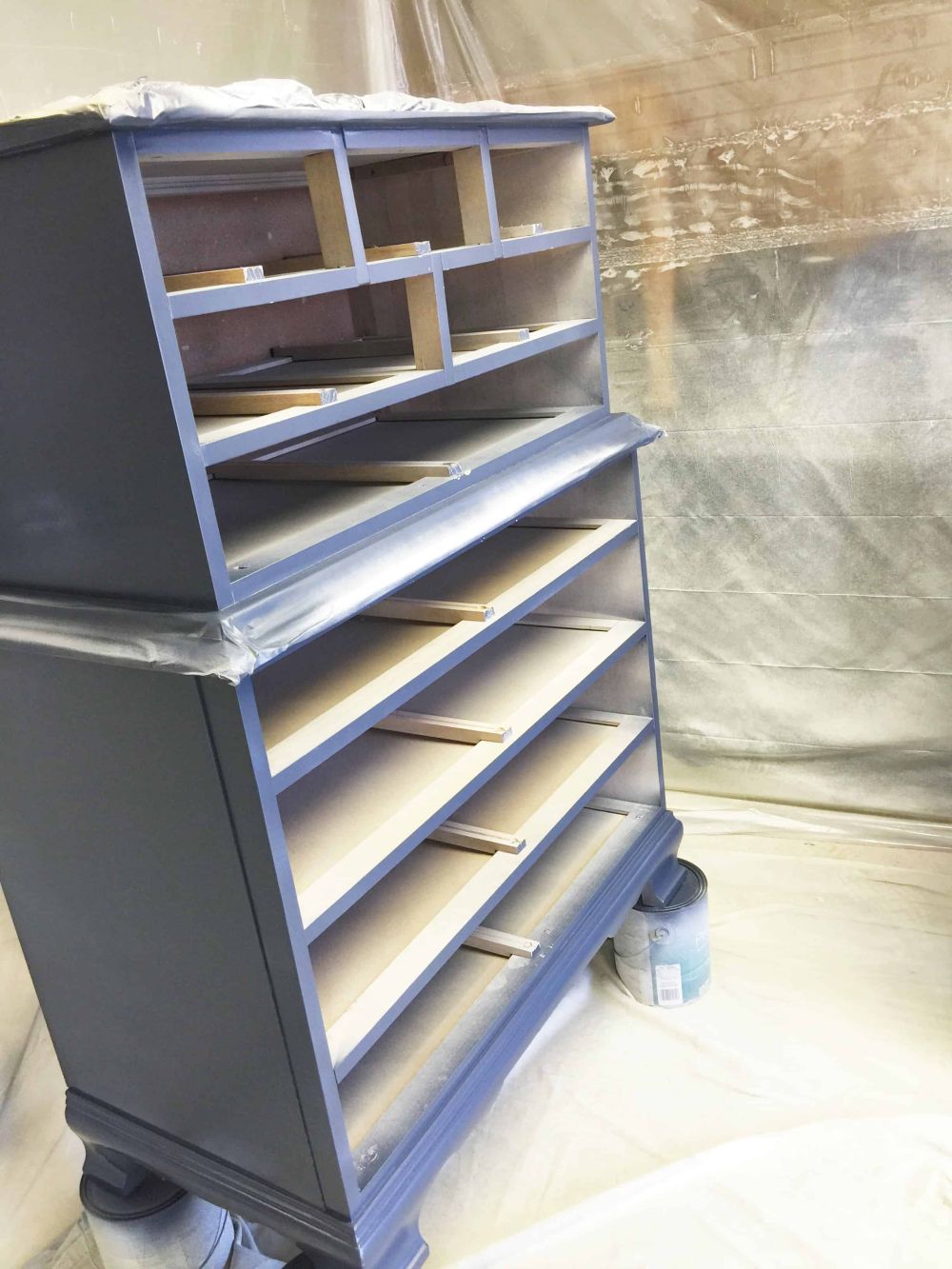
Once the primer dried, Benjamin Moore Hale Navy, mixed in Sherwin-Williams All Surface Enamel Satin, went onto the furniture in two coats. The progress image captures the tall chest with its side panels, rails, projecting ledge, and shaped base painted navy. The masked top and empty drawer openings show how the paint was confined to the frame rather than the wood surfaces selected for staining.
Damaged Brass Hardware Needed More Than Polishing
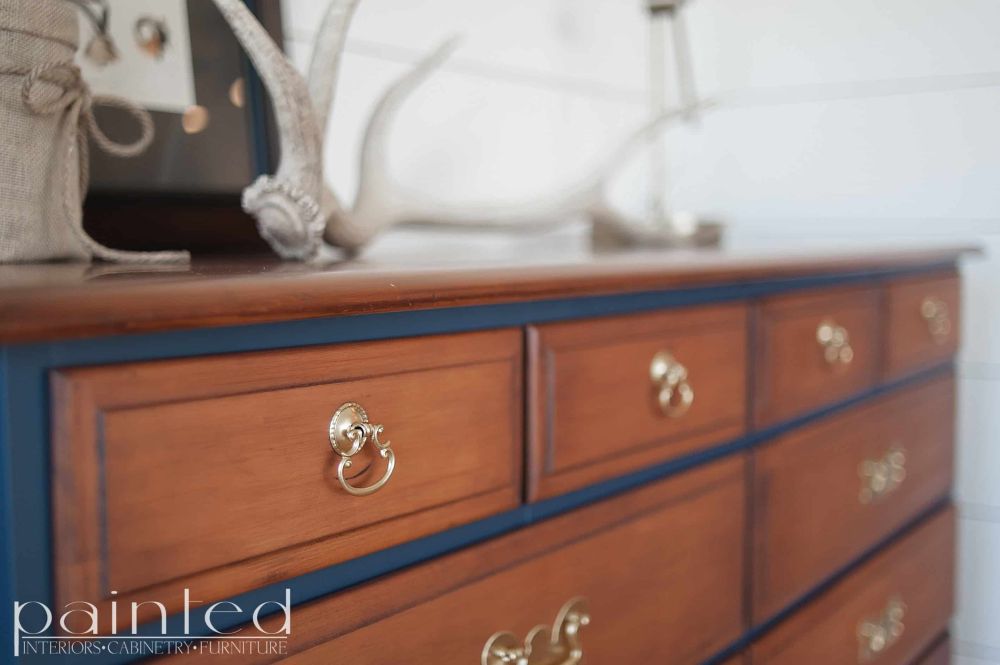
Original brass pulls were worth retaining, although corrosion had left marks on several pieces. Bar Keepers Friend removed surface buildup, but polishing could not restore the damaged areas, prompting a change of approach.
Rust-Oleum Gold Metallic spray paint gave the existing handles a consistent finish, preserving their decorative shapes without the need to find replacements for the different drawer sizes.
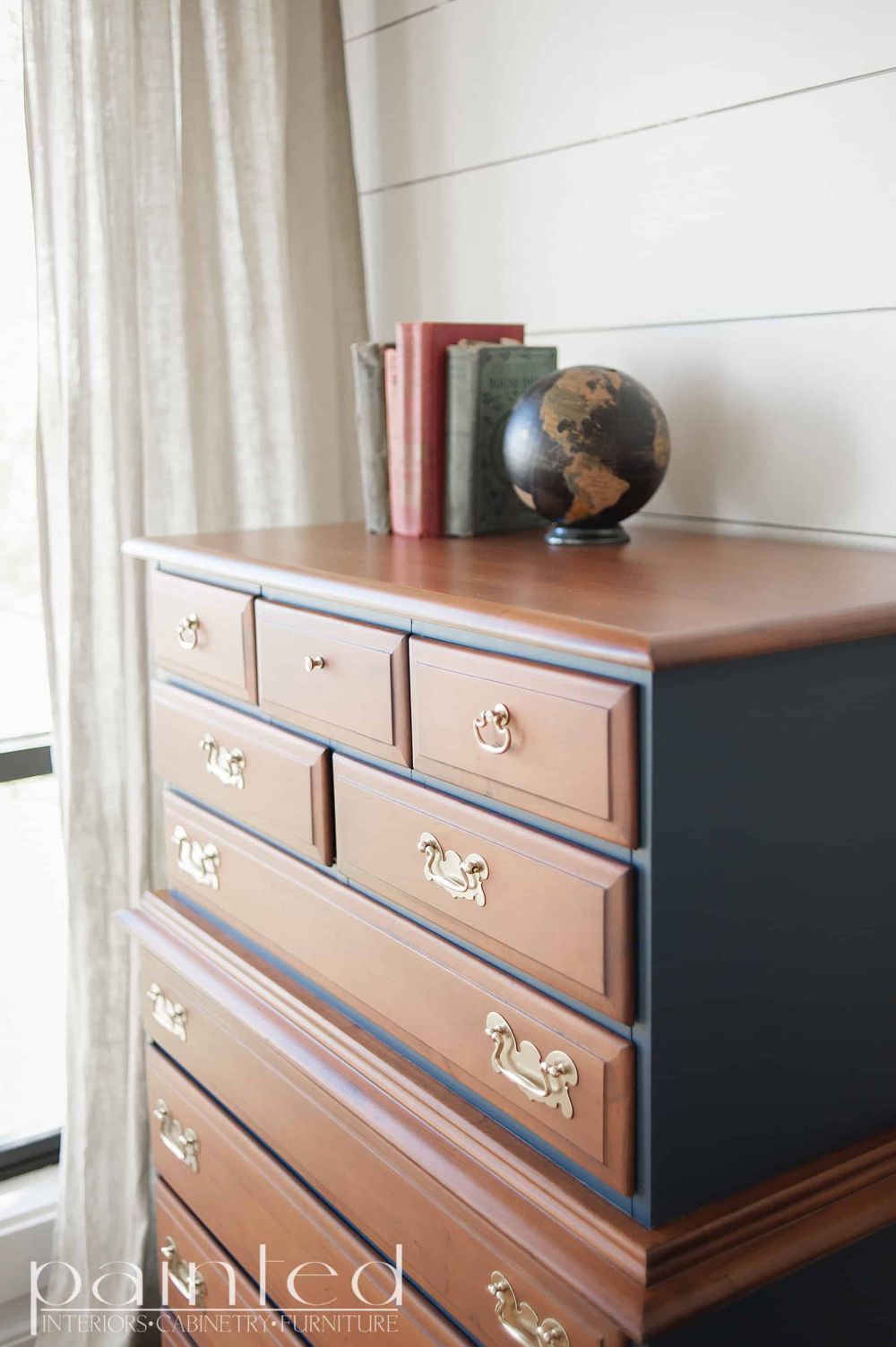
A close view of the completed chest shows the contrast between the small ring pulls on its upper drawers and the ornate bail handles below. Once the painting and staining were complete, two coats of Minwax Polycrylic in Satin provided a protective topcoat.
Finished Dressers Brought Two Different Furniture Shapes Together
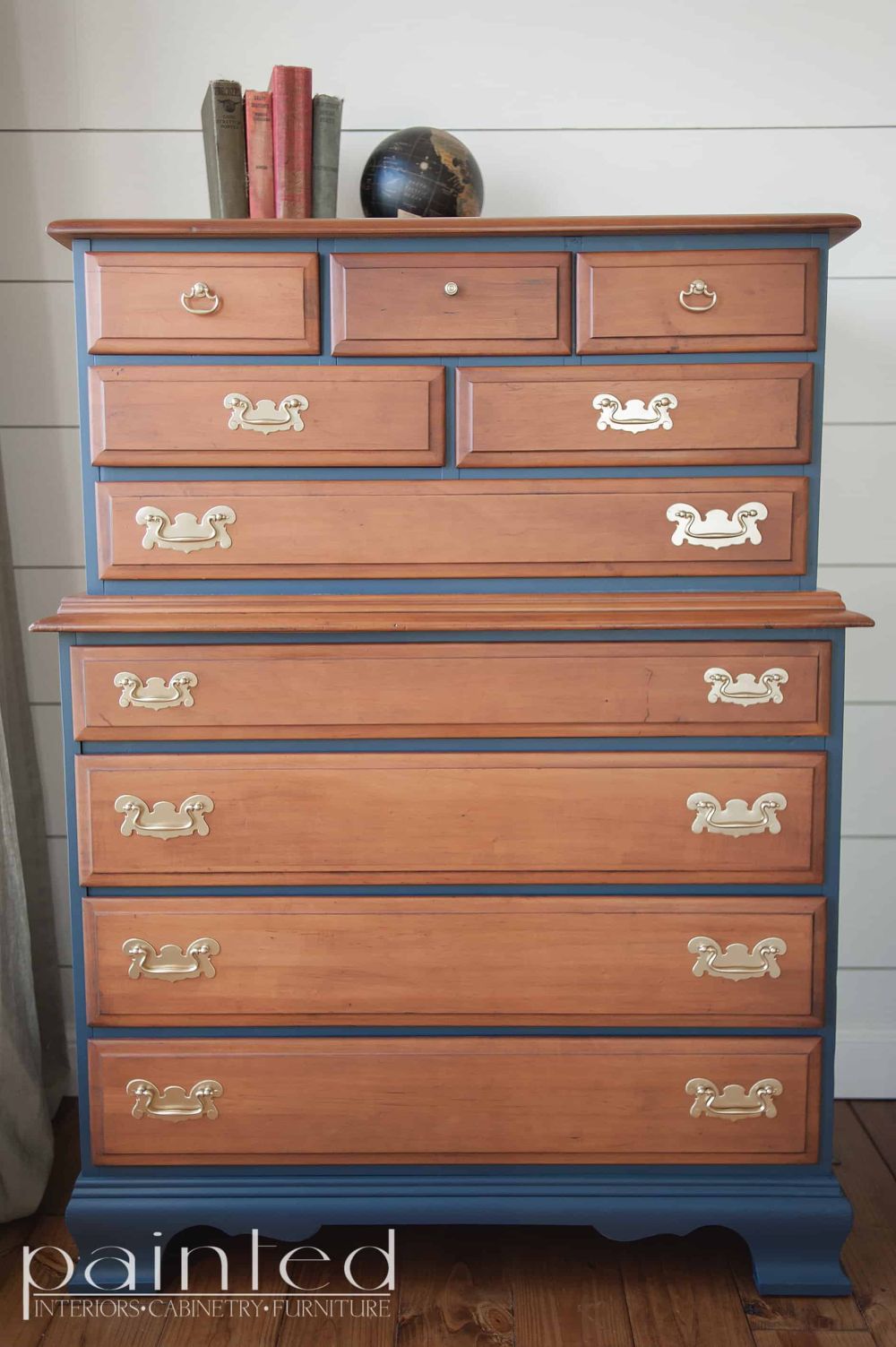
The completed tall chest retains its stacked arrangement, with the narrow upper drawers separated from the deeper lower section by the projecting wooden ledge. Navy paint makes the frame visible between the individual drawer fronts, while the gold pulls introduce a lighter metallic detail against the stained maple.
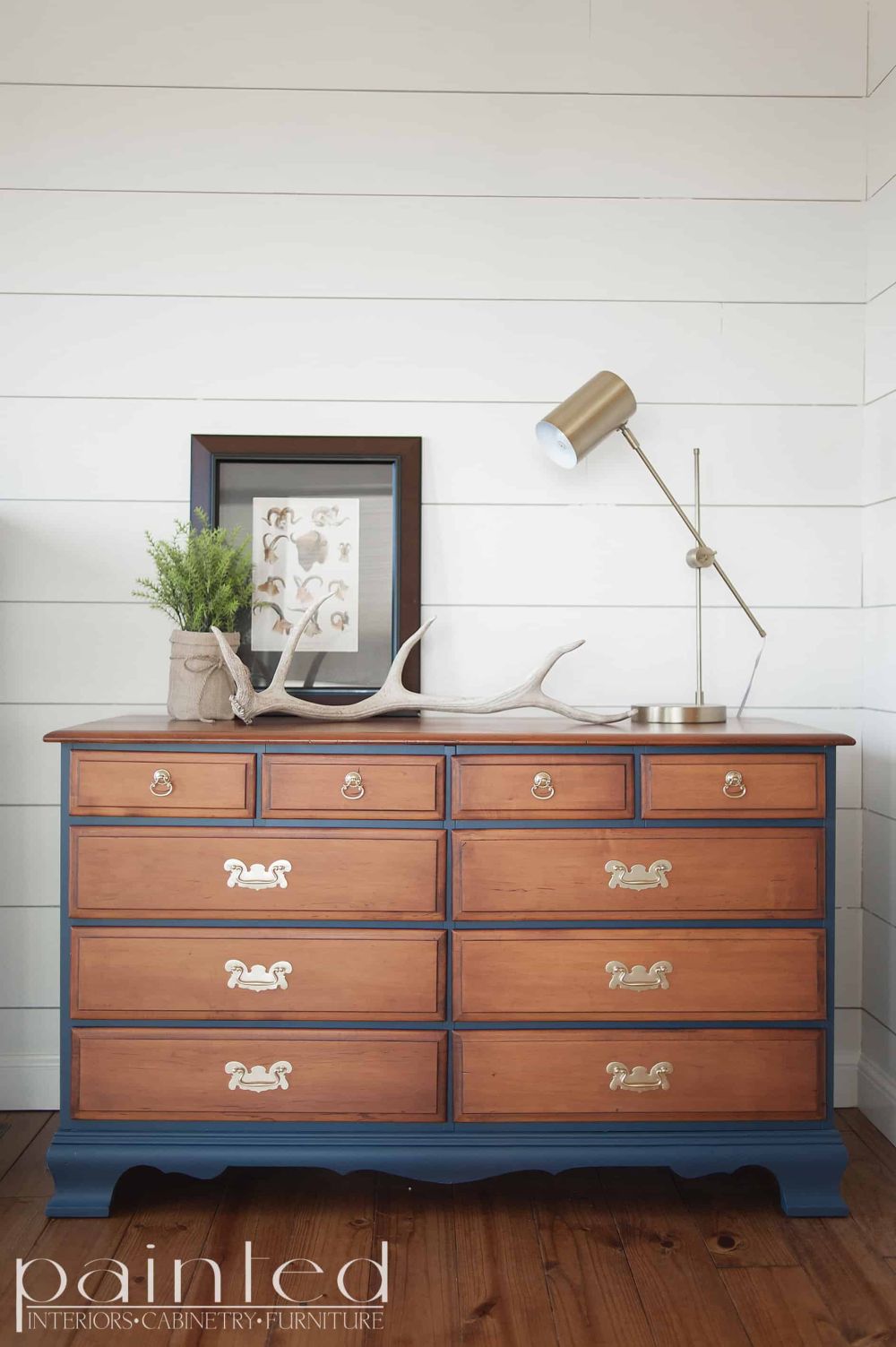
The wide dresser takes on a different appearance because of its horizontal proportions. Four small drawers stretch across the upper section, followed by three rows of paired drawers. Its broad wooden top provides space for a lamp and decorative accessories, while the shaped navy base grounds the piece against the wood floor.
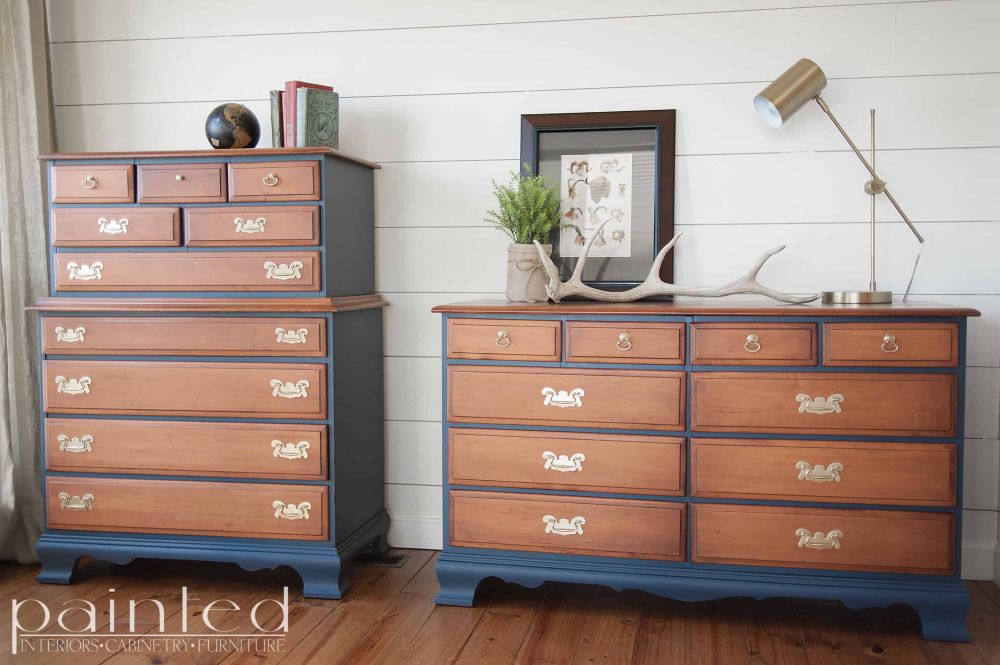
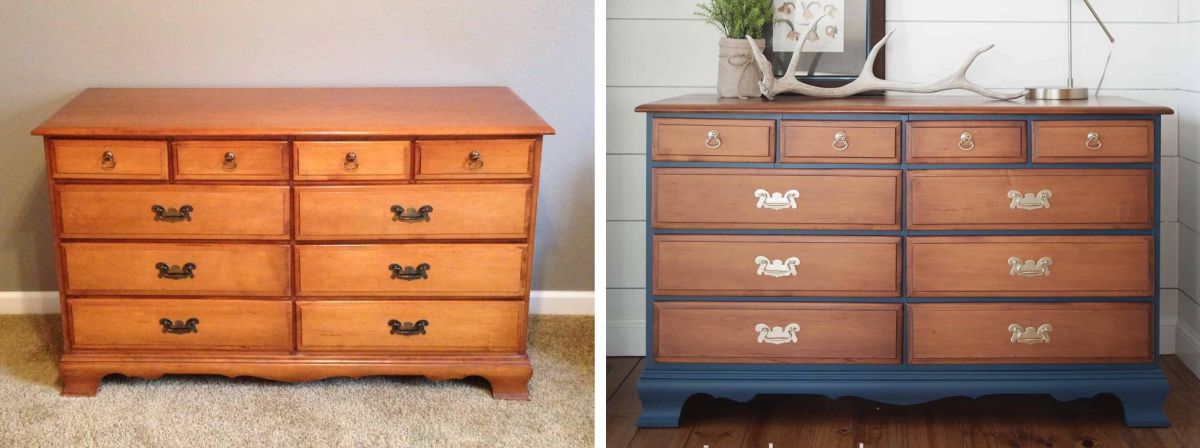
The before-and-after comparison shows the wide dresser in its original setting against a gray wall, followed by its finished appearance against white plank walls and wood flooring. The final photograph brings both pieces together, with books and a globe on the tall chest, while framed artwork, antlers, a small plant, and a brass lamp decorate the wider dresser.
Would you have kept the stained maple drawers or painted the entire set navy blue?
Image credits go to @paintedbykaylapayne.