Putting Aluminum Foil in the Kitchen Sink: What It’s For and Why People Recommend It


Leftover cooking oil can cause problems when poured down the kitchen sink. Grease collects inside pipes, restricting water flow and contributing to blockages. Hot water and dish soap may move it farther into the plumbing, but neither prevents buildup.
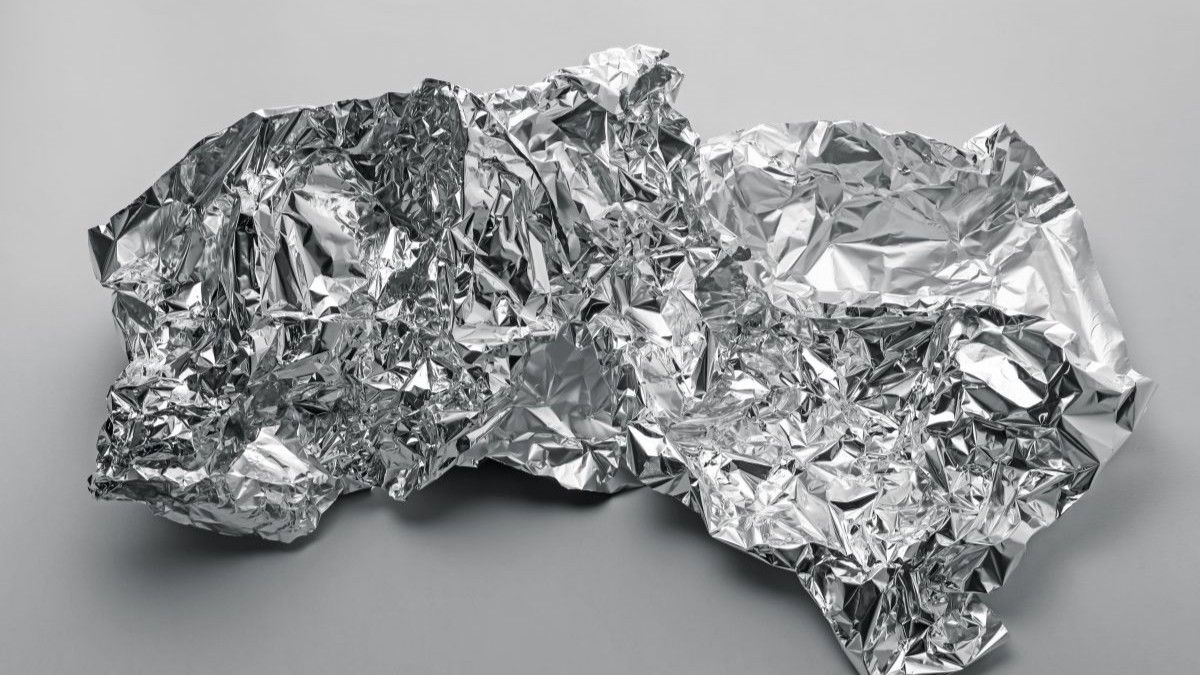
Instagram creator @sana.motherhood shared a trick she says her grandmother taught her. Instead of pouring leftover oil down the drain or looking for an empty jar, she shapes aluminum foil around a drinking glass to make a disposable container.
The foil sits over the sink opening, collecting grease from a frying pan before it enters the plumbing.
Why Put Aluminum Foil Over the Kitchen Sink Drain?
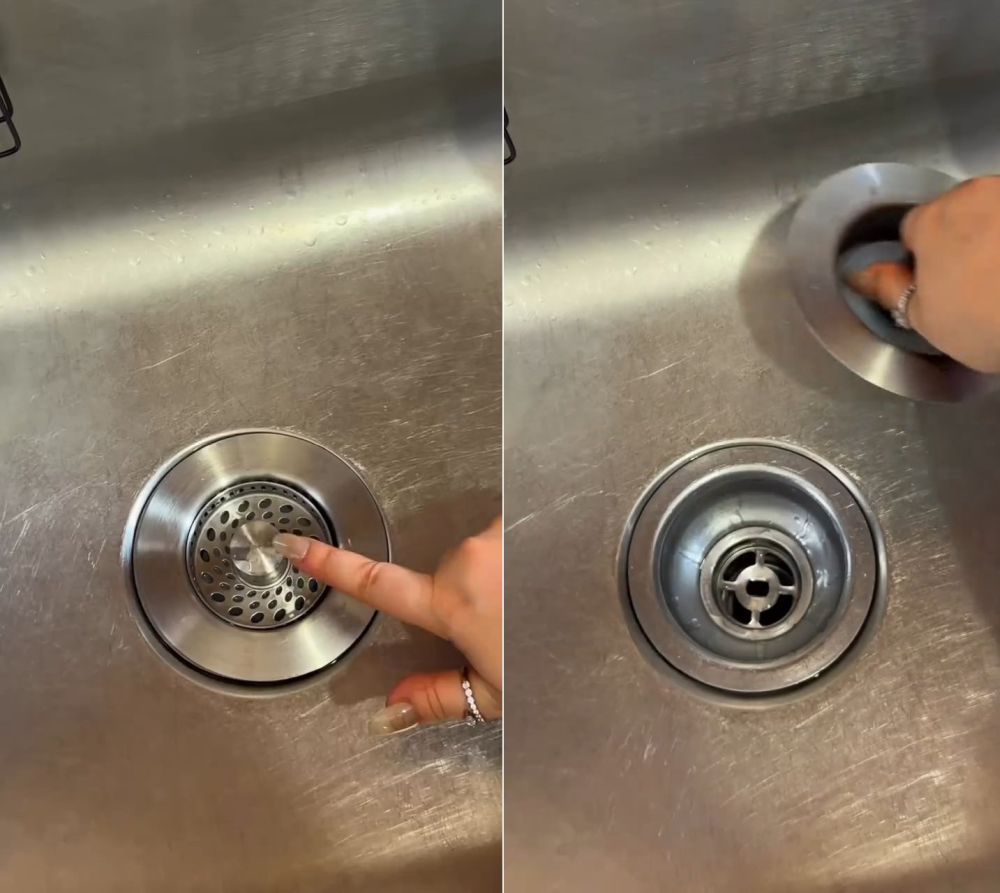
The demonstration begins with the removal of a metal sink strainer, exposing the drain opening beneath it.
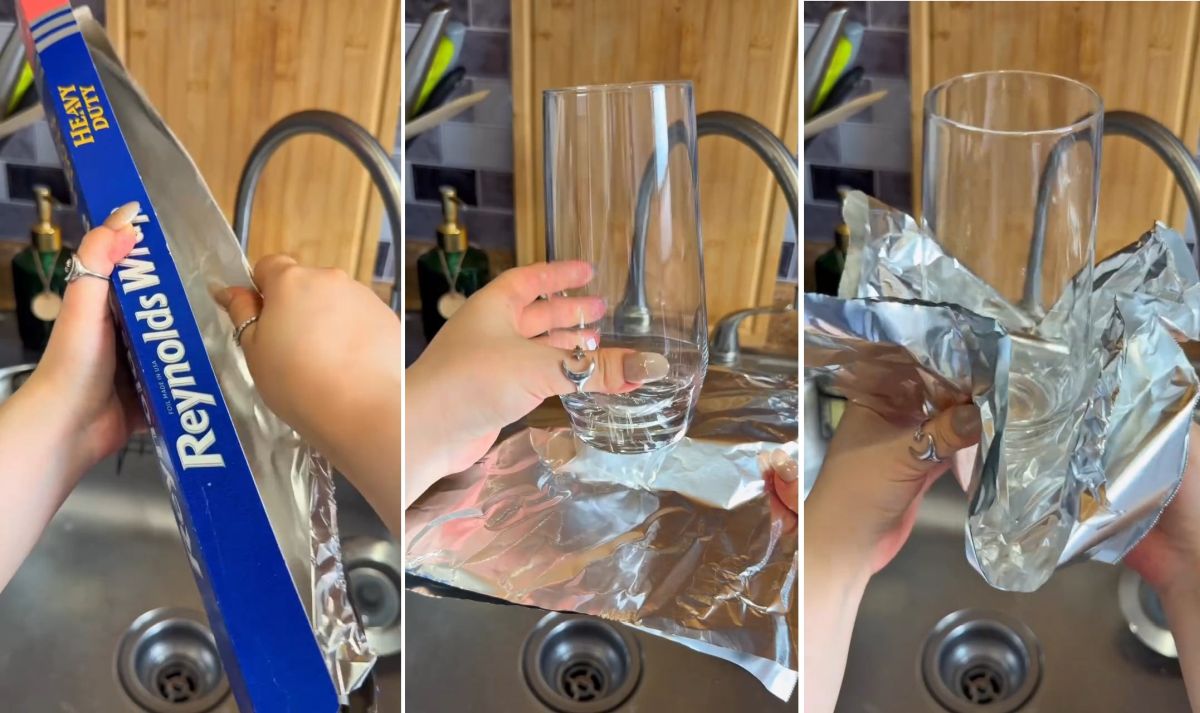
A sheet of Reynolds Wrap is then placed beneath a tall drinking glass. The woman folds the metal around the base and sides, forming a pocket that retains its shape when the glass comes out.
The finished cup sits over the opening, with the surrounding sink surface supporting its edges. It creates a temporary collection point for unwanted pan drippings.
What Happens to the Cooking Oil?
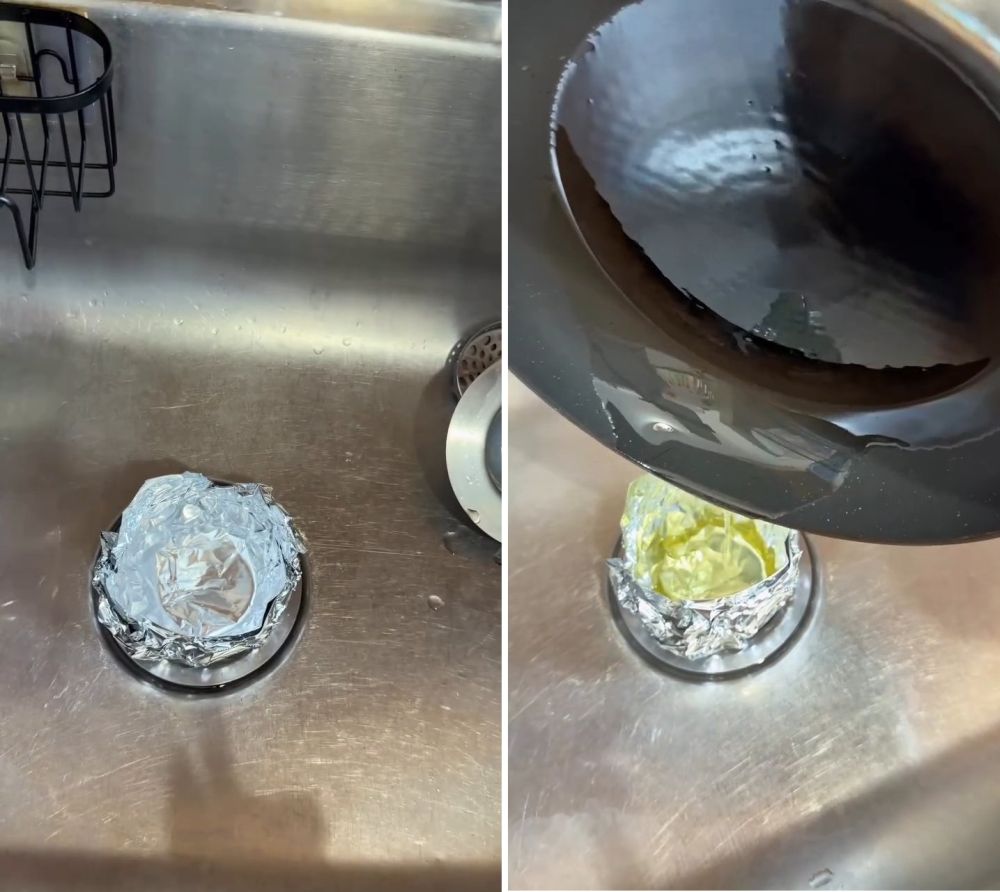
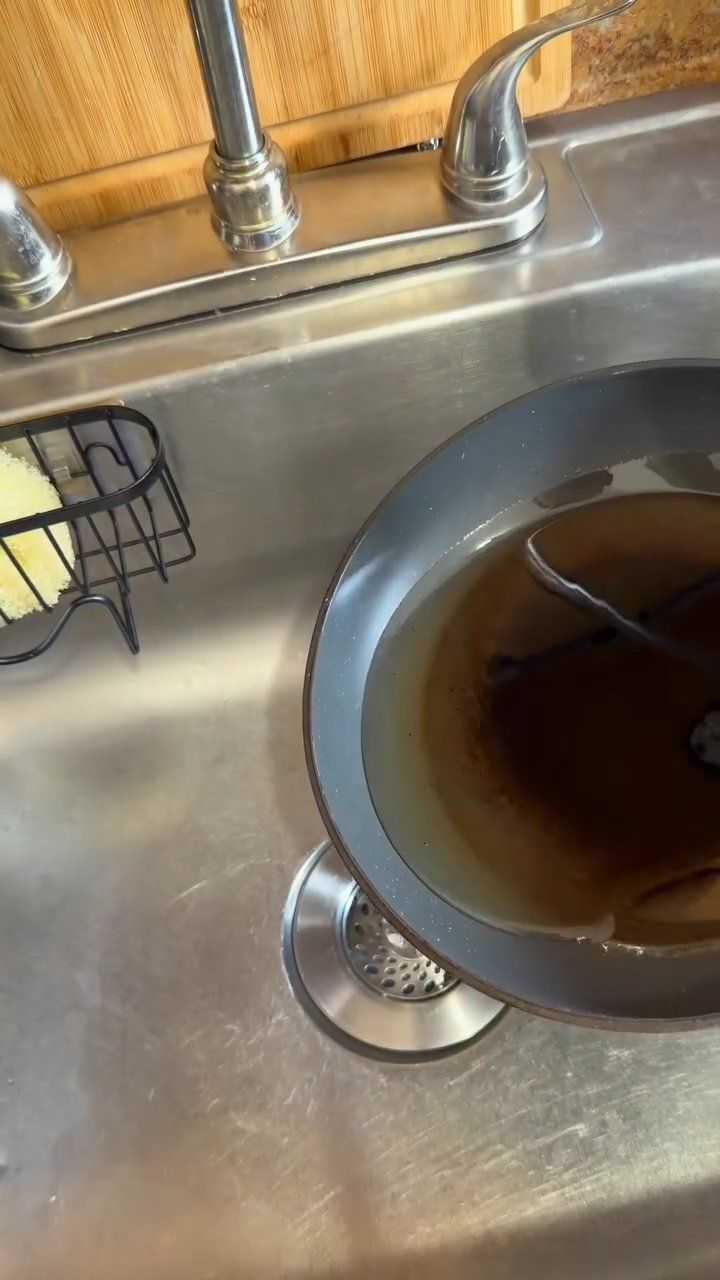
The frying pan is tilted over the foil, allowing the dark liquid to collect inside the pocket. The metal barrier prevents the contents from reaching the drain as long as it remains intact.
After emptying the pan, she wipes the remaining residue with paper towels and adds them to the same container.
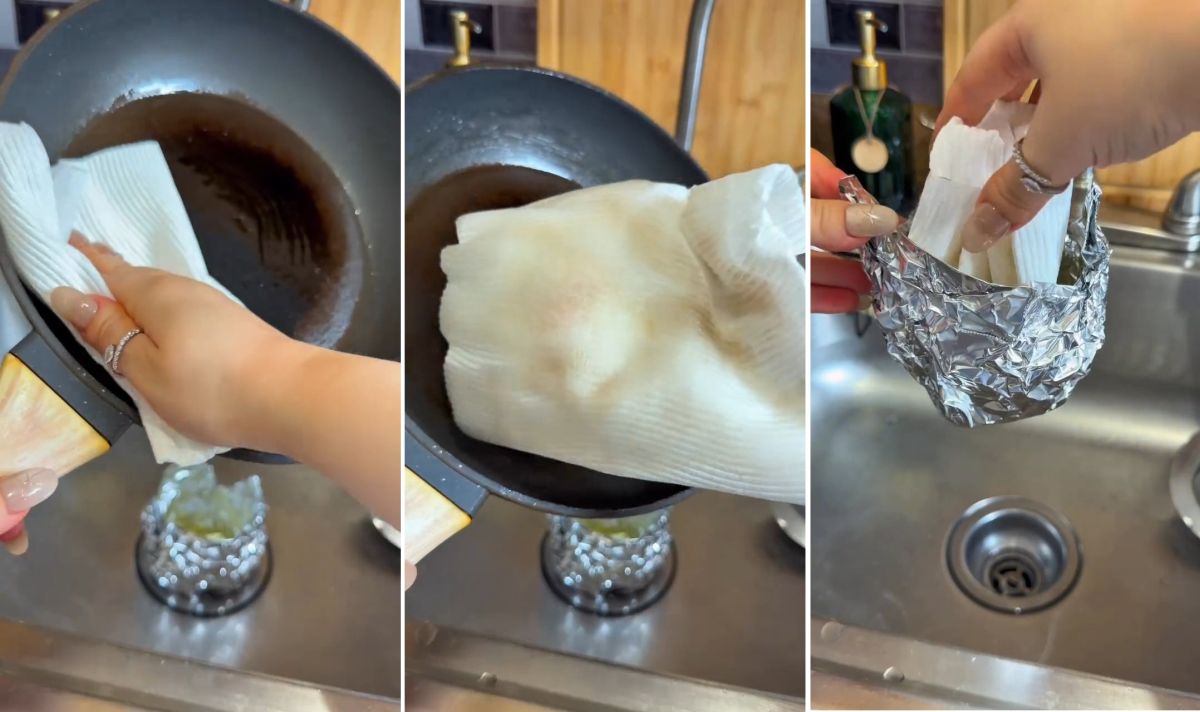
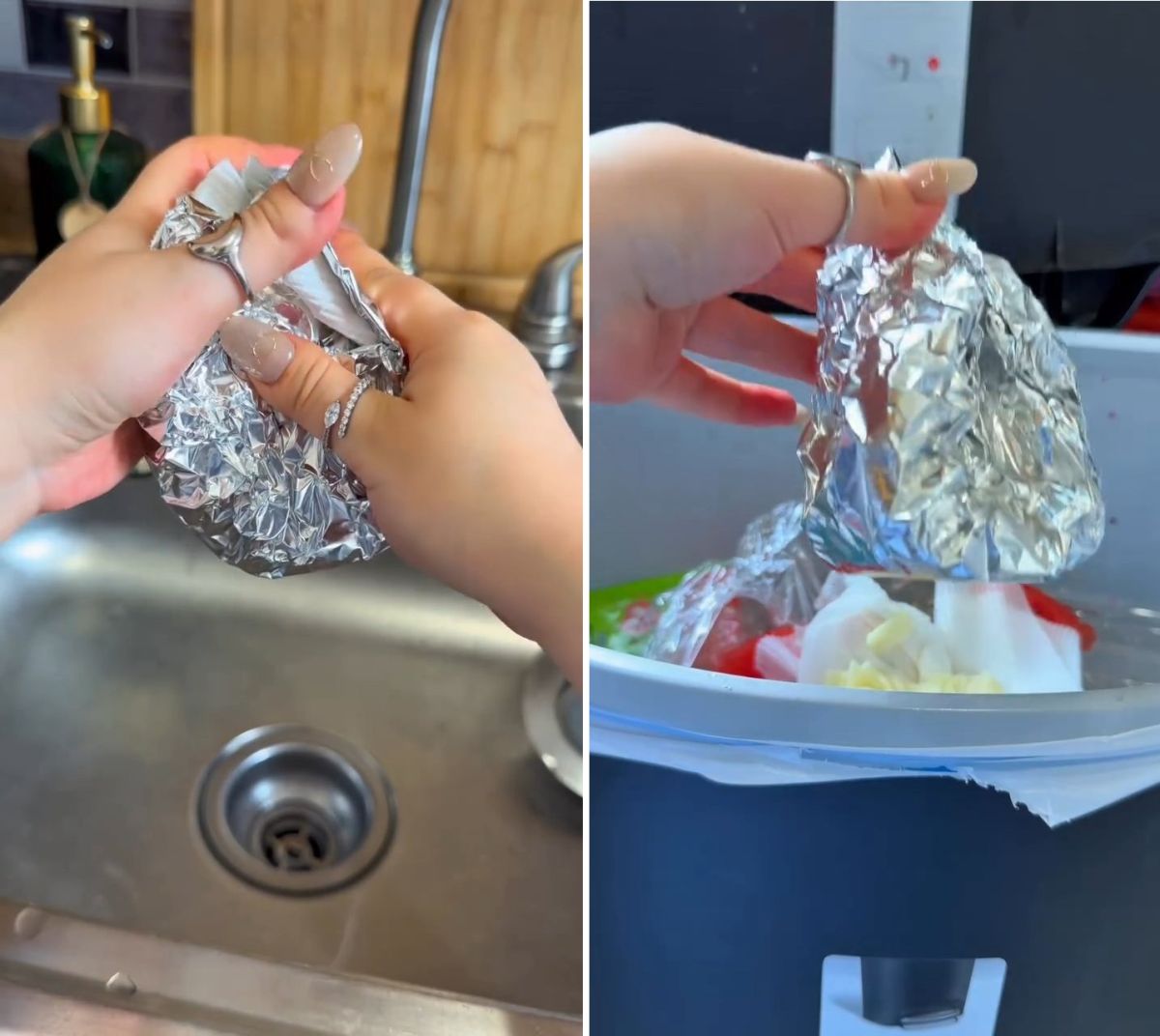
She gathers the edges around the waste, presses the foil into a bundle, and drops it into a trash bin.
The demonstration ends without an empty bottle or jar to store. The foil holds both the collected liquid and the used towels.
Why Keeping Cooking Oil Out of the Drain Matters
According to the U.S. Environmental Protection Agency, grease from homes, restaurants, and industrial sources accounts for 47% of reported sewer blockages. These deposits restrict wastewater flow and can cause sewage backups.
The City of Concord, North Carolina, recommends using an aluminum foil-lined cup to collect grease when another container isn’t available. The oil should cool before disposal, and the foil needs support to prevent spills or tears.
For larger amounts, the New York City Department of Sanitation advises transferring cooled oil into a sealed container before placing it in the trash. Used cooking oil collection programs may offer another option.
Turning aluminum foil into a disposable grease container is a useful kitchen trick worth sharing. Pass it along to help keep cooking oil out of household drains. Do you know any other kitchen tips that deserve more attention?
Image credits go to @sana.motherhood.