Instead of Throwing Away Empty Toilet Paper Rolls, She Turned Them Into Seed Packets for Next Spring


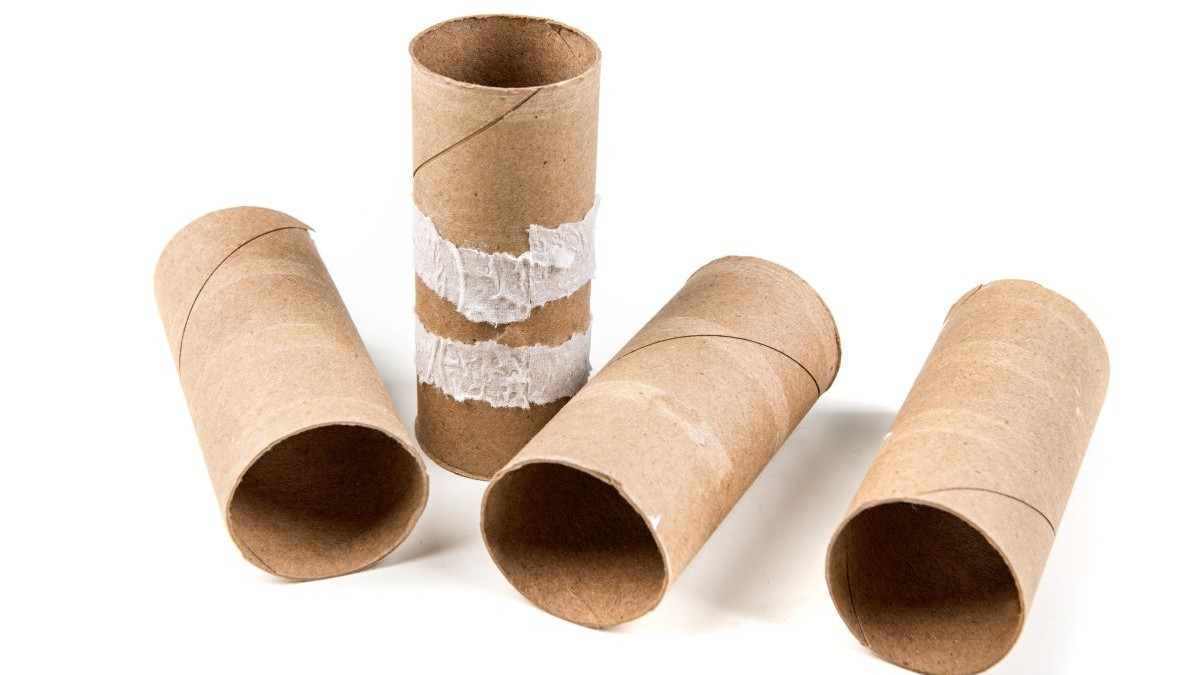
Empty toilet paper rolls often end up in the recycling bin, but one gardener found a use for the cardboard tubes after collecting seeds from her garden. Instead of using them as seed-starting pots, she turned them into small packets that can hold seeds until the next planting season.
Gena Murray, the Instagram creator behind @gigisgardentips, demonstrated how to make the packets by flattening a cardboard roll, trimming the ends, and folding the material into a small container. The project requires scissors, tape, and a few supplies for labeling.
Her method works best for larger seeds, such as squash and sunflowers, while smaller varieties need an extra envelope to prevent them from escaping. The finished packets can be labeled with the seed variety and collection year before going into storage.
She Flattened a Toilet Paper Roll and Trimmed the Ends
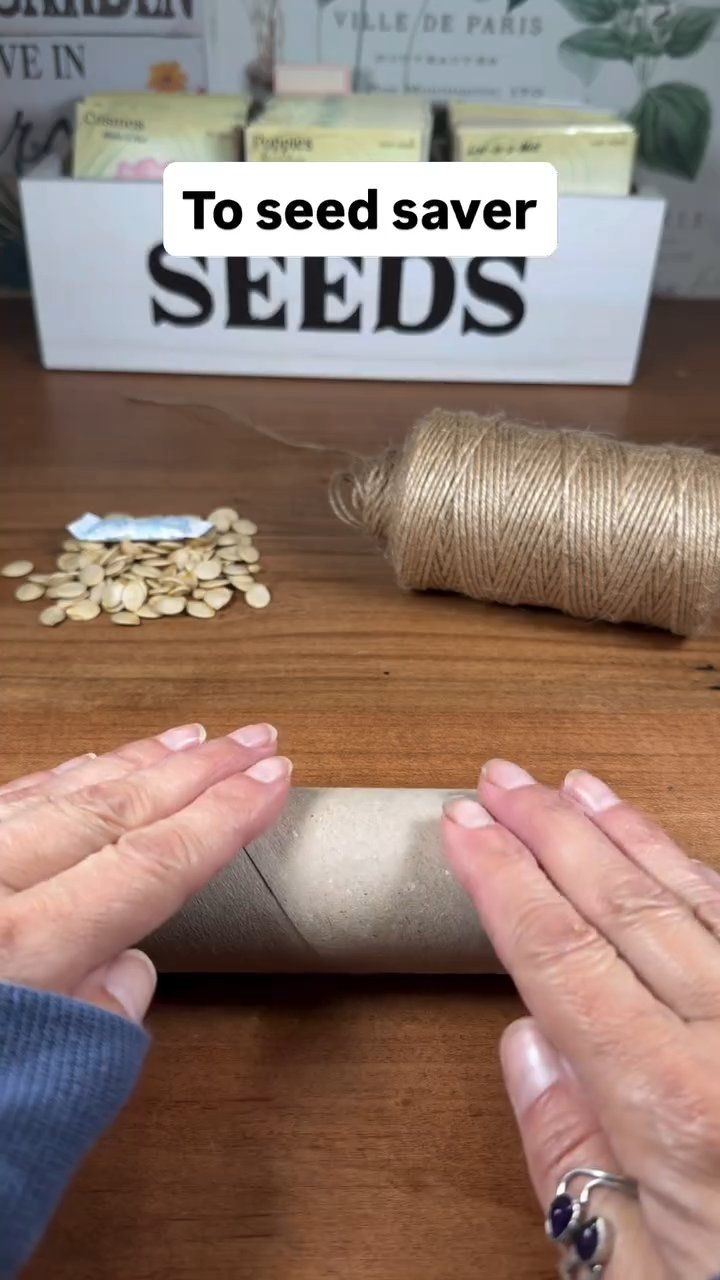
The project begins with an empty cardboard tube from a toilet paper roll. Pressing it flat creates two broad sides with folded edges, providing the basic shape of a small envelope.
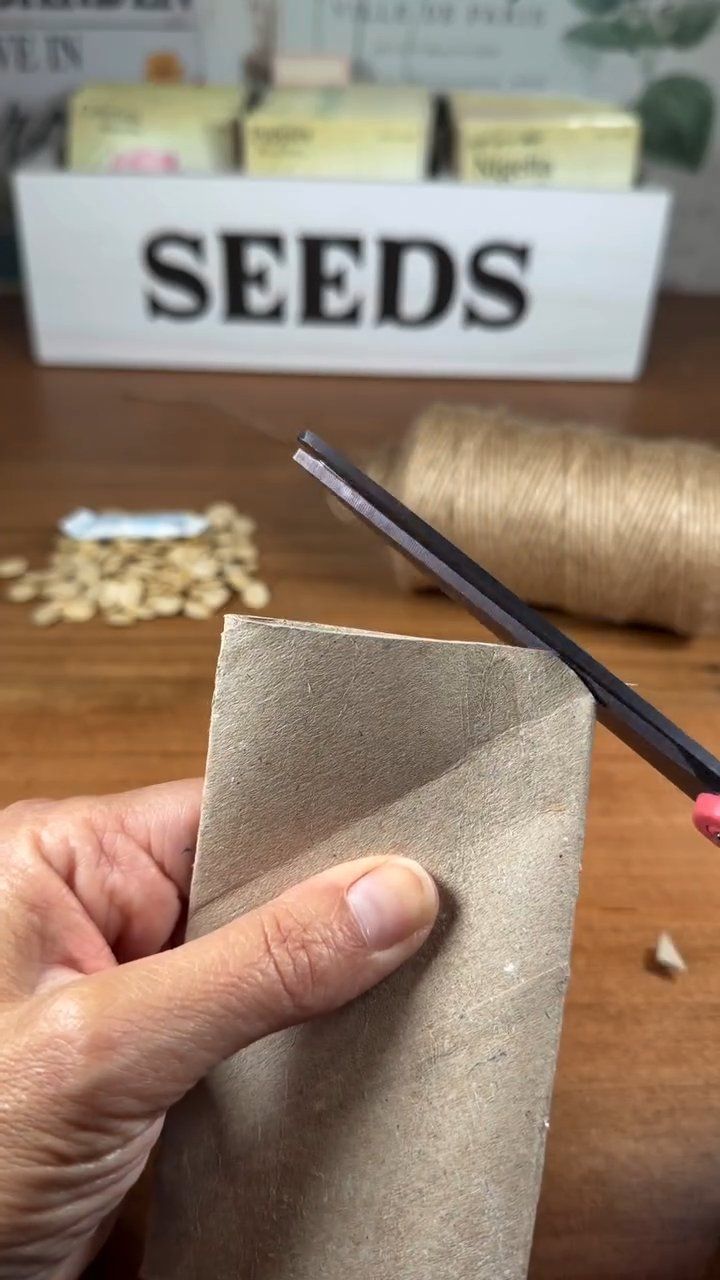
Using scissors, she trims the open ends into rounded curves rather than leaving the cardboard with straight edges. These curves allow the material to fold inward and form overlapping flaps.
The tube remains intact along its sides, so no additional cardboard or separate base is required.
Folding the Cardboard Creates a Small Seed Packet
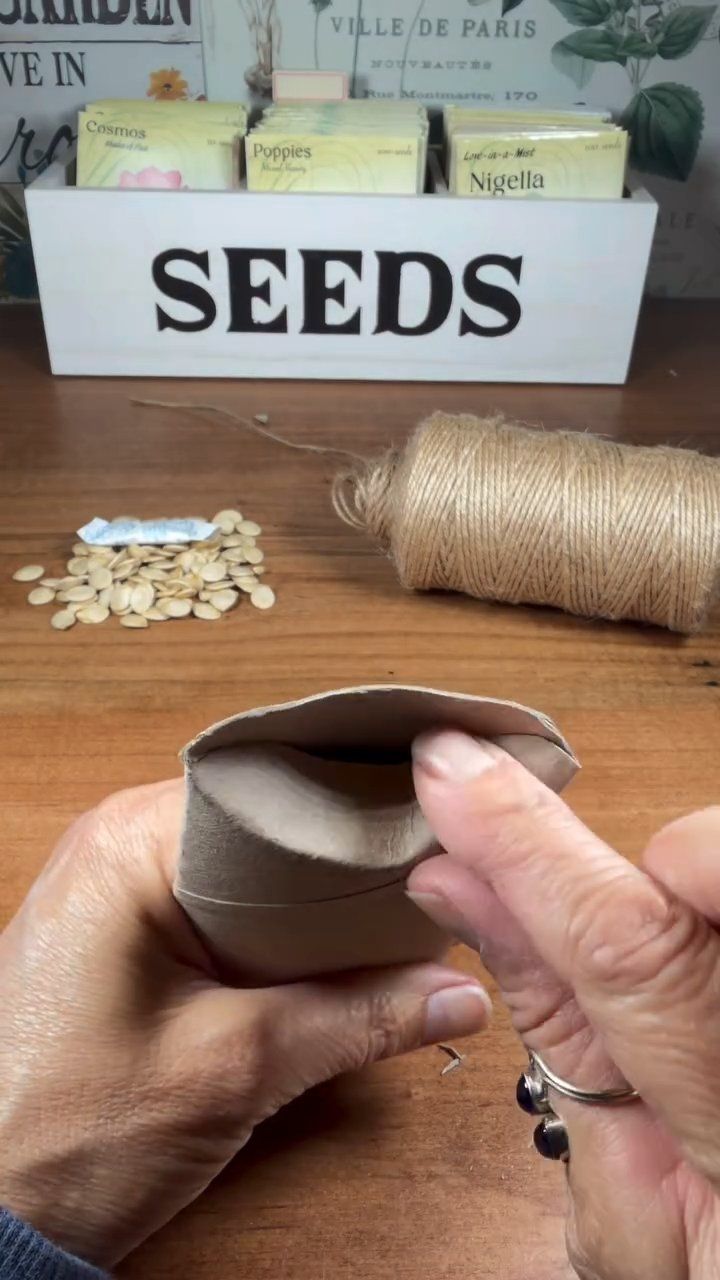
She presses one curved flap inward, then folds the opposite flap over it to close the first end. The overlapping cardboard forms a rounded closure similar to a pillow box used for small gifts.
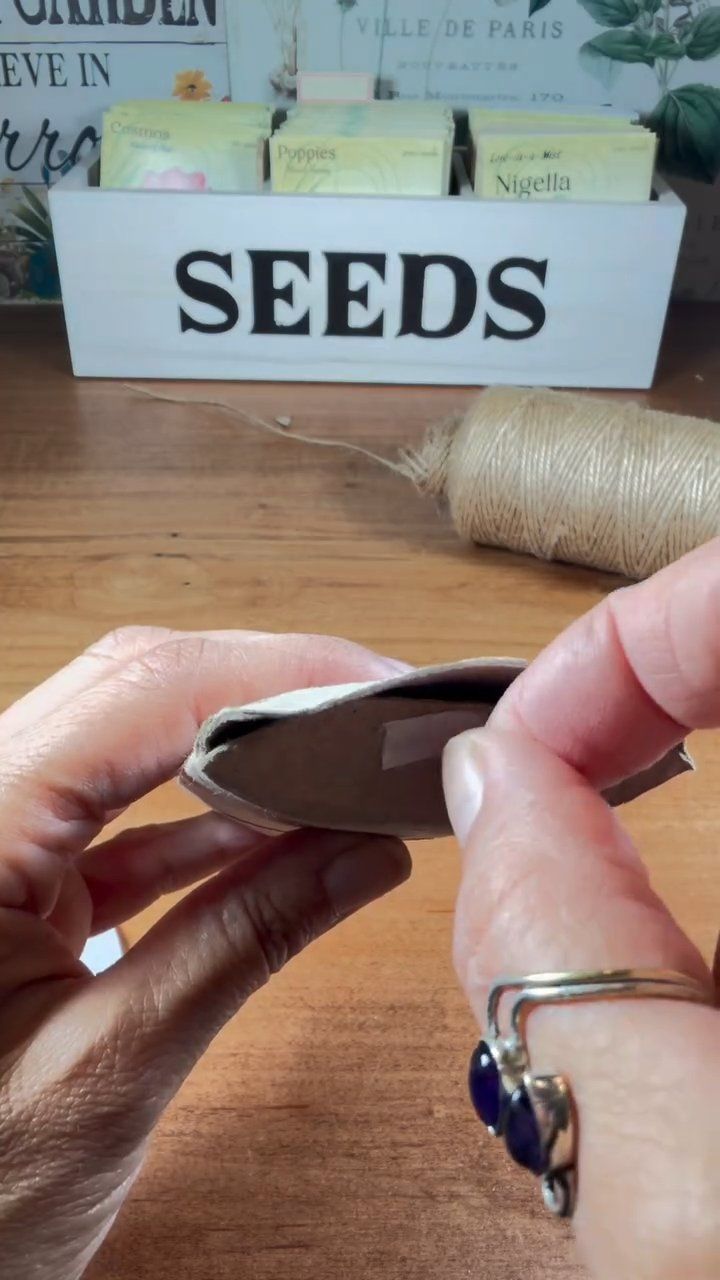
A small piece of tape holds the flaps together, helping prevent the packet from opening when seeds are added.
With one end secured, the remaining opening provides enough room to pour seeds into the cardboard container.
Dried Seeds Go Inside Before the Second End Is Closed
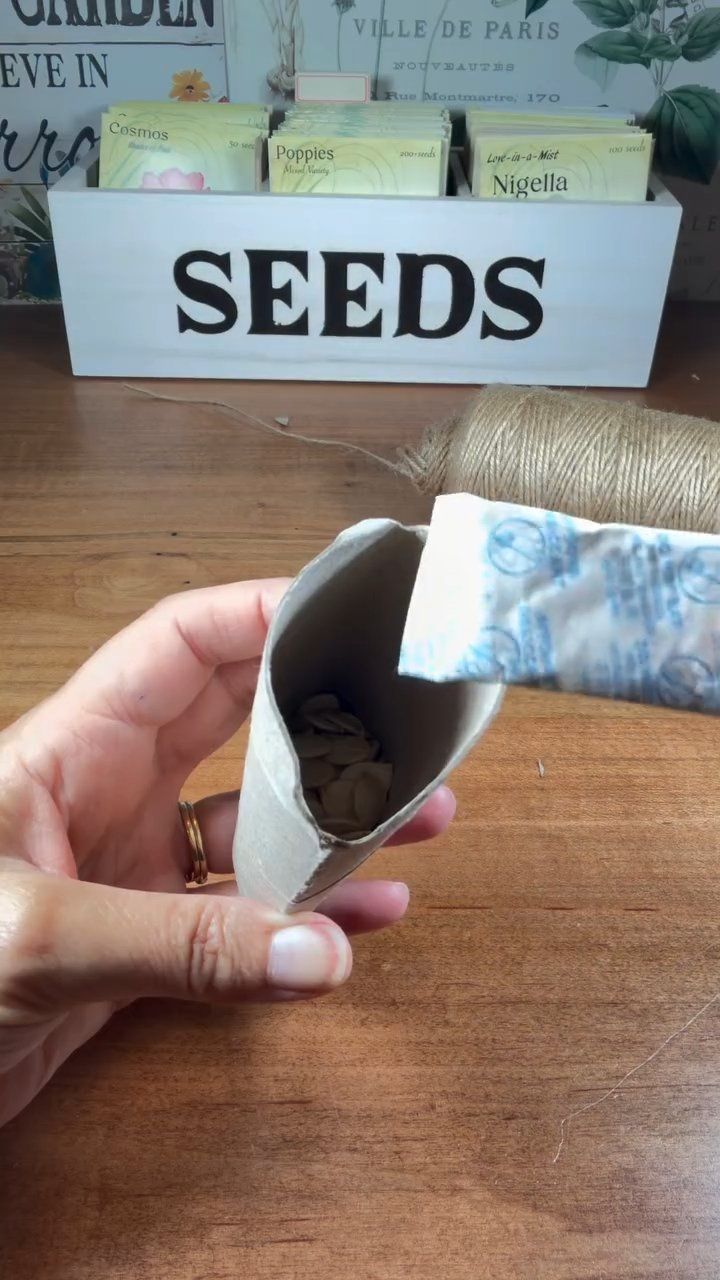
The gardener adds seeds through the open end, leaving enough space to fold the cardboard without crushing the contents.
She recommends using seeds that have finished drying before storage and adds a small silica gel packet to help absorb moisture. For fine seeds that could escape through the folds, she suggests placing them inside a sealed envelope before inserting them into the cardboard tube.
Once filled, the second end closes using the same overlapping flap method.
Labels and Twine Finish the Seed Packets
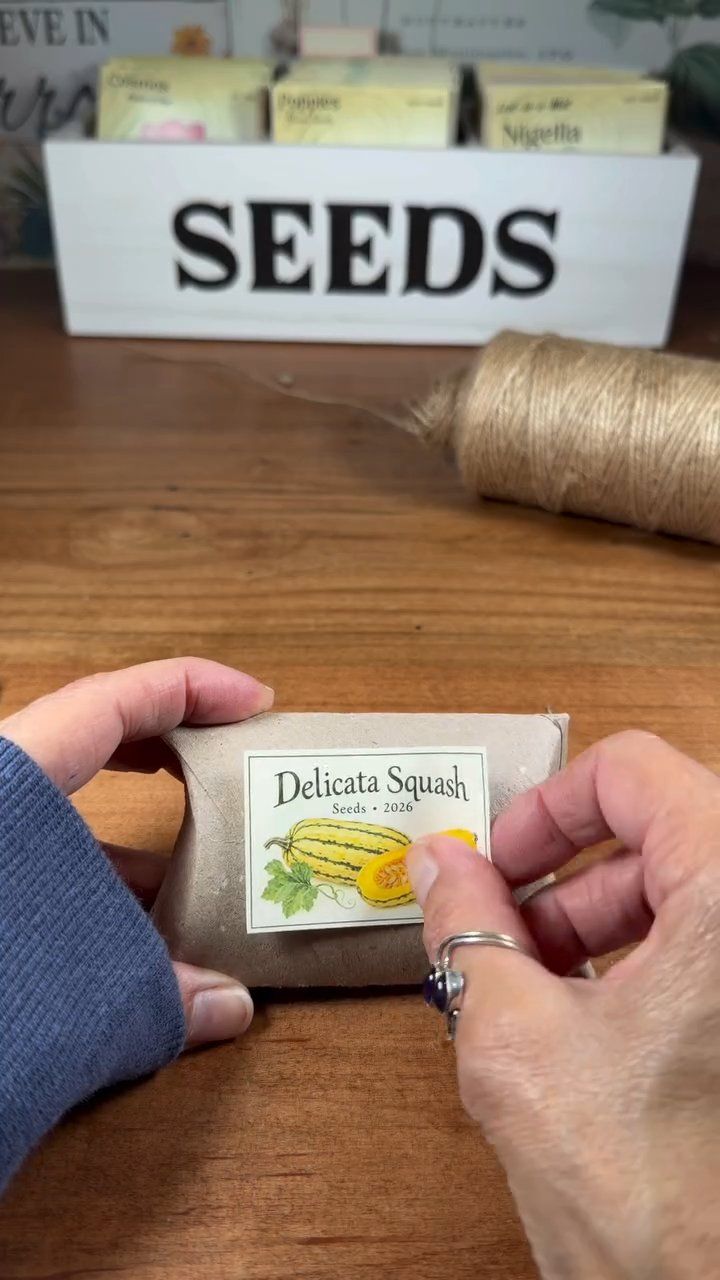
The closed cardboard receives a label identifying the seed variety and year of collection. In the demonstration, one packet is marked Delicata Squash, with an illustration of the vegetable beneath the name.
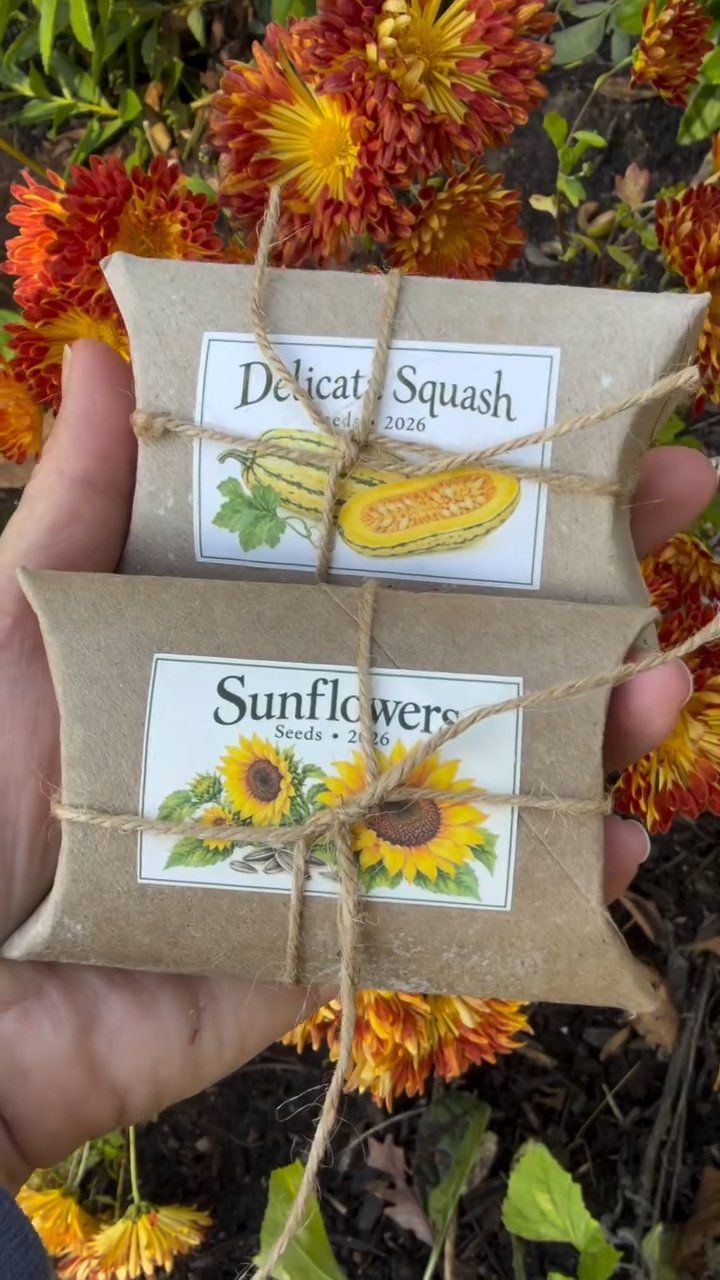
The finished examples include Delicata Squash and Sunflower seeds, with natural twine wrapped around the packets and tied across the front.
The string helps secure the folded ends, while the labels make it possible to distinguish different seeds without reopening each packet.
What to Know Before Storing Seeds in Cardboard
Cardboard absorbs moisture and cannot protect seeds from humidity during long-term storage. Place the finished packets inside an airtight container and keep them in a cool, dry location until planting season.
Would you use folded toilet paper rolls for seed storage, or would you worry about moisture getting inside?
Image credits go to @gigisgardentips.