She painted the brown cabinets Pewter Green, then checkerboarded the floor


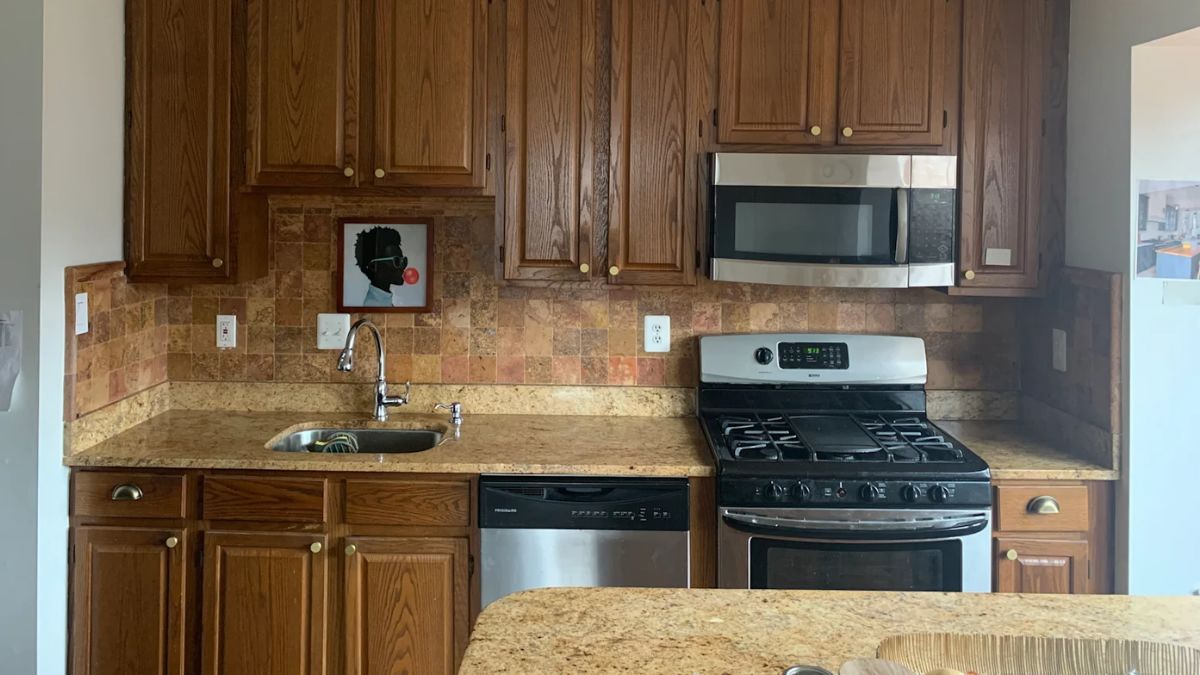
Brown cabinets, brown counters, brown floors and a brown backsplash. Three big windows let in plenty of sun, and the kitchen still feels dark, like the light gets swallowed before it reaches the middle of the room.
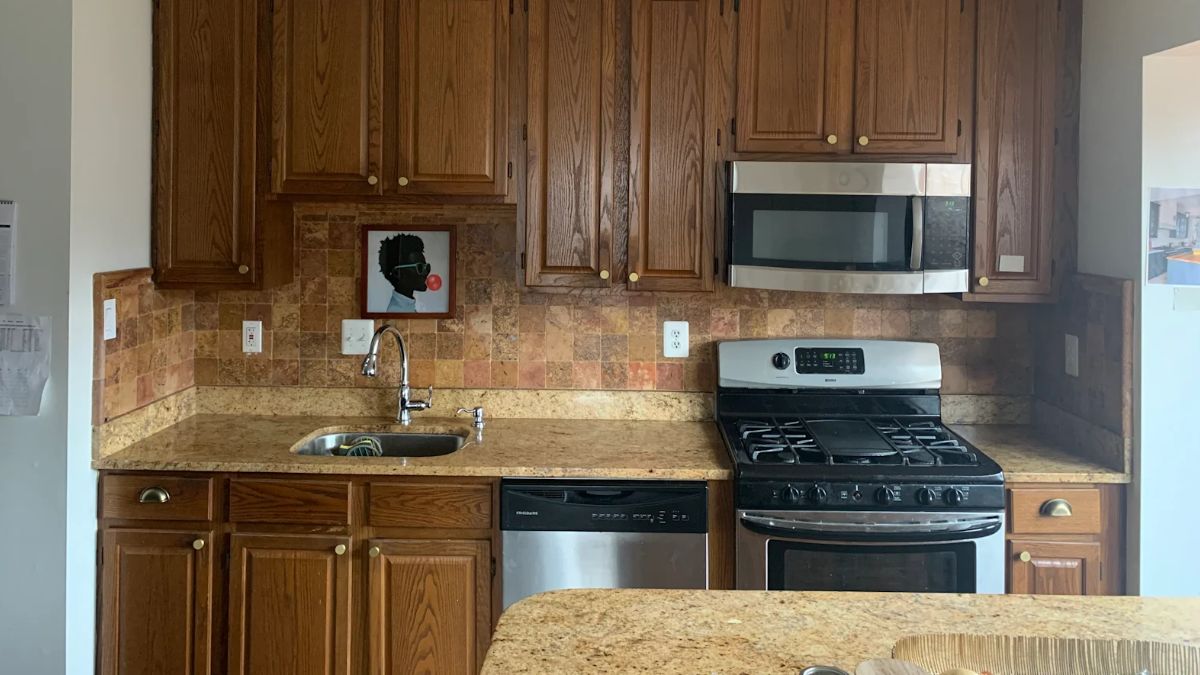
The windows weren’t the problem, all that brown was. Nedra Davis, who shares her home as @brickendhaus, had a kitchen just like that, with a color scheme she calls “very brown” and “outdated.” “The space always felt cramped and didn’t match the rest of the main floor, which was bright and airy,” she says.
Why a sunny kitchen can still feel dark
When every surface is the same dark tone, light has nothing to bounce off. Cabinets, counters and floor are the biggest surfaces in a kitchen, so Nedra changed all three, one after another, instead of replacing anything.
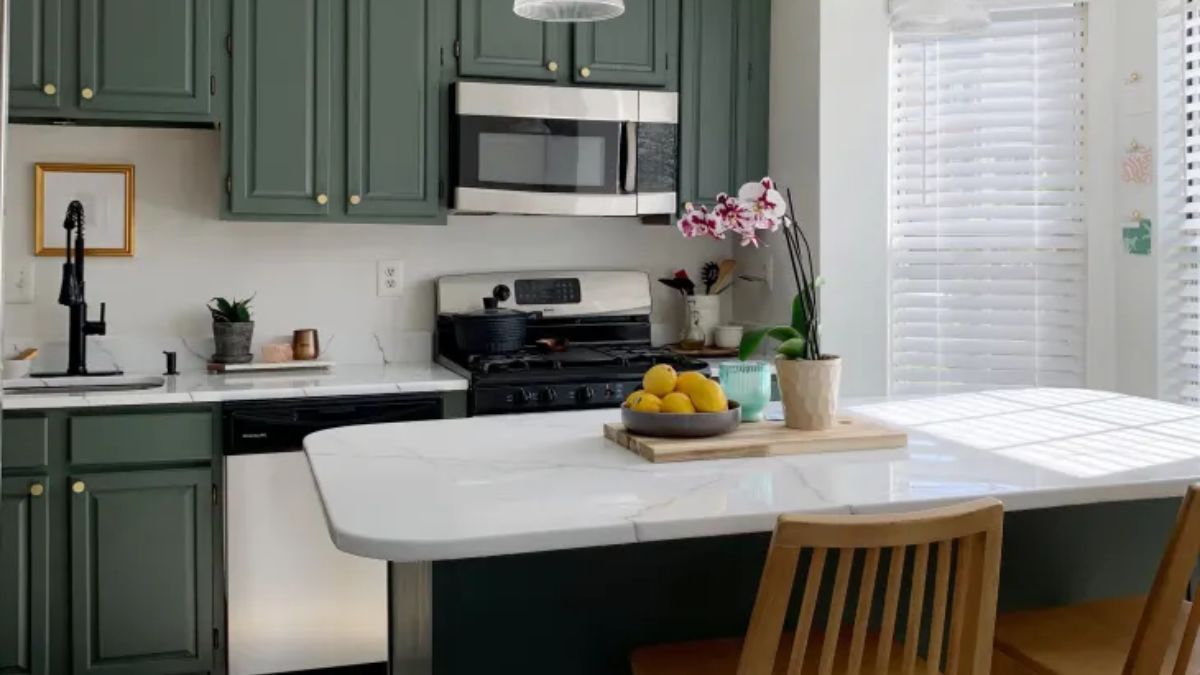
Cabinet color also changes how everything around it reads. After orange oak cabinets went sage green on the bottom and white on top, the beige tile countertops kept in place looked brighter, helped by grout whitewashed with a mix of paint and water.
Three paint projects and two pros
- Bring in help where it counts. A contractor demolished the old backsplash and repaired the wall behind it. “Drywall is a DIY I’ve determined I will never do,” Nedra jokes. An electrician reconfigured the light placement.
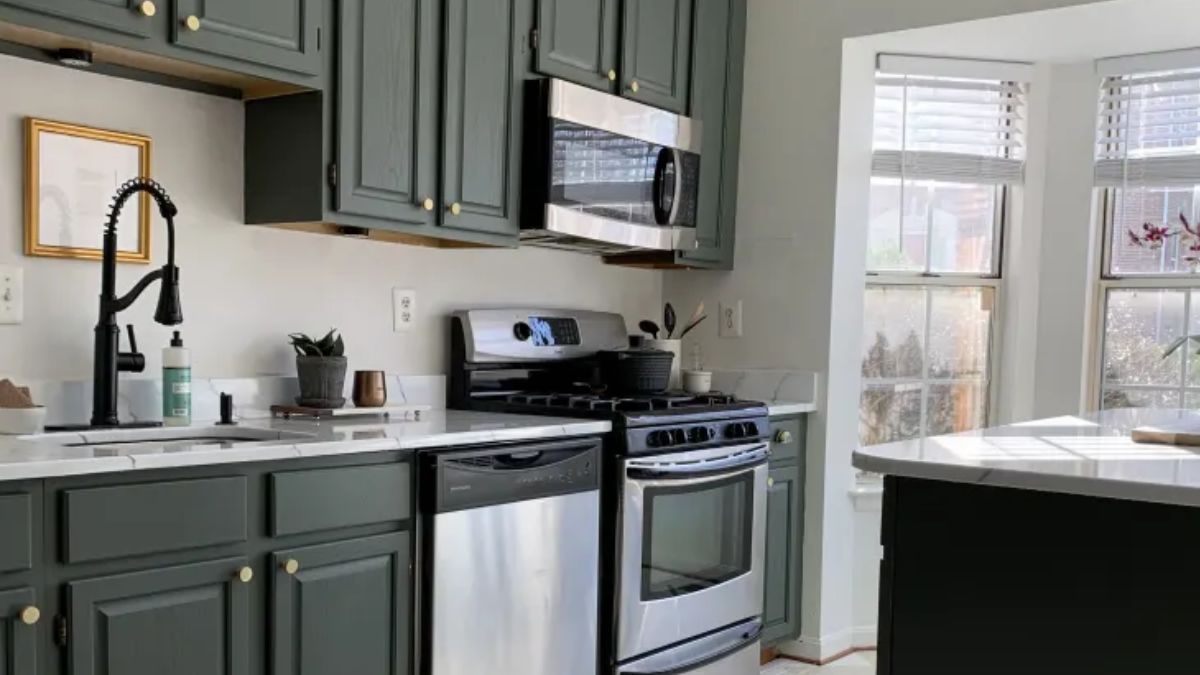
- Paint the cabinets. The dark brown wood went Sherwin-Williams Pewter Green, SW 6208, with new gold hardware.
- Fake the marble. She painted the countertops with a faux marble epoxy kit, white with soft gray veining. “I’m most proud of the faux marble painted countertops,” she says. “It was the first time I’d worked with epoxy as well as painting faux marble veining.”
- Checkerboard the floor. She painted the floor in a white and tan checkerboard. “Getting that pattern straight took quite a few tries!”
The three paint projects cost her $500, a figure that covers the paint work only. “It feels so airy and relaxing in the kitchen now,” Nedra says.
Plan B, if three projects feel like too much at once: start with the cabinets. They cover the most wall space, and the counters and floor can follow one at a time.
Epoxy counters and a painted floor ask for patience
Epoxy is not like wall paint. A construction safety alert from CPWR warns that some people develop an allergy called sensitization to epoxy chemicals, then react every time their skin touches them. It recommends thick nitrile or butyl rubber gloves, never cotton or latex, and good ventilation. Follow the kit’s label for mixing and cure time before you set anything on the counters.
A painted floor is a layout job before it’s a paint job. Measure and mark the grid first, because straight lines are what make a checkerboard work. Nedra’s floor paint isn’t named, so pick one made for floors, which takes foot traffic better than wall paint.
Leave the wiring to a pro. Nedra hired an electrician to move the lights, and that part of the job isn’t DIY. Paint the biggest brown surfaces first, and let the light do the rest. That’s the trick.