She Kept the Uneven Edges of a Walnut Slab and Turned It Into a Console Table With Black Hairpin Legs


Rough walnut wood, loose bark, and an uneven outline might seem like an unusual starting point for a console table. The slab had a wide end, a narrow middle, and curved edges that would disappear if the wood were cut into a standard rectangle.
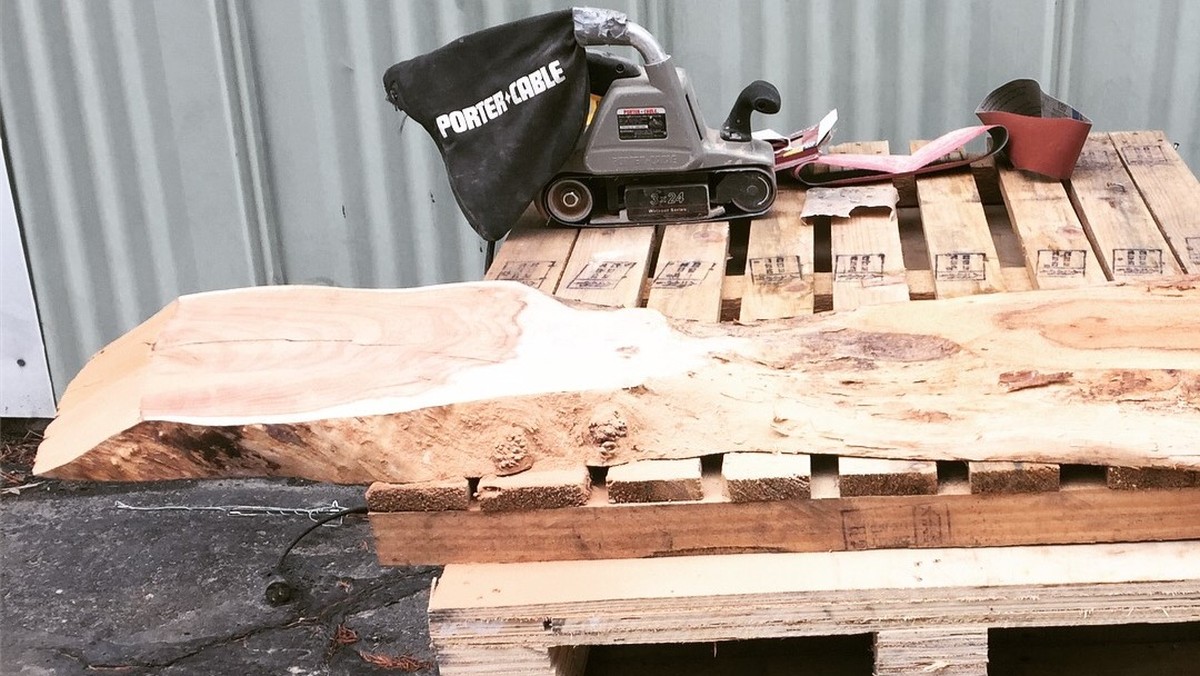
Jen from Rustique Restoration purchased seven live-edge wood slabs and decided to turn two into furniture. For the console table, she kept the wood’s original contours and chose matte black steel hairpin legs instead of a solid wooden base.
The project involved removing bark, sanding the rough surface, and applying three coats of satin polyurethane. No wood stain was needed to bring out the walnut’s brown tones and swirling grain.
Rough Walnut Wood Still Had Bark and Cracks
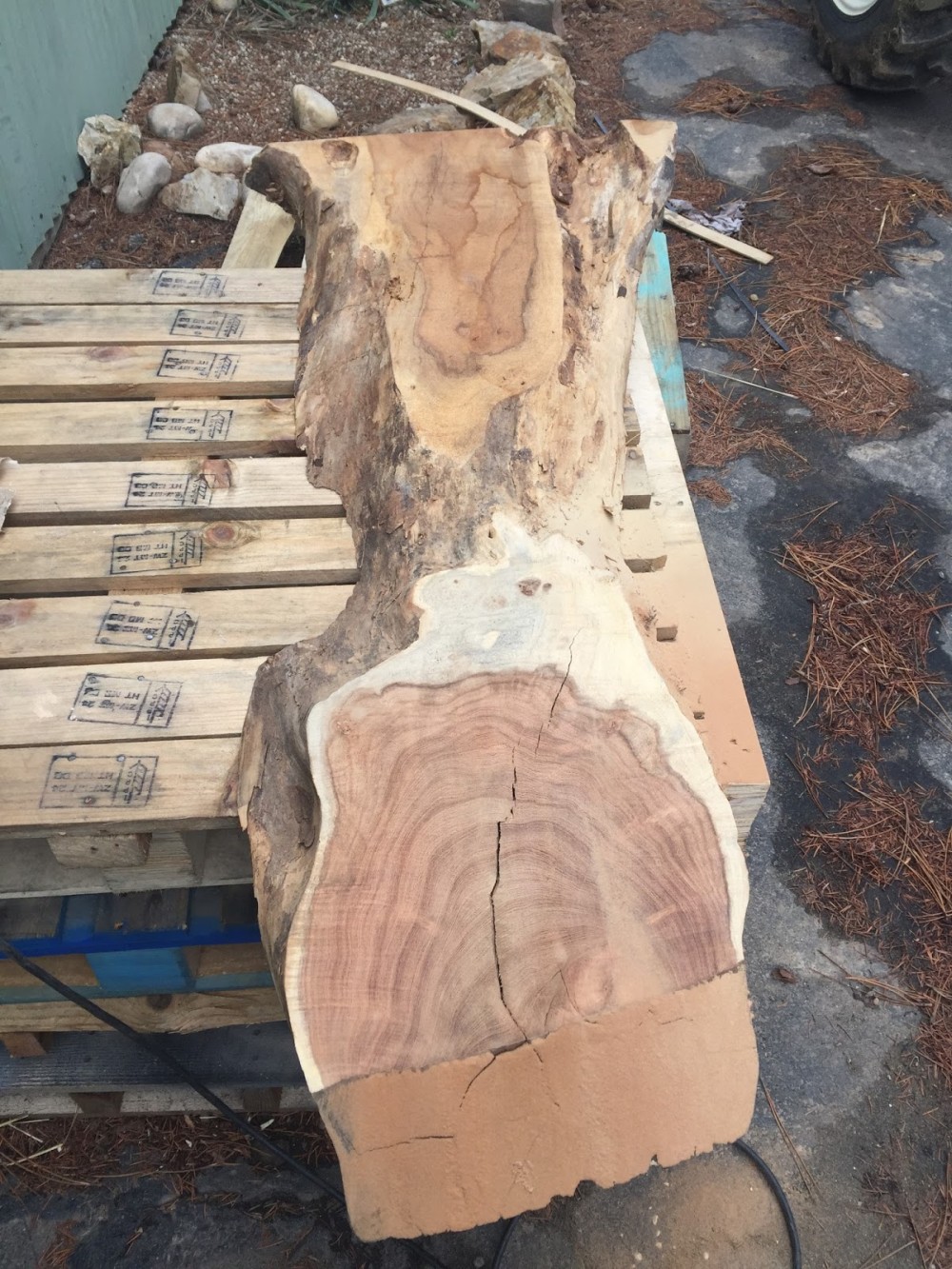
The first photograph shows a thick piece of walnut with rough bark, exposed wood, and an uneven outline. One cut section reveals growth rings, darker heartwood, and a pale border beneath the bark. Cracks extend across the exposed end grain.
The wood rests on shipping pallets, with branch remnants and jagged sections extending from the main trunk. Preparing this material for furniture meant removing loose bark and smoothing the cut surfaces without losing the natural edge.
Loose Bark Came Off Before Sanding
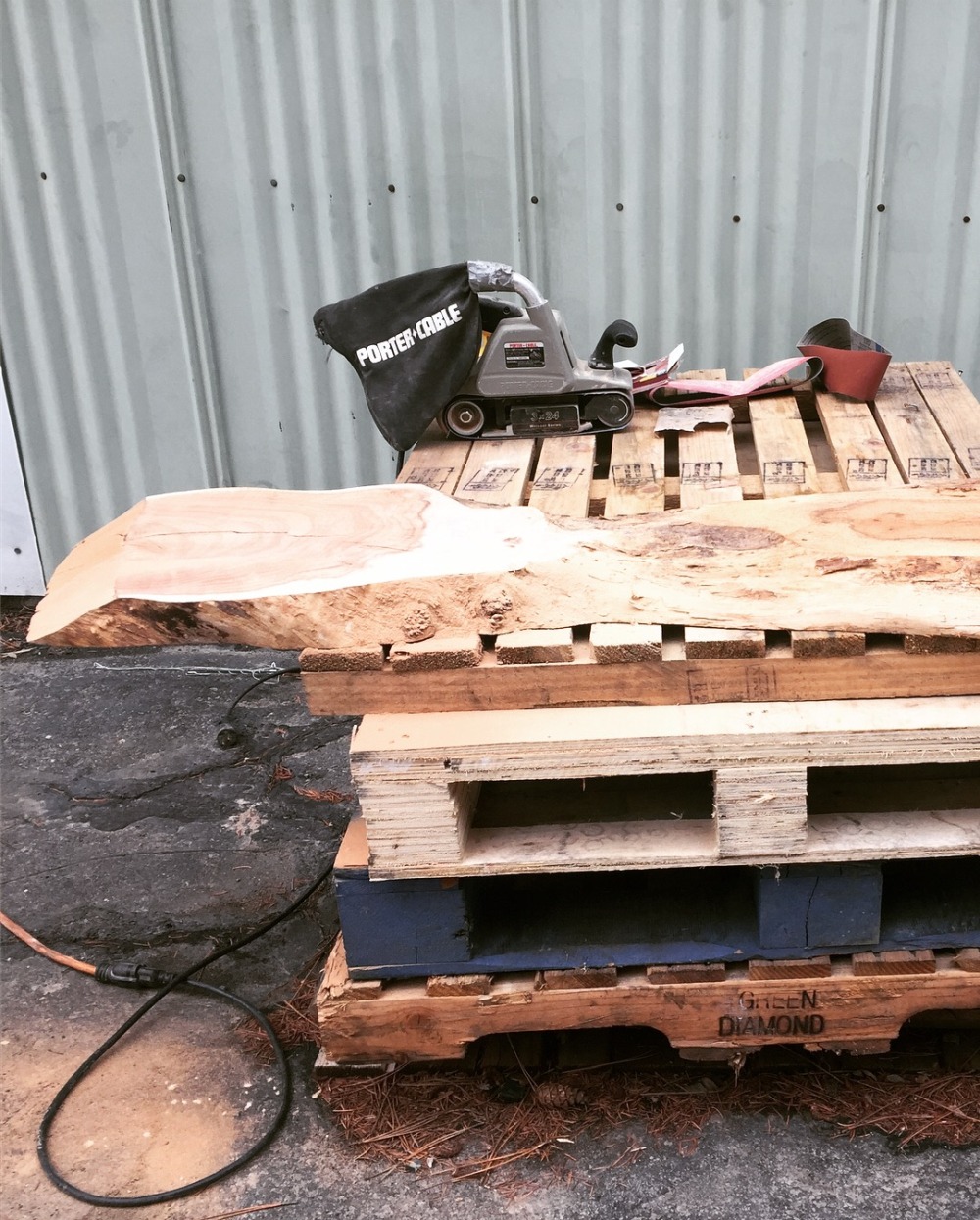
The console slab rests across wooden pallets beside a Porter-Cable belt sander. One edge has been stripped of bark, revealing the pale sapwood beneath, while rough sections remain along the opposite side.
Jen used a chisel to remove loose bark before sanding. She started with coarse sandpaper on a belt sander and increased the grit to 150. A palm sander followed, progressing through 150, 180, and 220 grit to prepare the walnut for finishing.
Sanding Exposed the Walnut’s Swirling Grain
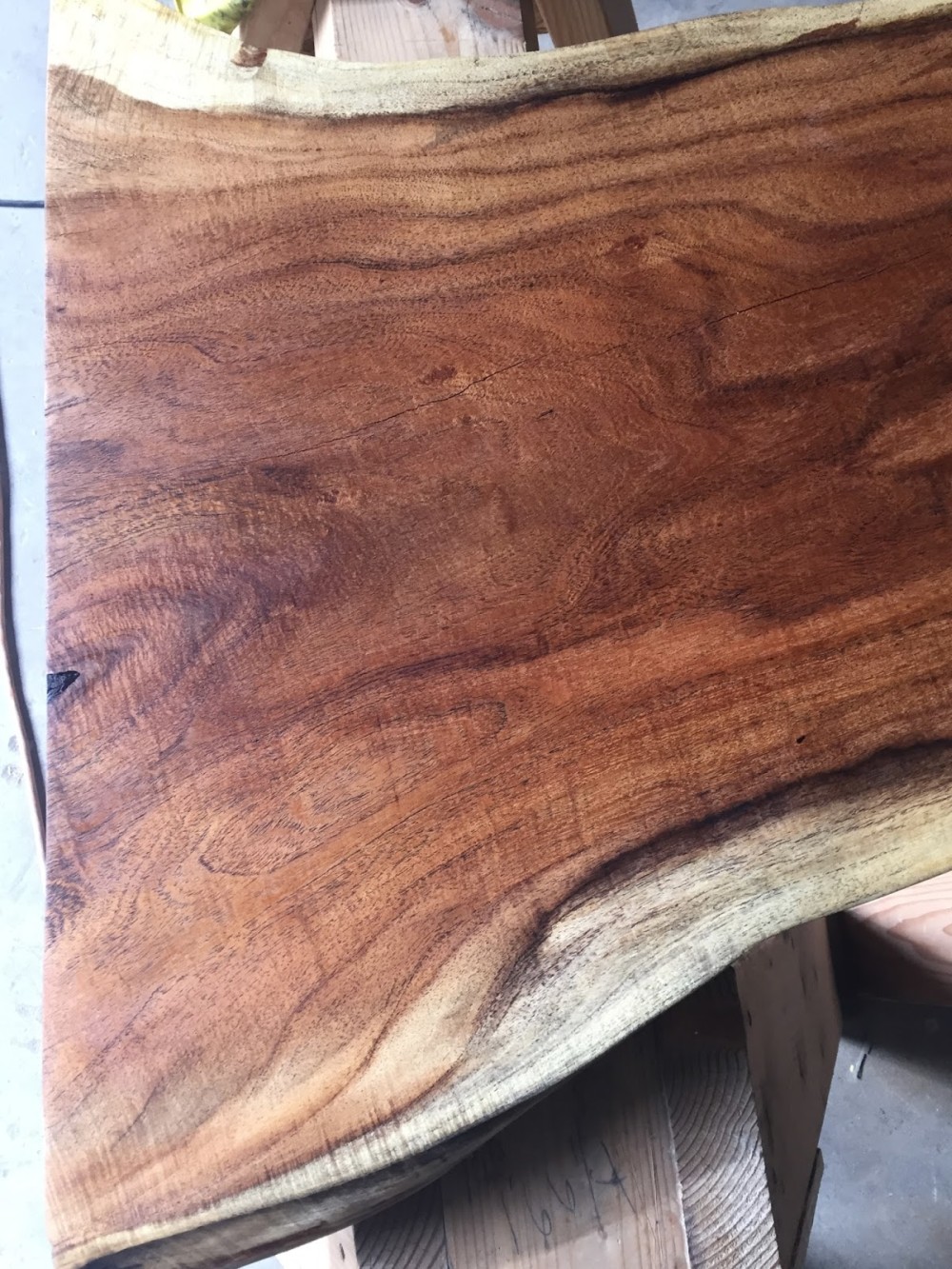
The sanded surface reveals dark brown bands sweeping across reddish wood, with knots and grain patterns forming curved lines near the center. Pale sapwood follows the irregular perimeter, separating the darker interior from the natural edge.
A thin crack crosses part of the surface, but the surrounding grain remains visible. Cutting the slab into a straight-edged rectangle would have removed sections of that pale border and changed the tabletop’s outline.
Three Coats of Satin Polyurethane Finished the Slab
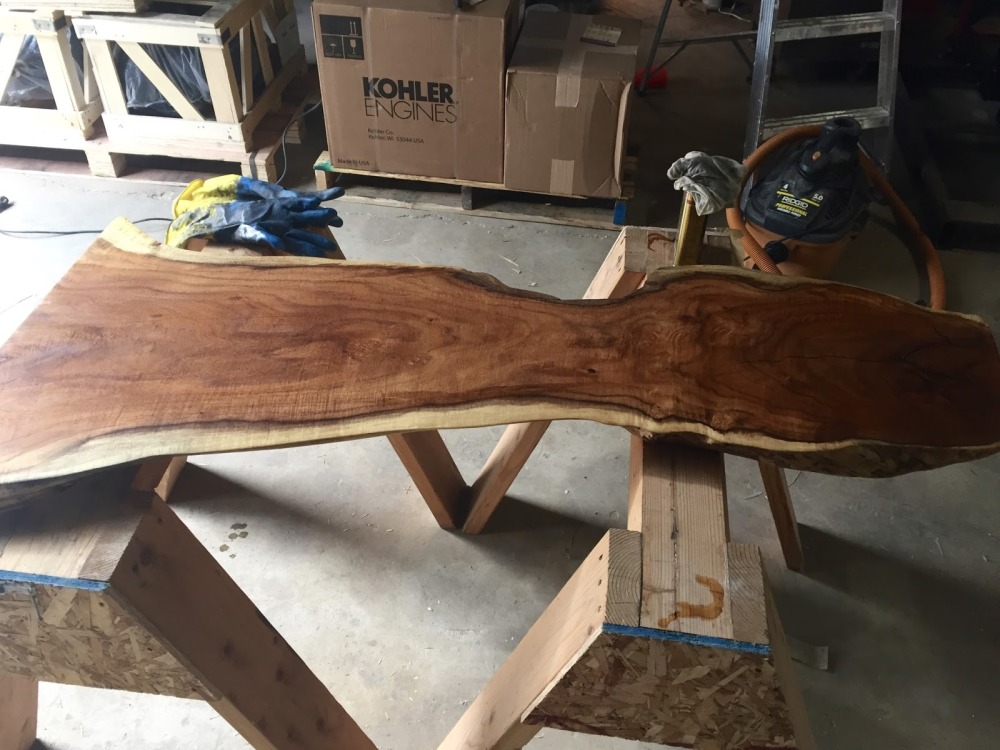
The full-length walnut slab rests on wooden sawhorses, showing its narrow center and broader ends. One side has a pronounced inward curve, while the opposite edge follows a gentler line.
Jen wiped on three coats of satin polyurethane to protect the wood. The finish deepened the brown tones and brought out the grain without adding stain or covering the lighter sapwood around the edges.
Black Hairpin Legs Became the Console Table’s Base
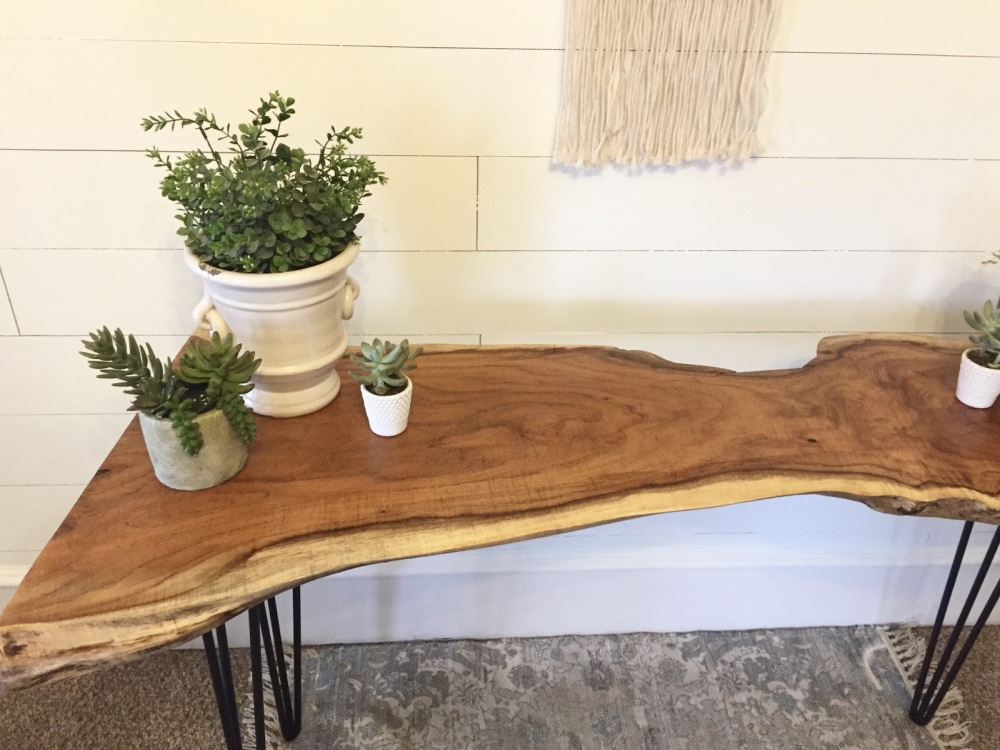
Thin matte black steel hairpin legs support the walnut top, leaving an open space beneath the table. The metal legs contrast with the brown wood without covering the grain or the curved front edge.
The legs also give the long slab a narrow profile suited to placement against a wall, where a cabinet-style base would occupy more floor space.
Live-Edge Console Table Against a White Shiplap Wall
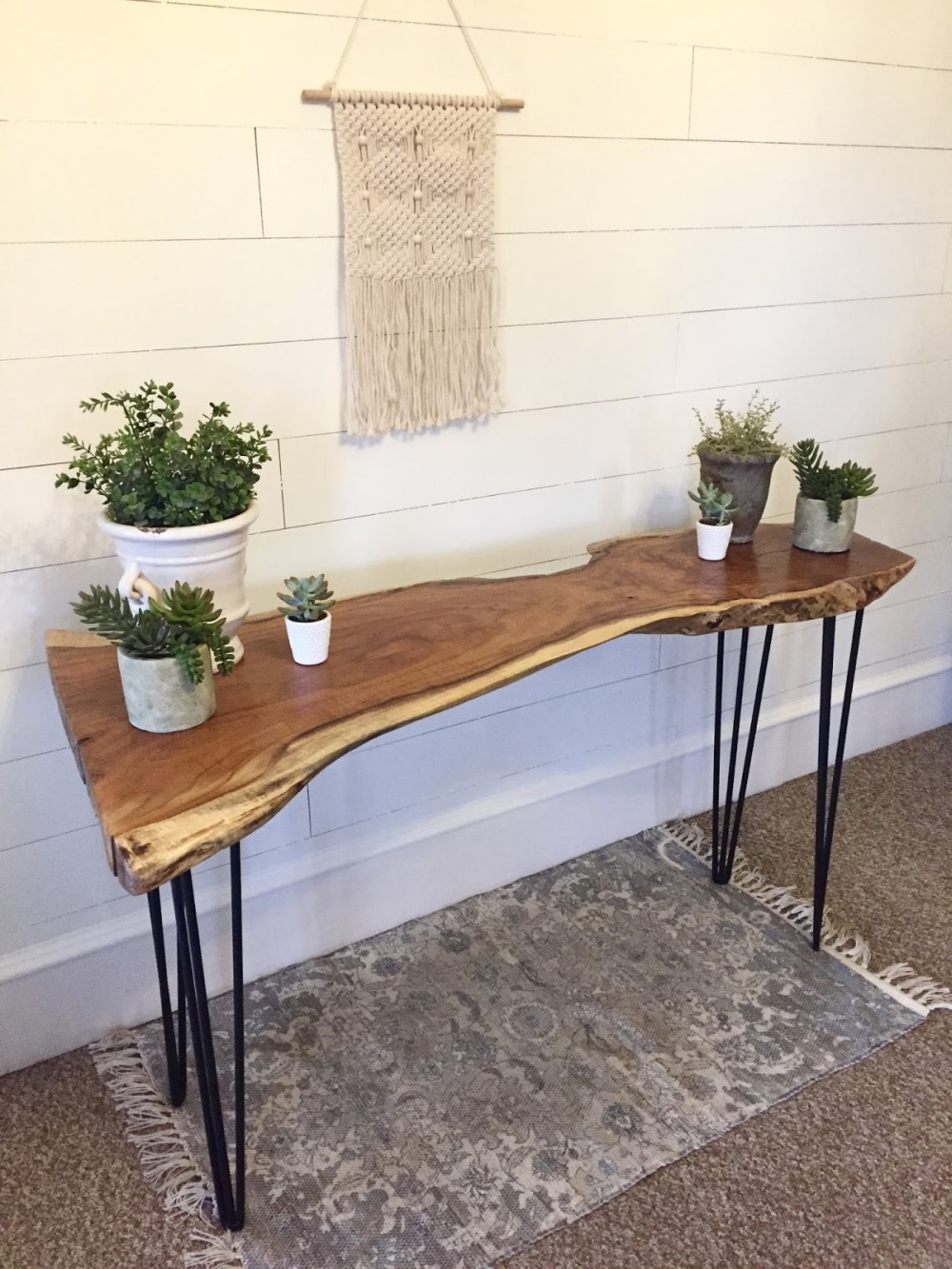
The finished console stands against white horizontal wall paneling, with a pale patterned rug beneath it. Potted succulents sit across the wood surface, including a larger plant at the left end and smaller arrangements toward the center and right.
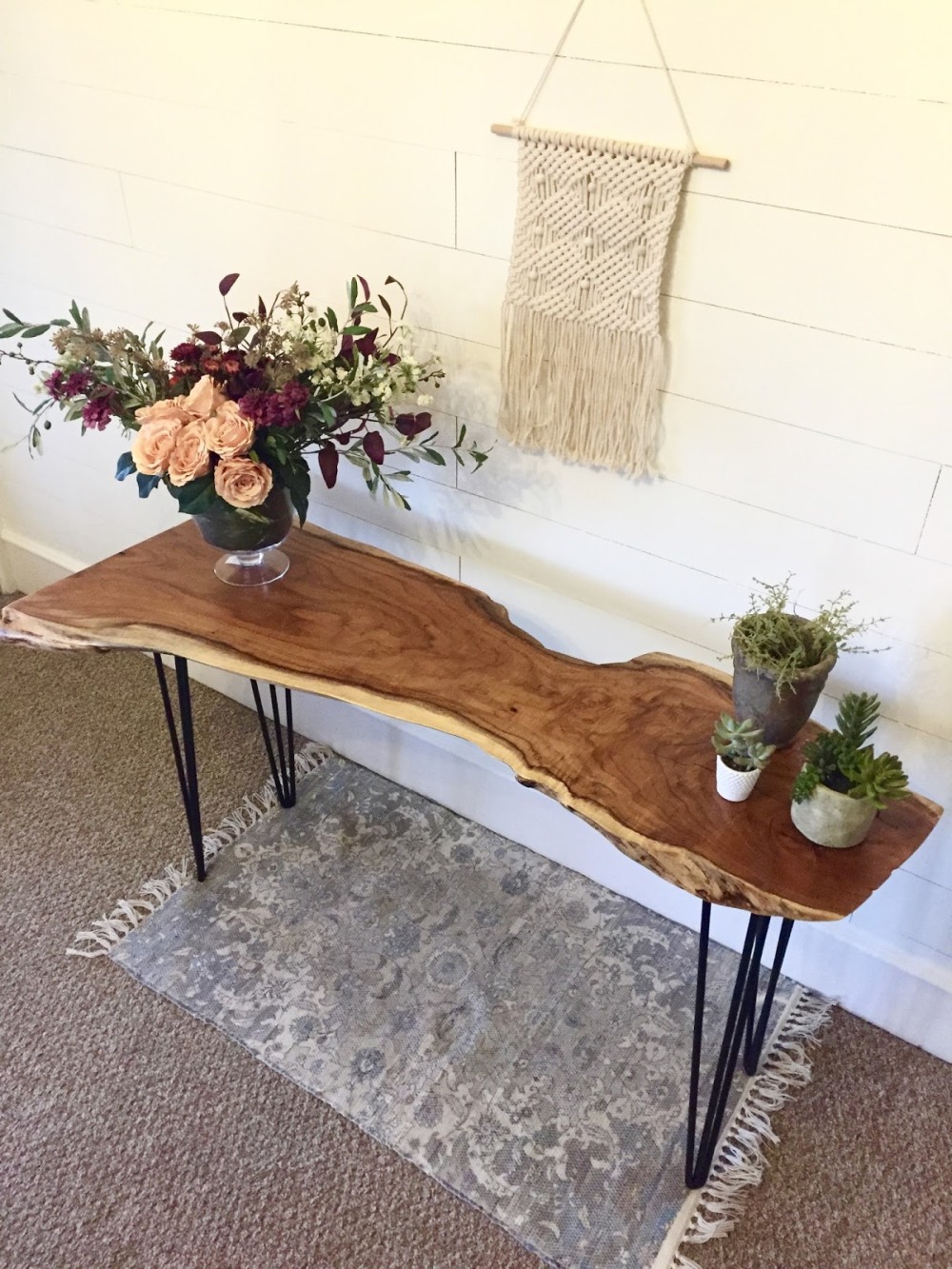
From a wider angle, the tabletop’s shape becomes clear. One end extends outward before the front edge curves inward through the middle and widens toward the other side. The black legs remain set back from the outer edges of the slab.
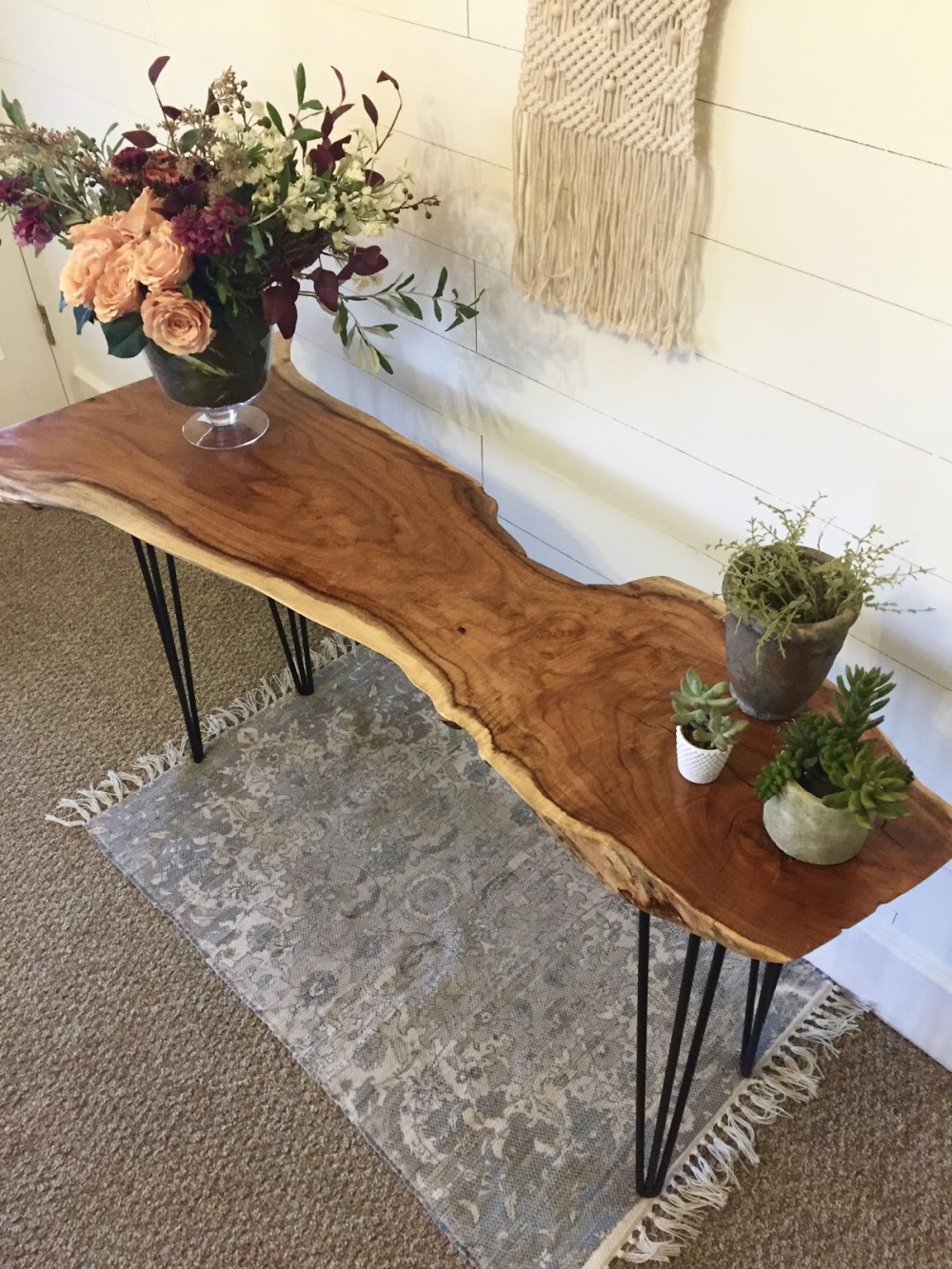
A second arrangement replaces the larger plant grouping with a glass vase of peach roses, burgundy flowers, and greenery. The narrow tabletop accommodates the floral arrangement alongside smaller potted plants without covering the grain across its center.
Another Walnut Slab Became a Matching Coffee Table
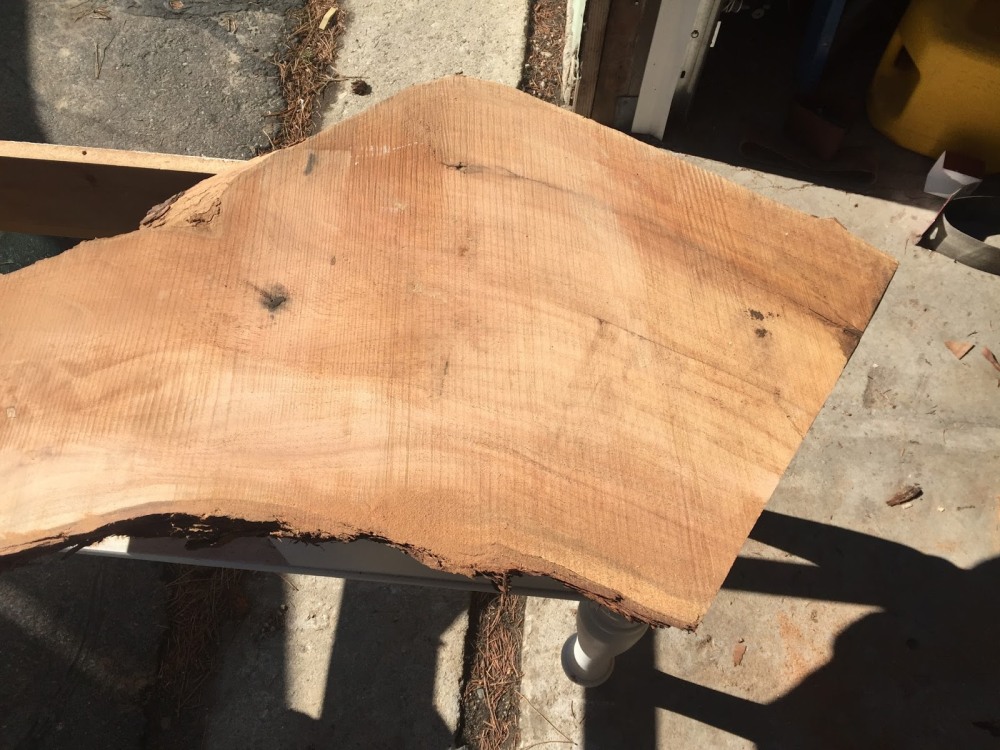
Jen also worked on a shorter walnut slab for a coffee table. This piece has a wider surface relative to its length, with a curved live edge, darker knots, and rough sections along the perimeter.
It received the same bark removal, sanding, and polyurethane treatment as the console.
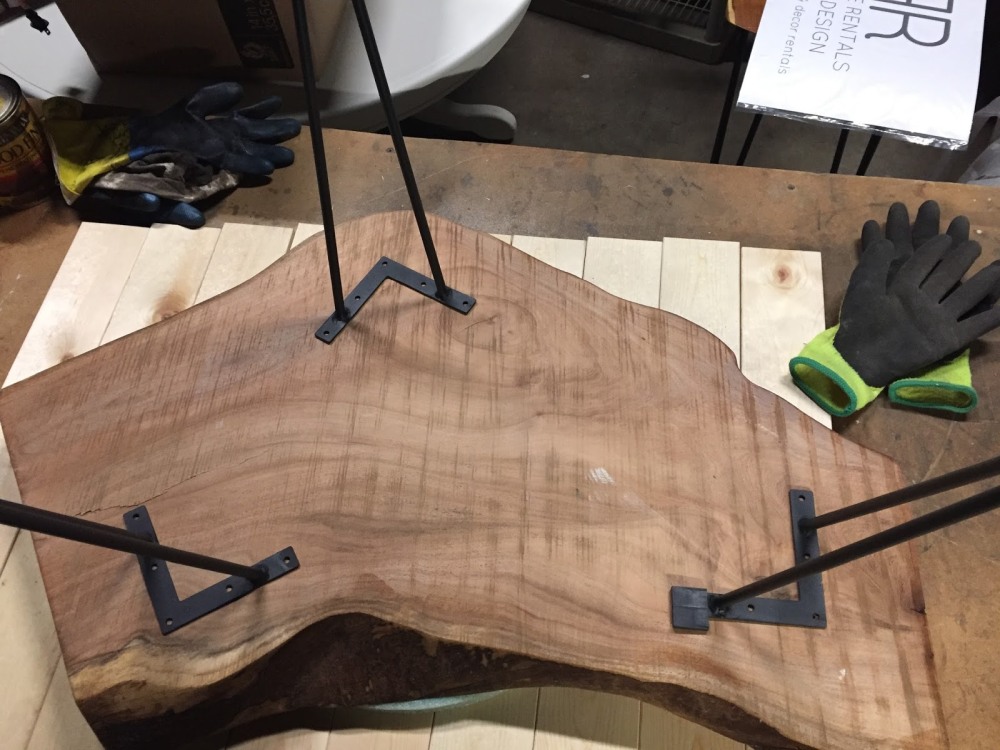
The underside photograph shows black hairpin legs attached with metal mounting plates and screws. The legs sit inward from the irregular edges, leaving the curved wooden perimeter intact.
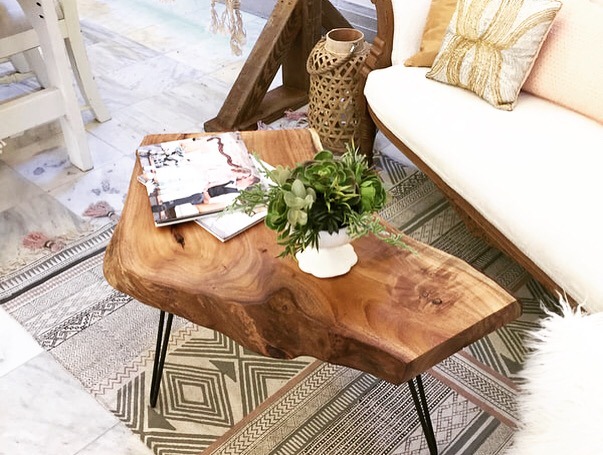
The finished coffee table sits beside a cream-colored sofa on a geometric patterned rug. Its walnut top holds a small plant, a book, and a decorative tray, with black hairpin legs raising the slab above the floor.
The console and coffee table use different slab shapes, but both preserve the live edges rather than replacing them with straight cuts.
Would you keep the uneven edges of a walnut slab for a table, or cut the wood into a rectangular top?
Image credits go to @rustiquerestoration.