She Painted an Old China Cabinet Green and Made the Wood Shine Like Glass


Dark wood framed four glass doors above a base of drawers and cupboards on this old china cabinet. Diamond-shaped glazing bars, a broad cornice, and brass-colored pulls gave it detail worth keeping, but the brown finish concealed how much those features could stand out.
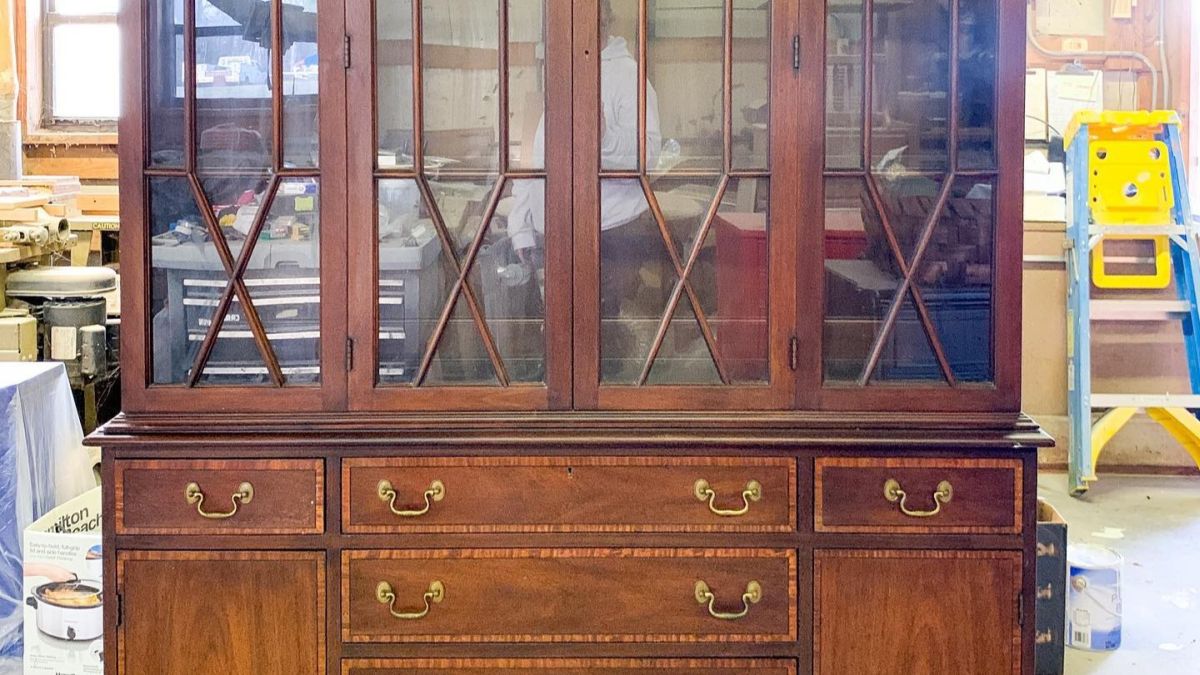
Furniture painter Kayla Payne spent three weeks working on the cabinet for a Furniture Flip Challenge themed “Make It Shine.” She kept the paint color hidden until the reveal, when the old wood cabinet appeared in a rich green finish with reflections across its doors and drawers.
She used Fine Paints of Europe’s G20010 in Hollandlac Brilliant, coating the cabinet from its broad cornice to the narrow diamond-shaped glazing bars. Behind the glass, blue-and-white china stands against a gold-toned backdrop.
Dark wood covered the cabinet from cornice to base
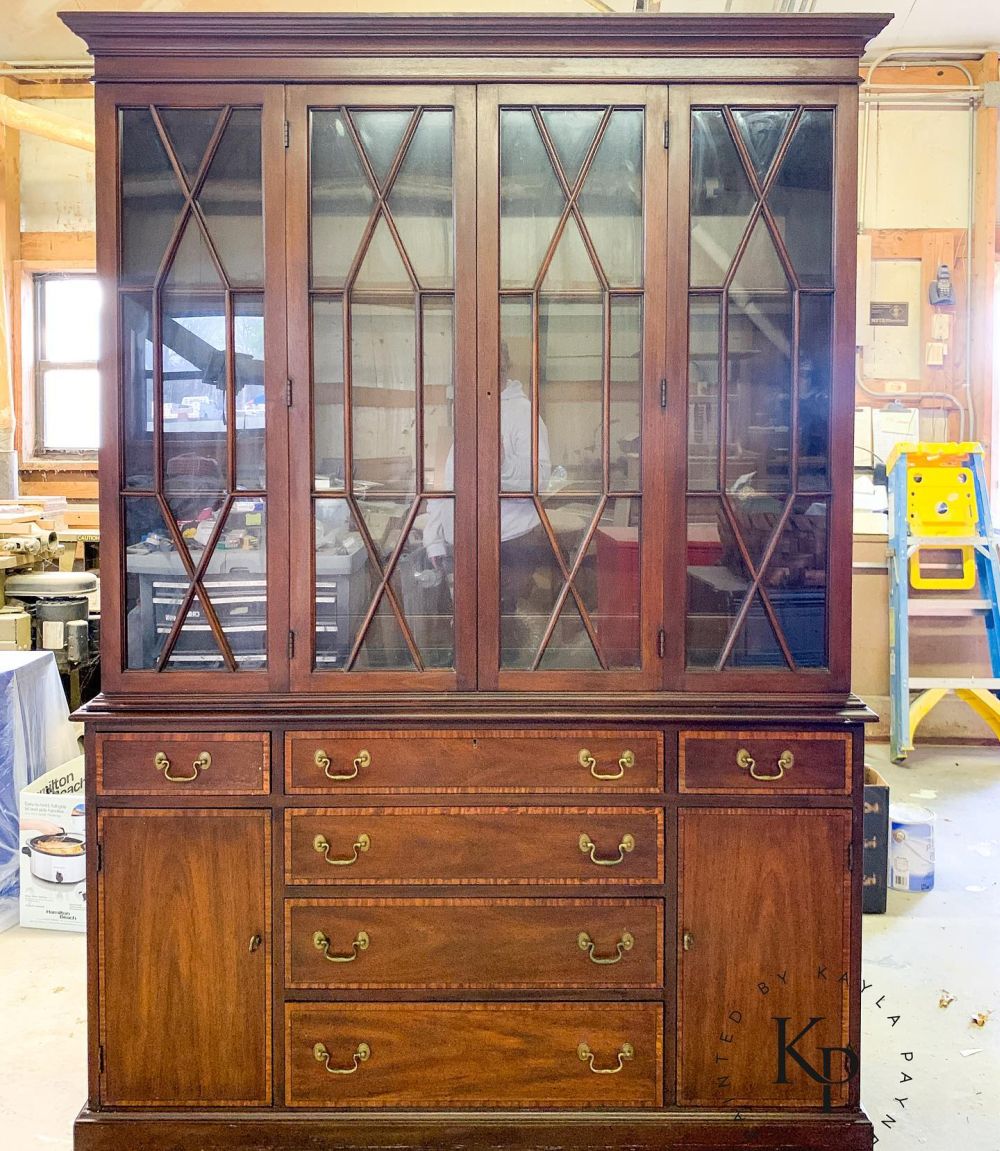
Before the makeover, reddish-brown wood surrounded the glass display section and continued across the lower storage. Brass-colored handles sat against the darker drawer fronts, while wear and uneven color marked parts of the base.
Four tall glazed doors divided the upper section, each crossed by narrow diagonal bars. Keeping that framework preserved the cabinet’s display space and its most recognizable detail.
Preparation reached the drawer edges and broad panels
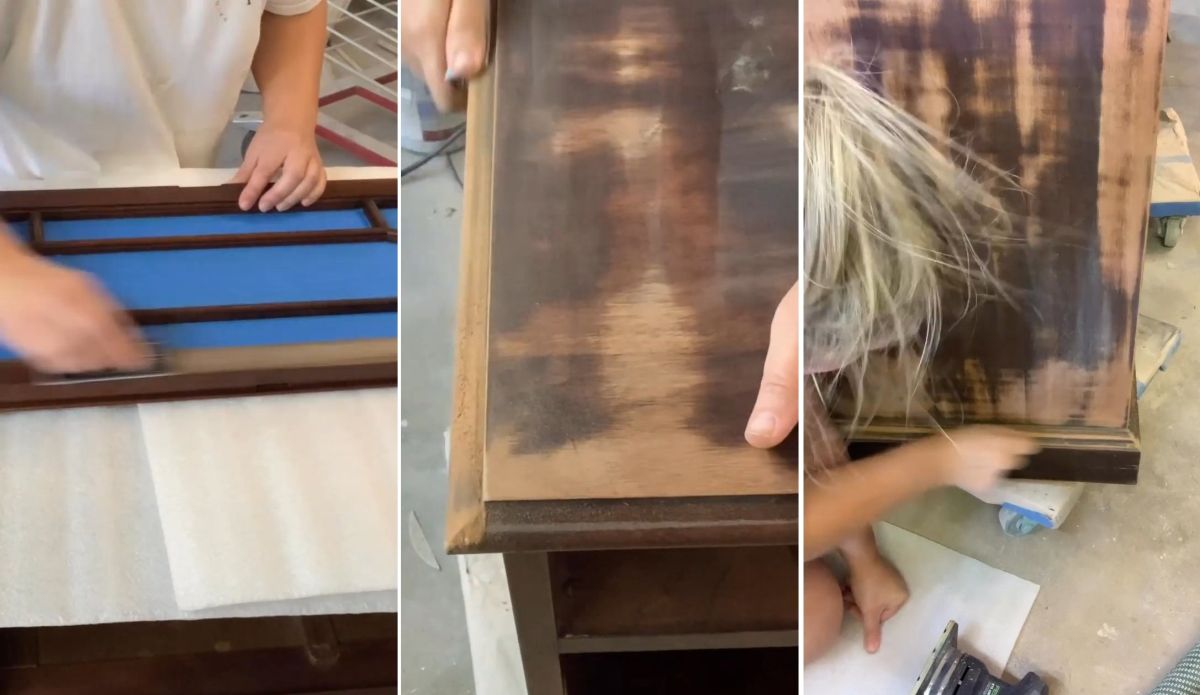
Process images show masking around a drawer, sanding across the wood, and pale preparation coats on stripped-back surfaces. Later views show work continuing on the green panels before the final reveal.
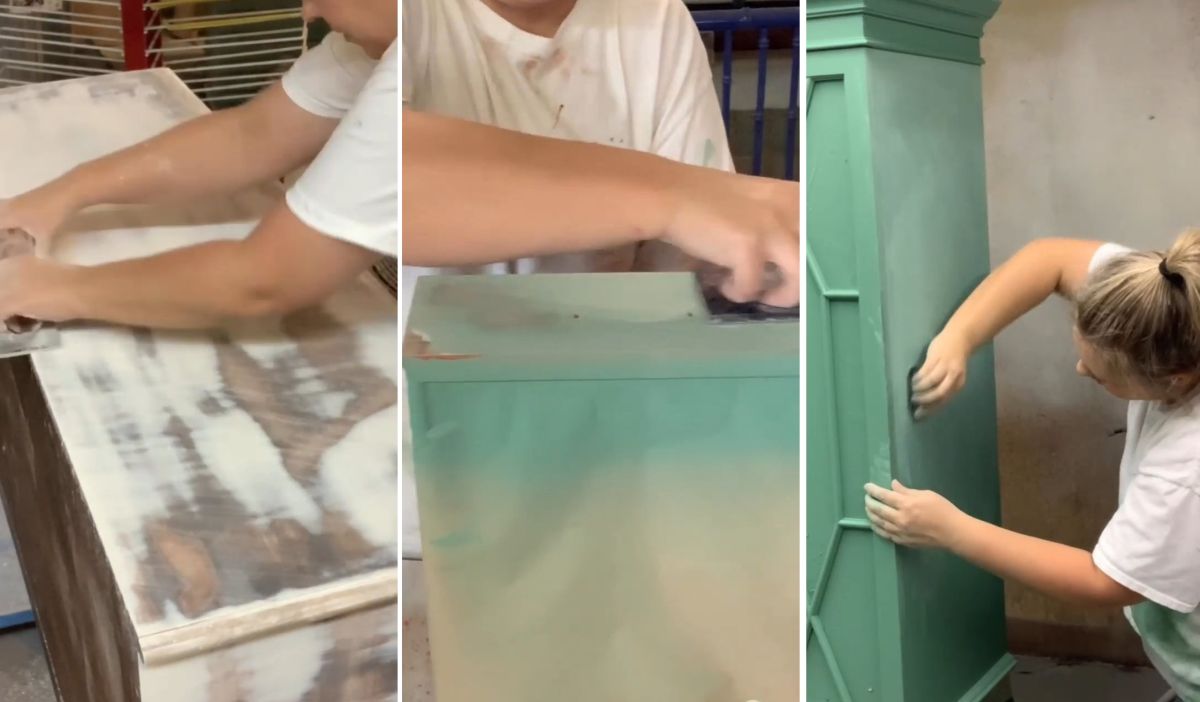
In a reply beneath the post, the painter identified Fine Paints of Europe’s oil undercoat primer as part of the project. These preparation stages preceded the reflective finish seen across the completed cabinet.
Green paint traced every glazing bar
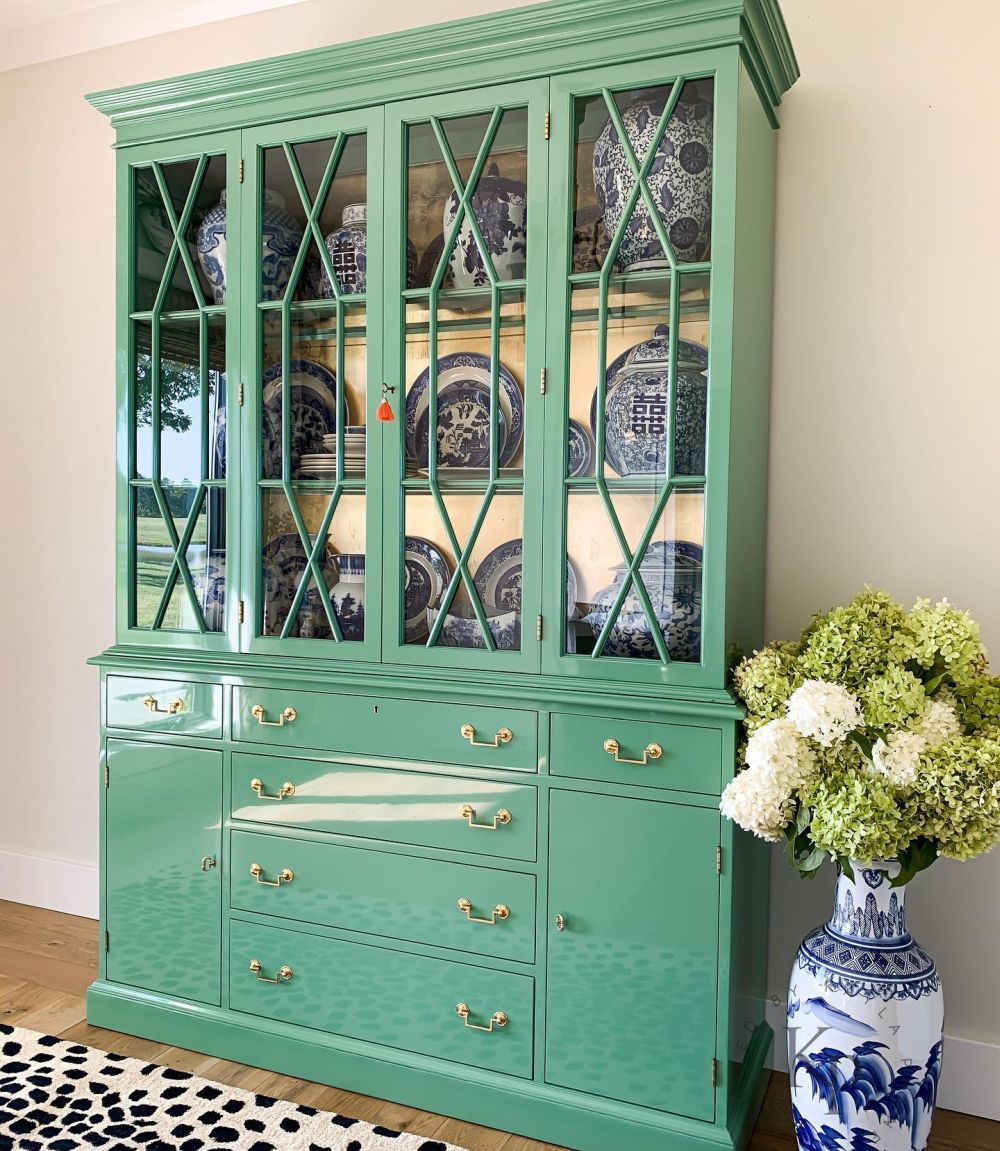
Matching color runs over the cornice, door frames, diagonal bars, and lower cabinet. Across the glass doors, those narrow green lines form repeated diamonds in front of the plates and vessels.
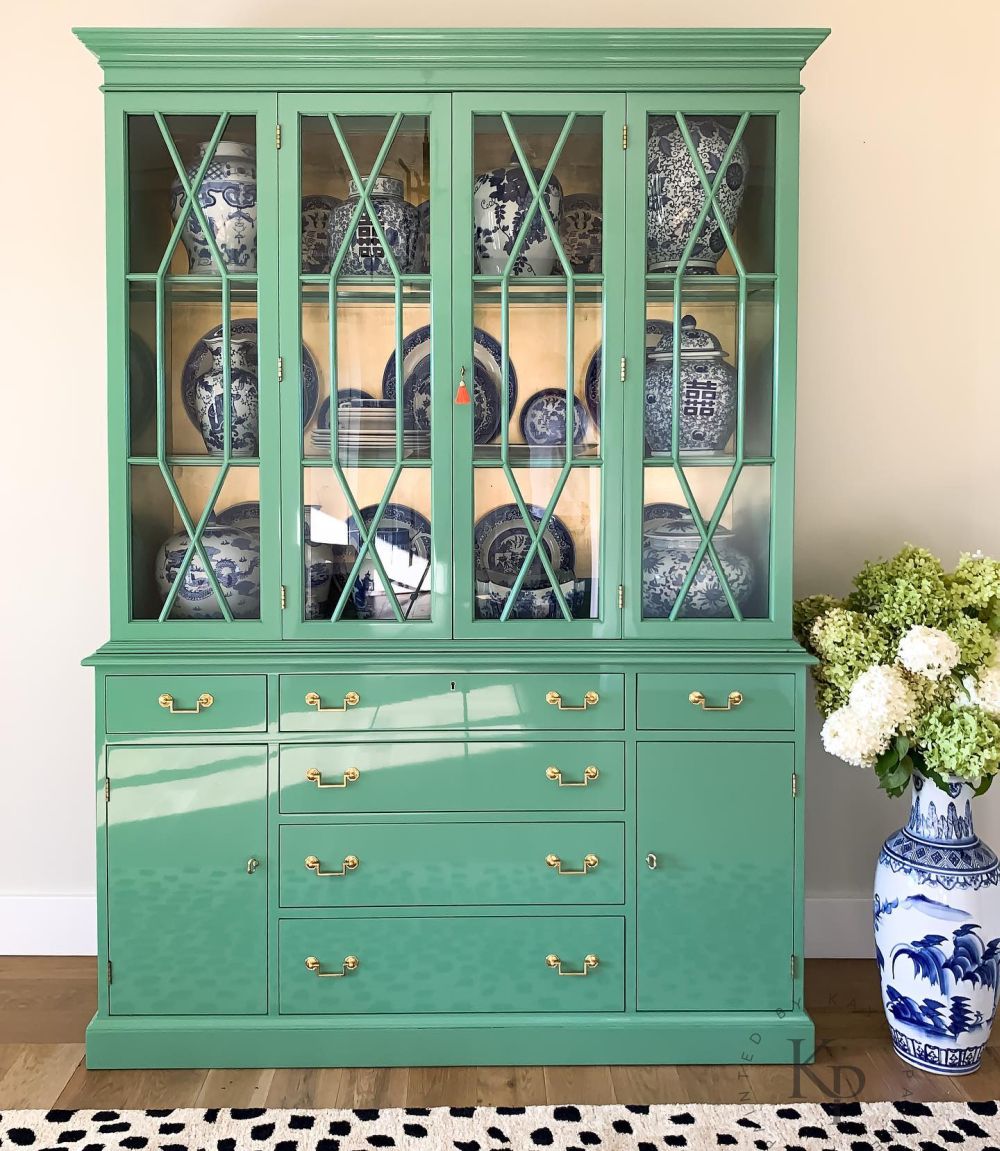
Pale walls leave the cabinet’s outline exposed, from the projecting crown to the straight plinth below. Painting the full exterior gives its upper and lower sections one continuous finish.
Drawer fronts reflect the rug beneath them
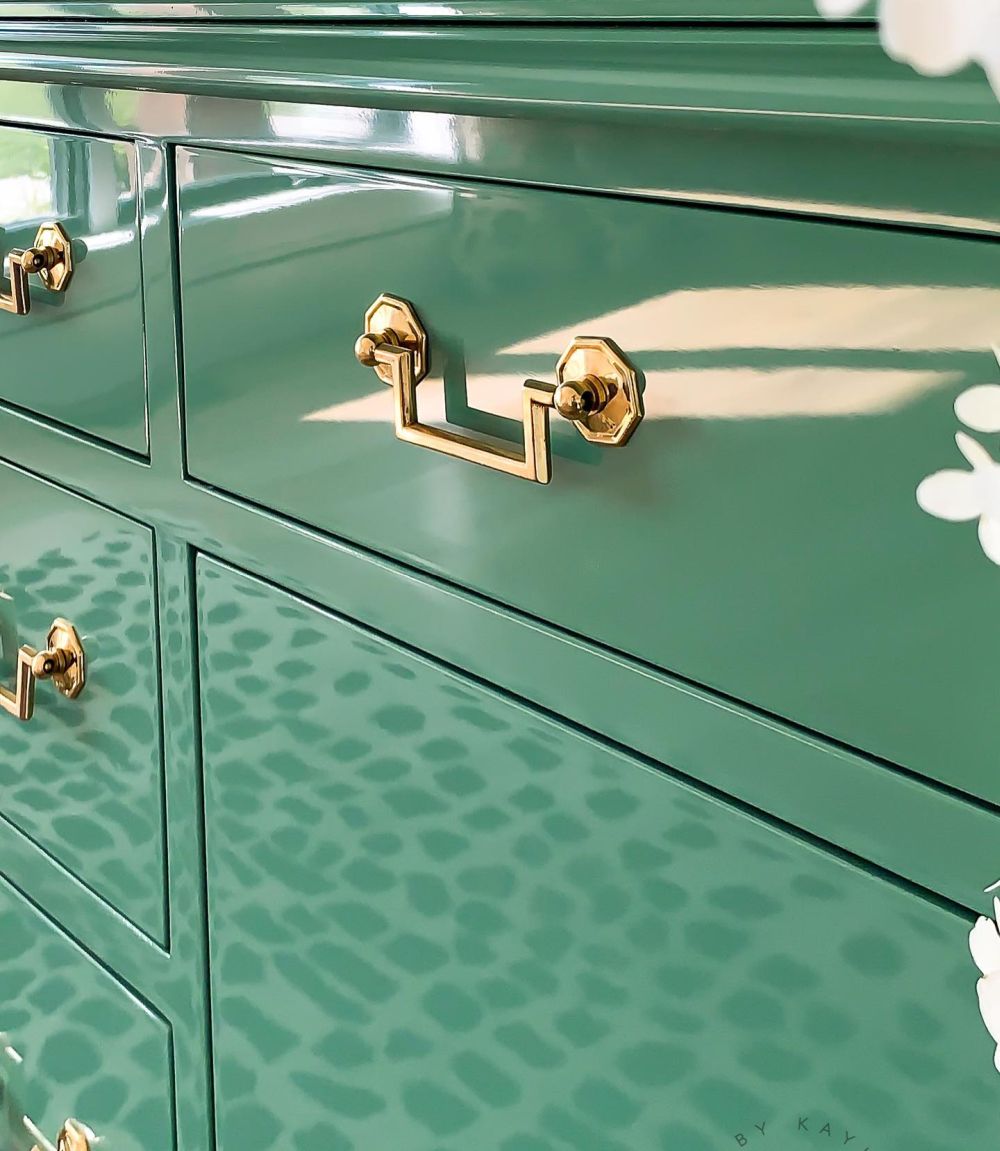
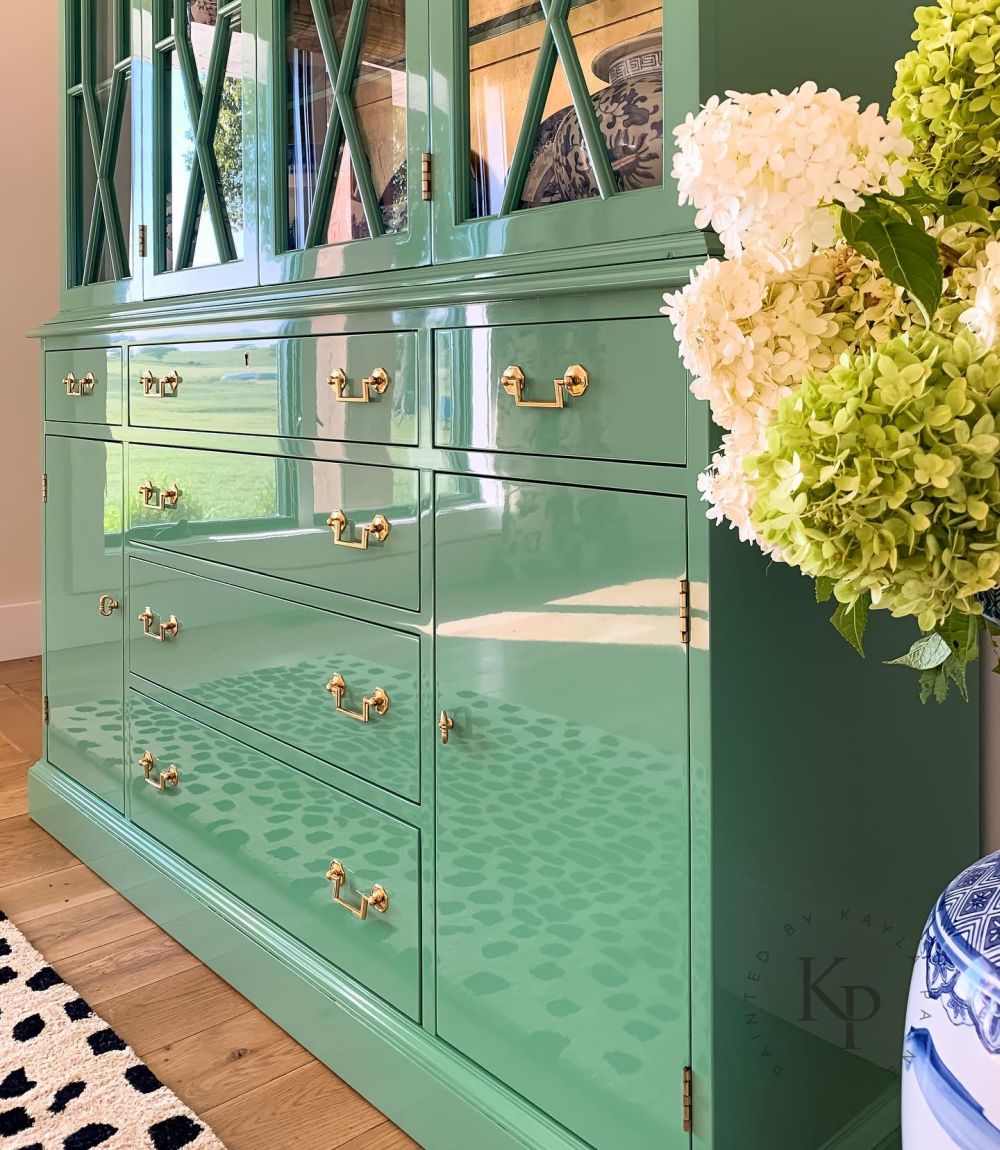
Close views reveal the patterned rug reflected across the lower doors and drawers. Bright shapes from the surrounding room cross the green surface, showing the gloss behind the glass-like effect.
Brass-colored bail pulls sit above those reflections, their angular handles and shaped mounts visible against the paint. Fine gaps between the drawers remain clear within the polished-looking front.
An orange tassel hangs from the cabinet key
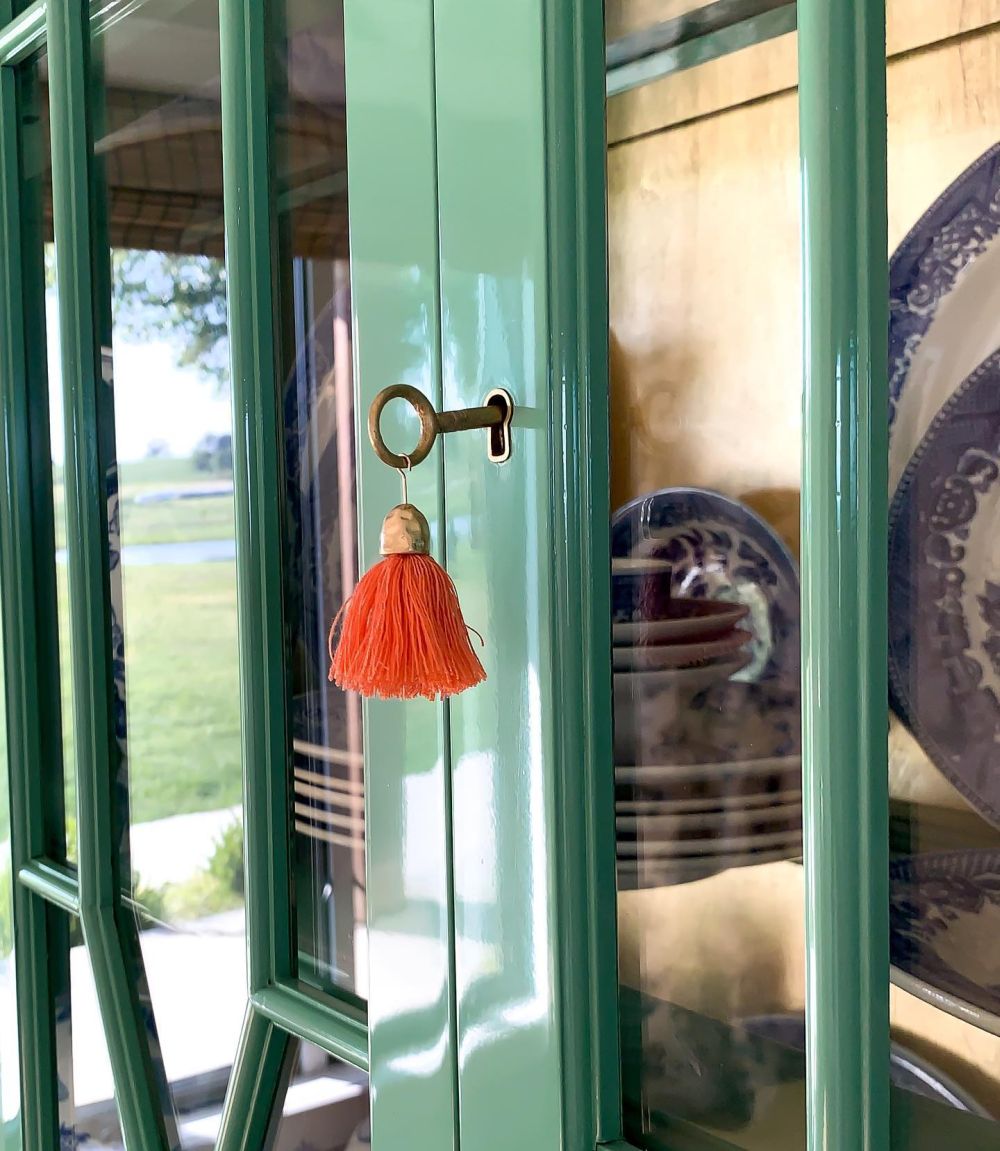
A round-handled key remains in the glazed door lock, with an orange tassel suspended beneath it. That small accent introduces a warm color beside the green frame and blue-and-white display.
Reflected daylight follows the narrow painted edges around the glass, extending the sheen beyond the broad lower panels.
Hinges and moldings remain visible beneath the new finish
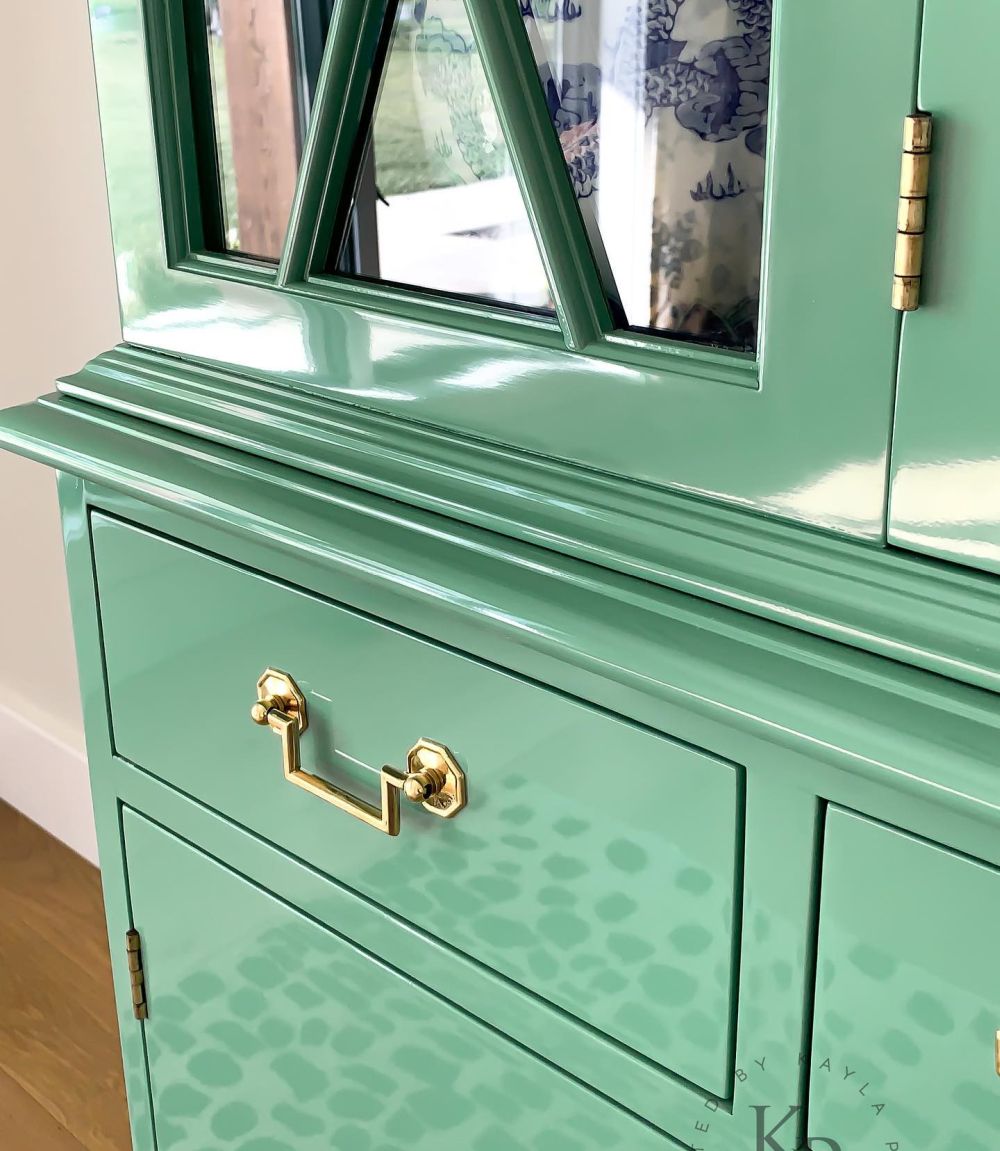
A brass-colored hinge sits beside the outer glass door, above the layered molding that separates the display from the storage below. Green paint follows each ridge without hiding the changes in profile.
From this angle, the cabinet’s depth becomes clear: glazing bars project from the glass, molding steps outward, and the drawer front sits beneath a narrow overhang.
Open doors reveal the china against a gold-toned backdrop
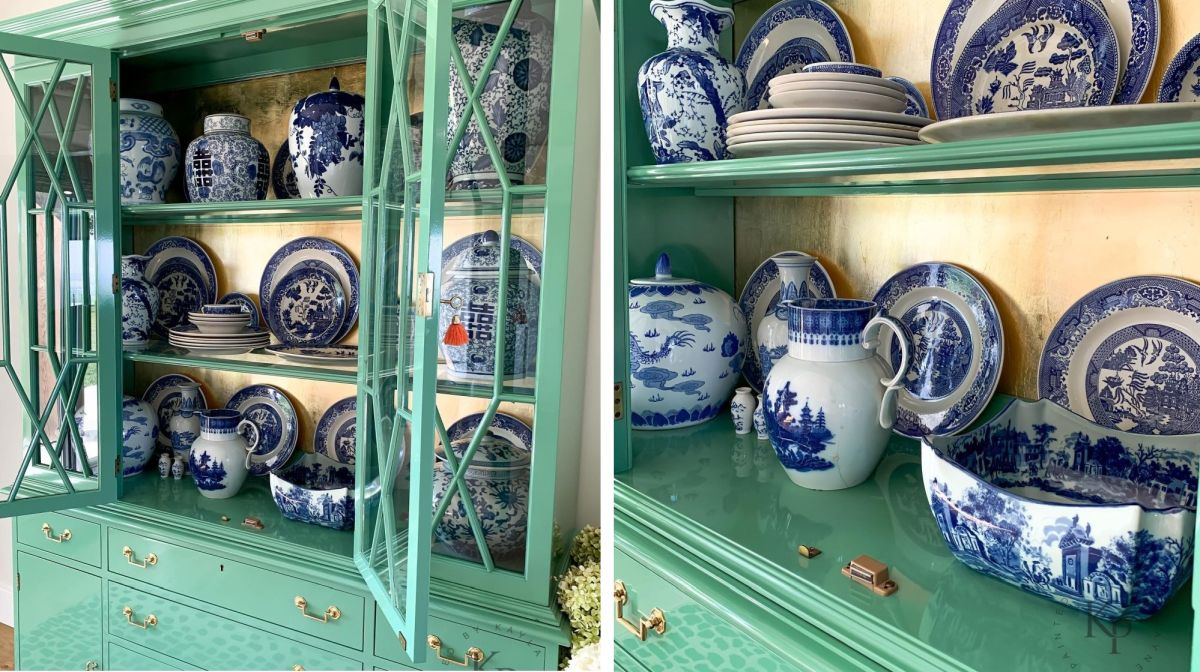
With the glazed doors open, upright plates fill the back of the shelves while pitchers, jars, cups, and a handled bowl occupy the space in front. Stacks of white plates break up the blue patterns.
Green shelf edges frame each level, and the gold-toned backing adds warmth behind the collection. Leaving the doors glazed keeps those objects visible when the cabinet is closed.
Before and after put the reflective finish in focus
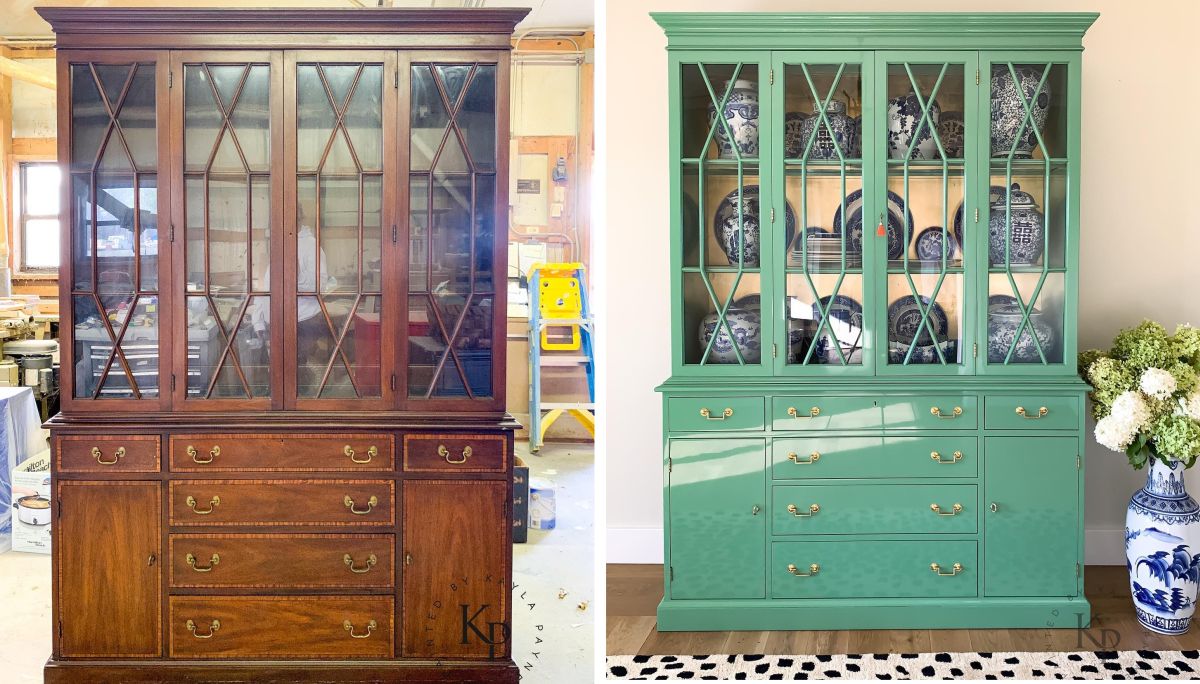
Side-by-side photographs show the same diamond glazing, drawer arrangement, and broad crown beneath two different finishes. Dark wood once framed an empty display; green now surrounds a cabinet filled with china.
Green wasn’t the biggest decision here. Painting over a cabinet with this much original detail was. Would you have kept the dark wood or taken the same risk?
Readers Disagreed About Painting Over the Original Wood
The makeover divided Homedit readers, with some questioning whether the cabinet should have been painted at all.
“she ruined it. It was beautiful before she painted it,” wrote MollyP.
Heather pointed to the original drawer fronts: “The article fails to mention the beautiful inlaid wood on the drawer fronts.” She felt the green finish made the cabinet resemble metal rather than wood.
Jenny went further, suggesting the piece could be a vintage Henkel Harris cabinet and arguing that painting it may have reduced its collectible value.
Others defended the result. Rose Diaz called it “an absolutely beautiful transformation,” while Pauline Loates, who prefers leaving old furniture unpainted, made an exception for this project.
The disagreement raises a question beyond personal taste: When does painting vintage furniture become a loss rather than an improvement?
Image credits go to @paintedbykaylapayne