New Leaves Don’t Always Mean Your Prayer Plant Is Healthy: Why the Older Ones Keep Turning Yellow


Fresh leaves keep appearing on a prayer plant, yet older ones turn yellow and die. More water seems like the answer, but it could make the problem worse. Even new growth cannot rule out trouble beneath the soil.
In a Facebook plant-care discussion, Jocelyn Crittenden described this exact problem. Her prayer plant kept producing new leaves while losing older ones. She avoided direct sunlight and wondered whether a pebble tray could provide the humidity it needed.
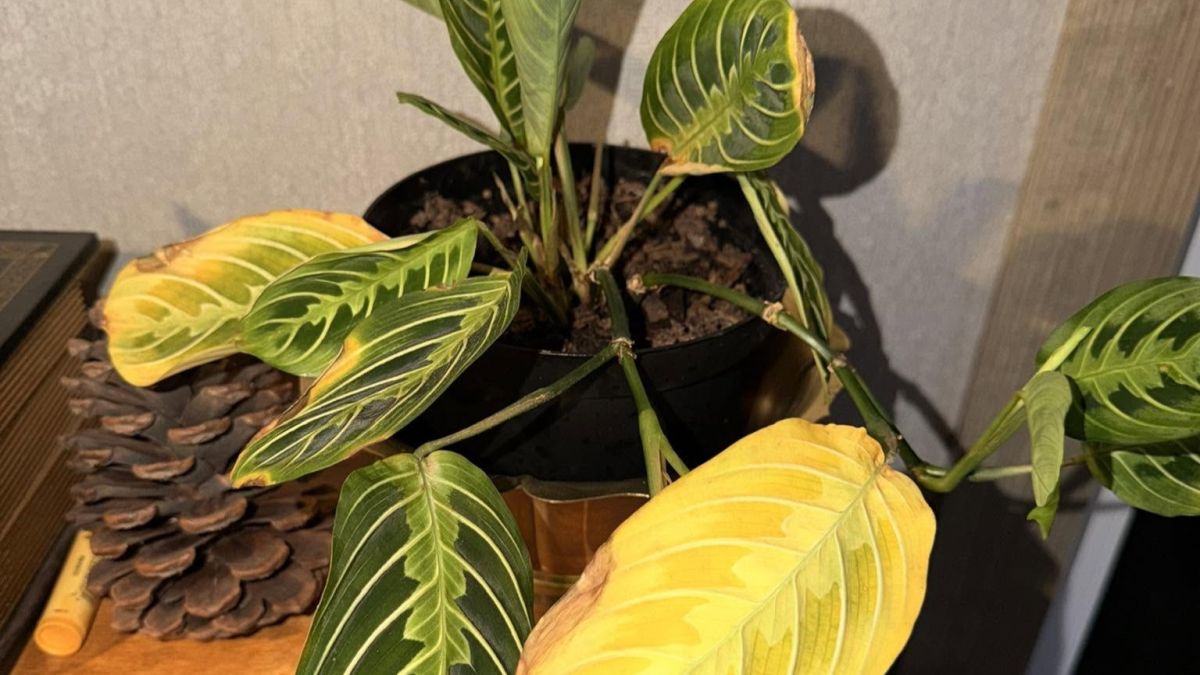
Her question sparked conflicting advice.
Plant Owners Couldn’t Agree on the Cause
“Humidity Humidity Humidity,” wrote Tony Anderson, who also warned against letting the soil dry out.
Marissa Finley suspected another problem: “Looks over watered or poor drainage.”
Melissa Bellevue reported a different experience: “No humidity for mine. I just water maybe once a week and indirect sun.”
Renee Vass offered another explanation: “Some leaves just die. Sometimes we don’t know why.”
Each comment pointed toward a possible cause, but yellow leaves alone cannot reveal whether a prayer plant needs more water, less water, or a change in growing conditions.
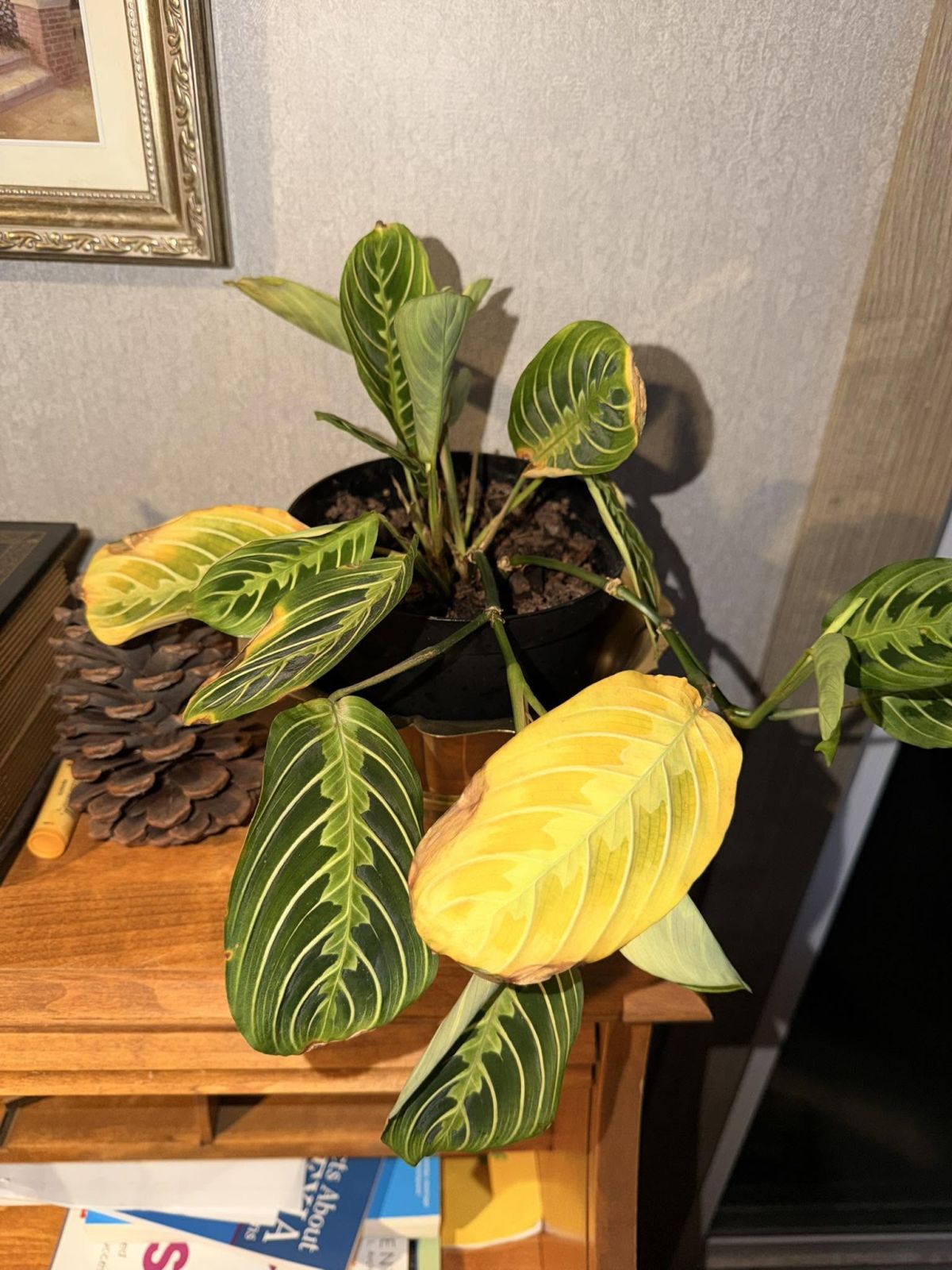
New Growth Doesn’t Rule Out Stress
The University of Maryland Extension addressed a near-identical case in 2023. A prayer plant owner reported new leaves growing while others turned yellow and brown.
The horticulture expert explained that losing a few older leaves can be part of normal growth. Leaves furthest from the center of the plant may die as fresh foliage emerges.
The warning sign is the rate of leaf loss.
When older leaves die faster than new ones develop, or yellowing spreads across the plant, the cause may extend beyond normal aging.
Too Much Water Can Look Like Too Little
Yellow leaves often prompt another watering. That response can damage roots when the potting mix is wet.
Utah State University explains that saturated soil displaces air around roots, reducing oxygen and interfering with water absorption. A plant can develop yellow leaves and wilt even when surrounded by moisture.
Prayer plants need consistent soil moisture, but their roots cannot remain waterlogged.
Before watering, check the top inch of soil. If it still feels wet, wait. If it has begun to dry, water until excess moisture drains from the pot, then empty the saucer.
Poor drainage can keep lower roots wet long after the surface appears dry.
Humidity Isn’t the Only Thing to Check
Prayer plants prefer humid conditions, but adding a pebble tray will not correct every leaf problem.
North Carolina State University Extension recommends bright, indirect light, moist soil, and higher humidity for Maranta leuconeura. It also warns that poor drainage can cause root rot.
Water quality presents another concern. University of Maryland Extension identifies fluoride, mineral-rich water, and fertilizer salt buildup as possible sources of leaf damage in prayer plants.
Brown leaf tips, yellow patches, and fading foliage can result from different conditions. Adding a humidifier or switching to distilled water without checking soil moisture may leave the cause untouched.
Should You Cut Off Yellow Prayer Plant Leaves?
Once an older leaf has turned yellow, it won’t regain its green color. Cut the stem near its base with clean scissors rather than pulling it from the plant.
Removing yellow leaves won’t fix problems with watering, humidity, or damaged roots. It removes dying foliage without disturbing new shoots.
Sources: University of Maryland Extension, Utah State University Extension, North Carolina State University Extension