Instead of keeping this vintage buffet brown, they painted it Tricorn Black with gold leaf


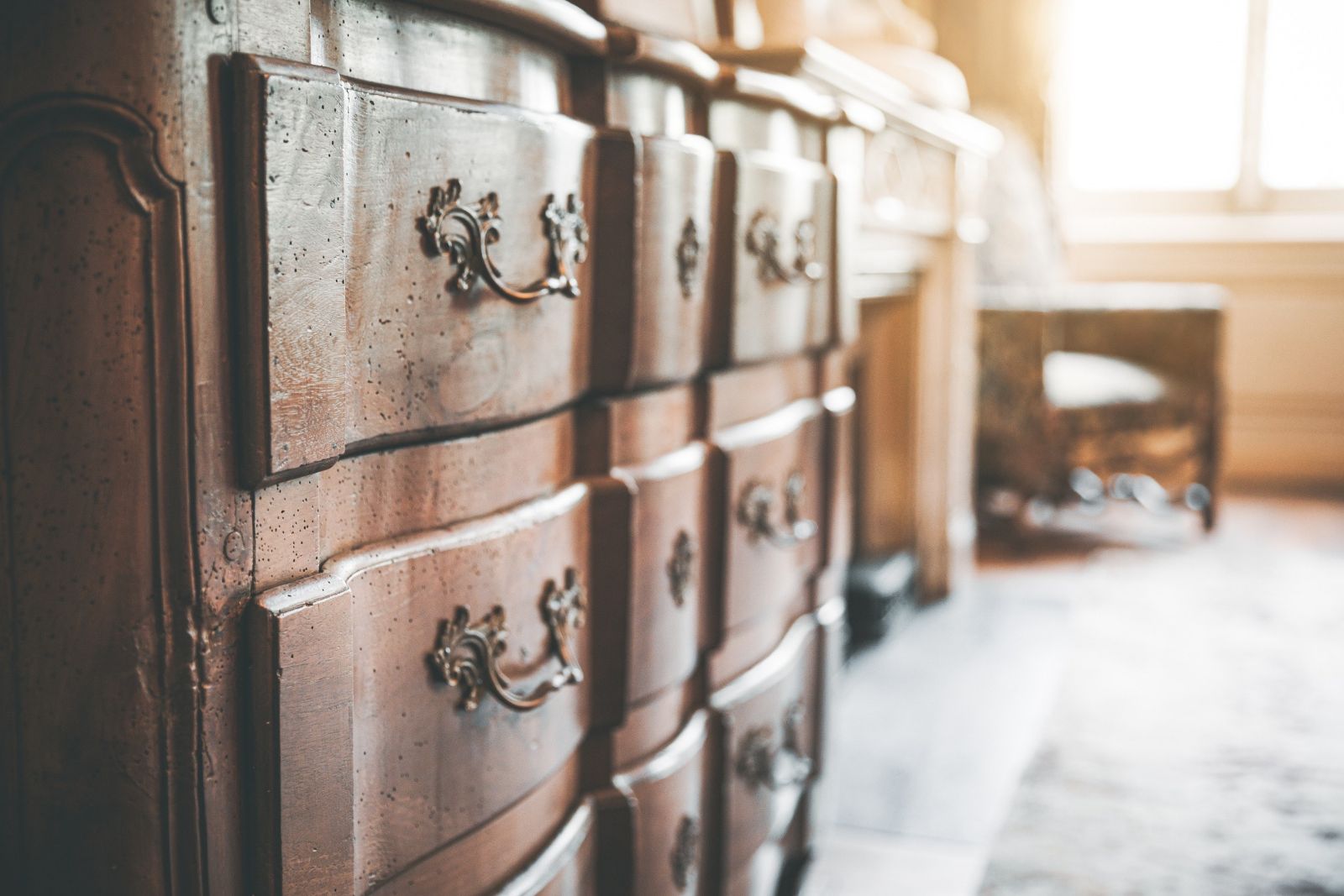
You’ve scrolled past one on Facebook Marketplace: a solid vintage buffet, brown from top to toe, with dings along the edges and pale rings where years of drinks sat on the top. In the photo it looks heavy, and you can already picture it swallowing the dining room. So you keep scrolling.
The piece wasn’t the problem, the finish was. Dana Metcalf, who shares her furniture projects as @houseofrevivaldesigns, paid $100 for exactly that kind of buffet on Facebook Marketplace. Over three days, with about $100 in materials, she and her husband, William, gave it a second life for roughly $200 all in.
Why the all-brown finish was holding it back
When the top, the frame and every detail wear the same brown, the eye reads one dark block and nothing stands out. The couple didn’t want to erase the wood, though. “We loved the look of the antique wood and wanted a color to accentuate it,” Dana says. So the plan split the buffet in two: wood where the grain was worth showing, paint everywhere else.
For the painted parts, Dana says, “we chose ‘Tricorn Black’ and gold to make it all pop.” Tricorn Black is SW 6258, a Sherwin-Williams neutral rated for interior and exterior use. Its light reflectance value is 2.849, which the brand classifies as dark. Next to that near-black, the warm wood and the gold both look brighter than they did before. Gold works on a dark base because it only lands on the details. A $30 china cabinet shows it well: its carved flowers and curved moldings faded into the dark brown until blue paint and gold details brought them back.
The makeover, step by step
- Check what you have. Dana’s first advice is to “research the value and quality to determine if it should be refinished or completely restored if possible.” A valuable antique may deserve a restorer, not paint.
- Refresh the top. The couple sanded the top and stained it with Minwax’s Antique Walnut. Try the stain on the back or underside first, so the color holds no surprises.
- Bring out the wood faces. They used Danish oil to wake up the original shade. Watco’s technical sheet says to let each coat penetrate for 15 minutes, wipe the surface completely dry, and work when the air is between 60°F and 90°F. Expect 6 to 8 hours before it’s dry to the touch, and wait at least 72 hours before any polyurethane.
- Prime, then paint. The parts meant to go black got primer and Tricorn Black.
- Gild the details last. Gilding supplier SeppLeaf describes the order: a clean, smooth, sealed surface, a coat of gilding size, a wait until the size reaches the right tack, then the leaf, pressed down gently, with the excess brushed away. “I had never worked with gold leafing before and didn’t find that it was that difficult, but there is a learning curve,” Dana says.
Plan B, if the wood is too scratched to show off: Dana’s rule is that for a piece without great value or in poor condition, “a new paint job will bring it back to life.” Painting the whole body Tricorn Black and saving the gold for the trim still gives you the contrast.
Where this finish has its limits
Old furniture can hide old paint. If you find painted layers under the brown, don’t sand blind. The CDC warns that sanding can create hazardous lead dust from old paint, and it recommends EPA-certified contractors for that kind of work. Test before you sand, or leave those layers to a pro.
Oily rags are the other trap. The National Park Service warns that rags soaked with oils can spontaneously combust in the right conditions. For home projects, it advises spreading used rags in a single layer on concrete, out of direct sunlight, with the corners secured so the wind can’t move them.
Keep the best wood, paint the rest near-black, and save the gold for the details. That’s the trick.