Not Worth Hanging? She Painted Right Over the Glass of These Thrift Store Pictures


Old thrift store pictures can have ornate frames worth keeping, even when the artwork inside looks dated. Replacing the prints means opening each frame, finding new art, and putting everything back together.
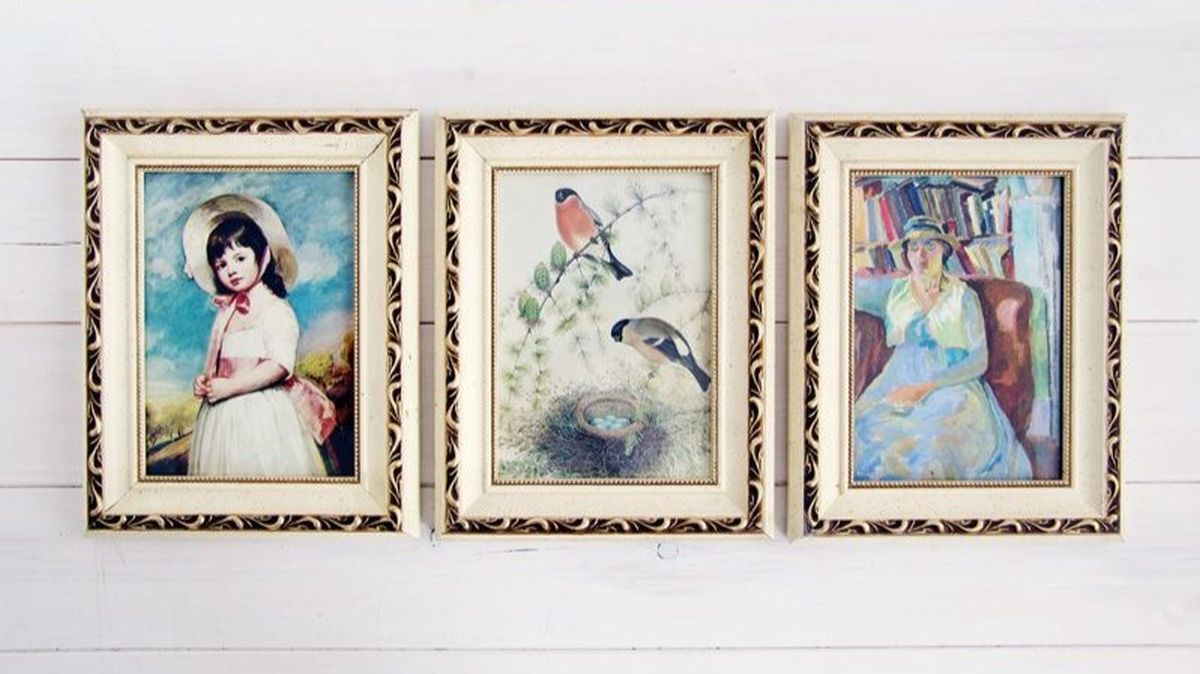
DIY Homedit creator Francesca Stone took another approach. Instead of removing the pictures or painting just the frames, she covered the lower section of each piece with paint, including the glass protecting the artwork.
The result leaves part of each vintage print on display, while blue, yellow, and burgundy paint conceal the rest. Three unrelated pictures become a matching wall arrangement without changing what sits behind the glass.
Three Old Pictures With Ornate Gold Frames
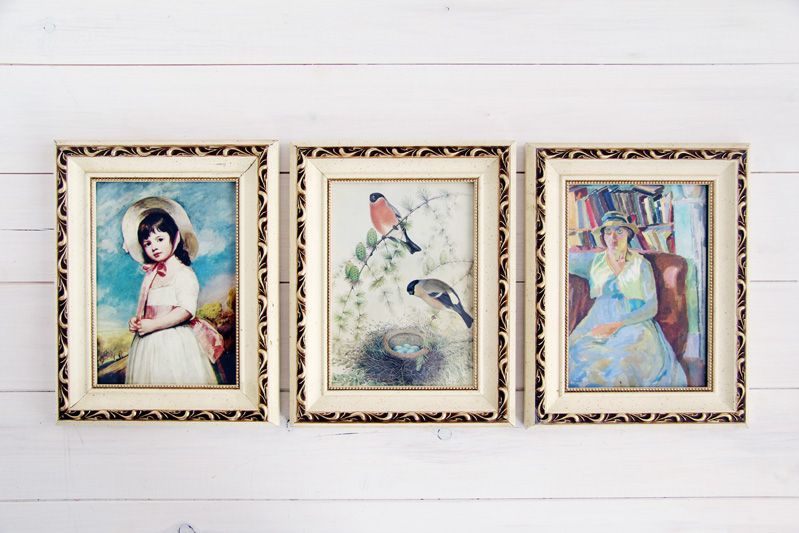
The starting pieces included a portrait of a young girl, an illustration of birds near a nest, and a painting of a woman seated beside bookshelves.
Each had an ivory frame with gold trim, a dark decorative border, and carved details. Those features remained part of the finished project rather than being stripped or covered with one color.
No Need to Remove the Pictures or Glass
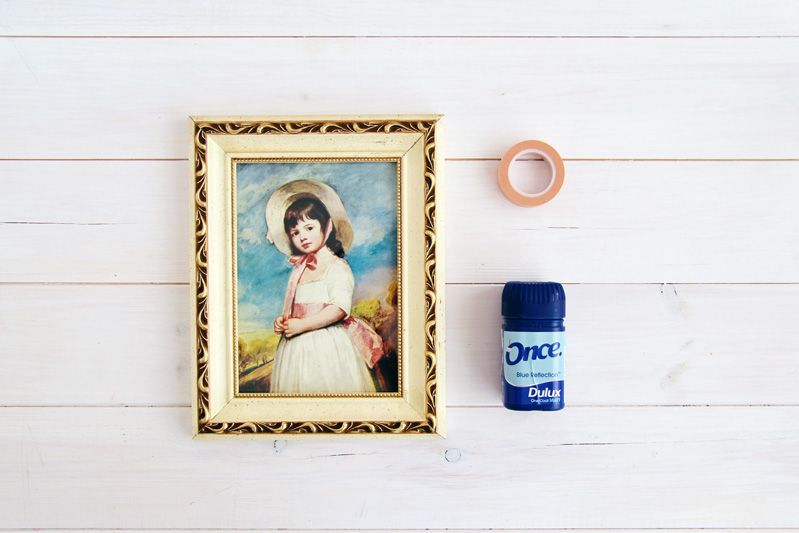
Stone used masking tape, paint, and a small applicator for the makeover. The blue paint shown beside the first portrait is Dulux Once, while the other two frames received yellow and burgundy finishes.
The pictures stayed inside their frames throughout the process.
Tape Went Straight Across the Artwork
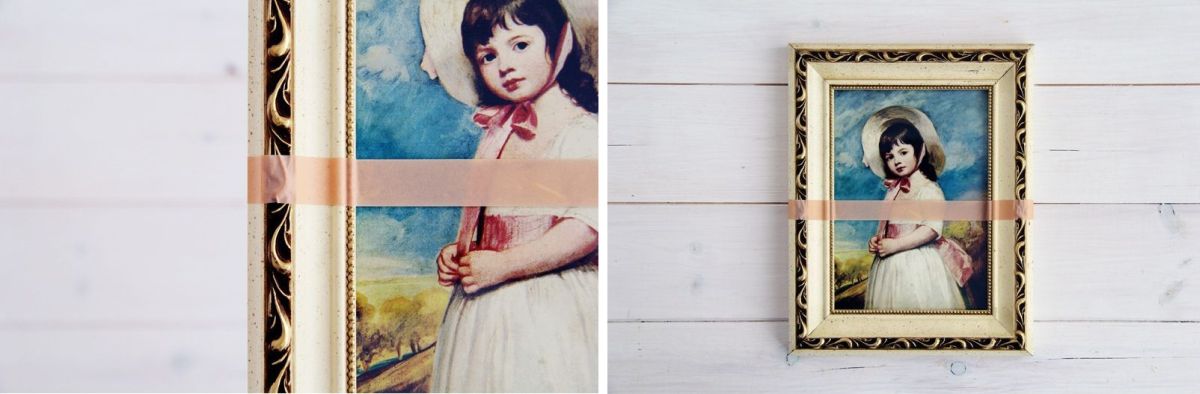
A strip of masking tape ran across the middle of the first picture, passing over the glass and extending onto both sides of the frame.
Pressing the tape against the raised molding helped separate the exposed upper portion from the section receiving paint. The lower part of the girl’s dress, along with the surrounding border, would disappear beneath the new color.
Blue Paint Covered the Glass and Frame
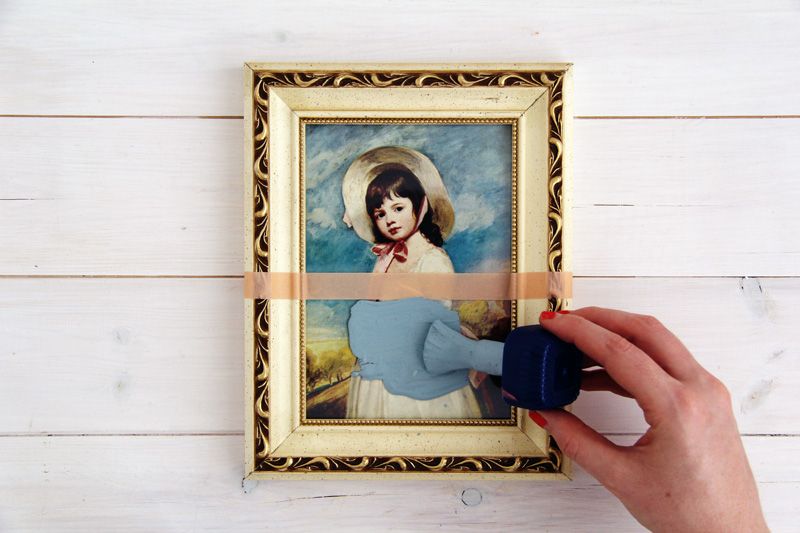
With the tape in place, Stone began applying blue paint across the glass. The paint concealed the girl’s hands and dress but left her face and hat visible above the taped line.
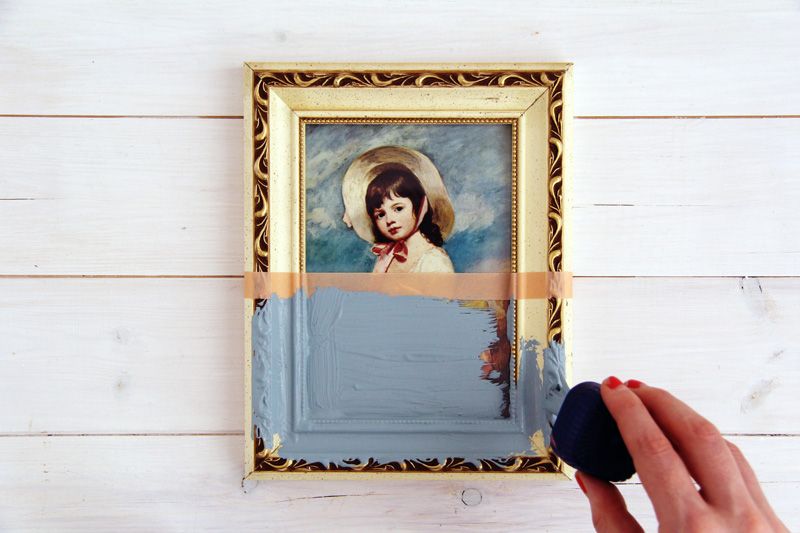
The same paint continued across the inner trim, carved outer border, and lower corners. Recessed details required more coverage than the flat glass, but the goal was one unbroken painted section.
A second coat followed after the first dried, with the tape left in place until the finish had set.
The Finished Picture Has Two Different Halves
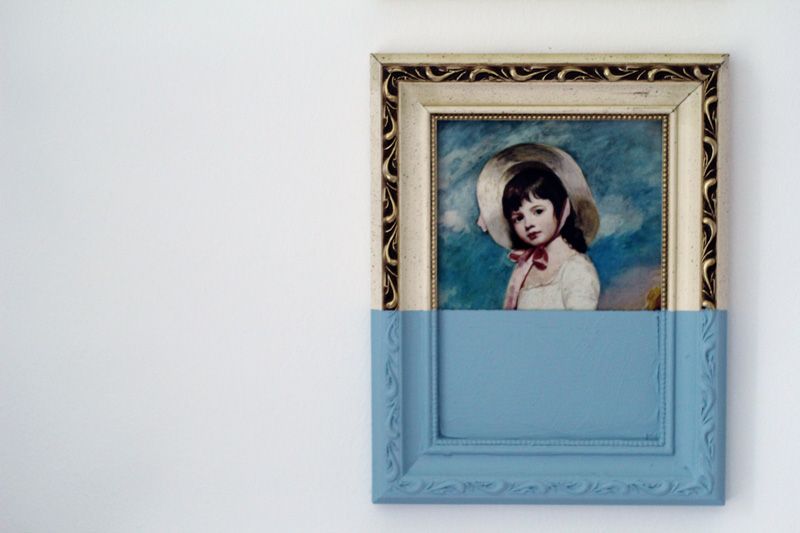
Once the tape came off, the blue section formed a straight boundary across the portrait. The upper half retained the ivory-and-gold frame and the girl’s face, while the lower half became a solid blue block.
The paint also covered the decorative molding, leaving its raised pattern visible beneath the new finish.
Three Different Pictures Became a Matching Wall Display
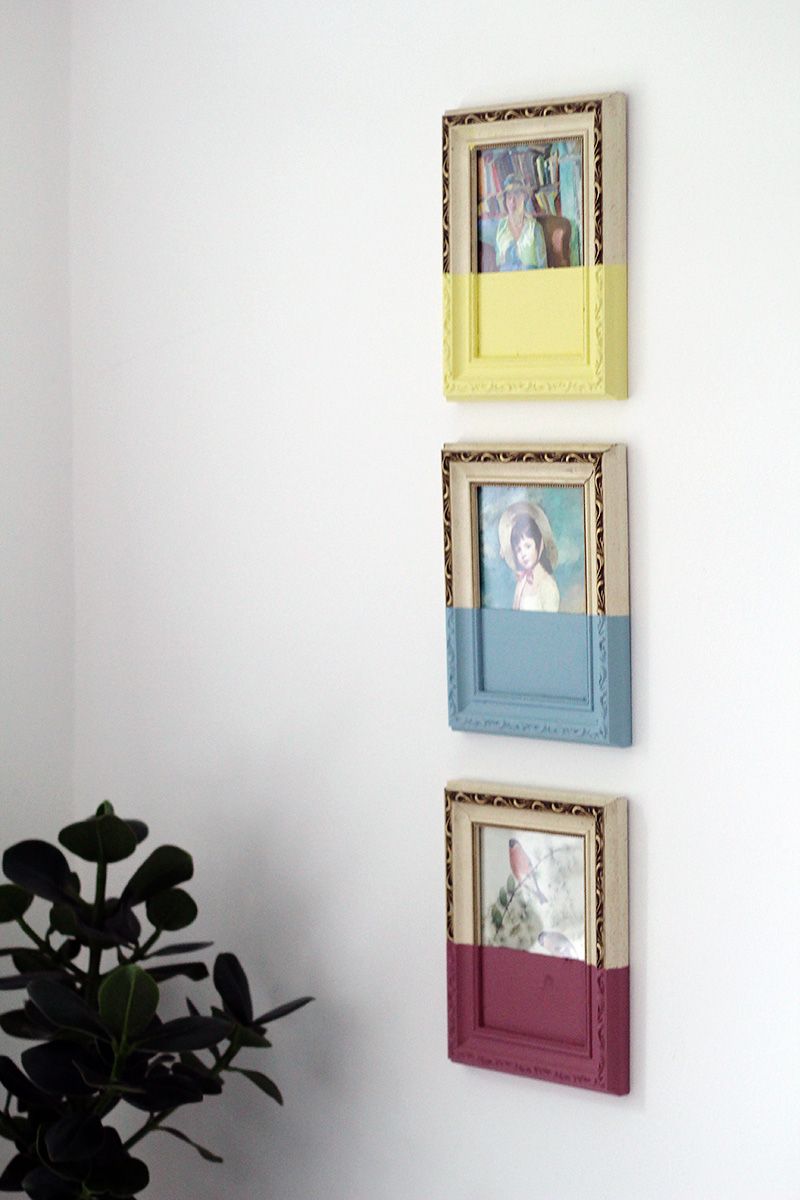
Stone repeated the treatment on the other two frames, choosing pale yellow for the woman seated beside bookshelves and burgundy for the bird illustration.
Mounted in a vertical arrangement, the pictures share the same painted division despite their different subjects. The yellow frame sits at the top, the blue portrait occupies the middle, and the burgundy bird picture finishes the group.
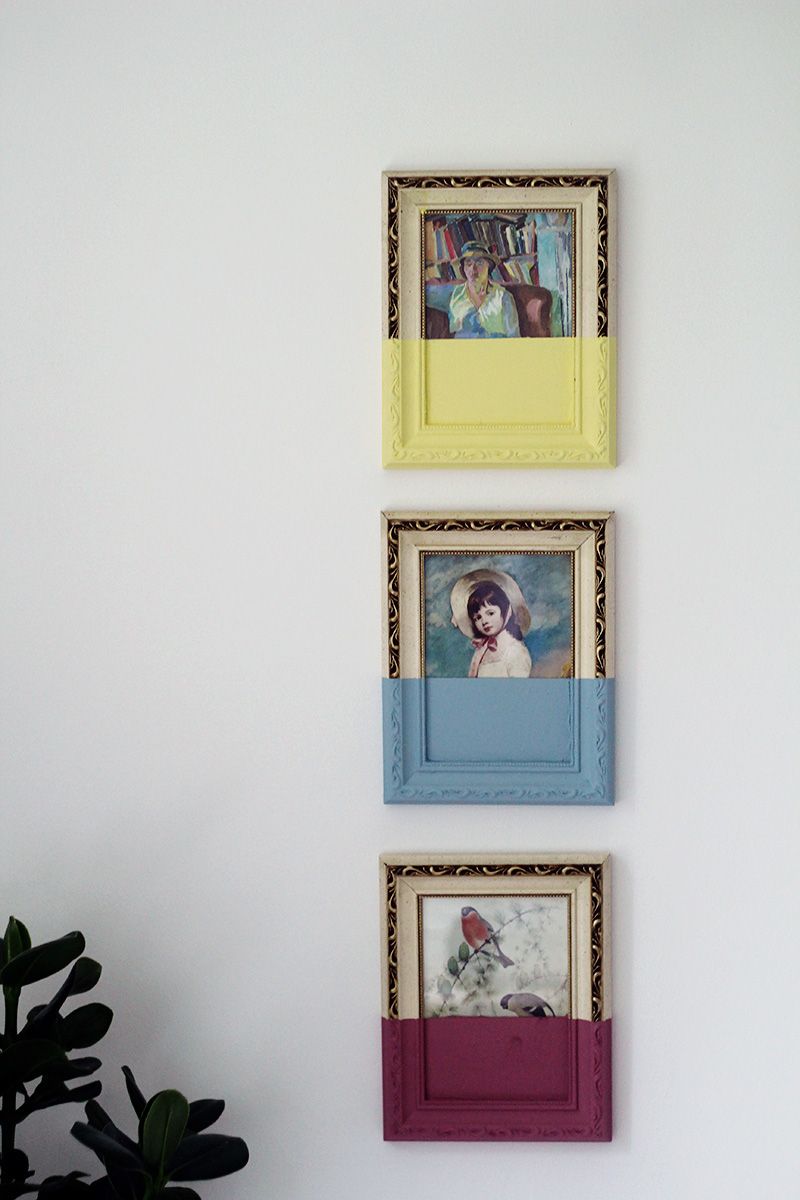
The finished display keeps the old artwork, original glass, and ornate frames. Paint covers the sections Stone chose to hide, while the exposed portions preserve enough of each picture to recognize its subject.
Would you paint across an old picture rather than replace the artwork inside?