He Used One Concrete Mold to Turn a Strip of Grass Into This Stone-Look Walkway

Pavers can give a yard a defined walkway, but buying enough individual stones is not the only way to get one. A concrete mold can create an entire path from repeated pours while giving each section the shape of irregular stone.
Sarah from Simply SARAHdipity used a Quikrete WalkMaker Country Stone mold when replacing a loose line of stepping stones between her porch and driveway. Instead of setting rows of manufactured pavers, she mixed concrete, tinted it charcoal, and formed the stones on site.
The finished path looks far removed from the grass and mismatched stepping stones that were there before. Dark concrete forms the center of the walkway, while pale pea gravel fills the spaces and creates contrast around each molded stone.
Loose stepping stones marked the original route
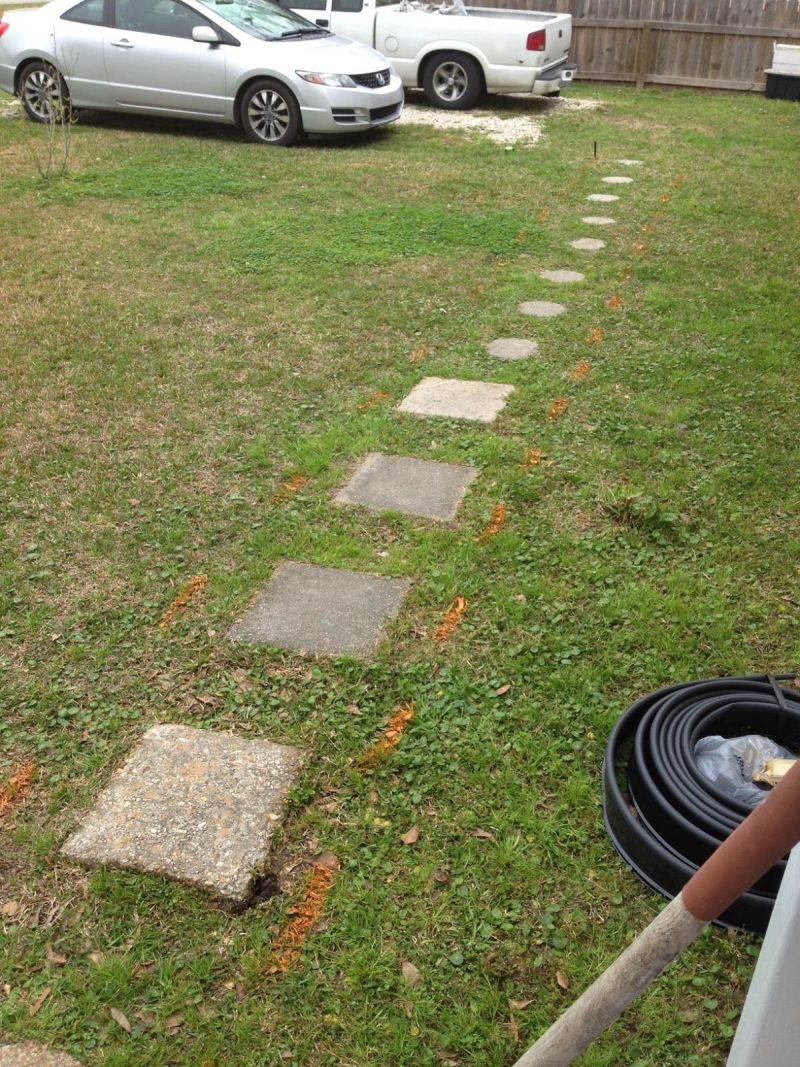
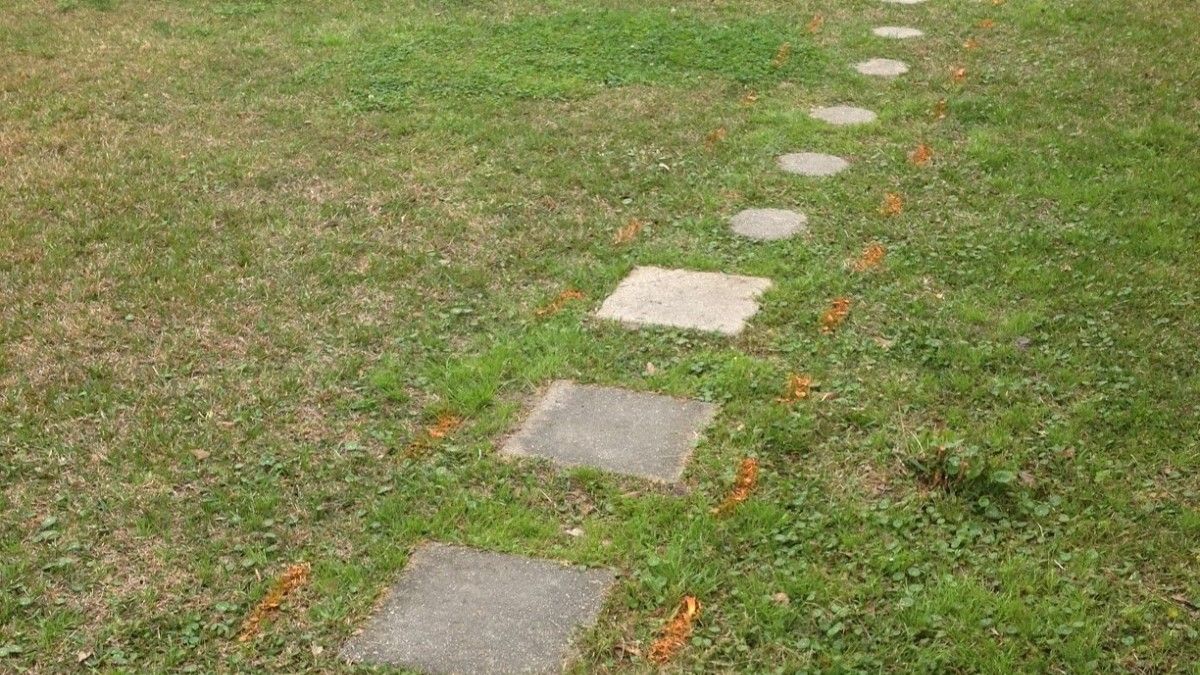
Square and round concrete stepping stones already ran through the grass, giving Sarah a starting point for the new walkway. Orange markings established the edges of the wider path before work began.
Rather than build around the existing stones, the project removed them along with the grass inside the marked area.
Four inches of soil came out first
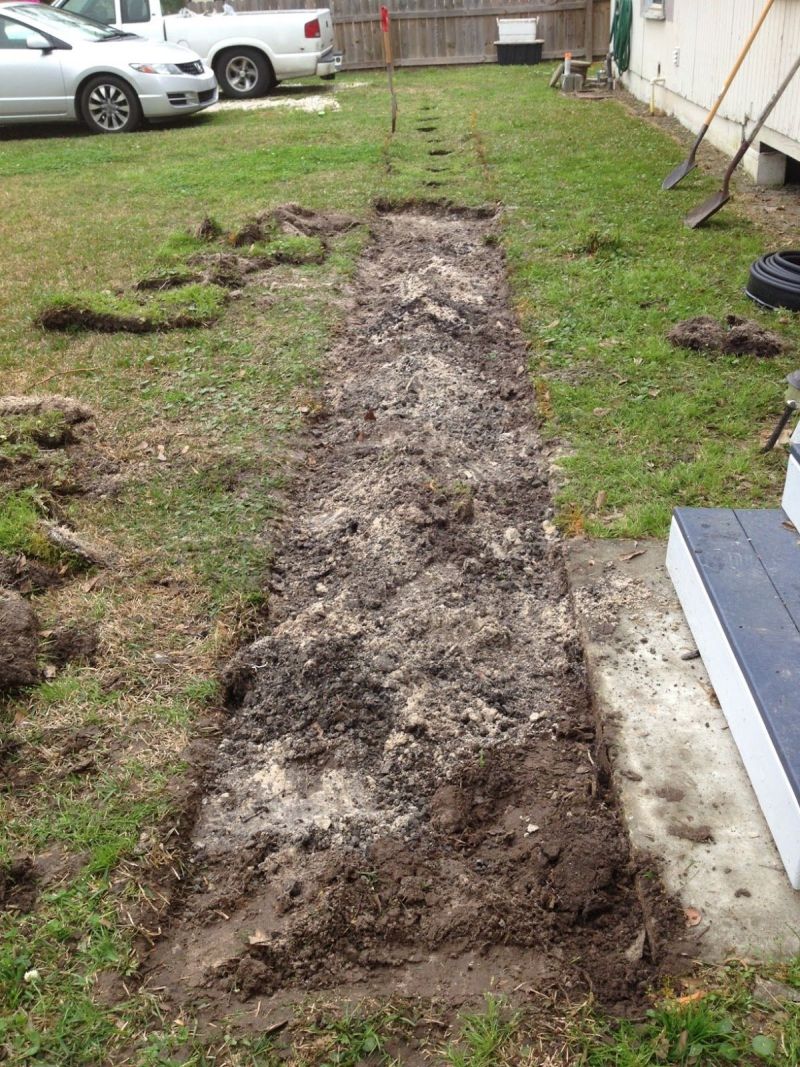
Sarah dug the path down about four inches, creating a long recessed strip from the porch toward the driveway. Sod removed during this stage was transplanted into another part of the backyard instead of discarded.
Excavating the full path also left room for the base layers beneath the concrete.
Compacted rock formed the base
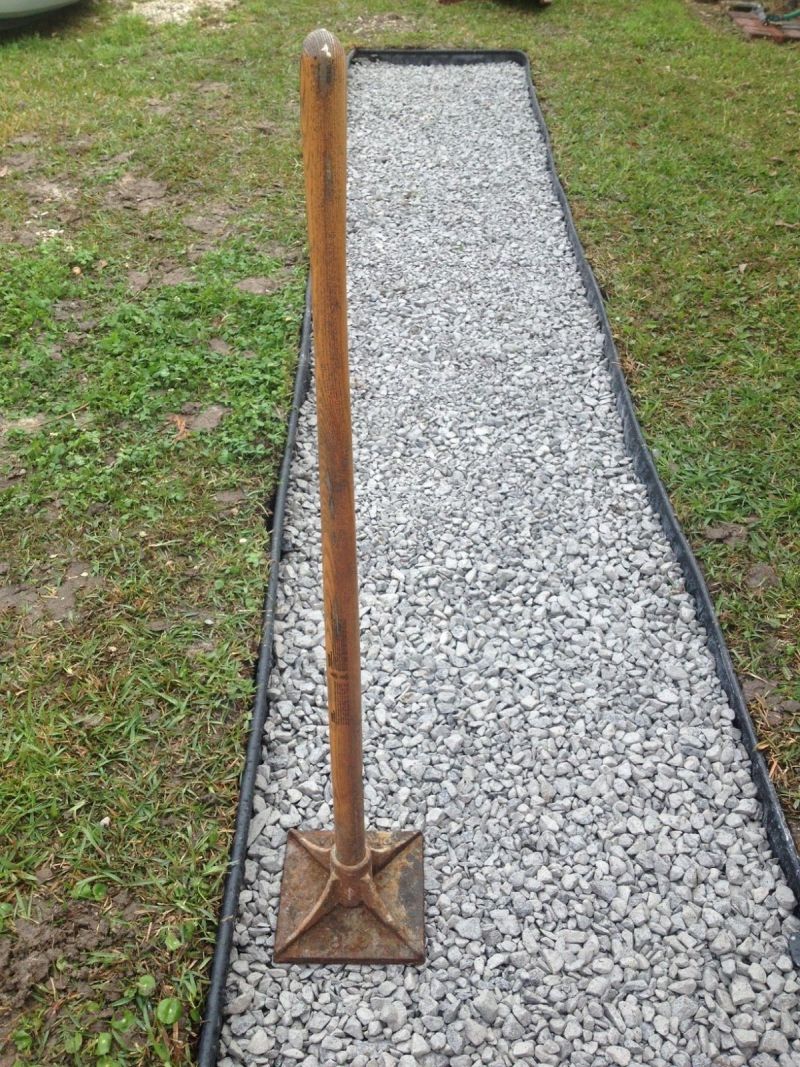
About three inches of drainage rock, also called paver base, went into the excavated path. A hand tamper compressed the material before the next layer went down.
That step created a firm base rather than placing the molded concrete over soil and grass.
Paver sand created a level surface
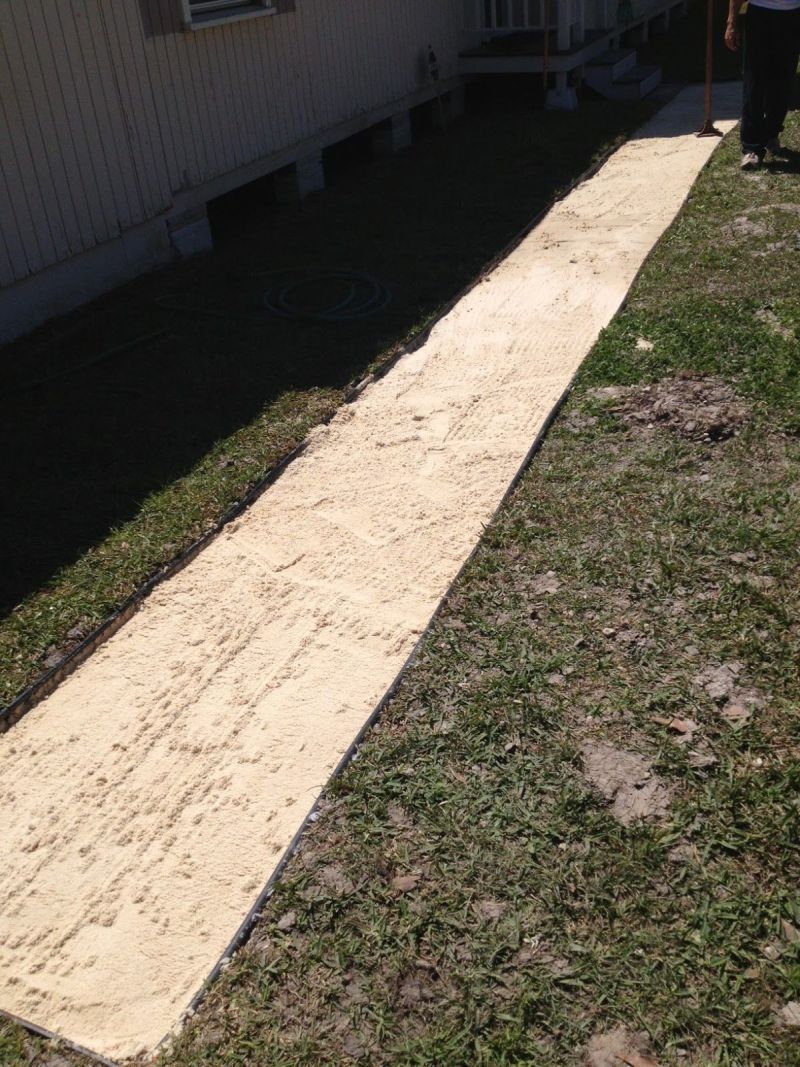
About an inch of leveling sand covered the compacted rock. Sarah tamped the sand and worked across the surface to bring it close to level.
Black edging along both sides contained the base and established the finished width of the walkway.
One mold created the stone shapes
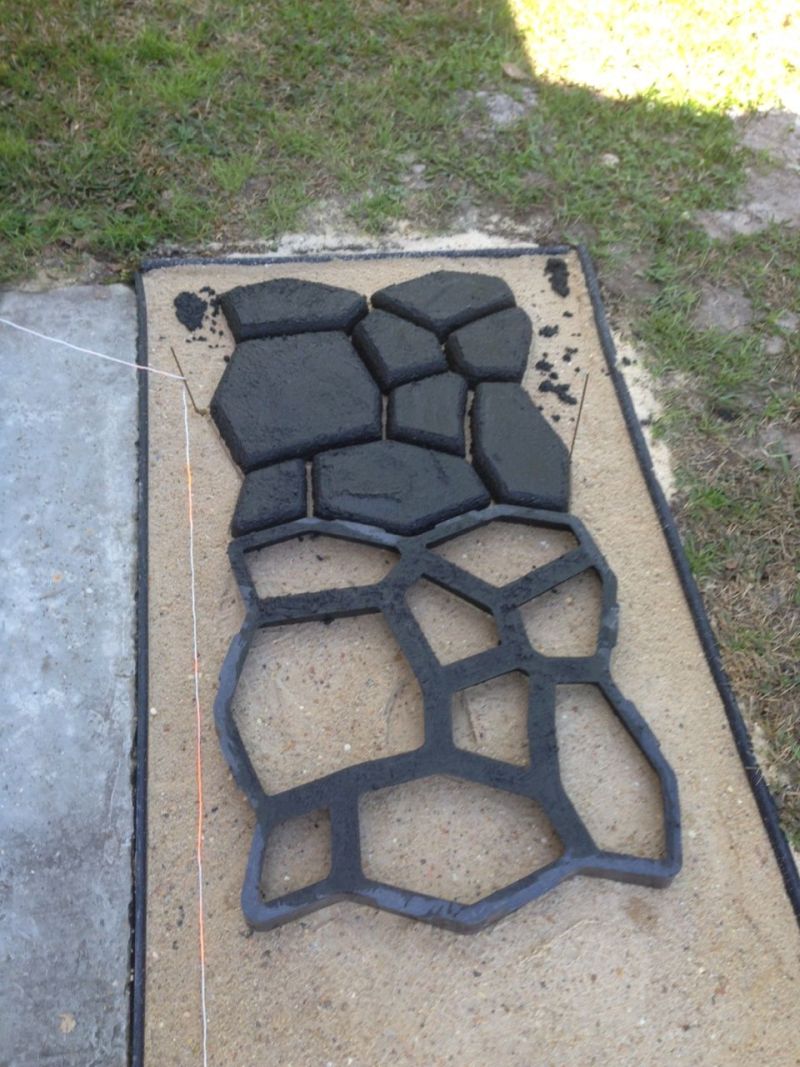
Here is where the path stops looking like a standard concrete project. The WalkMaker mold divides one pour into several irregular shapes, creating pieces that resemble individual stones.
Concrete fills each opening in the mold. Once one section is formed, the mold can move farther down the path and repeat the pattern.
Charcoal tint changed the look of the concrete
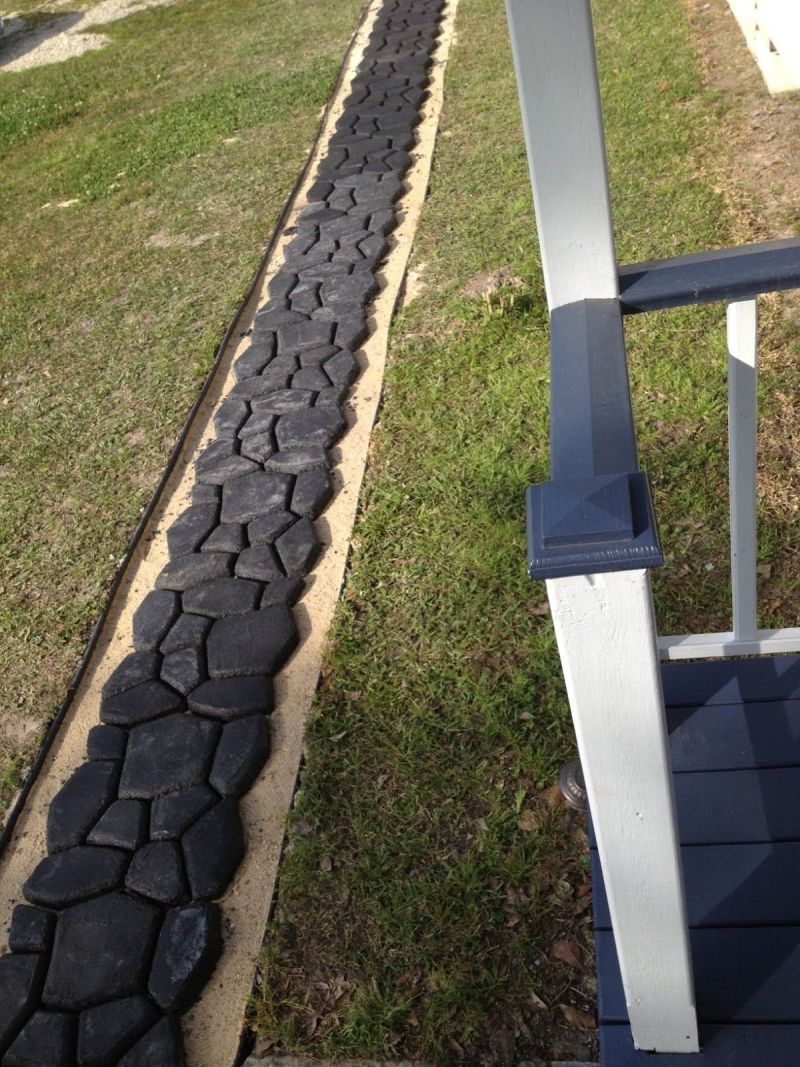
Sarah chose a dark charcoal color instead of leaving the concrete gray. The concrete was mixed before being transferred to the mold.
She found that one 80-pound bag filled about one and a half mold sections, despite the mold instructions calling for one bag per section.
Each opening was packed and shaped by hand
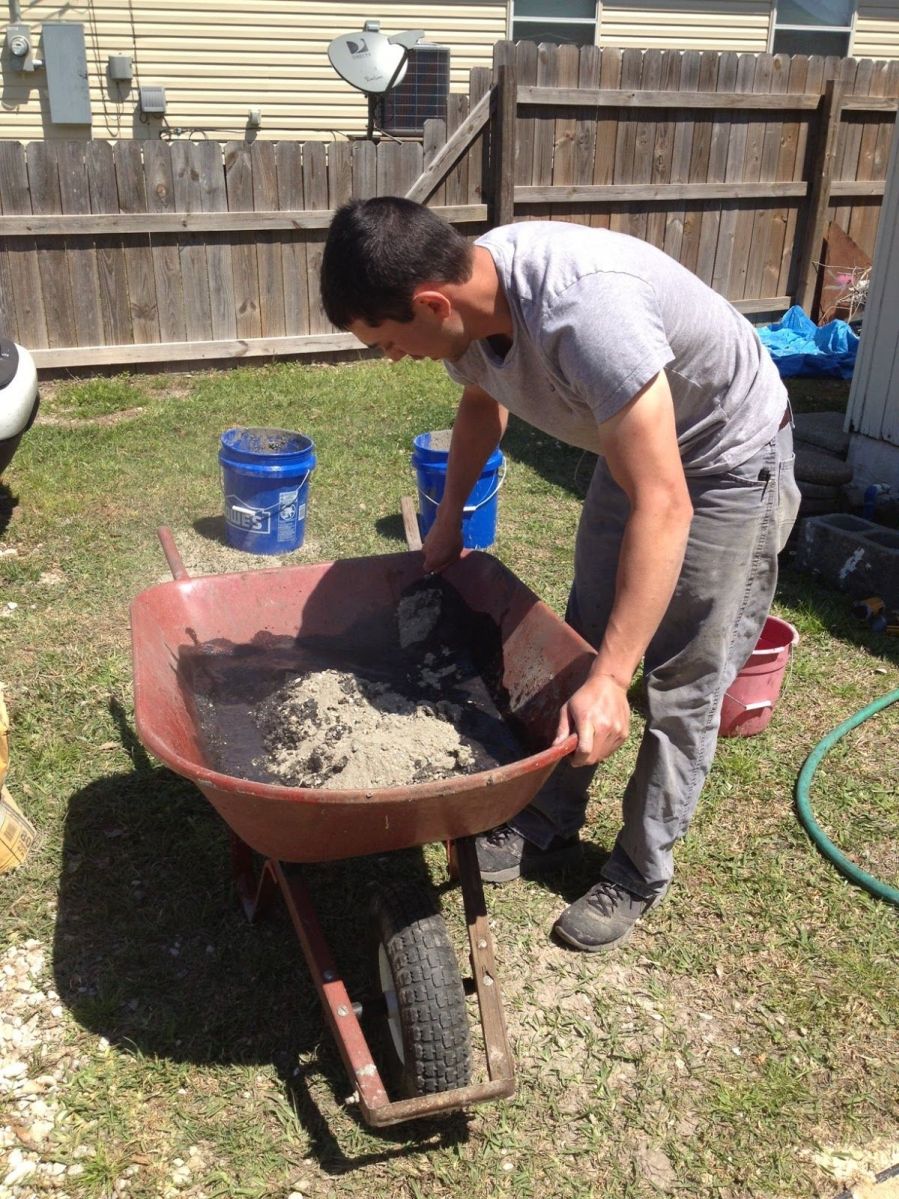
Wet concrete was pressed into each compartment and smoothed to the shape of the mold. Different opening sizes produce the mix of broad and narrow pieces visible across the finished path.
The concrete appeared much darker while wet. After it set for a day, the charcoal finish became lighter.
Repeating the mold built the full walkway
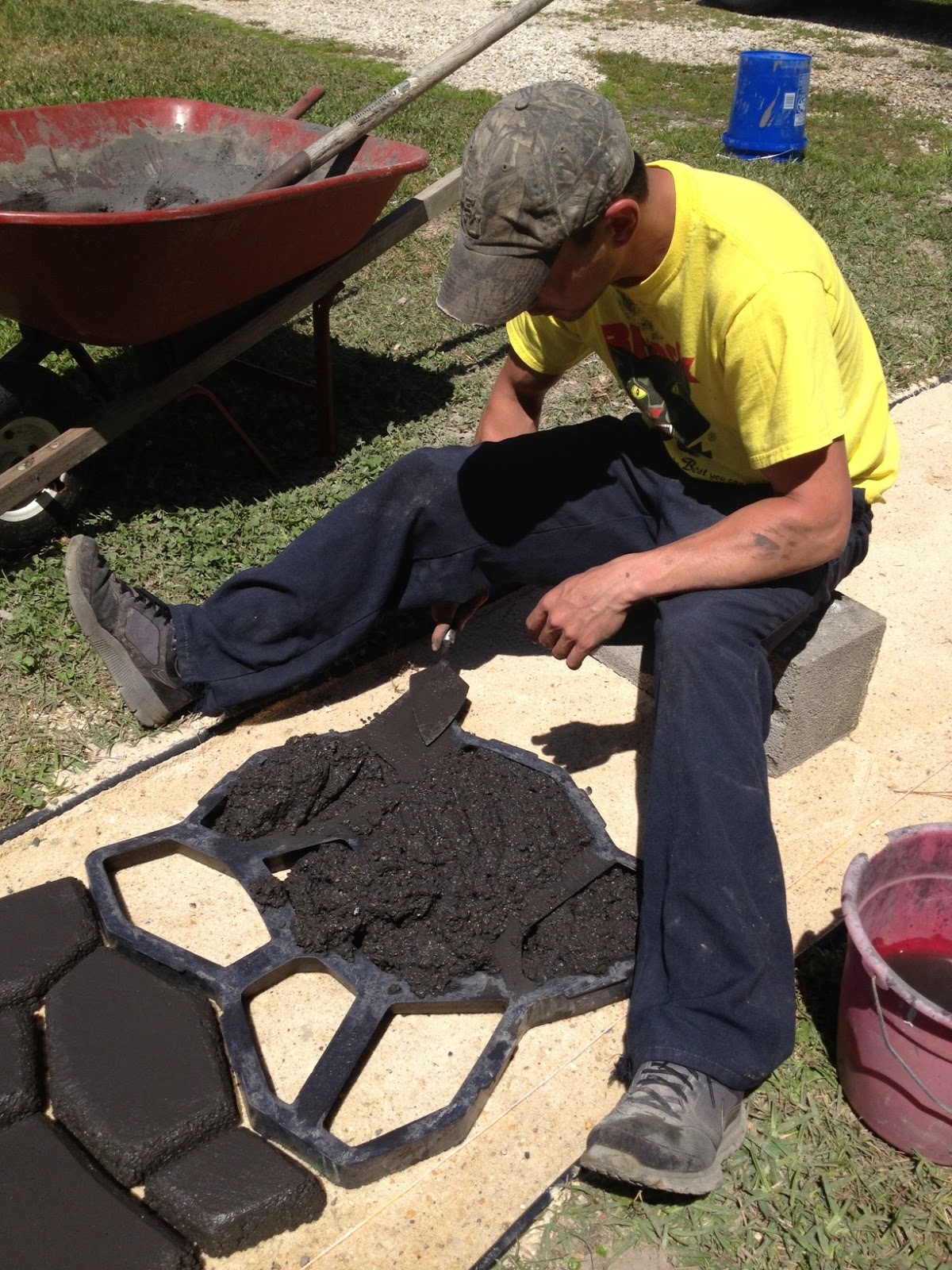
Moving the same mold down the prepared base turned the narrow strip into a continuous stone-look path. Irregular edges keep the center from reading as a row of square concrete slabs.
The dark concrete also creates a sharp break from the lawn on both sides.
Pea gravel finished the spaces between the stones
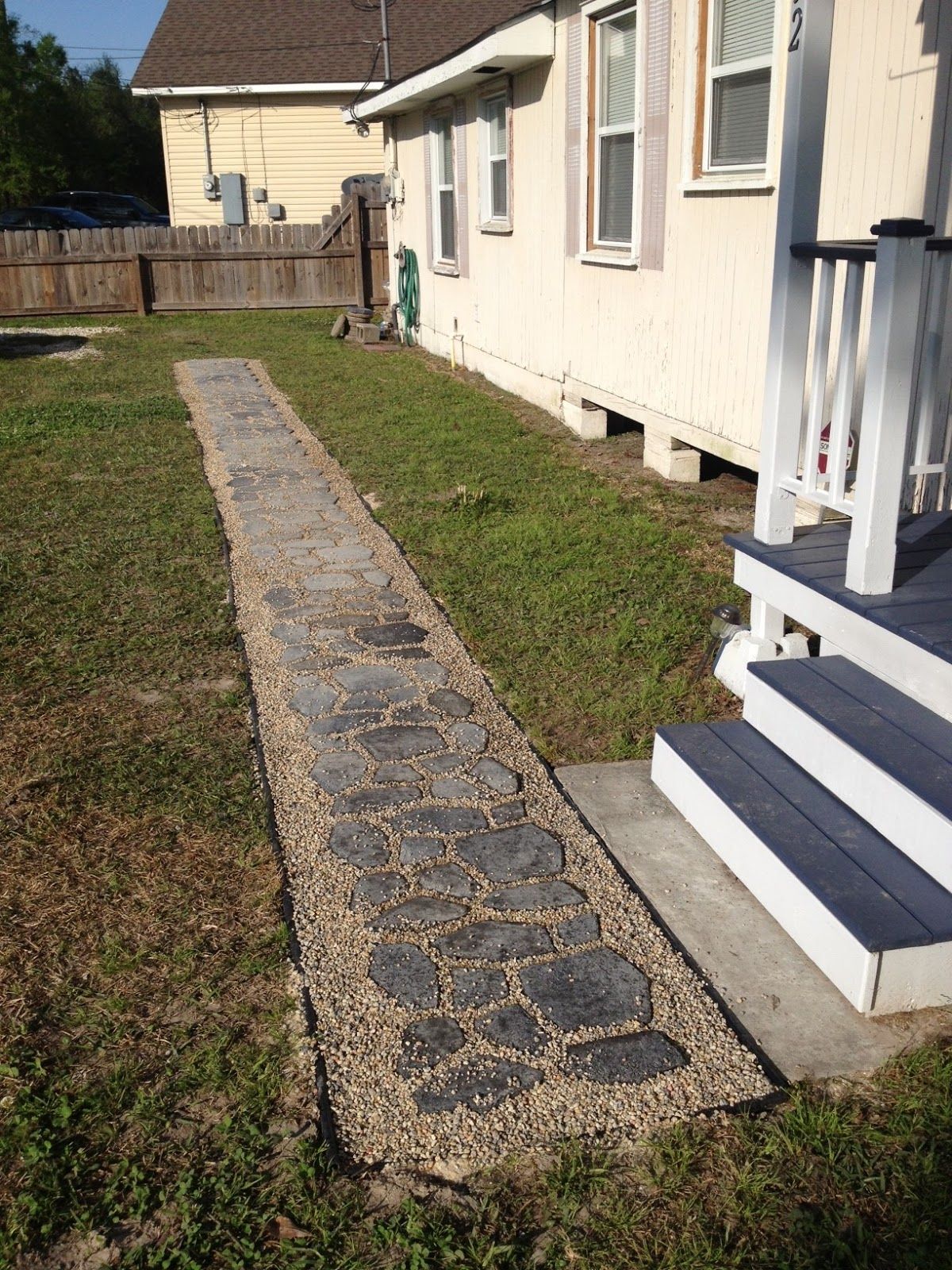
Sarah filled the open areas around the concrete with pea pebbles. She considered polymeric sand, but the gaps between the molded pieces were too large for it.
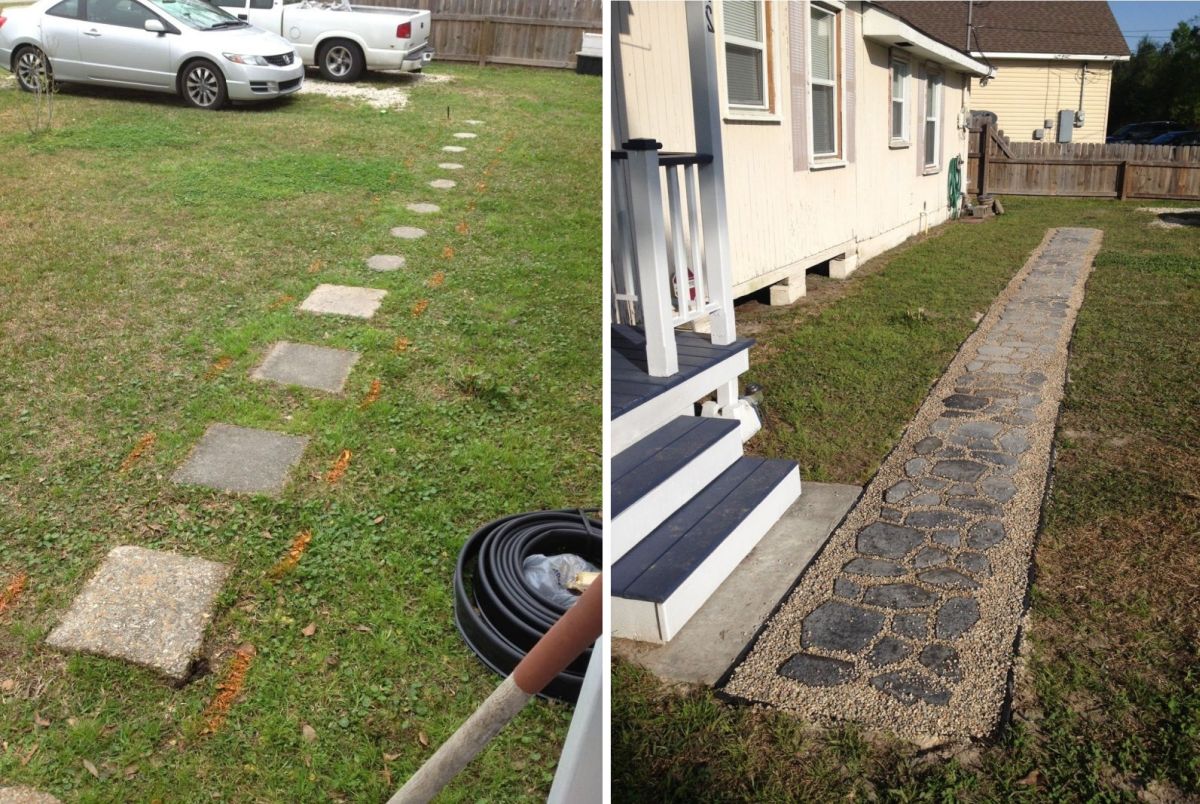
Pale gravel fills those spaces and runs along both edges, making the charcoal concrete shapes stand out as individual stones. What began as a scattered line of stepping stones now reads as one defined walkway from the porch to the driveway.
Would you guess this path came from one reusable concrete mold?