He Put Five Pieces of Split Firewood Back Together and Filled the Gaps With Clear Resin: Now They Glow


Five pieces of split firewood would have made an ordinary addition to a wood-burning stove. Instead, they were put back together into the shape of a log, with wide gaps left between the pieces. Clear resin filled those openings, and a light bulb hidden inside turned the cracks into glowing amber lines.
Woodworker Robert Pelletier, who shared the project on his blog Rob & Yvonne’s Az Living, had saved the matching pieces of ash firewood for years without deciding what to make from them. After seeing a wooden cube assembled with epoxy resin, he chose to recreate the original log rather than build a solid block.
The finished lamp retains the knots, curved trunk, and natural wood grain of the ash, but light now passes through the spaces where the wood had been split. Even the top reveals five bright lines spreading from the hollow center toward the outer edge.
Five Pieces of Ash Firewood Became a Hollow Log
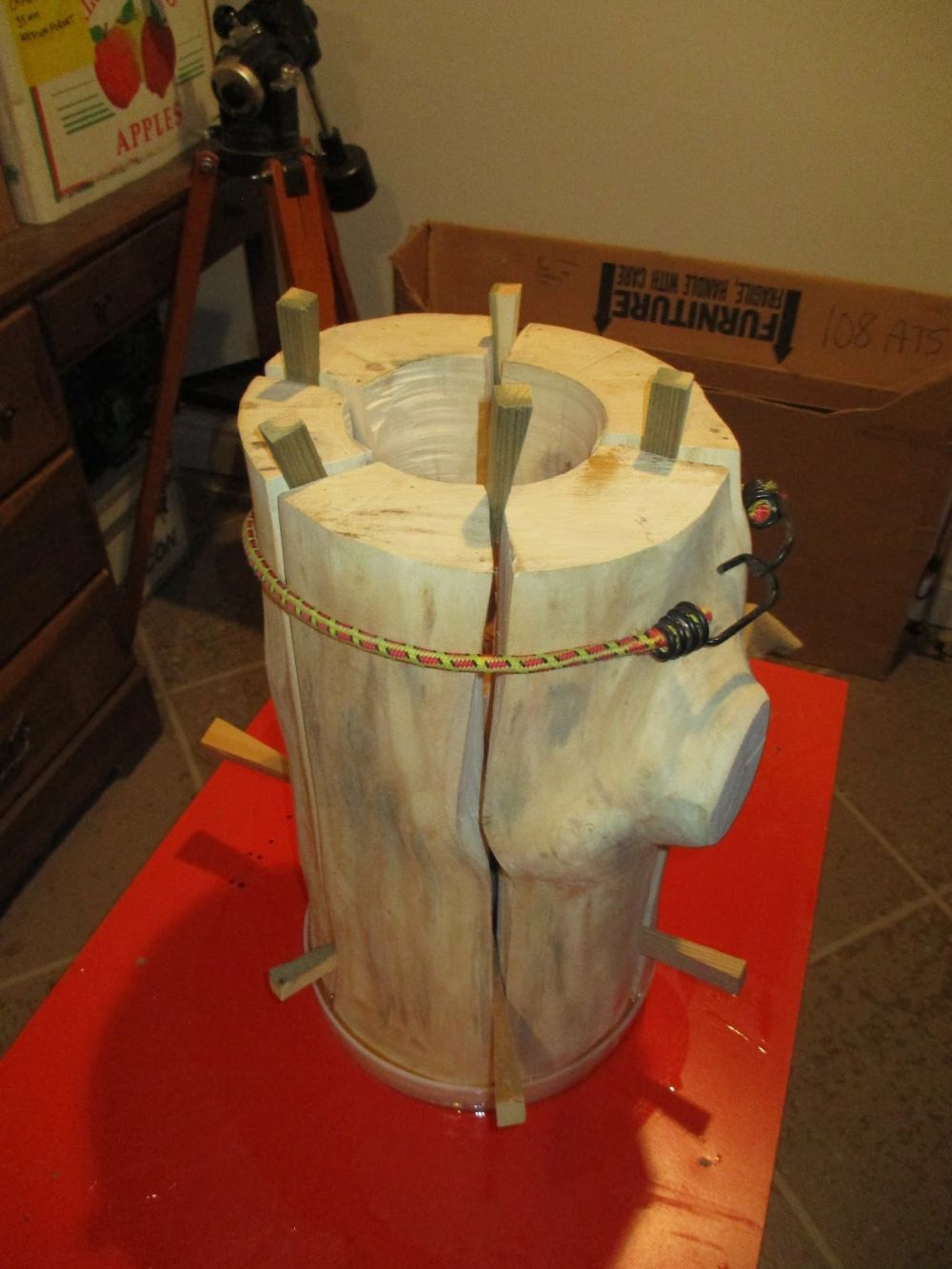
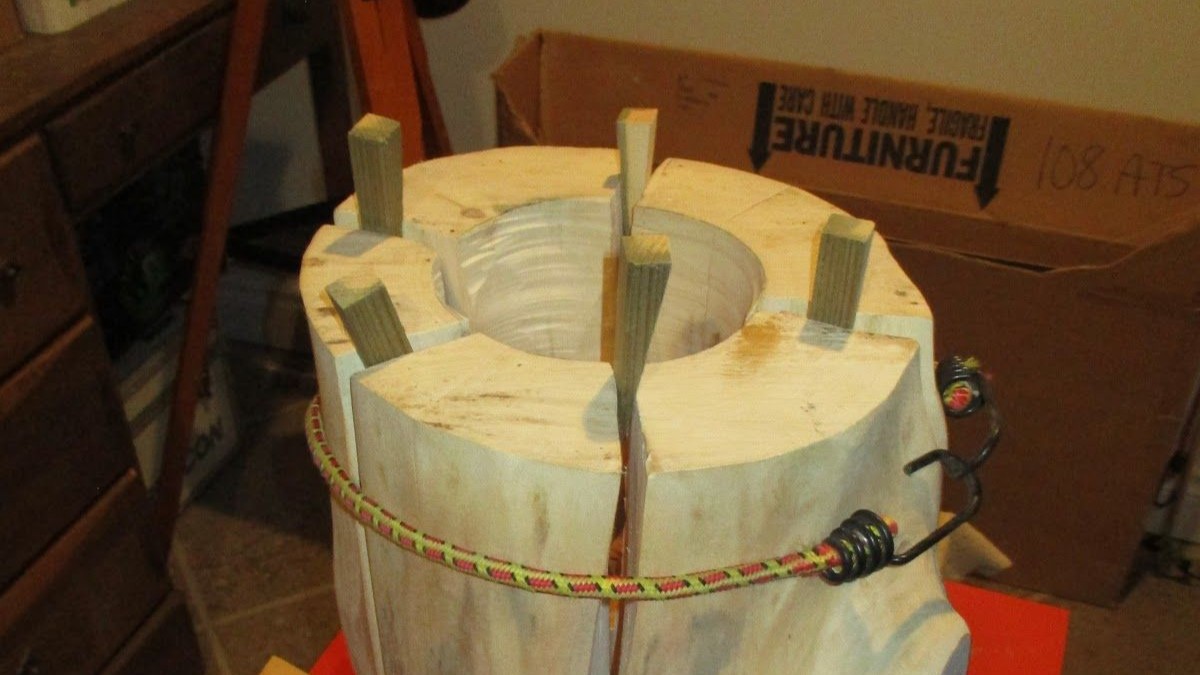
Robert began by removing the bark, sanding the surfaces, and rounding the edges of the five matching pieces. He arranged them around a hollow center to reconstruct the shape of the original log, which measured about 12 inches across.
Wooden spacers held the sections apart, while a bungee cord wrapped around the outside kept them in position. The gaps were intentional because they would become transparent channels once filled with resin.
Clear Epoxy Joined the Wood Without Closing the Gaps
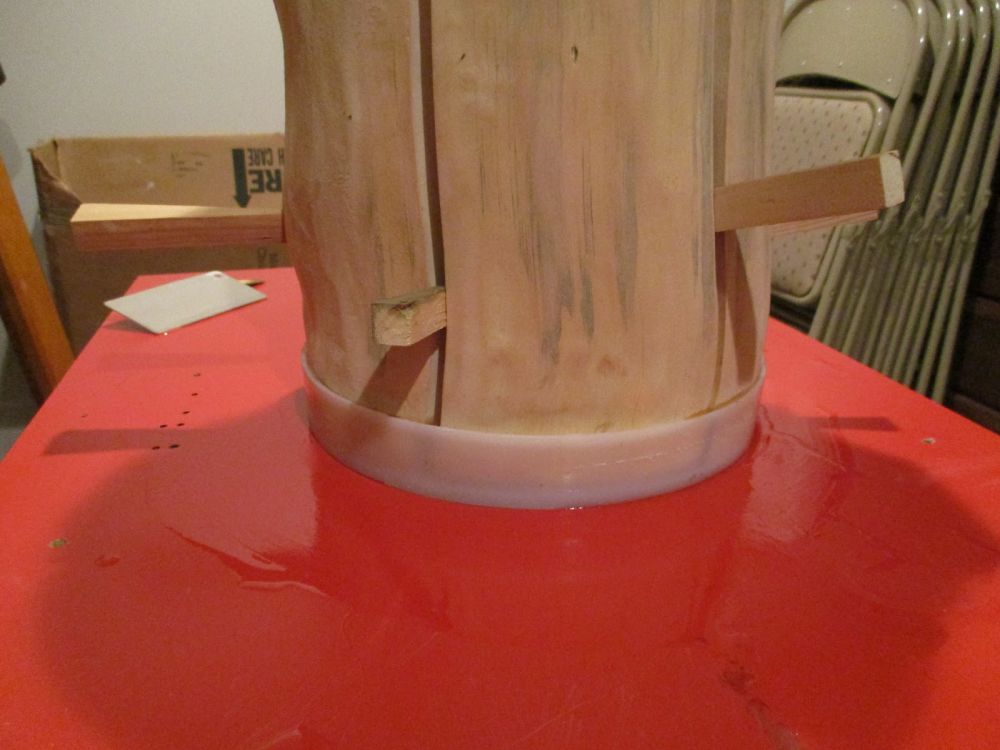
To form one end of the lamp, Robert used the bottom 1.5 inches of a five-gallon bucket as a temporary mold. He left approximately one-eighth of an inch between the wood and the form so the clear epoxy could cover the surface.
The first pour used about eight fluid ounces of two-part epoxy, which hardened around the wood sections and began joining them into one assembly.
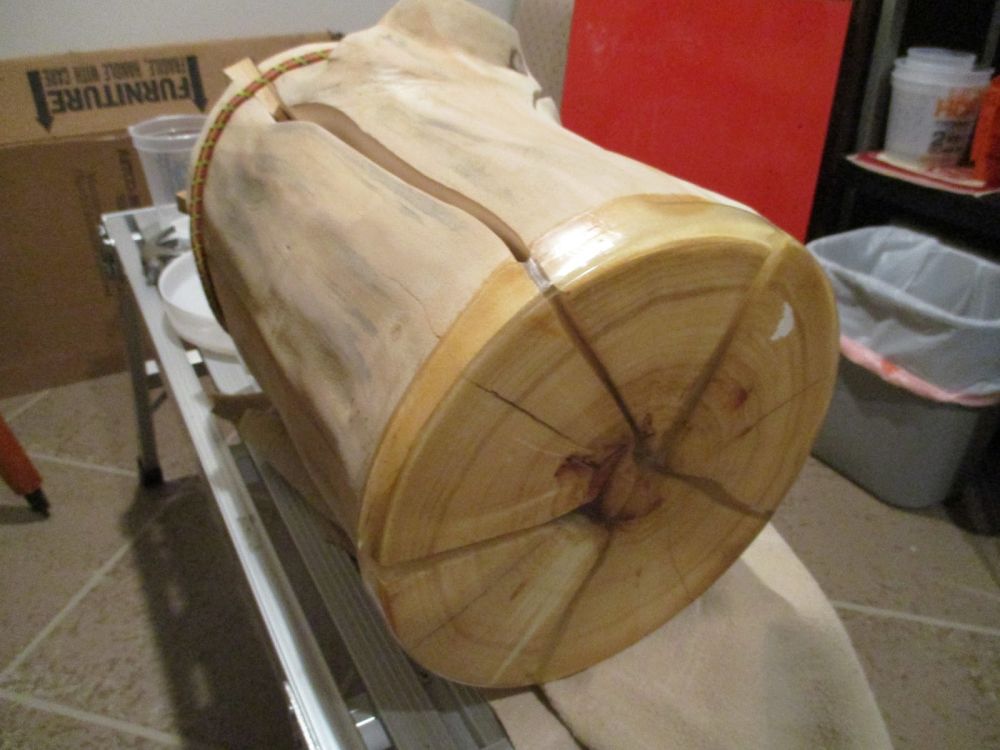
After 12 hours, he removed the mold and exposed the resin-covered end. The photograph shows five divisions spreading from the center of the log, with the clear material connecting the pieces.
Robert sanded the rough cured edges before preparing the remaining openings for resin.
Each Vertical Crack Needed Its Own Resin Pour
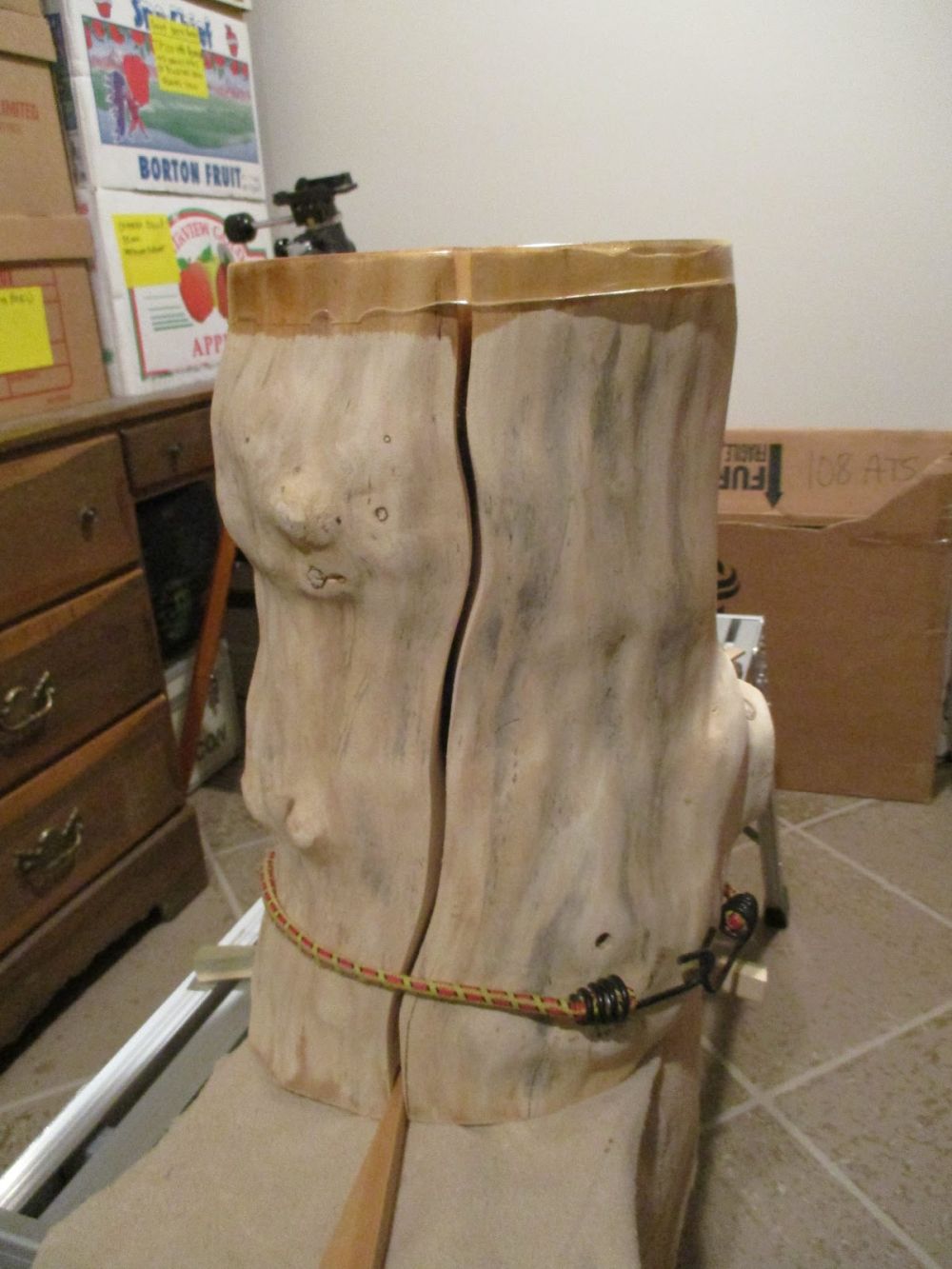
With the log positioned upright, the long splits remained open along the sides, following the uneven contours of the original wood. The sections were held in place while Robert prepared to fill the gaps without losing their width.
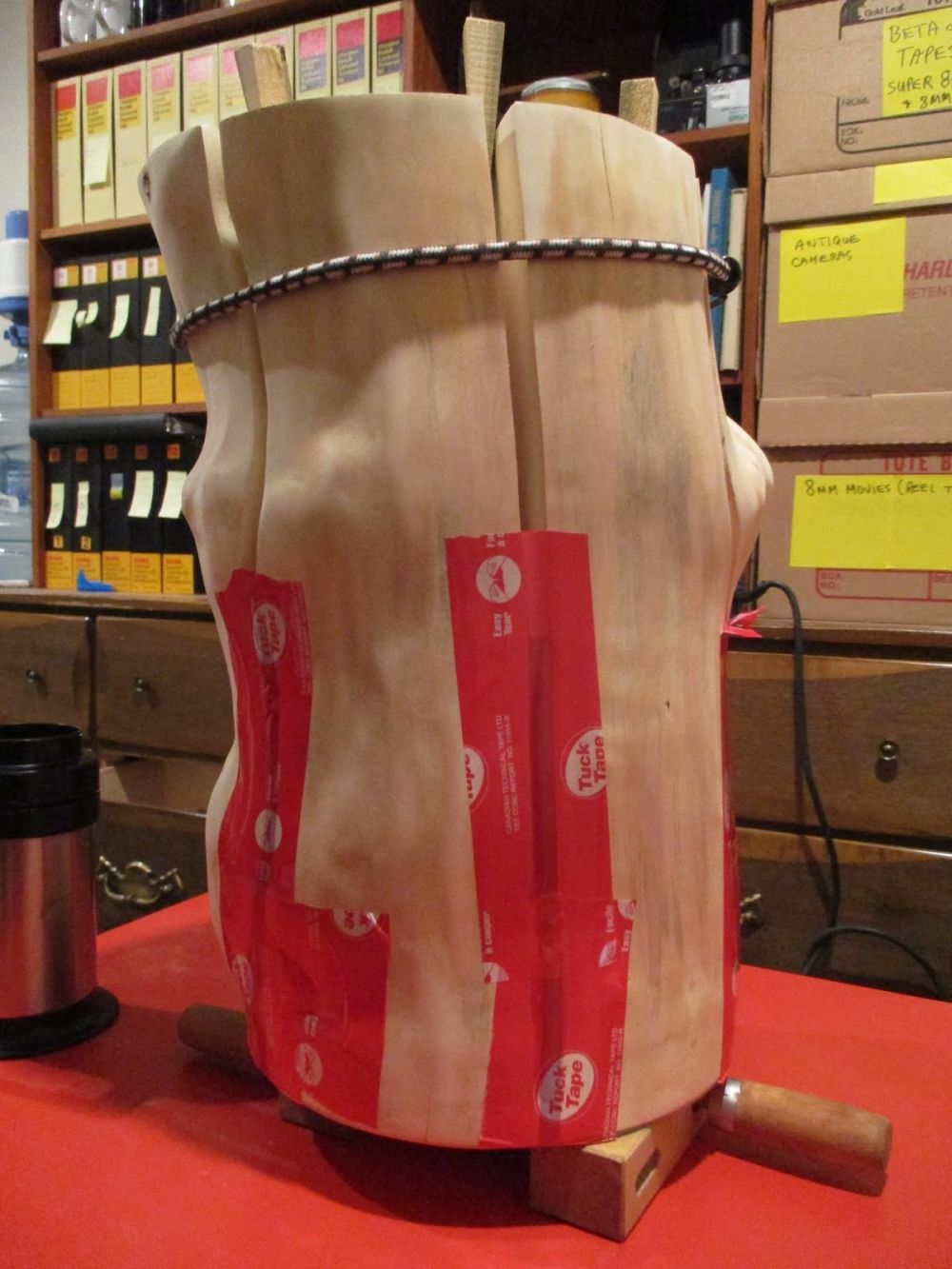
Red Tuck Tape covered the openings to keep liquid epoxy from escaping. Robert poured approximately 16 fluid ounces during this stage, using the tape as a temporary barrier until the resin cured.
Each remaining gap received a separate pour, with the final five pours taking another five days. He noted that incorrect mixing ratios could leave two-part epoxy soft or uncured, making the manufacturer’s proportions an important part of the process.
The Hollow Center Left Room for a Light Bulb
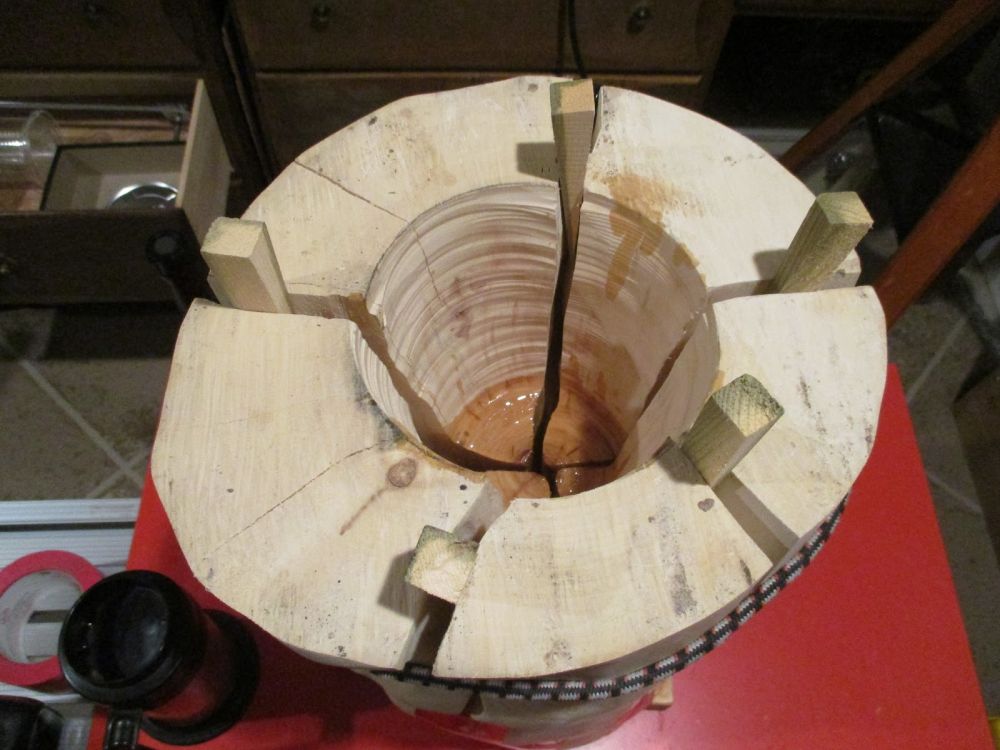
Looking down into the assembled log reveals the hollow center surrounded by thick sections of ash. Wooden spacers maintain the gaps between the pieces, while cured resin is visible toward the bottom.
Robert made a thin round wooden disc to cover the base and hold the lightbulb assembly. Placing the light source inside the log allowed illumination to pass outward through the resin rather than through the wood itself.
The original project does not provide complete electrical specifications or testing details, so the wiring arrangement should not be treated as an electrical installation guide.
The Finished Log Glowed Through Its Former Splits
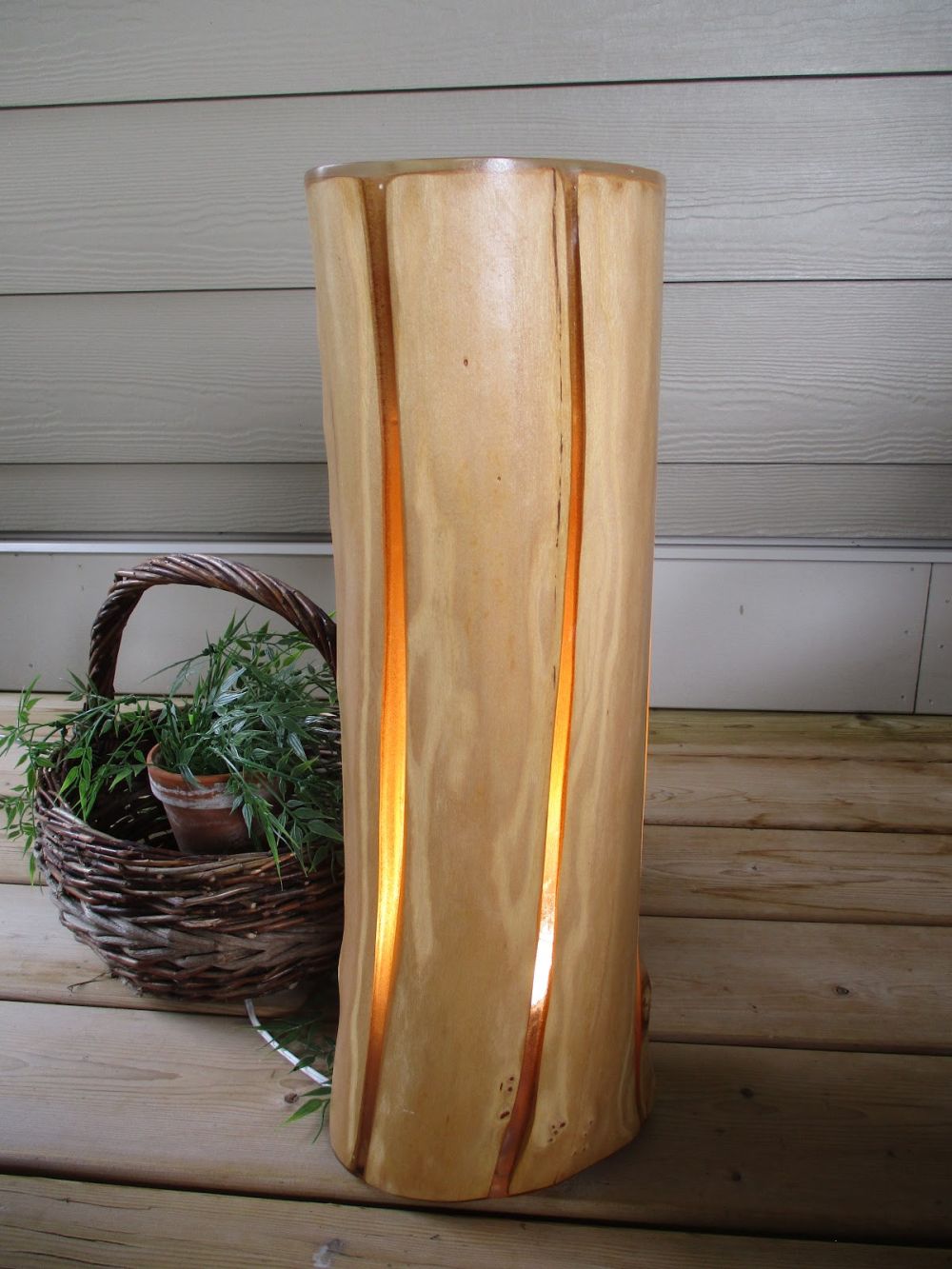
Once assembled, the lamp looked like a pale wood stump with narrow amber strips running down its sides. The natural curves and knots remained visible, while the illuminated resin traced the openings between the five sections.
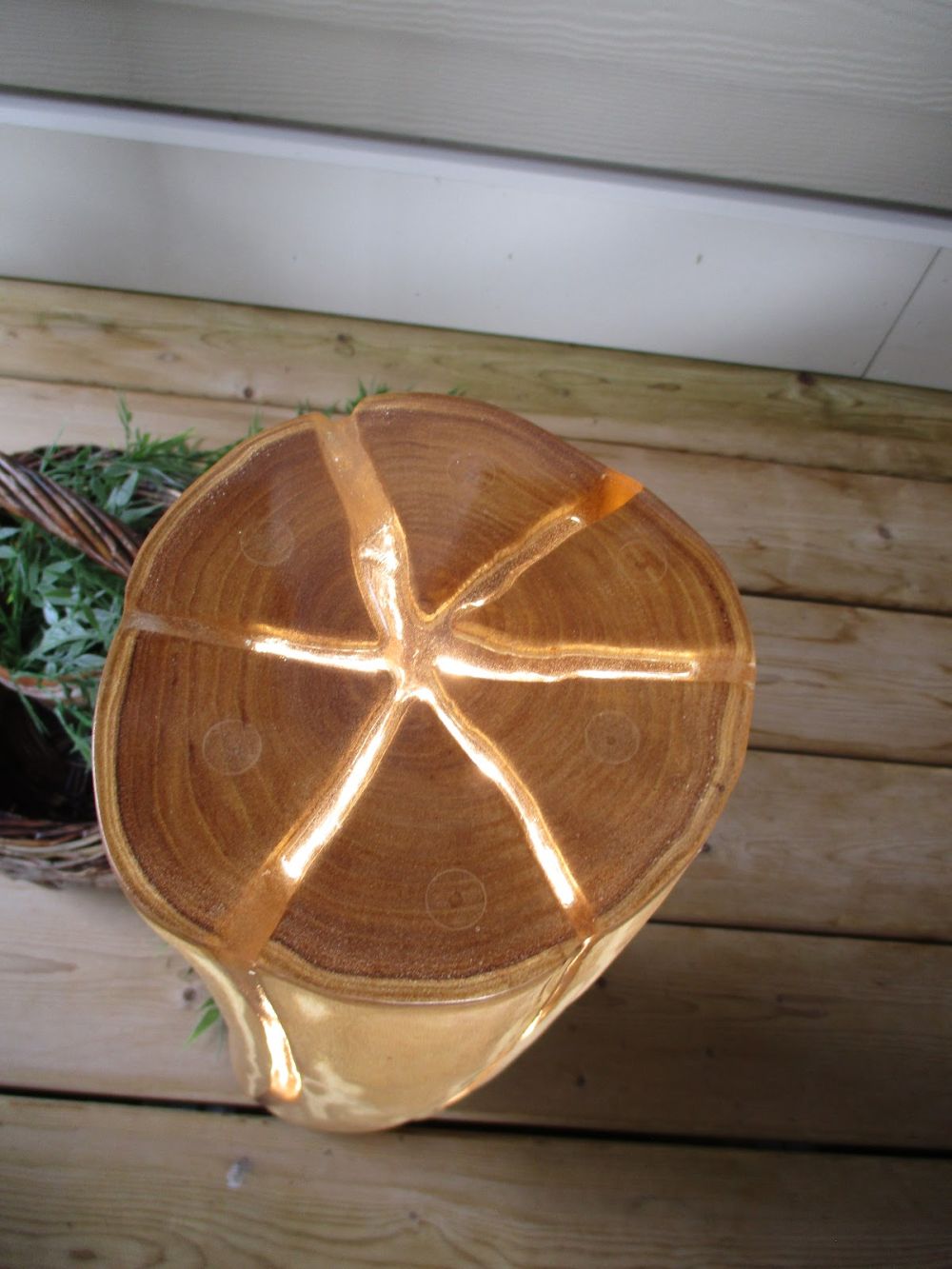
From above, the light forms a star-like pattern across the circular end grain. Five glowing seams extend from the hollow center toward the outside, revealing how the pieces fit together.
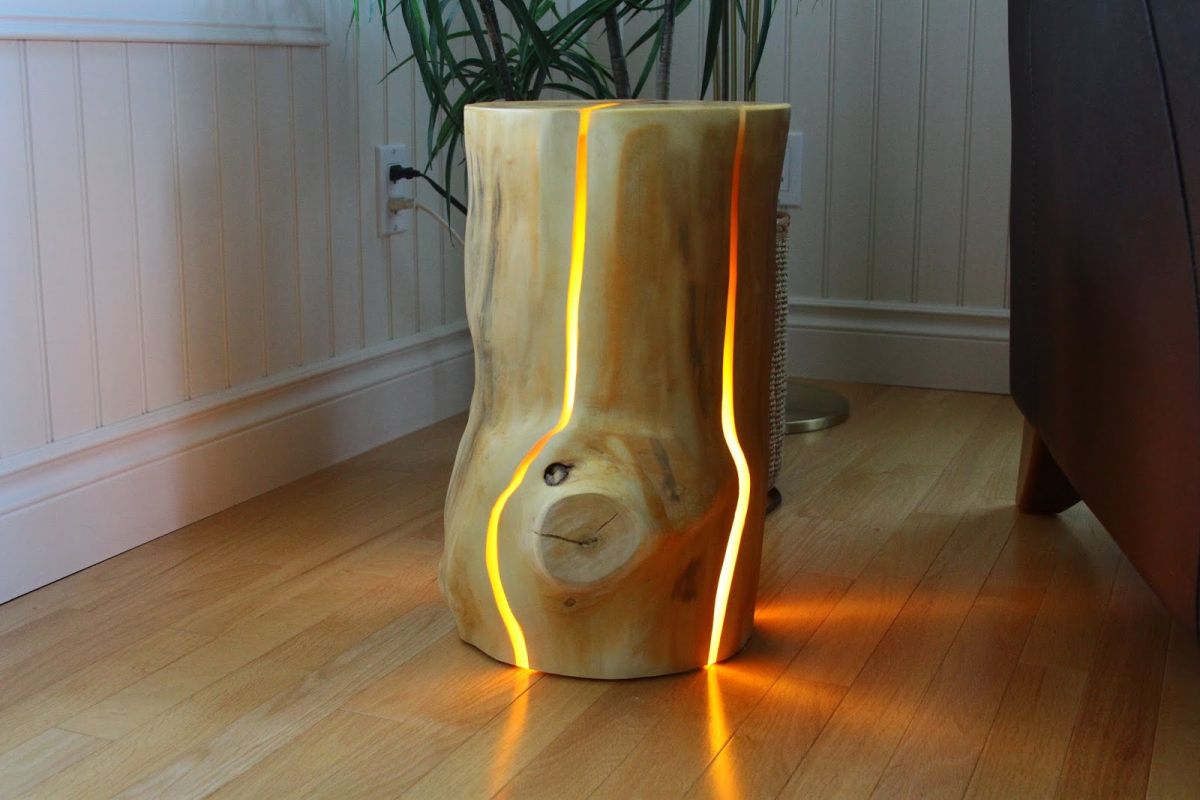
The indoor photograph shows the lamp on a wooden floor beside furniture and a potted plant. Its light shines through two visible vertical channels and spills onto the floor, while the exterior retains the appearance of an unpainted tree trunk.
After completing the 12-inch ash lamp, Robert built a smaller version using a six-inch elm log. The second project took less than a week and required about half the epoxy.
Would you turn split firewood into a lamp like this, or keep the wood for the fireplace?
Project and photographs: Robert Pelletier, Rob & Yvonne’s Az Living.