She rescued two boards from a demolition pile: now they’re the shelves that make this kitchen bar stand out


Broken wall sections, peeling siding, and loose lumber filled the salvaged pile, but two boards offered something worth keeping: broad grain, dark knots, and marks left by their former use.
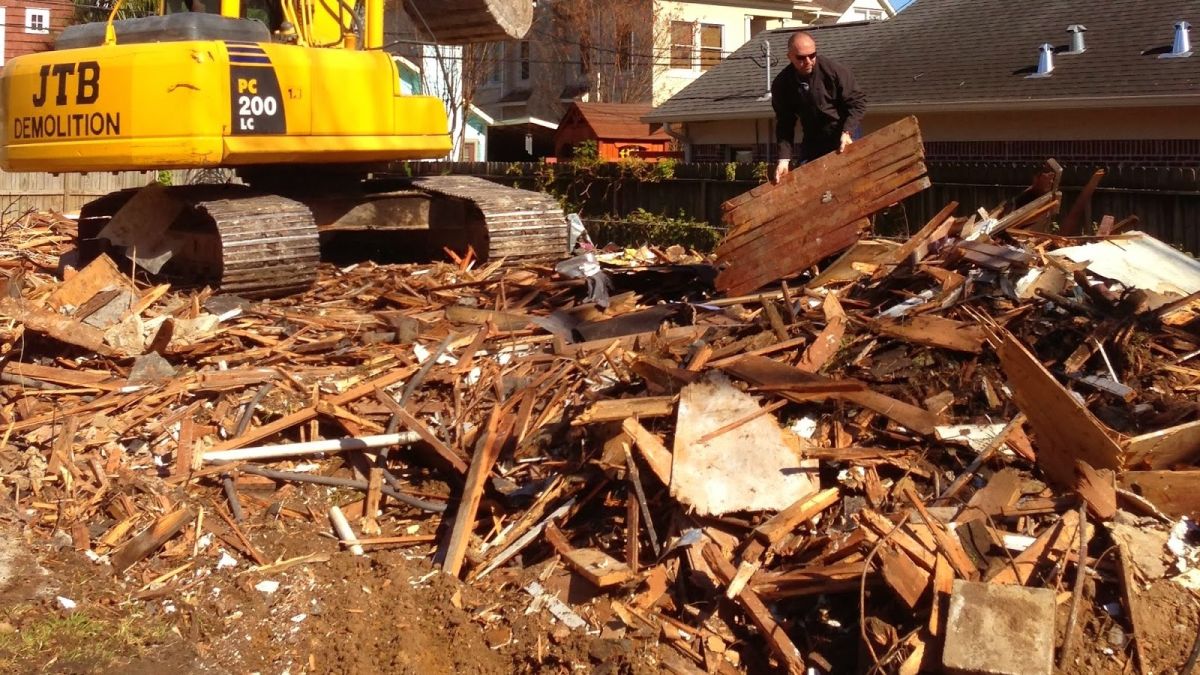
Christie Chase selected the pieces from wood Tyler had collected at a neighborhood demolition site. She cleaned them, removed rusty fasteners, and applied paste wax before asking a handyman to install them in an office kitchen.
Mounted above the counter on gray metal brackets, the reclaimed boards became shelves for bottles and glasses. Their worn surfaces gave the bar a focal point without adding cabinets or covering the wood with paint.
Kitchen shelves started inside a salvaged wall
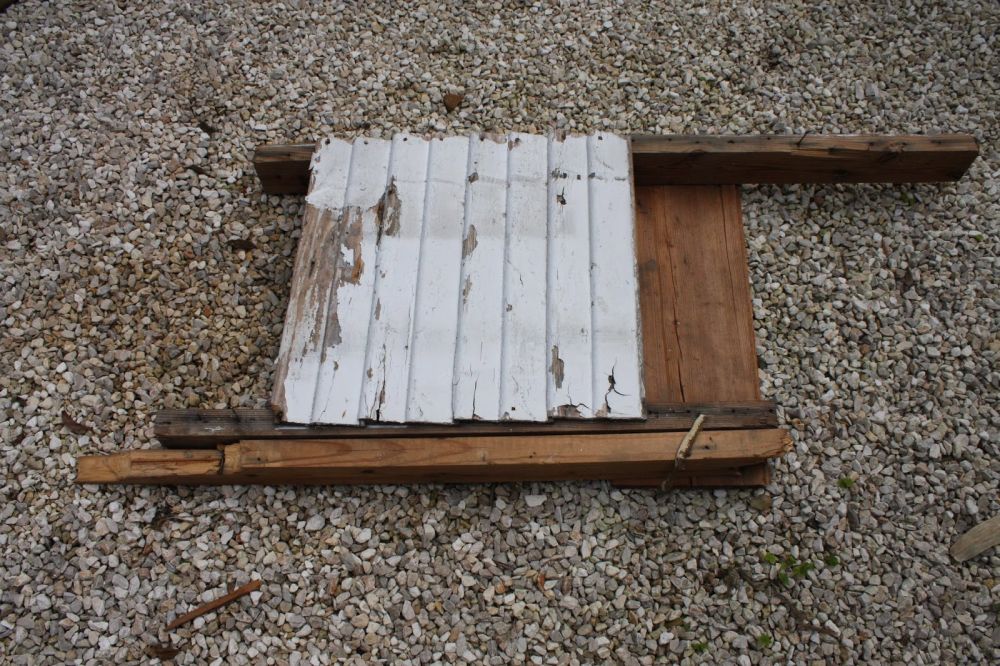
Among the loose boards sat a section of wall with brown interior planking on one face and white exterior siding on the other. The photos show the material before it became decor, still attached to framing and mixed with splintered offcuts.
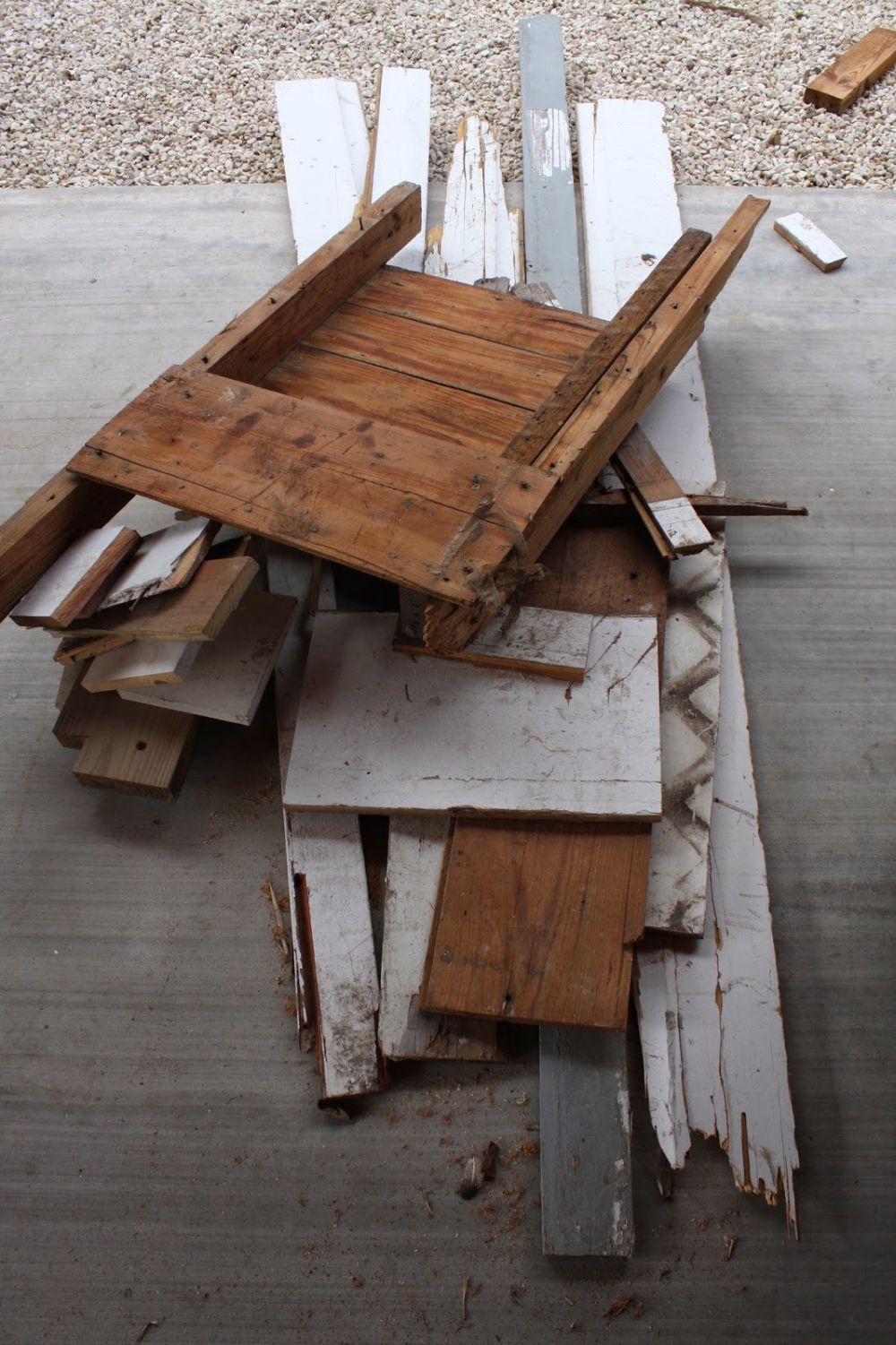
The demolition site belonged to one of the real estate brokers whose office received the shelves. Wood from the same collection had been used for the office logo sign, leaving enough material for another project.
Cleaning exposed the grain beneath the debris
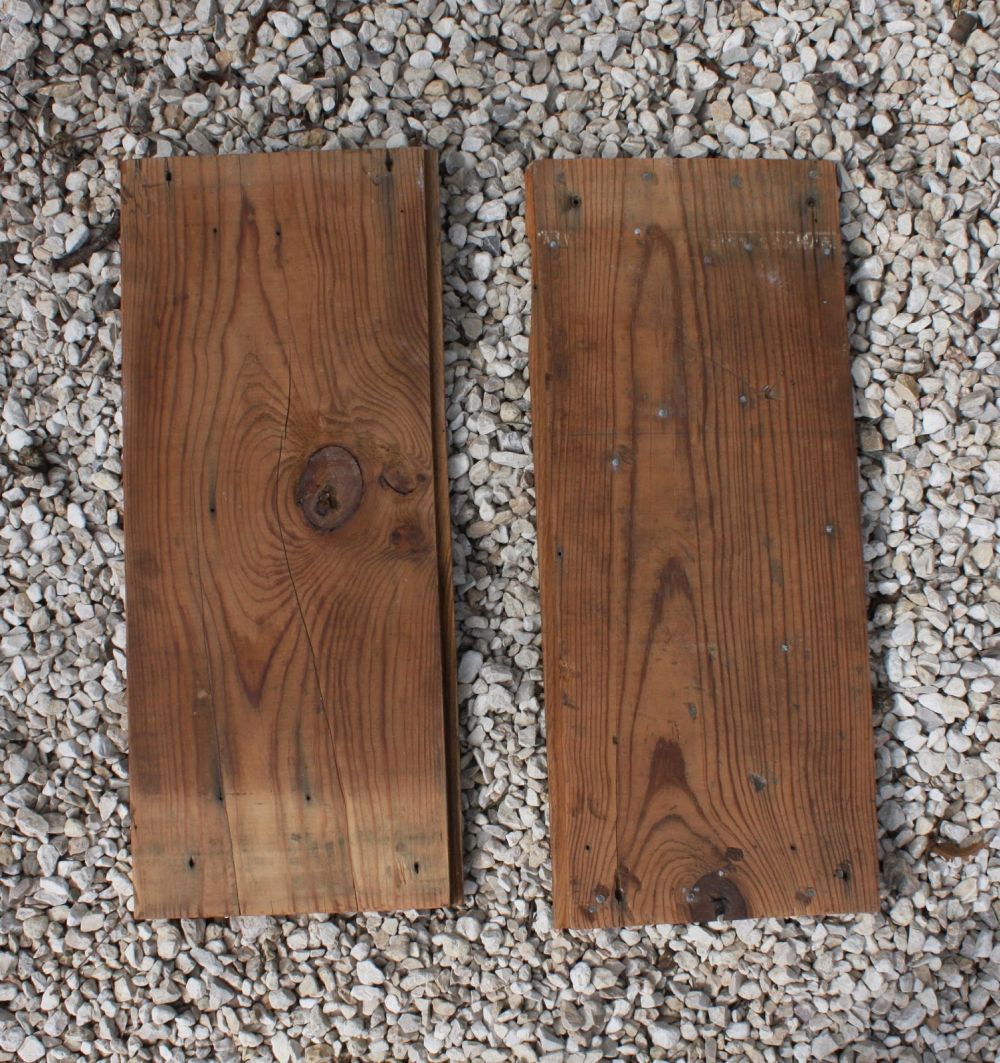
Once separated from the wall, the two boards revealed long grain lines and prominent knots beneath the dirt. Rows of old fastening marks crossed their faces, while splits and uneven ends recorded wear that remained visible in the finished shelves.
She pulled out rusty, bent screws and nails, then wiped the surfaces clean. The preparation preserved the boards’ appearance rather than turning them into smooth, uniform pieces.
Paste wax deepened the brown finish
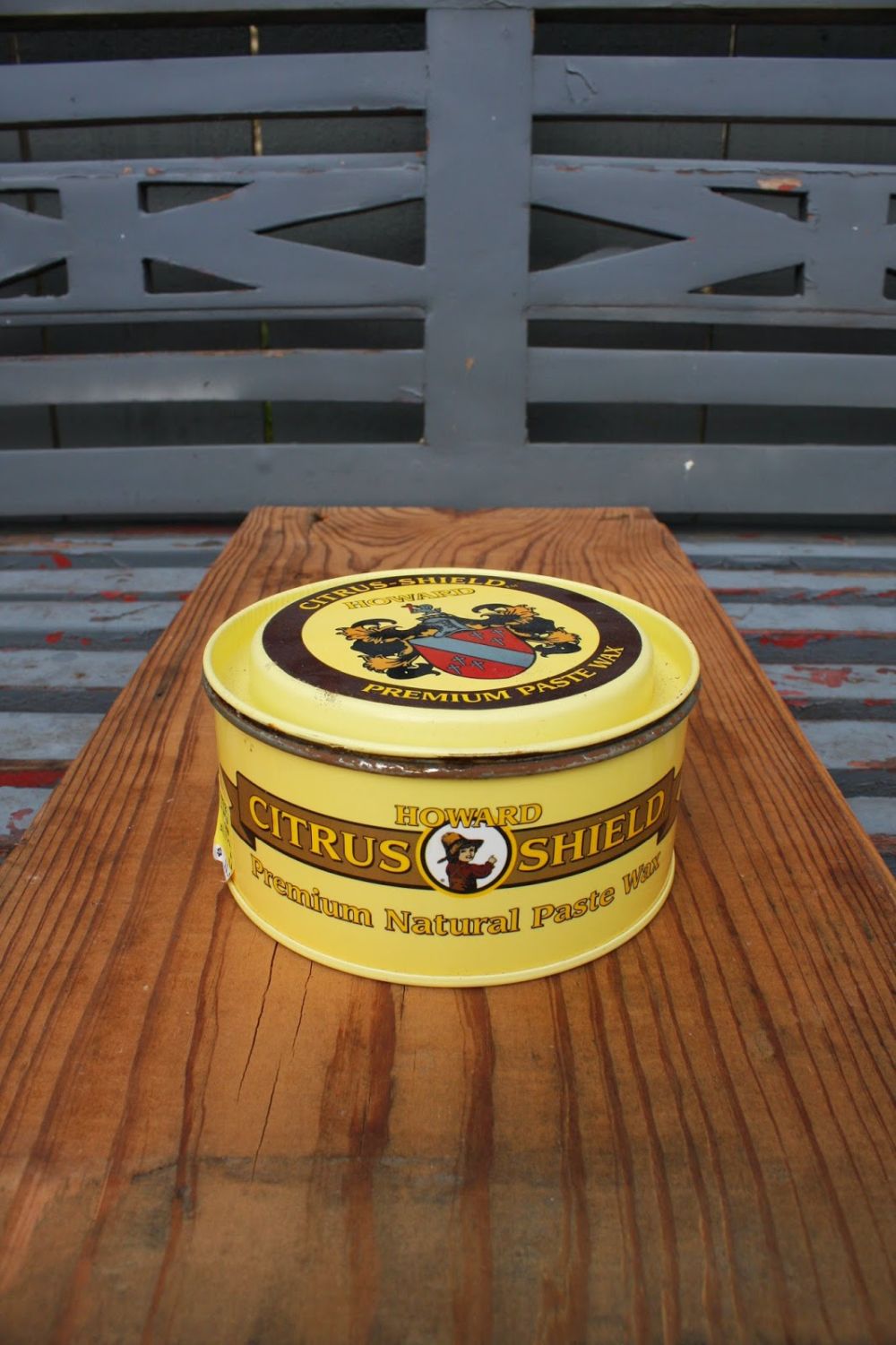
Howard Citrus-Shield paste wax brought out amber and reddish-brown tones, making the grain more pronounced around the knots. In the post-wax photo, both pieces retain dark marks and traces of their former wall connections.
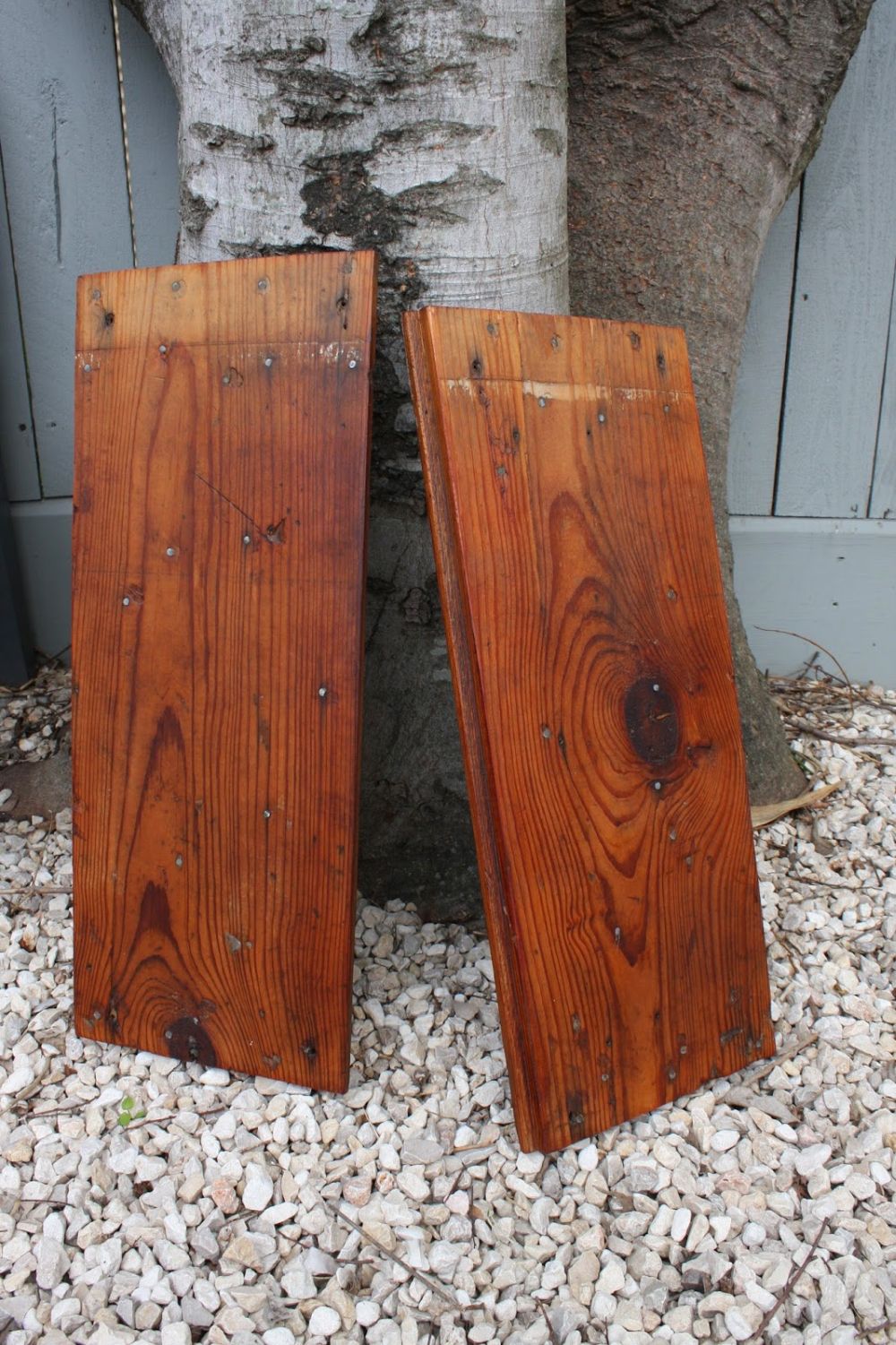
No stain or paint was described for the shelf surfaces, so the richer finish came from the wax treatment. “Here are the shelves post wax,” she wrote beneath the photo of the boards propped against a tree.
Leftover gray paint finished four metal brackets
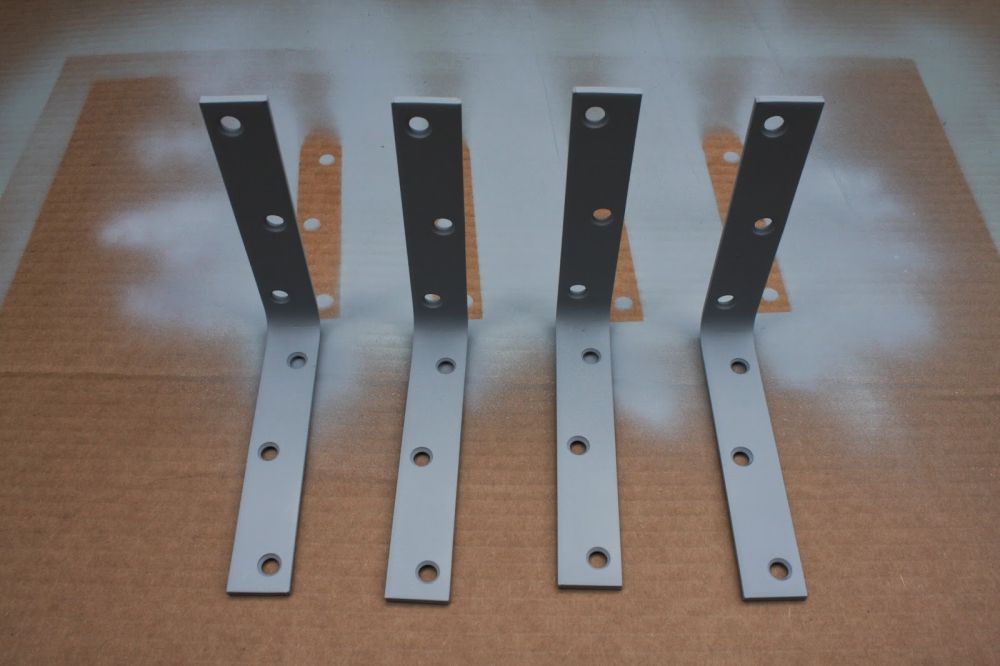
Four L brackets provided two supports per shelf, with mounting holes along both arms. She spray-painted the metal light gray using paint left over from the logo sign project.
The narrow supports leave most of the wall exposed beneath the boards, giving the installation a lighter appearance than a cabinet or a set of thick wooden corbels.
Two rows added storage above the counter
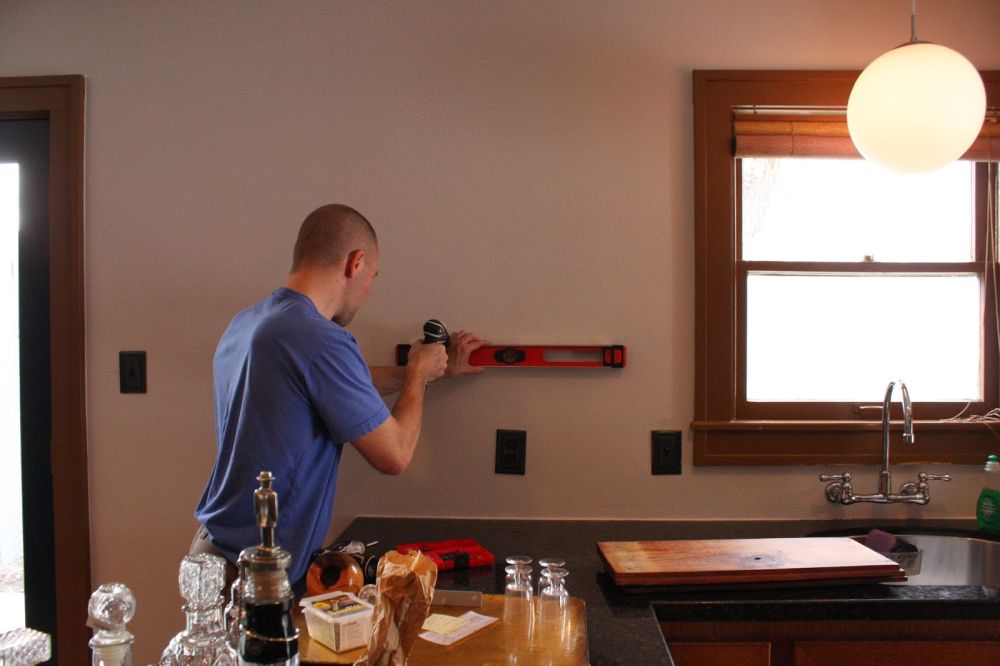
Installation placed the boards one above the other, with enough space between them for stemmed glasses. Their lengths appear close, but differences in the front edges keep the pair from looking like identical store-bought shelves.
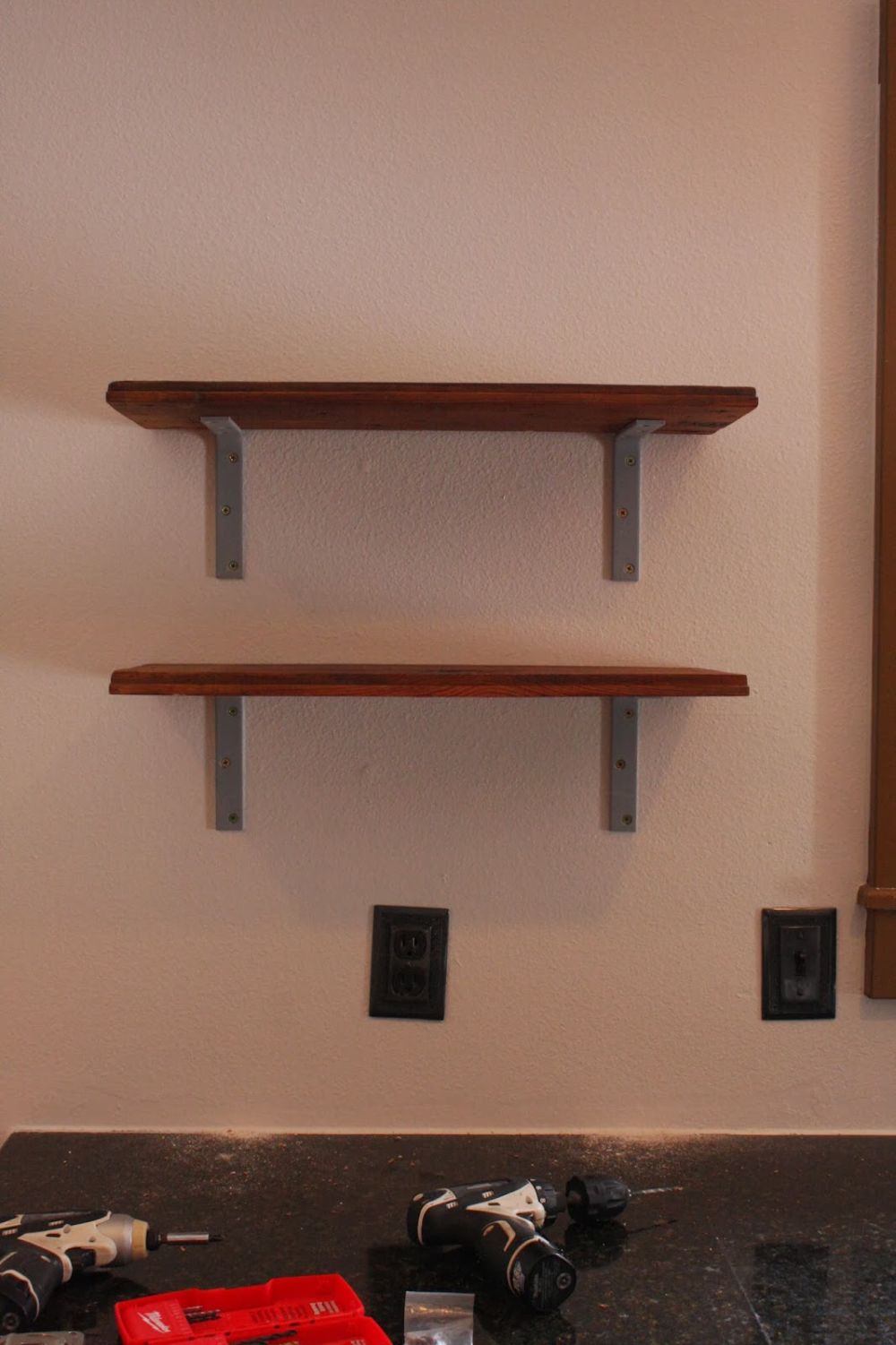
The handyman mounted the supports and boards above the existing counter, creating storage within a small section of wall beside the window.
Bottles and glassware completed the kitchen bar
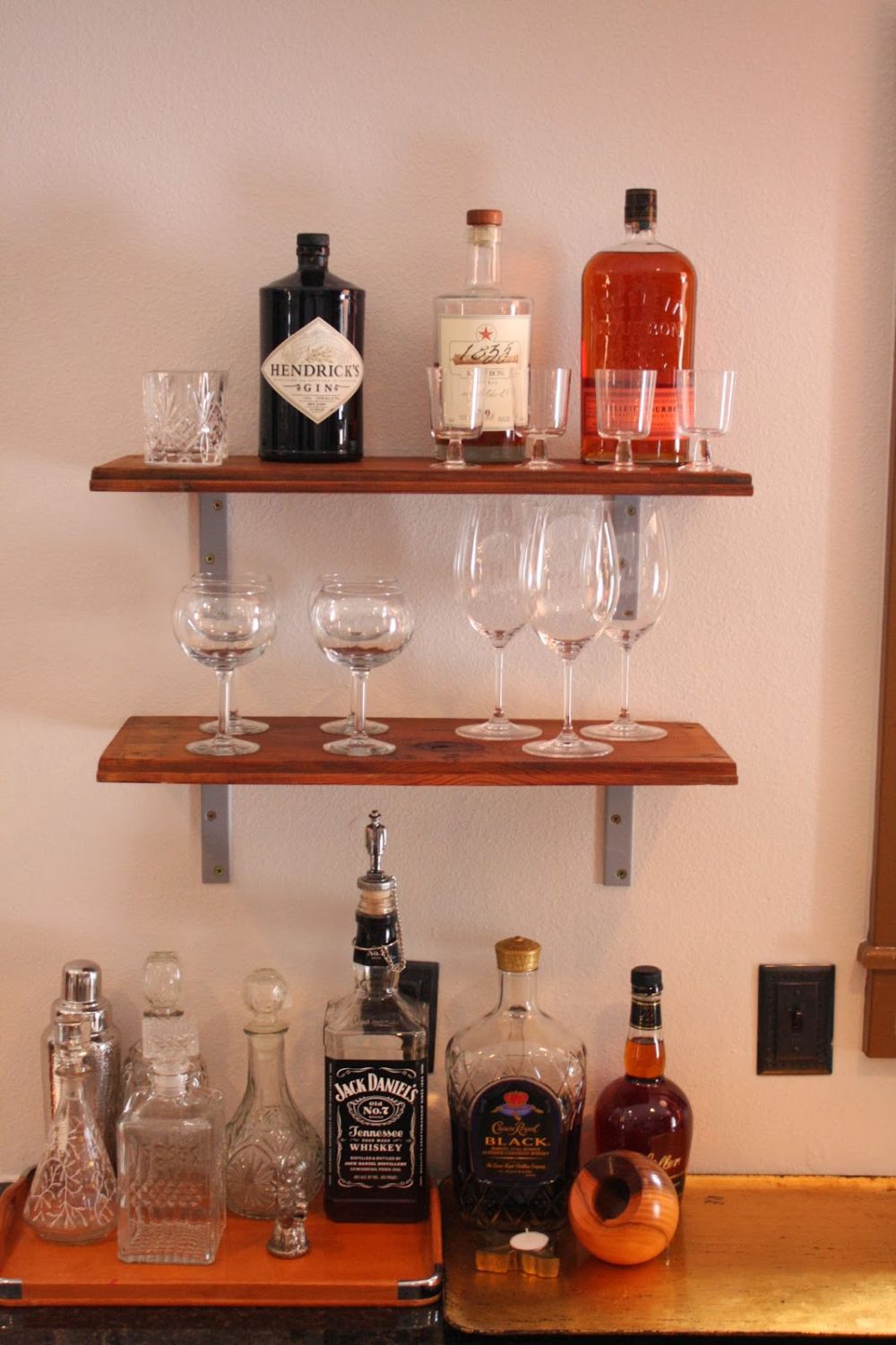
Moving glasses above the counter added storage without a freestanding bar cart or another cabinet. Each board became a shelf on its own, with no need to join planks into a wider panel or build a box around them.
Moving glasses above the counter added storage without a freestanding bar cart or another cabinet. Each board became a shelf on its own, with no need to join planks into a wider panel or build a box around them.
Image credits go to:@christiechase