These Two Bookcases Cost $5 at a Garage Sale, but Paint Wasn’t the Biggest Change


Two oak-look bookcases bought for $5 held books and toys beside a child’s bed, but their makeover went beyond covering the brown finish. Removing the thin cardboard backs opened the frames for a replacement made from free pallet boards.
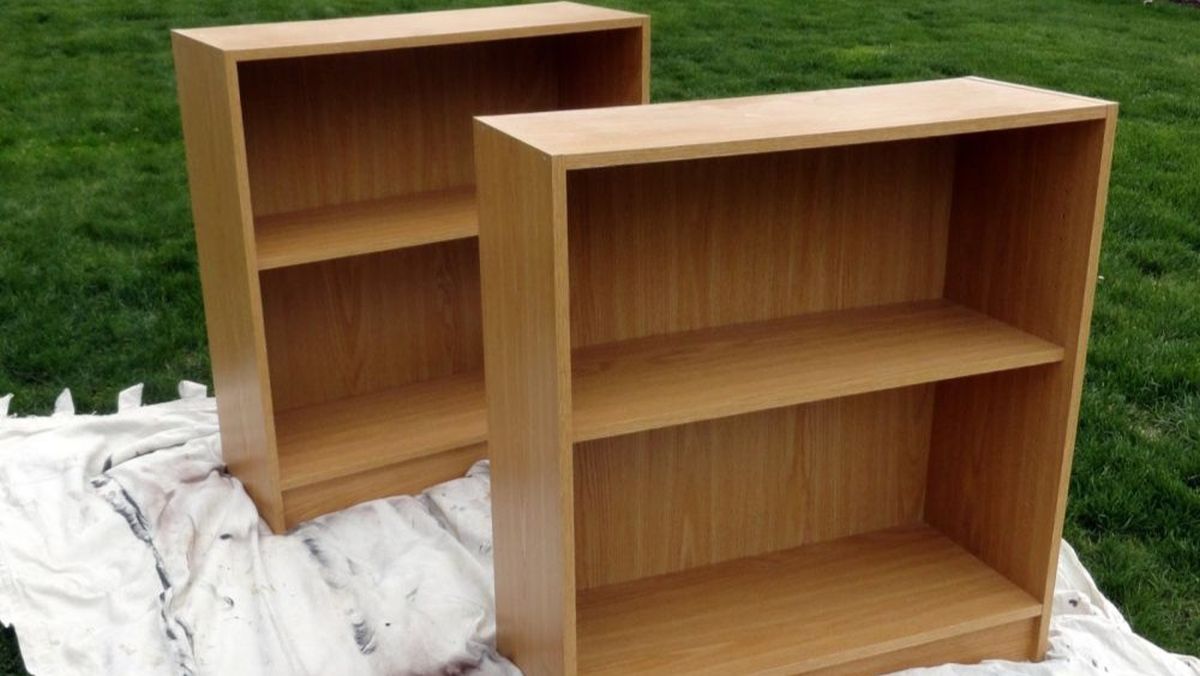
Rachel Teodoro updated the pair for her son Owen’s bedroom, using leftover denim blue paint and red chalk paint on the particleboard frames. Weathered wood replaced the printed backing, bringing exposed grain and nail marks behind the shelves.
Once finished, the units were stacked, bolted together, and secured to the wall. The same four compartments now occupied one floor position instead of two.
Cardboard Came Off the Original Frames
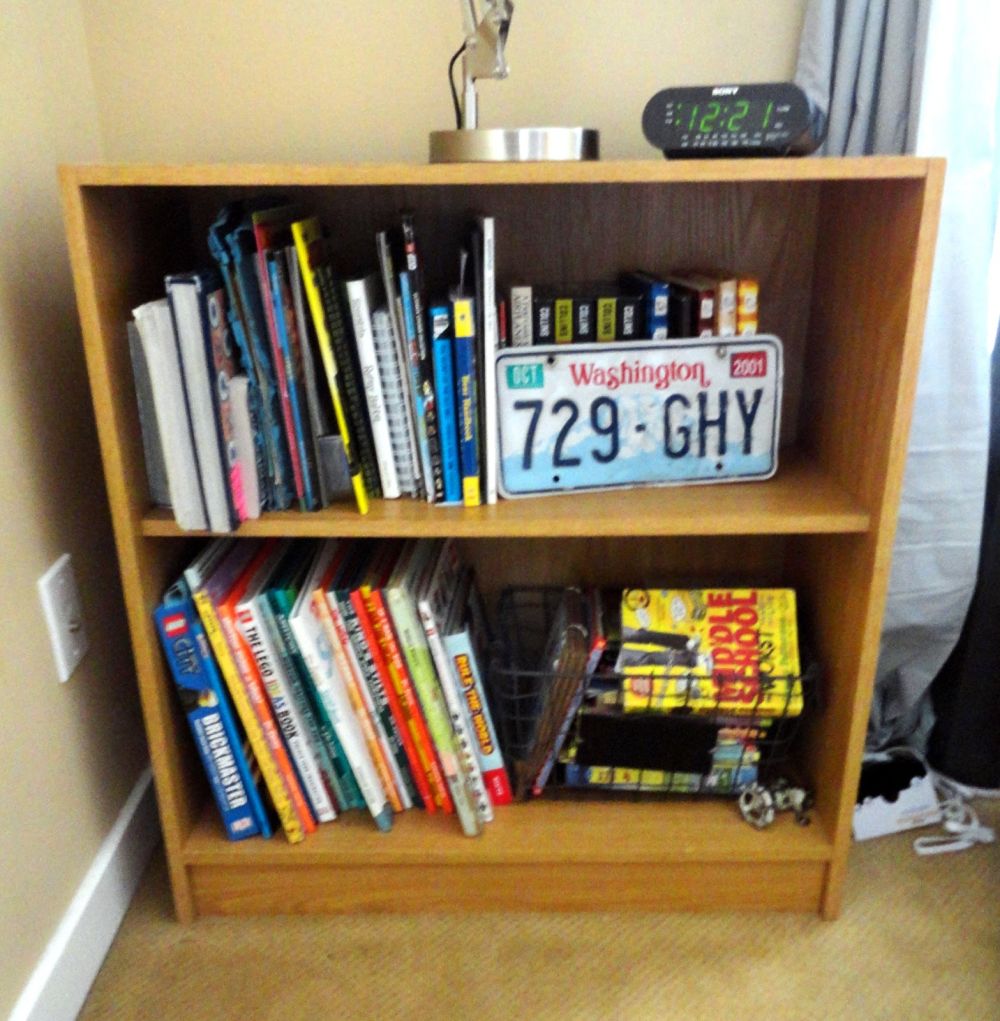
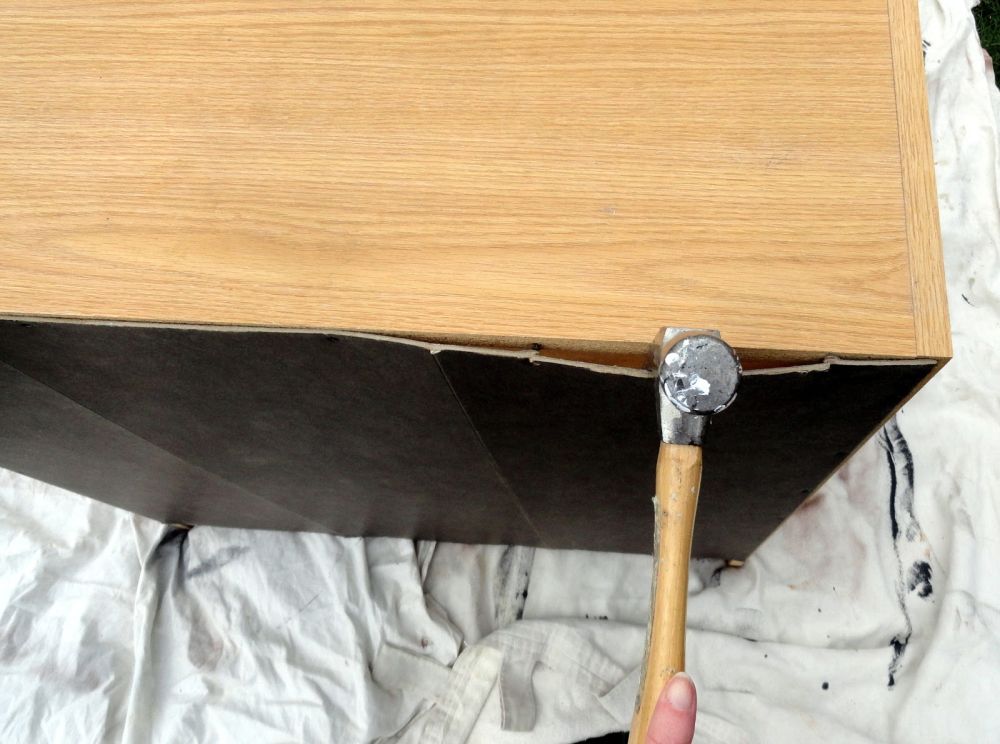
Before the makeover, wood-look backing matched the shelves and sides. A claw hammer lifted that thin panel from the rear edges, then pulled out the nails left in the particleboard.
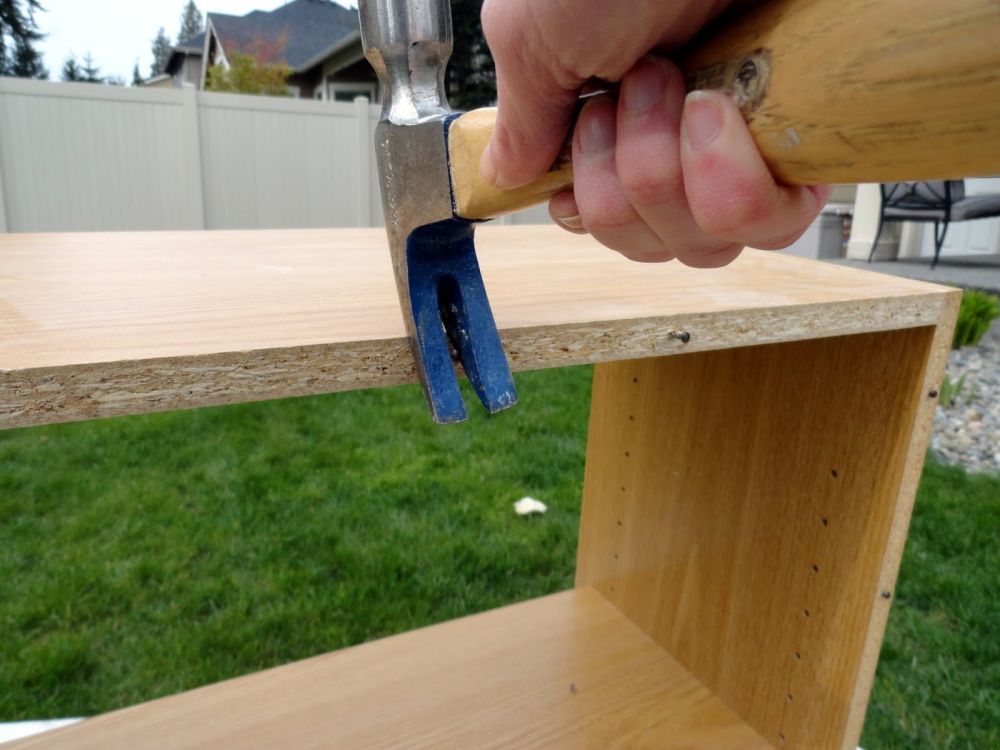
The adjustable shelves also came out, leaving both frames open for priming and painting.
White Primer Covered the Particleboard
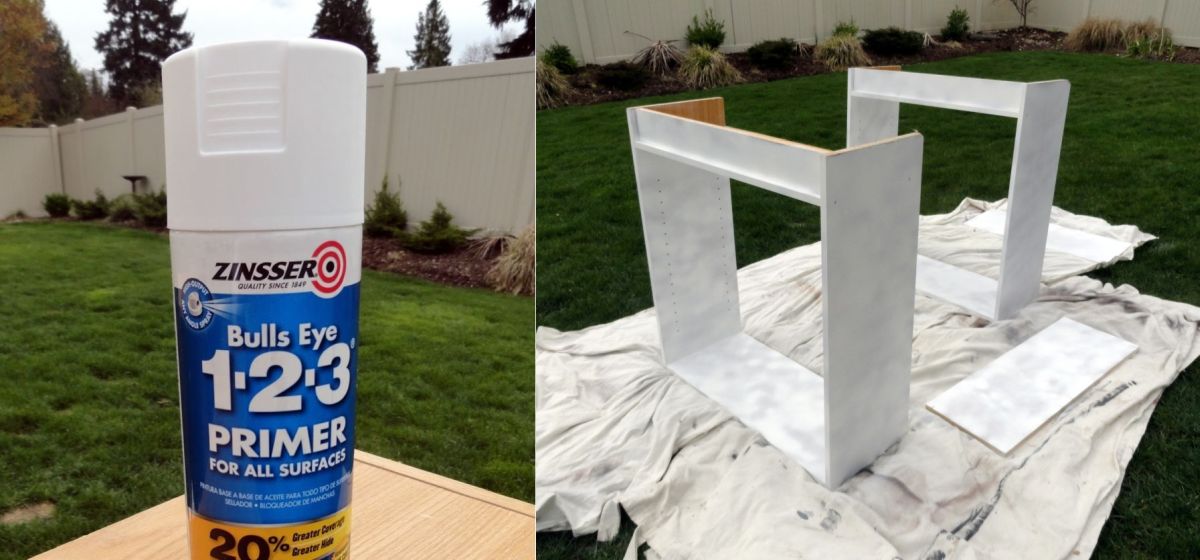
The preparation photo shows Zinsser Bulls Eye 1-2-3 spray primer beside the white-coated frames, which stand upside down on drop cloths outdoors. Removed shelves lie beside them.
Two cans went into this stage before rain interrupted the work. The creator noted that she would have preferred a heavier primer coat.
Denim Blue Went Over the White Primer
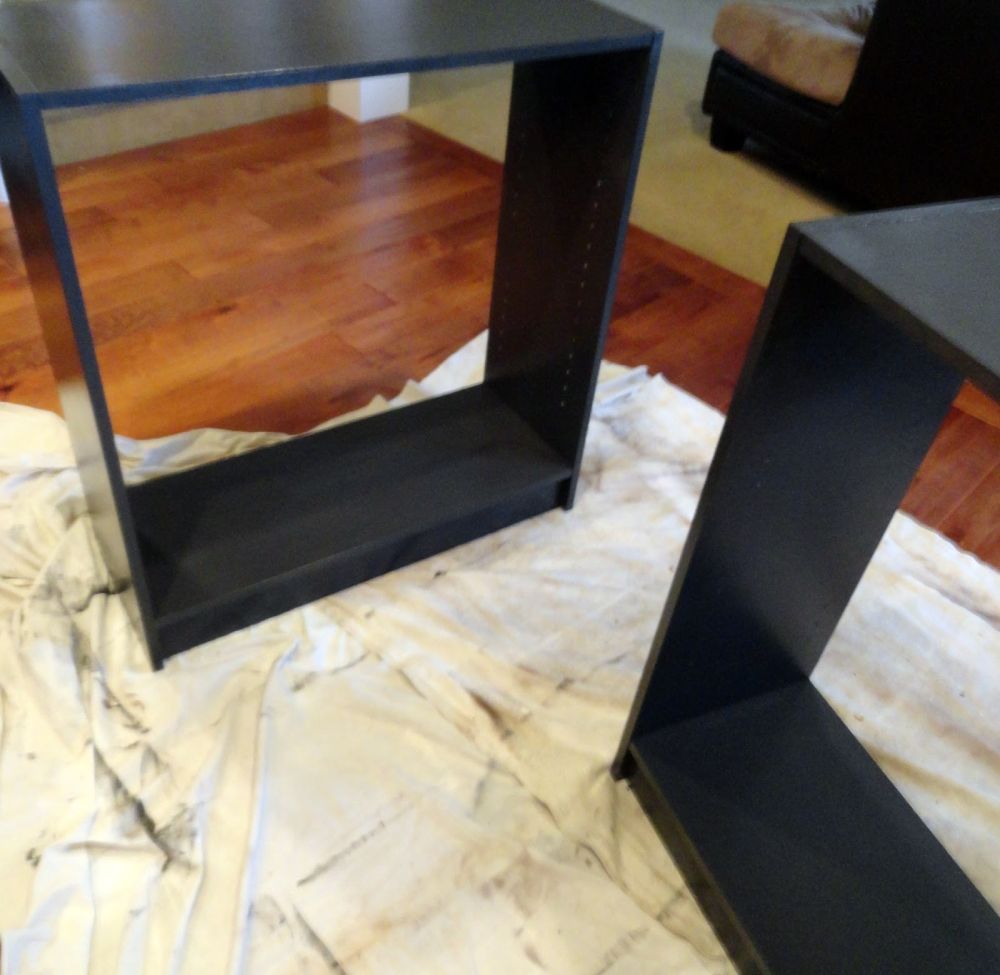
Painting continued indoors, where three coats of leftover denim blue covered the primed frames. This photograph shows the dark blue paint stage, with the shelves and replacement backs still absent.
The paint came from an earlier loft-bed project, keeping the new finish connected to materials already on hand.
Red Chalk Paint Left Streaks Across the Blue
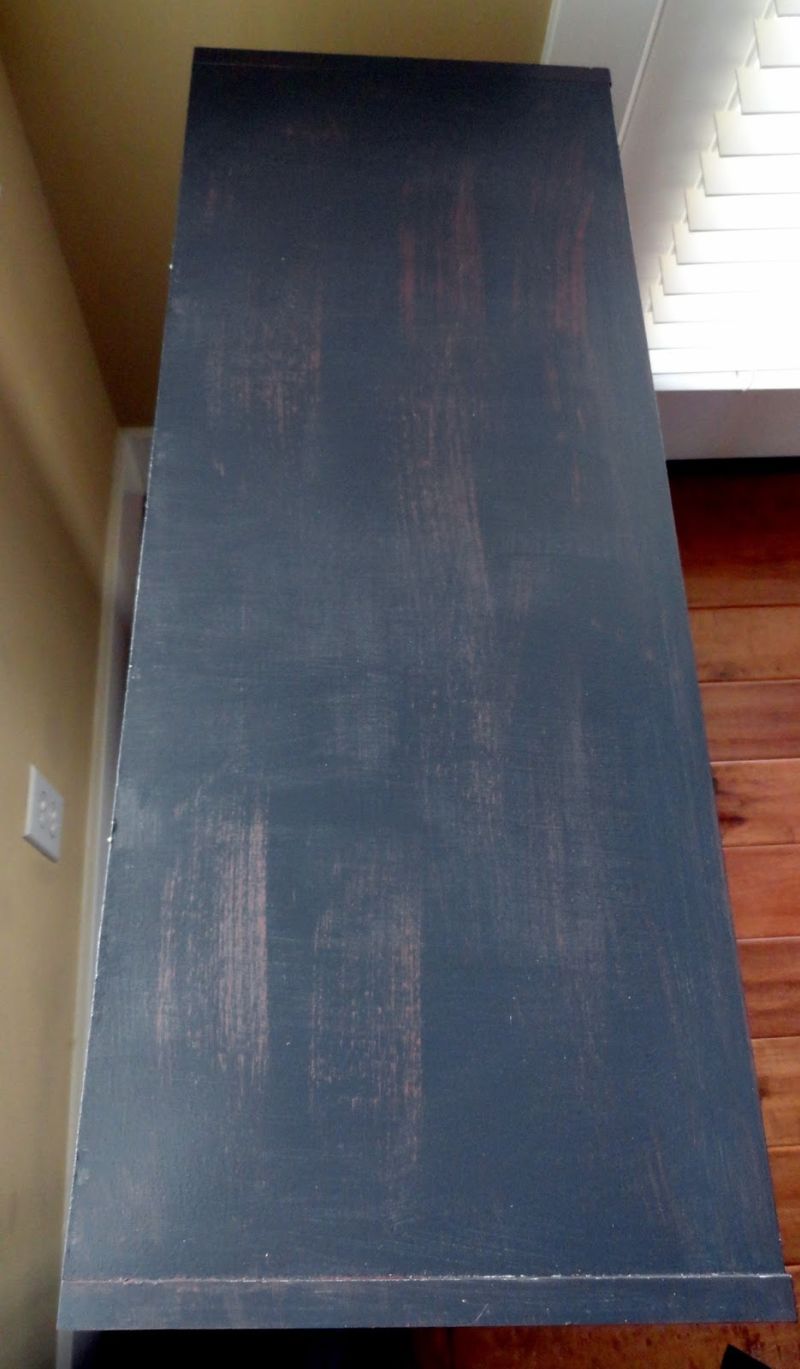
Annie Sloan red chalk paint was dry-brushed over the blue, leaving thin marks across the broad sides and edges. The close view shows those red streaks over the darker base.
The same treatment was used on the bedroom’s bed and toy box.
Salvaged Boards Needed Their Nails Removed
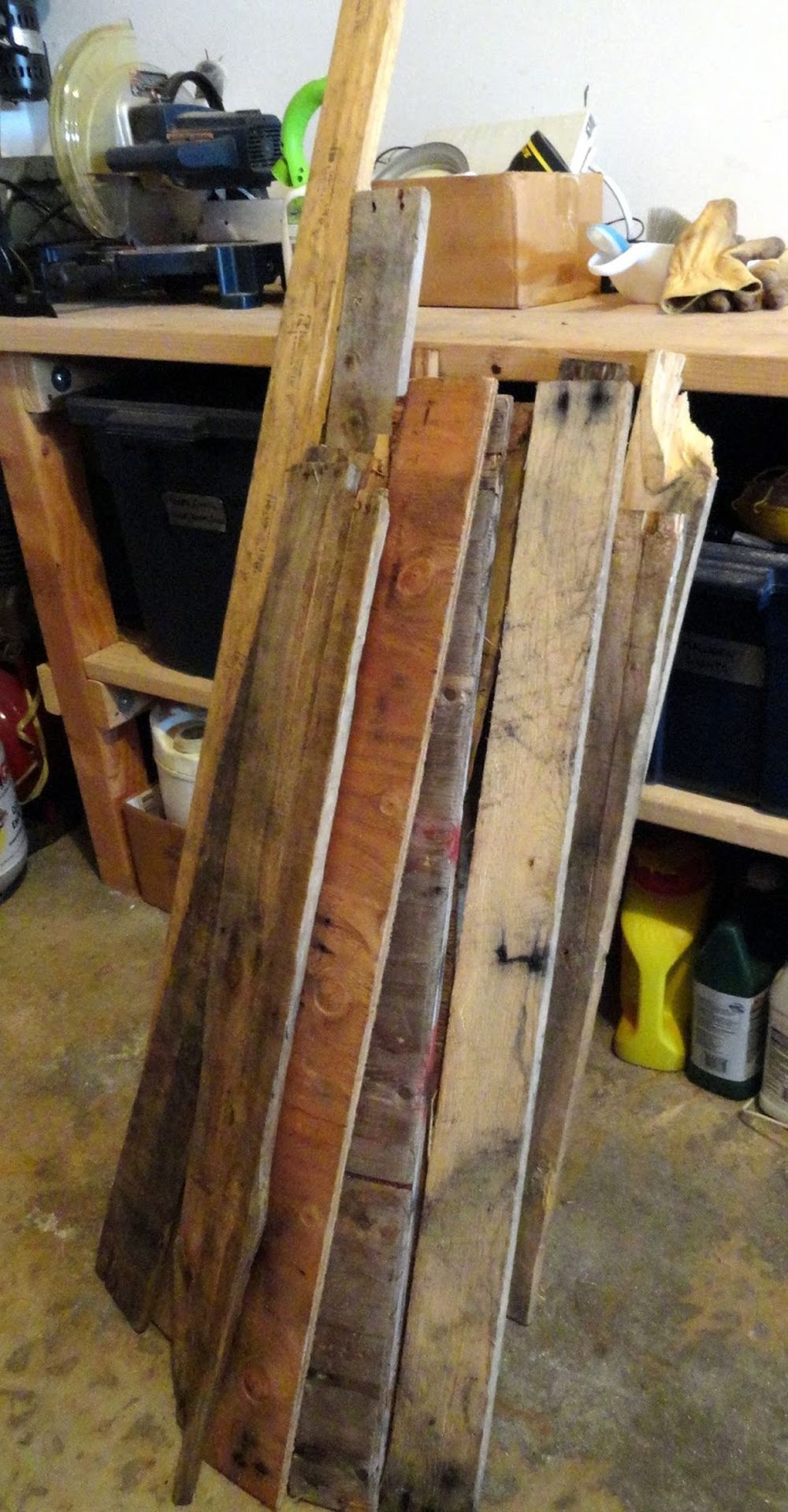
Free pallet boards supplied the new backs, with gray, gold, and brown surfaces varying from piece to piece. Embedded nails had to come out before cutting.
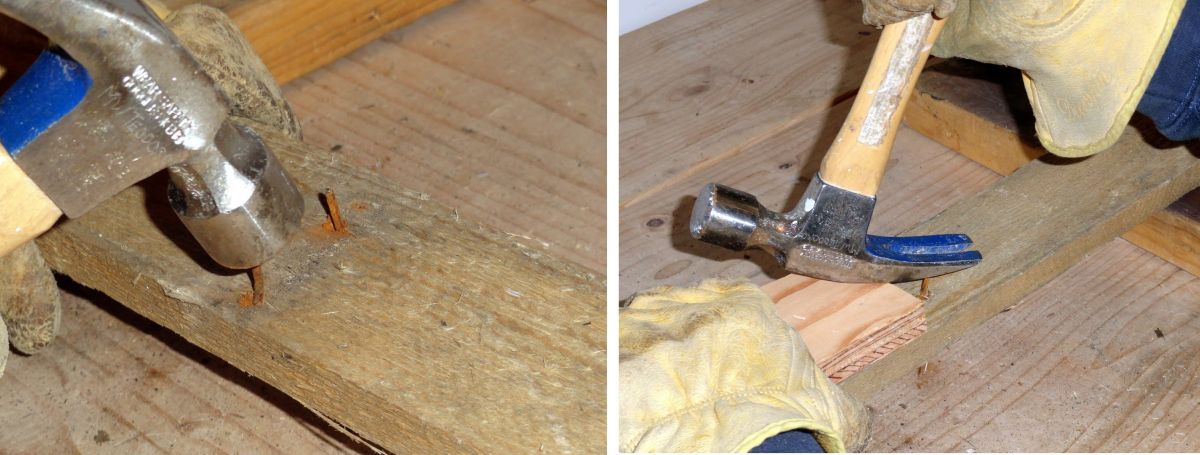
The process photographs show nails driven back through the wood, then pulled with a claw hammer resting against a small wood block for leverage.
Cut Boards Replaced Each Backing Panel
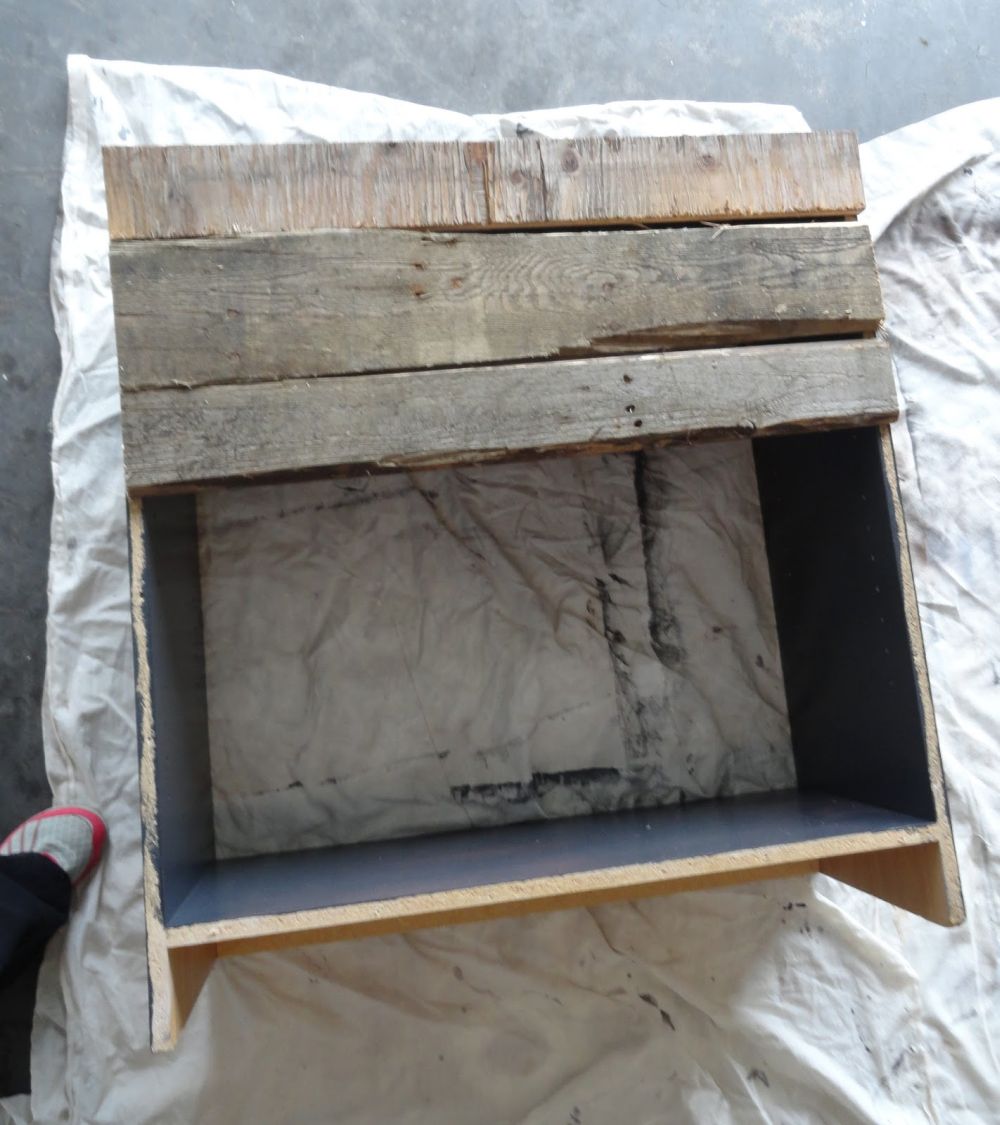
Boards were cut to fit and arranged across each open frame. Their uneven widths and edges required fitting before a pneumatic nail gun secured them around the perimeter.
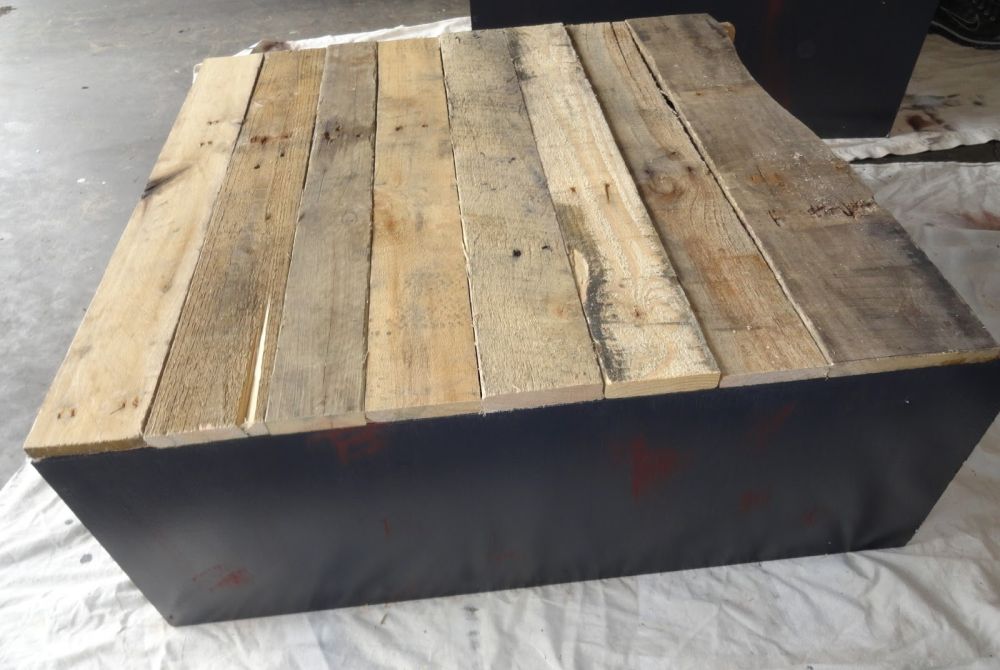
Horizontal lengths covered the rear opening, retaining the weathered surfaces instead of painting them to match the frame.
Bare Wood Remained Visible Behind the Shelves
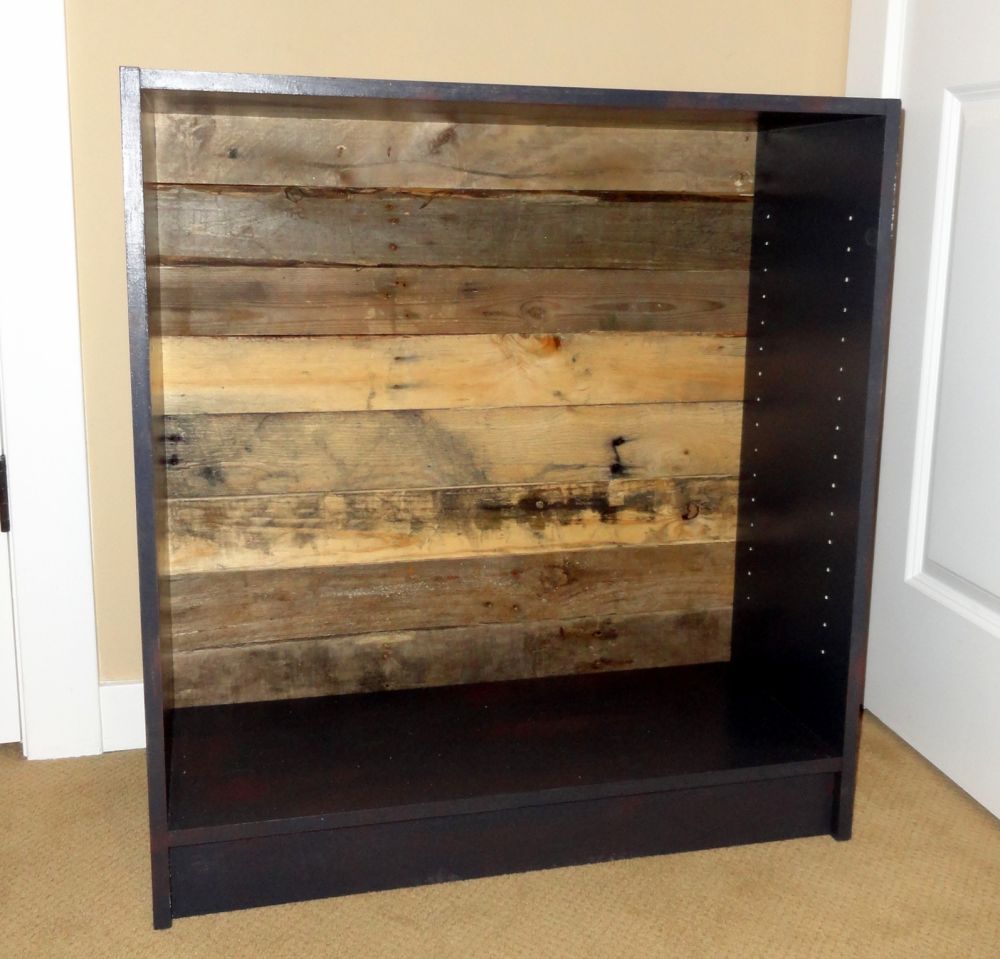
With the bookcase upright and its center shelf still removed, the full backing shows pale boards between darker lengths. Knots, grain, and old nail holes remain exposed within the blue frame.
This view makes the material change clear: separate wood boards have replaced the thin sheet printed to resemble timber.
Two Short Bookcases Became One Tall Unit
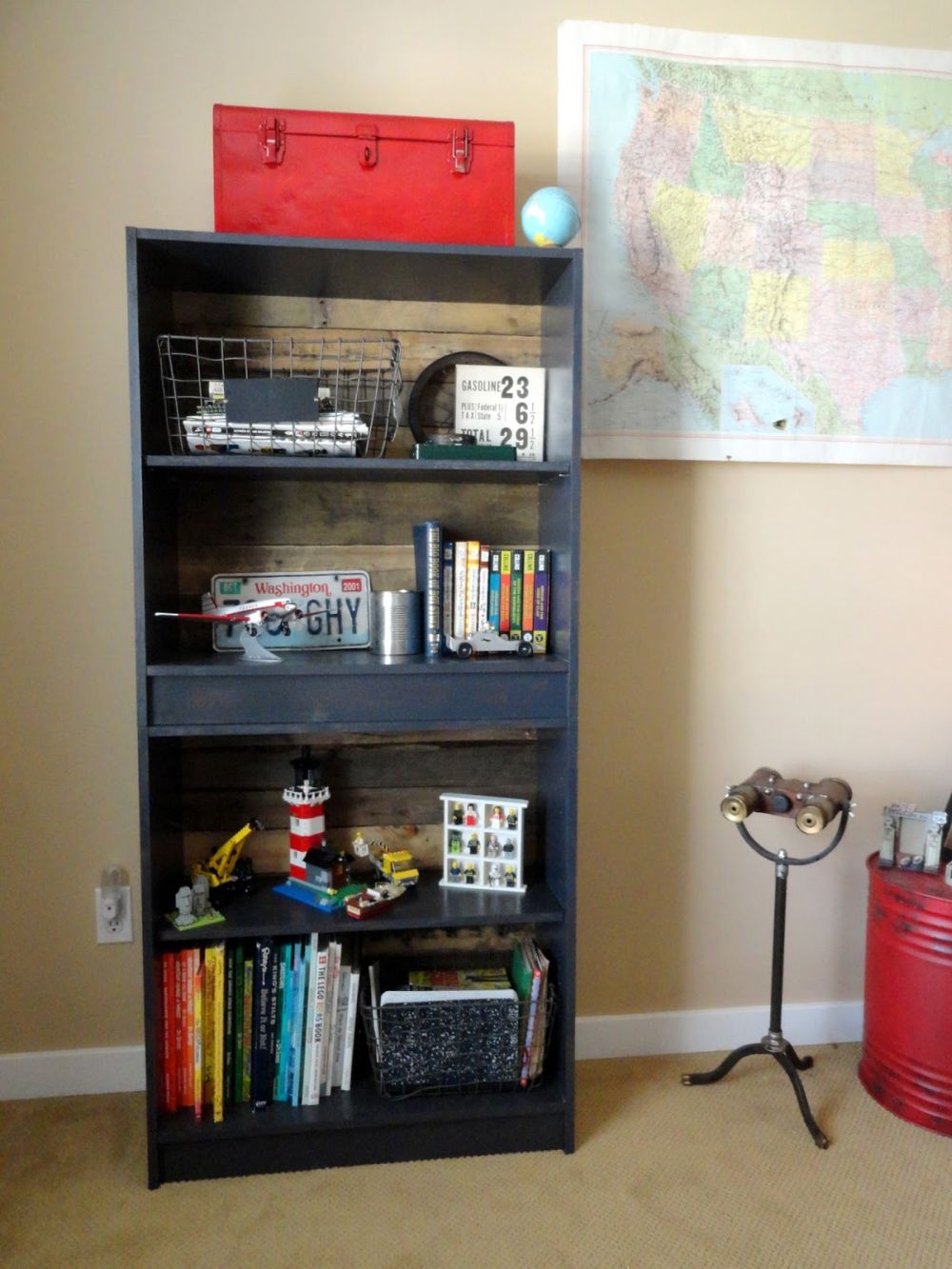
Stacking the finished frames brought the four compartments into one vertical arrangement. Bolts joined the bookcases, and the stack was secured to the wall.
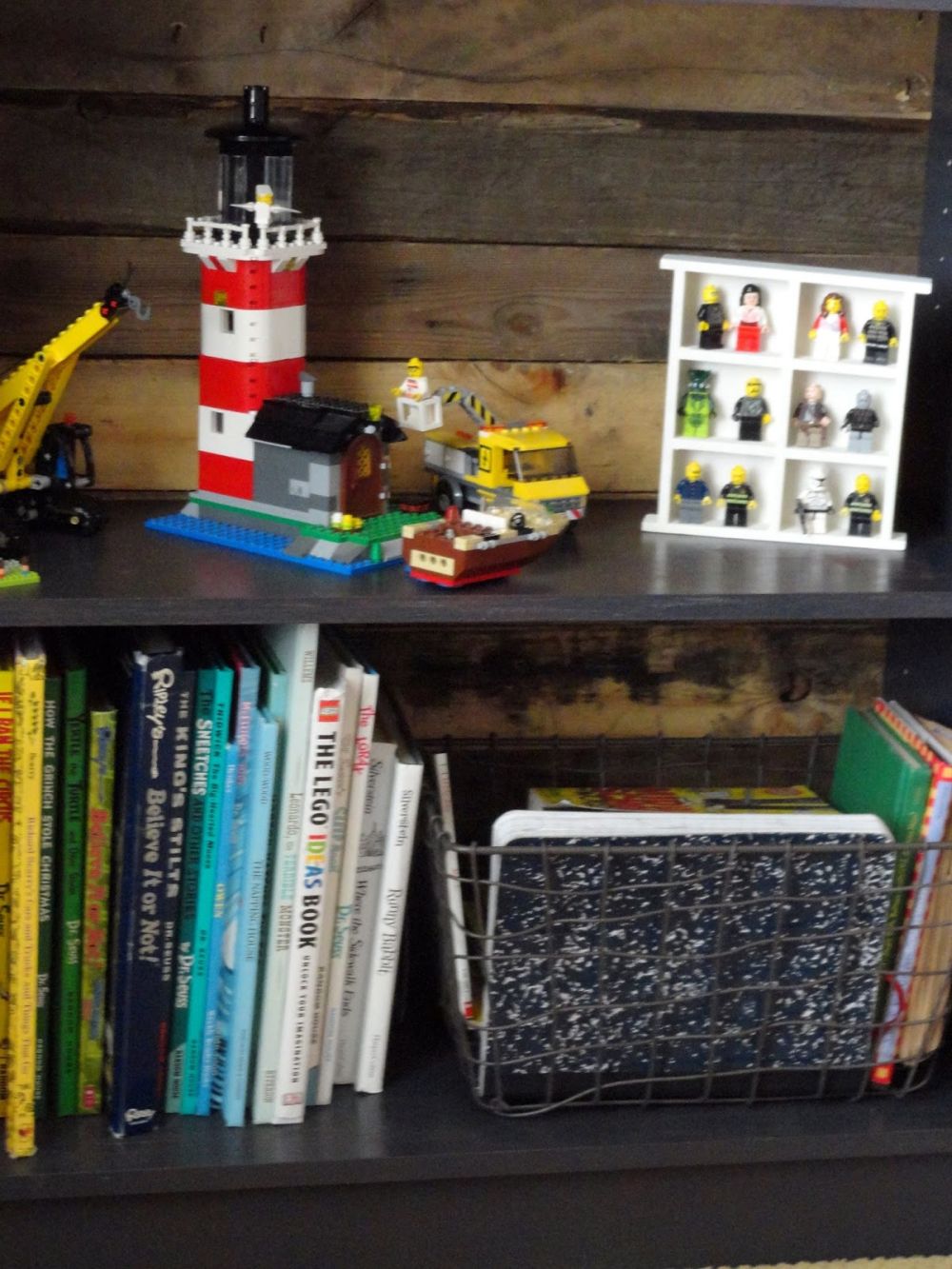
The join remains visible as a broad horizontal band through the middle. A red toolbox sits on top, while the taller unit fits beside the wall map and leaves floor space near the window.
Books and Models Returned to the Shelves
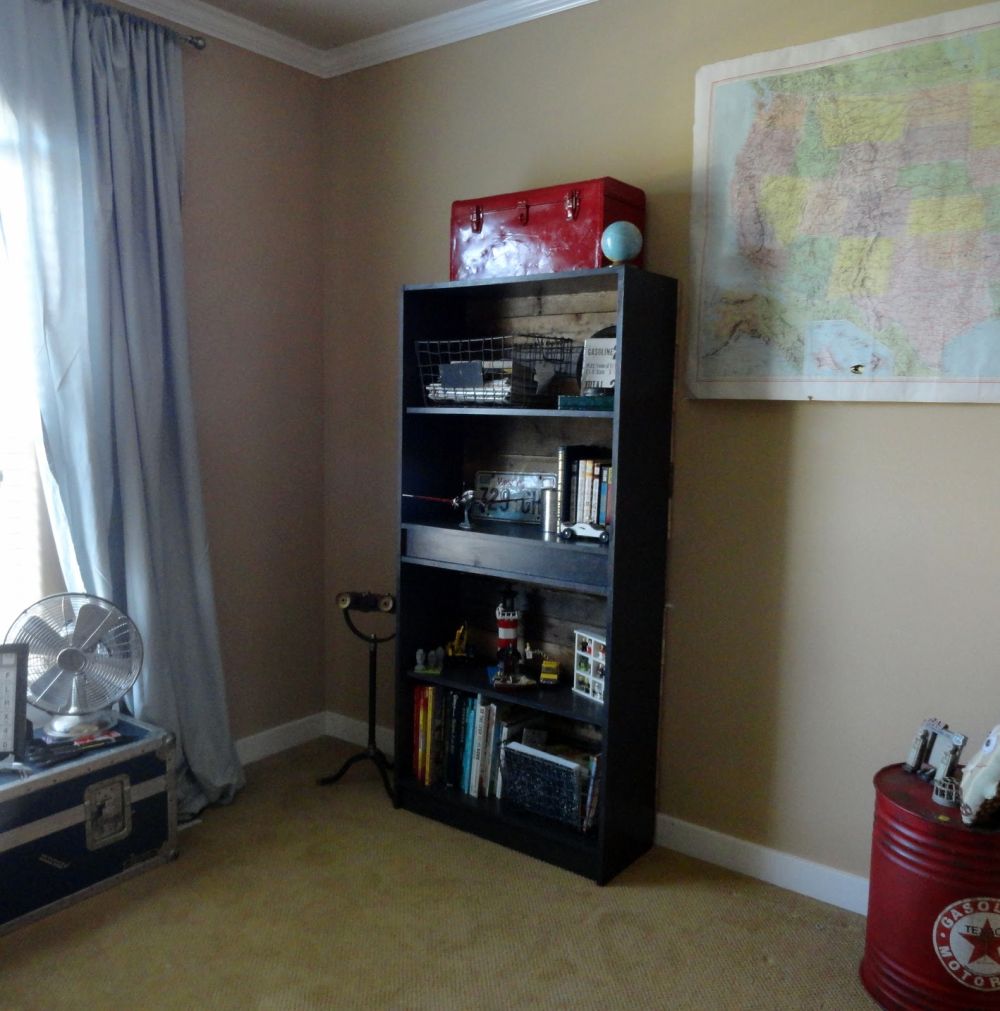
Wire baskets hold books and notebooks, while a lighthouse model, figures, and a model airplane occupy the remaining shelf space. The license plate from the original arrangement returns behind the plane.
Space between the objects leaves sections of the pallet backing exposed, keeping the wood visible after the storage is filled.
The Pair Kept Its Shelves but Changed Its Footprint
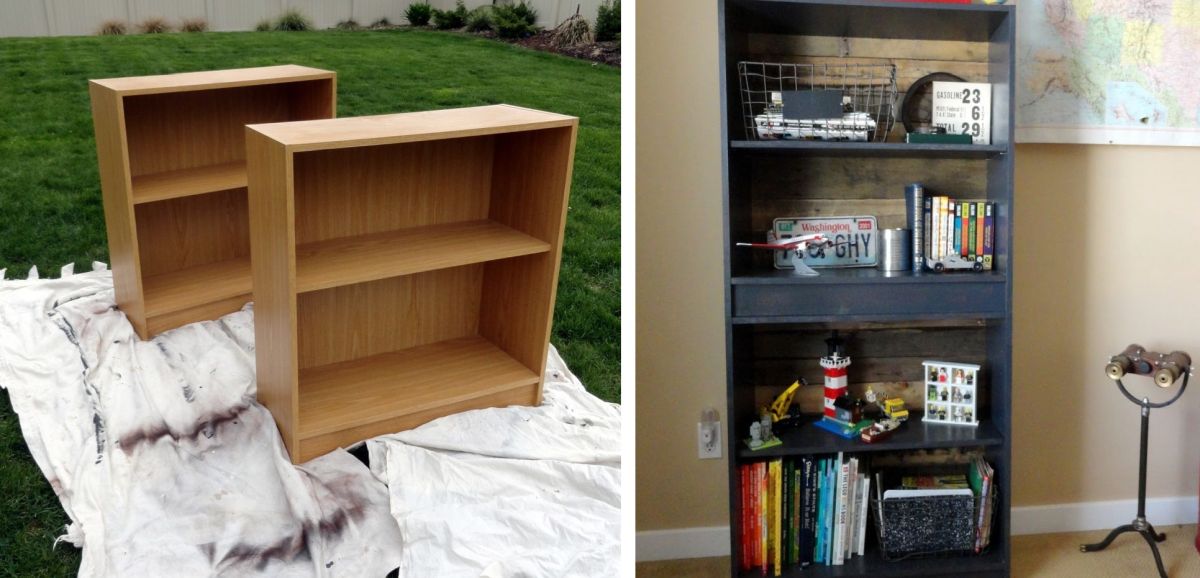
The comparison shows four compartments before and after, with the storage moved upward rather than expanded. The $5 purchase price covered both original bookcases; it was not a total cost for the makeover.
Would you stack the pair to save floor space, or keep two low bookcases with the new wood backs?
Project and image credit: Rachel Teodoro.