Woman Turns an Old Glass Vase Into a Designer-Looking Gold-Drip Piece Without Painting the Outside


Gold drips running down a white ceramic vase can make it look like an expensive designer piece. Recreating that finish on an old glass vase sounds like a job for brushes, several coats of paint, and a steady hand. But there’s a method that doesn’t require painting the outside at all.
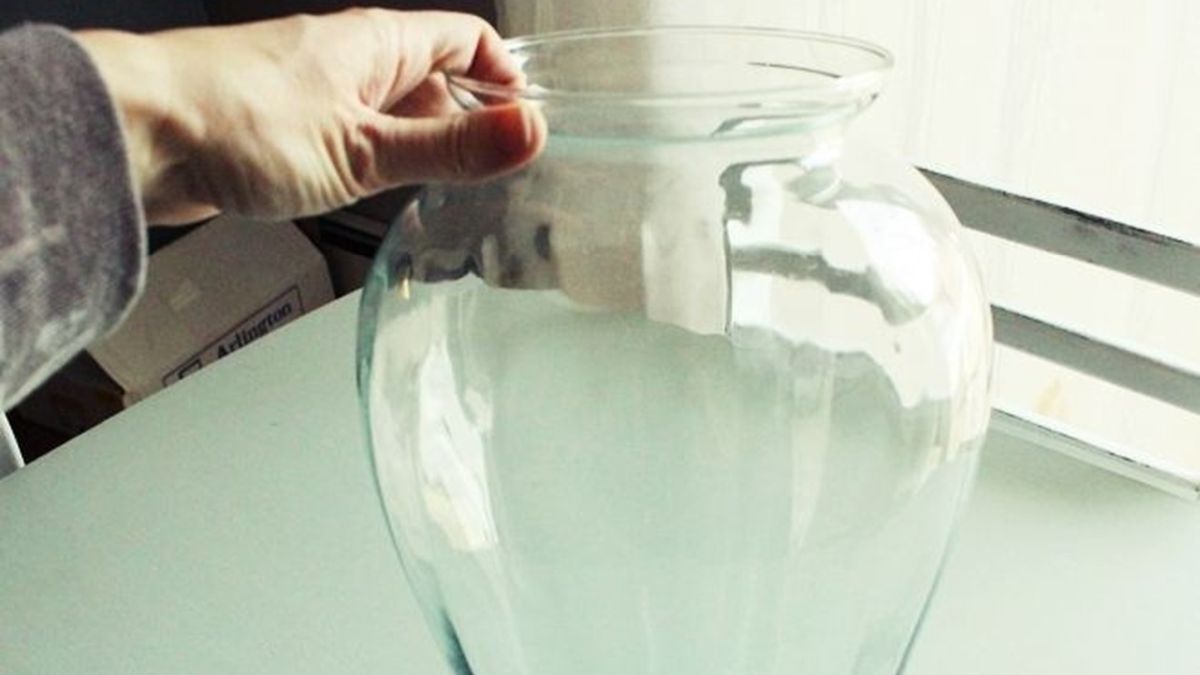
Homedit contributor Brittney Smart used metallic gold acrylic paint and white latex paint to turn a clear glass vase into a gold-and-white decorative piece. The trick is the order of the paint: gold goes inside first, followed by white, with the glass itself serving as the finished exterior.
Why the Gold Paint Goes Inside First
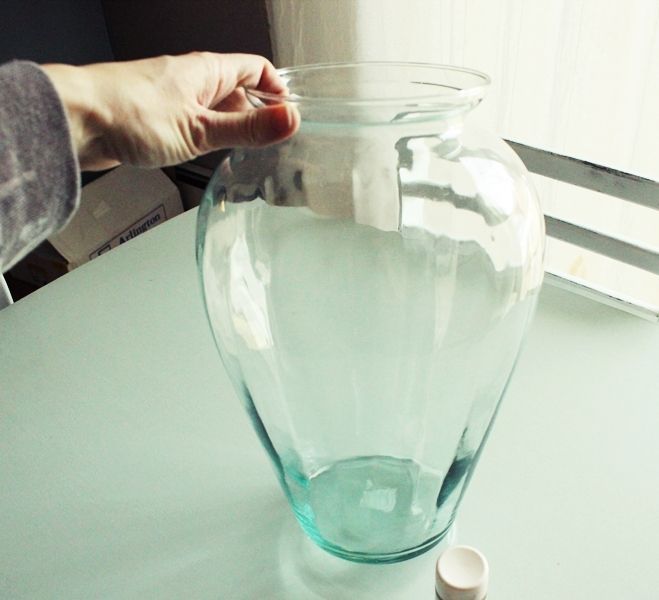
The original vase was clear glass with a wide opening, rounded body, and tapered bottom. Smart wanted a gold-drip finish against a solid white background without covering the glass exterior.
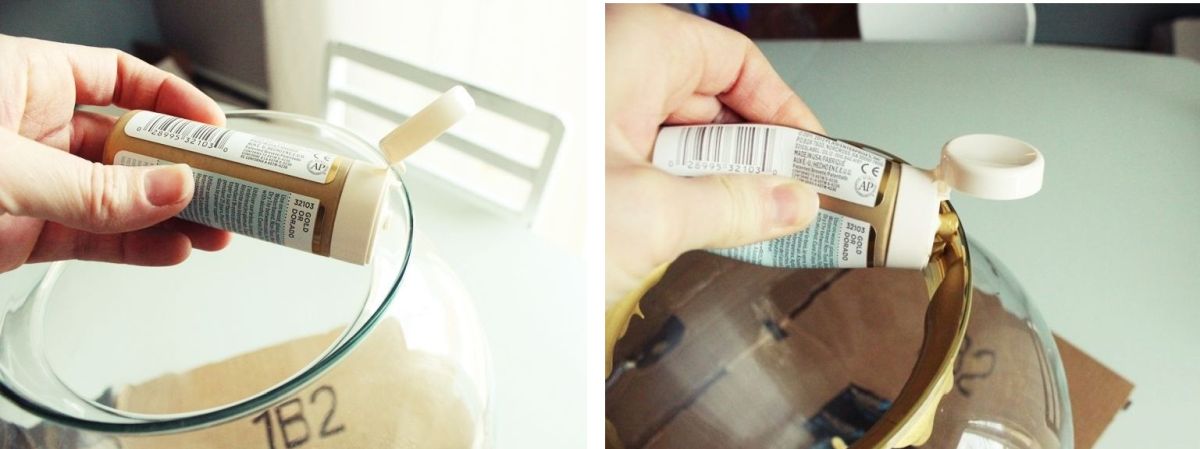
She squeezed Martha Stewart metallic gold acrylic paint around the inside rim, using enough for the excess to run down the walls. Gravity created streaks of different lengths, leaving the irregular drip pattern that defines the design.
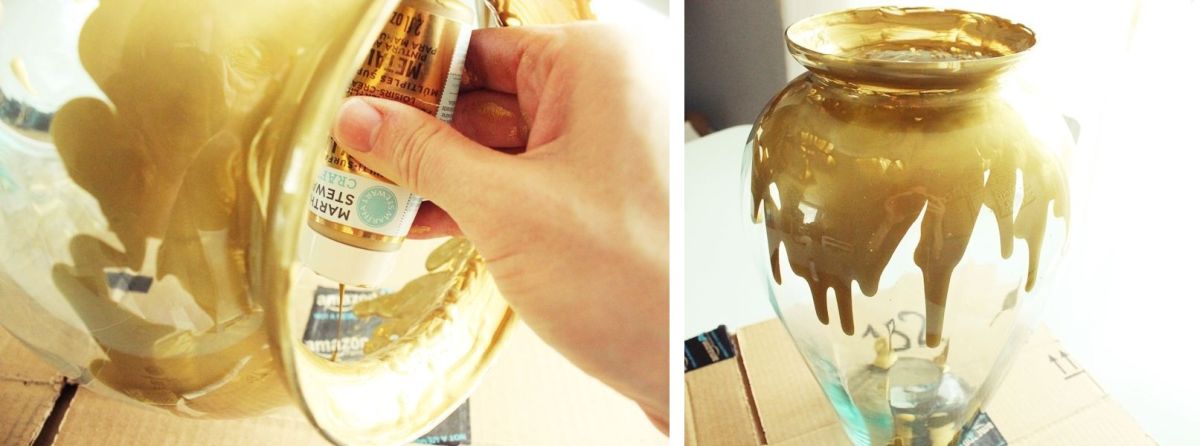
Rather than brush the streaks into an even coat, she let them remain. The gold needed to dry before adding the next color, which could take several days where the paint collected in thick sections.
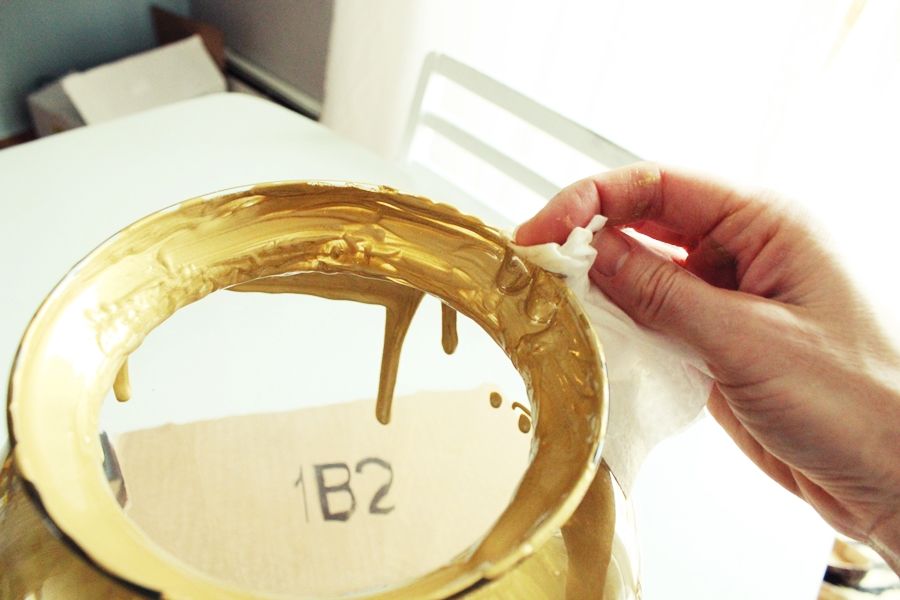
Once dry, she wiped the rim and removed unwanted paint deposits. The drips intended for the finished design stayed in place.
White Paint Creates the Ceramic-Looking Finish
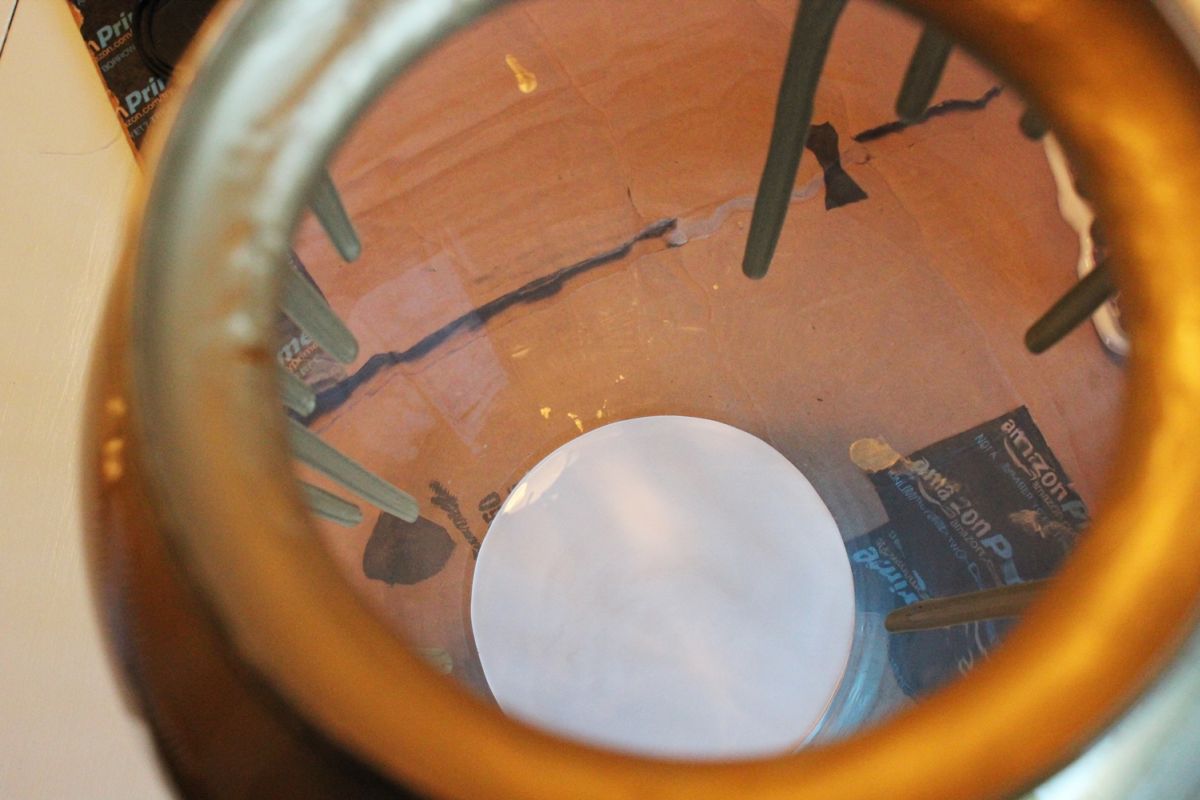
With the gold dry, Smart poured white latex paint into the vase and rotated the glass to cover the remaining transparent areas. About a quarter-inch of paint at the bottom was her starting amount, with enough needed to coat the interior.
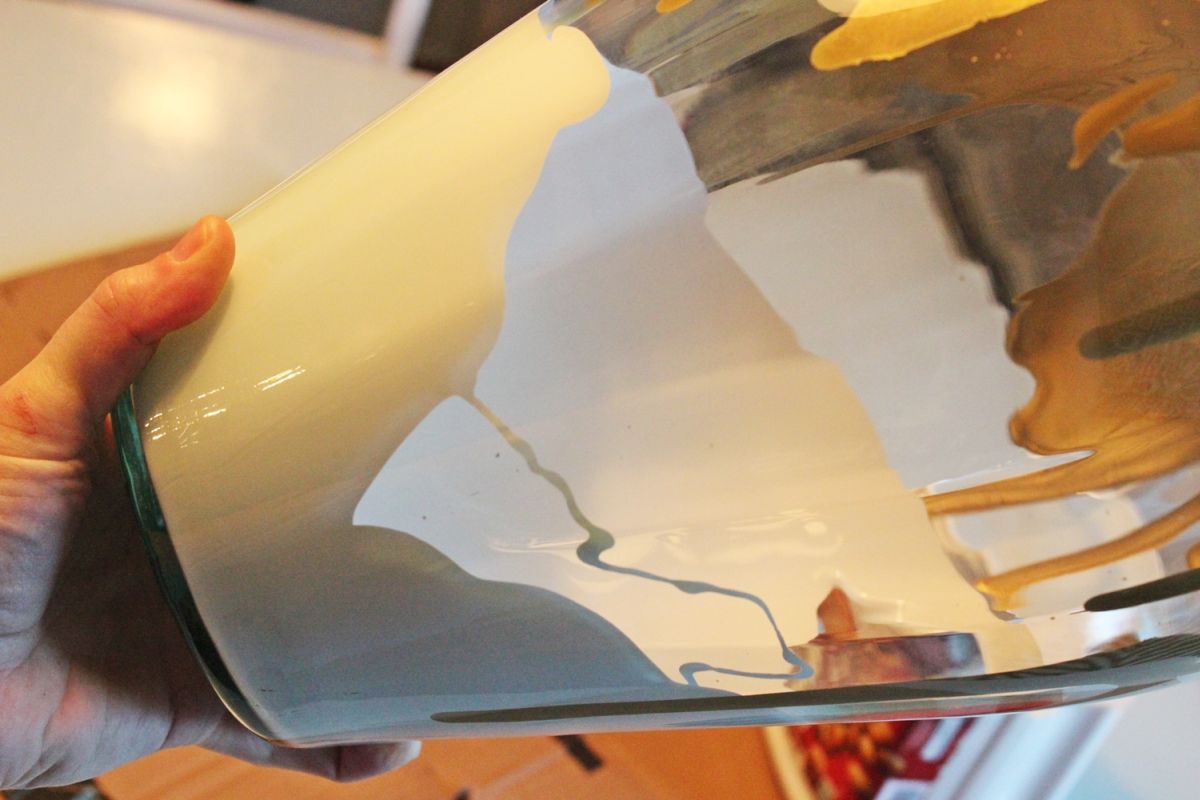
The white layer sits behind the gold when viewed through the glass. That order matters: painting white first would prevent the metallic pattern from showing through the exterior.
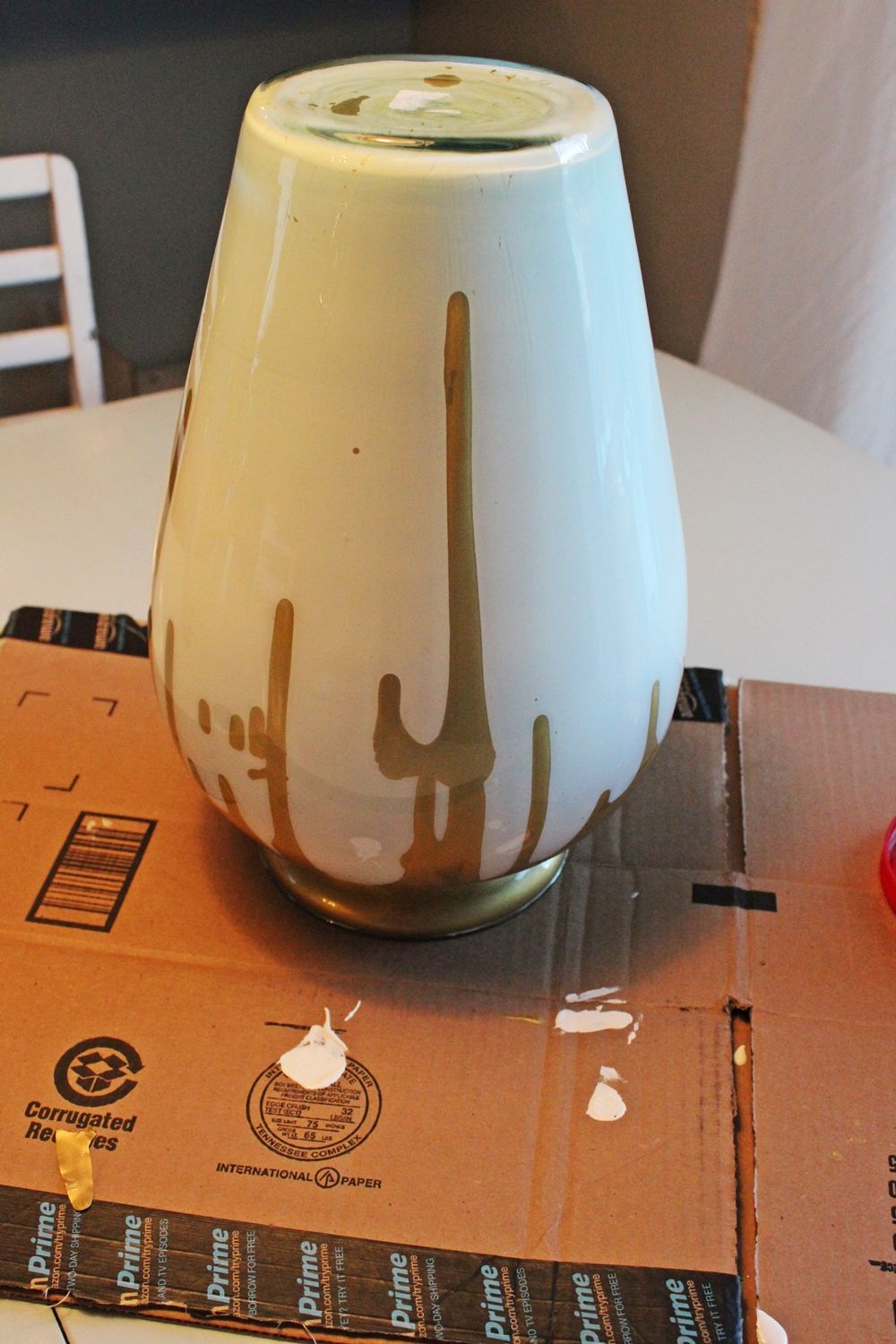
She turned the vase upside down over cardboard to let excess paint drain and left the coating to dry. Removing the excess prevents thick pools of paint from collecting inside.
The Finished Vase Looks Like a Store-Bought Piece
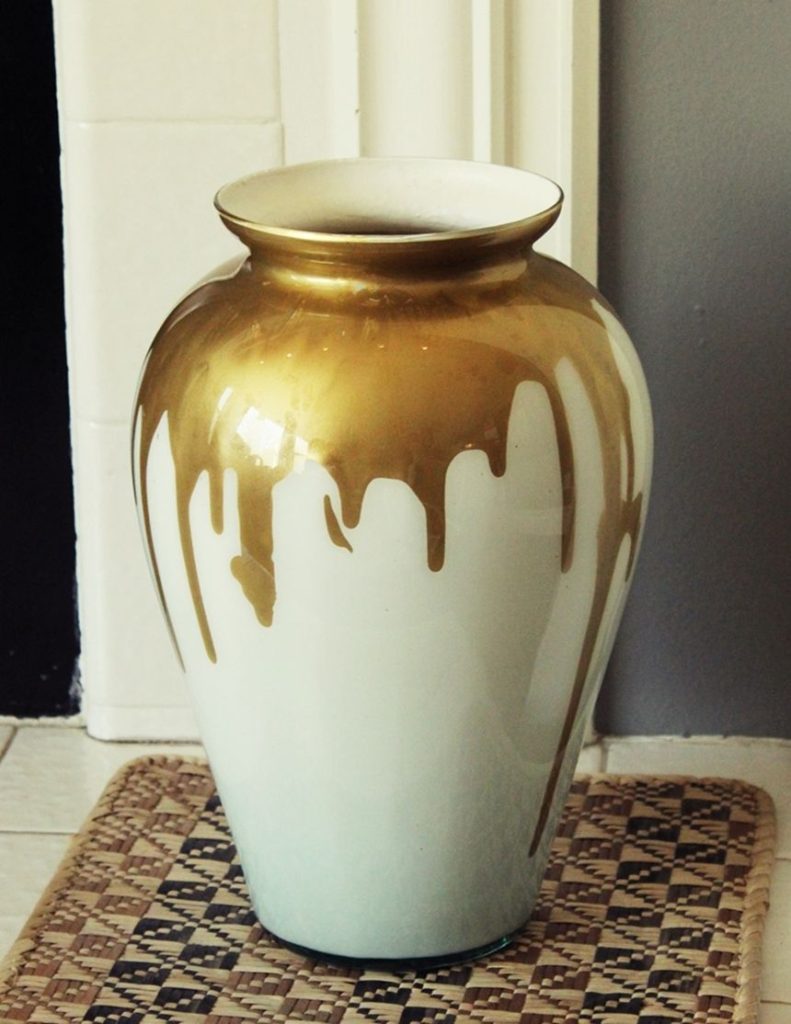
The finished vase has an opaque white body with metallic gold streaks falling from the rim. Some stop near the shoulders, while others extend toward the lower half. The glass exterior remains untouched, giving the entire piece a smooth surface.
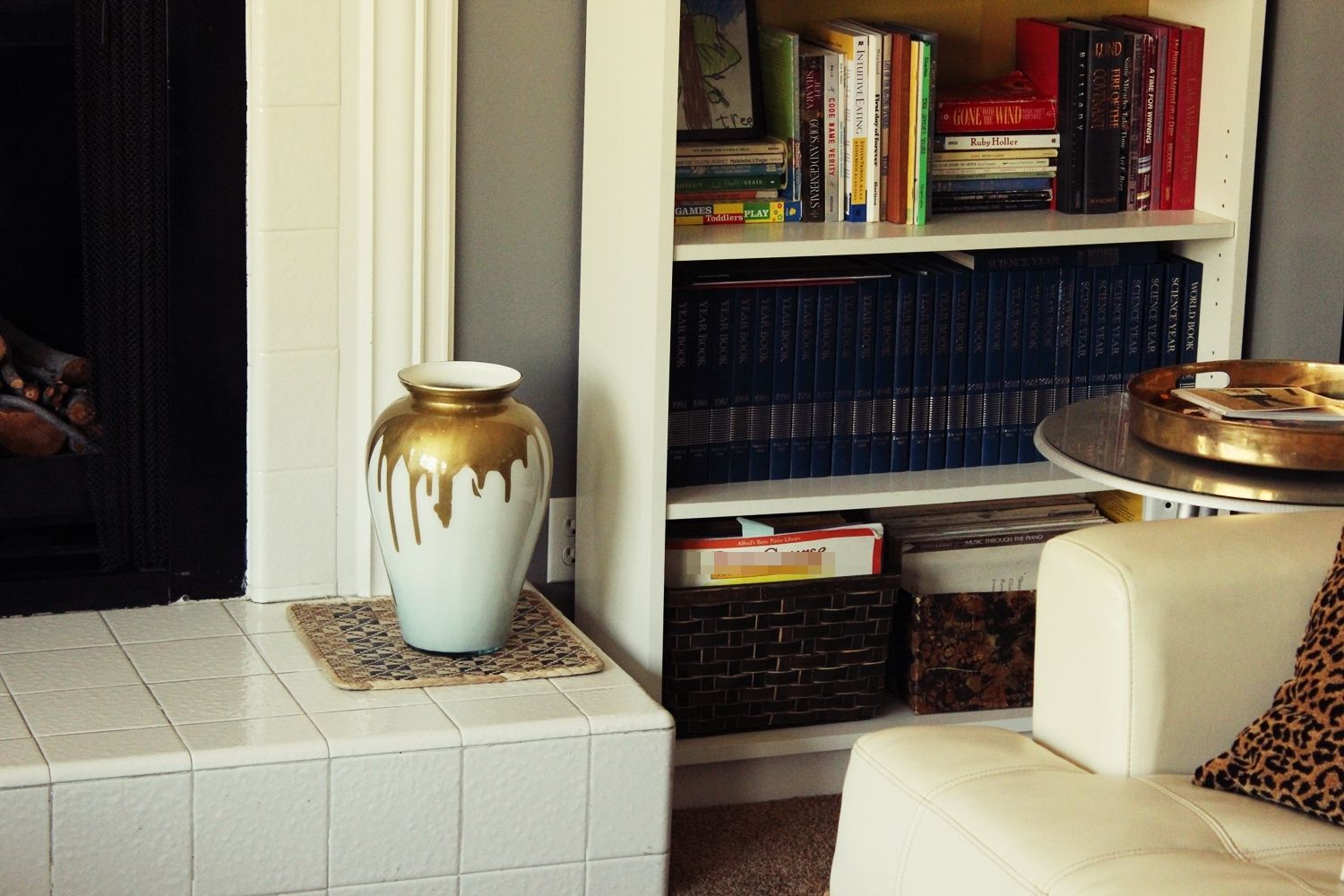
Smart displayed the vase on a tiled fireplace hearth beside white bookshelves. What started as transparent glass now resembles a glazed ceramic vessel with a gold-drip design.
One limitation matters: because craft paint covers the interior, the vase is best used for dry flowers or as a decorative object. Water could damage the paint.
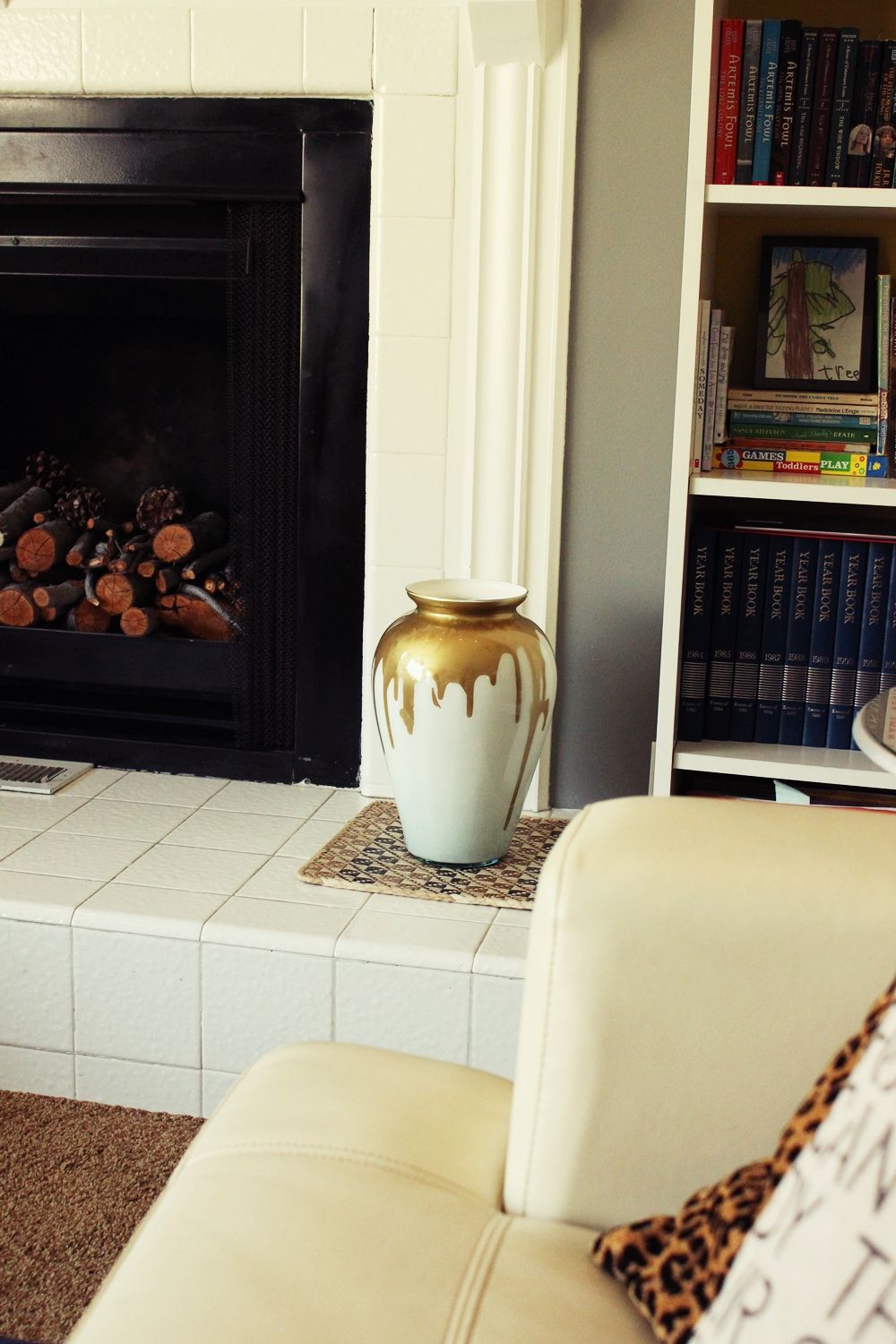
The technique also works with other color combinations. Keep the drip color against the glass, add an opaque backing after it dries, and leave the exterior untouched.