She Had a Black Brick Fireplace but Wanted It White, So She Grabbed Leftover Paint From the Shed


Black-painted bricks covered the fireplace surround in this Texas bungalow, forming a dark rectangle beneath a wooden mantel. The firebox, built-in shelves, and cream-colored hearth were already in place, but the homeowner wanted to change one part of the design.
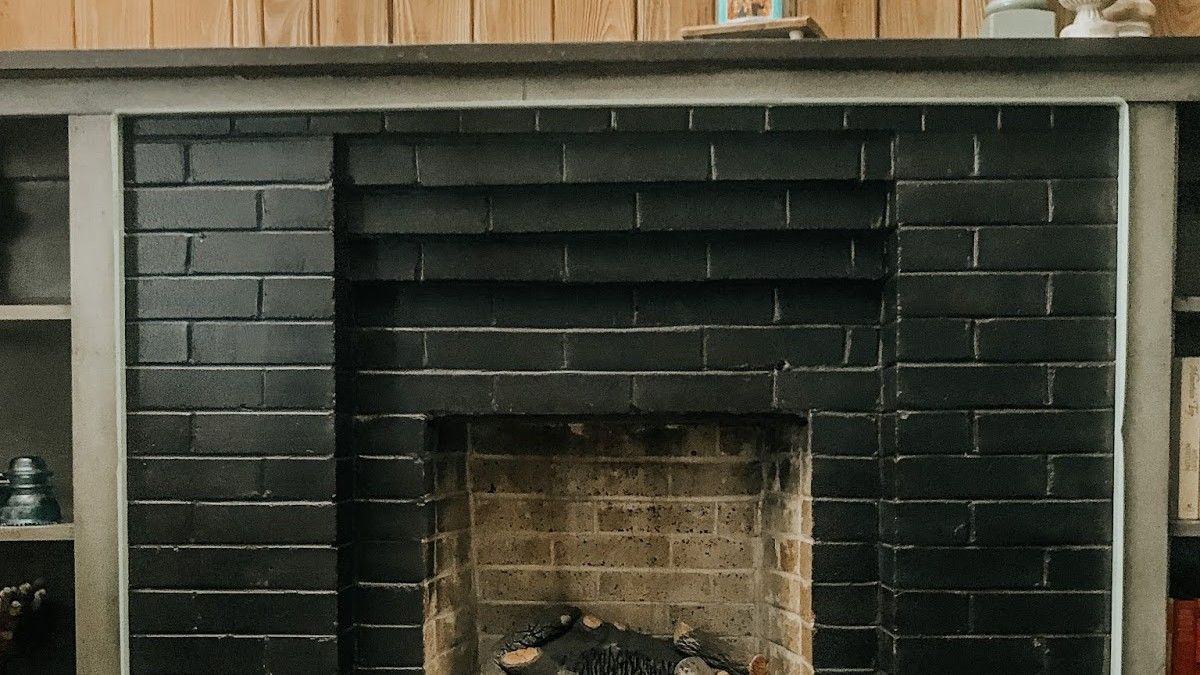
DeeDee, who shares her home projects on Clover House, had been replacing the dark paint finishes left throughout the house. Instead of buying new materials or covering the bricks, she found a can of white paint in the shed and decided to use it on the fireplace.
The project cost her nothing in new supplies. With a brush, painter’s tape, and two coats of paint, she turned the black surround white while keeping the surrounding woodwork intact.
Black Brick Surrounded the Original Firebox
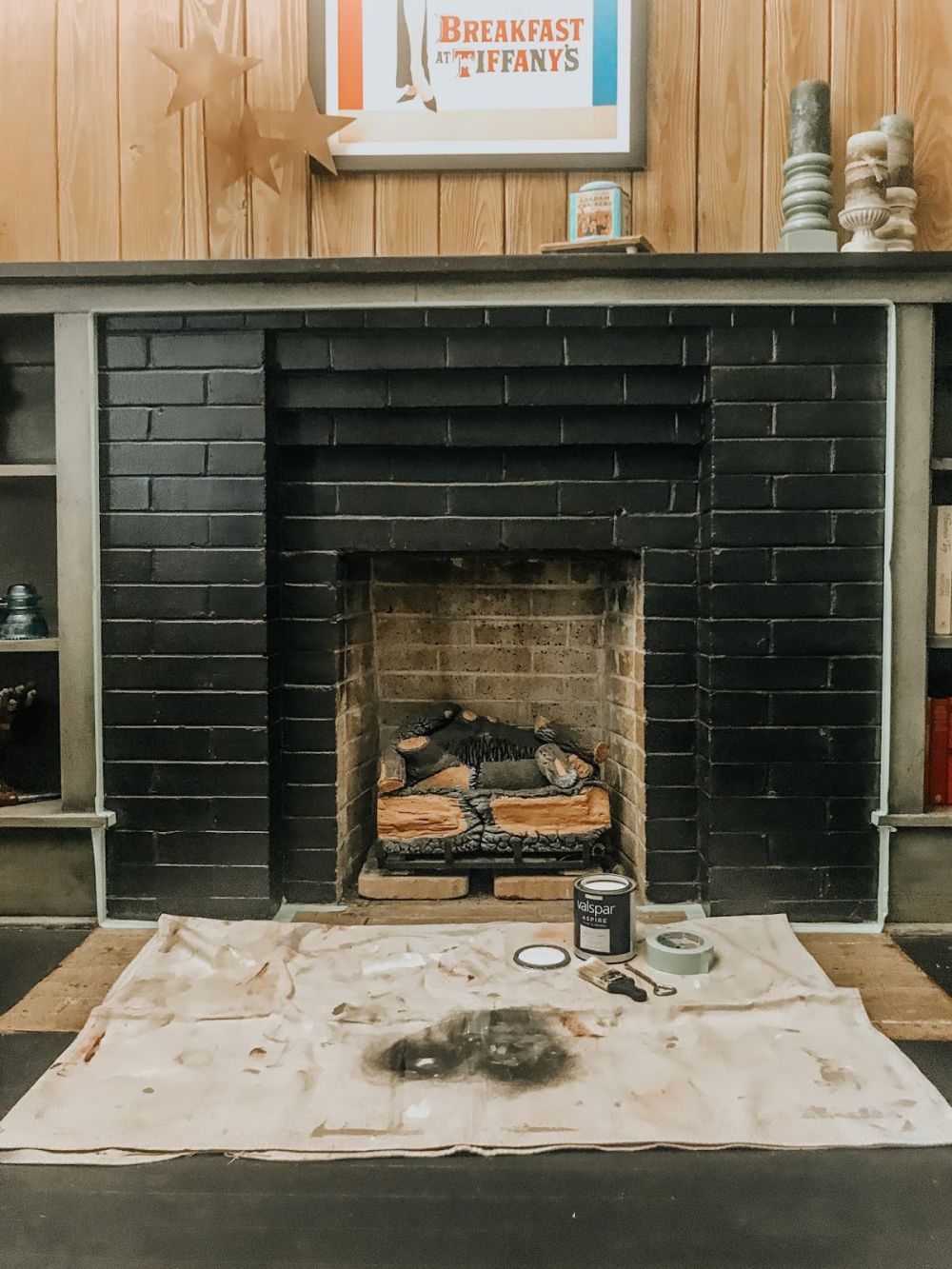
The fireplace had black-painted bricks extending from the hearth to the underside of a dark wooden mantel. The firebox opening remained lined with exposed, soot-marked brick, with gas logs resting inside.
Built-in shelves stood on both sides, framed in a muted green-gray finish. Vertical pine paneling covered the wall above the mantel, where a Breakfast at Tiffany’s poster hung between decorative stars and candleholders.
The homeowner wanted the dark brick changed, not the entire fireplace rebuilt.
Leftover White Paint Replaced the Black Finish
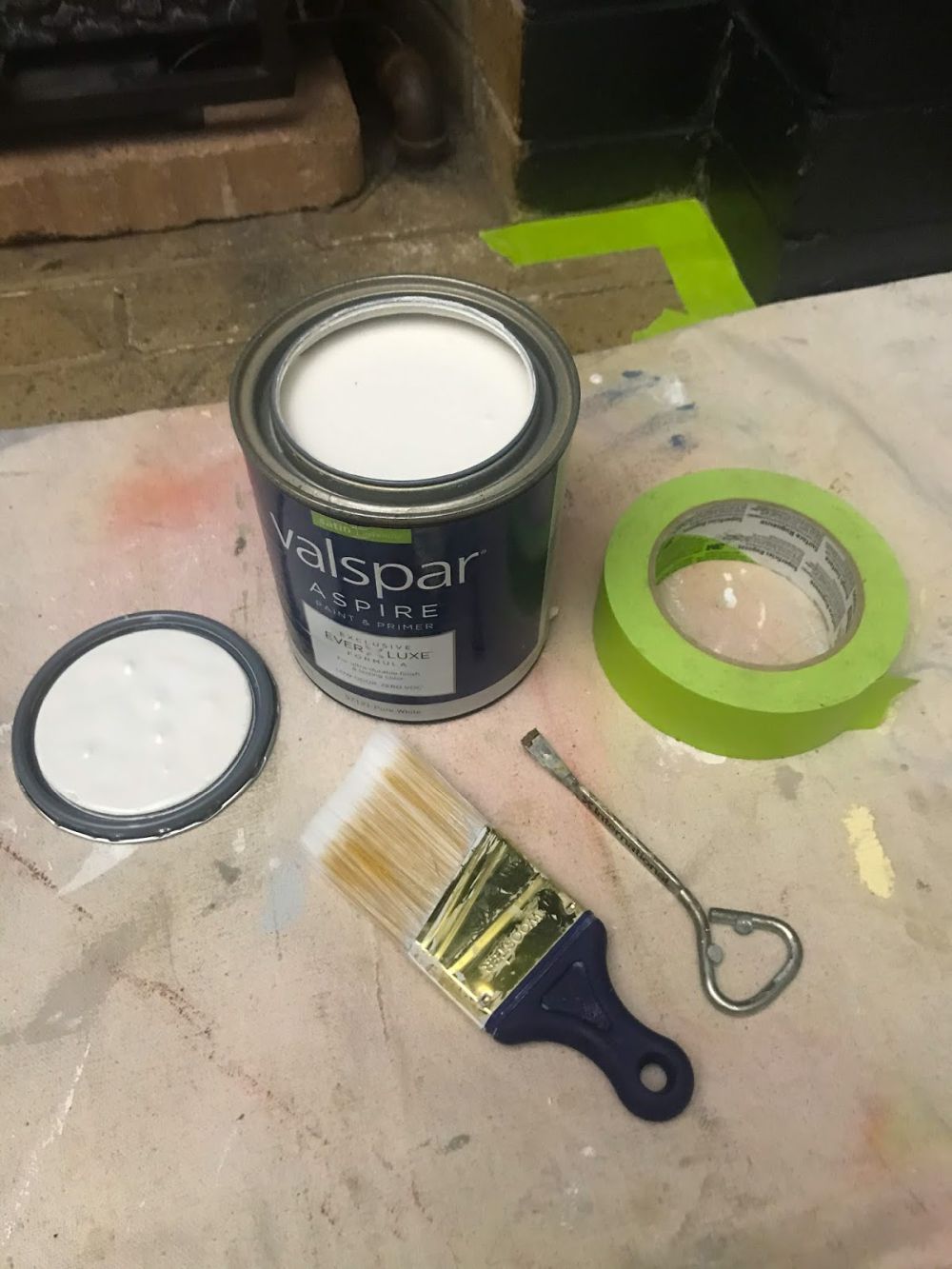
The supplies included Valspar Aspire white paint, a small angled brush, painter’s tape, and a paint-can opener. Since the paint was already available, there was no need to purchase another can.
Before painting, the bricks were dusted and vacuumed. Tape protected the surrounding edges, while a cloth covered the hearth and floor.
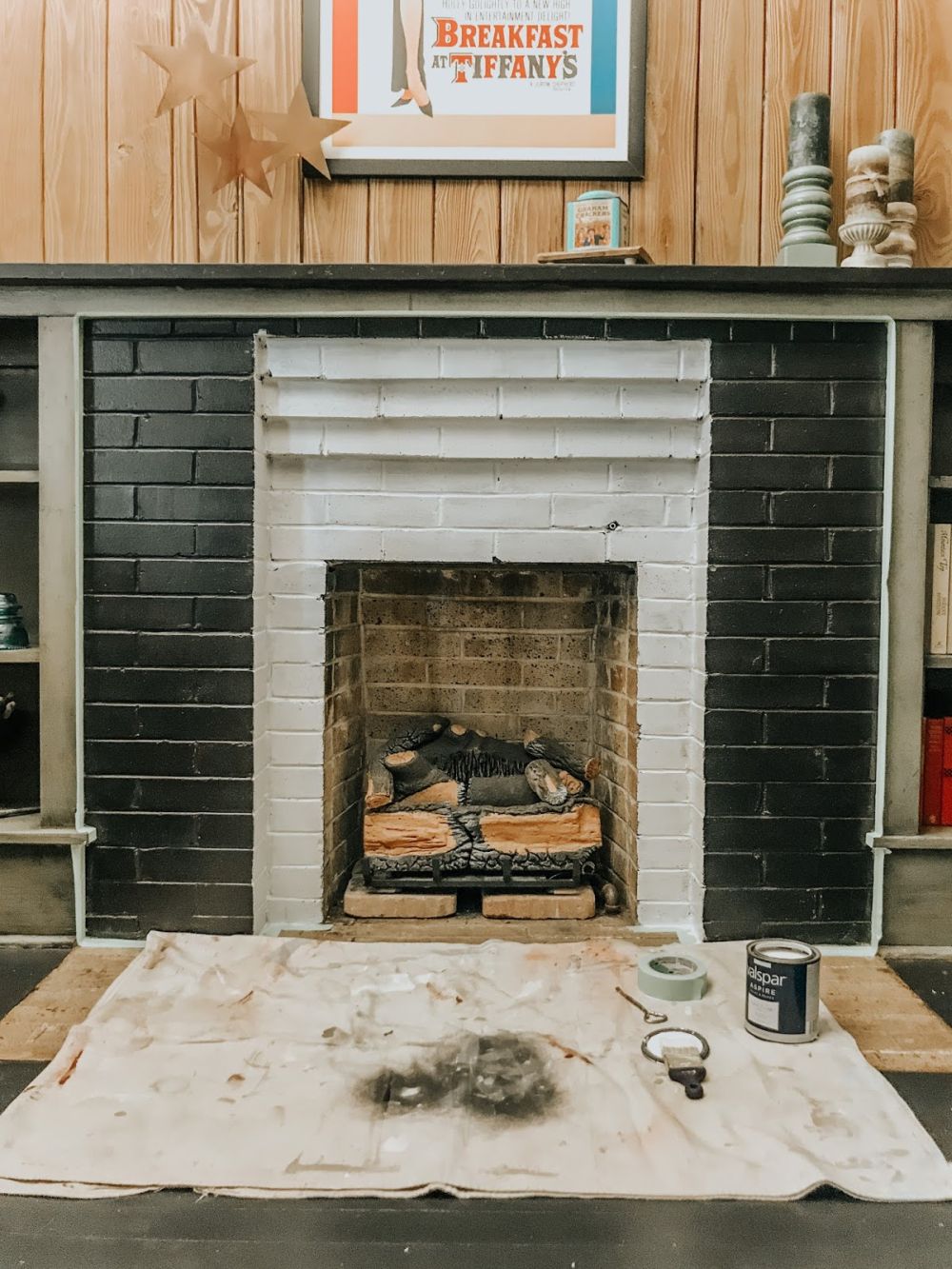
Painting began around the upper part of the firebox opening. White paint covered the horizontal brick courses first, leaving the black outer sections visible during the work.
The angled brush helped reach the mortar joints and narrow spaces around the raised brickwork. Covering the dark surface required a second coat, followed by touch-ups where black showed through after drying.
White Bricks Changed the Fireplace Without Replacing the Mantel
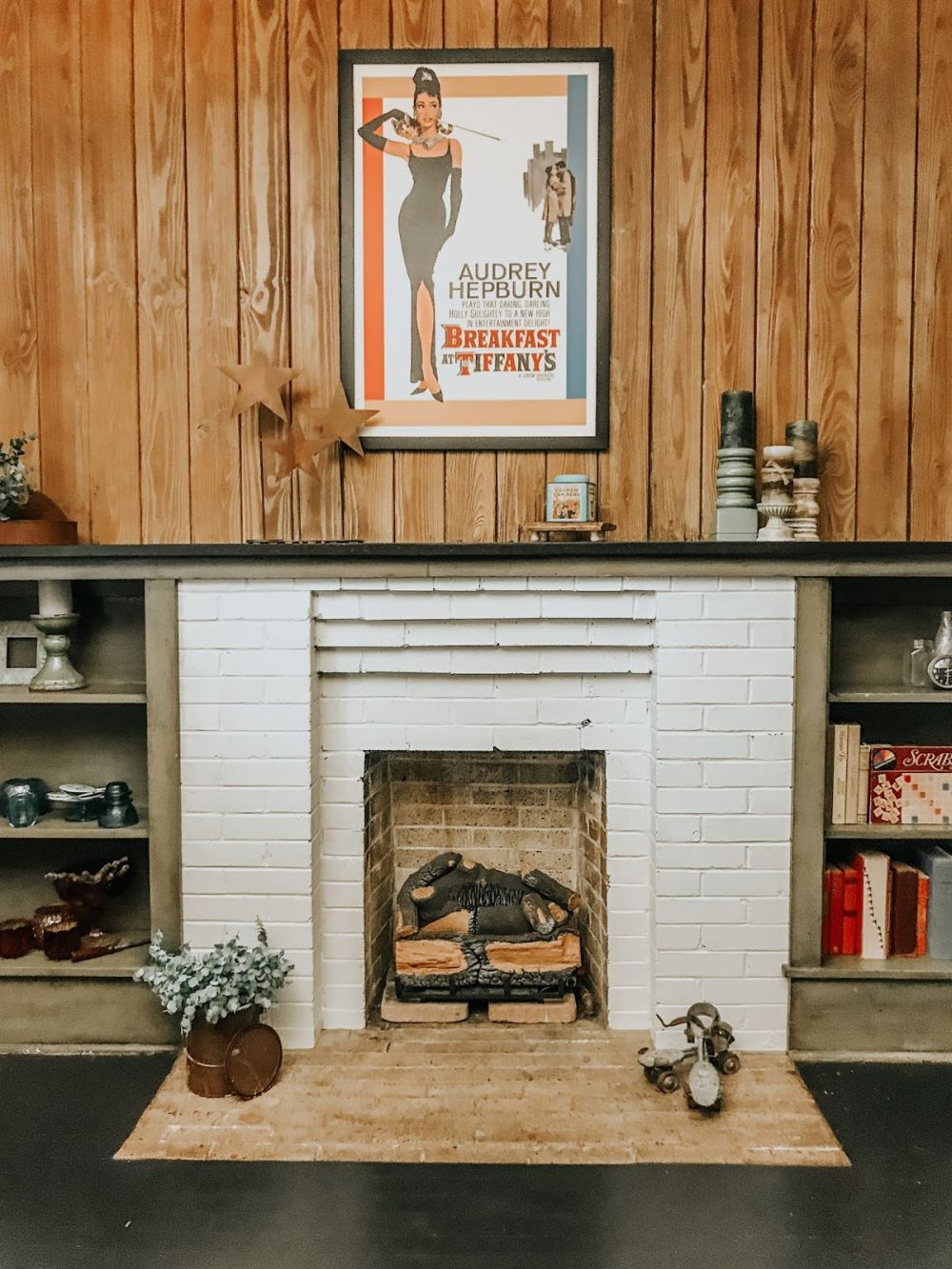
The finished surround has white brick extending across the former black sections, including the raised courses above the firebox. Mortar lines remain visible beneath the paint.
The dark mantel now sits above the white surround, while the original beige hearth and built-in shelving remain unchanged.

From farther back, the white brick separates the firebox from the pine-paneled wall and the shelving on either side. The black-painted area that once occupied most of the fireplace is gone.
The original gas logs, poster, and mantel decorations stayed in place.
Fall Decorations Went Back After the Paint Dried
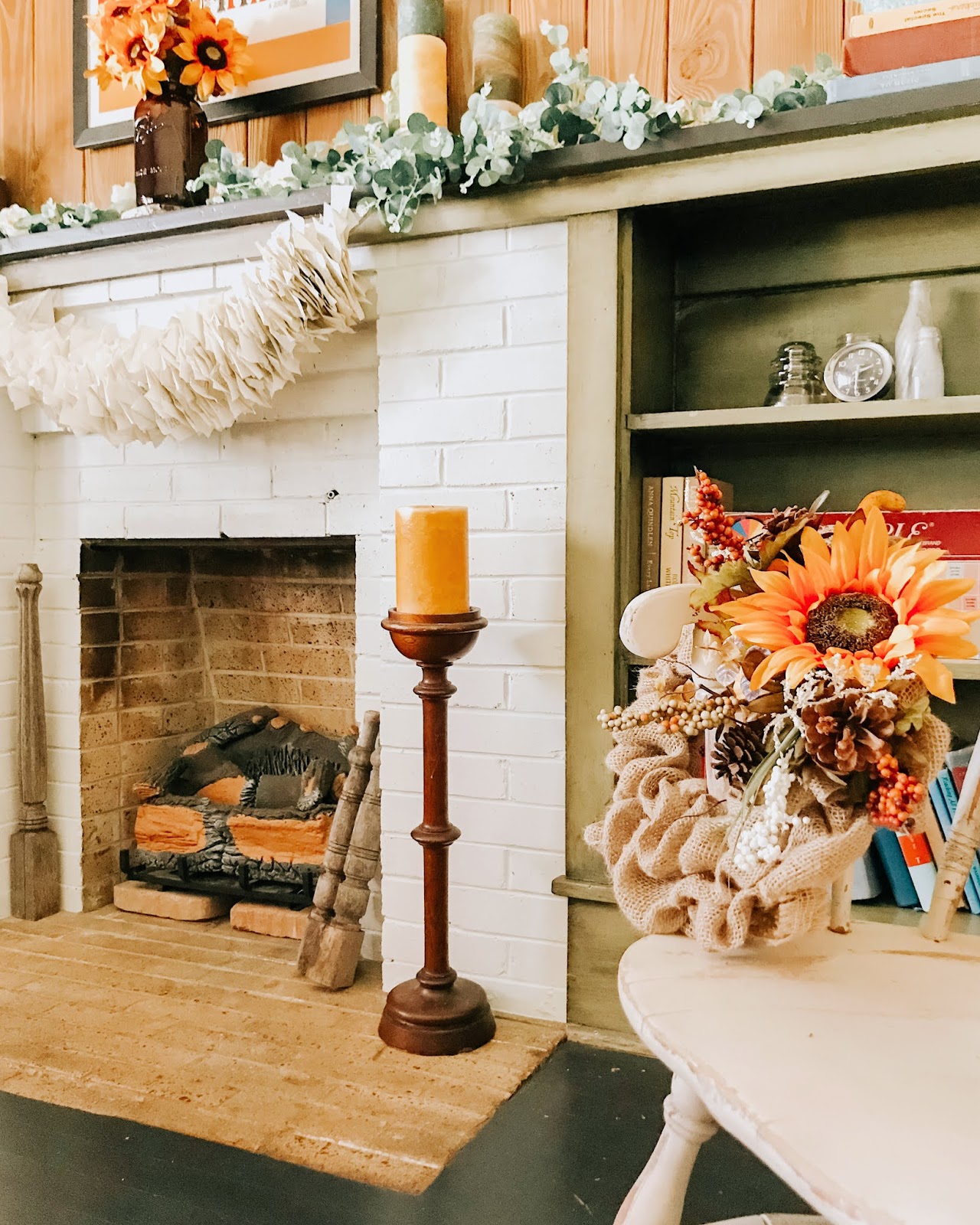
The homeowner added faux greenery, orange sunflowers, and candles along the mantel. A white paper garland hangs across the painted bricks, while an orange pillar candle stands beside the hearth.
The decorations can change with the season without requiring another fireplace makeover.
The Same Fireplace With One Finish Reversed
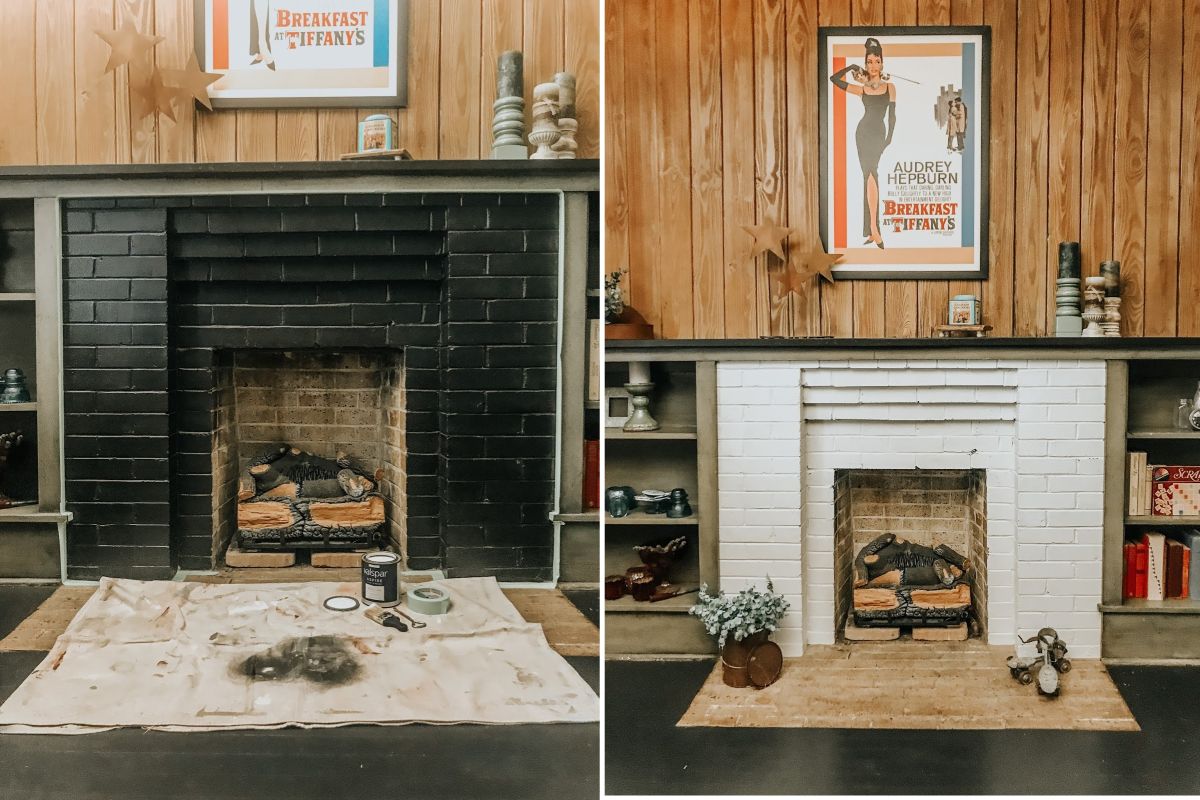
The side-by-side comparison shows the black surround before painting and the white brick after the project. The firebox, mantel, shelving, and wood-paneled wall remain in their original positions.
What began as an after-work painting project changed the most prominent dark surface in the room using supplies the homeowner already owned.
Would you have kept the black brick or painted it white? Sometimes, a can of leftover paint is all it takes to change the look of a room.
Project and photographs: DeeDee, Clover House.