Putting Laundry Powder on Patio Weeds: What Is It For, and Does It Help?


Weeds between paving slabs leave roots tucked into gaps that are hard to reach with a garden tool. Vinegar and boiling water are household treatments used against that growth, while laundry powder is promoted as another option for patches that keep returning.
Vinegar can damage exposed foliage, and boiling water can scald the plant tissue it reaches. Neither result guarantees that an established root system has been destroyed, so growth can return after the leaves collapse.
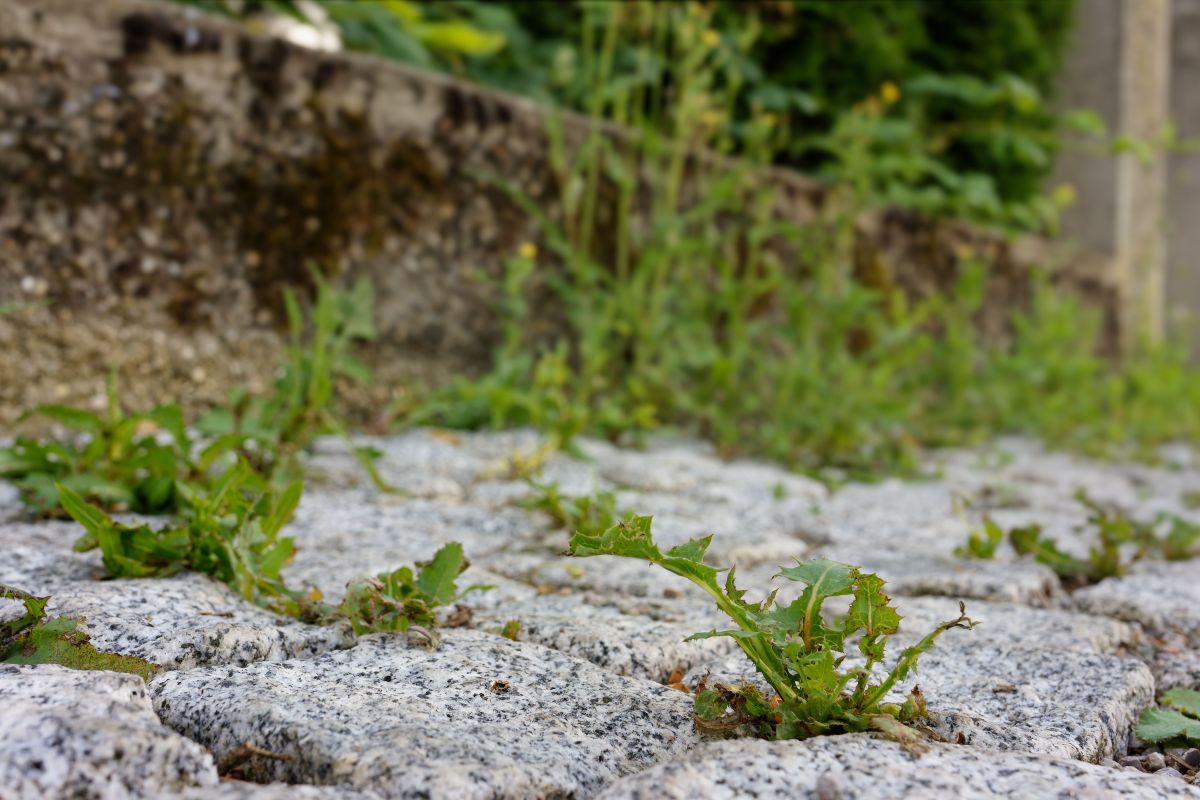
Laundry powder can injure plants too, but there is no established basis for treating it as the next step for heavier weed growth. A larger patch calls for a method suited to the weeds and the paving, rather than a stronger dose of a laundry product.
Vinegar Can Damage Leaves Without Stopping Regrowth
Vinegar-based treatments can burn exposed growth while leaving roots capable of producing new leaves. That distinction matters with weeds that return from below the paving after their tops have died back.
The surface also matters. Vinegar is acidic, so it is a poor choice for acid-sensitive paving materials and finishes. A treatment aimed at a narrow joint can spread onto the slabs beside it.
Boiling Water Acts Where It Makes Contact
Boiling water scalds the growth it reaches, but it does not provide a lasting barrier against new weeds. Deep roots and protected plant parts may survive a surface application.
Carrying and pouring hot water also introduces a burn risk, especially around children and pets. Calling it a household method does not make handling it harmless.
Laundry Powder Is Promoted for Small Weeds in Joints
The proposed use targets weeds growing between paving slabs, with removal of the plants forming part of the process. That makes it important to separate the effect of the powder from the effect of pulling out the weeds.
Laundry detergent can damage plant tissue, but clothes-washing products contain ingredients that make them unsuitable substitutes for garden treatments. Extension guidance warns against using laundry detergents on plants.
Browning leaves would demonstrate injury, not proof that the powder reached the roots or prevented regrowth.
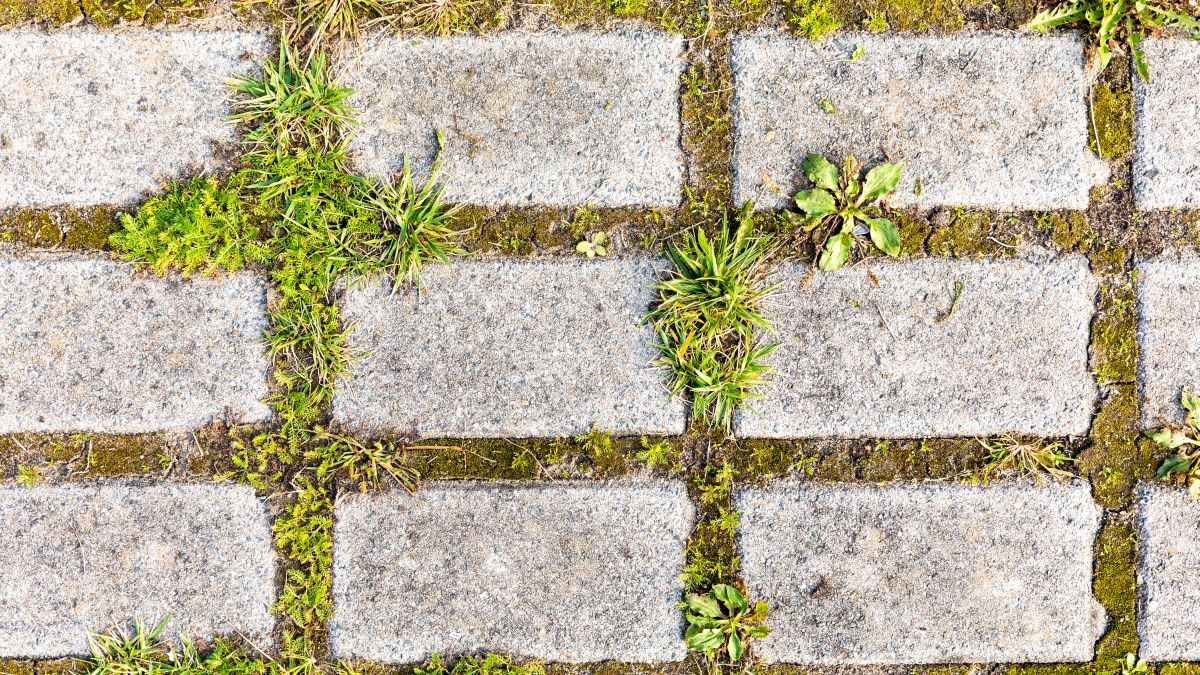
More Weeds Do Not Make Detergent a Better Choice
A dense patch does not establish a reason to switch from vinegar or hot water to laundry powder. The size of the patch changes the amount of work, while the detergent’s suitability remains unresolved.
Household detergents are not intended for outdoor application to plants. Their ingredients and concentrations vary, so a scoop provides no consistent dose across products or patio sizes.
Remove the Plants and Match Treatment to the Site
For scattered weeds, pull them or use a narrow joint-weeding tool, removing as much root as the gap allows without disturbing sound joint material. Clear the loosened growth and debris from the paving.
Persistent or extensive growth may require a product labeled for weed control at that site. Follow its directions and check that it suits the paving, surrounding plants and intended use.
Vinegar, boiling water and laundry powder can all damage exposed growth. That shared effect does not make them interchangeable, or establish laundry powder as the solution when the other two fall short.