They Removed Almost 5,000 Pounds of Dirt to Give Two Backyard Chairs a Better Place to Sit


Two wooden chairs already occupied the grassy corner beside the pond, but creating a level place beneath them took more than laying down a few stones. By the time the excavation ended, almost 5,000 pounds of dirt had left the backyard, even after some of the sandy soil went back into the project.
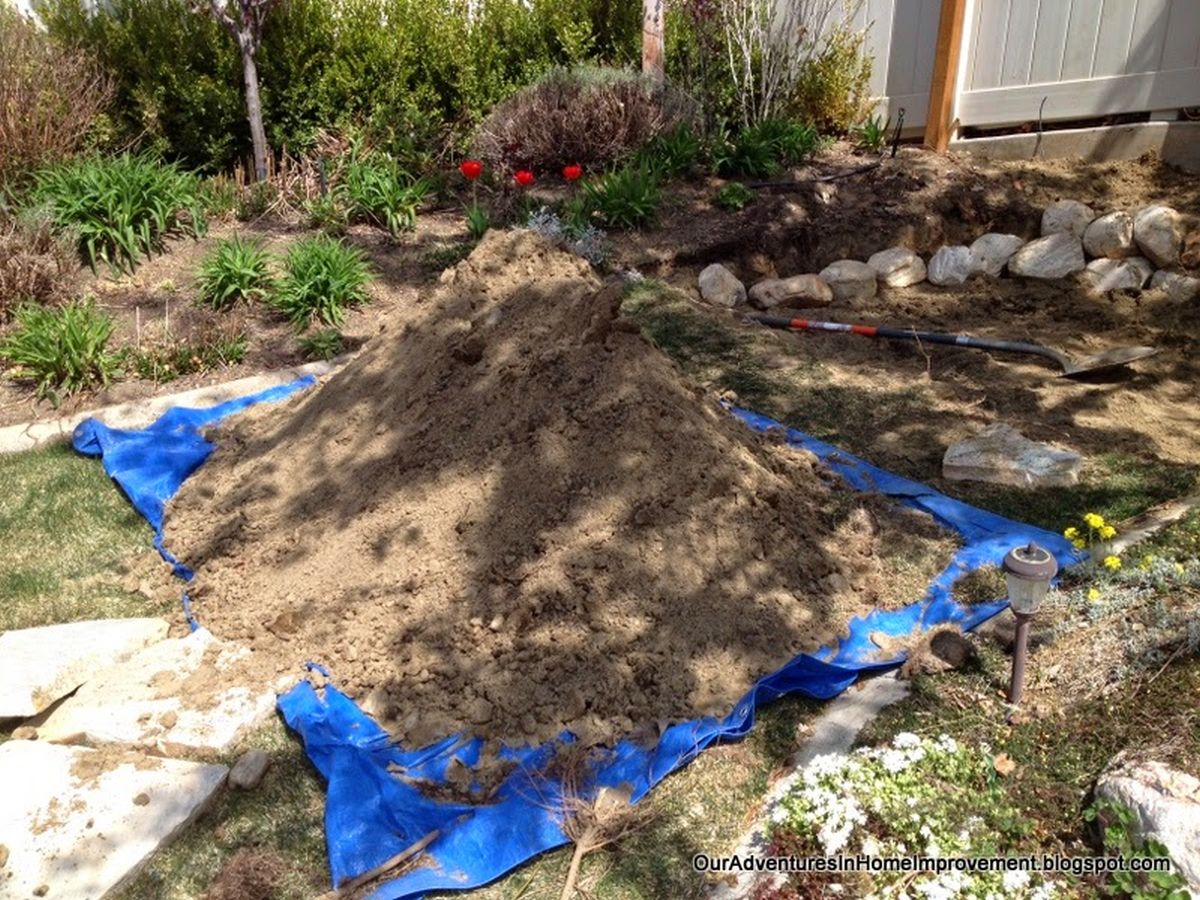
Pam from Our Adventures in Home Improvement and her husband wanted a shaded spot where they could hear the waterfall and watch their koi. Their existing garden had the tree, water, and seating; the slope between the fence and lawn needed reshaping.
Cutting into that bank created room for a stone patio, with a low rock wall holding back the soil and steps connecting the seats to the pond above. The Adirondack chairs her husband had built a few years earlier returned to the same corner on a different footing.
Two Chairs Sat on Grass Before the Digging Began
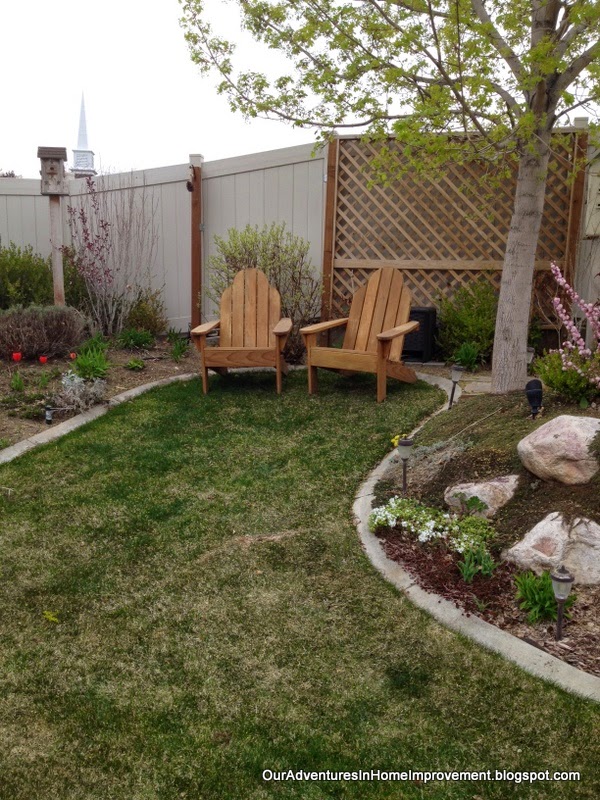
Wooden Adirondack chairs stood near the back fence, where the lawn rose between planted borders. Curved edging guided the grass toward the seats, while a mature tree occupied the bank beside them.
Lattice behind the chairs and flowering plants around the edges had given the corner a backdrop before construction began. The project focused on the ground within those boundaries, preserving the garden around it.
Excavation Cut a Level Space Into the Bank
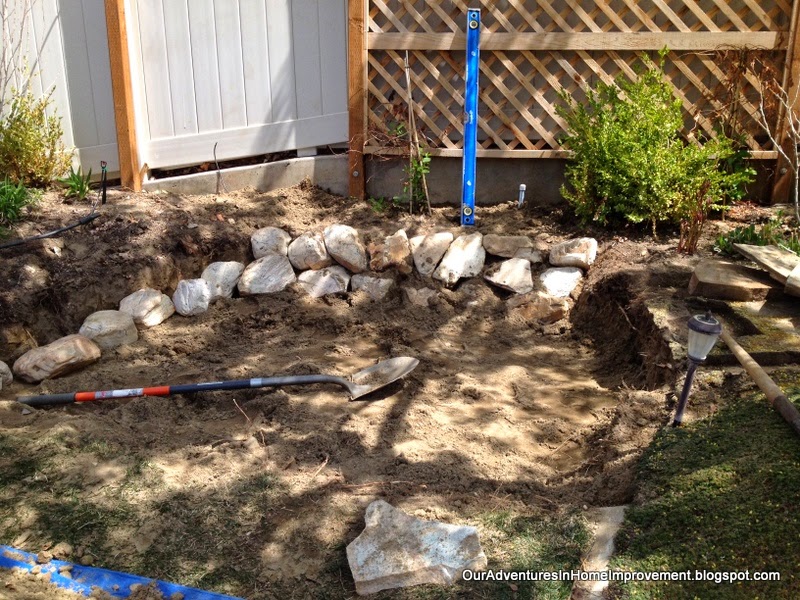
Removing the slope exposed a sandy patch below the fence and surrounding beds. Along the rear edge, the difference in height became clear: the planting area remained above the new seating surface.
Rounded stones formed a low retaining edge across that cut. Their uneven shapes followed the curve of the excavation, separating the soil behind them from the open space reserved for the patio.
The First Truckload Brought About 1,500 Pounds of Stone
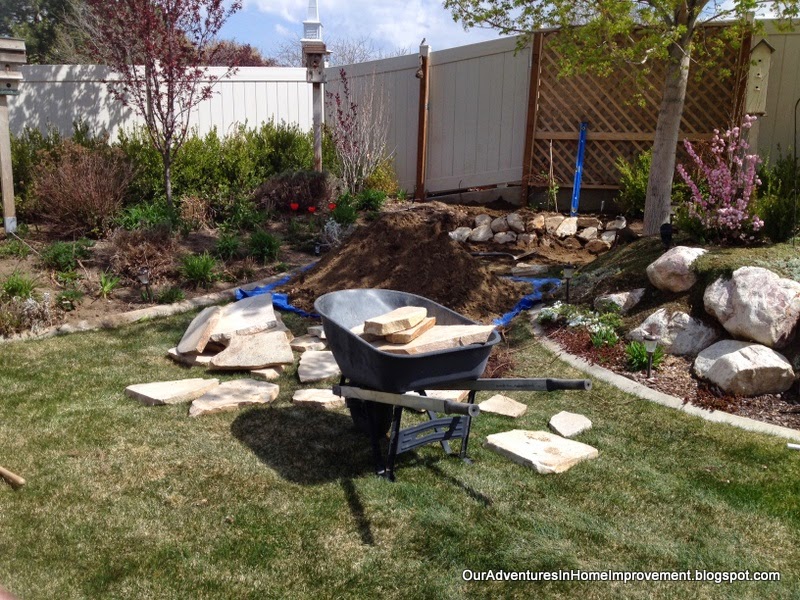
Flat slabs and rounded rocks filled the pickup bed after a trip to the stone yard. Each shape had a separate purpose, with broad pieces destined for the patio and thicker rocks selected to hold back the raised soil.
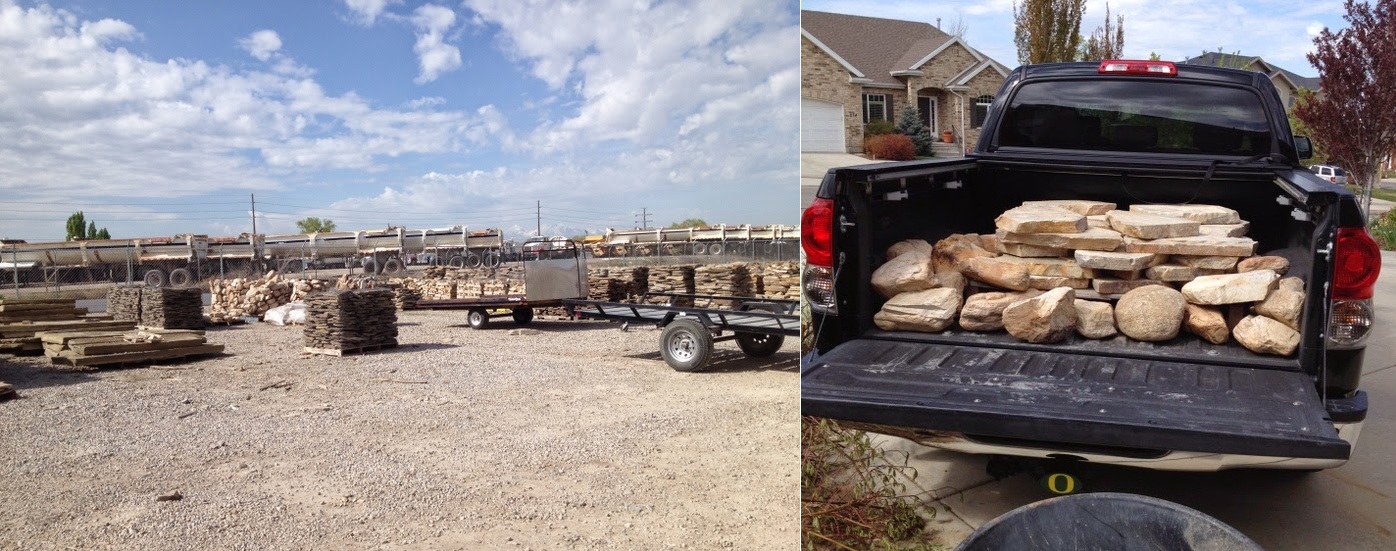
Getting them home was one part of the handling. The couple selected the stones, moved them onto a pallet, unloaded them into a wheelbarrow, and placed them around the excavated area.
Some Excavated Soil Went Back Beneath the Stones
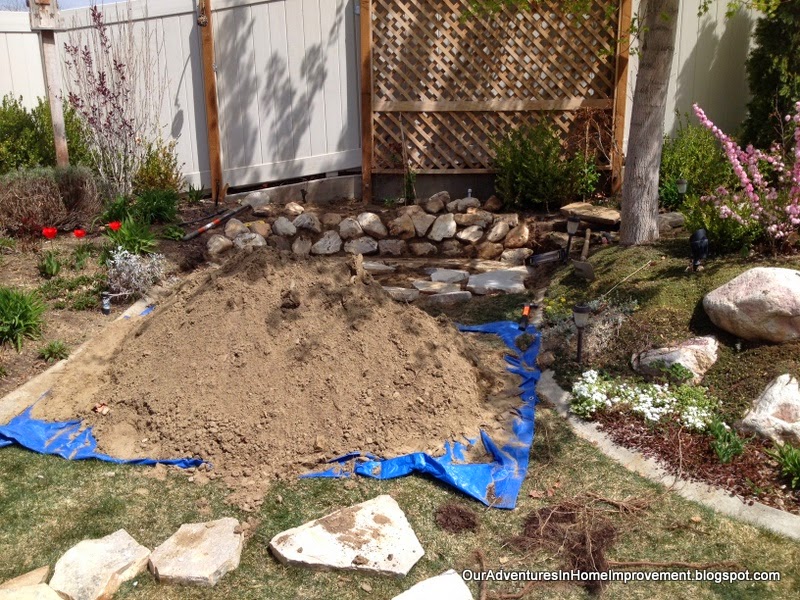
Piles of sandy earth remained on a blue tarp beside the work area as the first slabs went down. The couple reused some of that material to set the stones, reducing the amount that needed hauling away.
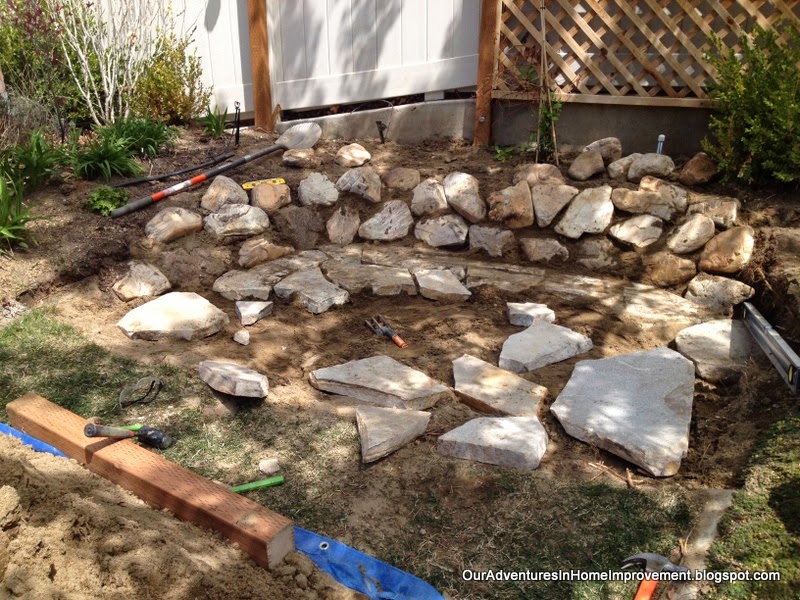
Irregular slabs formed the patio surface, with smaller pieces fitting between the broader ones. Even after that reuse, the surplus taken to the dump weighed almost 5,000 pounds, according to the project account.
Stone Steps Bridged the Remaining Change in Height
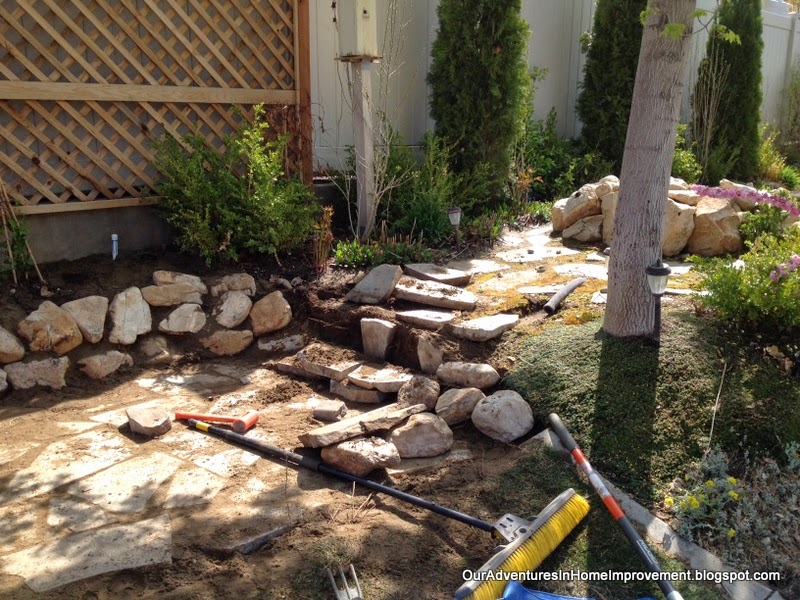
Lowering the seating area left a steep connection toward the pond, so the couple added stone steps beside the tree. Flat treads climb from the patio toward the higher path, with rounded rocks bordering the change in level.
Another visit to the stone yard brought about 500 pounds of additional material for the steps and other parts of the project. That brought the reported stone purchases to about 2,000 pounds across both loads.
Lattice and New Plants Framed the Empty Patio
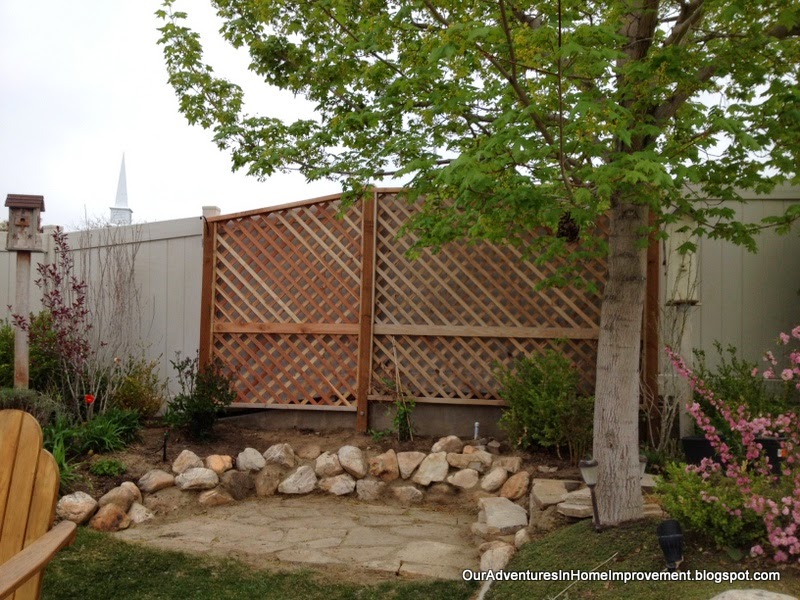
Before the chairs returned, the finished stone surface revealed the shape of the new seating area. Its curved rear wall enclosed the patio without separating it from the lawn across the front.
The couple added a lattice panel along with lilac, honeysuckle, daisies, and coneflowers. Those additions filled out the backdrop, while the existing tree extended its branches above the space.
The Same Chairs Returned on a Stone Surface
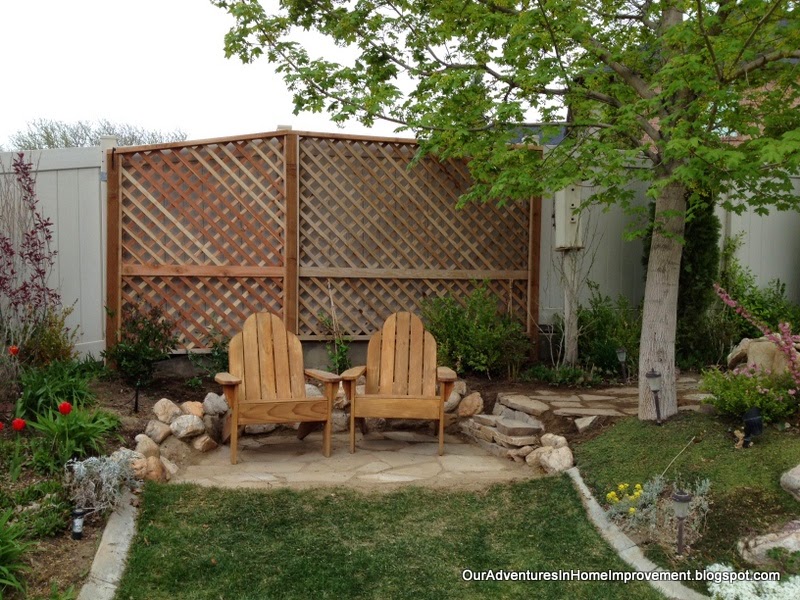
Both Adirondack chairs now sit side by side on the patio, with their feet supported by stone instead of the sloped lawn. The retaining edge runs behind them, while the steps provide a route up the right side.
Keeping the furniture makes the ground change stand out. The broad arms, curved backs, and wood finish remain, but the seats now occupy a defined recess within the garden.
The Wider View Shows Why They Chose This Corner
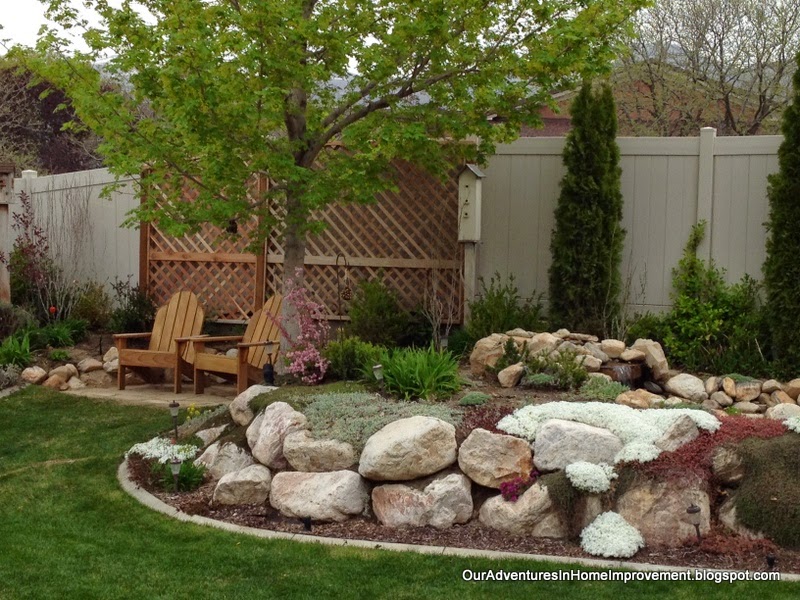
From across the lawn, the seating appears beside the established pond, where large boulders support trailing plants and water passes through a rock-lined waterfall. The patio uses the space behind that raised garden feature, beneath the tree canopy.
That position delivers the reason for the work: somewhere to sit in the shade within earshot of the water. Would you take on this much excavation for a level patio, or keep the chairs on the grass?
Project and image credit: Our Adventures in Home Improvement.