Few People Know What the Small Loop at the End of a Safety Pin Is For


Safety pins come out of the sewing kit when a hem drops, a zipper breaks, or fabric needs to stay in place. The sharp point and clasp have clear jobs, but the small loop at the opposite end gets less attention. That curl in the wire gives the pin its spring action, helping it open and return toward its resting shape.
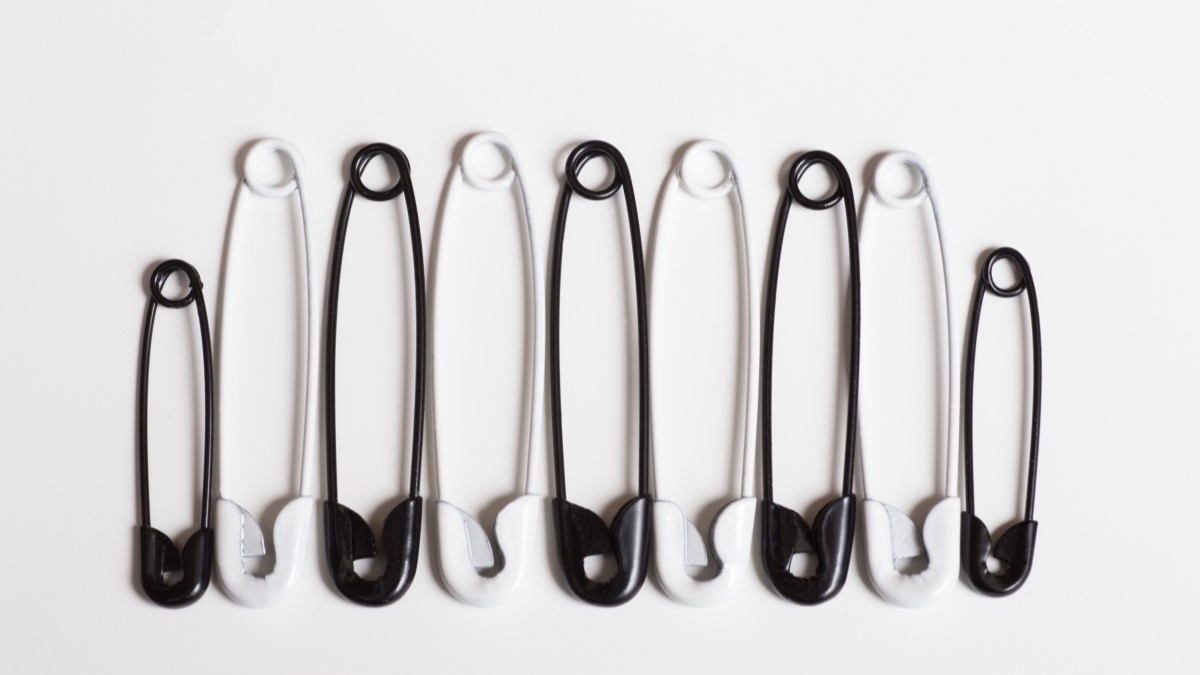
What the small loop does
Squeeze an open safety pin and the pointed arm moves toward the clasp. As you do, the coiled wire flexes and stores energy. Release your grip before fastening it, and the arm springs back.
The opening is the space inside that coil. Its purpose comes from the wire curved around it, which forms a spring within the pin itself.
Walter Hunt’s 1849 patent describes a pin made from one piece of wire that combines a spring with a clasp. The loop is part of that working design.
How the loop and clasp work together
Closing the pin means pressing the pointed arm inward and guiding its tip beneath the clasp. Once seated, the spring’s outward pressure helps hold the point against the catch.
The clasp covers the sharp end, while the coil supplies the spring action. Together, they let the pin fasten fabric without leaving its point exposed. The National Inventors Hall of Fame identifies both features as central to Hunt’s design.
Opening it reverses that movement: press the arm inward to clear the catch, then guide the point out.
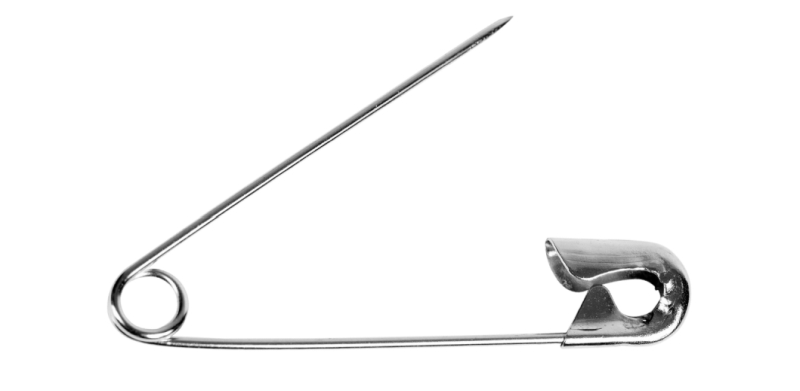
Why the opening is not a separate hidden feature
Calling it a “hole” can suggest that something is meant to pass through it. On a standard coiled safety pin, it is the open center of the spring.
Thread or ribbon can pass through that space for a craft project, but that extra use does not explain the coil’s role. Nor does the opening act as a separate device that regulates tension; the formed wire provides the resistance.
What to check when a pin stops holding
If the point no longer seats beneath the clasp, inspect the arm and catch for bends or damage. A distorted pin can leave its sharp end exposed or fail to hold the fabric.
Replace a damaged pin instead of bending it back and trusting it with another repair.
Next time you fasten one, watch the loop as you press the arm inward. The movement reveals what that small curl contributes: enough spring action to make a single piece of wire work as a reusable fastener.