They Bought a Blue-Painted 1930s Dresser and Stripped Off the Paint: The Wood Beneath Was Worth Saving


Bright turquoise paint covered this 1930s dresser, from its flat wooden top to the turned legs beneath the drawers. Chips along the edges exposed patches of wood, while ornate metal pulls remained attached to the blue fronts. What lay beneath the paint was far less certain.
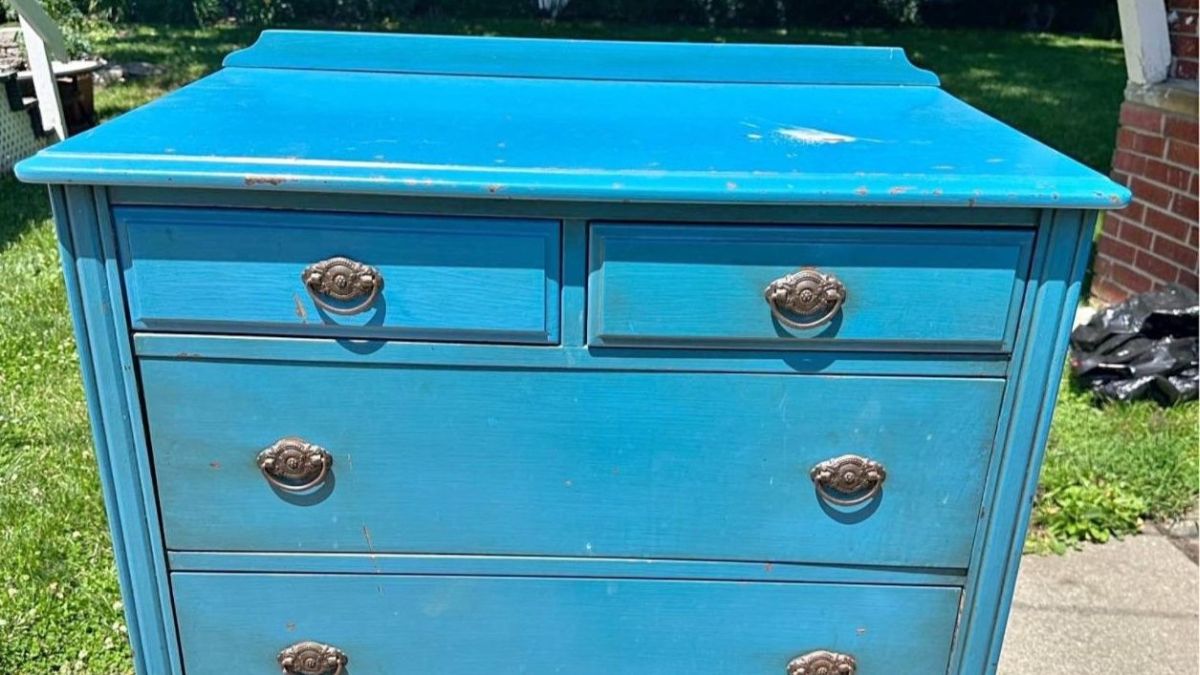
Reddit user u/themoondood bought the dresser believing it was solid walnut. A stamp reading “WAL” on the back seemed to support that description, but the first restoration attempt revealed a mix of woods beneath the finish.
The project grew from removing paint into taking apart sections of the cabinet. The restorer worked through stubborn coating, sanded the exposed wood, and chose walnut gel stain to bring the different surfaces closer in color. The finished dresser retained its original shape without the bright blue paint.
Turquoise Paint Covered the 1930s Dresser
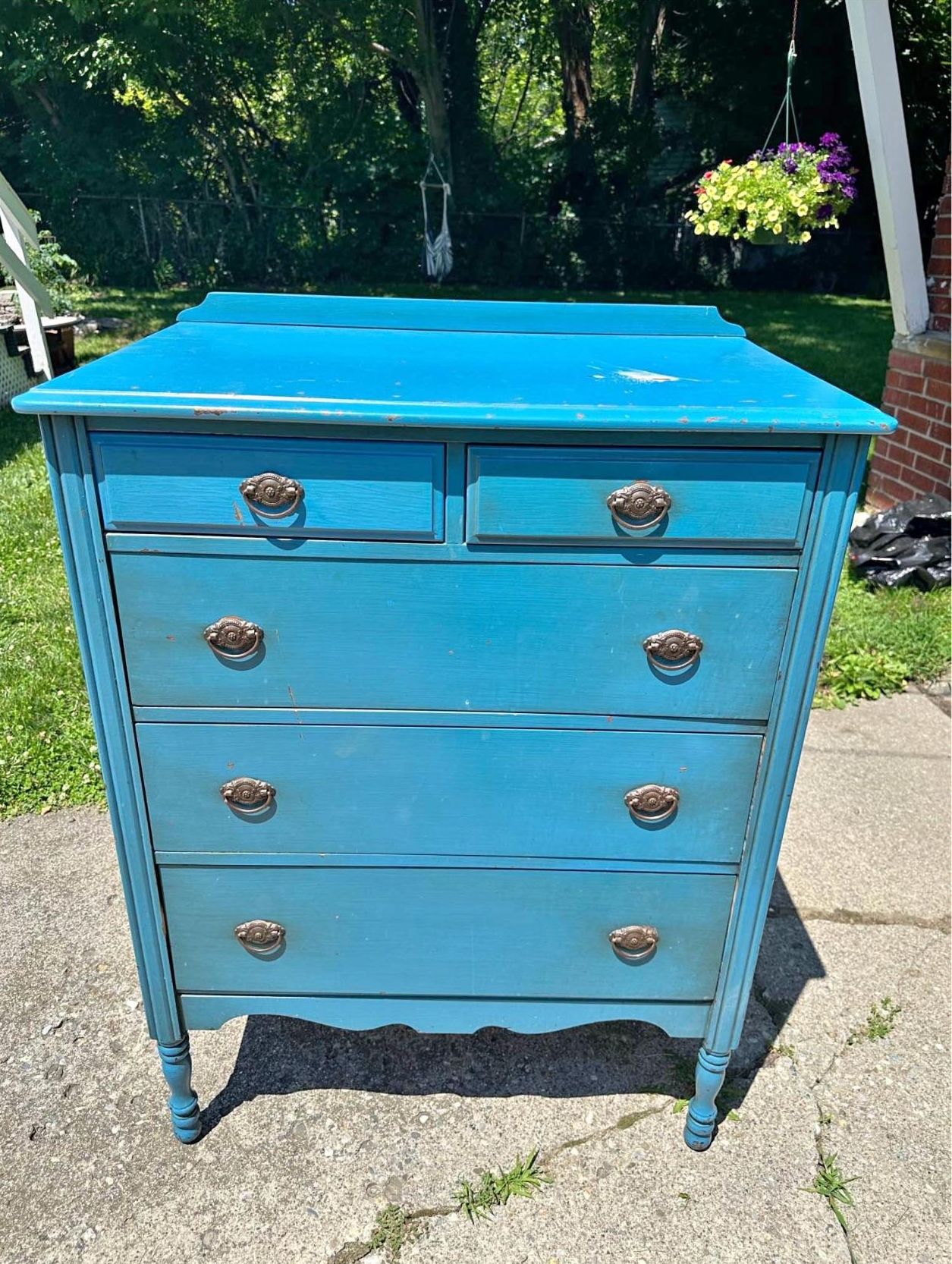
The original dresser had two small drawers above three wide drawers, ornate metal ring pulls, and a scalloped apron between its turned front legs. Turquoise paint covered the wood, with chips along the top edge and scratches across several drawer fronts.
Despite the worn coating, the drawer arrangement and decorative details remained intact.
Removing the Paint Led to More Work Than Expected
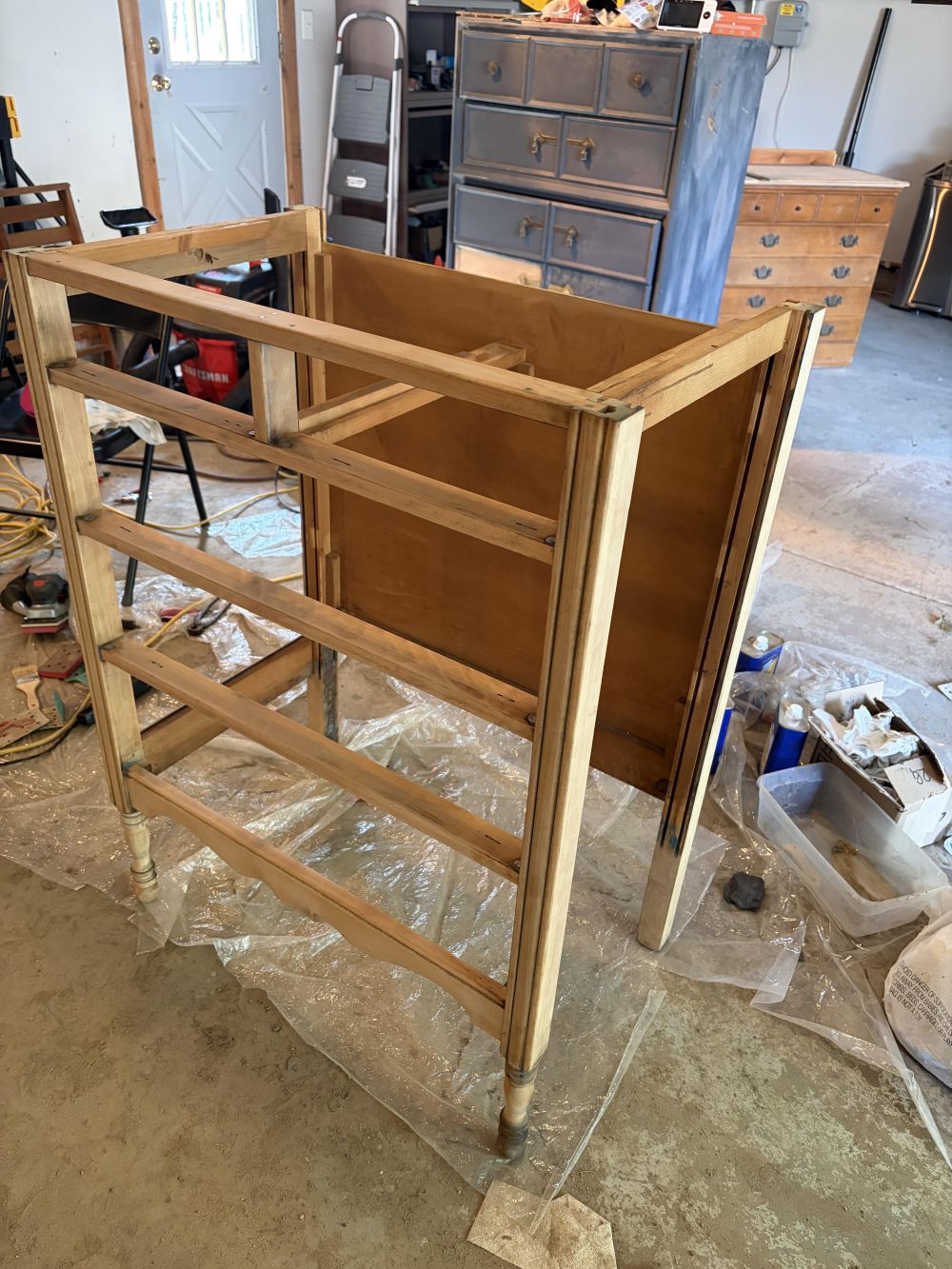
The restorer began with chemical paint stripper and sanding, switching between both methods when parts of the old finish resisted removal.
As the work continued, the drawers came out and the cabinet frame was exposed. One photograph shows the interior rails and back panel, while another shows two drawers returned to the stripped frame for a fit check.
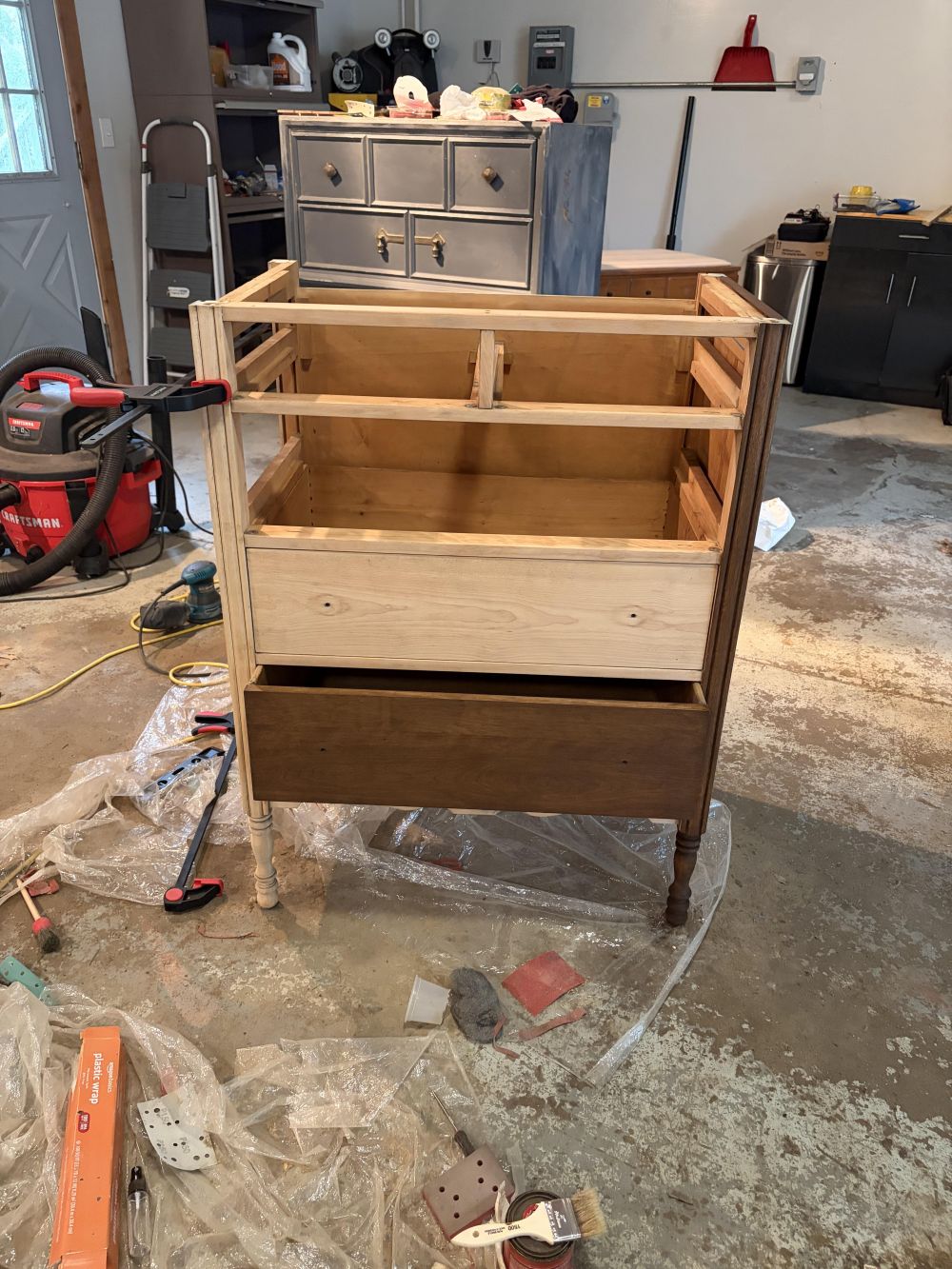
The creator had not planned to dismantle so much of the dresser. Removing the top, side panels, and drawer slides became a way to reach paint trapped in corners and along joints.
The Frame Was Taken Apart for Sanding and Staining
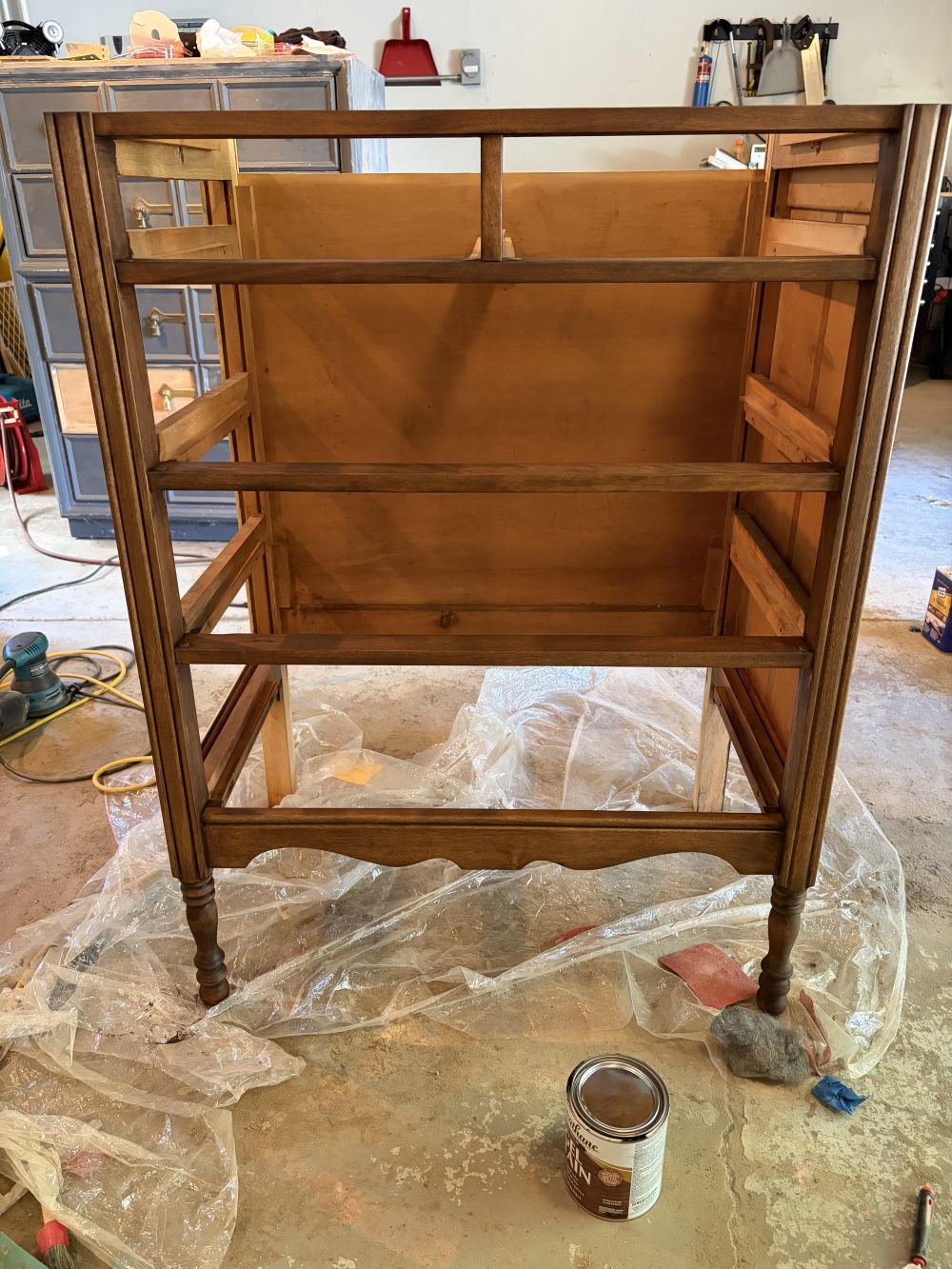
With the drawers removed, the narrow wooden rails, side panels, and curved lower apron were accessible. The frame received a darker brown finish, while the interior retained a lighter wood tone.
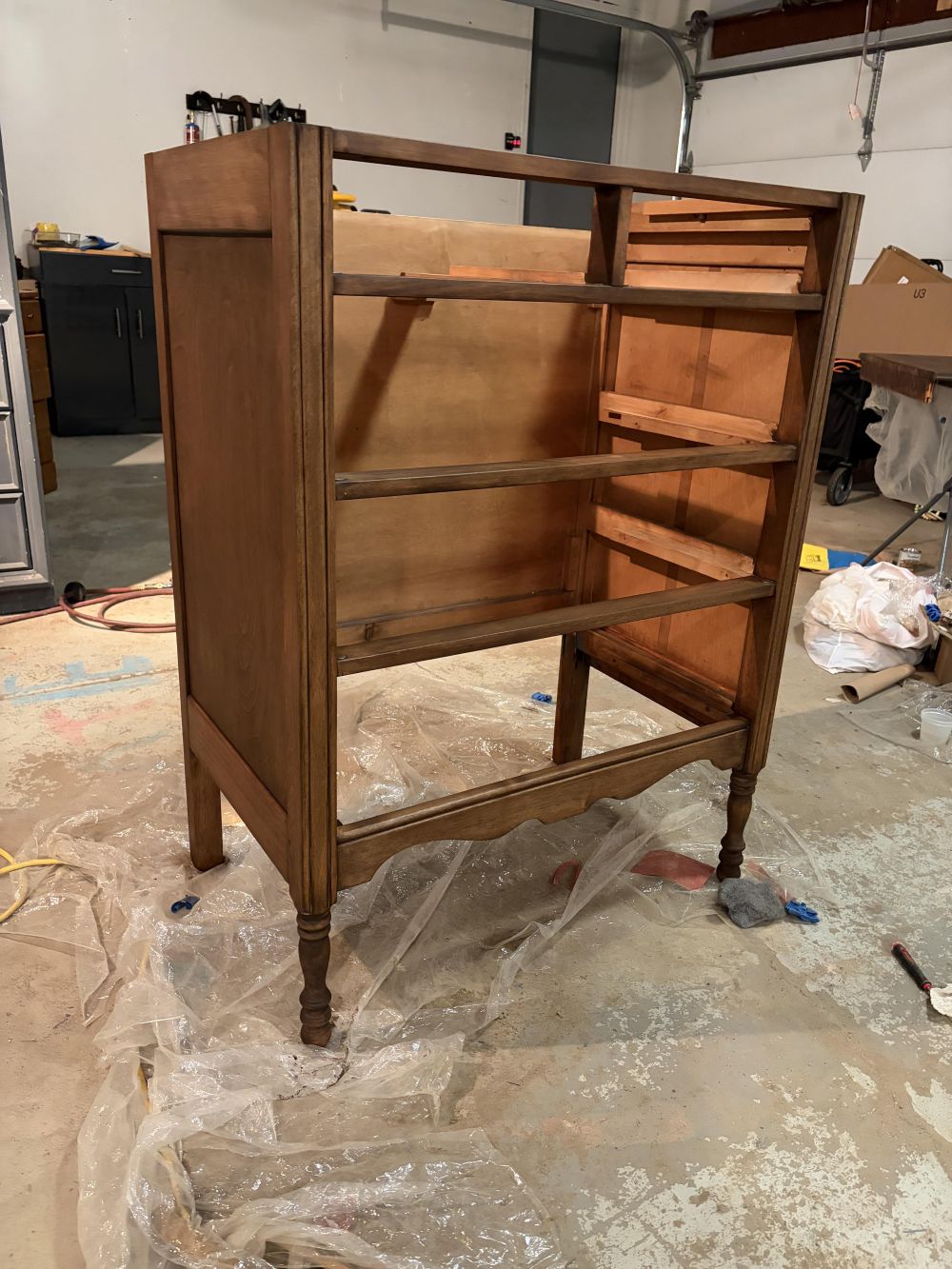
The restorer sanded most surfaces to 150 grit before applying wood conditioner. Since the cabinet contained more than one wood species, the conditioner and stain helped reduce differences between the pieces.
Walnut Stain Replaced the Blue Finish
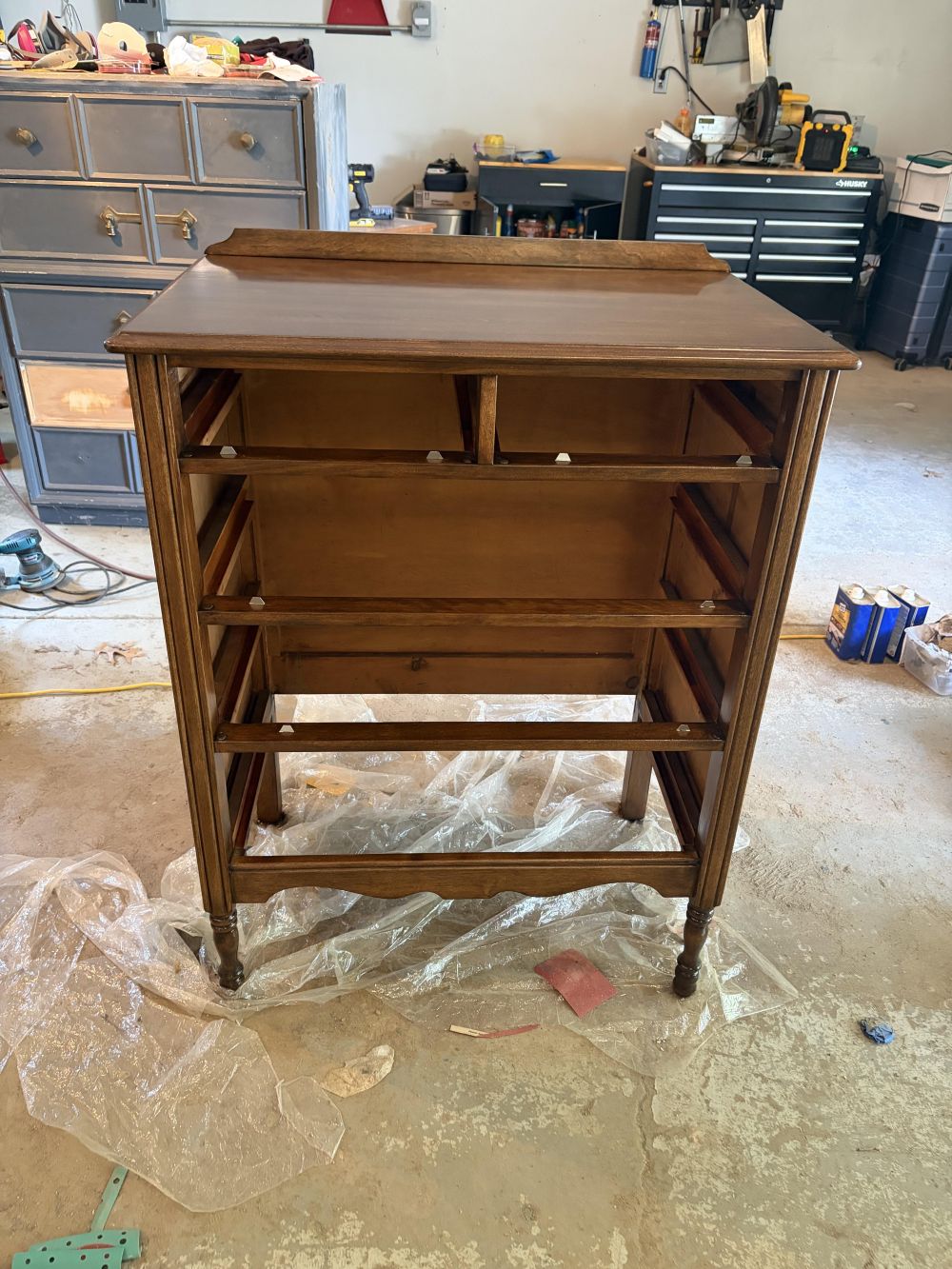
The reassembled dresser has a walnut-brown finish across the top, drawer fronts, and legs. Wood grain remains visible, with darker areas around knots and along the edges.
The restorer used walnut gel stain to blend the wood tones and conceal traces of old finish that could not be removed. Several coats of satin wipe-on polyurethane completed the surface.
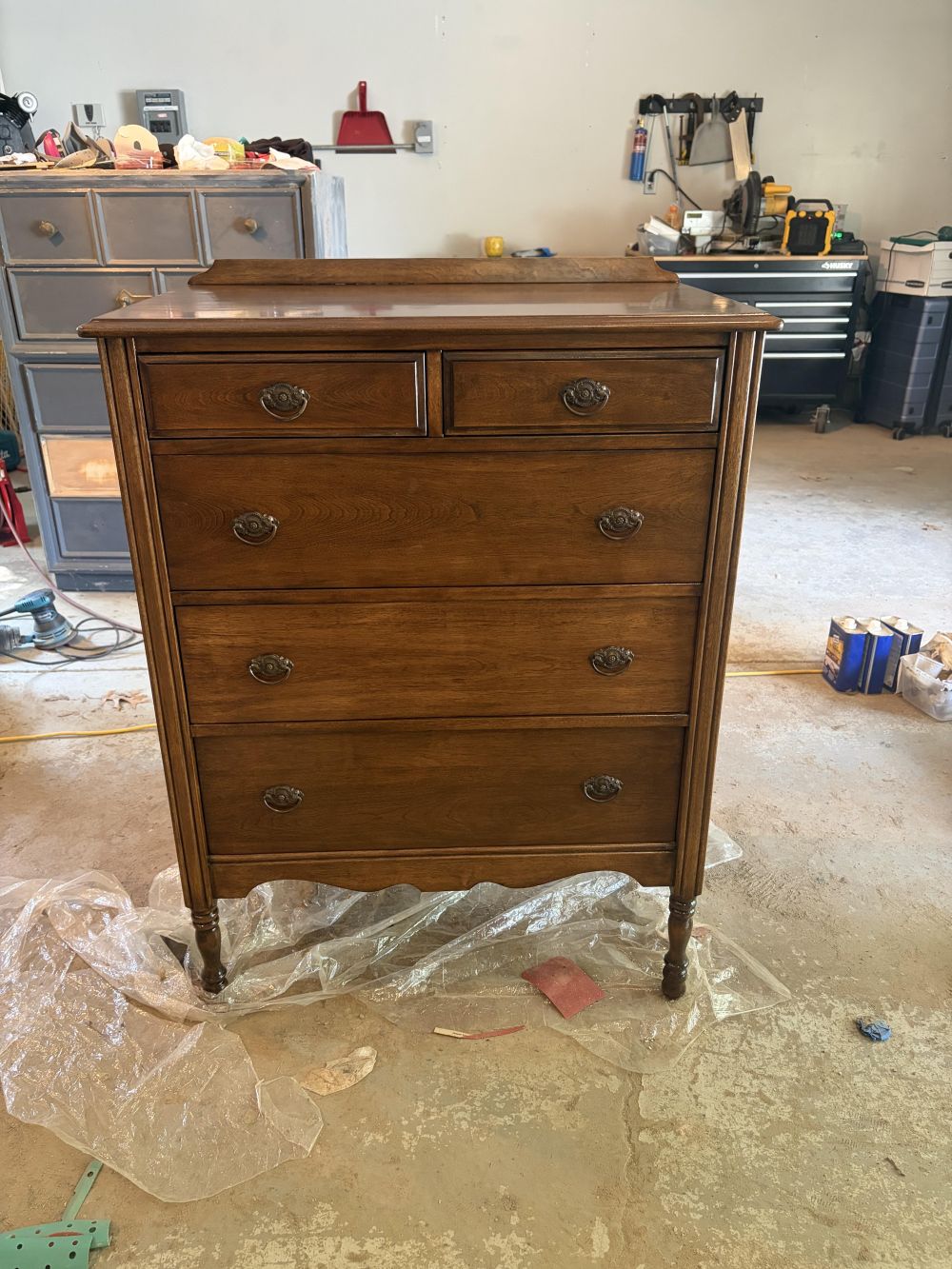
The finished front retains the original metal pulls, drawer arrangement, and curved apron. No new paint color was added over the wood.
The creator described this as a first restoration and acknowledged mistakes with materials and preparation along the way. Taking the dresser apart became part of learning how its frame and drawers were built.
The Blue Dresser Had More Wood to Offer Than Expected
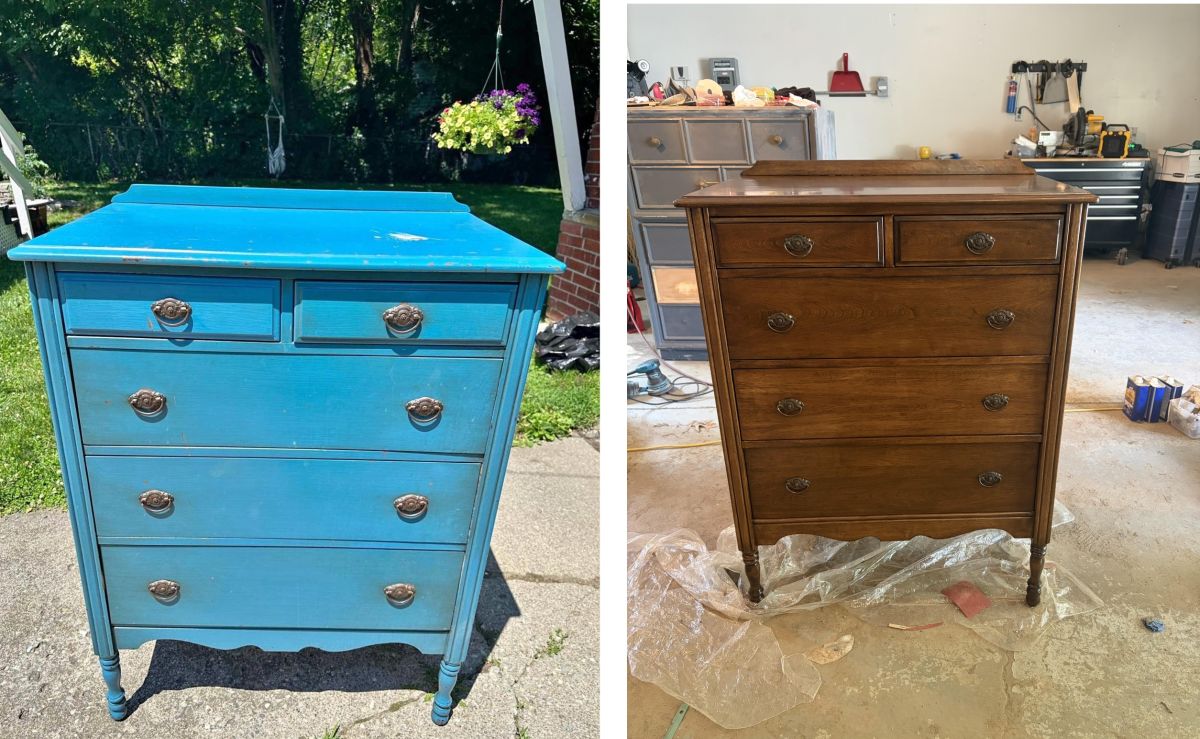
The before-and-after comparison shows the turquoise dresser beside the restored walnut-brown version. The same metal handles and turned legs remain, with the chipped blue coating gone.
The original “WAL” stamp did not mean the dresser was made from solid walnut. The restorer came to believe it referred to the former walnut-colored finish, making the final choice of stain a return to that appearance rather than a claim about the wood species.
Would you have kept the blue paint or restored the wood? I prefer the walnut finish, especially with the original metal pulls.
Project and photographs: Reddit user u/themoondood, First Attempt at a Restoration, r/furniturerestoration.