Farrow & Ball’s Drop Cloth Gives These Kitchen Cabinets the Warmth White Often Lacks

Kitchen cabinets can look white at first glance until the surrounding trim reveals the difference. Against white cornices and cream-toned counters, Farrow & Ball’s Drop Cloth shows its beige-gray depth, defining the framed doors and connecting the painted joinery to the oak floor.
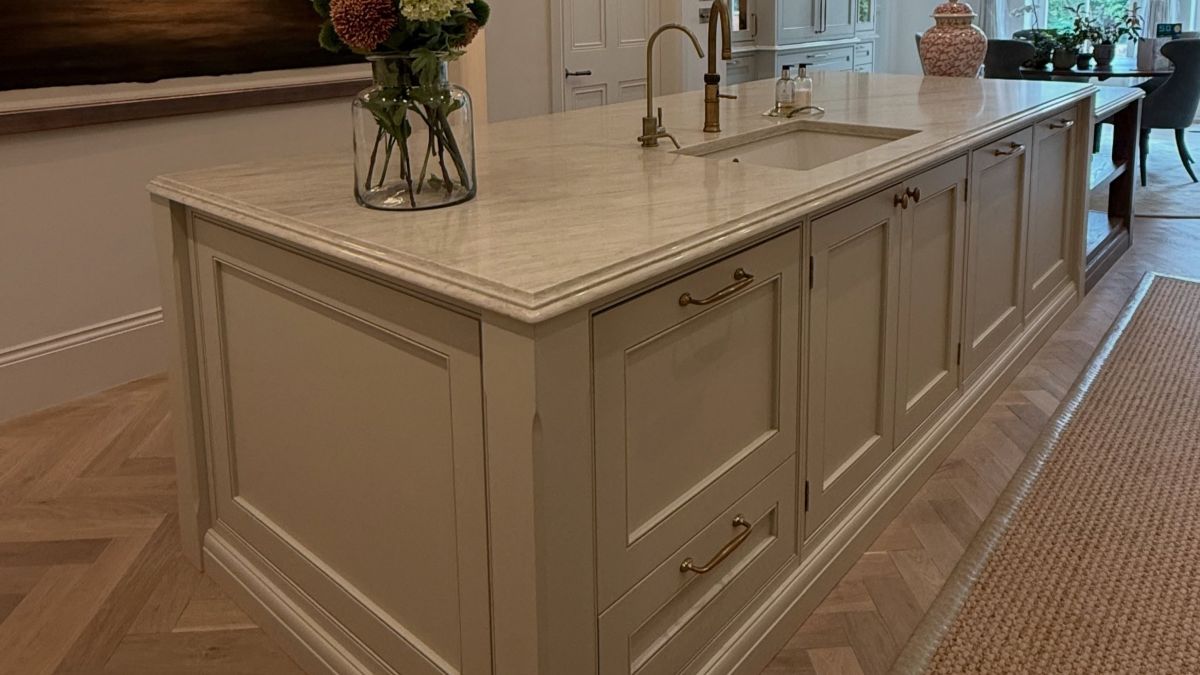
MB Carpentry Ltd installed the solid maple in-frame cabinetry during a major refurbishment in Jesmond, working with Bernard Interiors and Datum Build. Farrow & Ball’s paint covers the main cabinet faces, while oak shelving and interiors carry a rich Mink stain.
That contrast becomes more apparent as the photographs move through the kitchen. Painted panels surround the cooking area, a lower oak section changes the island’s profile, and closed doors within a display cabinet conceal another working counter.
Drop Cloth Gives the Cabinet Frames Definition
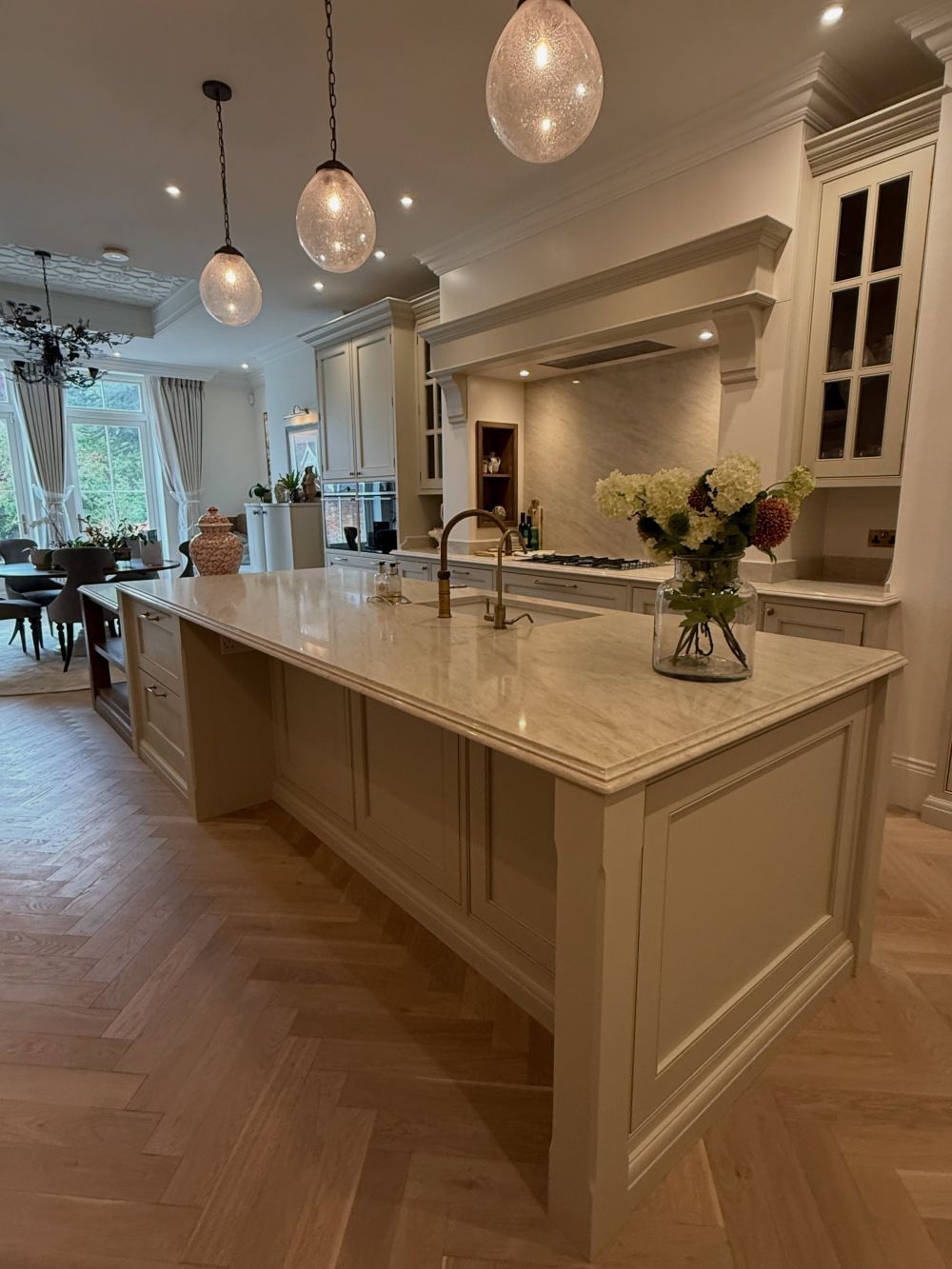
The island shows the paint across broad end panels, narrow frames, and recessed doors. Shadows outline the joinery, while the muted color keeps those details visible beside the pale worktop.
Above the hob, white walls meet a Drop Cloth mantel shelf and matching corbels. The distinction lets the cooking surround stand out without introducing a dark painted feature into the room.
Warm Metal Connects the Painted Doors to the Oak Floor
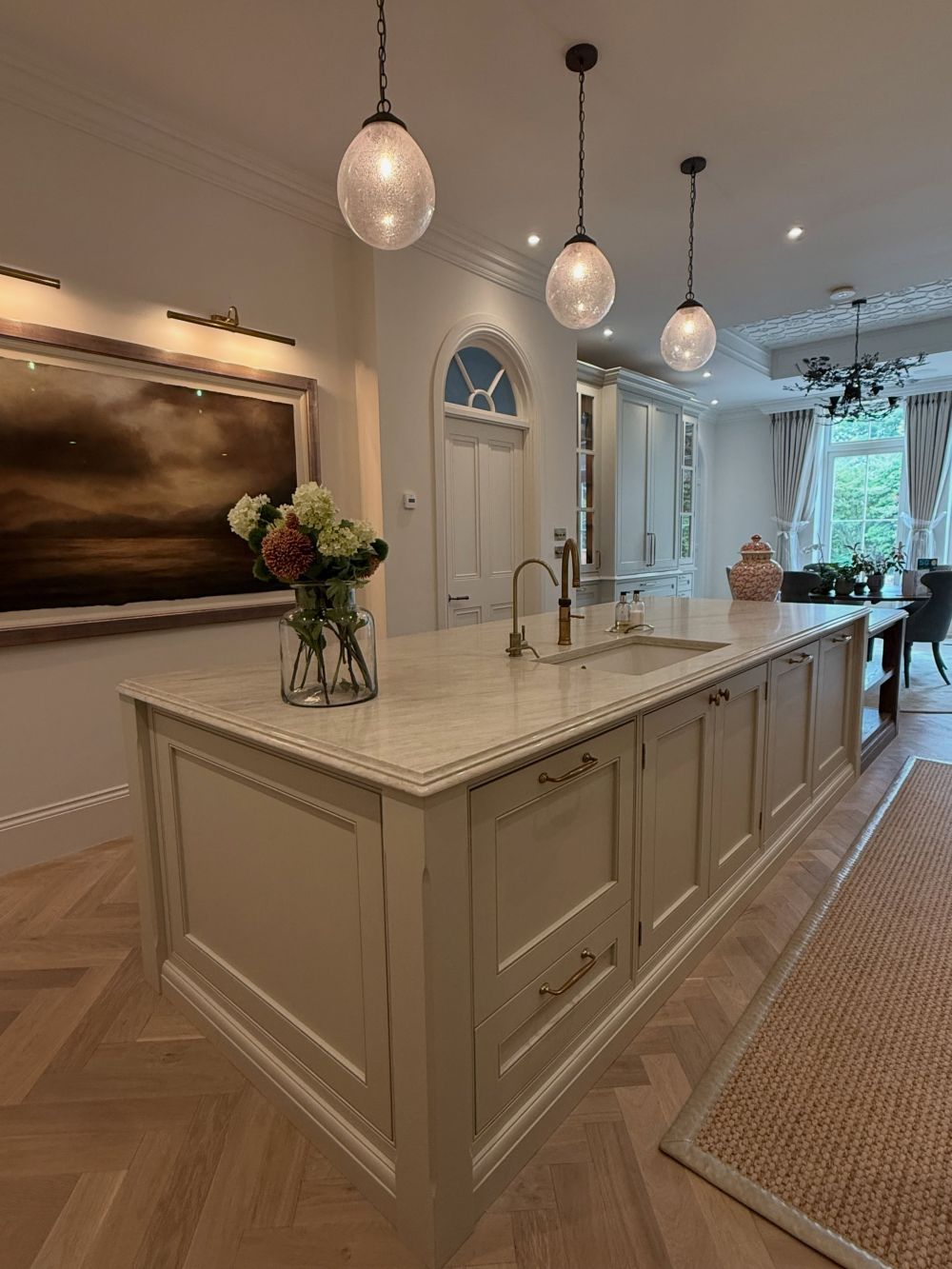
Long brass-toned handles cross the island drawers, picking up the warmer notes of the herringbone flooring. Against Drop Cloth, the metal reads as part of the room’s palette rather than a sharp accent.
The large Belfast sink sits within the higher work surface, accompanied by Quooker and Kangen taps. Paneled fronts continue beneath it, keeping the cleanup side consistent with the surrounding cabinetry.
A Lower Oak Section Changes the Island’s Character
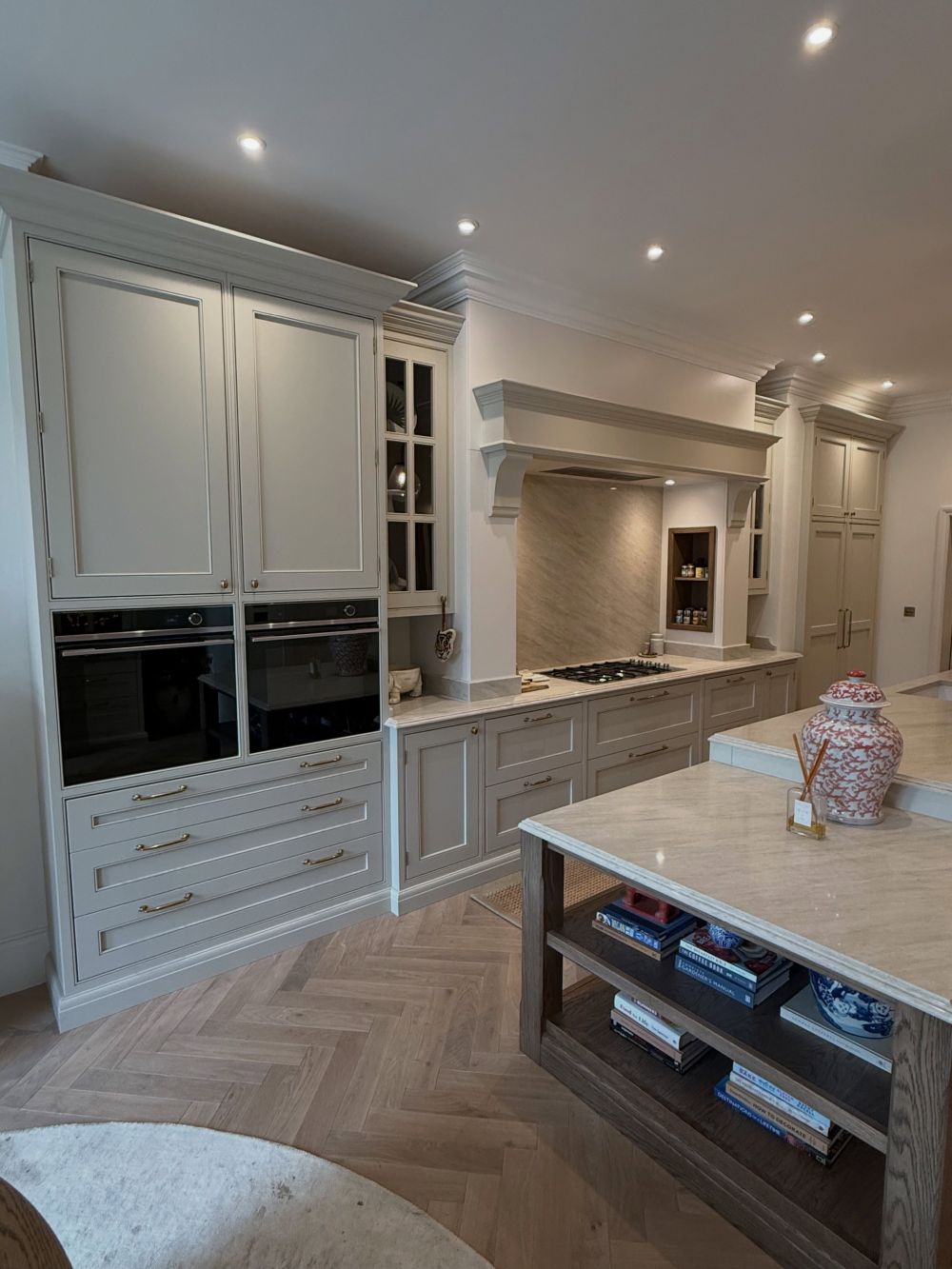
At the far end, the countertop steps down onto a stained oak section with open shelves. Books and ceramics occupy the recesses, giving this part of the island a display role beside the dining area.
The change in height separates it from the sink and prep surface. Its exposed grain also introduces a darker material at the center of the room, where painted cabinetry might otherwise dominate the view.
The Cooking Surround Holds a Small Oak Recess
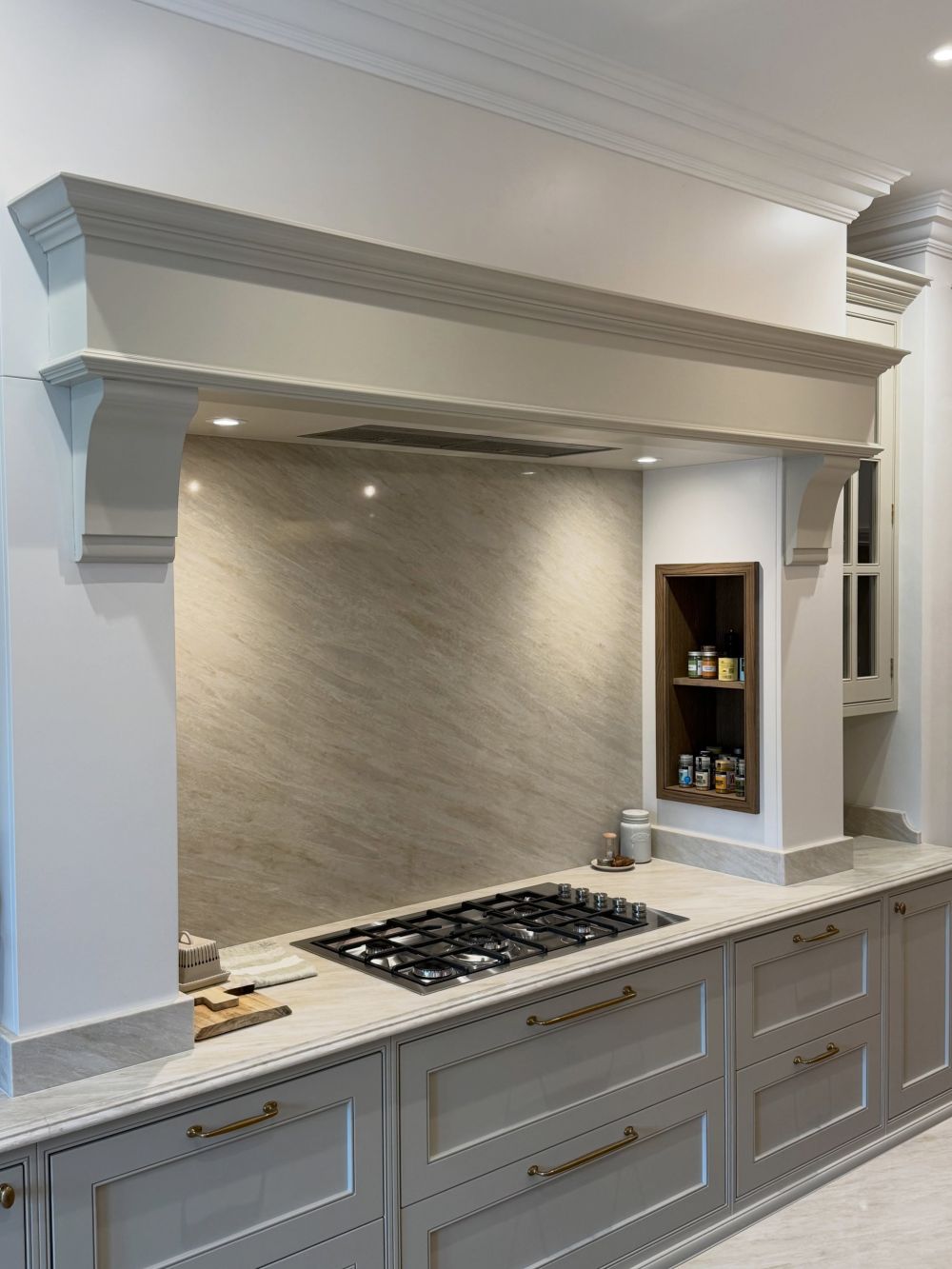
An oak-lined niche sits inside one side of the hob surround, with two shelves holding spice jars close to the cooking surface. Its dark interior creates a small break in the pale wall, framed by timber that connects to the island’s open shelving.
Across the back, veining runs through a broad slab beneath the concealed extractor. Drop Cloth outlines the shelf above it and the drawers below, giving the stone a defined setting.
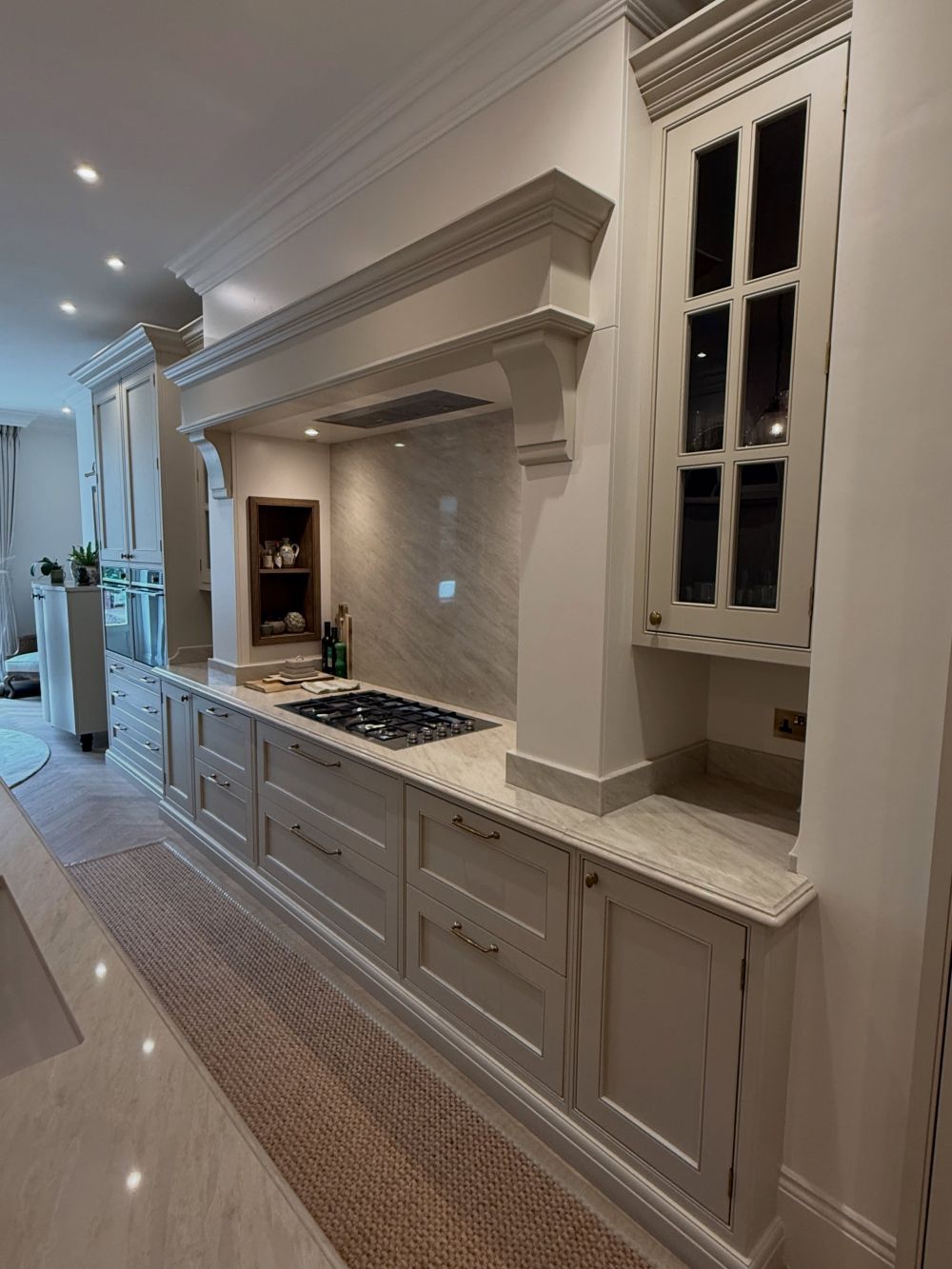
From the side, the counter continues beyond the surround into another cabinet bay. Narrow glazed cupboards flank the cooking area, adding vertical divisions above the long drawer runs. Double ovens occupy a separate bank of cabinetry farther along the wall.
Matching Panels Bring the Fridge and Freezer Into the Room
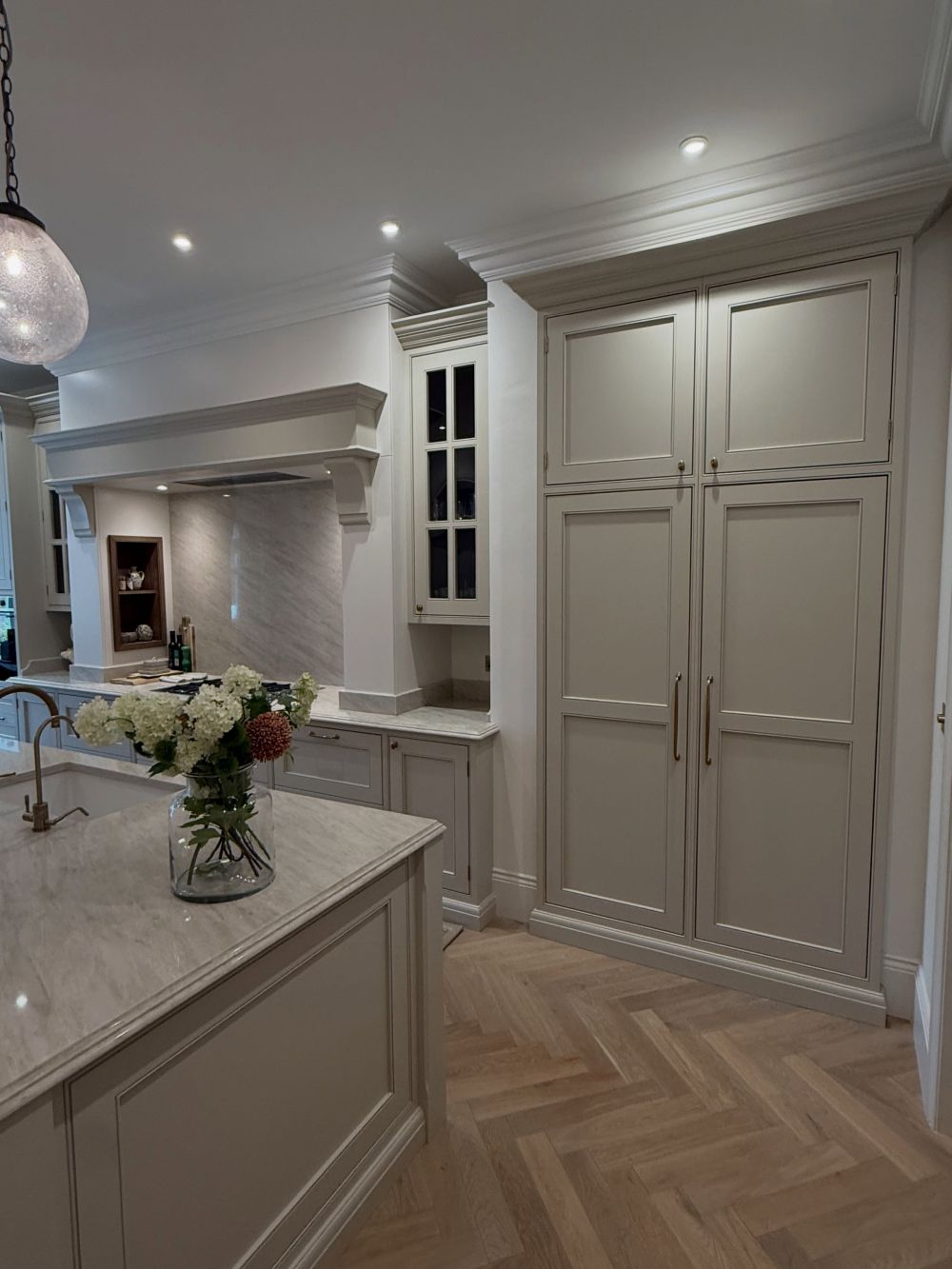
Full-height Fisher & Paykel refrigeration sits behind doors finished to match the rest of the kitchen. Smaller cupboards above, a molded crown, and a continuous plinth give the appliance bank the appearance of fitted joinery.
Here, the broad painted surfaces make the color easier to read against the white ceiling trim. Drop Cloth provides a muted transition between that trim and the warm wood underfoot.
A Display Dresser Has More Behind Its Center Doors
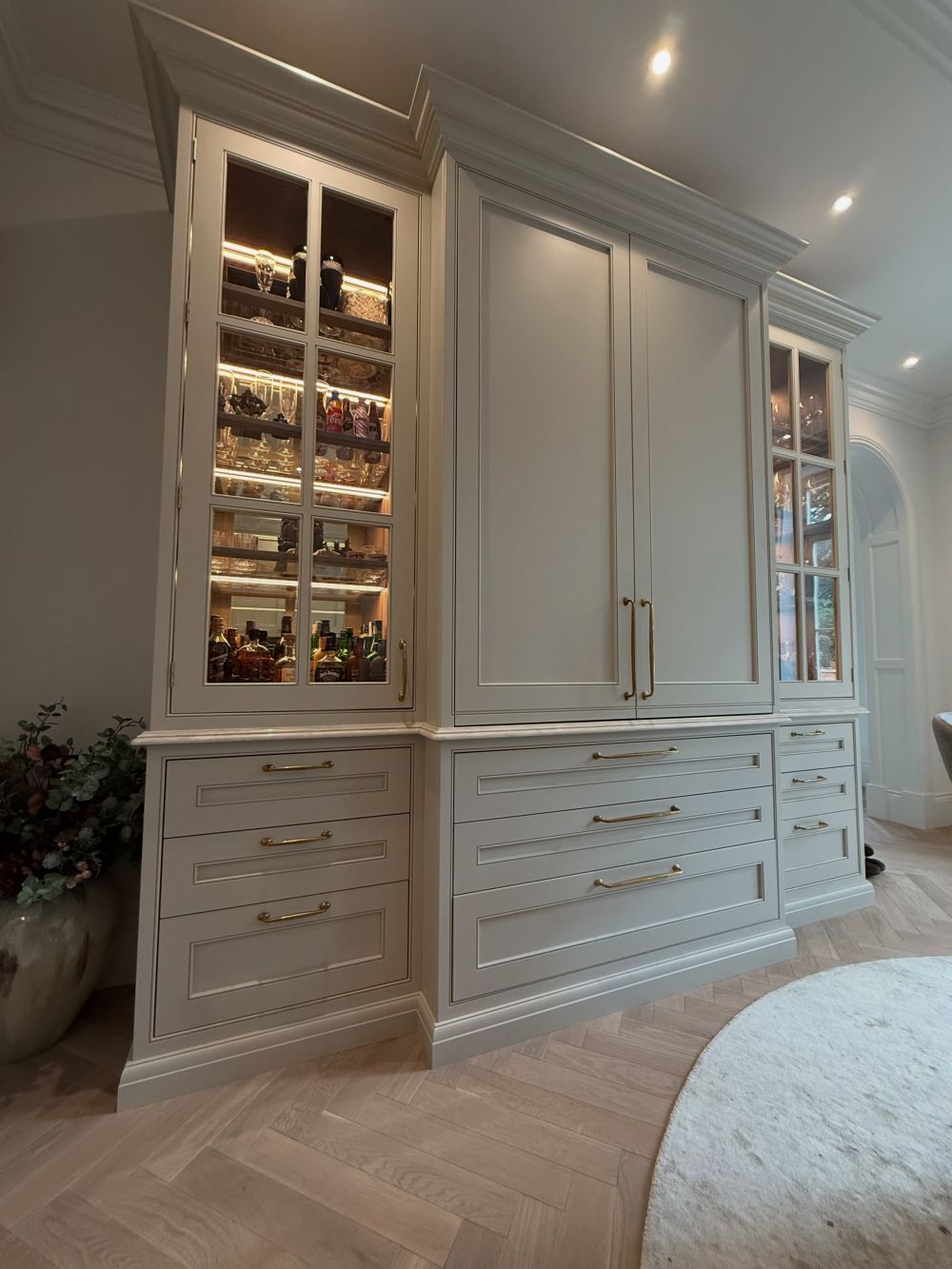
Illuminated glass cabinets hold stemware, bottles, and serving pieces on either side of a closed central cupboard. Matching paint, drawer fronts, and handles make the entire unit read as one dresser.
The solid doors interrupt the display with a quieter surface, giving little indication of the equipment behind them.
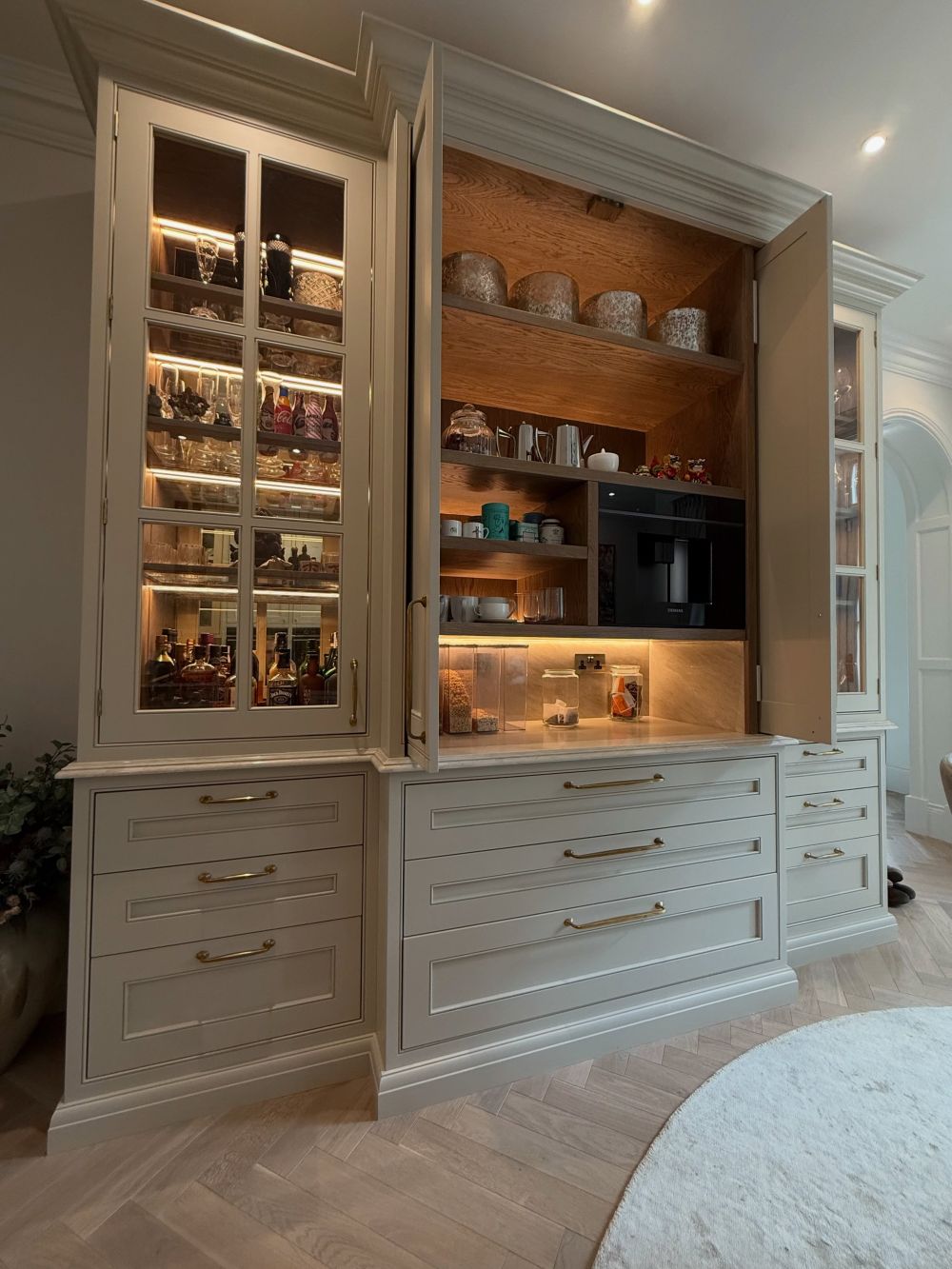
Opening those doors exposes an oak-lined breakfast station with a built-in coffee machine, shelves for cups and canisters, and a counter beneath. Lighting reveals the grain inside, bringing a warmer tone into a unit whose exterior matches the kitchen.
The doors let the owners conceal the breakfast equipment while leaving the glass-fronted collections on view.
The Pantry Extends the Palette Into a Separate Workspace
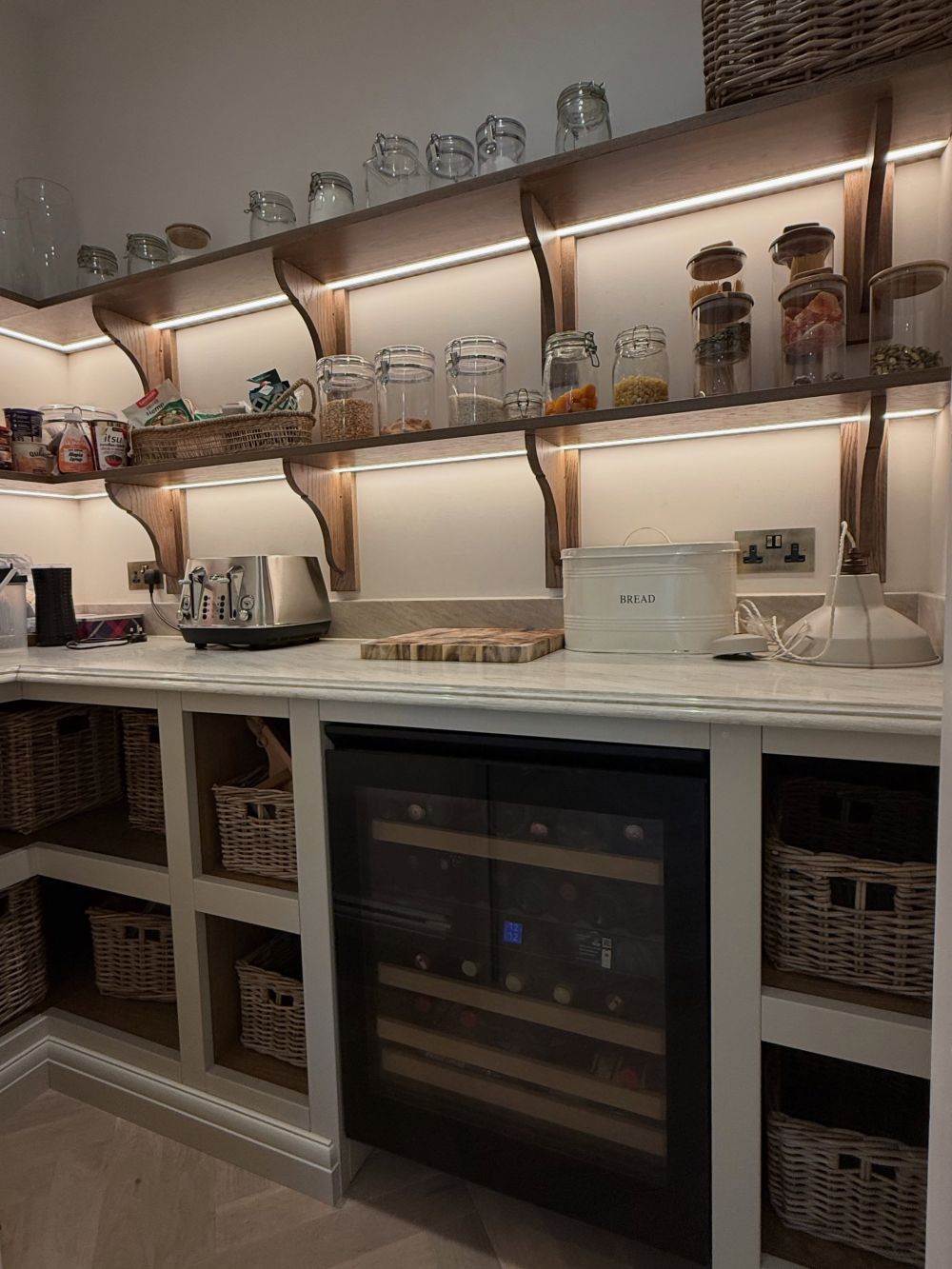
Oak shelves with curved brackets wrap around the pantry, with integrated lighting falling across jars and the counter below. Wicker baskets occupy open compartments around a wine cooler, replacing closed upper cabinets with storage that can be seen at a glance.
A toaster and chopping board give the counter a prep function alongside ingredient storage. Painted base frames connect this room to the main kitchen, while the shelves make stained oak the dominant detail.
Would you choose Drop Cloth for kitchen cabinets, or keep white and bring warmth through wood and hardware?
Image credit: MB Carpentry Ltd.