They Painted the Dark Cabinets Navajo White but Made the Island Black: Even the Old Granite Looks Different

Dark reddish-brown cabinets filled this kitchen from one end to the other, covering both walls, the refrigerator surround, and the large island in the center. Even the ceiling canopy above the stainless range hood matched the cabinetry, leaving little separation between the individual features.
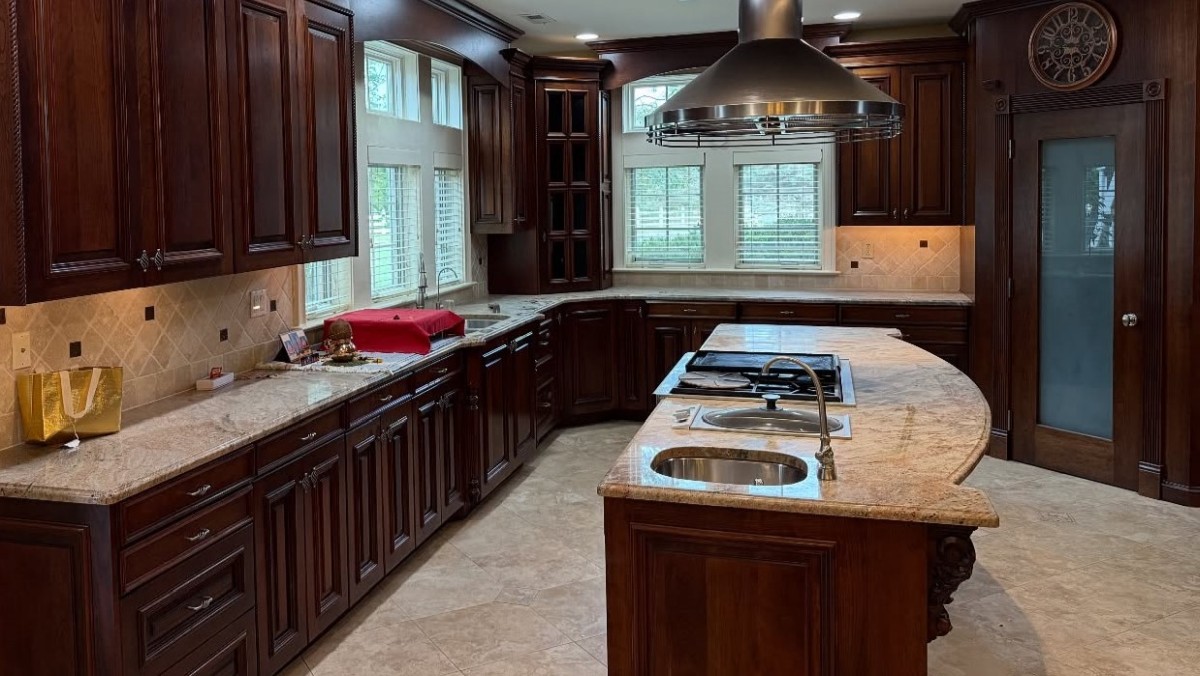
The kitchen already had granite countertops, carved cabinet details, glass-front storage, and an island with a built-in cooktop and sink. Replacing that cabinetry would have meant removing substantial woodwork designed around the room’s windows, appliances, and architectural openings.
Instagram creators from “Pezzotti Painting” took a different approach, refinishing the perimeter cabinets in Sherwin-Williams Navajo White and painting the island Tricorn Black. The granite, beige tile flooring, backsplash, and original cabinet arrangement remained, but the contrast between the two paint colors changed the room’s appearance.
Dark Wood Cabinets Dominated Both Sides of the Kitchen
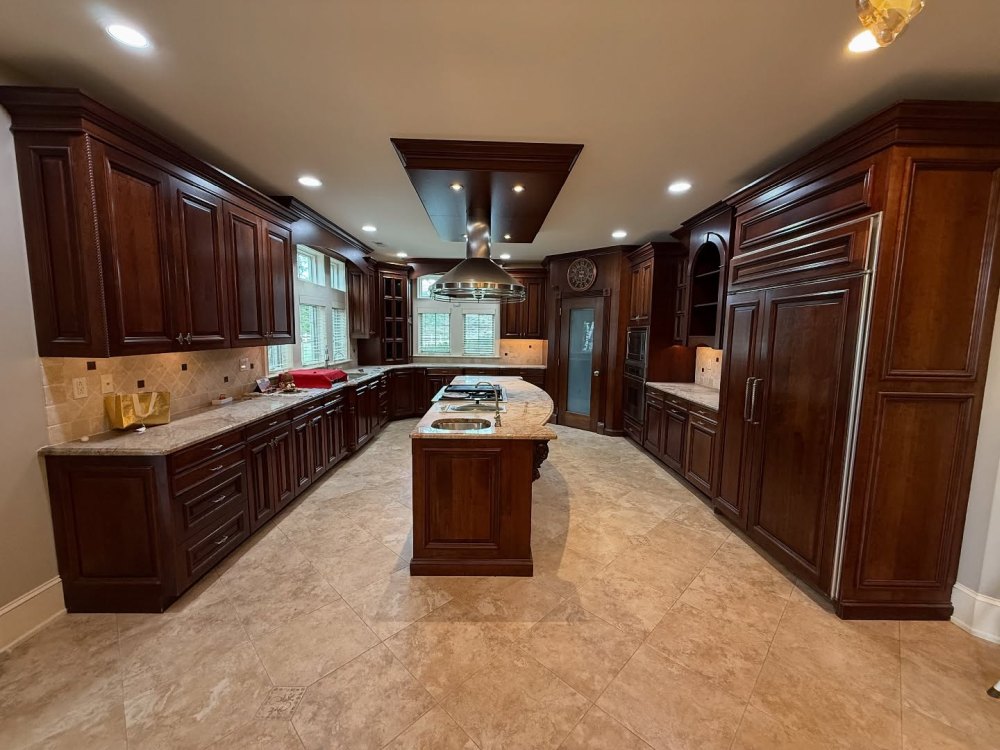
The original kitchen had two long walls of reddish-brown cabinetry, with tall refrigerator panels on one side and rows of upper and lower cabinets opposite them. Thick crown molding continued above the doors, while the same wood finish covered the central island.
Beige stone-look floor tiles and speckled granite countertops provided lighter surfaces, but the dark cabinets occupied most of the room’s vertical space. Even with several windows and recessed ceiling lights, the cabinetry remained the dominant feature.
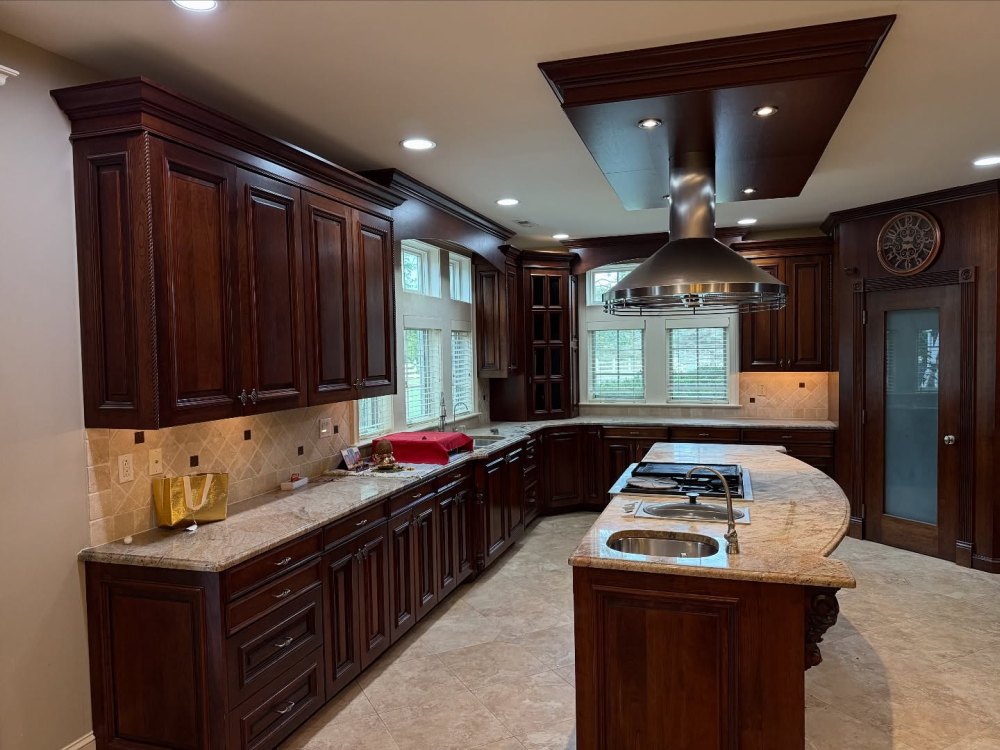
The island was more than a preparation counter. It contained a gas cooktop, a small sink, and a curved granite worktop extending toward the back of the kitchen.
Above it, a stainless range hood descended from a large wood-trimmed ceiling canopy. The original dark finish connected the island with the canopy overhead, making the cooking area appear enclosed by matching wood surfaces.
The Original Woodwork Had Details Worth Keeping
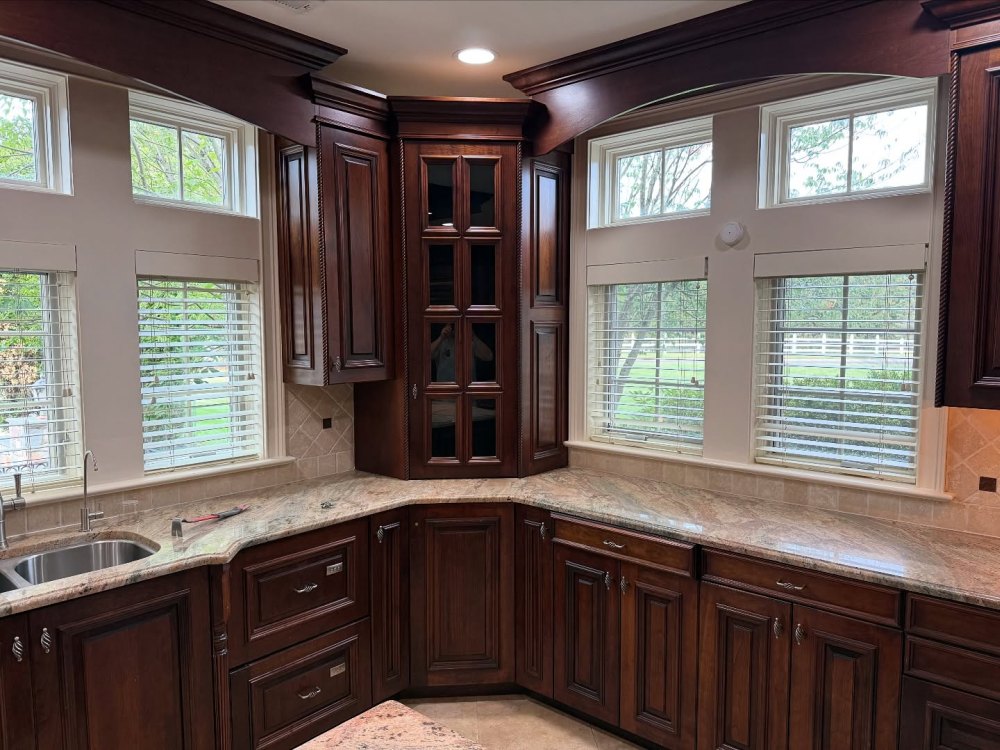
Two sets of tall windows meet at a corner occupied by a glass-front cabinet with divided panes. Narrow rope-style molding frames the surrounding cabinets, while broad wood valances run above the windows.
These details were built into the existing cabinetry. The corner cabinet follows the angled countertop below, and the trim continues across the adjacent storage units. Painting the woodwork offered a way to change its appearance without removing those fitted pieces.
Dark Cabinets Extended Beyond the Main Kitchen
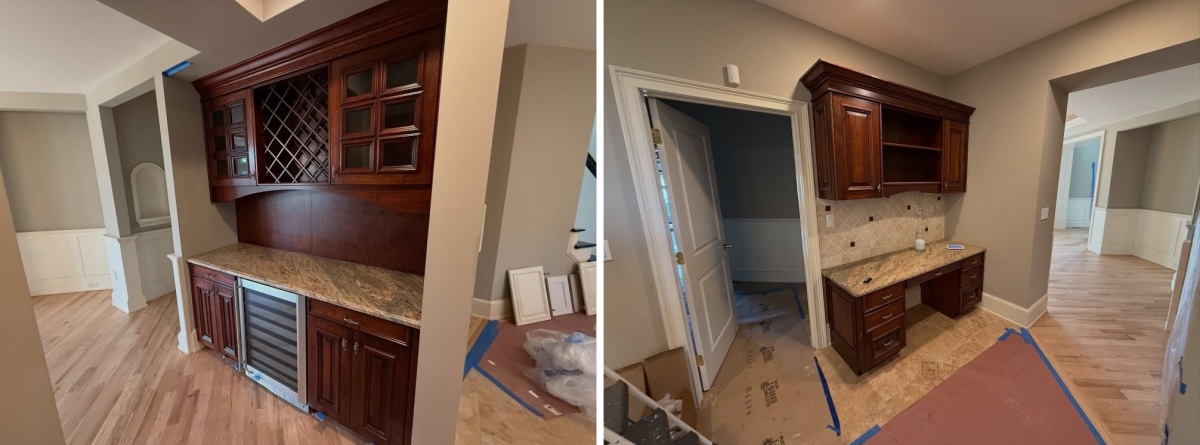
The same wood finish appeared in two adjoining built-ins. One held a beverage refrigerator beneath a granite counter, with a diamond wine rack and glass-front cupboards above it. The other served as a desk, with drawers on either side of an open seating space.
Leaving those cabinets dark would have preserved large sections of the original color outside the cooking area. Both were included in the painting project, connecting the adjoining spaces with the new kitchen finish.
The Cabinet Frames Were Painted Without Removing the Countertops
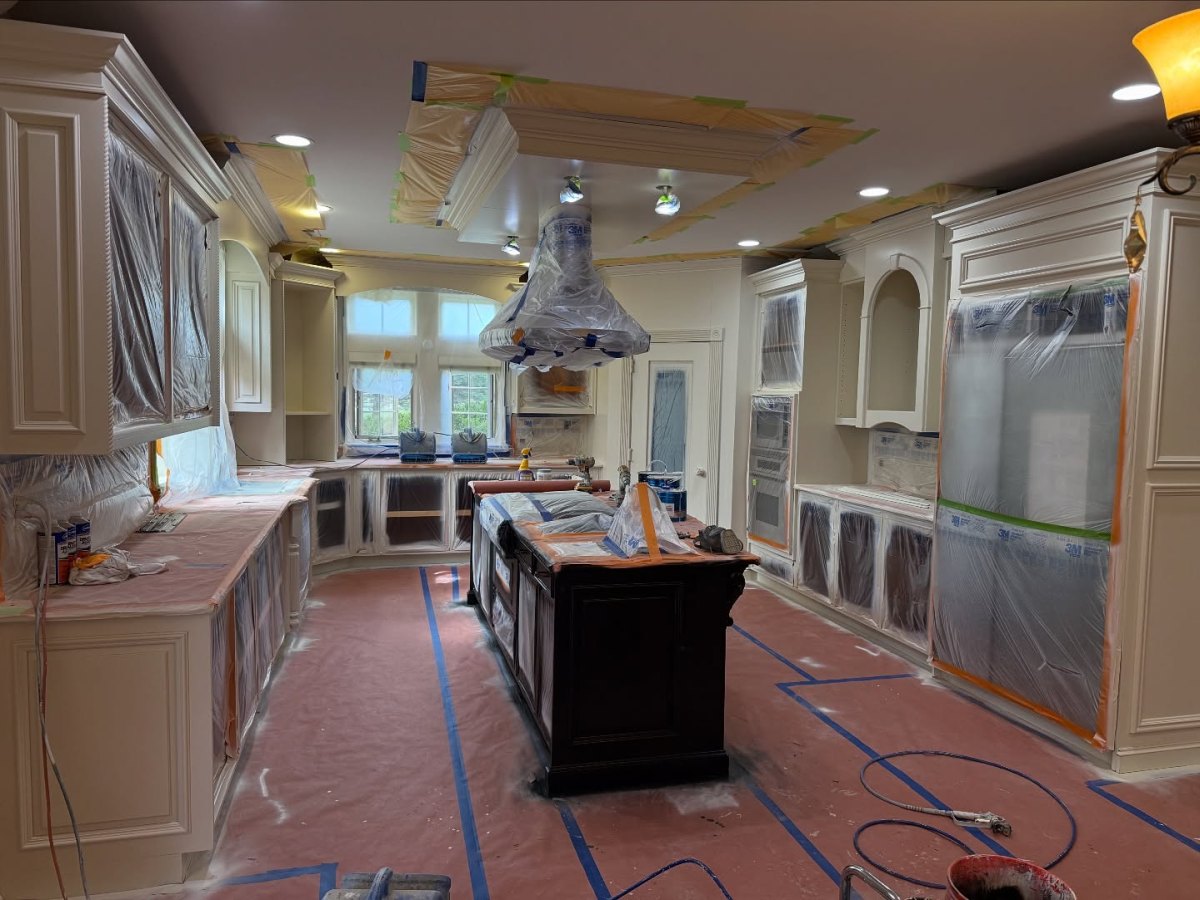
The work-in-progress photo shows Navajo White across the perimeter cabinets while the island remains dark. Plastic covers the appliances, cabinet openings, and range hood, with protective paper and tape extending across the floor.
The wood-trimmed ceiling canopy was also masked and refinished to match the lighter perimeter cabinets. This removed one of the largest dark surfaces above the island without changing the stainless hood suspended beneath it.
Pezzotti Painting used Renner Wood Coatings 851, a two-component polyurethane finish with a 10-sheen level, tinted to the selected Sherwin-Williams colors.
Navajo White Changed the Walls Without Changing the Kitchen Layout
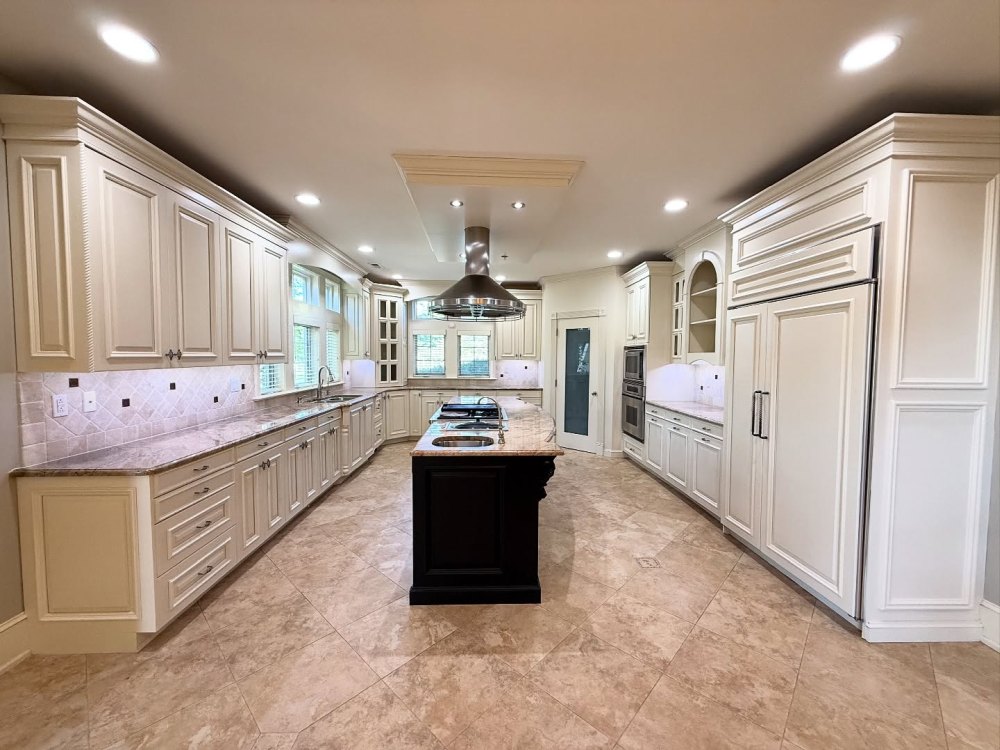
With the perimeter cabinets painted Navajo White, the two long walls no longer read as continuous dark wood. Individual doors, drawers, and tall cabinet sections are separated by their recessed panels and decorative trim.
The refrigerator surround on the right now matches the cabinets on the opposite wall. The granite countertops, beige floor tiles, and stainless range hood remain, giving the finished kitchen much of its original material palette.
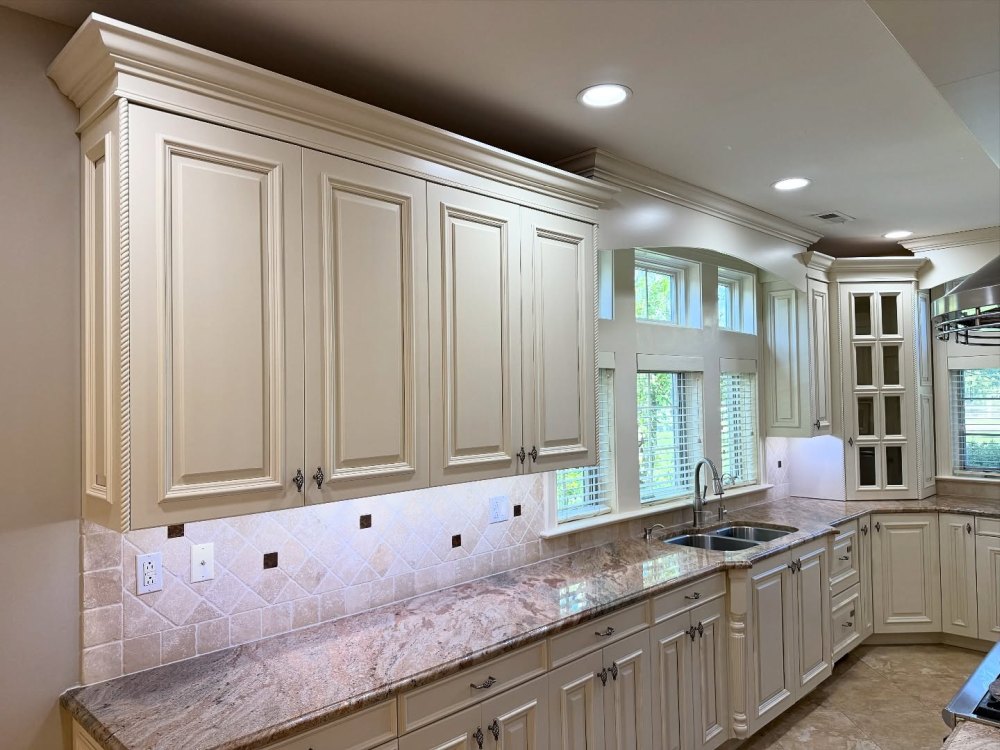
The sink wall shows how the warm off-white paint works with the existing finishes. Navajo White has enough warmth to sit beside the beige tile backsplash and brown-gray granite without introducing a stark white contrast.
Raised-panel doors, carved corner trim, and crown molding stand out against the painted surfaces. None of those details required replacement to become more visible.
The Glass-Front Corner Cabinet Became a Different Feature
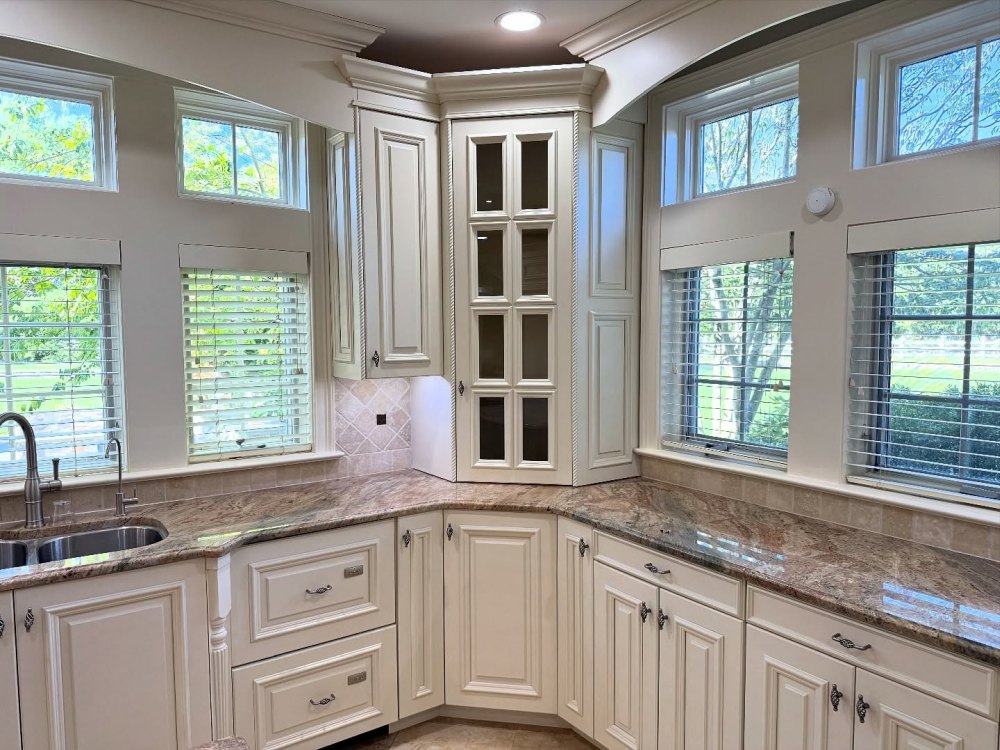
The corner cabinet between the windows retains its original divided glass doors, narrow side cabinets, and angled base storage. Navajo White now covers the framing, decorative trim, and adjoining cabinetry.
The original dark finish had made the corner cabinet blend into the surrounding woodwork. Against the lighter finish, the glass panes and individual cabinet profiles become distinct features.
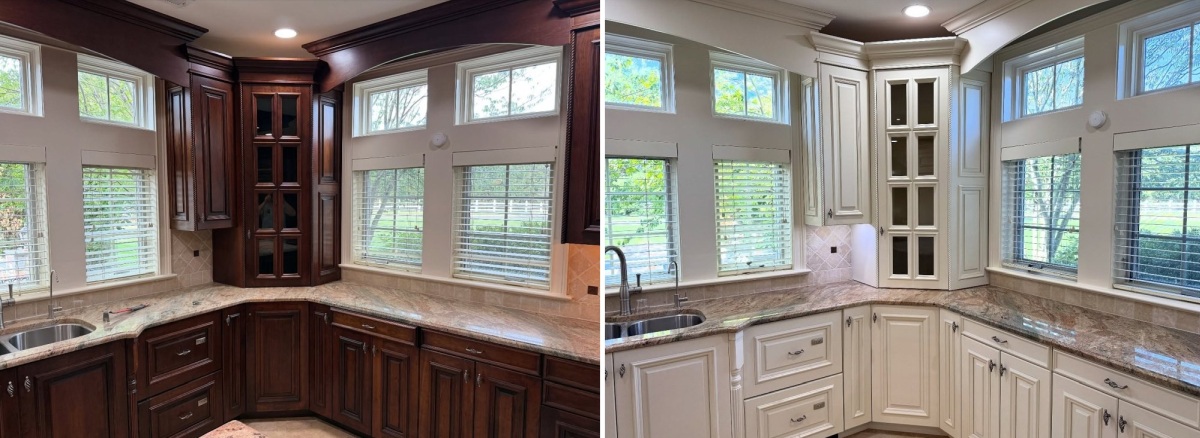
The before-and-after comparison also reveals the change above the windows. Dark wood valances once connected the upper cabinets across both walls. After painting, those same pieces match the window trim and adjoining cabinetry, removing the heavy brown border from the top of the room.
The Island Became Tricorn Black Instead of Navajo White
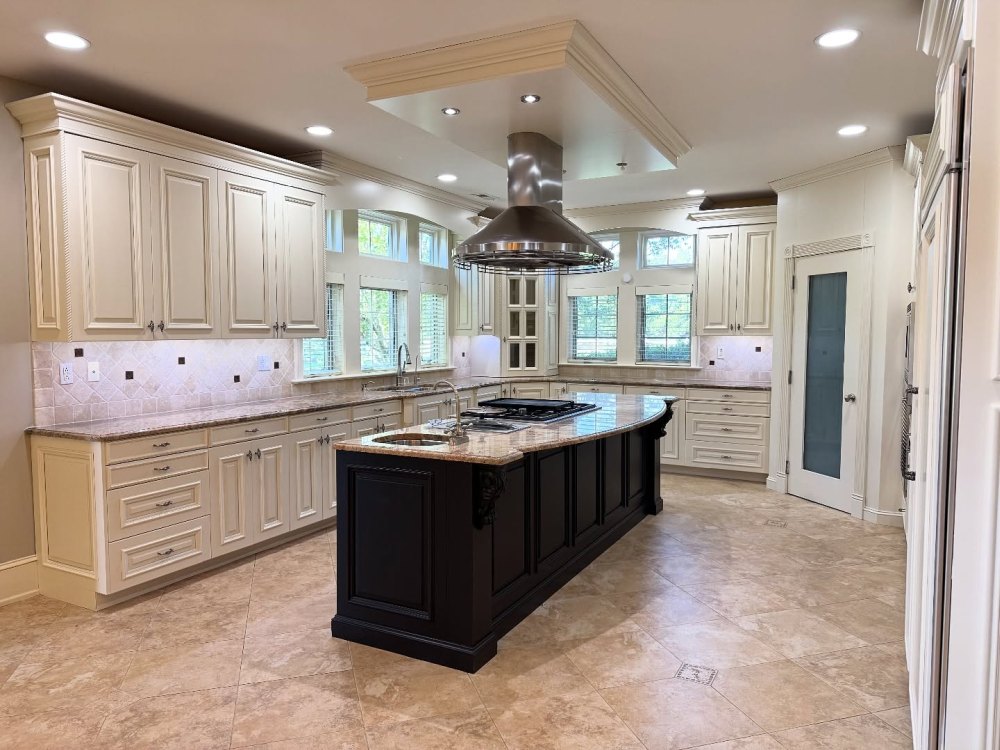
The painters did not carry Navajo White onto the island. Sherwin-Williams Tricorn Black replaced its reddish-brown finish, turning the existing cabinetry into a dark centerpiece against the off-white perimeter.
The island still has its curved granite countertop, integrated cooktop, prep sink, and decorative support brackets. Black creates a stronger separation between the island and the beige tile floor while keeping the cooking area prominent.
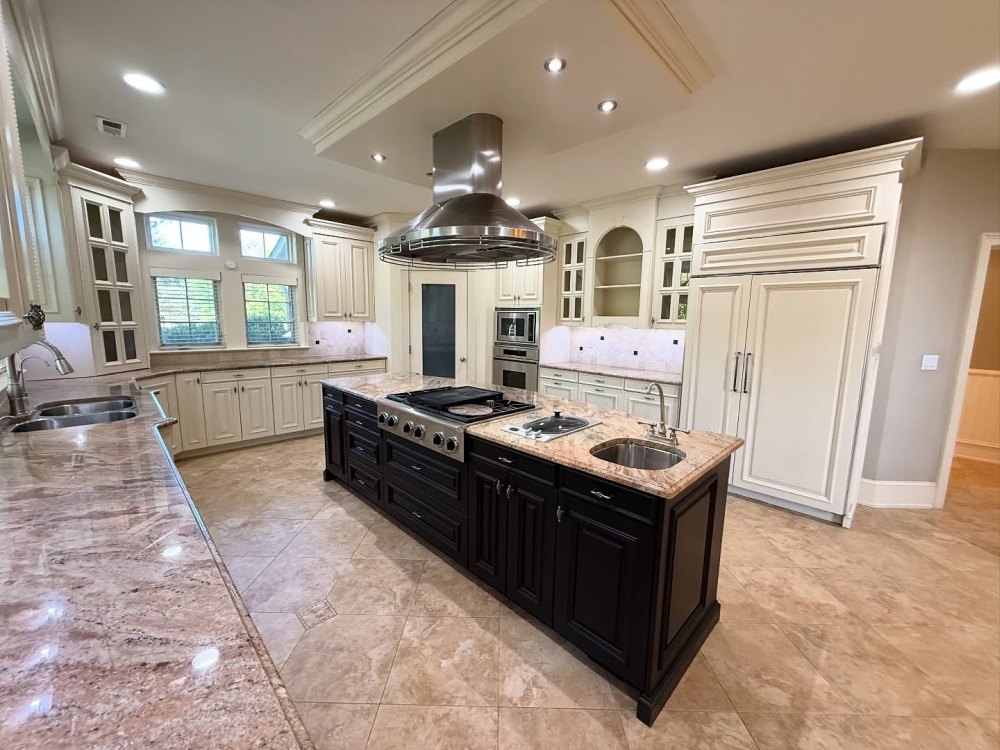
From the opposite side, the black island sits between the white refrigerator surround, built-in ovens, and glass-front storage. The stainless range hood remains centered above the cooktop, but the canopy now matches the perimeter cabinets rather than the island below.
Painting the island white would have extended the same color across almost every cabinet surface. Tricorn Black preserves a dark element in the middle of the room without returning to the original reddish-brown finish.
The Beverage Station Now Matches the Kitchen
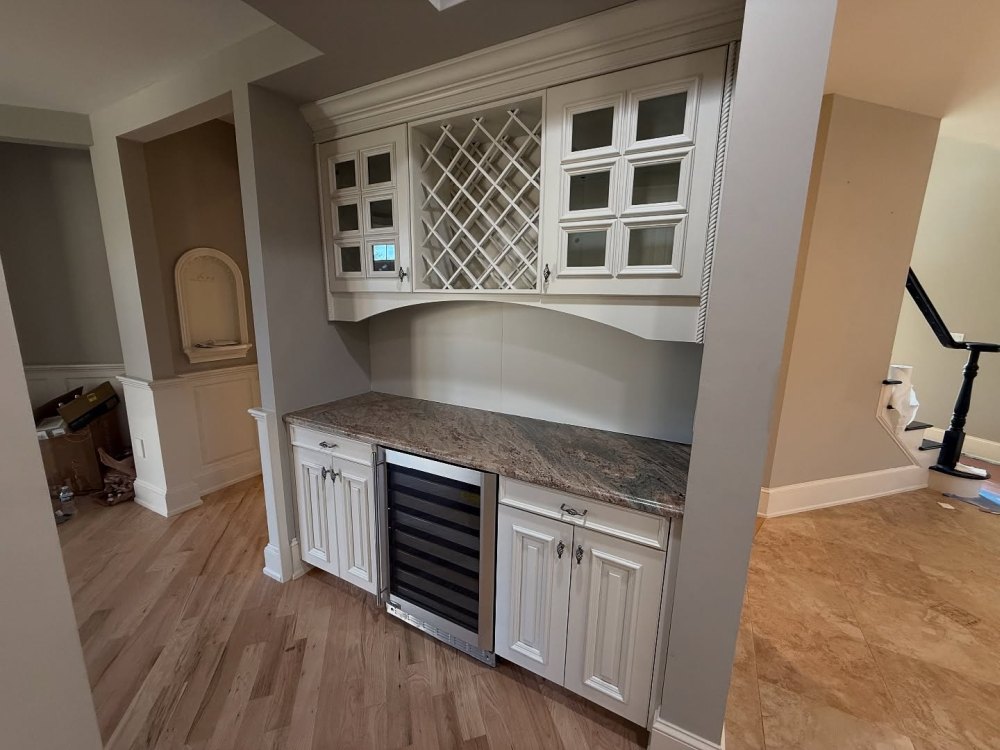
The beverage station received the same warm off-white finish as the kitchen perimeter. Its diamond wine rack, divided glass cabinet doors, and curved lower trim remain above the granite counter.
The stainless beverage refrigerator still occupies the center of the lower cabinets. Against Navajo White, its metal frame becomes more visible, while the decorative cabinet fronts no longer compete with the dark wood finish.
The Built-In Desk Was Included in the Makeover
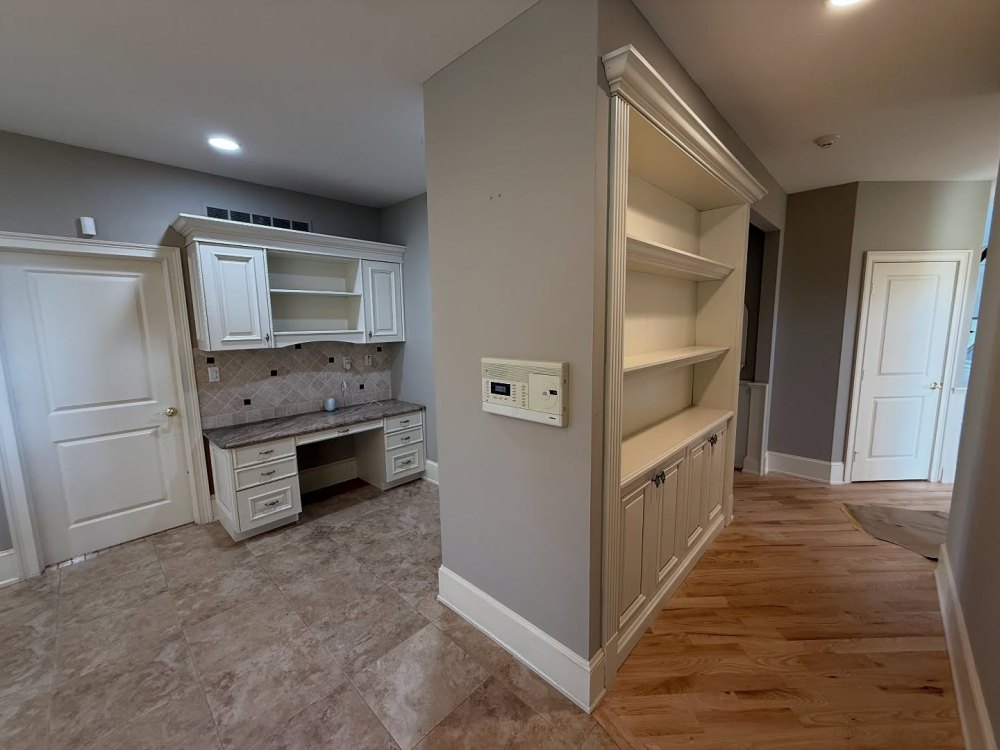
The desk area also changed from reddish-brown wood to Navajo White. The granite work surface, drawers, and overhead storage remain in place, including the open center shelf above the desk.
An adjacent recessed shelving unit received a matching light finish. Together, these pieces extend the cabinet color beyond the kitchen rather than leaving the surrounding built-ins in their original dark stain.
The Finished Kitchen Has More Contrast Without New Countertops
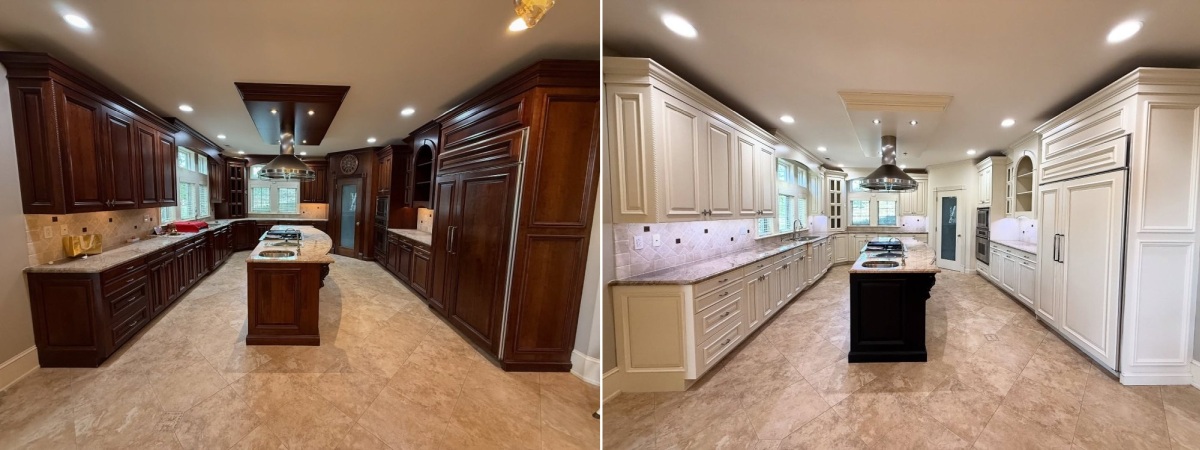
The full-room comparison shows the impact of changing the cabinet colors while retaining the original kitchen structure. Dark wood once covered both walls, the island, refrigerator surround, and ceiling canopy. Navajo White now occupies the perimeter, while Tricorn Black concentrates the darker finish on the island.
The granite countertops and beige tile flooring look more connected to the new warm-white cabinets, and the black island gives the room a clear focal point. The result comes from changing which surfaces carry the darkest color, not replacing the expensive materials already in the kitchen.
Image credits: Pezzotti Painting, Bucks County, Pennsylvania.