These Living Room Accent Chairs Have Zero Interest in Matching the Sofa

Matching an accent chair to the sofa might seem like the safest way to furnish a living room, but it can leave both pieces competing for the same role. Identical upholstery, matching arms, and repeated shapes create a coordinated set, yet the extra chair has little character of its own.
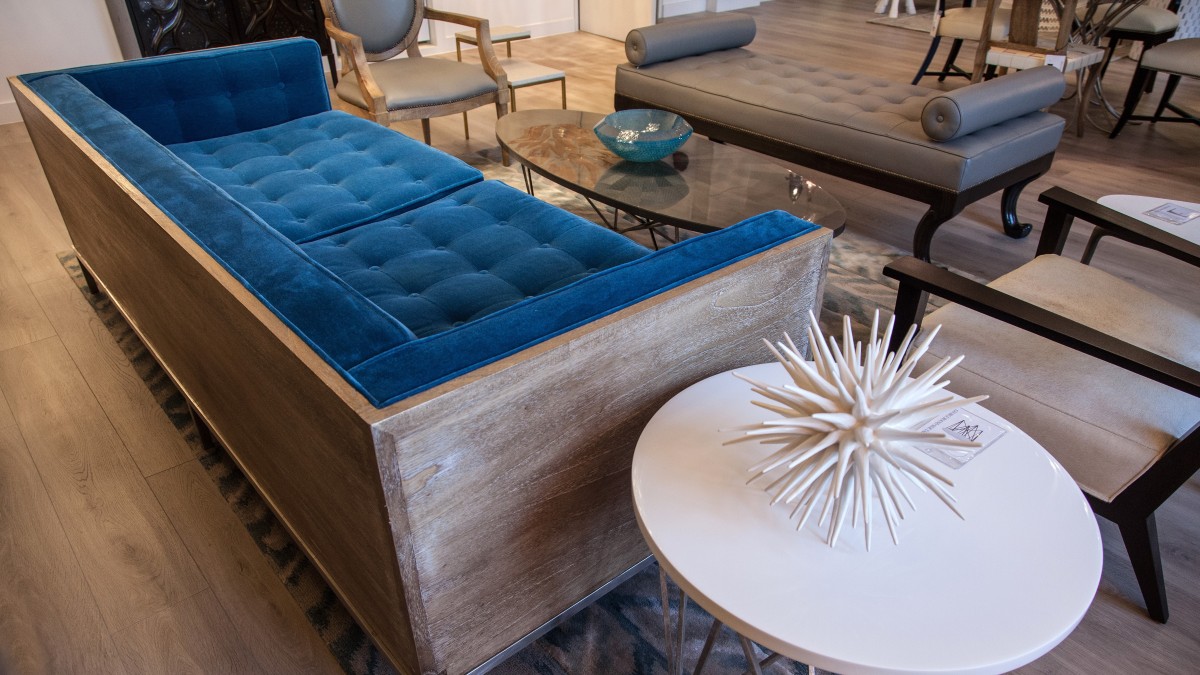
Across the living rooms photographed by Homedit, accent chairs take a different approach. Some introduce a contrasting color or material, while others share the sofa’s palette but change the frame, proportions, or seating position. None needs to look like an extension of the couch.
What makes these combinations work isn’t a matching furniture collection. It’s how the chairs connect with other details in the room, from cushions and rugs to wood finishes and coffee tables, while keeping their own identity.
Teal Velvet Creates Its Own Seating Corner Beside a Cream Sofa
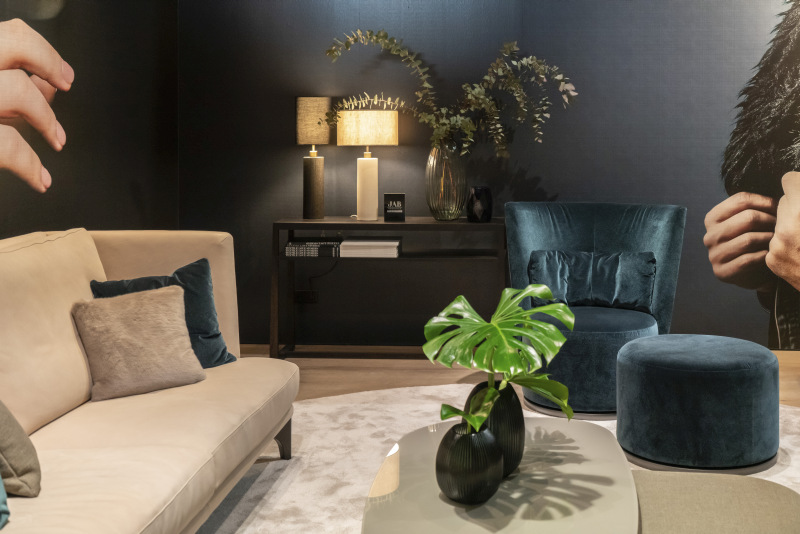
Cream upholstery covers the sofa on the left, while a deep teal velvet chair and round ottoman occupy the opposite side of the coffee table. The chair’s tall back, rounded seat, and matching footrest give it a separate identity from the low sofa.
Dark walls and a black console keep the teal from competing with other bright colors. Two teal cushions on the cream sofa repeat the chair’s color, connecting the pieces without matching their upholstery.
Brown Leather Adds Warmth Without Copying the Sofa
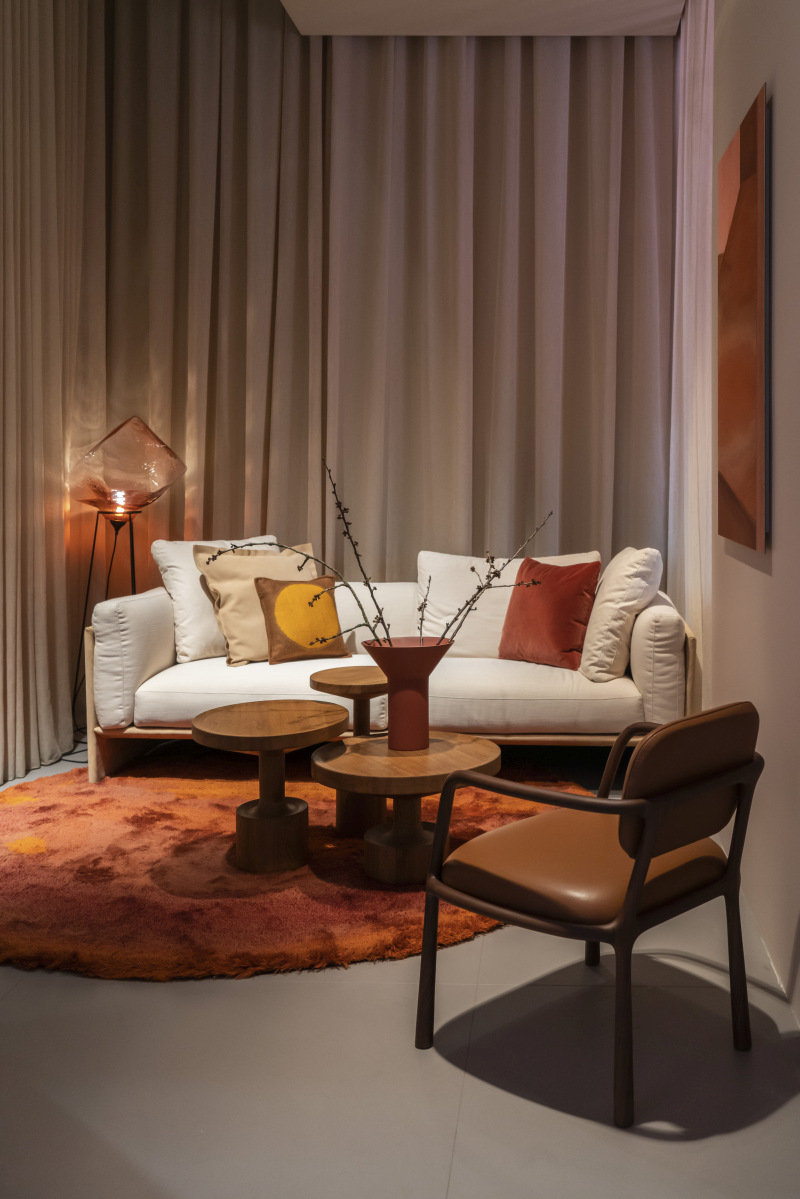
Light upholstery covers the sofa, while a brown leather armchair introduces a warmer material and darker finish. The chair’s shape and surface differ from the fabric sofa, giving the seating arrangement contrast without another large upholstered piece.
Warm accents across the room connect the chair to the surrounding furniture. Rather than matching the sofa, the leather brings another texture into the seating area.
Rust Upholstery Interrupts the Gray Seating Palette
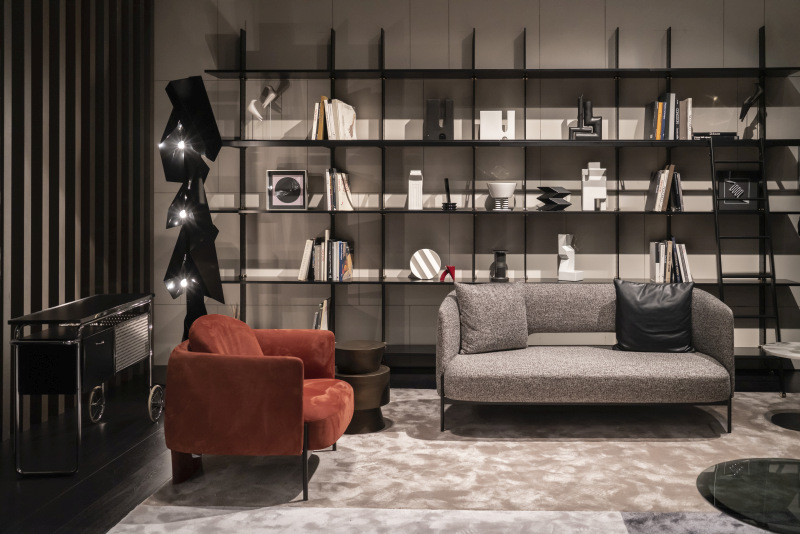
Gray seating occupies the main part of the room, while a rust-colored armchair stands against the dark wall and shelving. Its rounded back and warm upholstery separate it from the pale sofa without changing the room’s furniture arrangement.
The chair introduces a saturated color into a space dominated by gray, black, and neutral finishes. Its position beside the shelving gives the corner a purpose beyond extending the sofa’s seating capacity.
Light Upholstery Can Match in Color Without Matching in Design
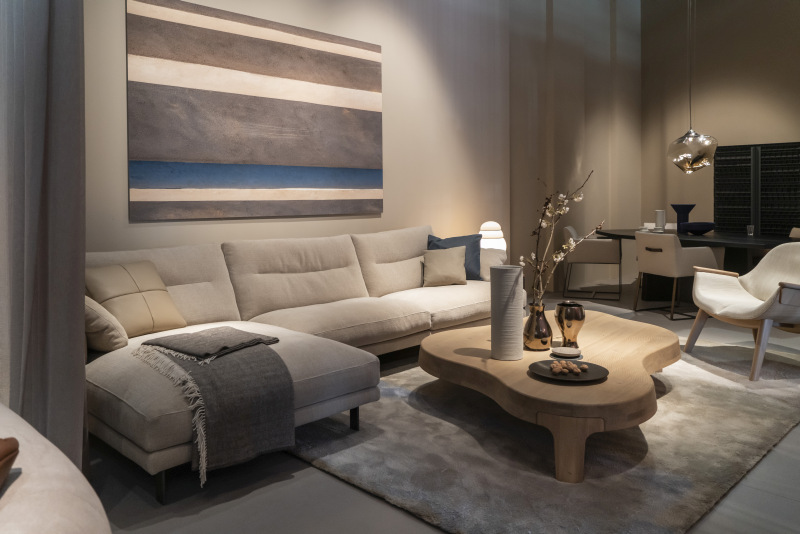
Pale seating occupies the room, but the accent chair doesn’t repeat the sofa’s proportions or construction. Its separate frame and seating position distinguish it from the larger upholstered piece.
The shared neutral palette keeps the furniture connected, while differences in shape and scale prevent the arrangement from resembling a coordinated furniture set. This approach works without introducing a strong contrasting color.
Orange Seating Picks Up the Sofa’s Accent Colors
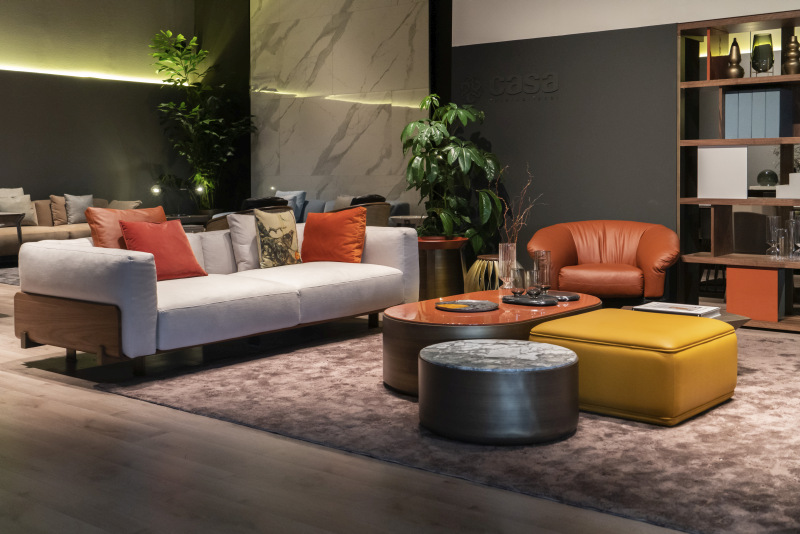
White upholstery covers the sofa, with orange and rust cushions arranged across its back. An orange barrel chair sits across the coffee table, repeating the warm tones without sharing the sofa’s fabric or rectangular shape.
The orange coffee table strengthens that connection, while a mustard ottoman introduces another warm color near the seating. Black shelving and the dark wall provide contrast behind the chair, keeping the orange pieces distinct from the white sofa.
Sage Leather Chairs Face a Navy Velvet Sofa
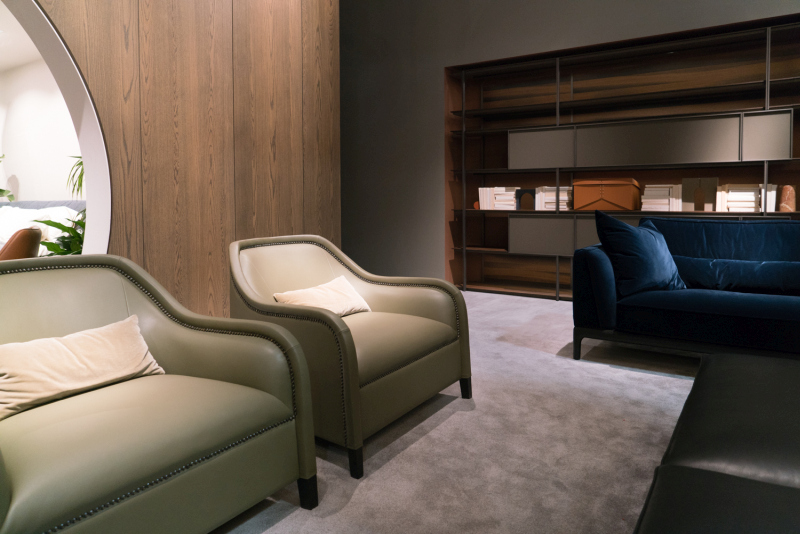
Two sage-green leather armchairs face a deep navy sofa, creating a conversation area with different upholstery on opposite sides. The chairs have curved arms, nailhead trim, and pale cushions, while the sofa uses dark fabric and a more restrained profile.
Wood wall panels and the large shelving system bring warm brown tones into the room. The green chairs sit against that wood backdrop, while the navy sofa occupies the darker side of the arrangement.
The two chairs match each other, but neither copies the sofa.
Wood-Framed Chairs Break Up a Gray Sectional
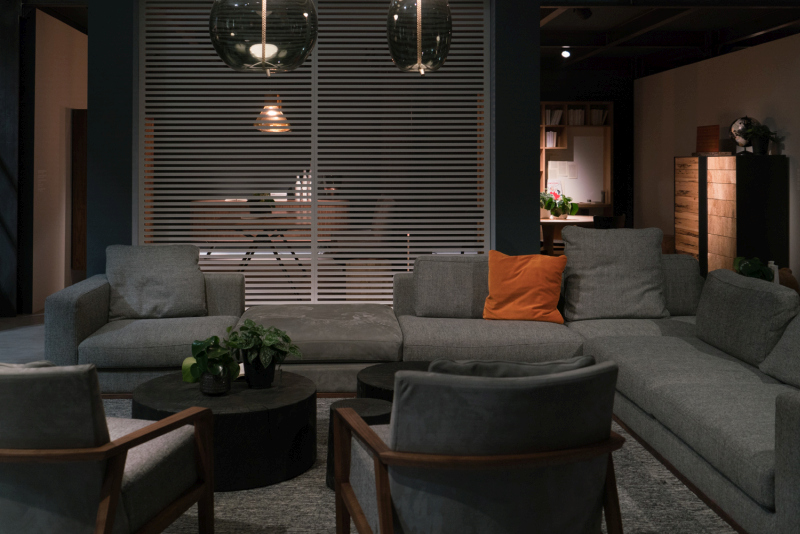
Gray upholstery covers the sectional and the two chairs facing it, but the exposed wooden chair frames create a distinction between them. The sectional has broad upholstered arms and deep cushions, while the chairs use narrow wooden arms and separate seat backs.
Dark round coffee tables occupy the center, leaving space between the facing seats. The wood frames connect with the tables and surrounding finishes, giving the chairs a place in the room without relying on a contrasting upholstery color.
A Separate Lounge Chair Changes the Seating Arrangement
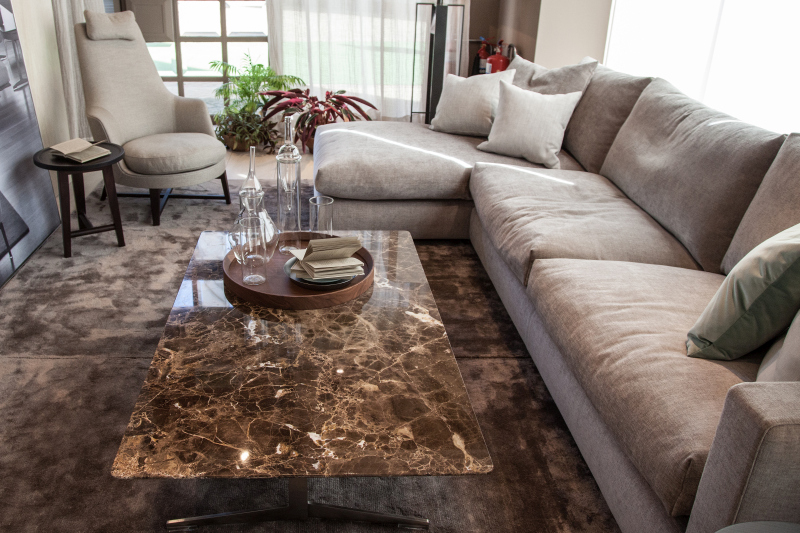
The accent chair introduces another seating position beside the main sofa, with a different back height and frame from the larger upholstered piece. Its placement gives someone a place to sit apart from the sectional without leaving the living room.
The chair works as an individual seat rather than an extension of the sofa. Its position also allows the surrounding tables and furnishings to serve different parts of the room.
Pale Upholstery Stands Against a Dark Sofa
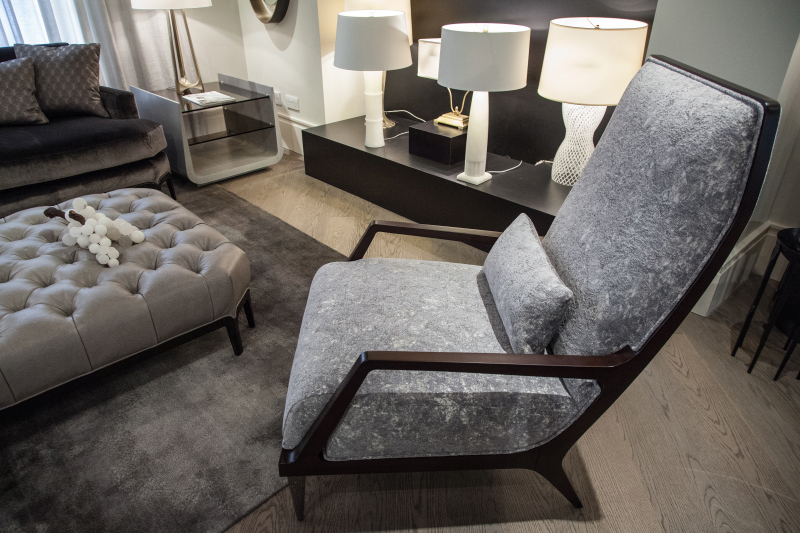
Dark upholstery covers the sofa, while the accent chair uses a lighter fabric and an exposed frame. The contrast separates the chair from the main seating, even though both pieces remain within a subdued color palette.
The lighter chair brings another surface texture into the arrangement, while the surrounding furniture connects the seating through similar tones and materials.
Matching the sofa isn’t necessary when the chair has another connection to the room, whether through a cushion color, wooden frame, rug, or nearby table.
Would you choose an accent chair that matches your sofa, or one that stands apart from it?