She Almost Painted This Old Pine Dresser One Color but Tried a Sunset Ombré Instead

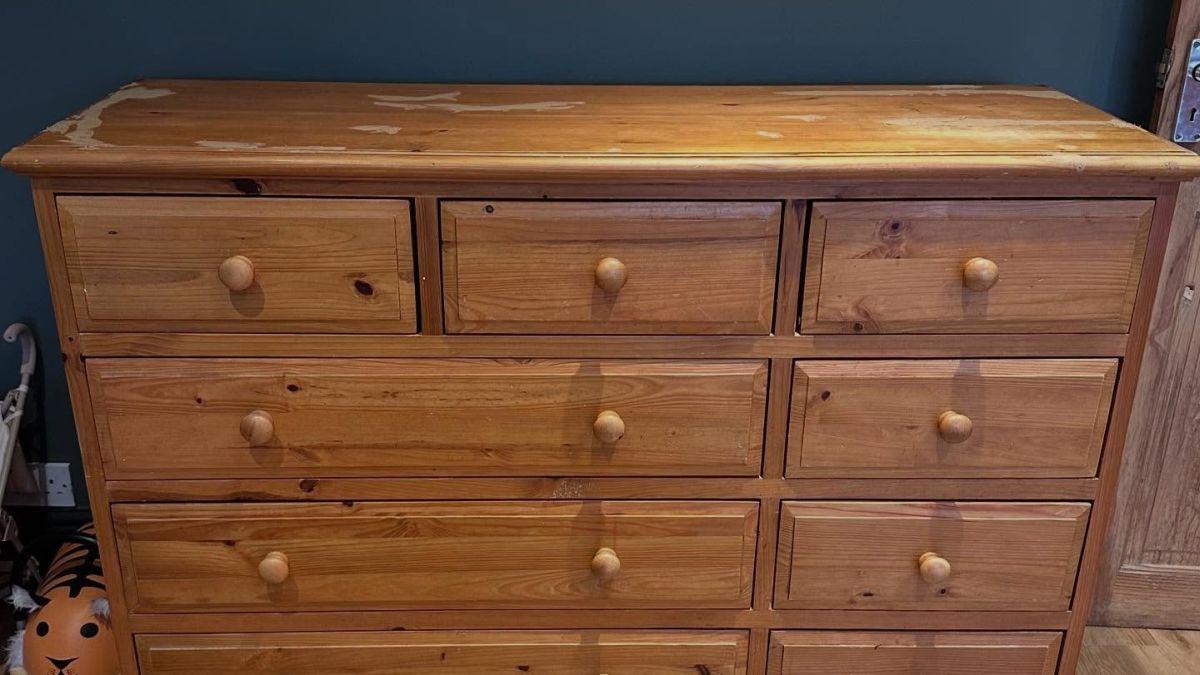
Orange-toned pine covered this old dresser from its rounded top to its thick base, with wood knobs and framed drawer fronts repeating across eleven drawers. Knots, grain, and wear marked the surface before paint changed the focus.
Hannah, the furniture artist behind @thelittlefurnitureroom, had planned an ombré finish but doubted whether it would work across such a large piece. She tried a single peach shade, then decided the result needed the color blend she had pictured from the start.
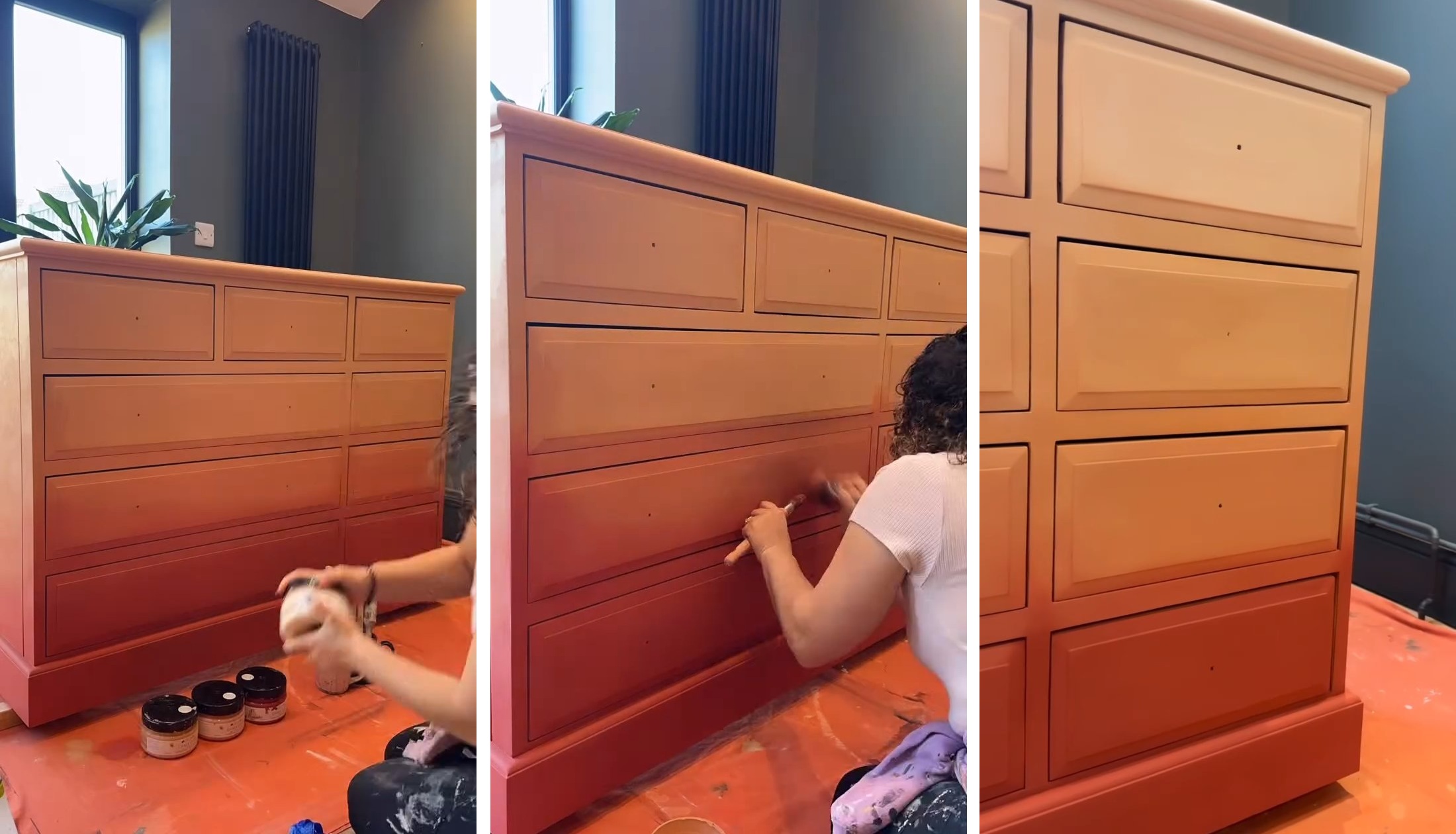
Using Toodaloo, Pumpernickel, Fox, and Vermillion from Ingilby Paints, she created a sunset effect that moves from cream through peach and orange to deep red. Small gold-toned knobs finish the drawers without interrupting the gradient.
Orange pine gave every drawer the same finish
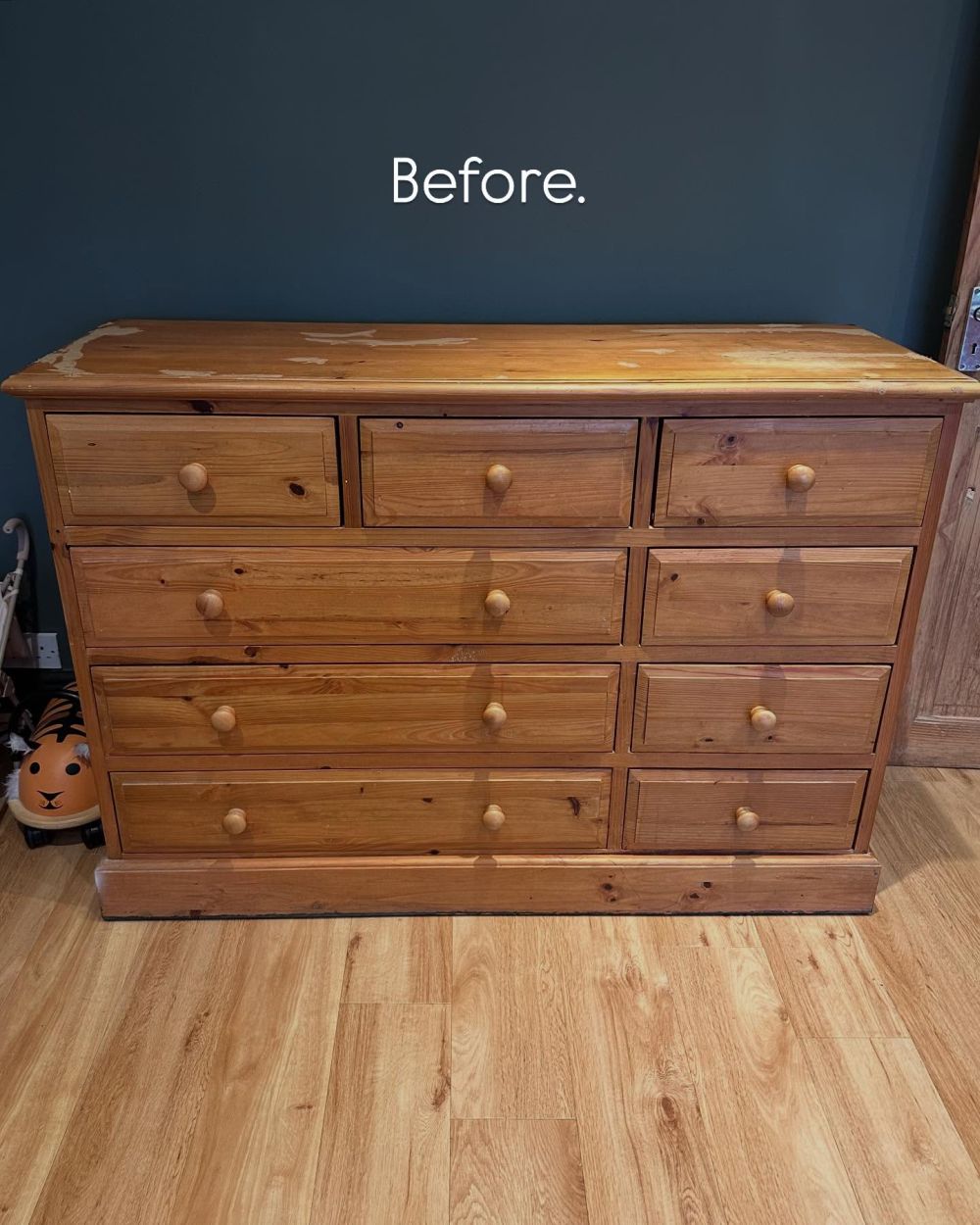
Three small drawers stretched across the top, with four paired rows beneath them. Routed borders outlined each front, while round wood knobs matched the surrounding pine.
Dark knots and grain marks stood out across the orange finish. Rounded top molding and a deep plinth framed the cabinet, providing edges that would remain visible after painting.
Sanding exposed the wood beneath the worn coating
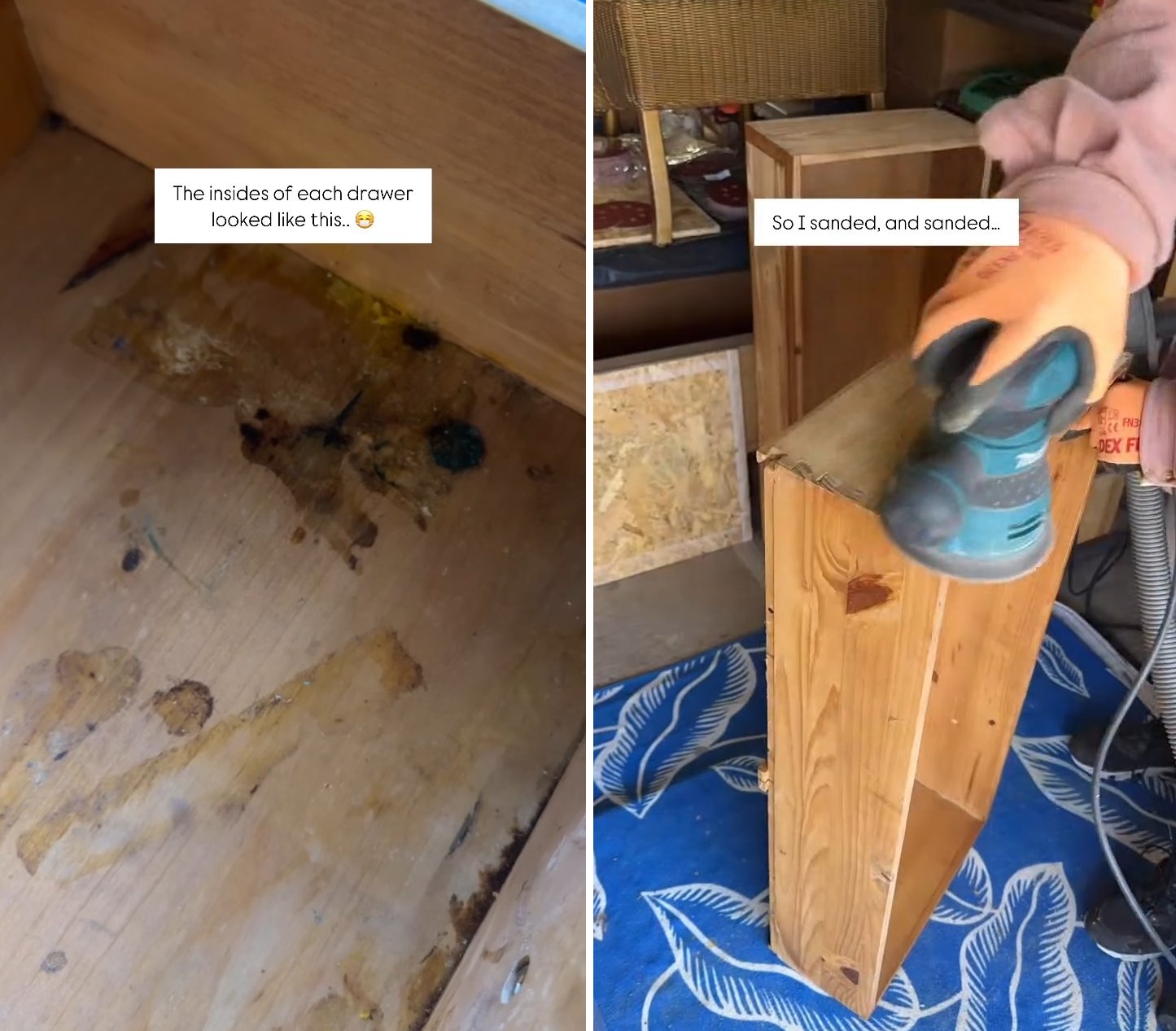
Removed drawers gave access to the frame, while an orbital sander worked across the top and drawer fronts. Lighter wood emerged as the old coating came away.
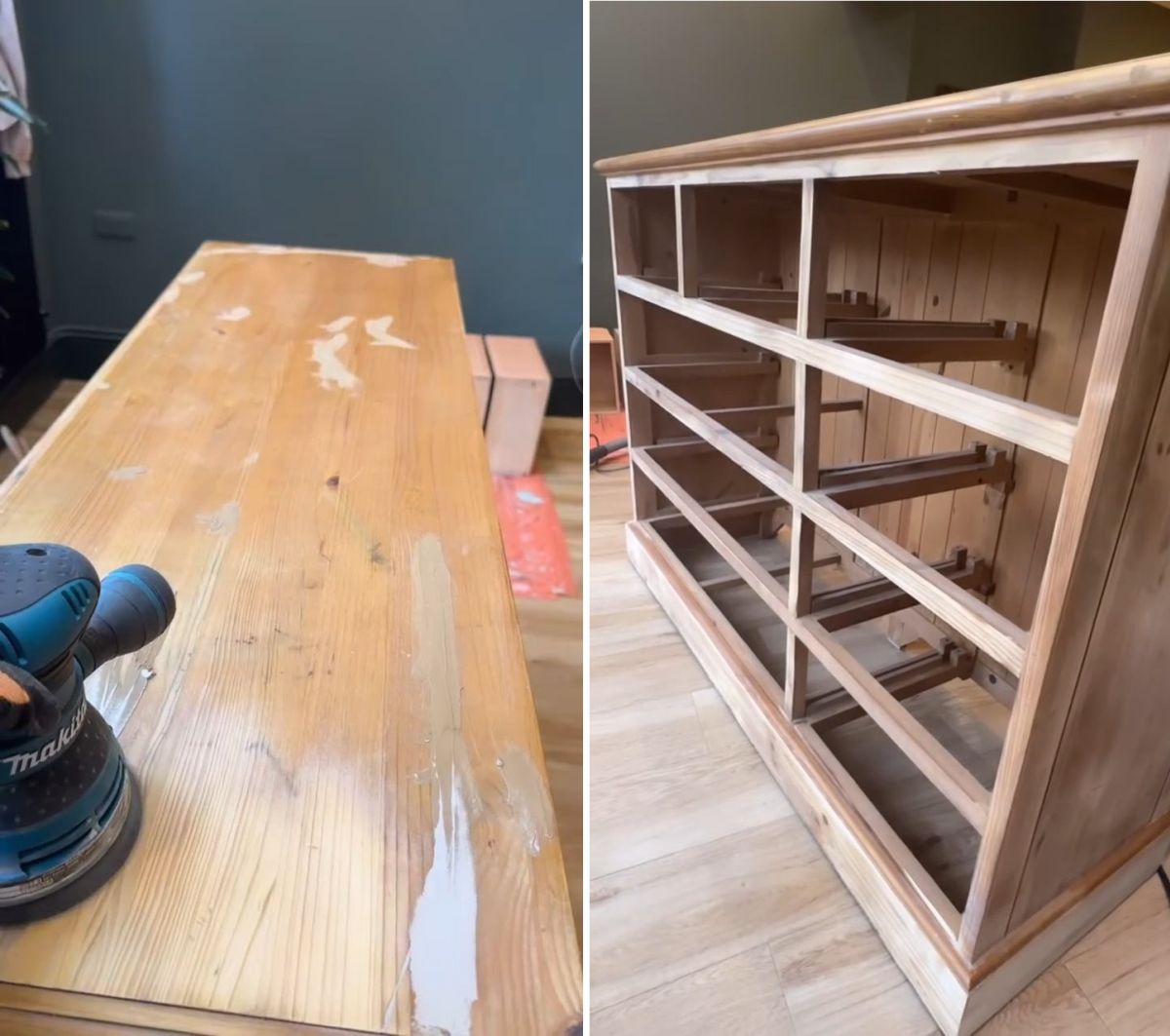
Close views show patches of finish remaining during preparation, with scratches and marks visible across the broad top. Sanding came before the first coat of color.
Doubt pushed the ombré plan aside
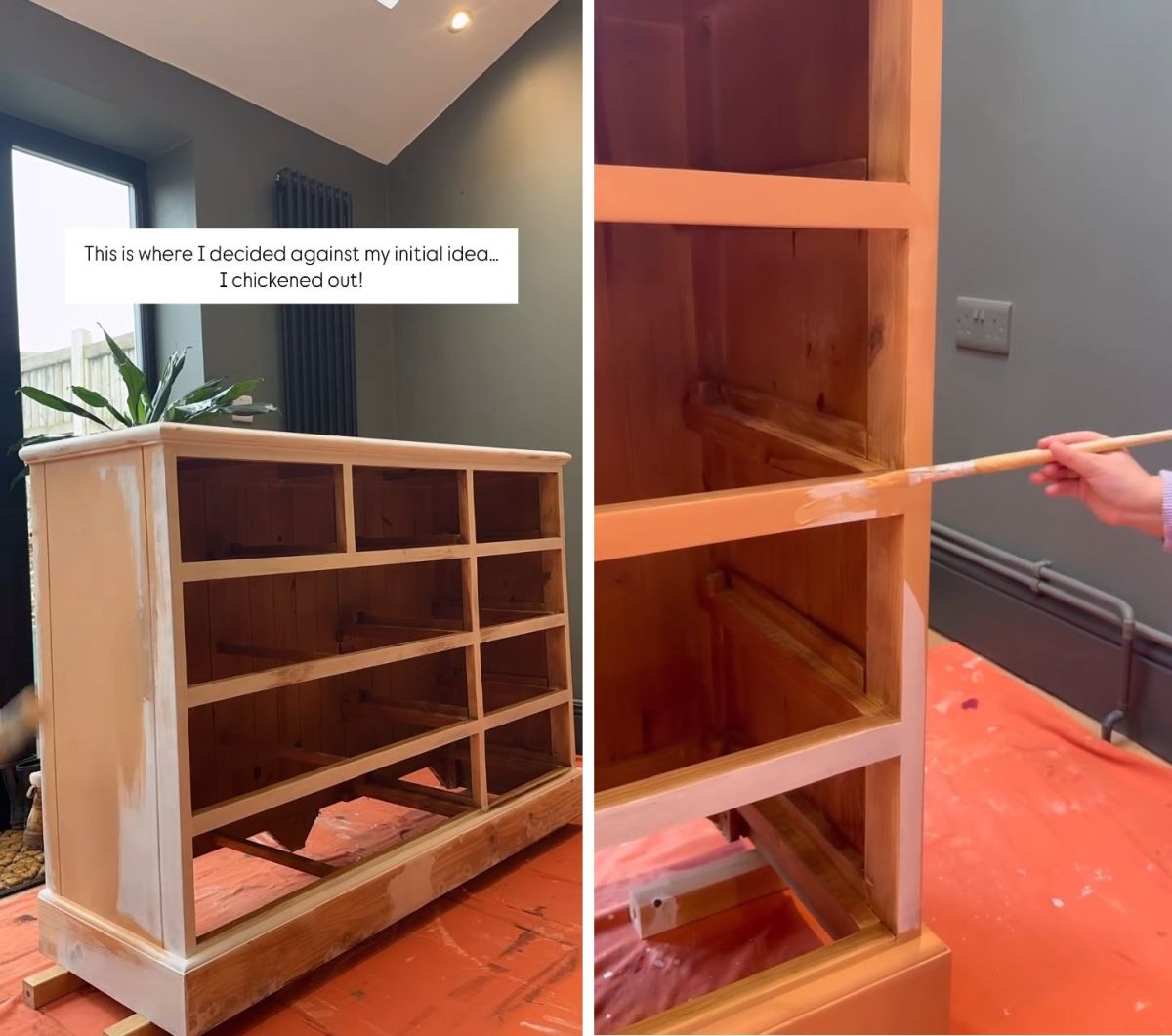
With the cabinet stripped back, the scale of the project prompted a change of direction. In her caption, the artist explained that she worried about whether the design would work and how much time it would take.
Warm peach paint went onto the frame instead, beginning a version that would keep the dresser one color.
One peach shade did not feel finished
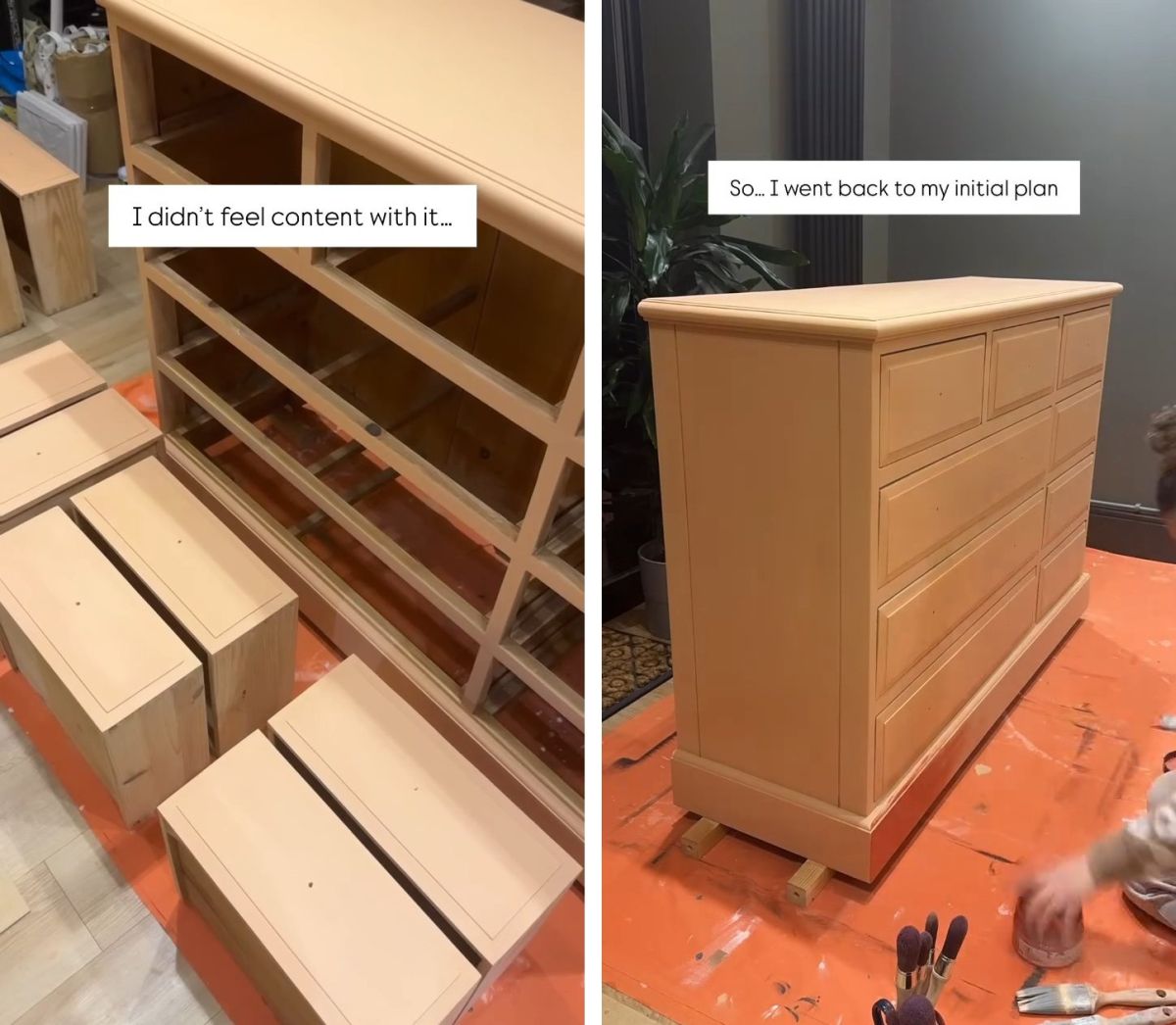
Peach covered the drawer fronts, sides, and top, giving the dresser a uniform appearance. The routed borders remained visible, but each row carried the same shade.
Text over the process images explains the next decision: she was not content with that version and returned to her first plan. The single-color stage became the starting point for the ombré.
Brushstrokes on paper tested the sunset palette
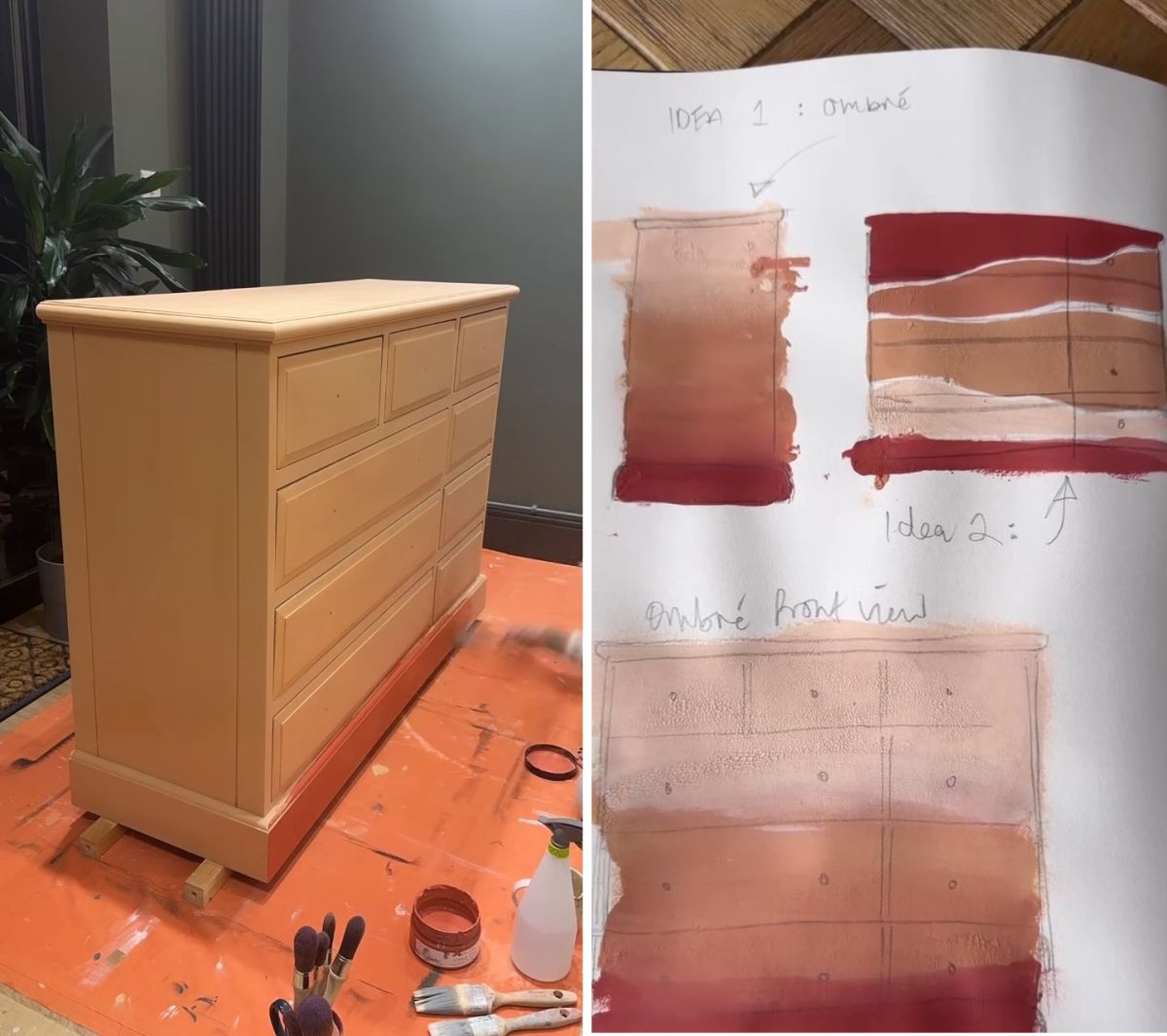
Paint samples explored transitions between cream, peach, orange, and red. Separate bands of color sat beside blended swatches, showing how the shades could meet before they reached the furniture.
Testing the combination on paper offered a small preview of a finish that needed to travel across the full cabinet.
Blended color crossed the drawer divisions
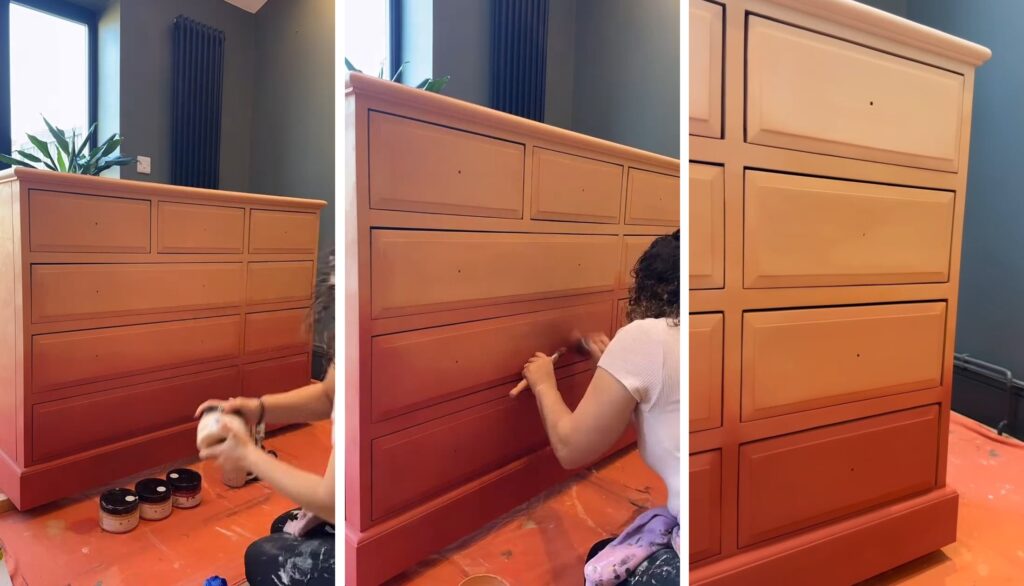
Orange developed through the middle rows as deeper red spread toward the base. Brushes worked across the fronts and narrow rails, carrying the transition through the spaces between drawers.
Painting those dividers mattered to the result: the gradient continues across the cabinet rather than breaking into separate colored fronts.
Cream at the top deepens into red below
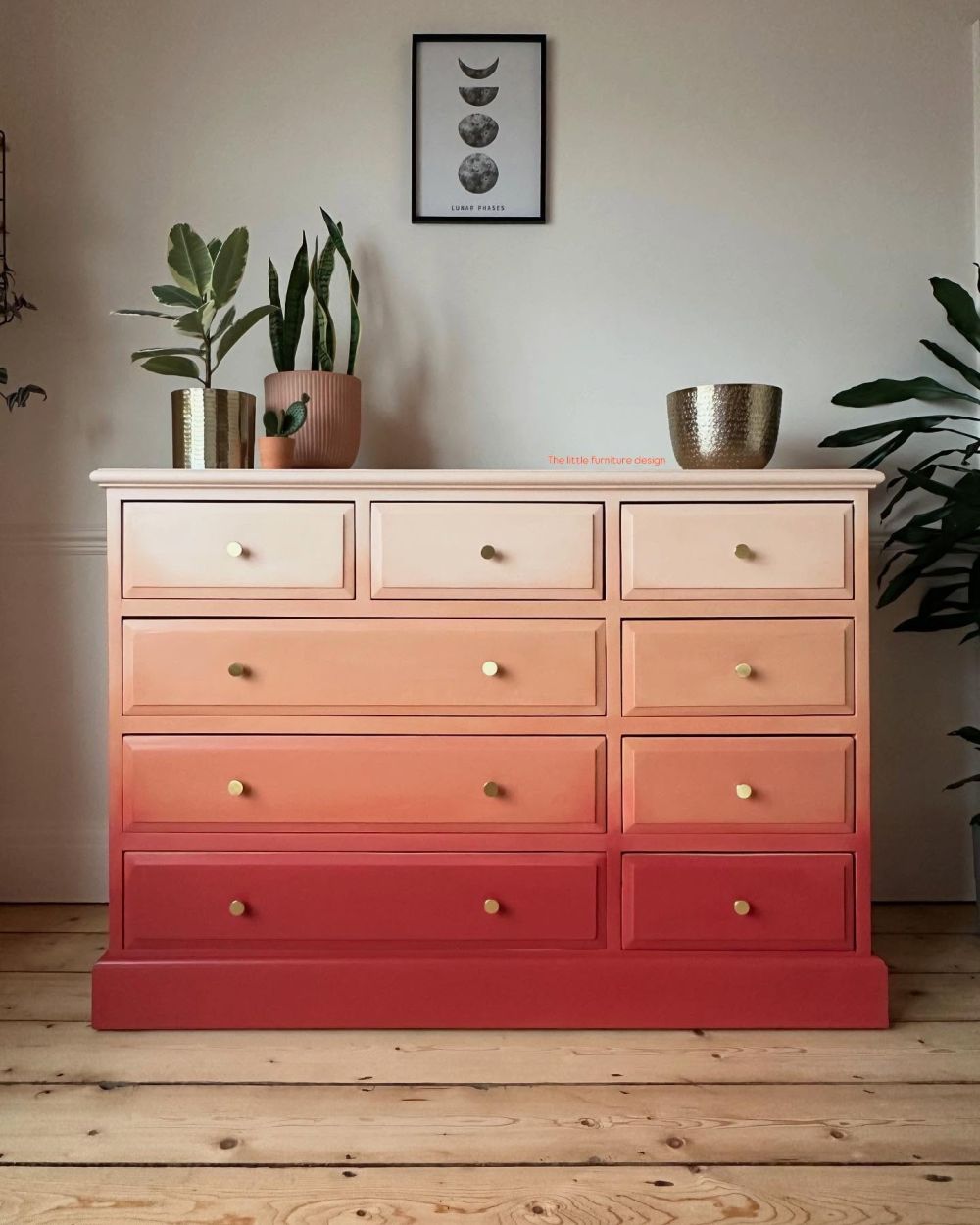
Viewed from the front, the completed dresser begins with cream across the three upper drawers. Peach follows beneath, then orange and coral deepen into red at the bottom.
Each row holds another stage of the transition, while the routed borders preserve the shape of the original drawer fronts.
Ombré continues around the cabinet sides
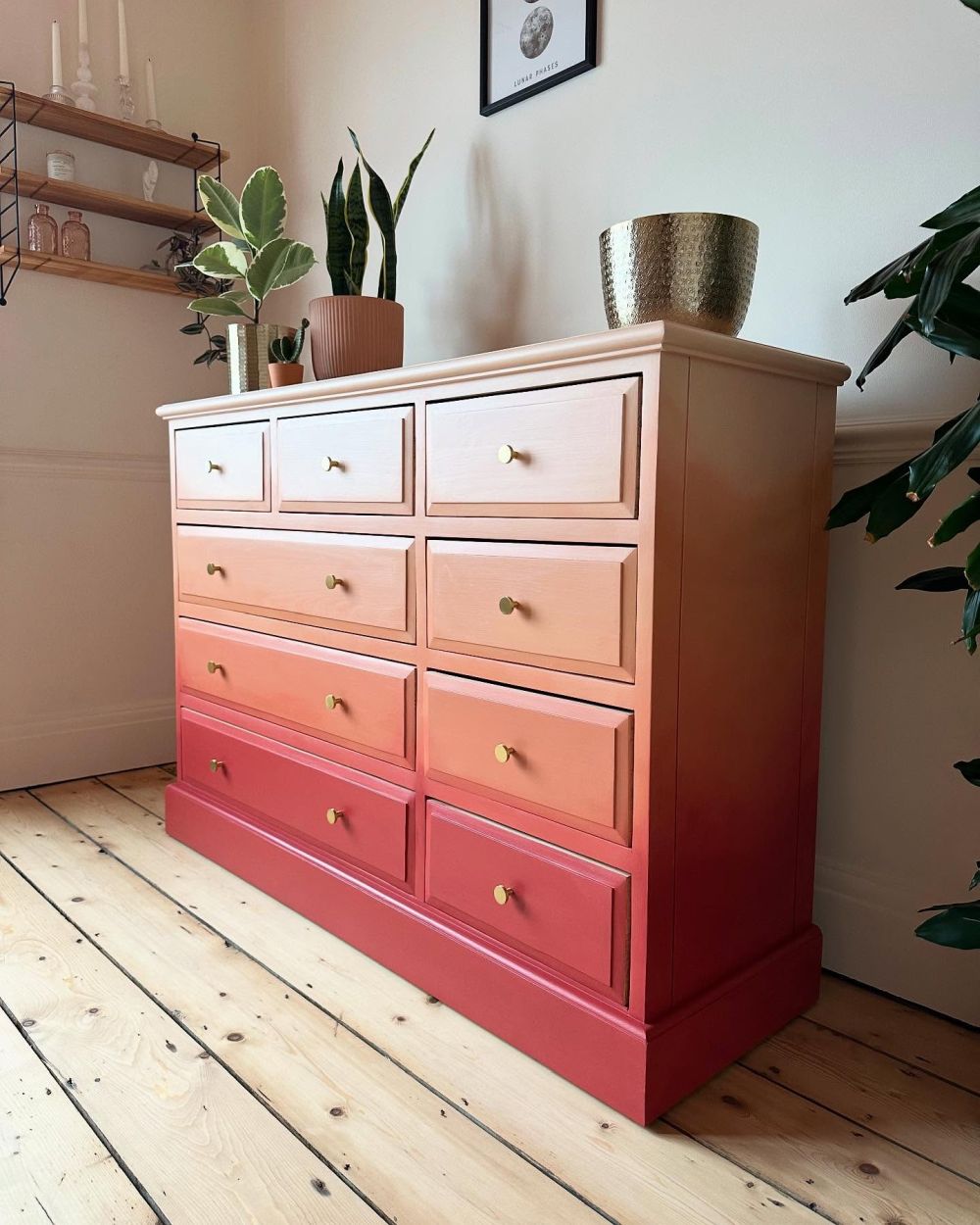
An angled view reveals the same color progression wrapping around the side panel. Light tones cover the upper section, with orange through the middle and red near the floor.
Extending the blend beyond the drawers gives the finish continuity from the front corners to the back edge.
Rounded top molding remains part of the design
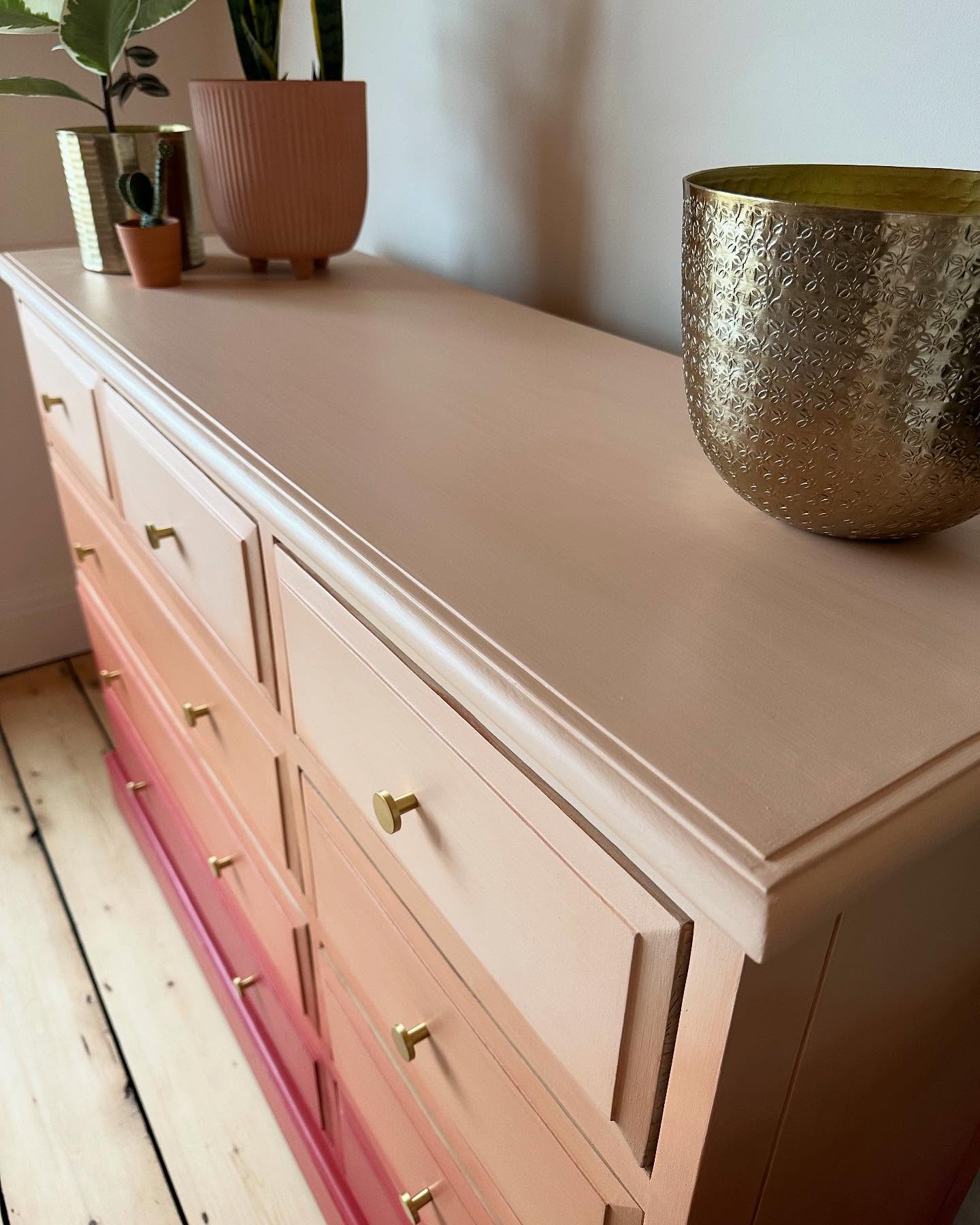
Cream paint covers the broad top and its curved edge, keeping the upper surface quieter than the saturated drawers below. The original molding adds shape beneath the new finish.
A textured metal planter sits near the corner, where the light paint makes the dresser’s layered edge easy to see.
Wood interiors remain behind the painted fronts
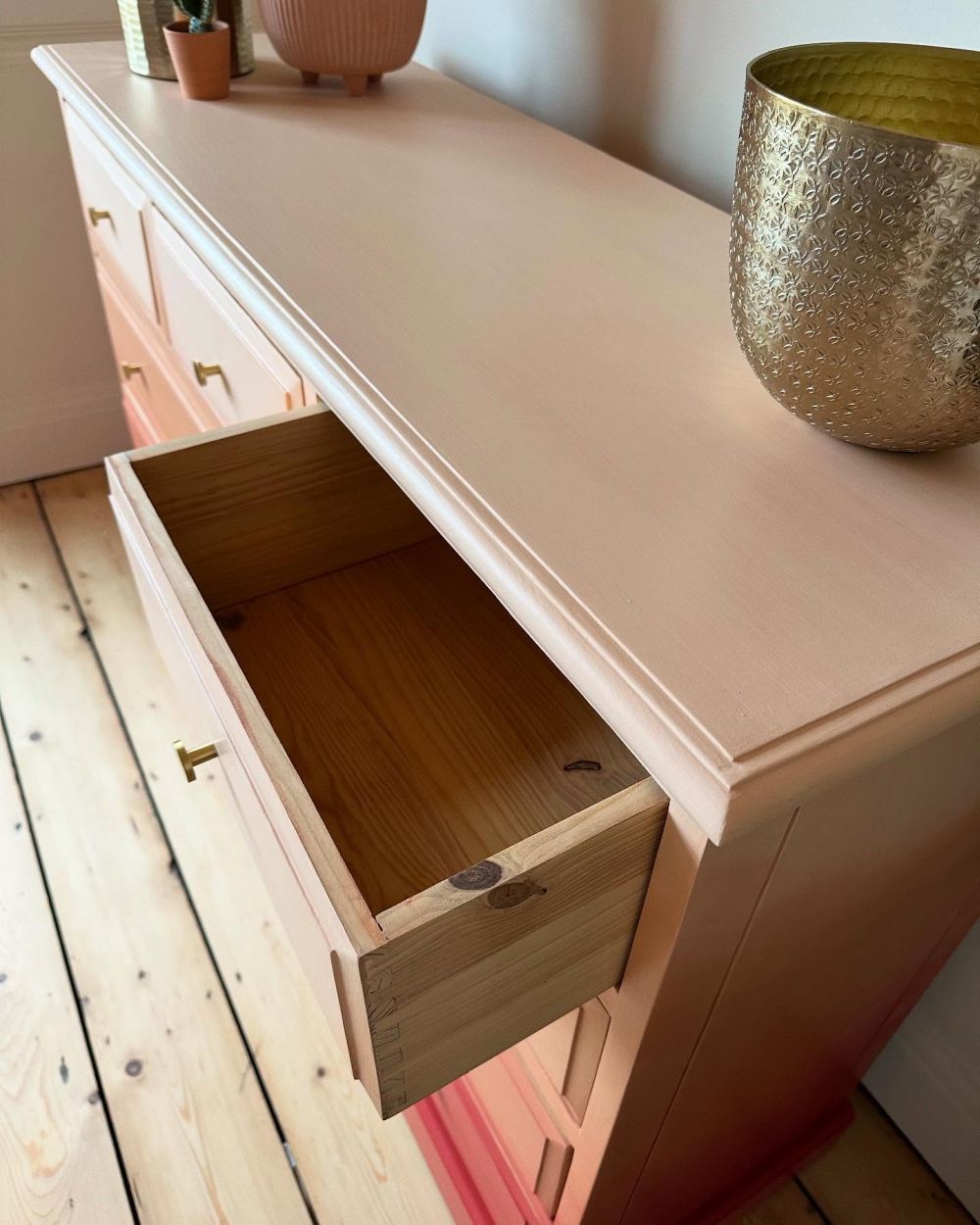
Open drawers reveal wood interiors and sides behind the sunset colors. Dovetail joints remain visible at the corners, along with the grain inside the drawer boxes.
The exterior carries the new design, while these surfaces preserve a direct view of the dresser’s construction.
Check out a similar project: Her Four-Year-Old Client Asked for Pink and Flowers: An Old Charity-Shop Cabinet Became a Bedroom Favorite
Gold-toned knobs punctuate the changing colors
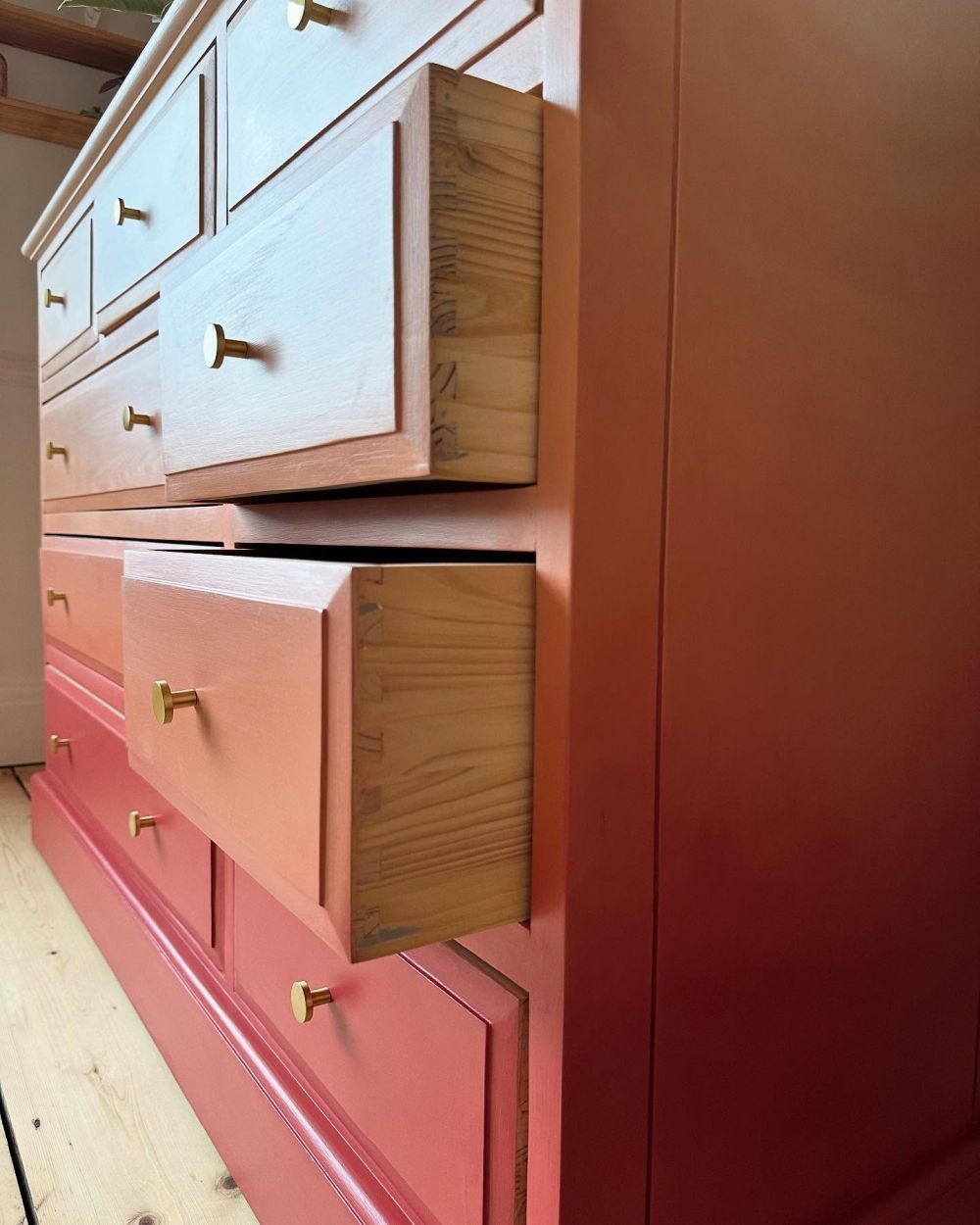
Small round knobs replace the larger wood pulls seen before the makeover. Their warm metal finish repeats across the cream, peach, orange, and red drawers.
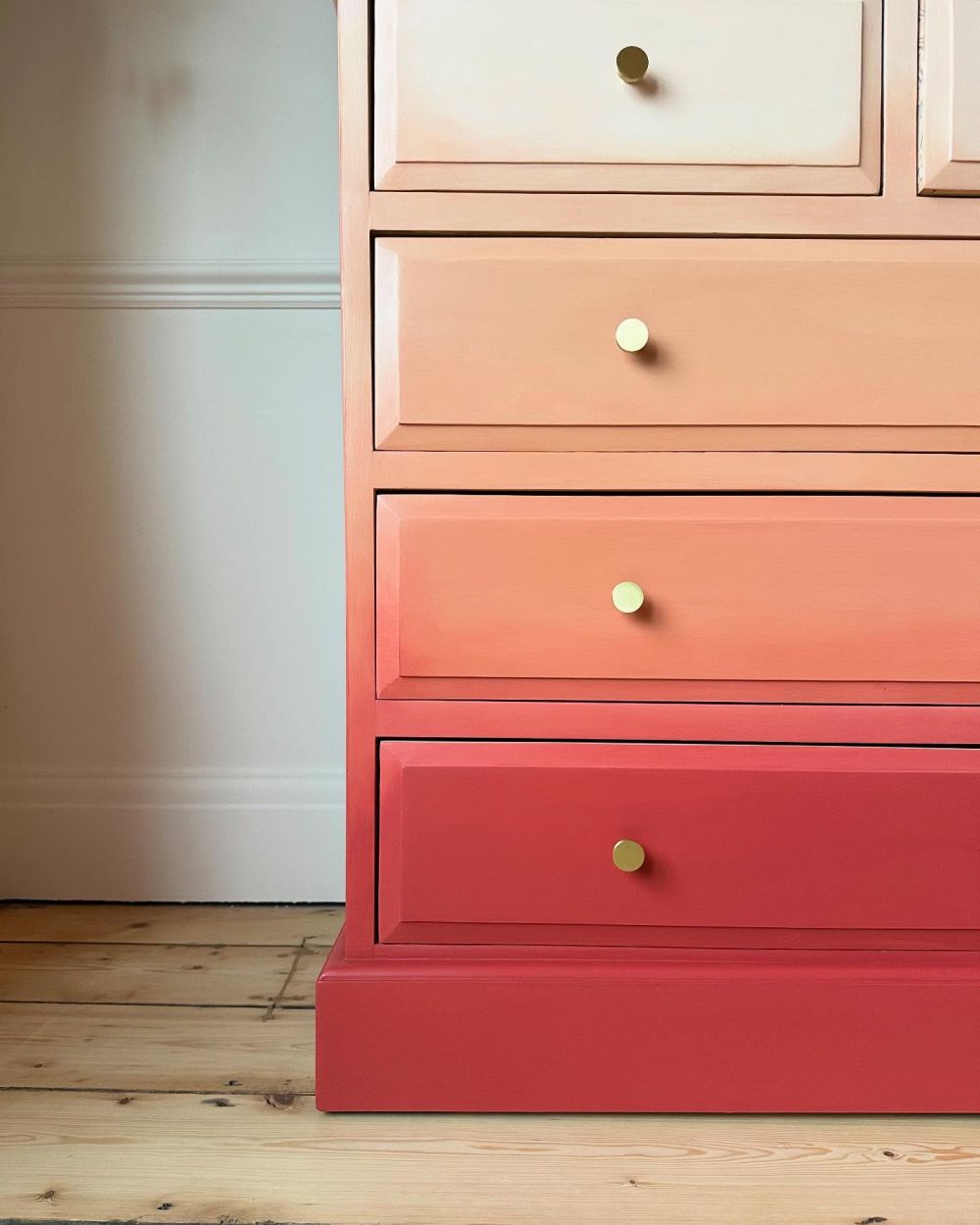
Near the base, the knobs stand out against the deeper color, adding contrast without covering the painted transition.
Eleven drawers now share one sunset effect
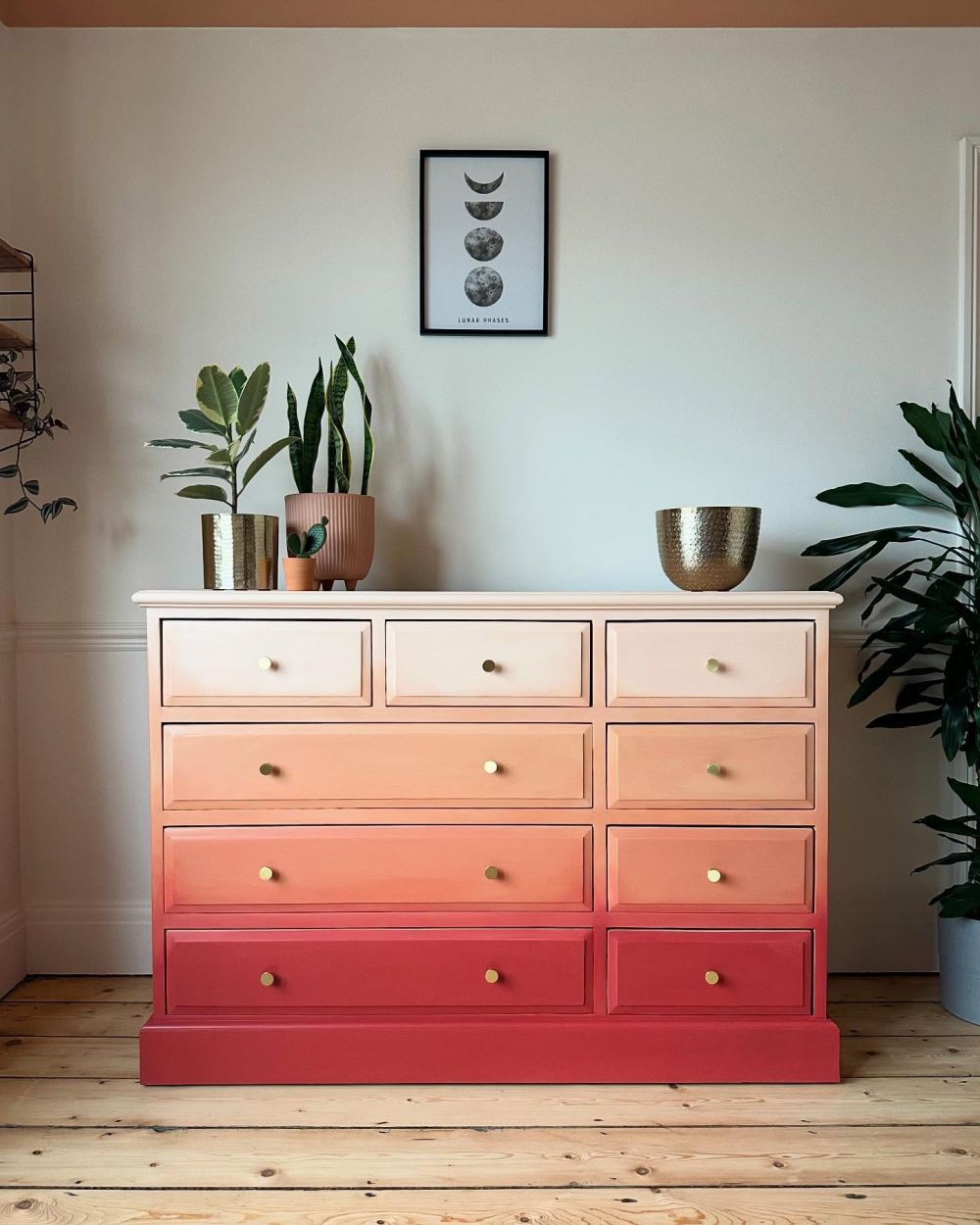
The full view shows how the gradient connects the three small upper drawers with the paired rows below. Color moves down the furniture, crossing both fronts and frame.
Red across the plinth completes the transition, while the cream top marks its lightest point.
Before and after reveal the value of changing course
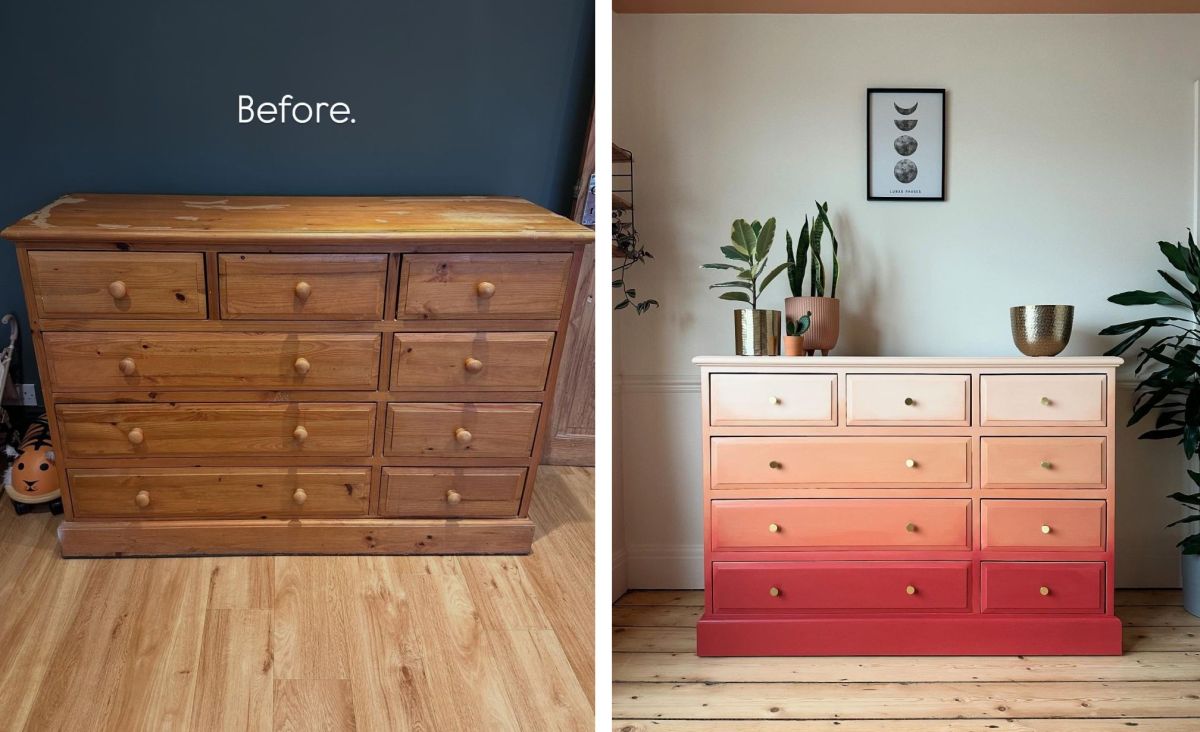
The drawer arrangement, framed fronts, rounded top, and deep base remain recognizable in both versions. What changes is where the eye goes: wood grain defined the original, while the finished dresser draws attention through its color progression.
Would you have stopped at the peach finish, or taken the extra step toward sunset ombré? Would black knobs have worked better than the brass ones?
Image credits go to @thelittlefurnitureroom.