She Used Her Husband’s Old Sock and White Primer to Give a Brown Dining Table a Driftwood Finish


Brown dining tables with glossy finishes can be difficult to update, particularly when the surface is veneer instead of solid wood. Sanding too much can damage the veneer, while a coat of paint can hide the wood grain altogether. Getting a weathered wood finish calls for a different approach.
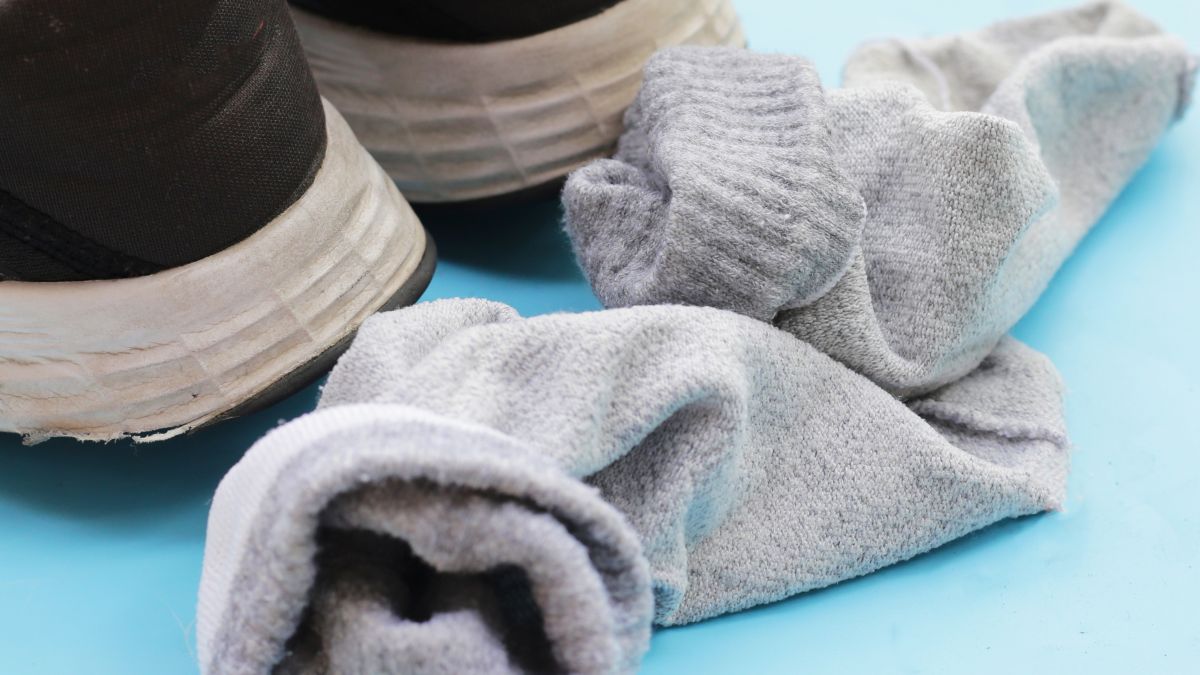
White primer, watered-down gray paint, and an old sock pulled over her hand helped one furniture restorer achieve the appearance of driftwood without stripping the tabletop down to bare wood.
Julie Peterson, the furniture restorer behind Simple Redesign, documented the process, including two problems that forced her to reconsider parts of the makeover.
Brown Tabletop Had a Veneer Finish That Looked Like Laminate
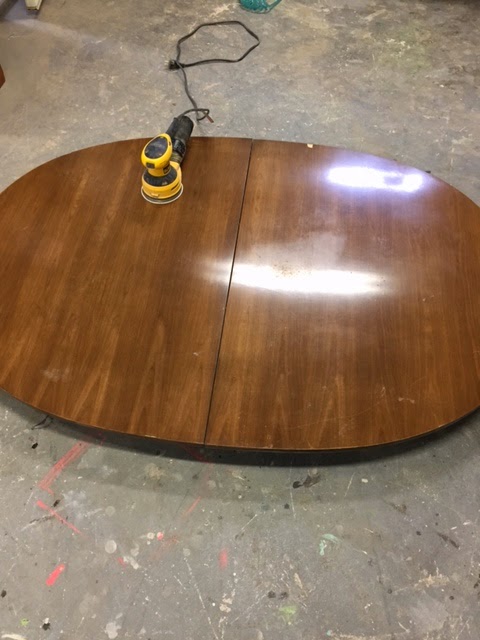
What appeared to be laminate turned out to be wood veneer beneath a glossy finish. Using 220-grit sandpaper, Peterson prepared the surface for primer while avoiding swirl marks that could show through the painted finish.
Watered-Down White Primer Became the Base Coat
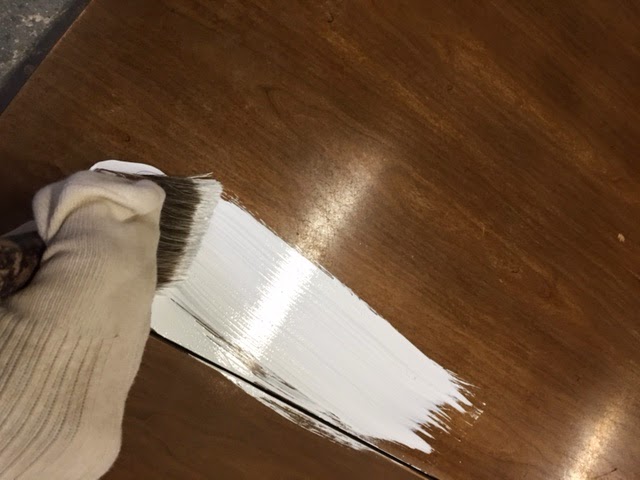
White primer served as both a bonding coat and the first color in the driftwood finish. Diluting it with water produced a translucent coating that allowed the brown surface to remain visible.
Her Husband’s Old Sock Became a Painting Tool
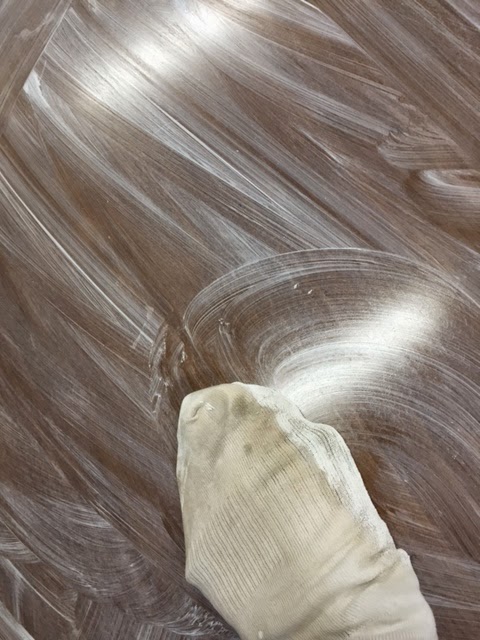
With an old sock pulled over her hand, she spread the primer across the tabletop, finishing with long strokes before it dried. Working in the direction of the grain helped distribute the white coating without covering the wood beneath it.
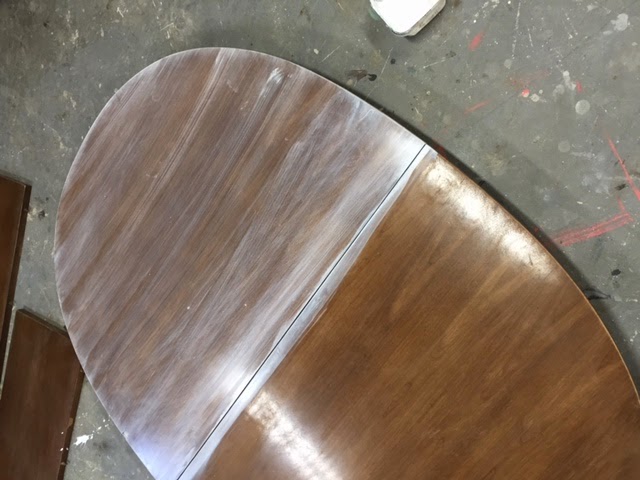
With half the tabletop treated, the difference between the original brown finish and the whitewashed surface became visible.
Brushstrokes Introduced the Weathered Wood Effect
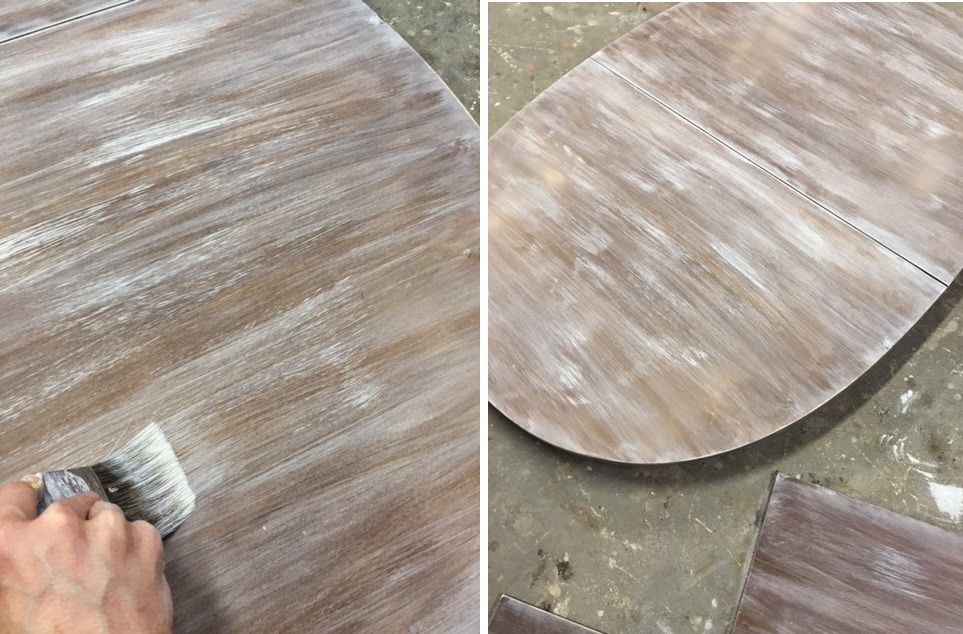
Once the first coat dried, additional white primer went onto the surface in uneven brushstrokes. This introduced variations in color resembling weathered wood.
At this stage, another problem became apparent: the removable table leaves were darker than the main tabletop, creating a difference that the first coat had not concealed.
Pale Gray Paint and a Feathering Brush Blended the Colors
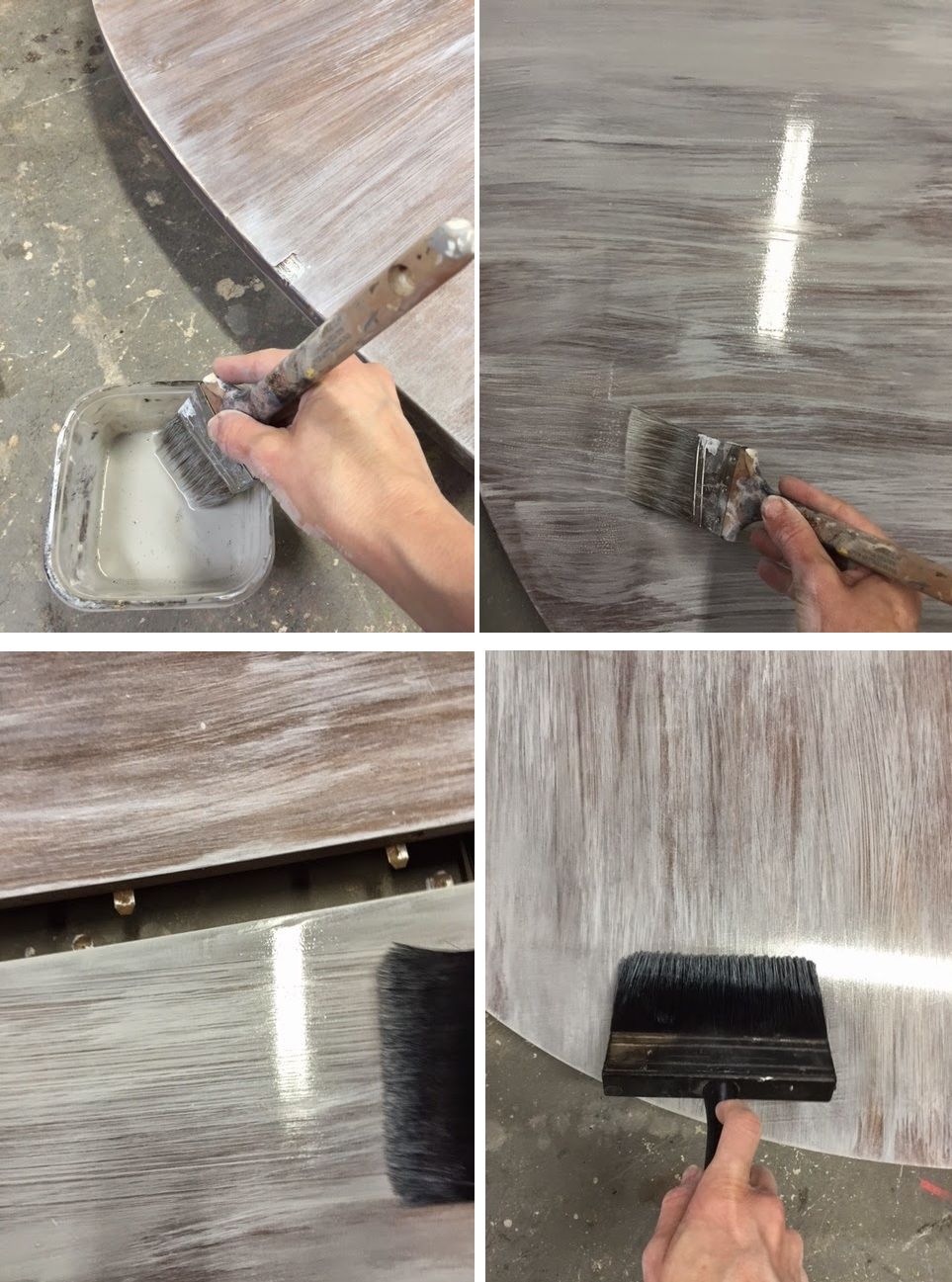
Watered-down pale gray paint formed the next coat, reducing the contrast between the white primer and brown veneer.
Using an old feathering brush collected from a garage sale, she blended the brush marks into long lines that followed the grain.
Painting Made a Chip in the Veneer More Noticeable
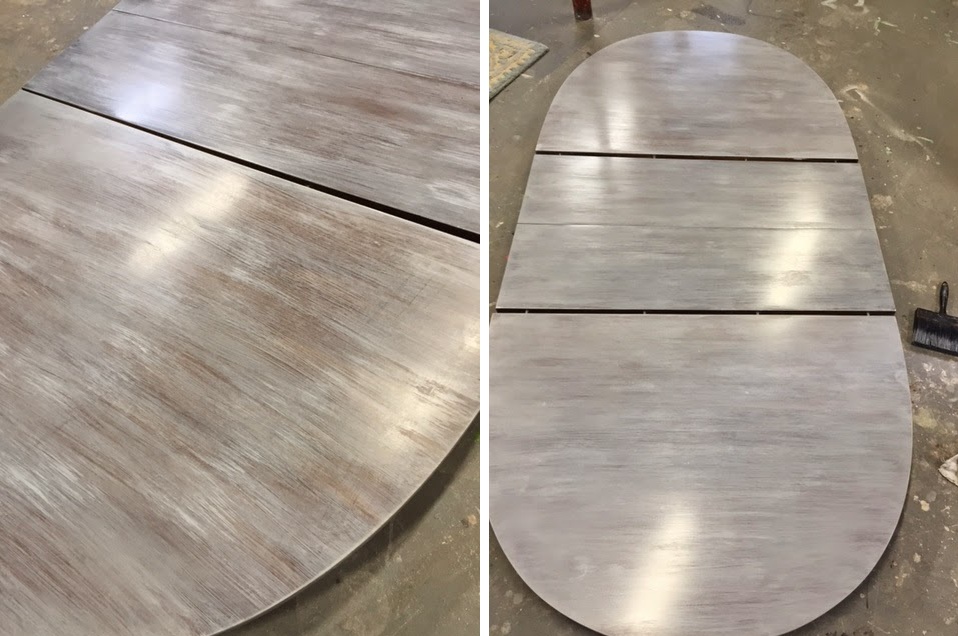
One damaged section of veneer became more visible beneath the paint because its grain ran in the opposite direction. Attempts to disguise it with the weathered finish had the opposite effect.
She sanded back the entire affected section, fitted a replacement piece of veneer, filled the gaps with wood filler, and used gel stain to match the surrounding surface. Primer and gray paint were then reapplied, followed by another whitewash to bring the tabletop and extension leaves closer in color.
Clear Coats Protected the Driftwood Finish
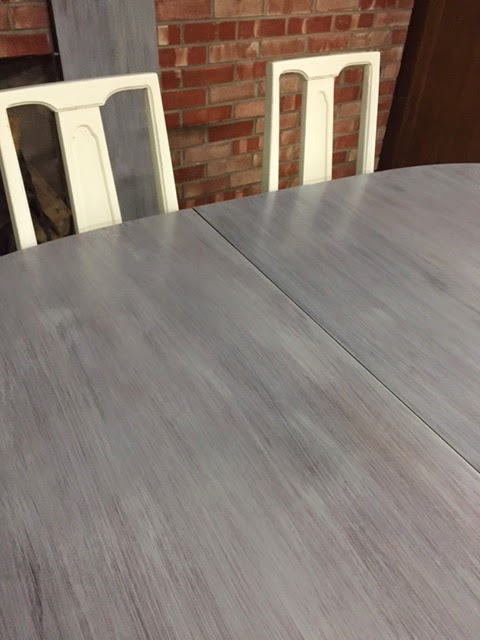
Several clear coats protected the painted surface, which retained variations of gray, white, and brown. Unlike an opaque paint finish, the whitewash and feathered brushstrokes preserved the appearance of wood grain.
Creamy White Paint Completed the Dining Set
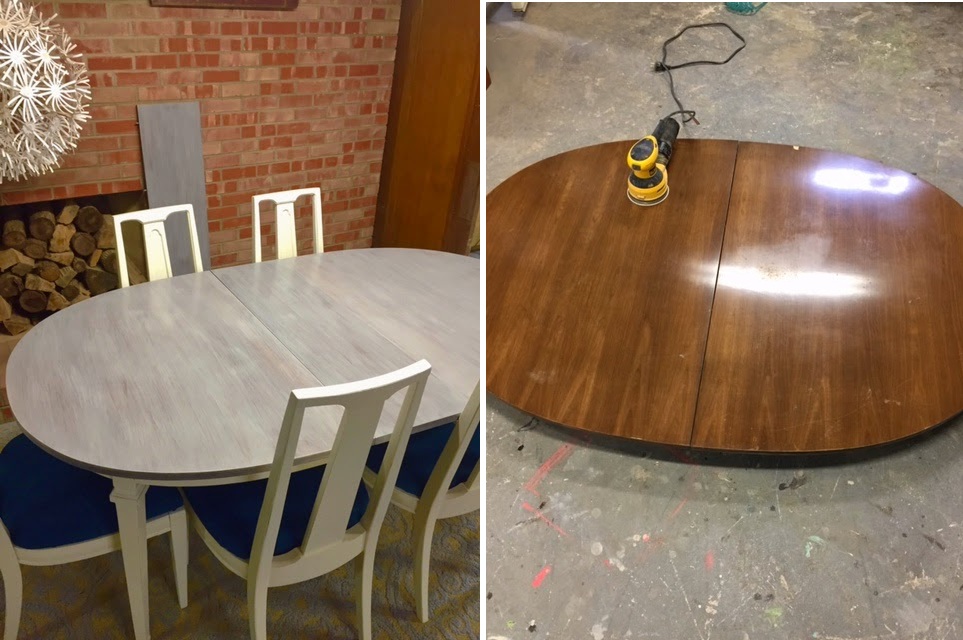
Creamy white lacquer covers the table apron, legs, and chairs, while blue seat cushions provide contrast against the gray tabletop.
What makes this makeover worth considering is that wood veneer does not always need to be stripped or covered with solid paint to change its appearance. Even an old sock can become a refinishing tool.
Would you give your brown dining table a driftwood finish or keep its original wood color?
Image credits belongs to @simpleredesign