He Cut Up Old Cardboard Boxes and Used Them to Make His Own Concrete Patio Pavers


Buying patio pavers means working with the shapes, sizes, and colors available at home improvement stores. But if you want a pattern that isn’t on the shelf, you don’t have to settle for what is available. This project started with something most homeowners put in the recycling bin: old cardboard boxes.
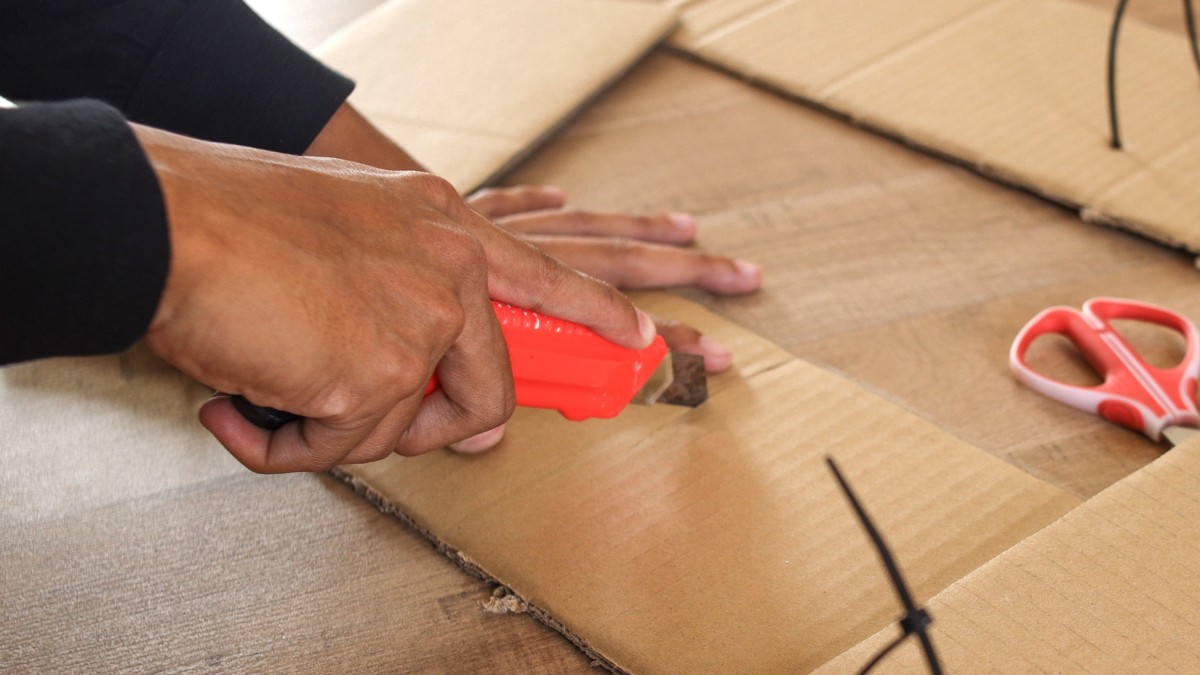
Cutting the cardboard into two five-sided shapes provided the starting point for reusable molds that could produce enough concrete pavers for an entire patio.
Ben Uyeda, the creator behind HomeMadeModern and a Homedit DIY contributor, developed the method using cardboard, drywall joint compound, silicone, and concrete mix.
Old Cardboard Boxes Became Paver Prototypes
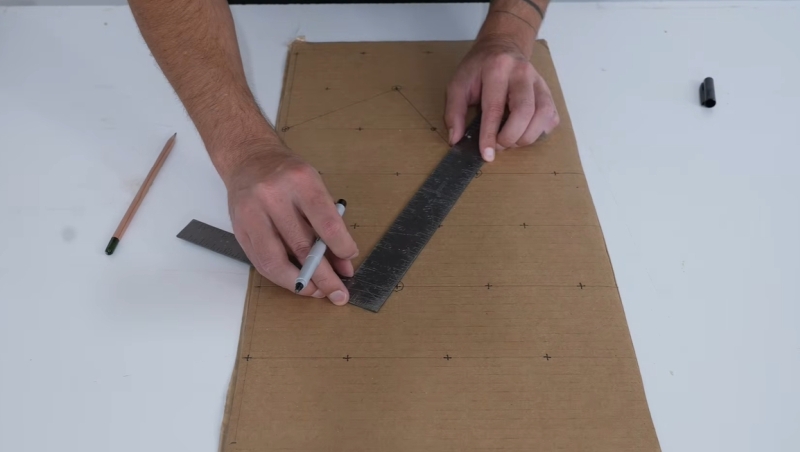
Using a three-inch offset grid, Ben marked points on flattened cardboard before connecting them with a metal ruler. His design consists of two five-sided shapes that fit together in a pattern resembling a turtle shell.
Two layers of cardboard were glued together to strengthen each prototype before adding thickness.
One-Inch Cardboard Strips Established the Shape
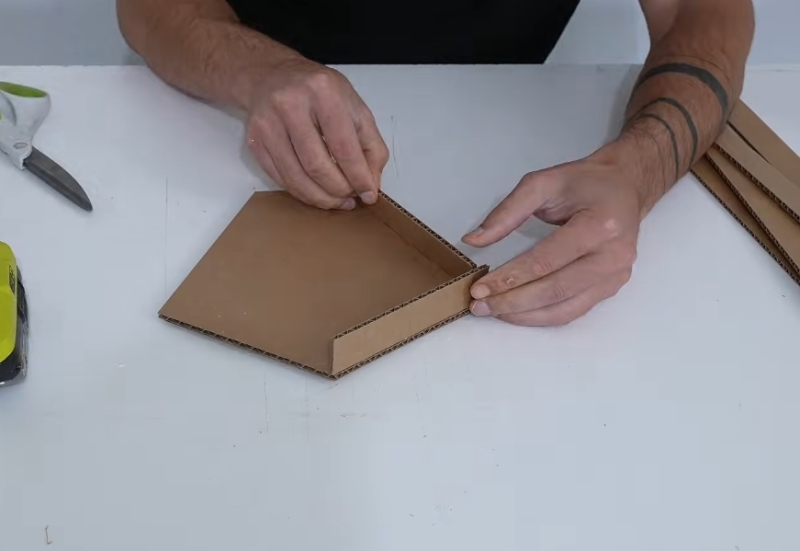
Cardboard strips measuring one inch wide were attached around the perimeter with hot glue. These strips establish the thickness of the future concrete pavers and turn the flat templates into three-dimensional prototypes.
More Cardboard Reinforced the Structure
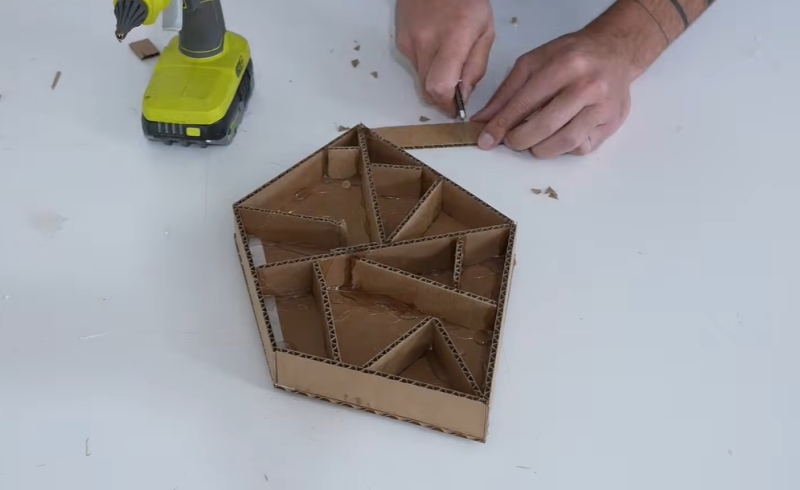
Smaller cardboard sections were added inside each prototype to support the surface and prevent it from bending.
Two coats of drywall joint compound covered the cardboard, with sanding between applications to remove imperfections and round the edges. Minwax Polycrylic sealed the surfaces before the silicone was introduced.
Two Reusable Silicone Molds Can Produce an Entire Patio
Both prototypes were secured to a melamine board and surrounded by two-inch cardboard borders. Mold Star 30, a two-part silicone, was poured around the shapes and left to cure for about ten hours.
Once the silicone set, the cardboard borders and prototypes were removed, leaving two molds that could be filled with concrete over and over again.
White Concrete and Green Pigment Create the Paving Pattern
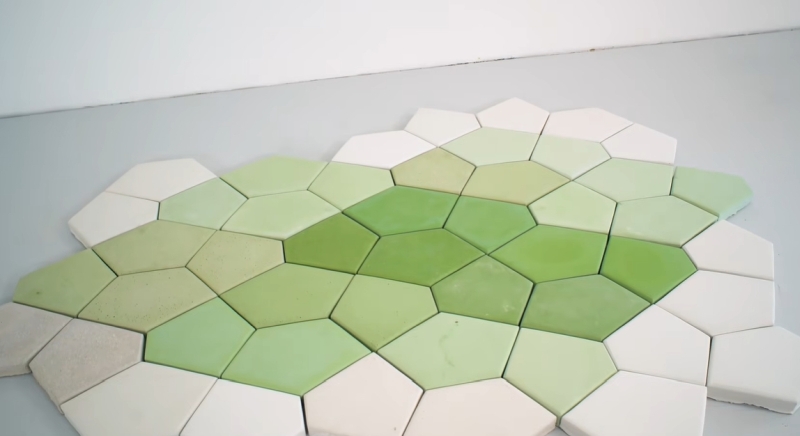
White concrete countertop mix forms the base of each paver, with different amounts of green pigment added between batches. This produces variations in color across the interlocking shapes.
Ben removed each pair from the molds after about 12 hours, casting another set every morning and evening. Full curing before installation depends on the concrete manufacturer’s instructions.
Concrete has featured in several of his furniture projects, while other materials appear in his Homedit tutorial for building a coffee table with a slate tile top and wooden balusters.
Is Making Your Own Patio Pavers Worth the Work?
Silicone accounts for a portion of the initial expense, but the cardboard prototypes can produce additional molds if needed. At the time of filming, Ben estimated another two to three weeks of casting before having enough pavers to cover his patio.
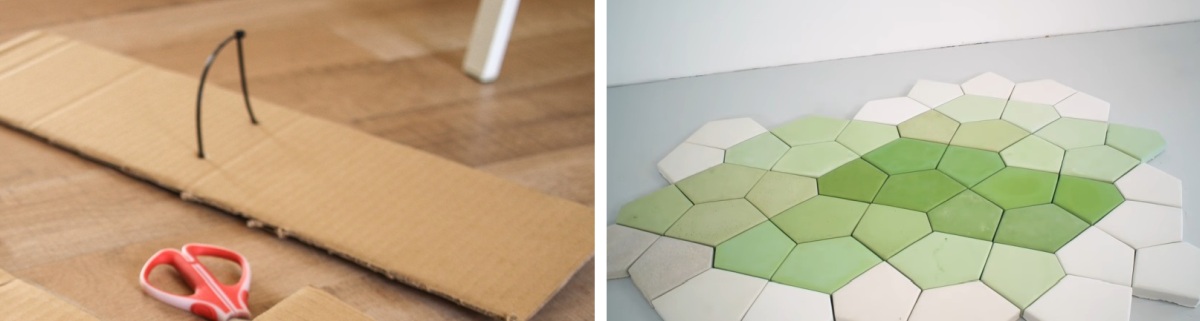
Buying pavers saves time, but making your own gives you control over the shape, thickness, color, and pattern before laying the first stone.
Cardboard boxes are not the only household waste that can help shape concrete, as seen in another DIY project where cut-up milk jugs served as molds for homemade cobblestones along a backyard walkway.
Would you spend several weeks making your own concrete pavers to get a patio pattern you couldn’t buy in stores?
Image credits belongs to youtube.com/@HomeMadeModern