They bought a 1950s house one family had kept for 63 years, then spent three months living in a pop-up camper in the backyard


The house in Boulder, Colorado, was everything Dee Saale and her husband wanted. Built in the 1950s and lovingly maintained by the same family for 63 years, it was structurally sound. It also hadn’t been renovated in decades, and the kitchen had to go.
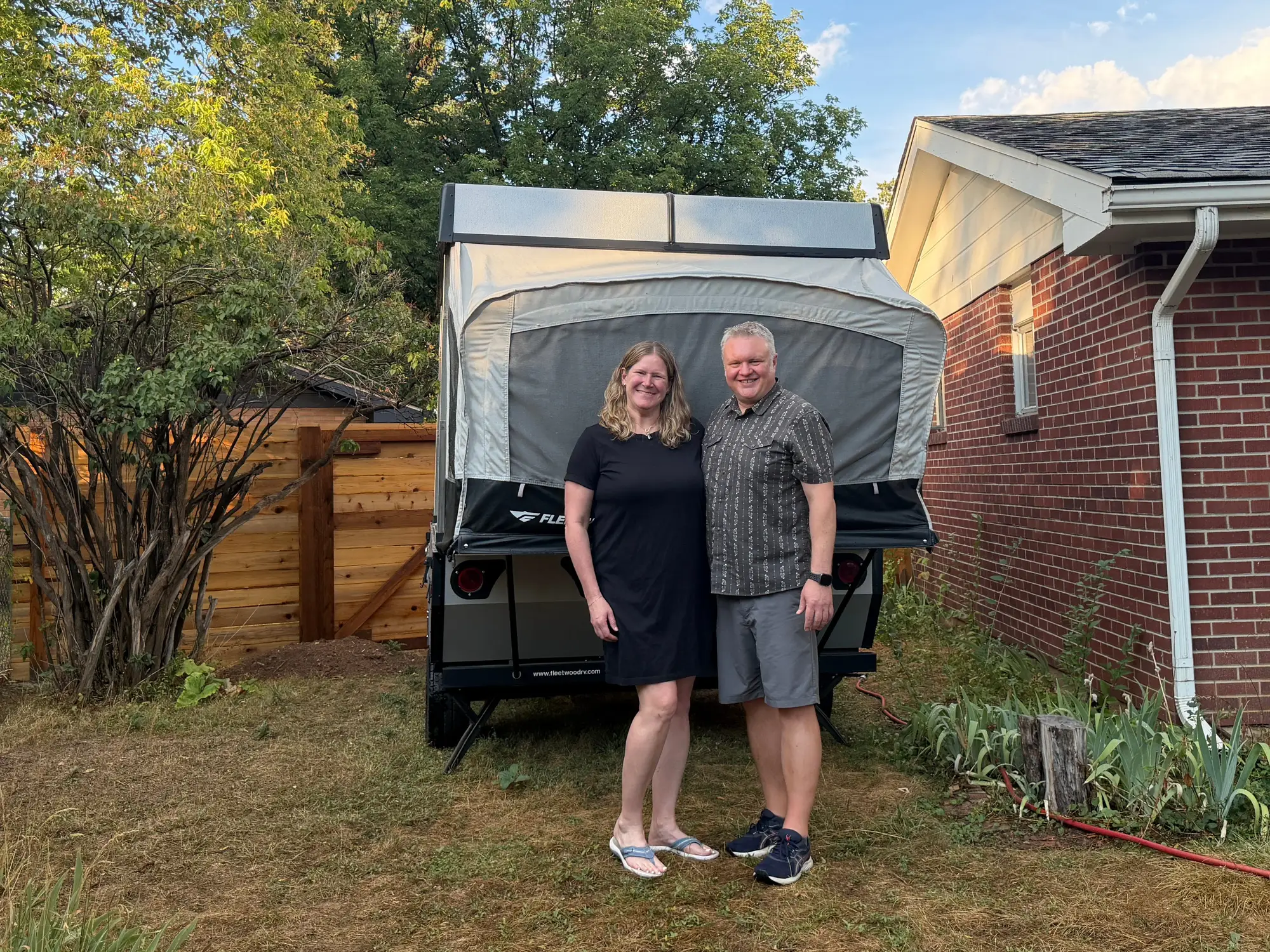
That left a problem every renovating couple knows. Living in a house while the kitchen is torn out is hard, and paying to live somewhere else eats the budget meant for the house. Their answer was one they already owned: the pop-up camper they had bought about 20 years earlier for camping trips.
Why they skipped the hotel
A hotel in Boulder would have cost hundreds of dollars a night. Short-term rentals weren’t much better, especially in summer and during the rush of university move-in season.
The couple also accepted that the work would happen in stages. “We knew we couldn’t do everything at once,” Saale writes.
The lot helped. At over a third of an acre, the yard is large by Boulder standards, with room for the camper next to the patio.
Three months in a 15-foot camper
They moved into the backyard for three summer months. Here is what daily life looked like:
- The camper. Fully extended, it measures about 15 feet long, 7 feet tall and 7 feet wide, with two double beds on foam mattresses and a small booth-style table.
- No camper sink. They never hooked it up, worried about mold.
- The house bathroom. It stayed in working order, so they showered there and even rinsed fruit and vegetables in it once the kitchen was demolished.
- An outdoor kitchen of sorts. A toaster oven, a slow cooker and a microwave ran from outdoor outlets, with disposable dishes and most meals on the patio.
- Careful cooking. They avoided cooking in ways that would draw wildlife.
That last point matters in Colorado. Colorado Parks and Wildlife notes that when natural food runs short, bears can move into neighborhoods, and it asks residents to clean and store grills and never leave pet food outdoors.
Three months is also about how long it took to rework a tiny 1937 Charleston kitchen that had no room for a stove, with old tile from the attic reused as the oven backsplash.
Today, most of the Boulder renovation is complete, and the couple is living with a new kitchen.
What a backyard stay doesn’t fix
Saale doesn’t pretend it was easy. She admits they didn’t love every minute of the three months in the yard. They could have spent thousands of dollars making the camper more comfortable, and chose to put that money into the house instead.
The setup leaned on three things: summer weather, a bathroom that still worked inside the house, and outdoor outlets close by. Take one away and the stay gets much harder.
The age of the house matters too. According to the EPA, a home built before 1978 is more likely to have lead-based paint, and renovation that disturbs painted surfaces may create large amounts of lead dust. In a 1950s house, that is worth checking before demolition starts, especially if you plan to live a few steps away.
Still, Saale’s verdict is clear: the stay wasn’t perfect, but it saved them a lot of money. Stay on the property and put the comfort money into the house. That’s the trick.