Dishwasher: the simple trick to stop white marks on your glasses


You open the dishwasher and every glass comes out cloudy, with a milky haze that no towel can polish off. They look old and dirty even though they just came out of a hot wash, and it’s tempting to decide they’re ruined and toss them.
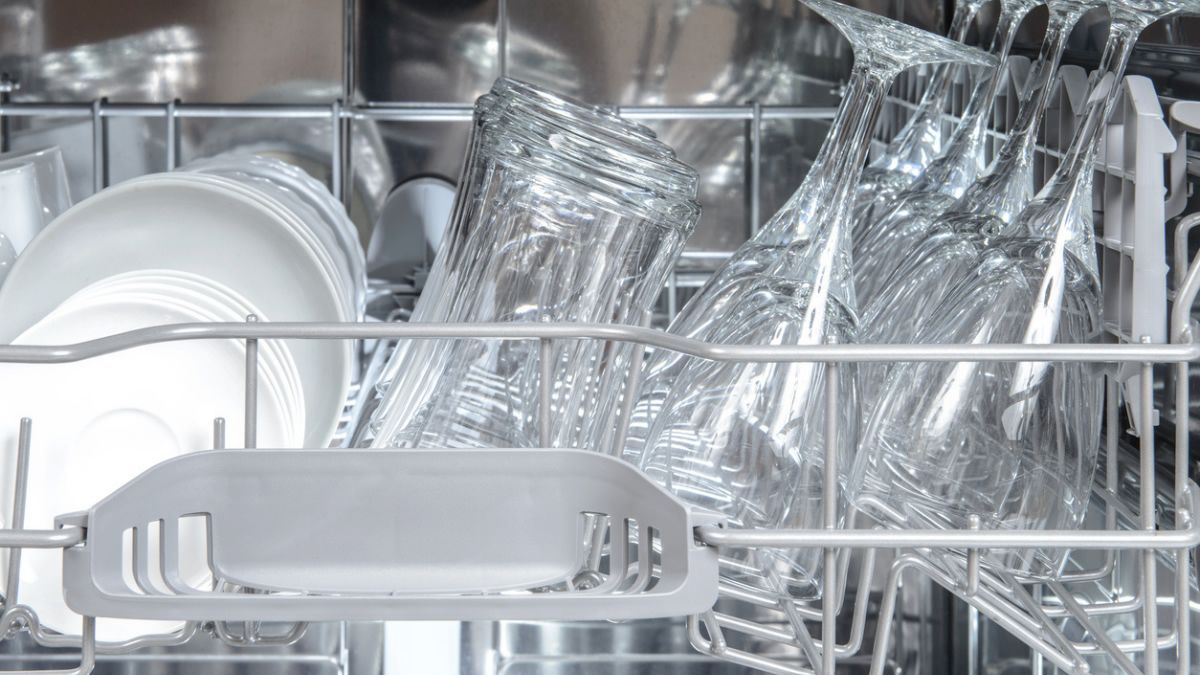
The glasses may not be the problem at all. That haze is often a film of minerals left behind by hard water, and it comes off. A small vinegar test tells you which kind you’re dealing with before you replace anything.
Film or etching: what that white haze really is
Hard water is water with a lot of dissolved calcium and magnesium. The U.S. Geological Survey points out that one of the most common causes of cloudy dishes and glassware is hard water. Each cycle leaves a thin layer of those minerals on the glass, and the layers build up into a white film. Too much detergent and poor loading can add to it.
Etching is different. Appliance makers describe it as permanent dullness or roughness in the glass surface itself, often linked to very soft water, too much detergent and long or very hot cycles. Etched glass can’t be repaired.
The vinegar test sorts them out in a minute. Dip a cloth in white vinegar and rub a cloudy spot in small circles. If the haze lifts and the glass gets clearer with each wipe, it’s mineral film. If it stays foggy, it’s etching.
Vinegar dissolves mineral buildup elsewhere in the kitchen too. On a faucet crusted with hard water deposits, a bag of vinegar tied around the spout for a few hours, or overnight for heavy buildup, loosened the crust without scrubbing.
Clearing the film with one vinegar cycle
- Test one glass. Do the vinegar rub first. The cycle only helps glasses with mineral film.
- Load only the cloudy glasses. Put them on the top rack, with the rest of the dishwasher empty.
- Add the vinegar. Fill a dishwasher-safe bowl or measuring cup with about 2 cups of plain white vinegar and set it upright on the top rack among the glasses.
- Skip the detergent. Leave the dispenser empty for this cycle.
- Run a normal hot cycle. Check the glasses when it ends, and repeat once if some haze remains.
Plan B, if you’d rather not run a cycle: lay the glasses on their sides in a sink or dishpan, cover them completely with white vinegar for 15 minutes, then hand wash with dish soap and warm water.
Dry right away with a microfiber cloth, since air drying can leave new water spots.
What vinegar can’t undo, and how to keep the haze away
Vinegar won’t fix etching. If the rub test leaves the glass foggy, the surface is damaged, and the only fix is replacing the glasses. To protect the ones you have left, appliance makers suggest washing below 140°F, skipping the high-temperature and sanitize options, and using less detergent if your water is soft.
For film, prevention is simpler than cleanup. Keep the rinse aid compartment filled, avoid heavy pre-rinsing, run full loads, and clean the dishwasher regularly so mineral buildup doesn’t collect inside it.
Check your dishwasher’s manual before running vinegar through it, and keep delicate pieces like crystal or hand-painted glass out of the machine entirely. Rub one glass with vinegar before you decide it’s ruined. That’s the trick.