She Used Black Caulk to Draw Giant Flowers on Her White Patio Wall, Then Filled Them With Paint


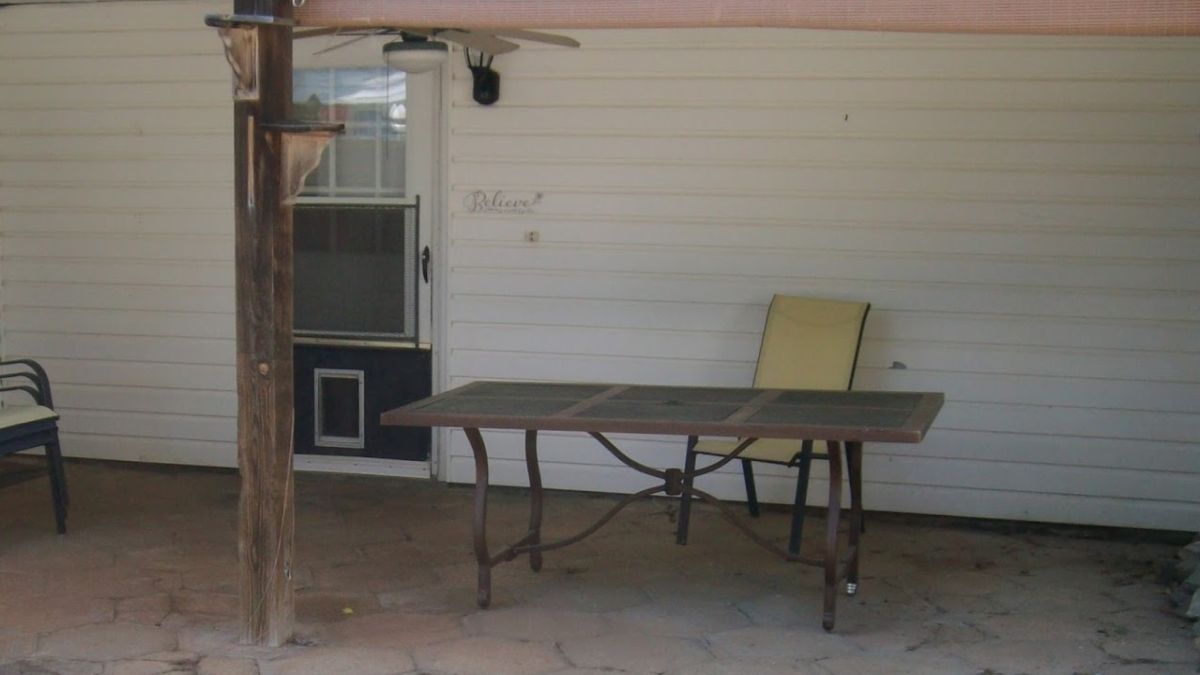
White vinyl siding covered the back wall of this North Carolina patio, with a few chairs, a table, and a bamboo shade hanging between wooden posts. The homeowner wanted more color around the seating area, but the bamboo coverings she had tried before developed mold in the humid climate and had to come down.
Rather than replace the siding or cover it with another material, she decided to paint flowers across the wall. The project started with pastel chalk sketches, followed by black caulk applied over the outlines. Exterior paint would fill the spaces between the lines, turning the white siding into a mural of oversized poppies and peonies.
Dianna Wood, who shares her projects on The Wood’s Secret Garden, created the artwork after moving to North Carolina with her husband, Michael. She chose orange-red flowers and green leaves to complement patio furniture they had purchased from local thrift stores.
The Patio Had White Siding and a Few Pieces of Outdoor Furniture
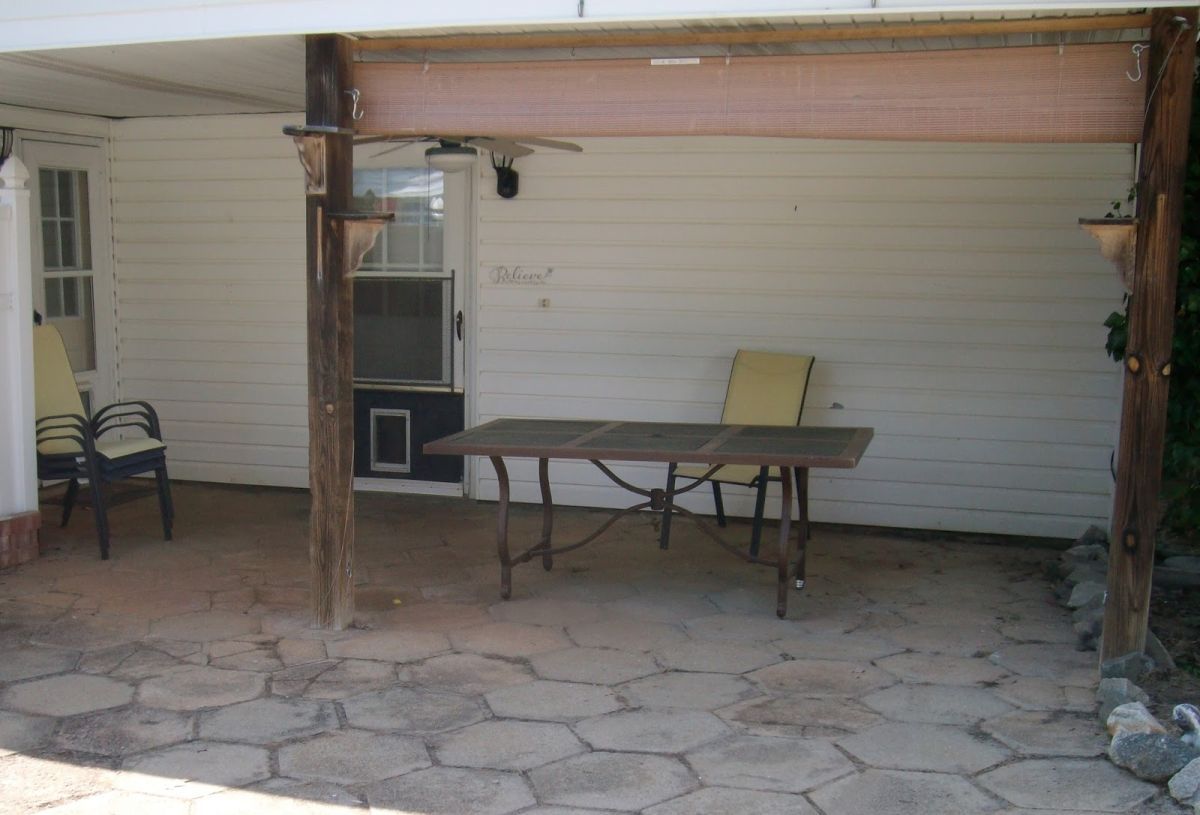
Before the mural, the covered patio had a long white wall, a stone-patterned floor, wooden support posts, and a glass-topped table. The seating area connected the main house to the in-law quarters, where Dianna’s mother lived.
Two green chenille chairs purchased for $20 each helped establish the color scheme, along with a $20 glass table and several secondhand dining chairs.
Pastel Chalk Provided the Outline for Giant Flowers
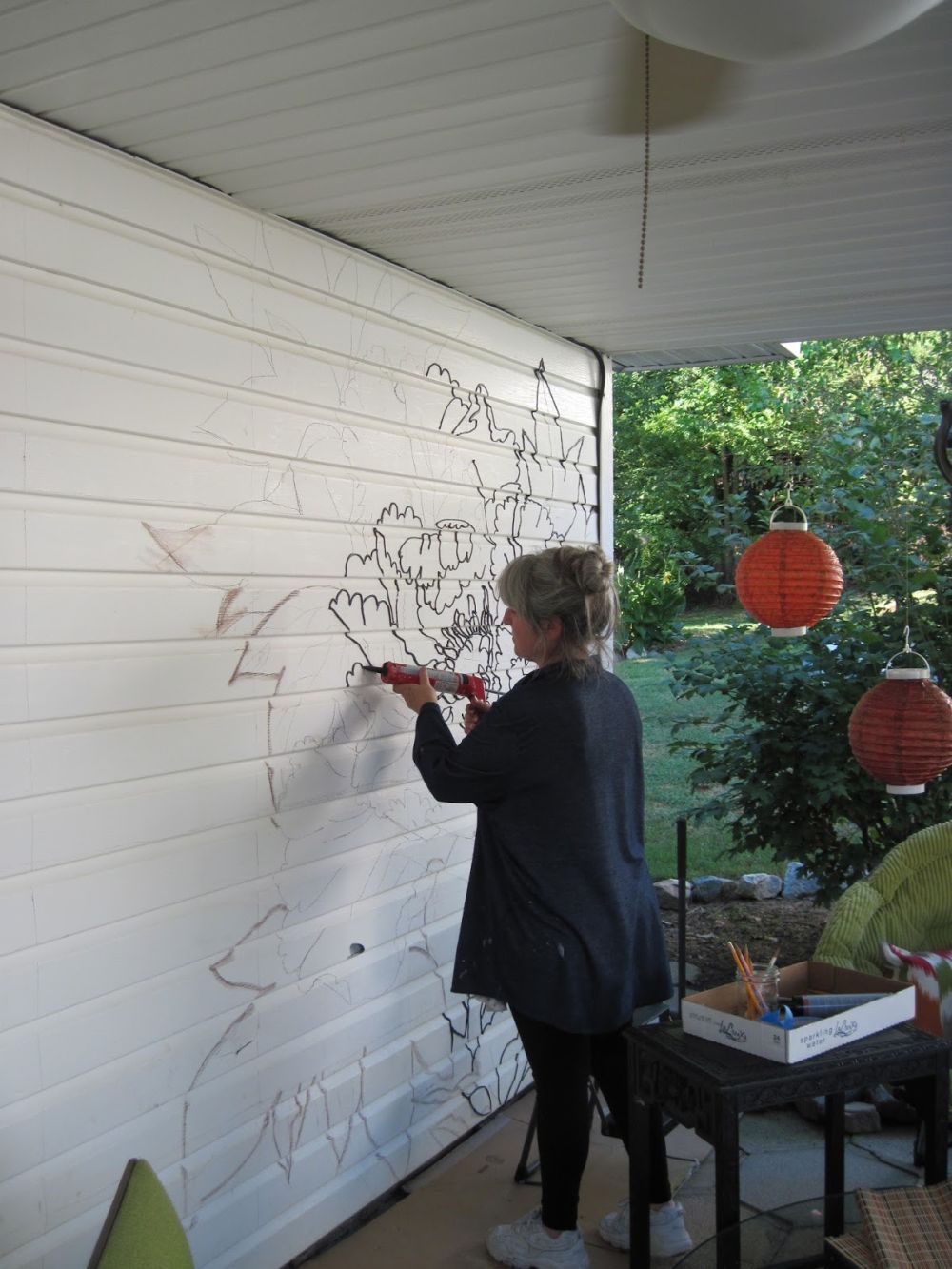
Dianna drew the flowers across the horizontal siding with pastel chalk, using the wall as her canvas. The design included broad petals, stems, leaves, and flower buds, with the largest blossoms extending from near the floor toward the ceiling.
The chalk marks gave her a guide for the next stage without leaving permanent lines where she wanted to make adjustments.
Black Caulk Replaced Paint for the Flower Outlines
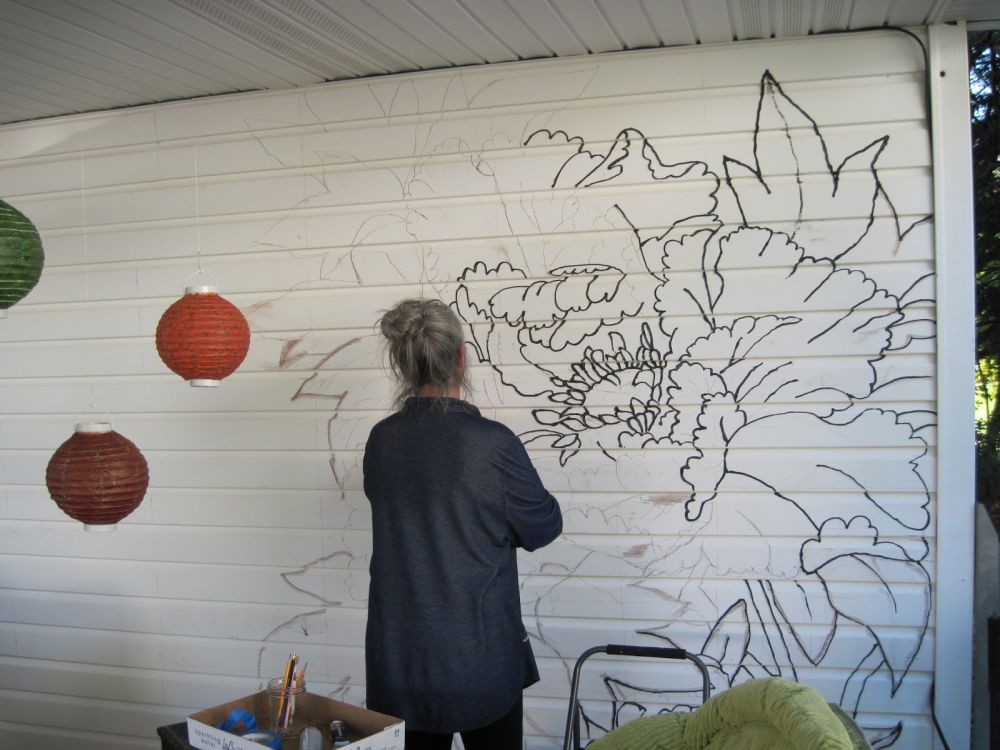
Using a caulk gun, Dianna traced the flower shapes with black caulk, following the curves of the petals and leaves. The material formed raised outlines against the siding, separating the sections that would receive different paint colors.
She kept a damp cloth nearby to wipe away mistakes and remove excess caulk from the applicator tip. After letting the lines dry for several hours, she pressed down any raised points before painting.
Yellow and Green Paint Established the First Colors
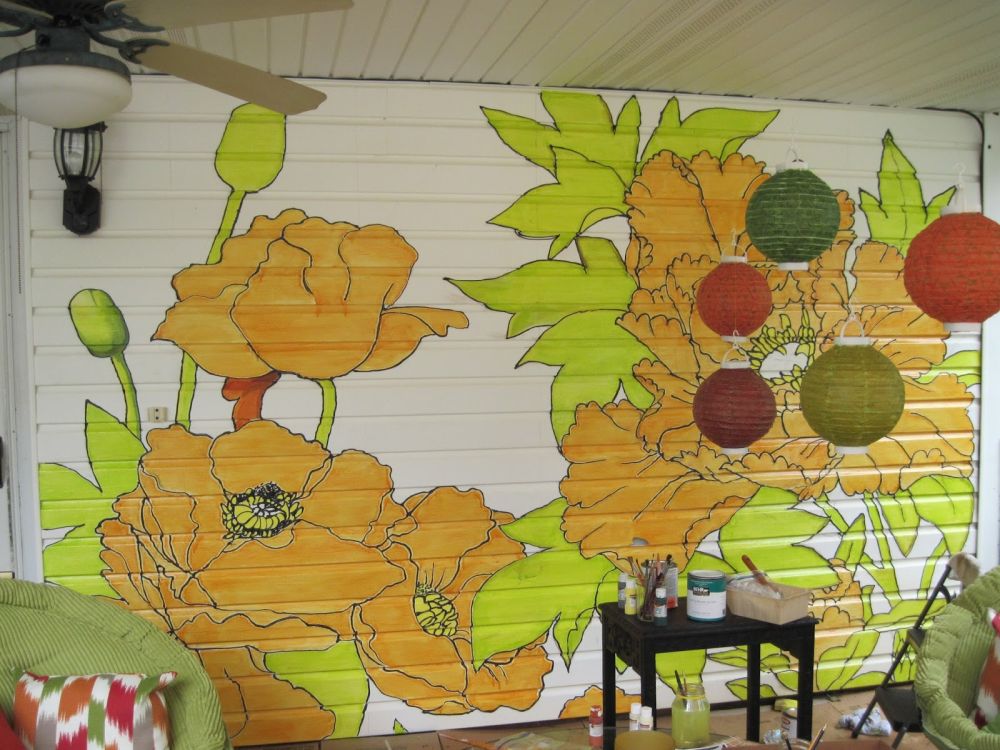
The first paint layers gave the flowers yellow-orange petals and the leaves a light green finish. Black outlines remained visible across the design, defining the individual petals and the centers of the blossoms.
Dianna used exterior latex semi-gloss paint, applying more than one coat where the colors needed greater coverage.
Red Paint Changed the Flowers From Yellow to Orange-Red
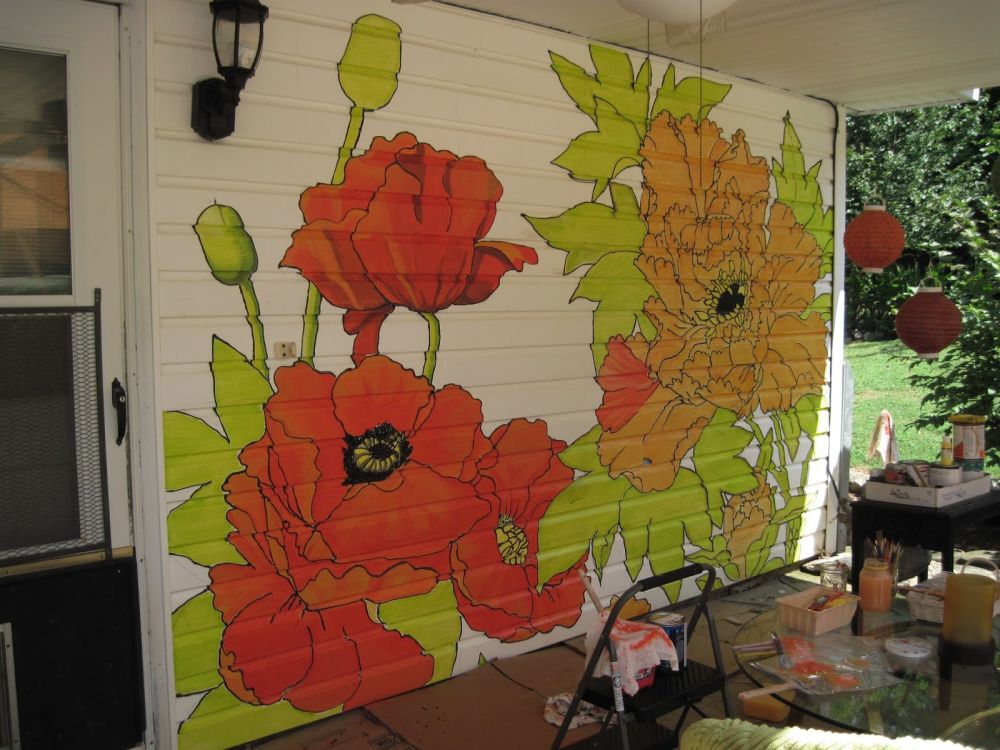
Red paint went over sections of the yellow base, creating orange and coral tones across the petals. Some yellow remained near the centers and edges, while darker paint defined the folds.
The flowers took on different shades without requiring a separate color for each petal.
Dark Green Leaves Completed the Floral Wall
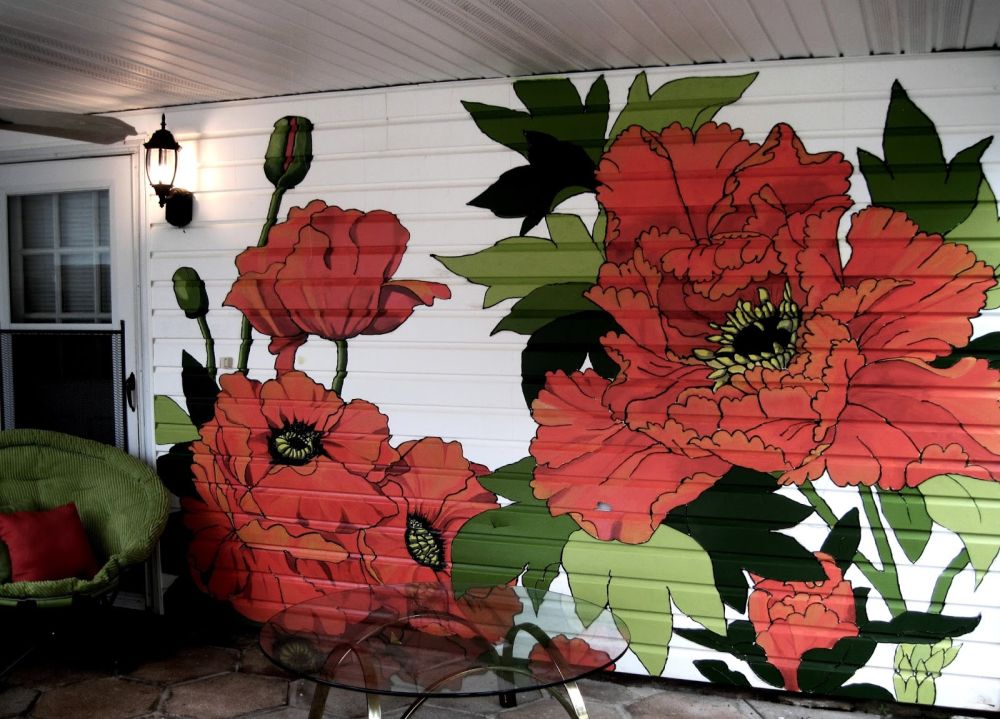
The finished mural covers the siding with large red-orange blossoms, dark flower centers, and green leaves. The black caulk outlines remain visible, following the contours of the flowers across the horizontal siding.
The original white wall still shows between the painted sections, while the ceiling, door, and wall-mounted light remain unchanged.
The Outdoor Seating Area Became Part of the Mural
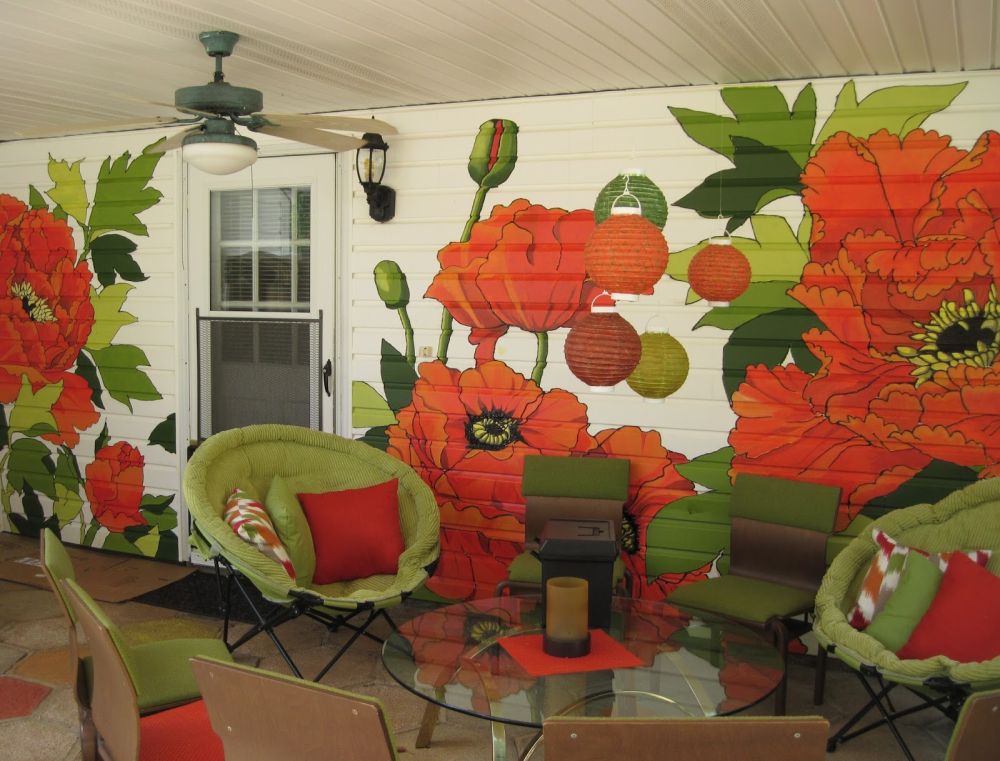
The completed wall sits behind green lounge chairs, a glass table, and hanging paper lanterns in orange, red, and green. The furniture colors relate to the leaves and petals, connecting the mural to the rest of the patio.
Dianna extended the design around the door and onto the adjoining wall, allowing the artwork to continue across the seating area rather than stopping at one section.
The Before-and-After Shows the Change Without New Siding
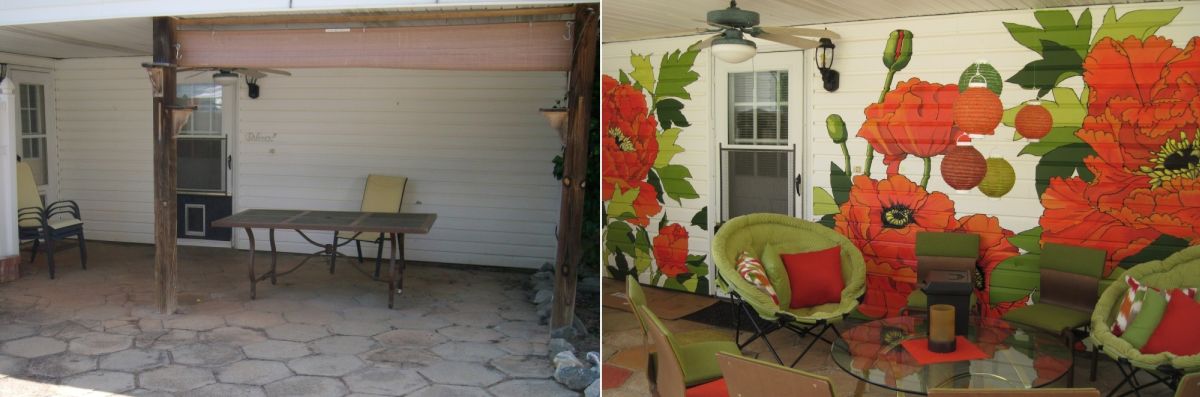
The original patio had plain white siding behind a small table and chairs. After the project, oversized flowers cover the walls, while the existing siding, roof, door, and stone-patterned floor remain in place.
The makeover replaced the failed bamboo wall covering with painted artwork, using the exterior wall as the foundation for the design.
Paint can also change the look of the patio floor, as another homeowner demonstrated when she used painter’s tape and two paint colors to create a tile pattern on her concrete patio without installing new tiles.
Would you paint giant flowers across your patio siding or keep the wall in its original color?
Original project and photographs: Dianna Wood, The Wood’s Secret Garden, “Painted Patio Wall Transformation – Our New Secret Garden,” published August 23, 2017.