Instead of Laying Patio Tiles, She Used Painter’s Tape and Two Paint Colors on Her Concrete Patio


Concrete patios can develop cracks, stains, and worn patches after years of exposure to rain, dirt, and outdoor furniture. Installing new tiles can cover the surface, but paint offers another way to create a tiled appearance without adding new flooring.
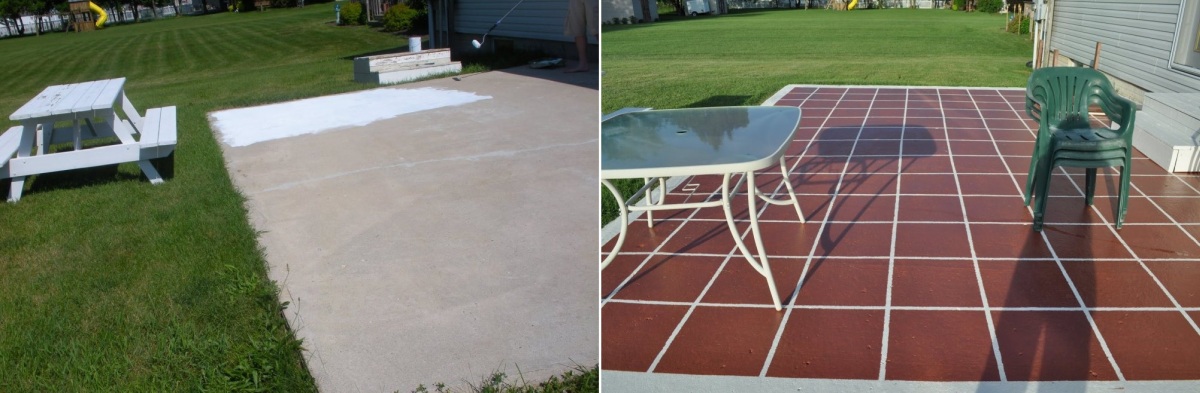
The homeowner behind Keep Calm and Decorate took this approach with a large backyard patio. After cleaning the concrete and filling the cracks, she used painter’s tape to mark a grid of 16-inch squares, then covered the surface with two contrasting paint colors.
The finished patio resembles reddish terracotta tiles separated by pale grout lines. No tiles were installed, and the original concrete slab remained beneath the painted pattern.
The Original Patio Was Plain Concrete
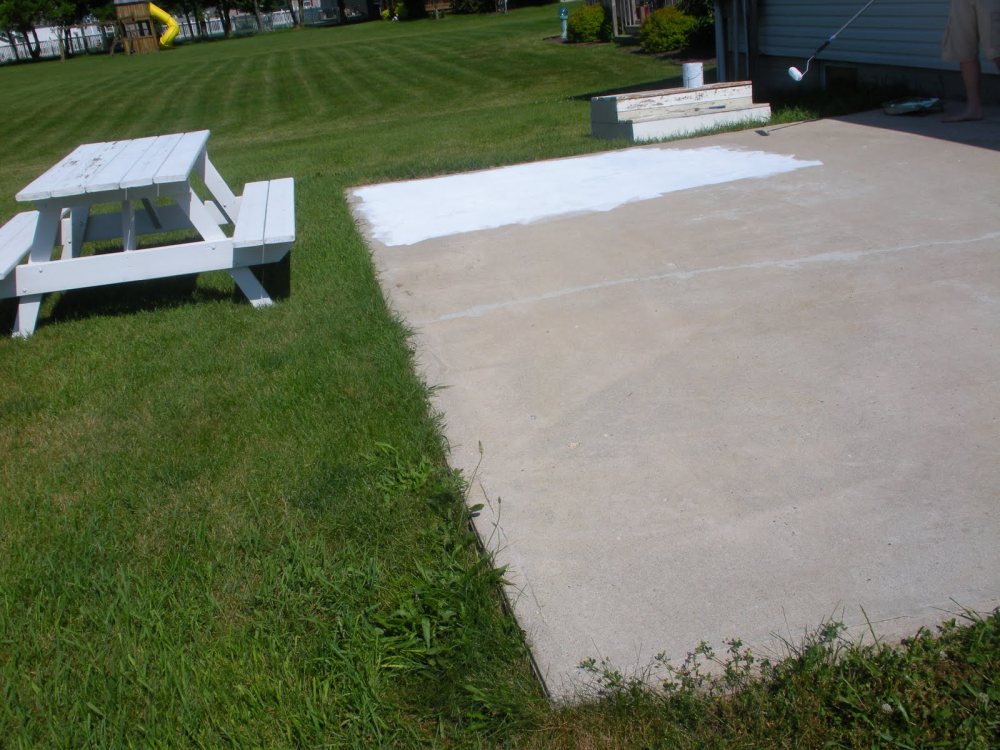
The backyard had a large rectangular concrete slab extending from the house toward the lawn. Its surface showed discoloration and signs of wear, with a small wooden staircase leading to the back door.
Before painting, the patio was pressure-washed to remove dirt and mold. Cracks were filled with concrete repair material and left to dry before the surface received a mold-resistant primer.
White Paint Created the Base for the Tile Pattern
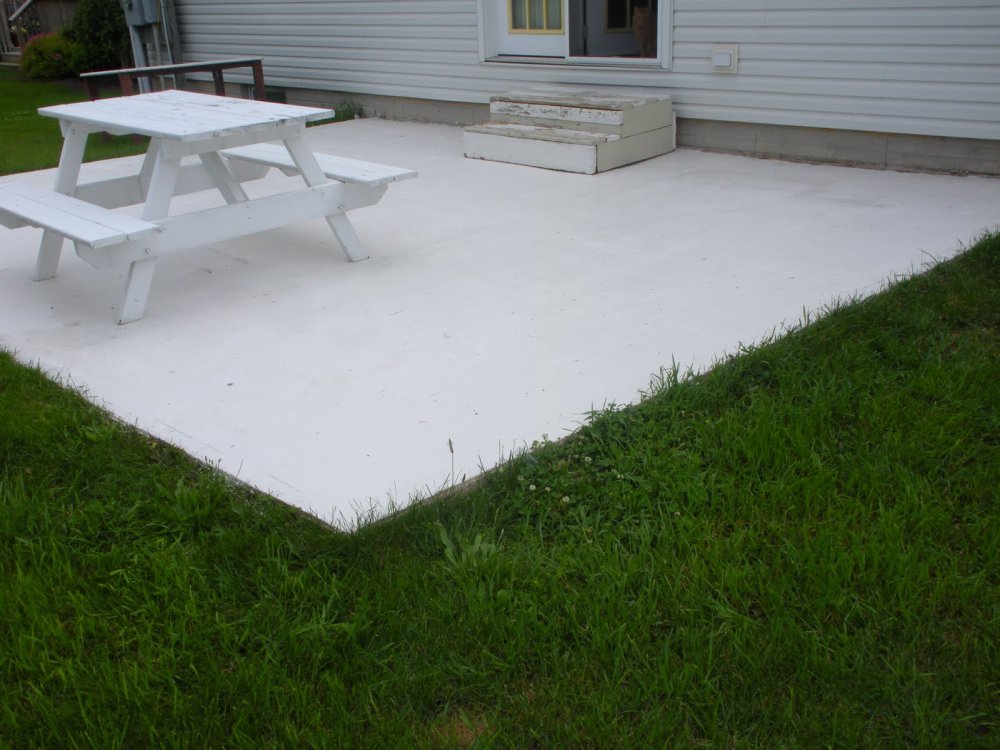
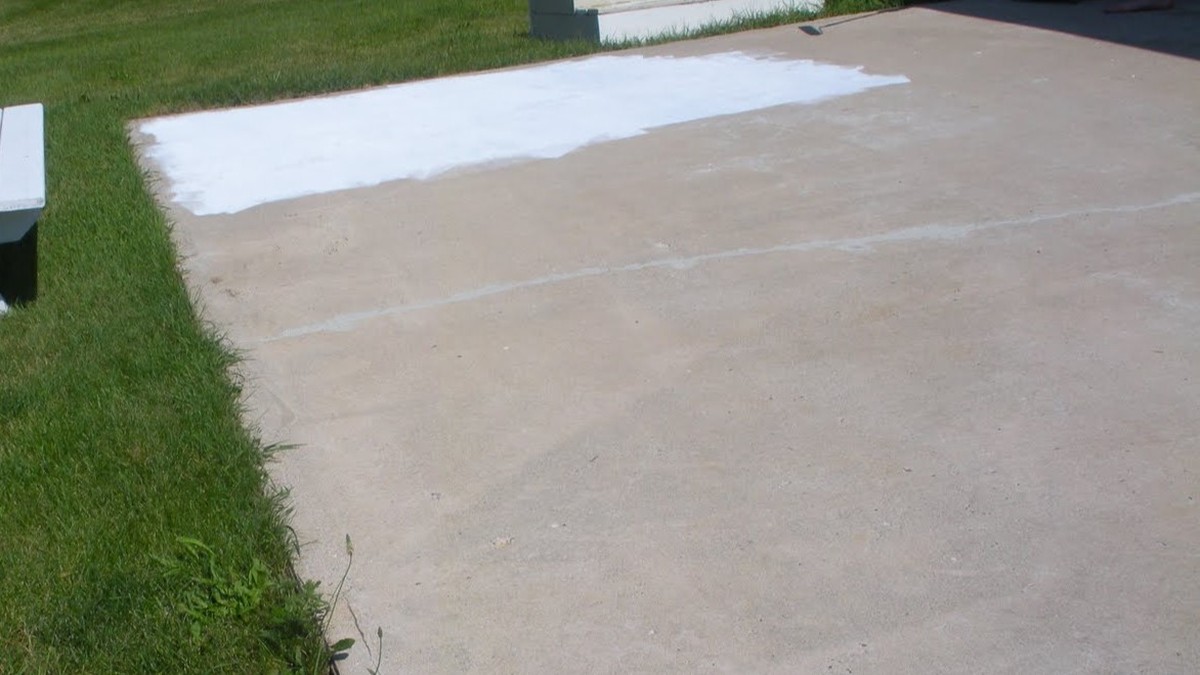
The primed patio received a coat of Valspar Porch and Floor Oil Paint in a color called Chowder. This pale finish would become the visible lines between the painted tiles.
The entire slab received the base color, including the area where the grid would be marked. The homeowner used a roller designed for concrete surfaces to apply the paint.
Painter’s Tape Marked 16-Inch Squares
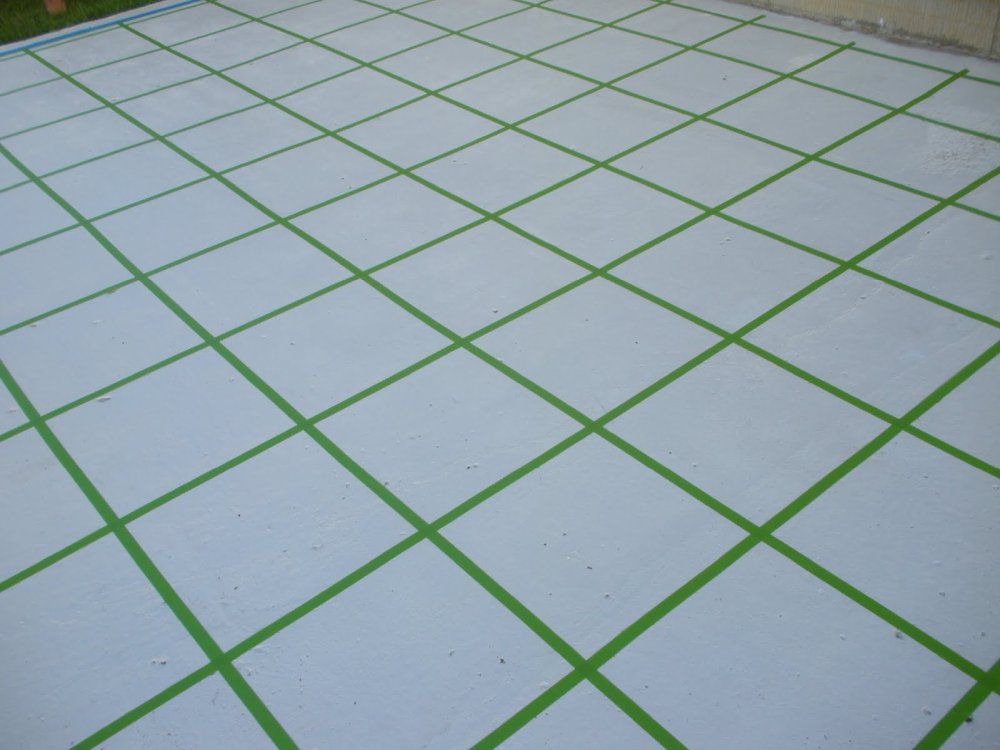
Once the base coat dried, strips of 1-inch FrogTape were arranged across the patio in a grid of 16-by-16-inch squares.
The tape followed straight horizontal and vertical lines, leaving equal-sized sections across the concrete. An 8-inch border was left around the outside edges, separating the pattern from the surrounding grass and house.
Rusted Earth Paint Covered the Grid
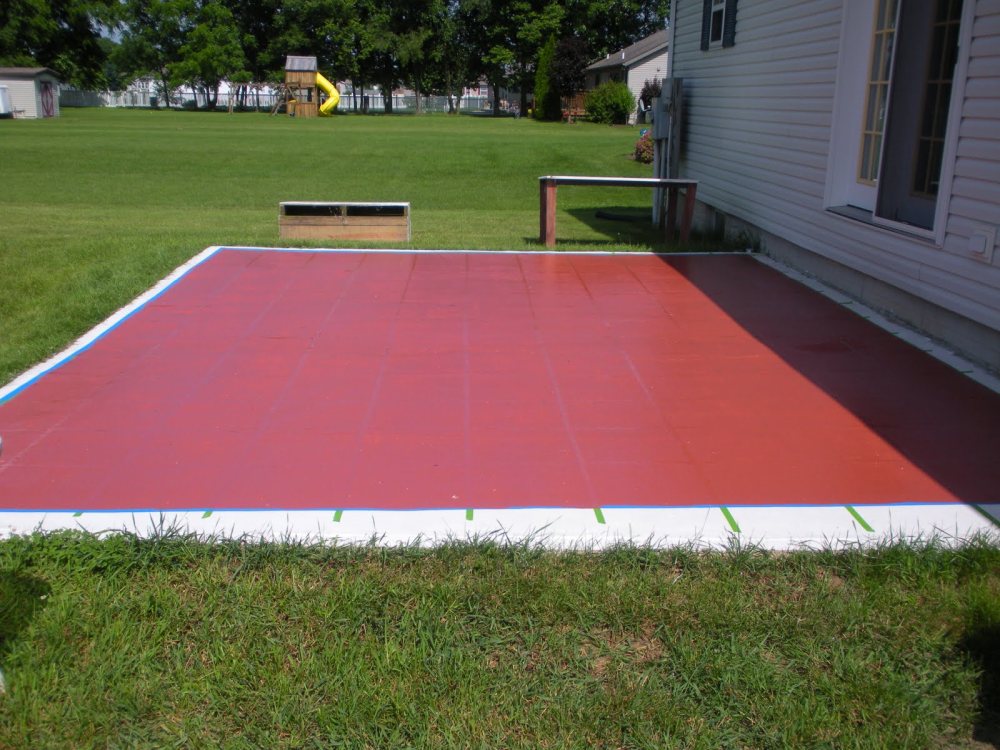
The second color was Valspar Porch and Floor Oil Paint in Rusted Earth, a reddish-brown shade.
Paint was rolled across the taped surface, covering the squares while the strips protected the lighter base coat beneath them.
After 24 hours of drying, the tape was removed to expose the Chowder-colored lines.
The Finished Patio Resembled Terracotta Tiles
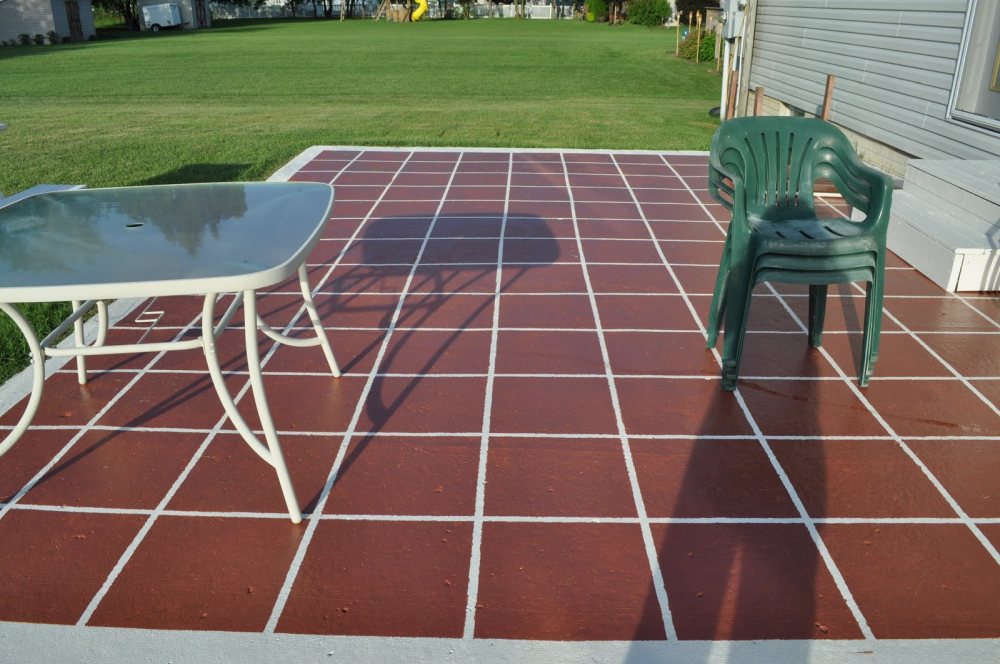
Removing the tape revealed a grid of reddish squares separated by pale lines. The pattern resembles large outdoor tiles, although the surface remains painted concrete.
The white border around the edges frames the grid, while the straight lines give the rectangular slab a defined pattern without cutting into the concrete.
The Painted Surface Became an Outdoor Seating Area
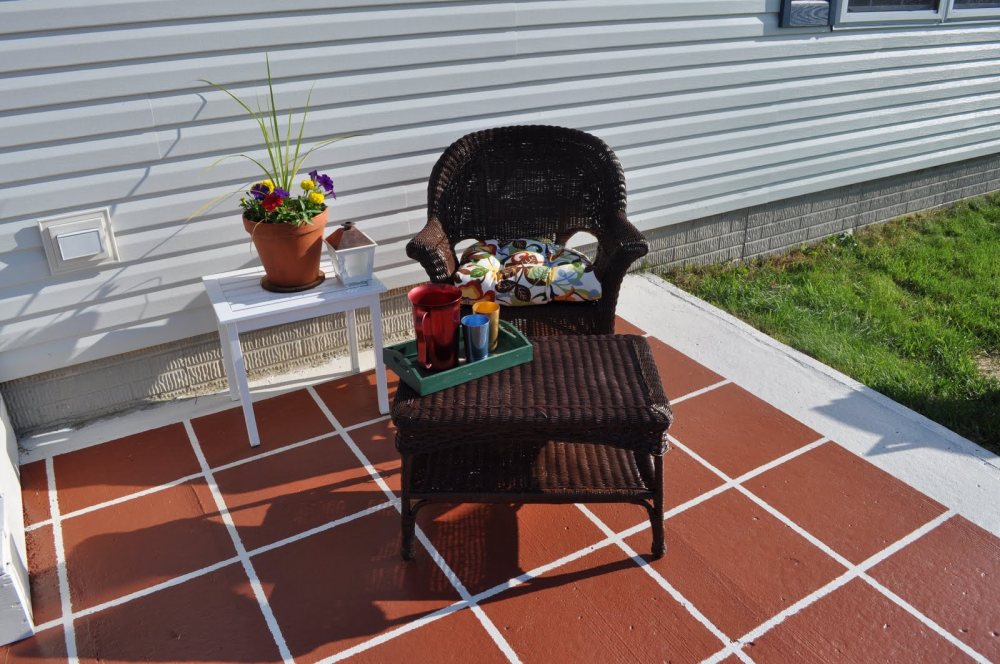
The finished patio was furnished with a wicker chair, matching footstool, and a small white side table. The painted squares remain visible beneath the furniture.
The original concrete steps also received a white finish, matching the border around the patio.
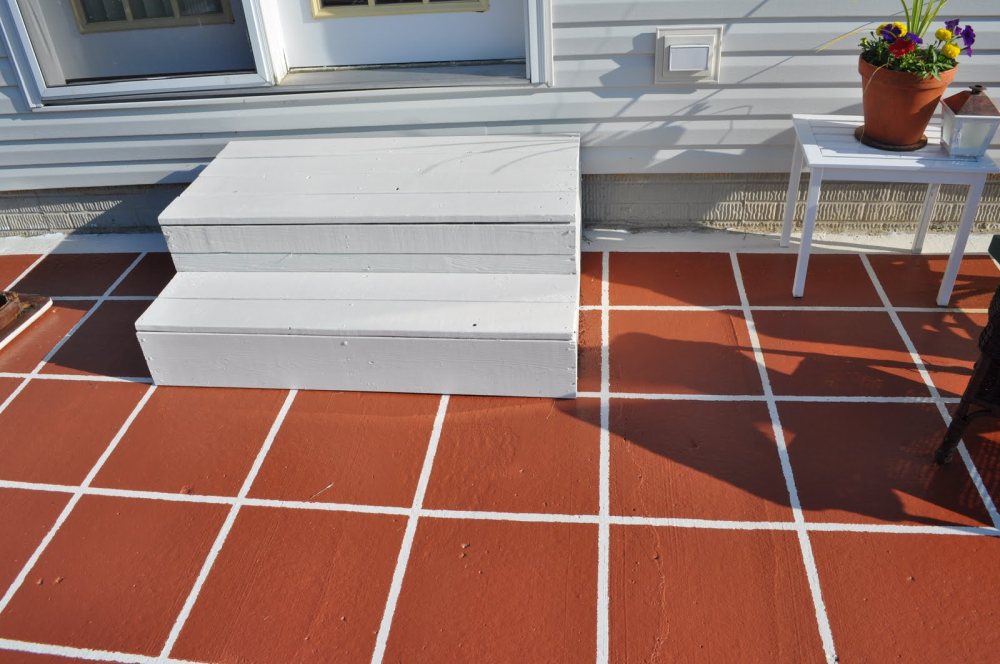
The close-up shows the contrast between the white steps and reddish floor. The painted pattern extends toward the entrance, with the square outlines remaining visible across the slab.
The project changed the appearance of the patio without covering it with pavers or adding a new layer of flooring. Outdoor paint requires a suitable concrete surface, and future maintenance depends on weather exposure, preparation, and foot traffic.
Another homeowner took a similar budget-conscious approach outdoors, removing old gray porch carpet and spending 16 hours painting the floor to look like tile instead of installing new flooring.
Would you use painter’s tape and concrete paint to create a tile pattern, or install outdoor tiles instead?
Image credits go to Keep Calm and Decorate.