She Left a Damaged Victorian Dressing Table in Her Kitchen for a Year, Then Painted It Yellow With Stripes


Victorian dressing table sat in a Cornwall kitchen for a year, its curved front covered in chipped finish and its wooden top marked by scratches. Six small drawers, carved legs, and tall mirror supports remained intact, but the amount of damage made the restoration a project its owner kept putting off.
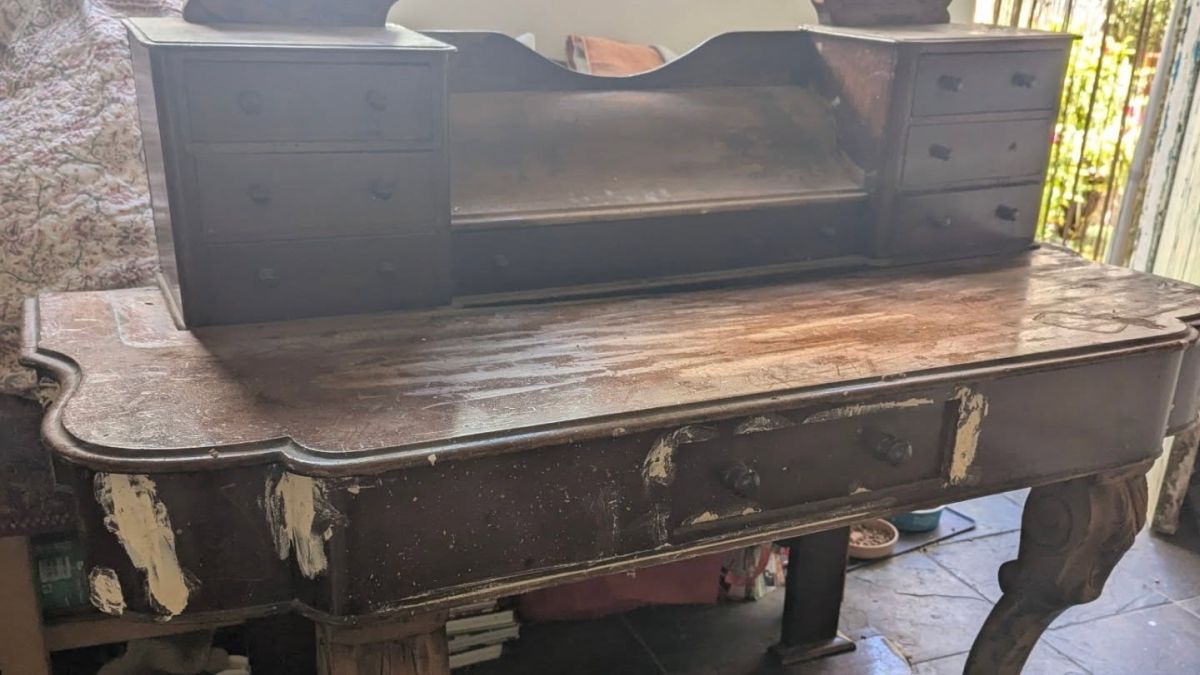
After a year of avoiding the work, the furniture painter decided against returning the piece to its original dark brown finish. She repaired the damaged sections, covered much of the frame in mustard yellow, and added cream stripes across the curved front while leaving the tabletop with a washed wood finish.
Furniture artist @olyaupcycle from Penzance, Cornwall, used Dixie Belle Colonel Mustard and Burlap paints, with touches of blue, red, and green beneath the yellow finish. Her Bridgerton-inspired makeover retained the Victorian carvings and drawer arrangement, with dark wax used to bring out the details.
Damaged Victorian Dressing Table Sat Untouched for a Year
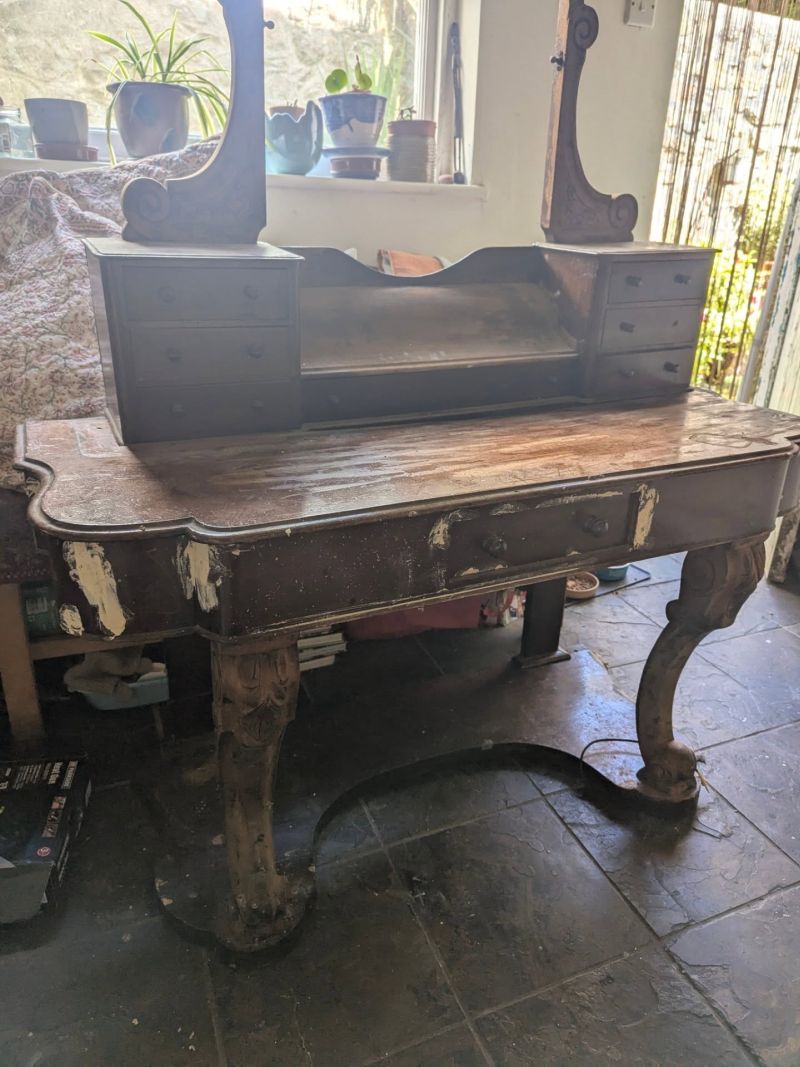
Dark brown finish covered the dressing table, with large patches of exposed wood and chipped coating across the front. Scratches ran across its broad tabletop, while worn sections interrupted the curved edge beneath it.
Two raised drawer compartments held three drawers each, with carved wooden supports extending above them. Beneath the tabletop, a central drawer sat between two large front legs decorated with carved leaves and scrolls.
The artist described the piece as a falling-apart mess that had intimidated her for over a year. Rather than abandon it, she chose to repair the existing structure and keep its Victorian design.
Repairs and Sanding Prepared the Damaged Wood
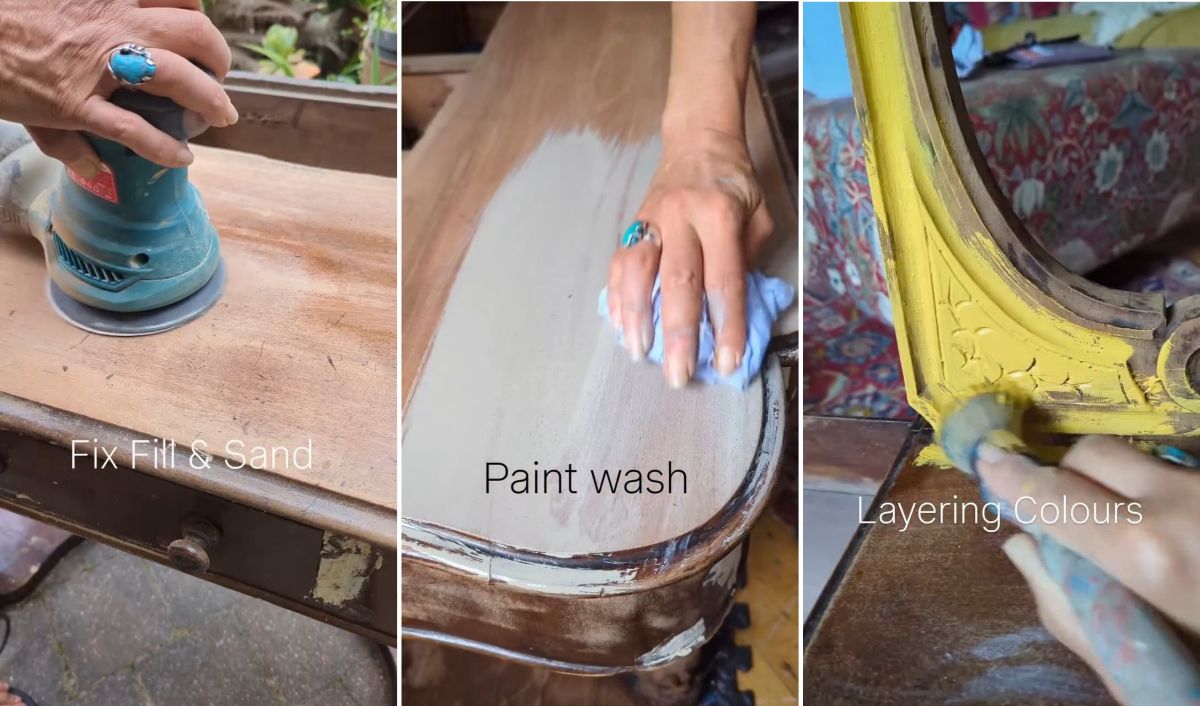
Work began with cleaning, filling damaged areas, applying glue, and securing loose sections with clamps.
An orbital sander removed the worn finish from the broad tabletop. The artist finished exposed wood with 240-grit sandpaper and used 120-grit abrasives and hand sanding on other sections.
Before painting, she applied a wash made from Dixie Belle Burlap diluted with water at a ratio of 1:8. Brushing the mixture onto the wood and wiping it off along the grain helped reduce the reddish tones without concealing the surface.
Mustard Yellow Paint Covered the Carved Frame
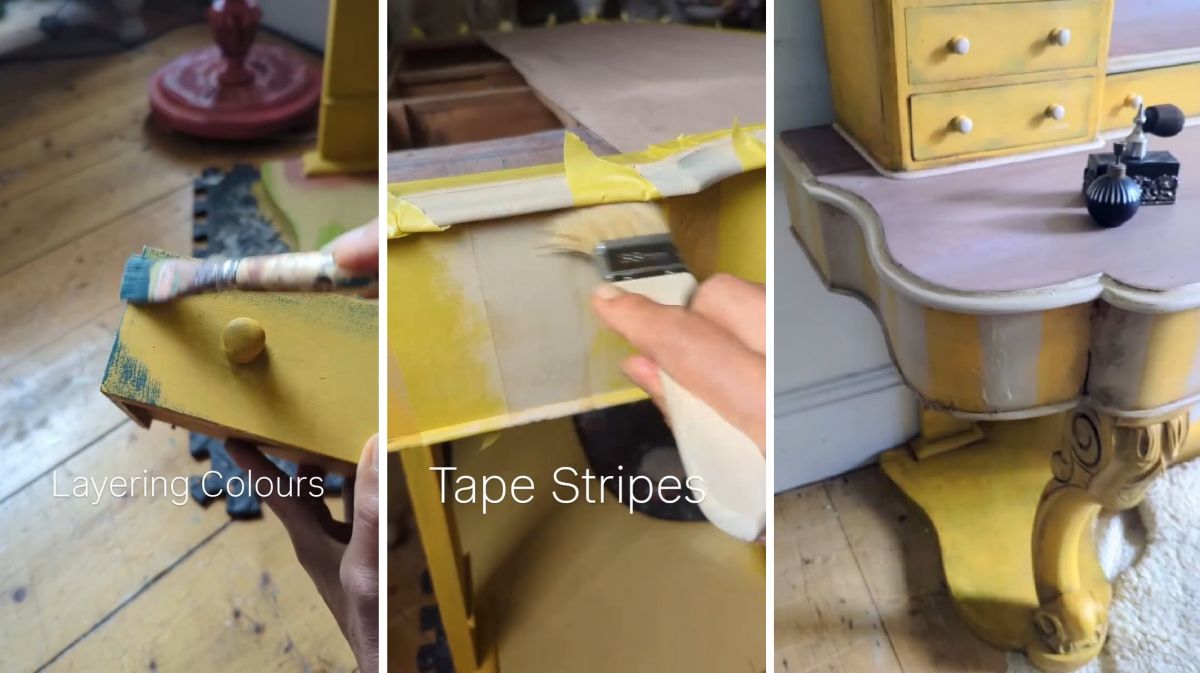
Dixie Belle Colonel Mustard replaced the dark brown finish across the drawer compartments, upright supports, legs, and lower base.
Rather than stop at one shade, the painter added touches of Antebellum Blue, Barn Red, and Kudzu green with a dry brush. Another coat of Colonel Mustard went over those colors, leaving traces beneath the yellow surface.
Each of the six upper drawers received the mustard finish, with pale round knobs standing against the painted fronts.
Cream Stripes Replaced the Plain Brown Front
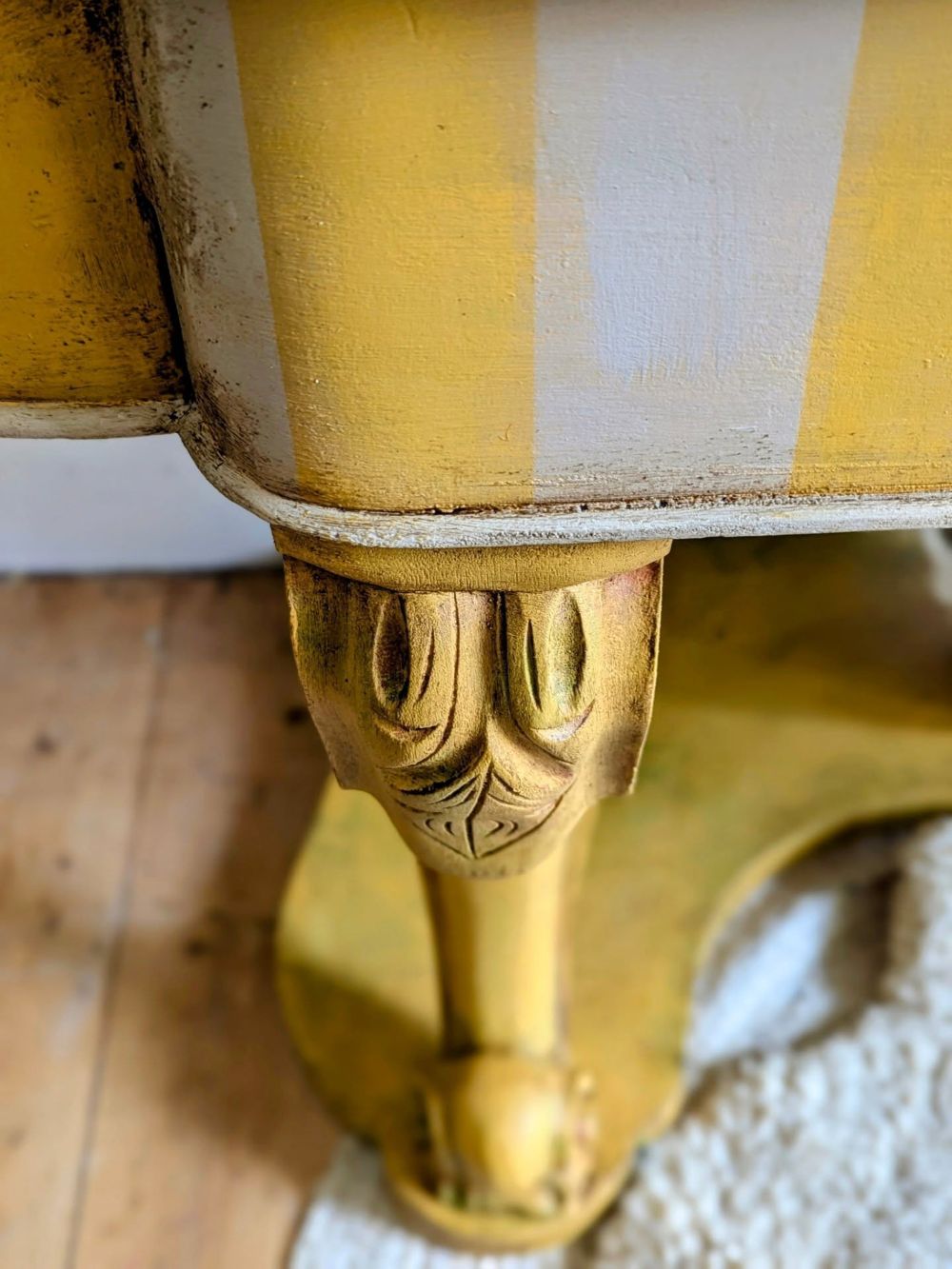
Curved front apron received a pattern of vertical stripes in mustard yellow and Burlap cream.
FrogTape helped mark the bands across the front before the painter brushed on the lighter color. The stripes continued around the curved corners and across the section containing the central drawer.
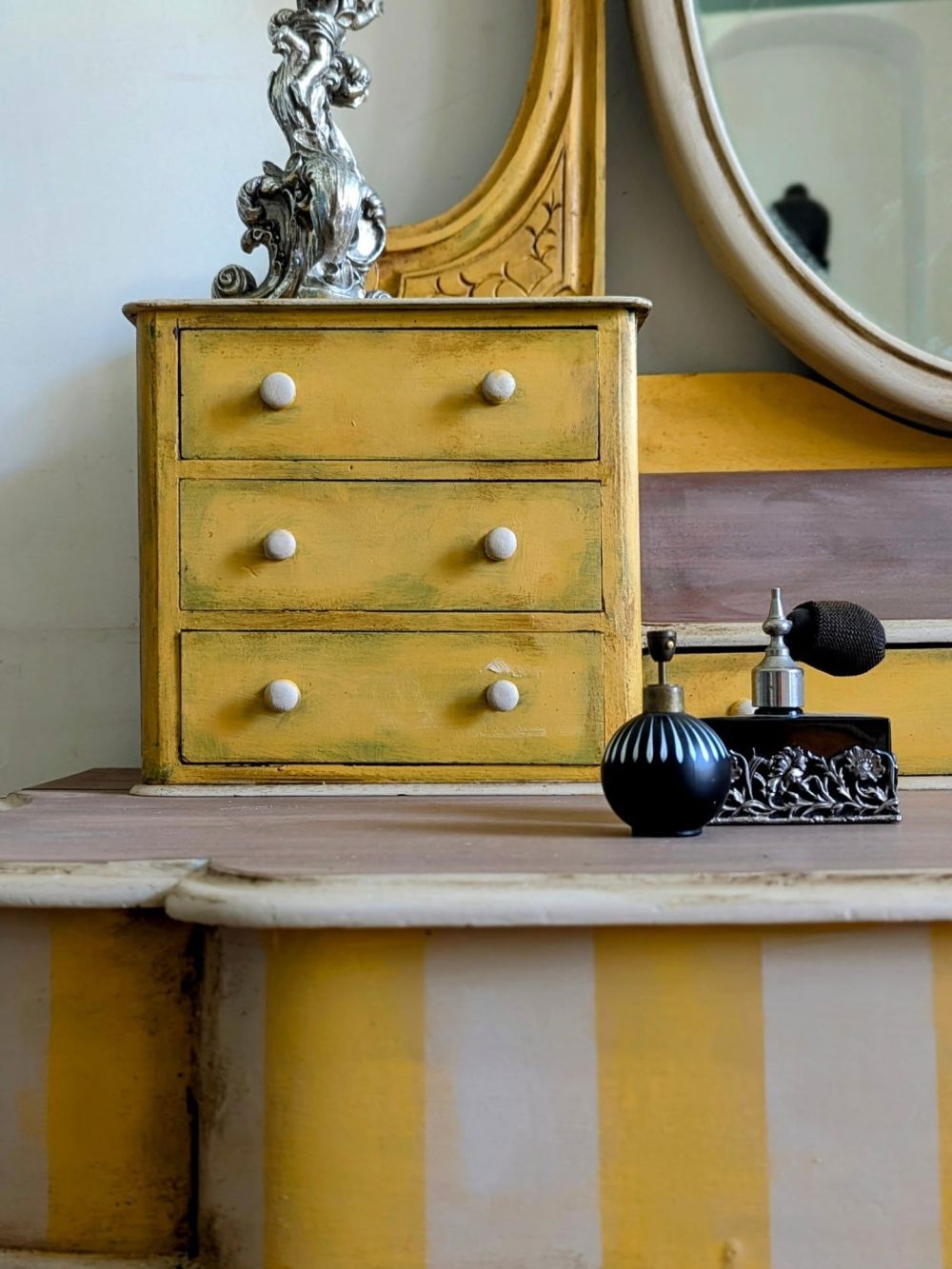
Clear and brown wax completed the painted surfaces, leaving dark marks around the edges and carved details.
Leaf patterns on the legs became more visible as brown wax settled into their recessed lines. Some areas retained patches of the colors applied beneath the mustard paint.
Wood Finish Remained on the Top and Behind the Mirror
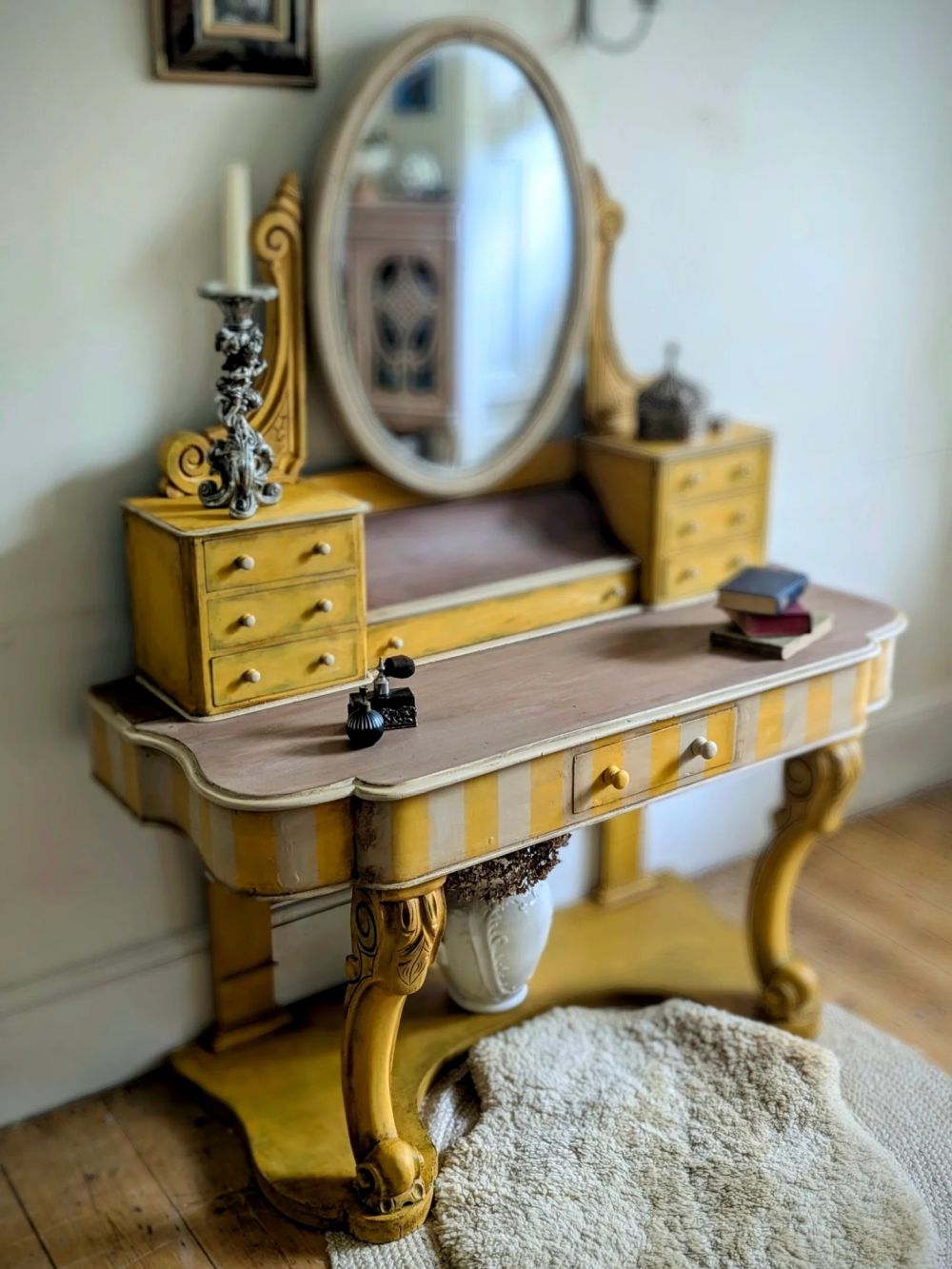
Broad tabletop received a different treatment from the painted base. Its brown wood finish remained visible beneath the wash, bordered by a pale painted edge following the curved outline.
Another unpainted-looking brown section sits between the upper drawer compartments beneath the oval mirror. Together, these surfaces contrast with the yellow frame.
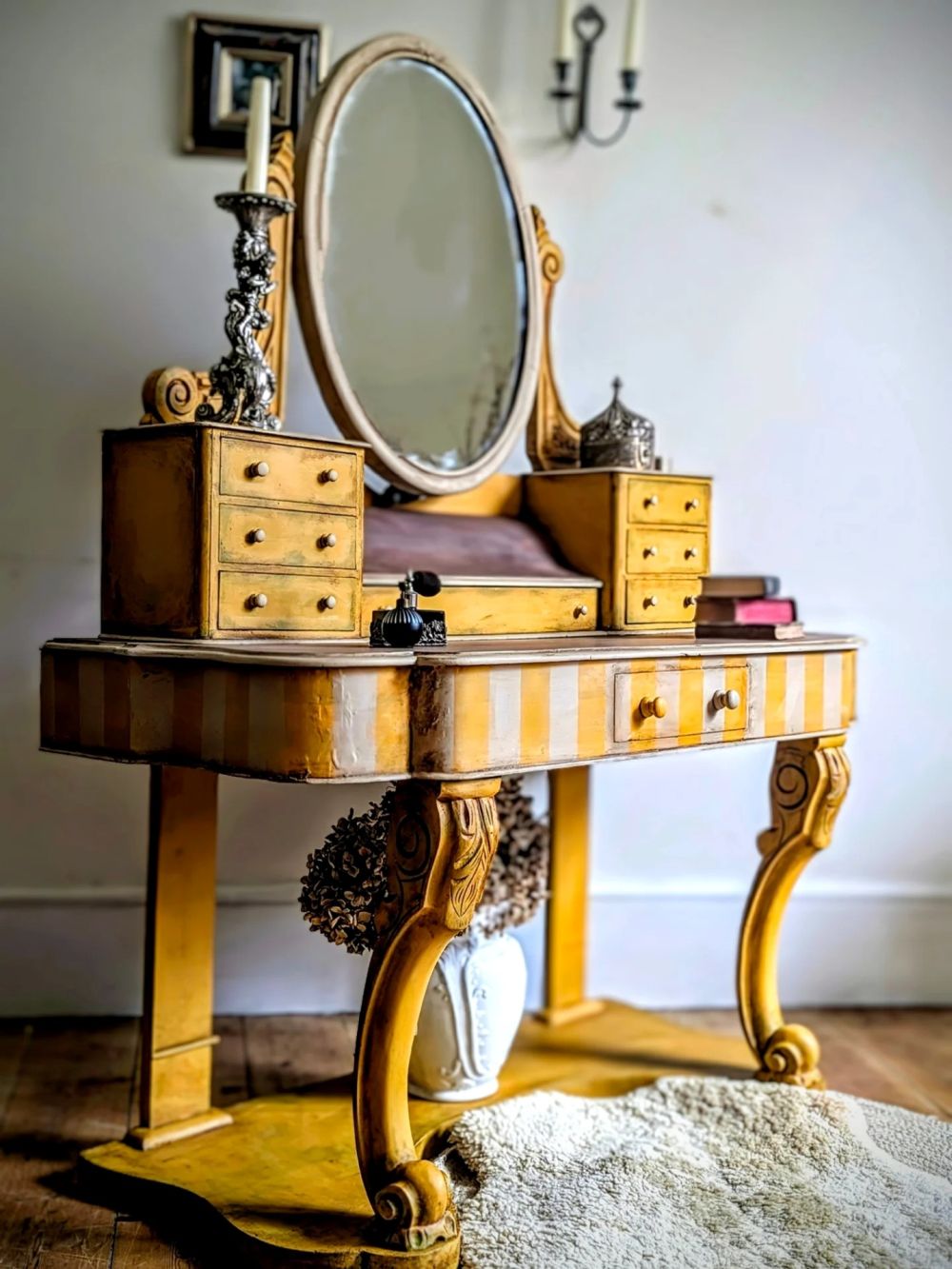
From the side, the carved front legs curve toward the floor and connect to a broad wooden base. Mustard paint covers these sections, while darker wax emphasizes the scrolls and recessed patterns.
Finished Victorian Dressing Table Has Yellow Drawers and a Striped Front
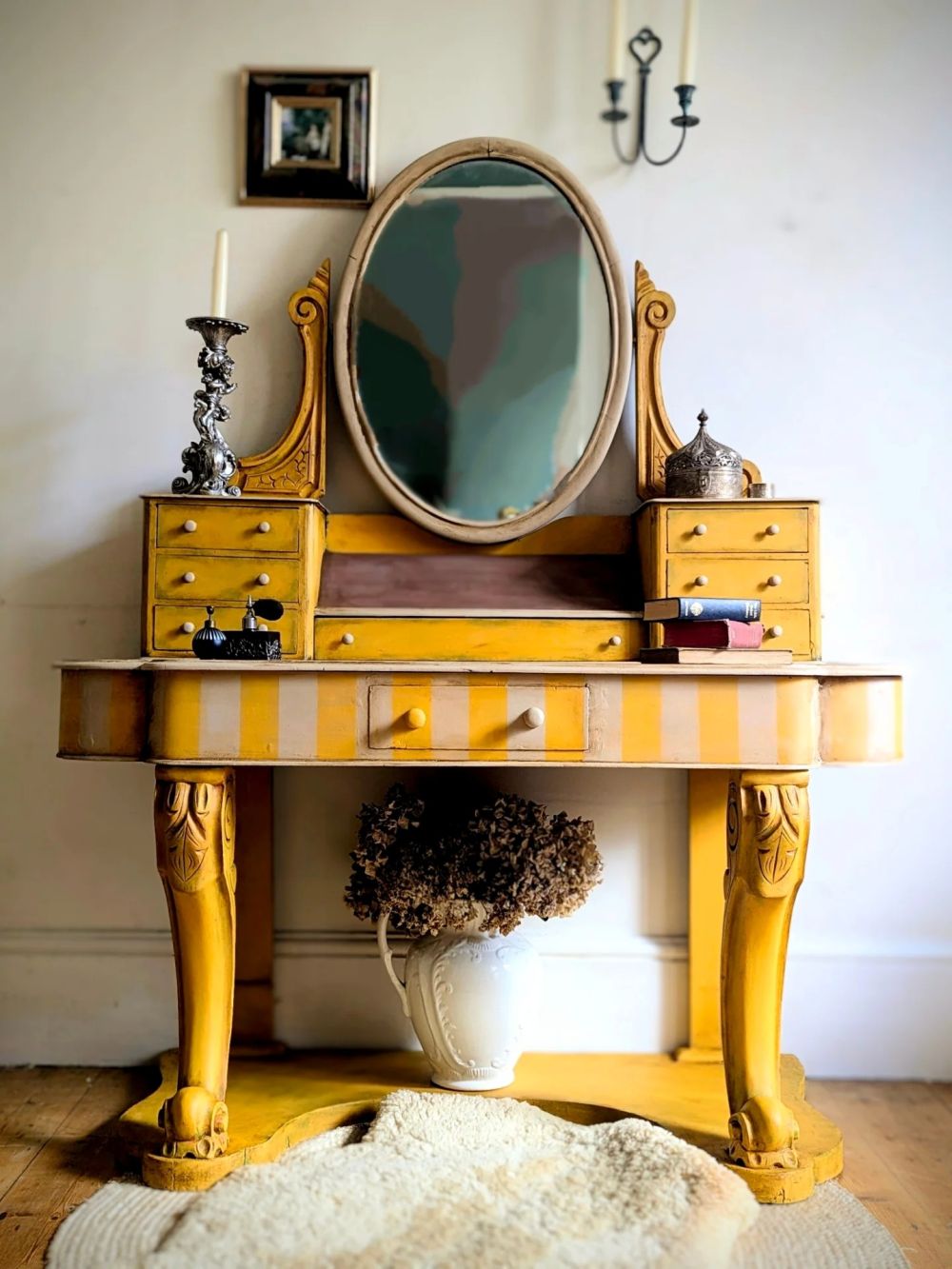
Restored dressing table now holds an oval mirror between the two raised drawer compartments. Six yellow drawers sit above the washed tabletop, with another drawer centered in the striped front.
The curved legs, lower base, and carved supports remain part of the original furniture. Brown wax follows the old detailing, while the combination of cream, yellow, and exposed wood replaces the former dark finish.
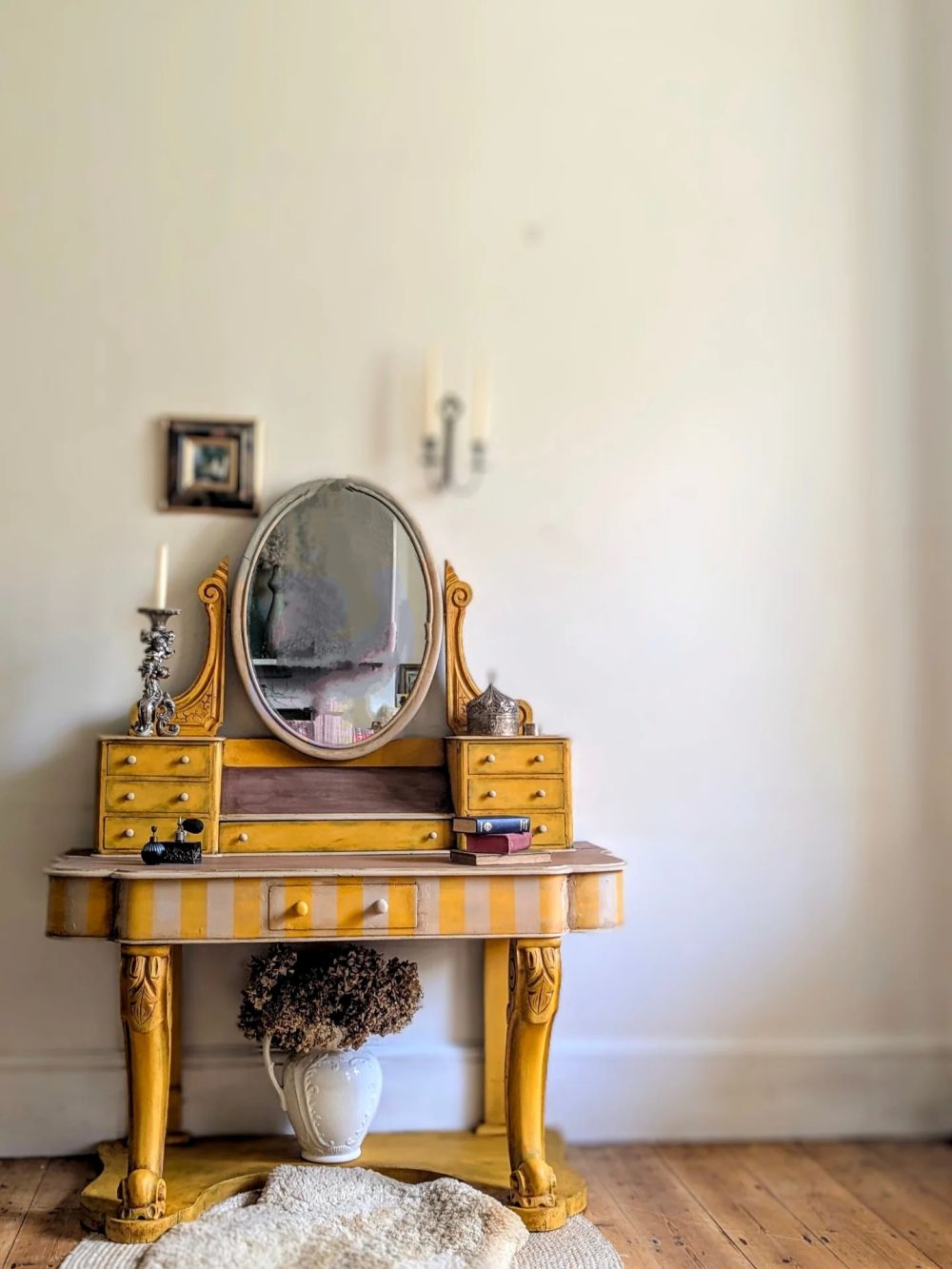
After spending a year avoiding the damaged piece, the artist completed the makeover without removing the carvings or rebuilding the Victorian frame.
Before and After: One Small Detail Connects the New Design
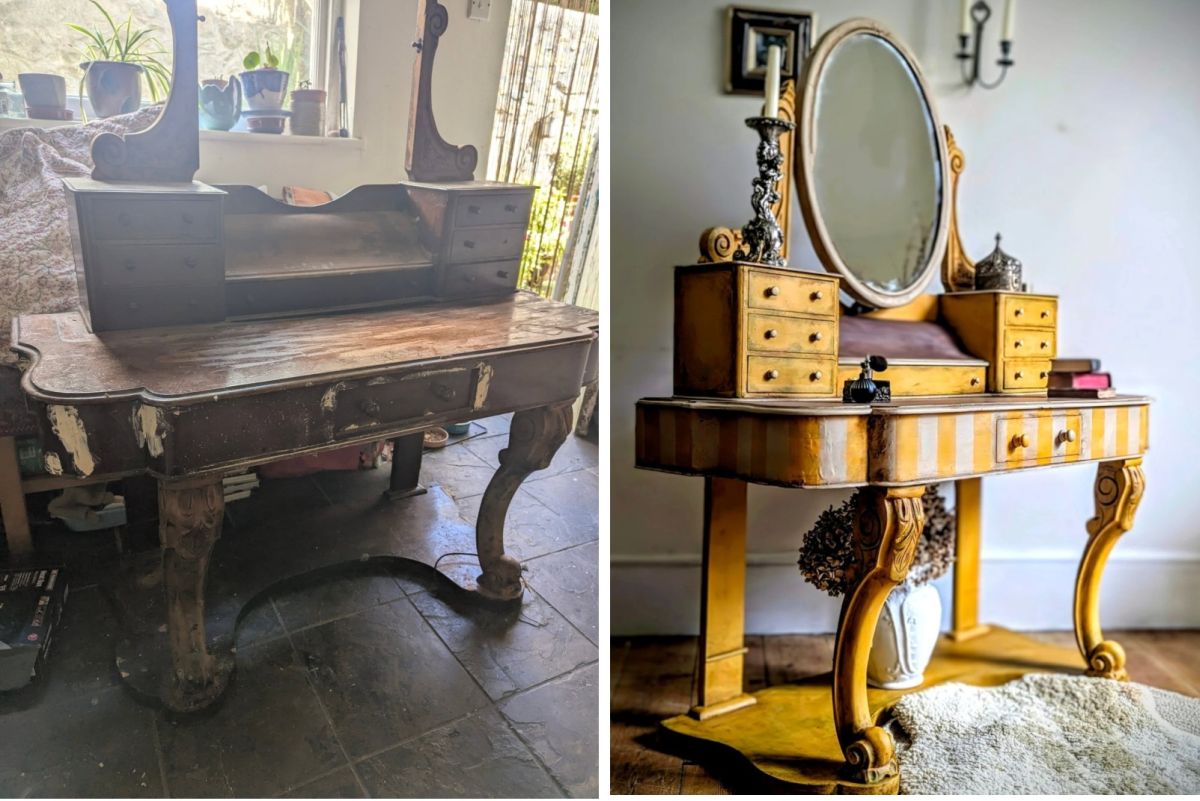
Side-by-side photos reveal a detail easy to miss. Both knobs on the center drawer were dark before the makeover. Now one is mustard yellow and the other cream, matching the striped front. Rather than replace the drawer or its position, the painter incorporated it into the pattern.
For another furniture transformation shaped by a child’s suggestion, see how one painter asked her three-year-old daughter to choose a design for a 1960s dresser and ended up using 14 colors.
Would you have restored the original dark wood finish or gone with the mustard yellow and cream stripes?
Image credits go to @olyaupcycle