She Asked Her 3-Year-Old How to Paint a 1960s Dresser and Ended Up Using 14 Colors


Grandfather built this small bedside dresser for his wife in the 1960s. Decades later, it ended up in a furniture painter’s workshop, covered in gray paint with decorative trim around the drawers and old metal handles. Its original construction had survived, but the finish was worn and needed work.
When the painter asked her three-year-old daughter what she should do with it, the answer was simple: paint rainbows. Instead of painting traditional rainbow arches, she took that suggestion in another direction, combining 14 chalk paint colors across the entire dresser.
Furniture artist @thelittlefurnitureroom shared the transformation after receiving several pieces from a woman whose grandfather had made them for her grandmother. What began as a child’s suggestion became a hand-painted cabinet with abstract brushstrokes, gold hardware, and a new set of legs.
Gray Paint and Ornate Trim Covered the Original Dresser
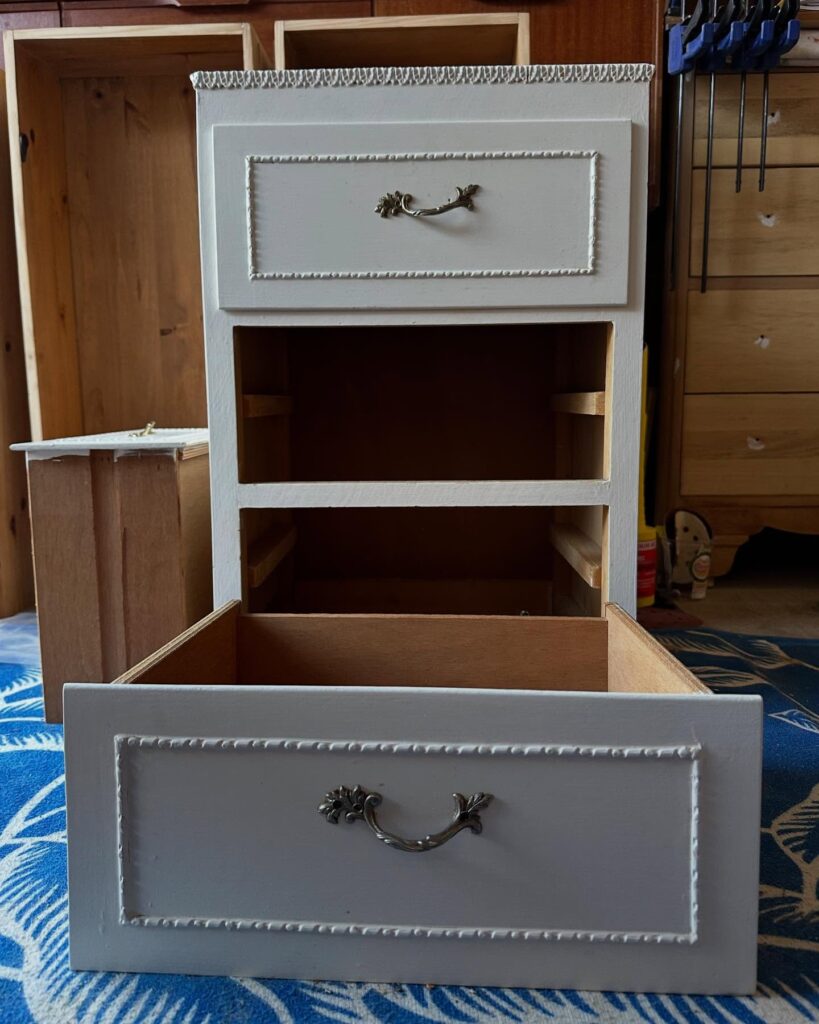
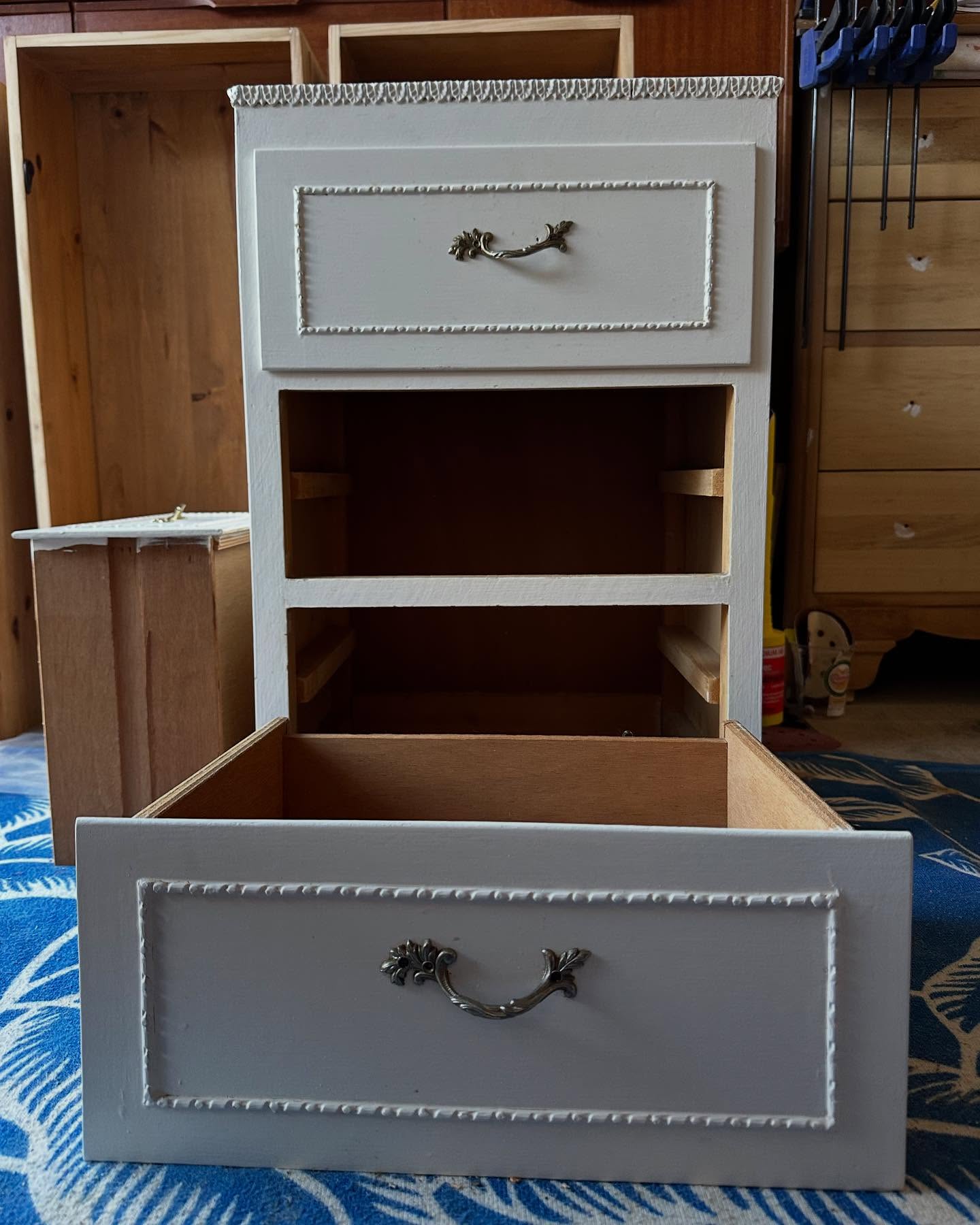
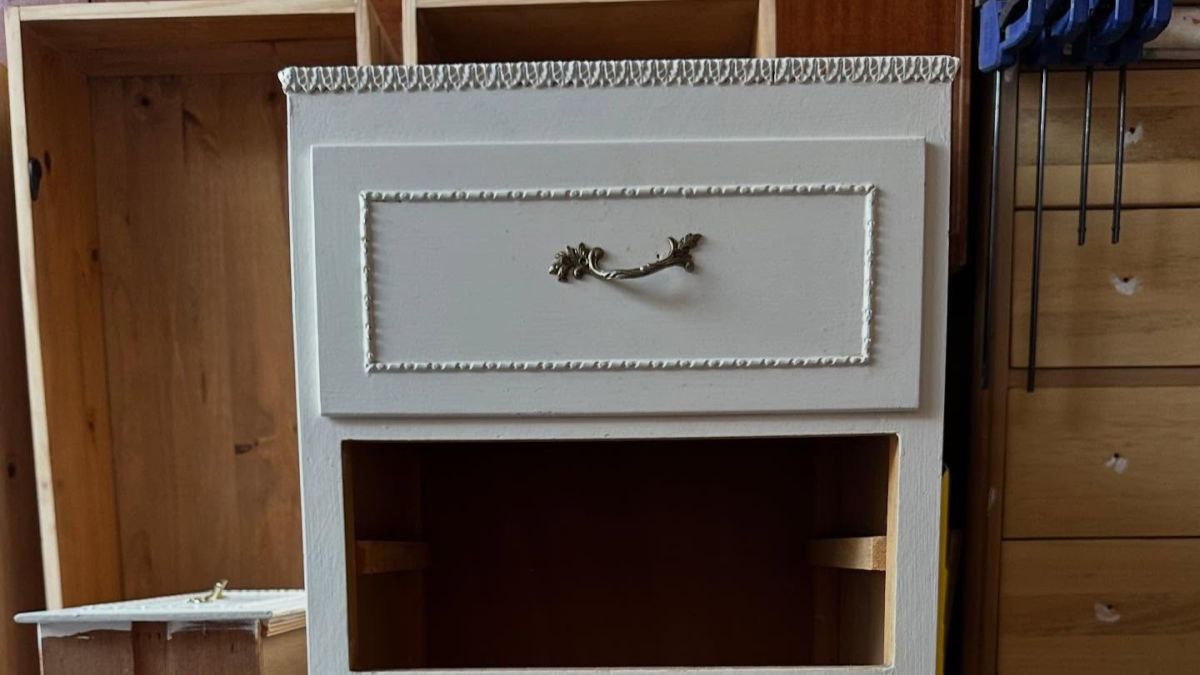
Pale gray paint covered the narrow cabinet, with raised rectangular panels outlined by rope-style molding on the drawer fronts. Decorative metal handles with curved ends sat at the center of each panel, while another band of raised trim ran along the top edge.
Two drawer openings were empty in the workshop photo, exposing the wooden interior and drawer supports. The bottom drawer had been pulled out, revealing unfinished wood on the sides and inside.
Old Decoration Came Off Before the Repainting
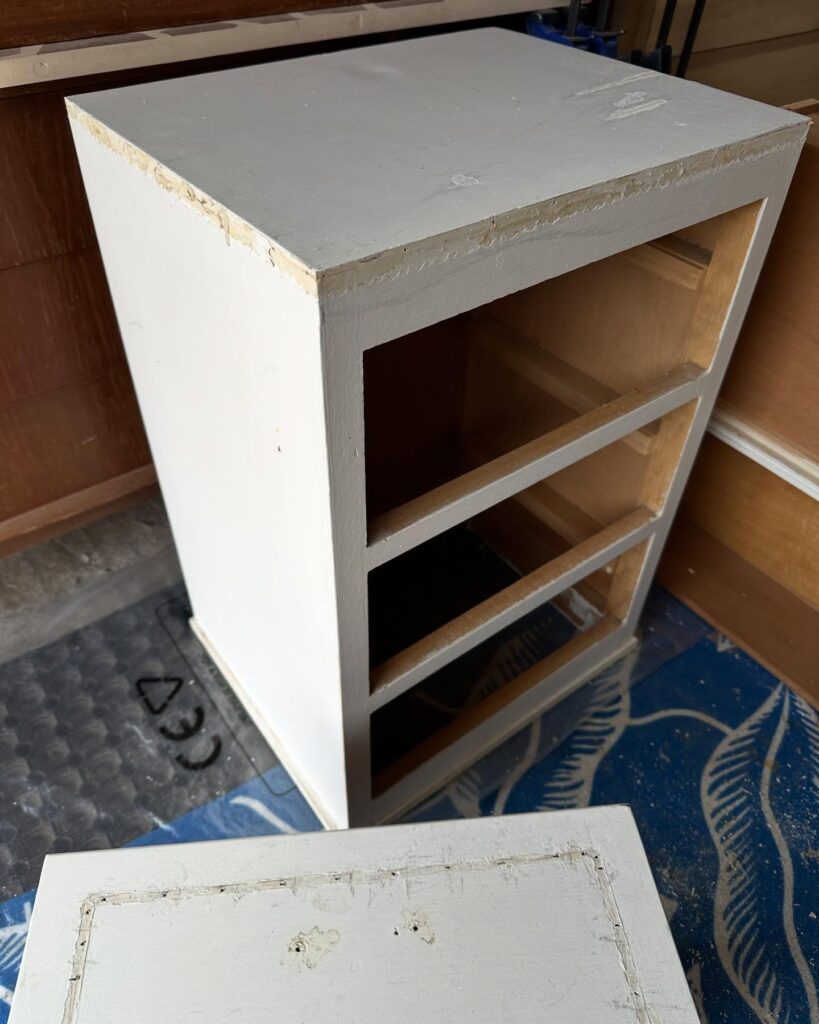
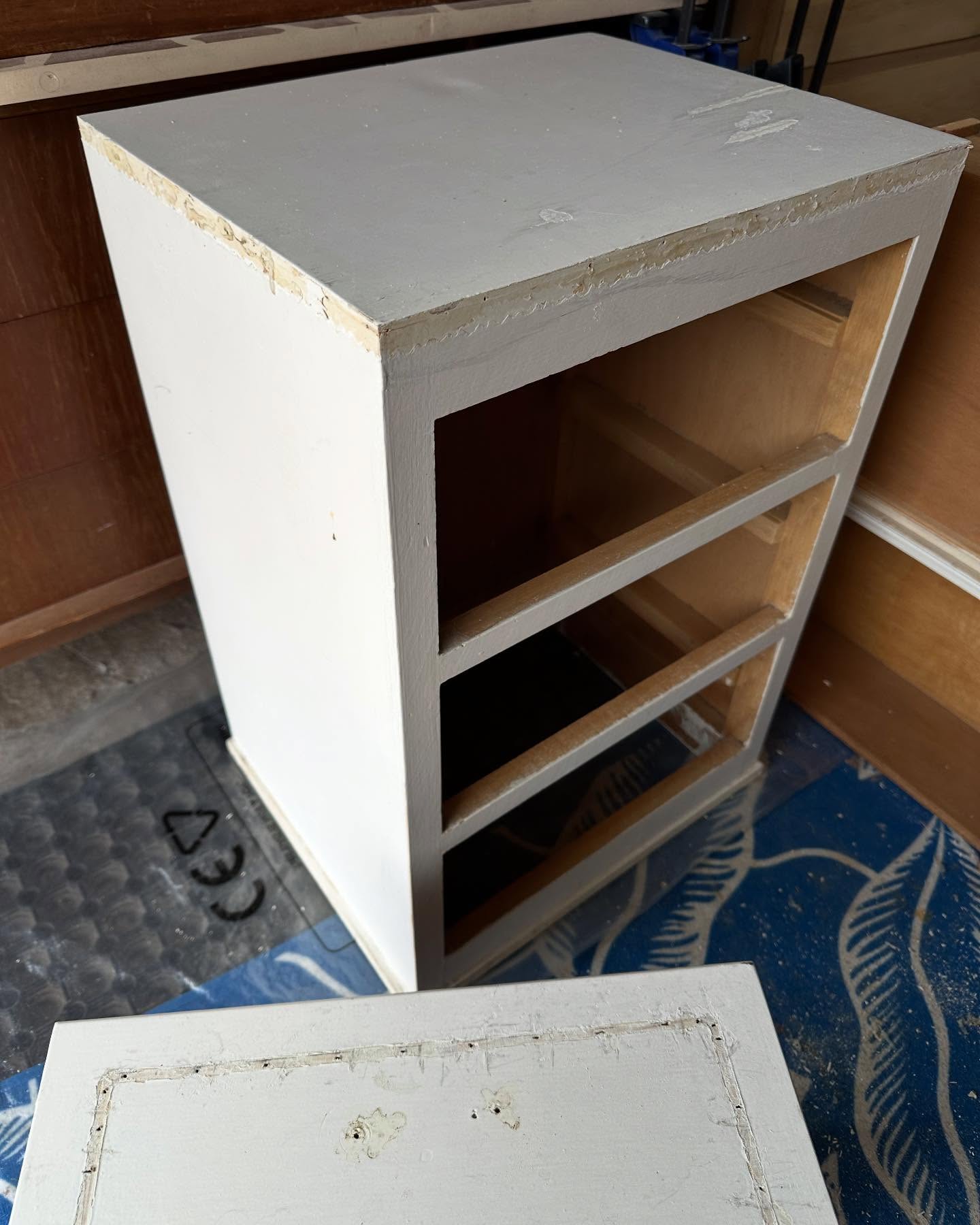
Removing the original hardware and applied molding left visible marks around the drawer fronts. Small holes, rough edges, and patches of old paint remained where the decorative pieces had been attached.
The cabinet top also showed damage along its front and side edges. Beneath the gray exterior, the frame and drawer runners retained their original wood construction.
Sanding Prepared the Frame for a Different Finish
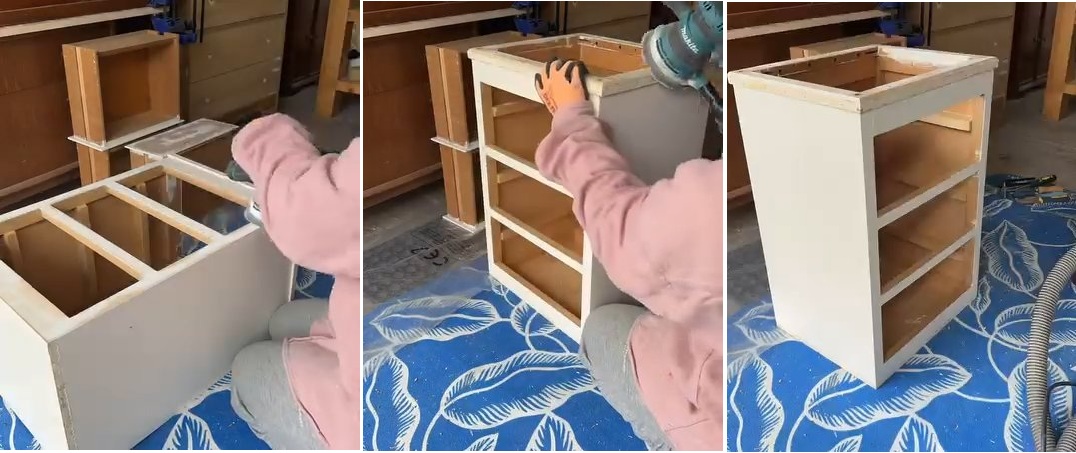
With the drawers removed, the painter worked across the upper edges and front frame using a power sander. The process exposed pale wood along the top perimeter while leaving the three drawer compartments intact.
Rather than rebuild the cabinet or change its dimensions, she kept the existing drawer arrangement and removed the details that would interfere with the new painted surface.
Fourteen Chalk Paint Colors Replaced the Gray
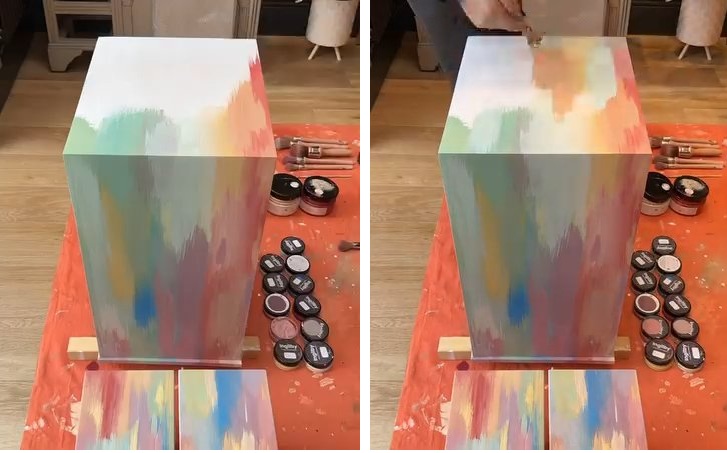
Painting began with a mix of pink, mint green, blue, orange, yellow, lavender, and other shades from a collection of 14 chalk paints by Ingilby Paints.
Instead of creating separate rainbow bands, she applied short, overlapping strokes of color across the cabinet. Some marks run down the side, while others spread across the top and drawer fronts.
The process photos show paint being added over an existing patchwork of colors, with areas of pink and pale green remaining visible between stronger blue and orange strokes.
Pink and Blue Brushstrokes Cover the New Drawer Fronts
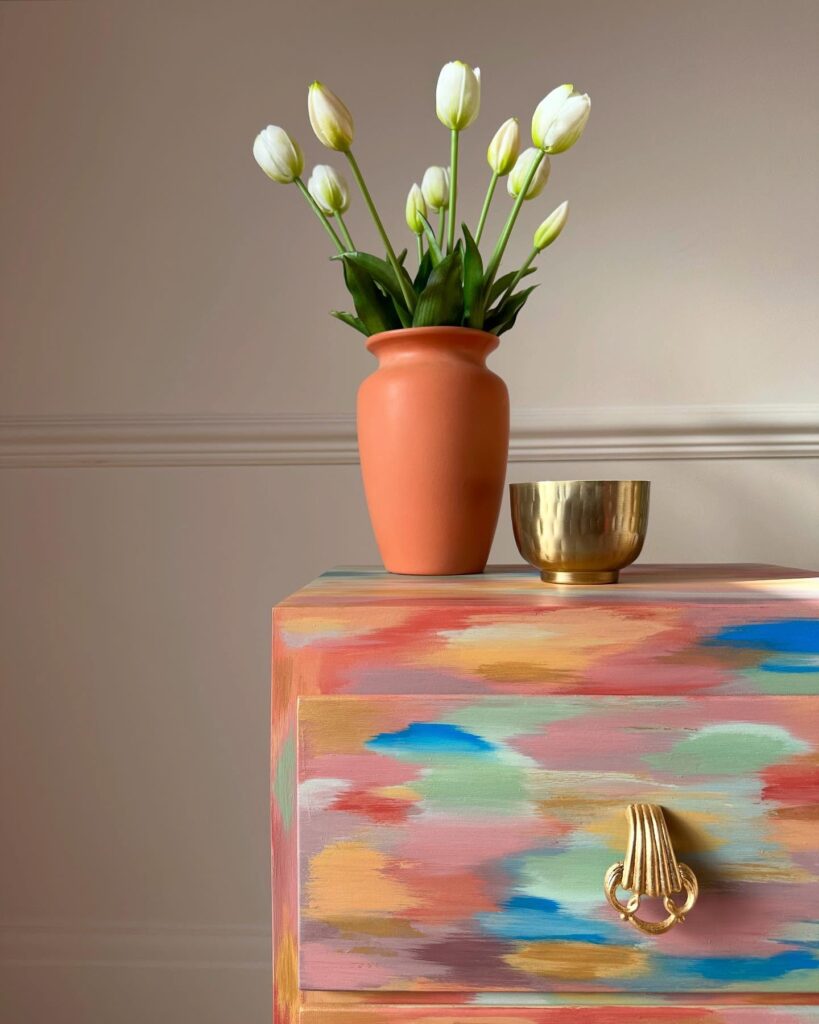
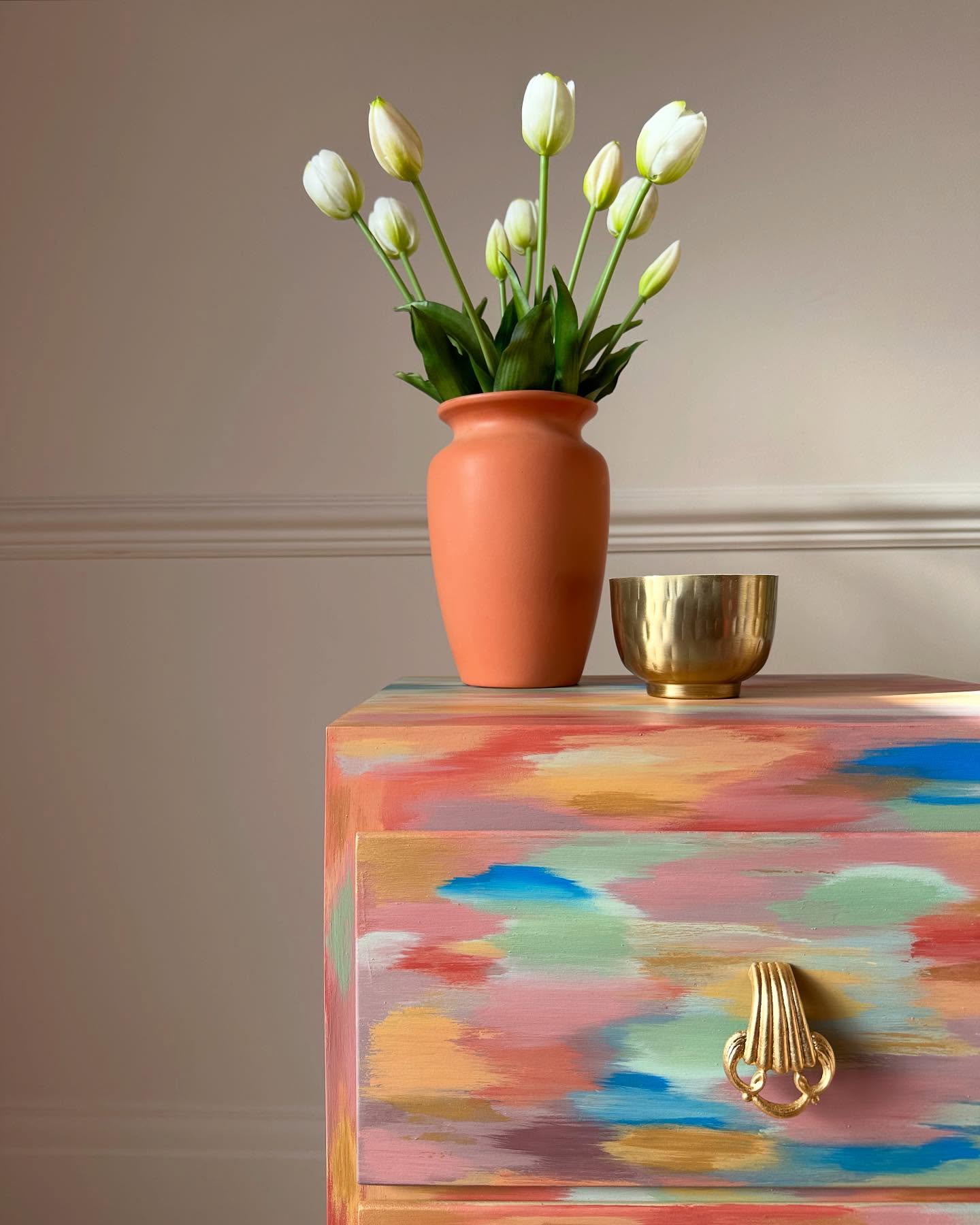
Pink occupies much of the finished surface, interrupted by patches of turquoise, mint, coral, yellow, lavender, and bright blue. Brush marks remain visible, with soft edges where one color meets another.
One of the biggest changes is the hardware. The old curved handles have been replaced with gold drop pulls featuring fluted upper sections and looped details beneath.
The flat drawer front no longer has the rope molding that framed the original handle.
Three Drawers Now Have Gold Handles and Matching Feet
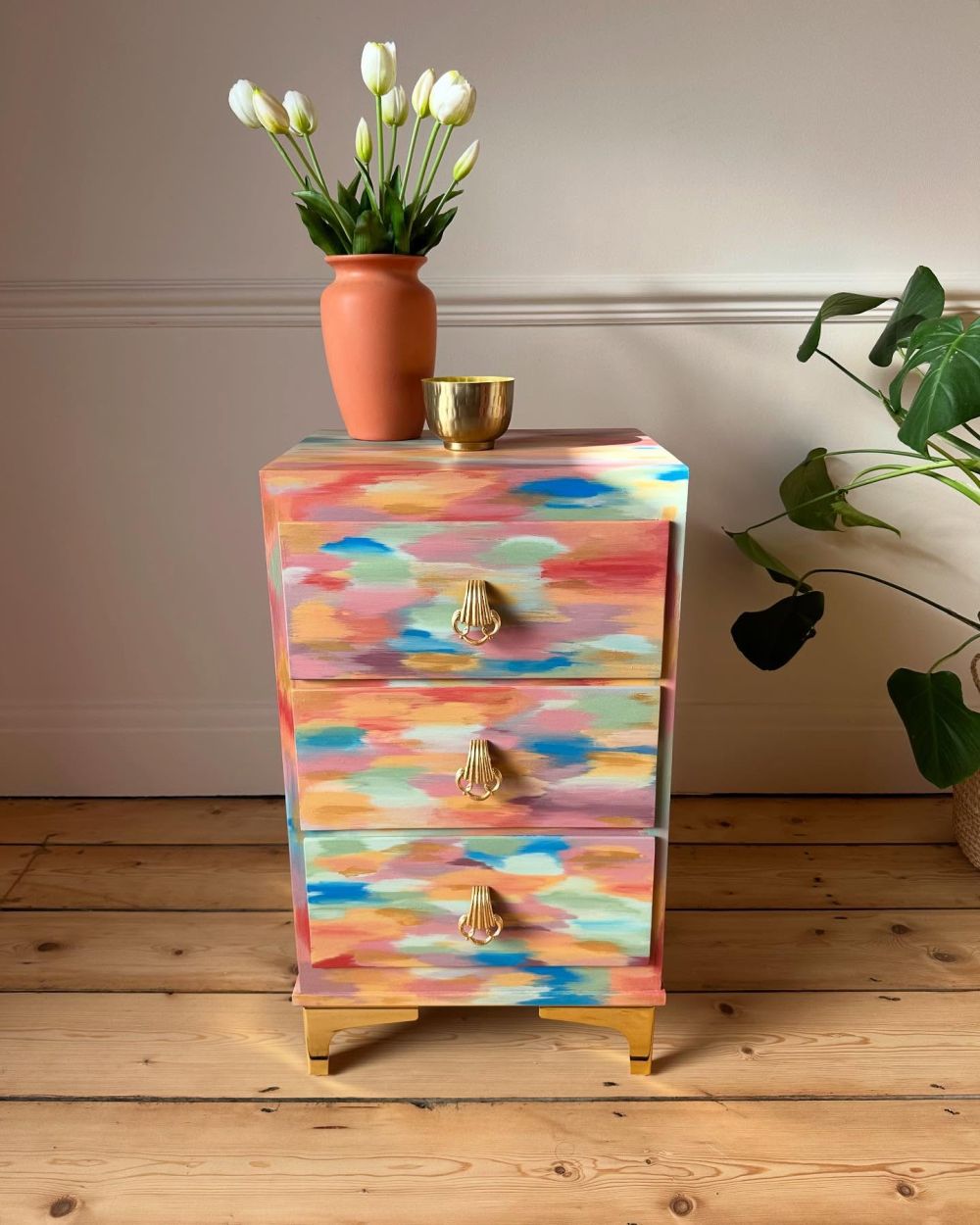
Finished dresser retains three stacked drawers, but the former gray cabinet has become a compact multicolored piece. Gold legs with curved openings lift the base above the floor, replacing the low, plain appearance seen during the workshop stages.
Each drawer has a single gold handle at its center. The painted pattern continues from one drawer to the next without repeating identical color combinations.
Abstract Paint Covers the Top, Not Just the Front
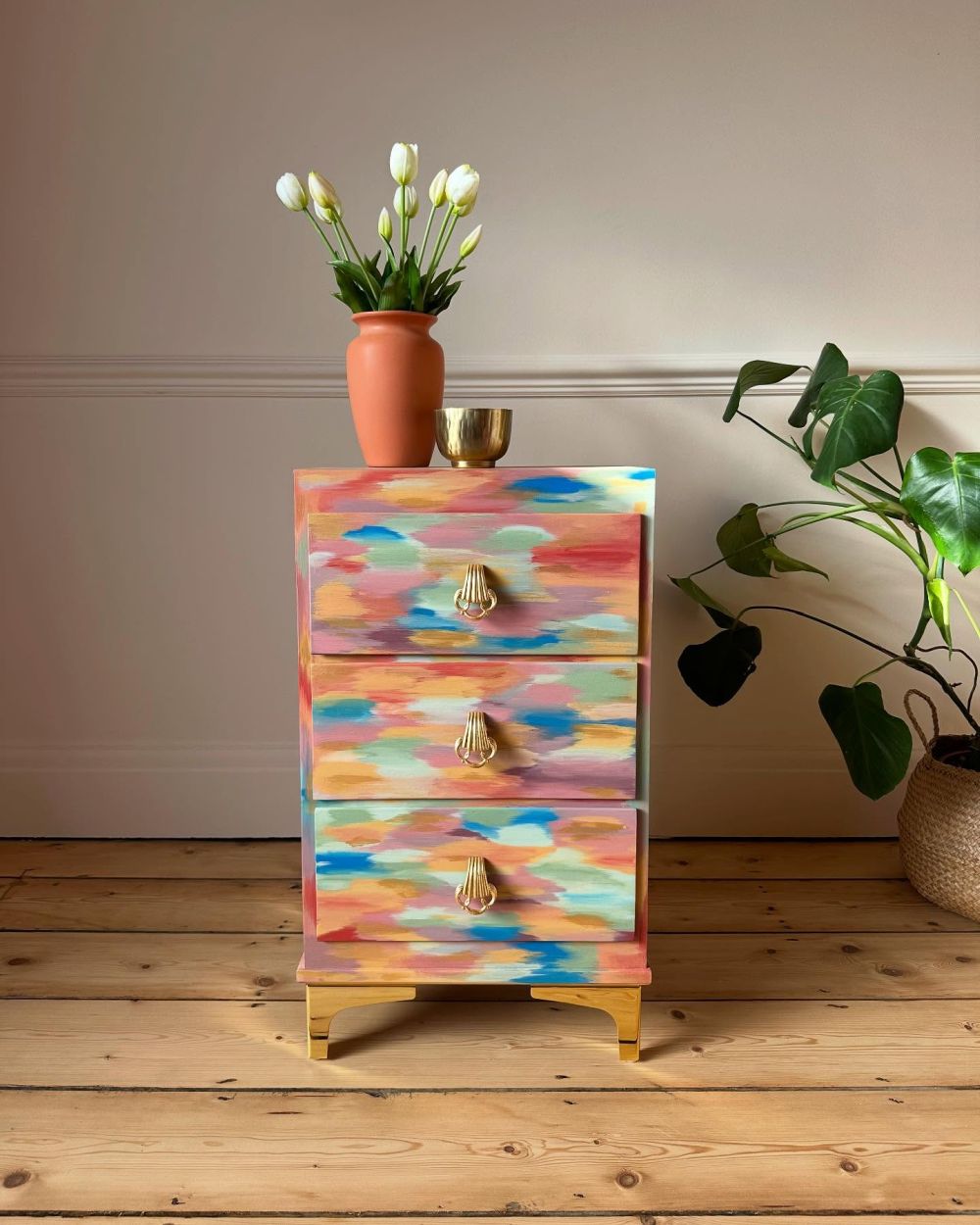
Color extends across the cabinet top, where pink, orange, yellow, and blue meet beneath a terracotta vase and brass bowl.
White tulips stand above the dresser, while a cream wall with horizontal molding and pale wooden floorboards form the background. A large green houseplant sits beside the cabinet.
Side Panels Have a Different Brushstroke Pattern
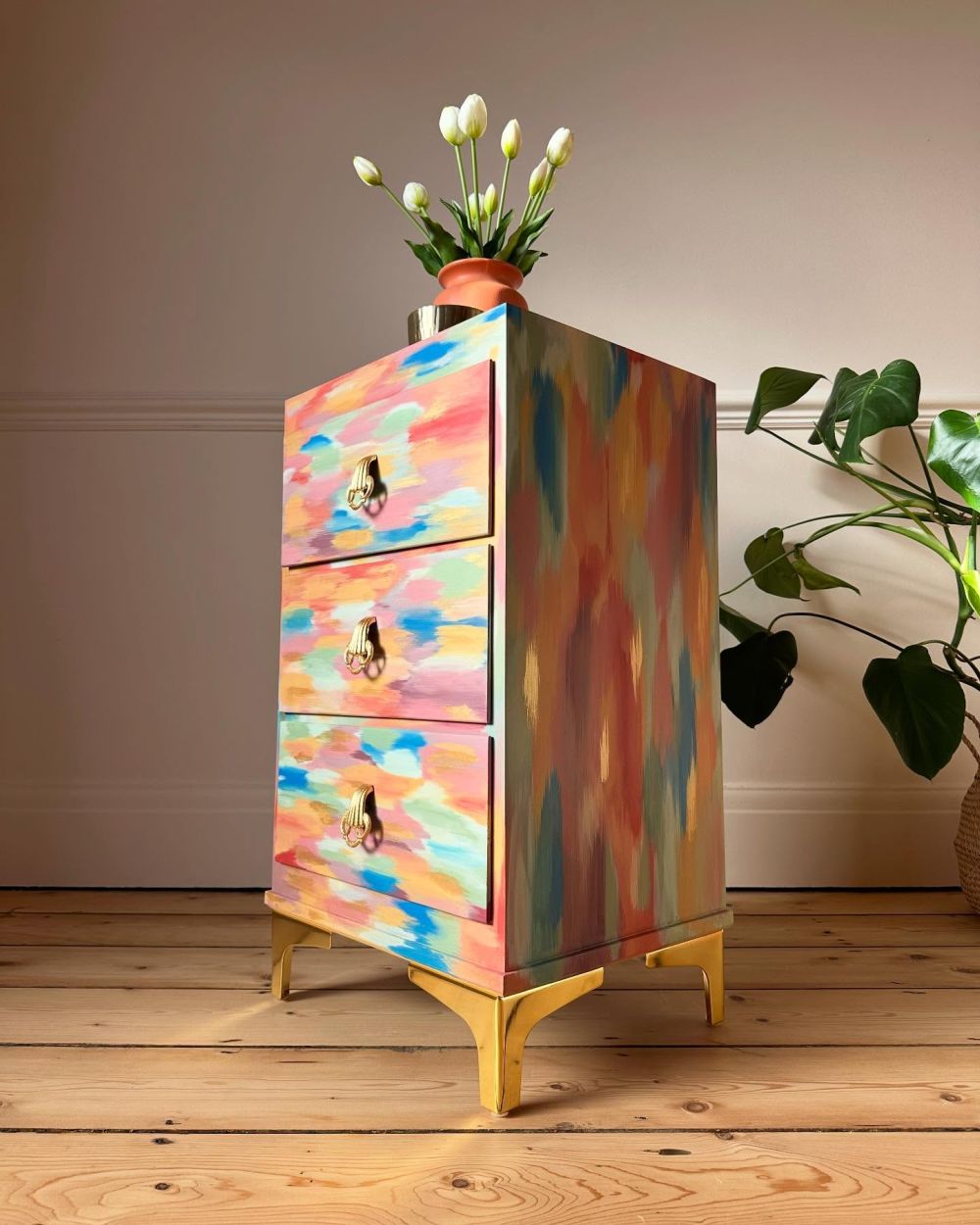
Unlike the horizontal marks across the drawer fronts, the side panels feature longer strokes running down the cabinet. Orange, coral, blue, muted green, and yellow form irregular vertical patches.
The corner view shows how the side painting meets the front without a separate border or contrasting trim. Gold feet continue beneath both sides, including a shaped front leg visible from this angle.
Original Wooden Drawer Interiors Were Left Unpainted
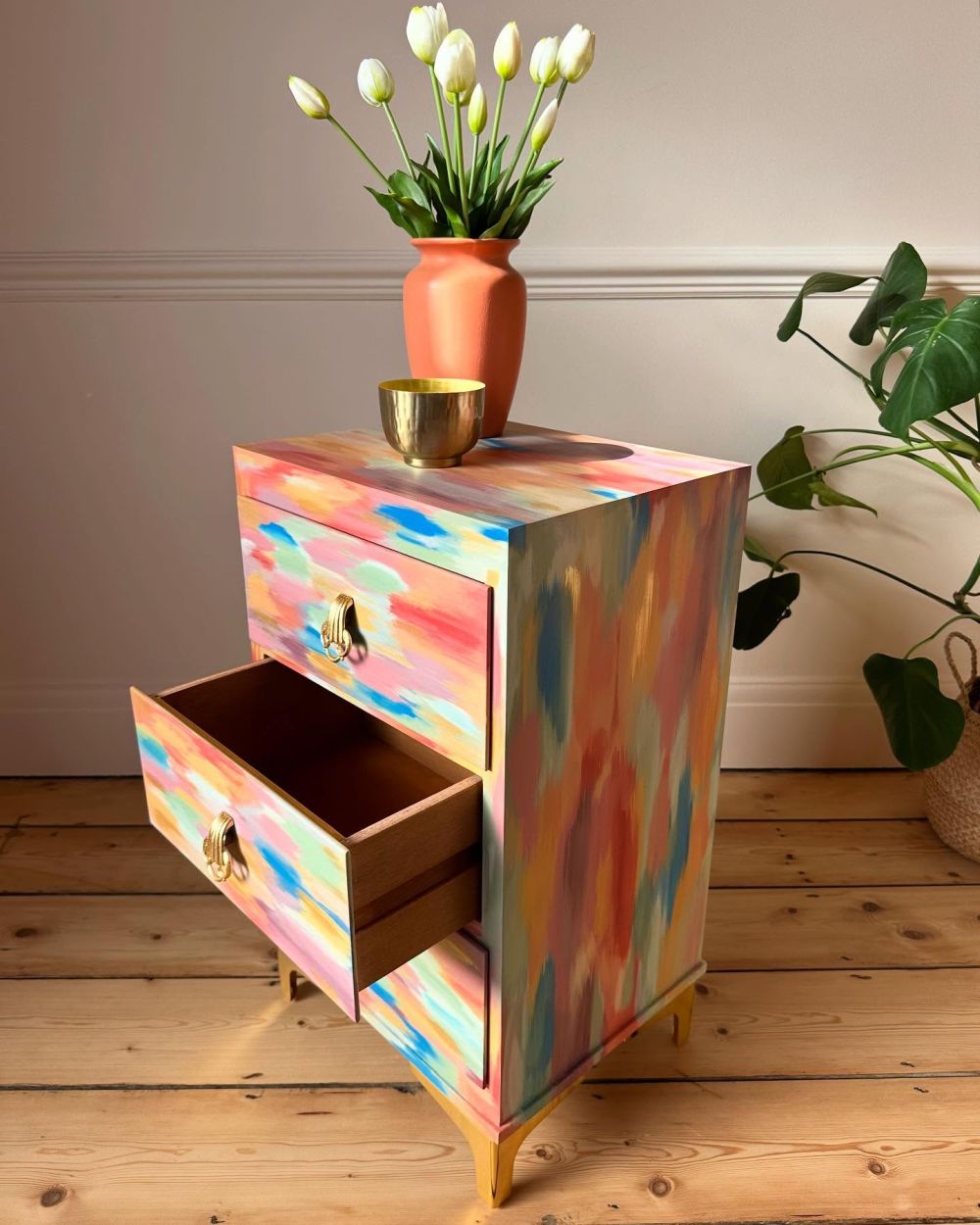
Pulling out the middle drawer reveals another decision. While the exterior received 14 colors, the interior remains brown wood, including the drawer sides, bottom, and rear panel.
The new front extends beyond the drawer box, and its gold handle sits against the multicolored painted surface. Leaving the interior unpainted preserves part of the original construction from the 1960s.
Watercolor-Style Paint Extends Across the Sides
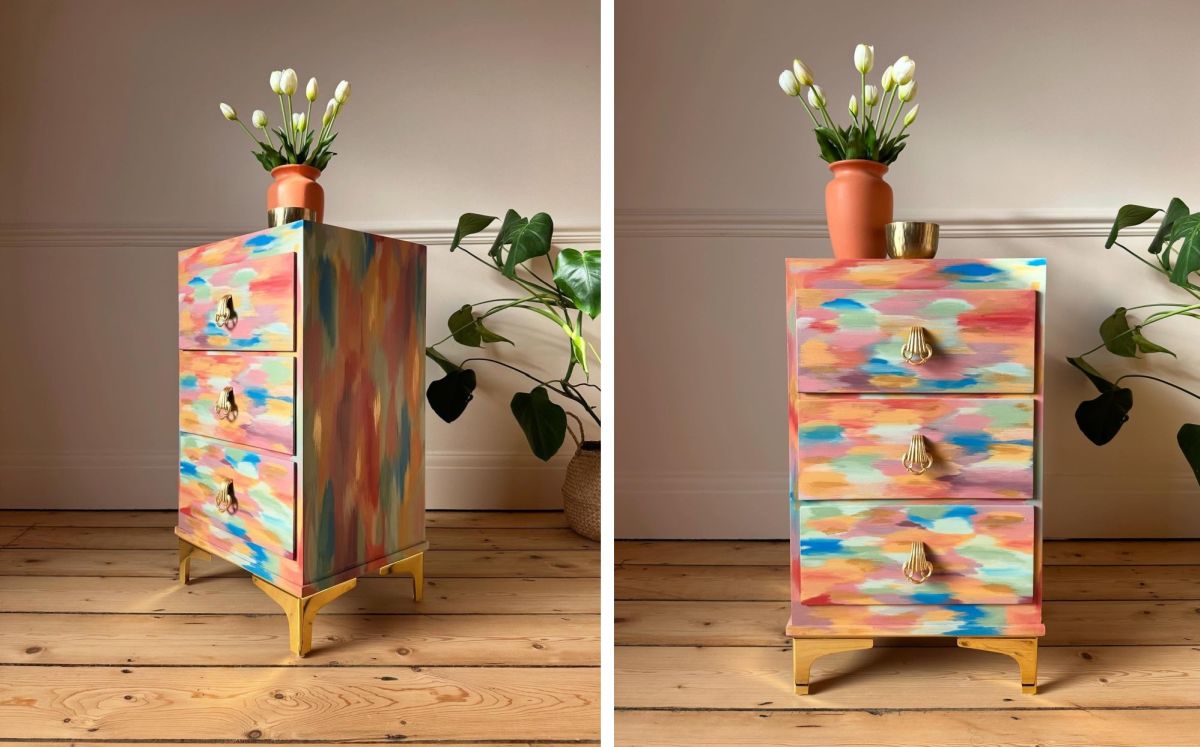
Long strokes of coral, blue, mustard, and green run down the side panels, while shorter patches cross the three drawer fronts. The colors overlap without hard borders, giving the chalk paint a watercolor-like appearance.
From a 1960s Family Dresser to a Mix of 14 Colors
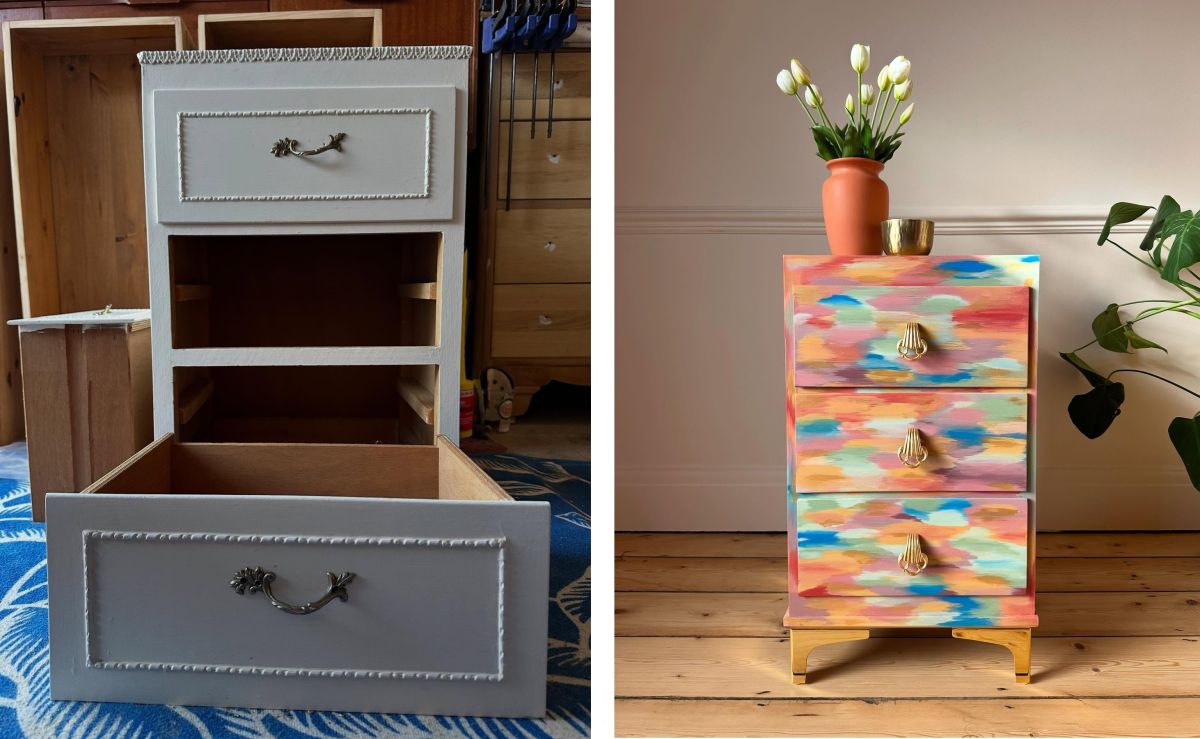
Gray paint, rope-style trim, and old metal handles are gone. Gold legs lift the cabinet off the floor, while three gold drop pulls replace the original hardware. The dresser retains its original wooden frame and drawers.
Would you try mixing 14 colors to create this watercolor effect, or choose fewer shades?
Image credits to go @thelittlefurnitureroom