Putting Empty Glass Bottles on Plumbing Pipes: What It’s For and How It Works


Before throwing away an empty wine bottle or a few plumbing fittings left over from a renovation, consider what happens when those materials are brought together. Pipes that would otherwise sit behind walls can become lamp bases, while glass bottles take the place of fabric lampshades.
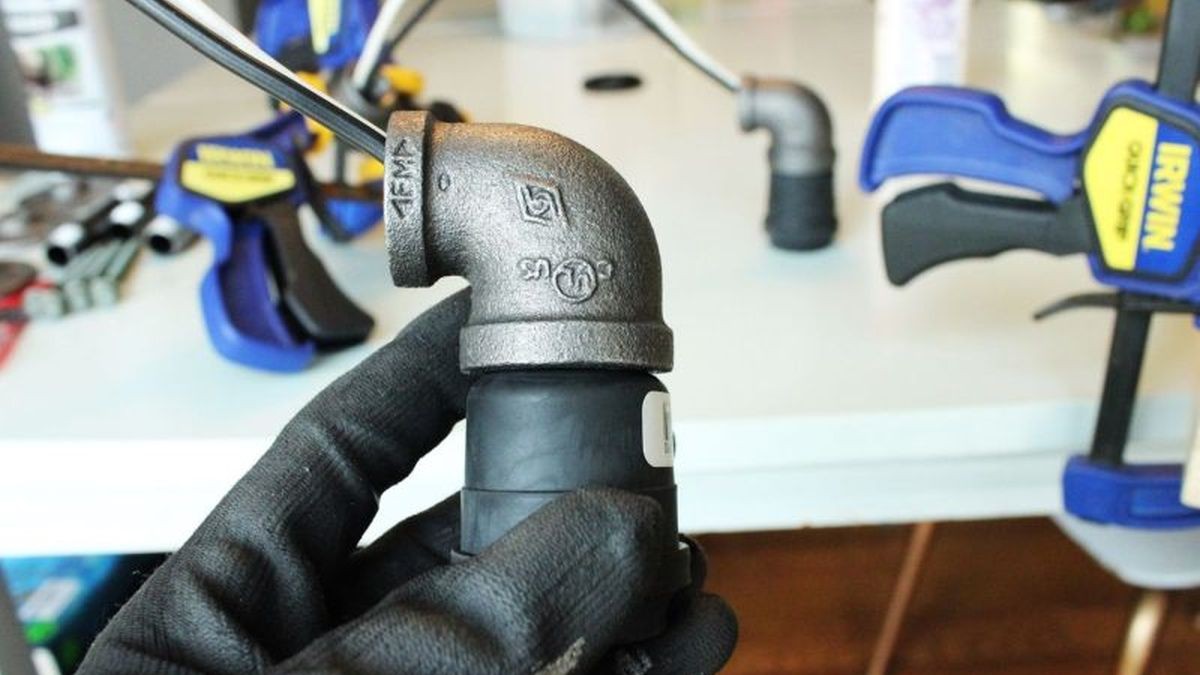
Elbow fittings, threaded pipes, and valve handles provide the structure, leaving the bulbs and glass exposed.
These two lighting designs photographed by Homedit show how materials associated with plumbing can serve a different purpose inside the home.
Plumbing Pipes Take the Place of Conventional Lamp Bases
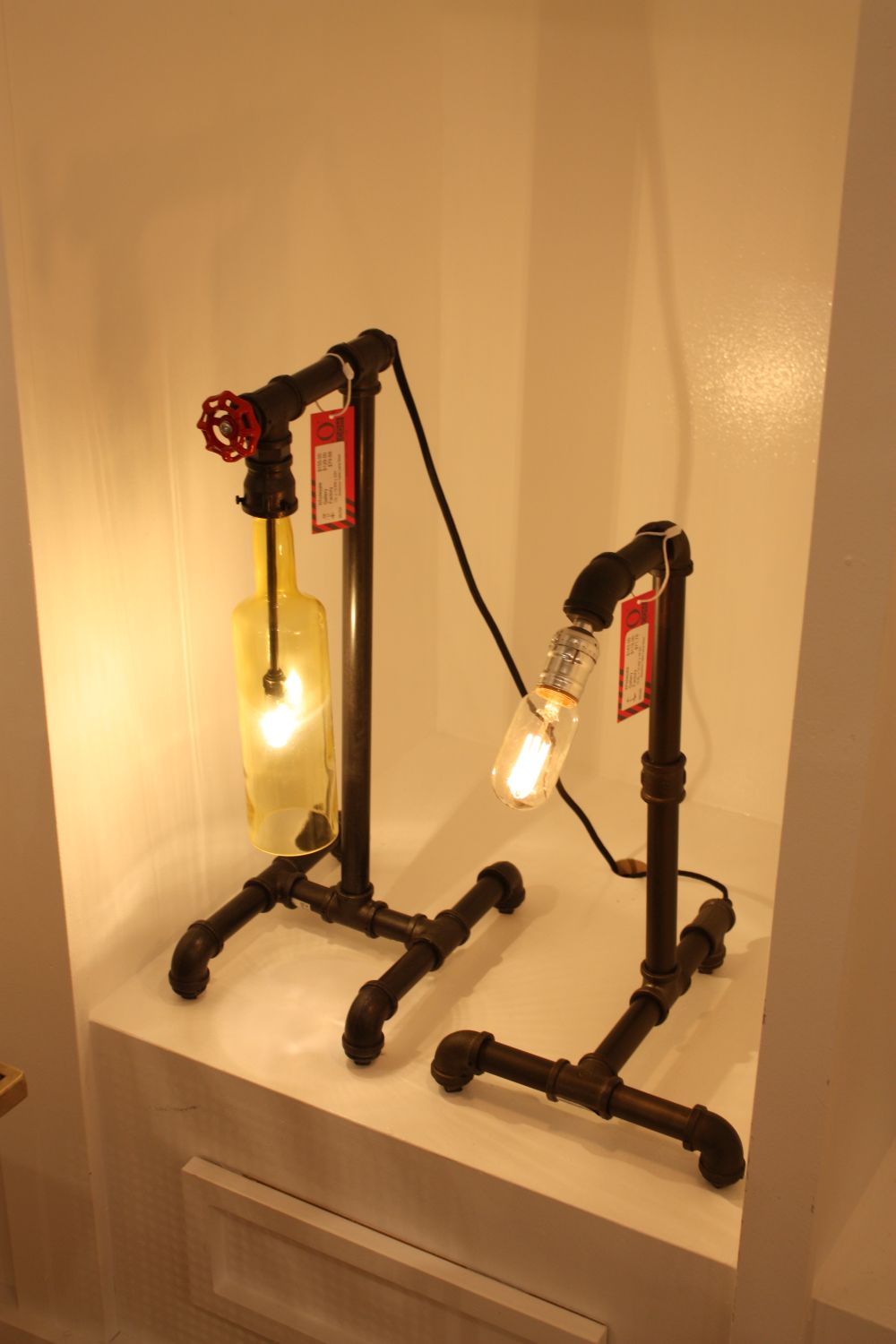
Black pipes and elbow fittings form the feet, upright supports, and arms of these two table lamps. One features an amber glass bottle surrounding the bulb, while the other leaves its filament bulb exposed.
Even the red valve handle remains part of the design, introducing a detail that connects the lamp with its plumbing origins.
How Plumbing Pipes and Wine Bottles Become Lamps
YouTube creator Andrew P. Olson demonstrates a related project using black iron pipes, threaded fittings, a wine bottle, and electrical lamp components.
Two Glass Bottles Replace Traditional Lampshades
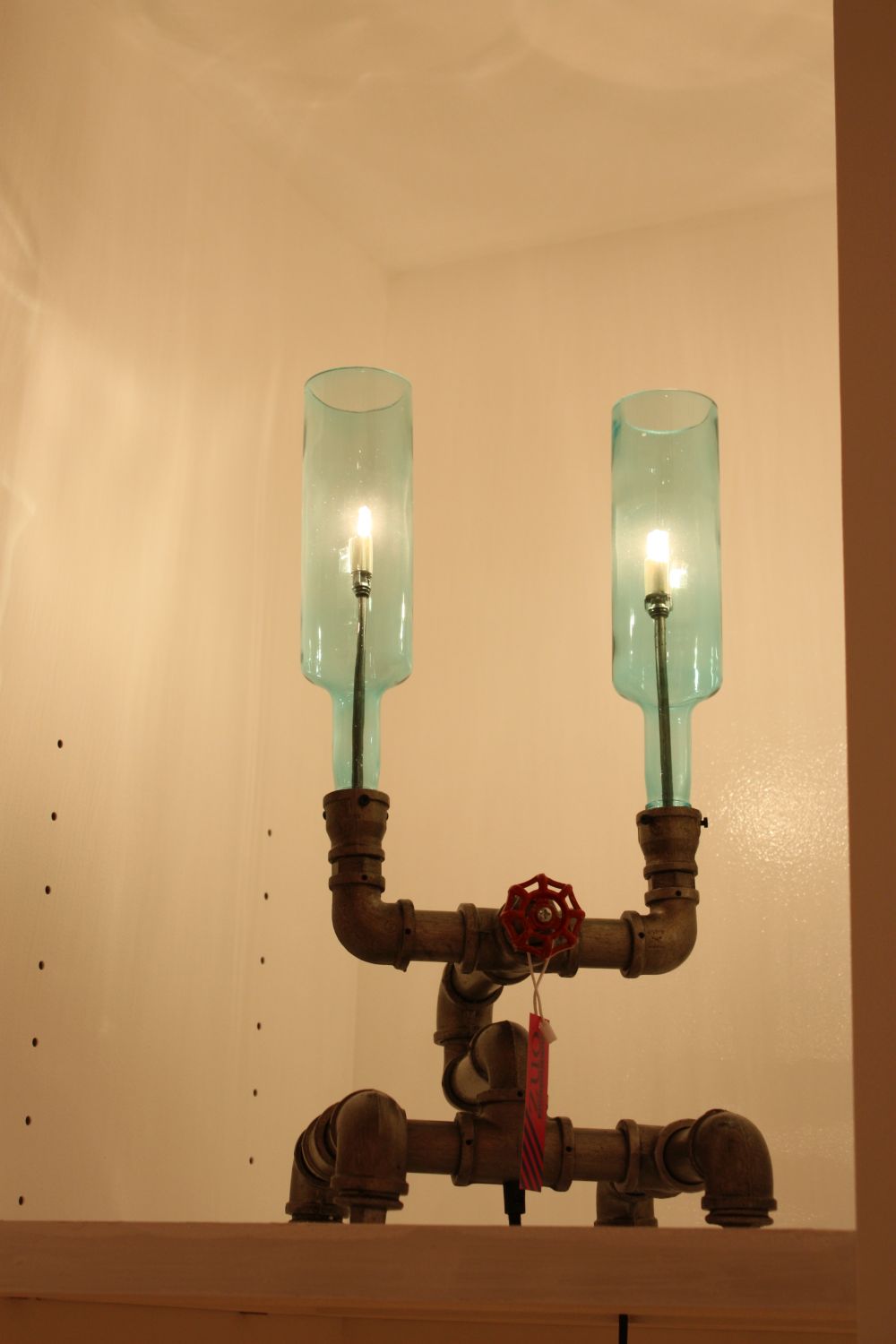
Inverted blue-green glass bottles surround two bulbs, with their necks resting inside the pipe fittings. Removing the bottle bases creates openings above the bulbs, while the horizontal pipe connects both lights.
Unlike fabric shades that conceal the bulb, colored glass allows light to pass through while keeping the bottle’s original shape visible.
What to Know Before Making One
Plumbing fittings can provide the structure of a lamp, but they are not designed to house electrical wiring. According to UL Solutions, table lamps are assessed for fire hazards, electric shock, burns, and structural stability under the UL 153 safety standard.
Use safety-certified sockets, cords, and switches, along with LED bulbs that produce less heat than incandescent bulbs. Have an electrician check the wiring, insulation, and grounding of the metal structure before connecting it to a power outlet. Certified components alone do not guarantee the safety of the finished lamp.
Glass bottles also require suitable cutting equipment and smooth edges to prevent injuries.
Plumbing pipes can also replace conventional wall-mounted light fixtures, as seen in this DIY project that turns pipe fittings into a three-bulb bathroom light.
Would you put a lamp made from plumbing pipes and glass bottles in your living room, or do these materials belong in the workshop?
Image credits: Homedit.com.
Editorial note: The photographs show finished lamp designs. The YouTube tutorial is a separate project, and whether the photographed lamps contain reclaimed materials has not been confirmed.