Not Minimalist, Not Maximalist: These Decorative Pieces Take a Different Approach to Home Styling


A glitter-covered torso on vintage trunks, oversized fossils on a console table, and an industrial clock beside turquoise ceramics aren’t the usual home accessories. These pieces replace familiar decorative arrangements with objects inspired by history, nature, and industrial design.
Some resemble museum exhibits, while others borrow from antique furniture, travel luggage, and botanical collections. Their shapes, materials, and finishes make them suitable for display without surrounding them with matching accessories.
From framed wood specimens to decorative trunks used as plant stands, these ten examples show how objects associated with other purposes can become part of home decor.
1. A Classical Torso With a Glitter Finish
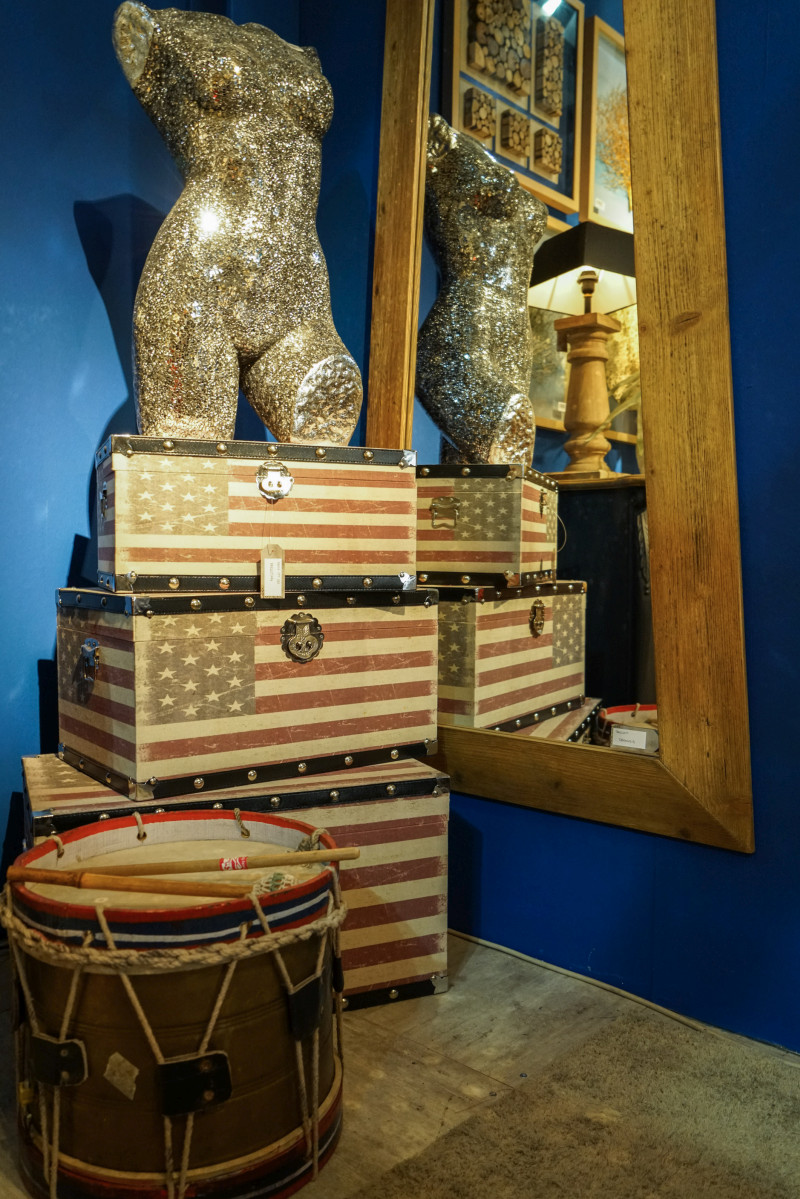
A silver torso with the proportions of a classical statue stands on three stacked storage trunks decorated with faded American flags. Its reflective finish gives the traditional sculpture a contemporary appearance, while the trunks introduce travel-inspired details through their metal corners, dark edges, and printed surfaces. A circular mirror behind the display repeats the silver finish without competing with the figure.
The arrangement demonstrates how an ordinary storage piece can become a pedestal for an object worth displaying. Vintage suitcases, wooden chests, or sturdy decorative trunks could serve a similar purpose, provided they create a stable base. A sculpture with a contrasting finish is enough to draw attention without surrounding it with additional ornaments.
2. Wood Specimens Displayed Like Artwork
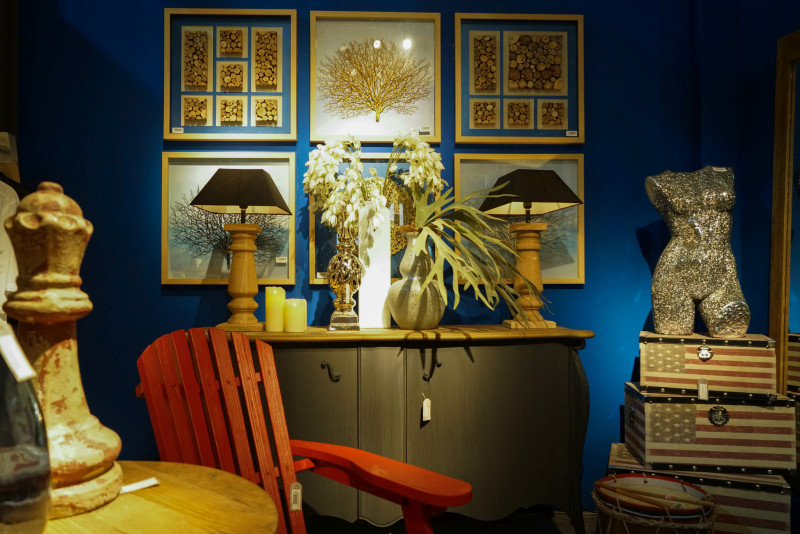
Five framed pieces occupy a deep blue wall above a wooden sideboard, including arrangements of cut branches and a central botanical illustration. The circular wood sections vary in size, revealing differences in grain, bark, and color that become part of the composition. Their pale frames separate the natural materials from the dark background.
Framed wood specimens offer an alternative to paintings or photographic prints, especially in rooms with wooden furniture. A collection of branch slices can provide its own patterns without paint or printed graphics, although the pieces should be dry and secured before framing. Using frames of comparable dimensions helps connect the specimens without requiring identical contents.
3. A Drawer Cabinet Filled With Ornamental Grasses
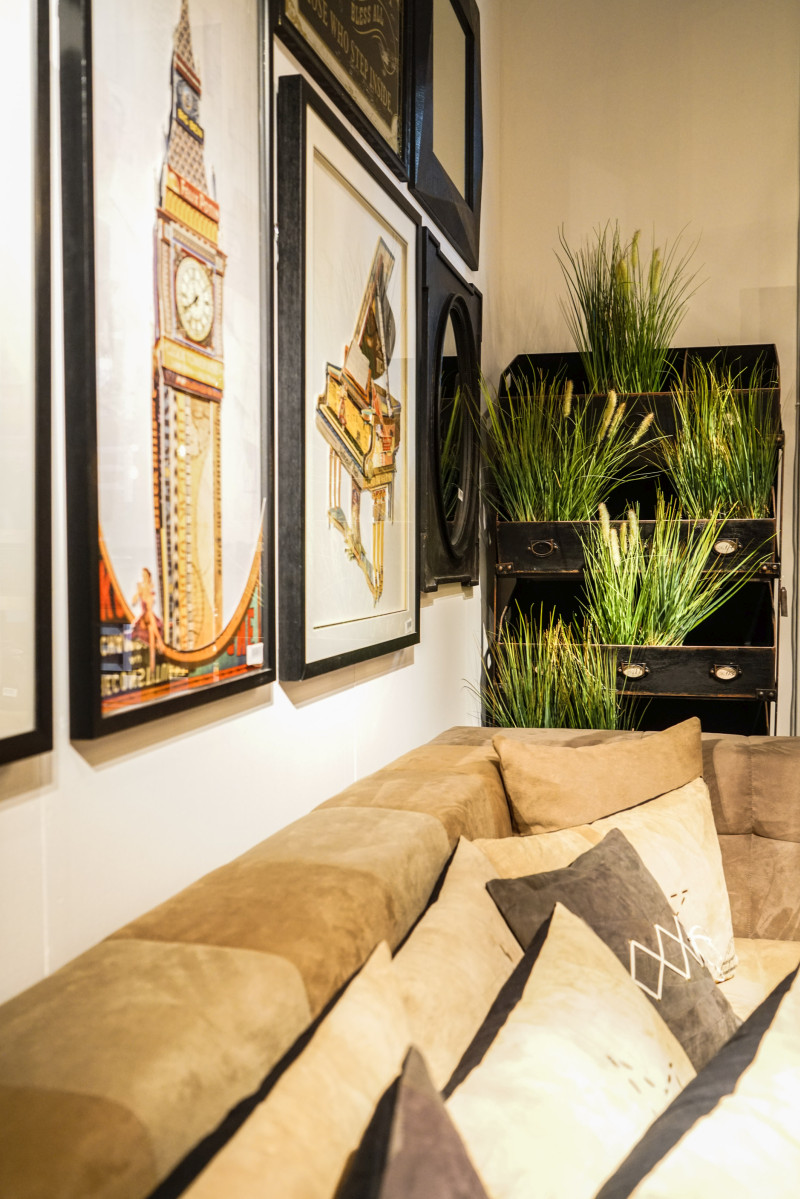
Tall grasses emerge from several open compartments of a narrow black cabinet positioned behind a sectional sofa. The rigid wooden frame provides a contrast to the long blades, which extend above the cabinet and across its openings. The result resembles a botanical installation rather than a conventional arrangement of houseplants.
An old drawer cabinet or shelving unit can serve as a display for potted plants at different heights, with taller varieties toward the back and smaller ones below. Containers need waterproof saucers or liners to protect the furniture, and live plants require suitable light and drainage. Keeping the pots accessible also makes watering possible without disturbing the entire display.
4. An Industrial Clock Paired With Turquoise Ceramics
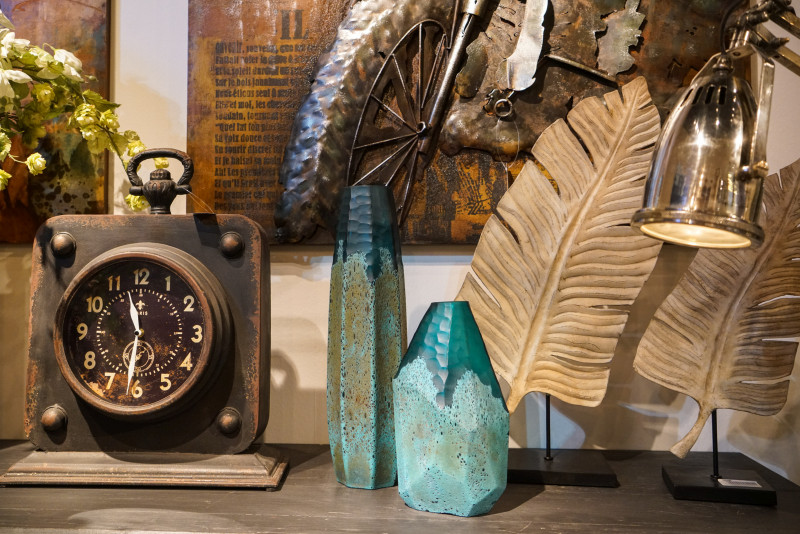
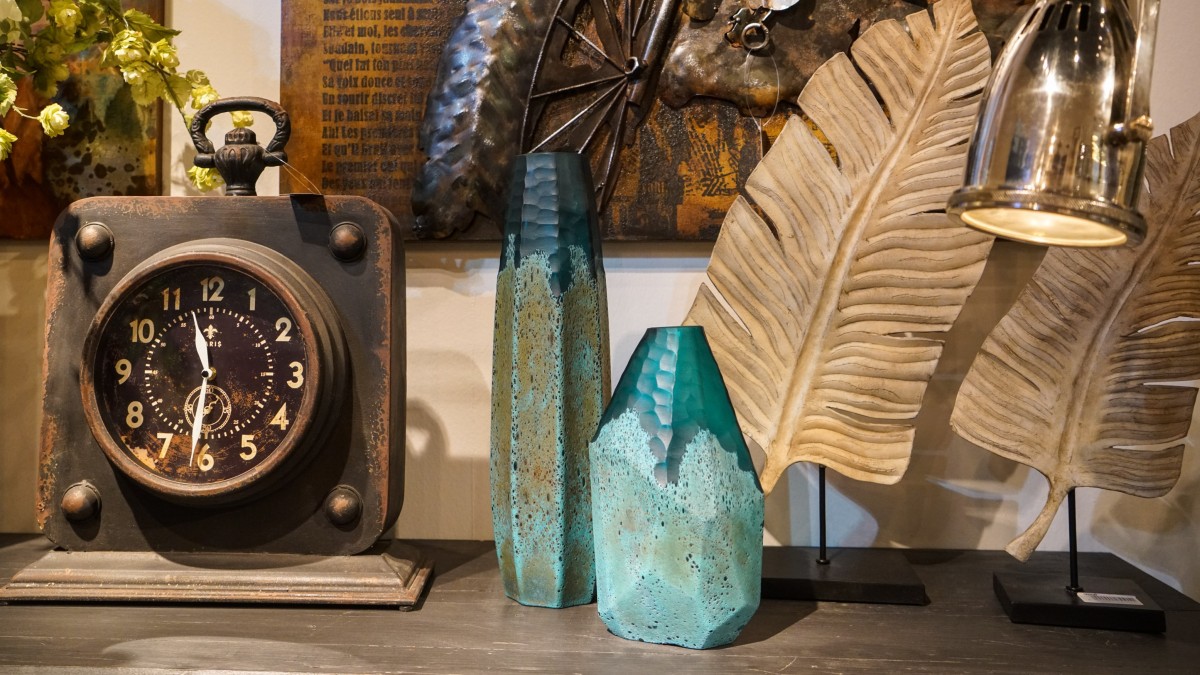
A large black clock with exposed corner bolts and a distressed finish sits between two turquoise ceramic vessels. The clock resembles an old factory instrument, with a round dial set inside a square housing. Beside it, carved wooden leaves mounted on metal stands introduce botanical shapes without using fresh greenery.
A clock with this scale can serve as the largest accessory on a console or sideboard, leaving smaller objects to occupy the surrounding space. Ceramic vessels with strong colors work well against distressed metal, while wooden pieces provide another surface finish. The arrangement is most useful as an example of choosing accessories with different heights and forms rather than purchasing a matching tabletop set.
5. Oversized Ammonite Sculptures on a Console
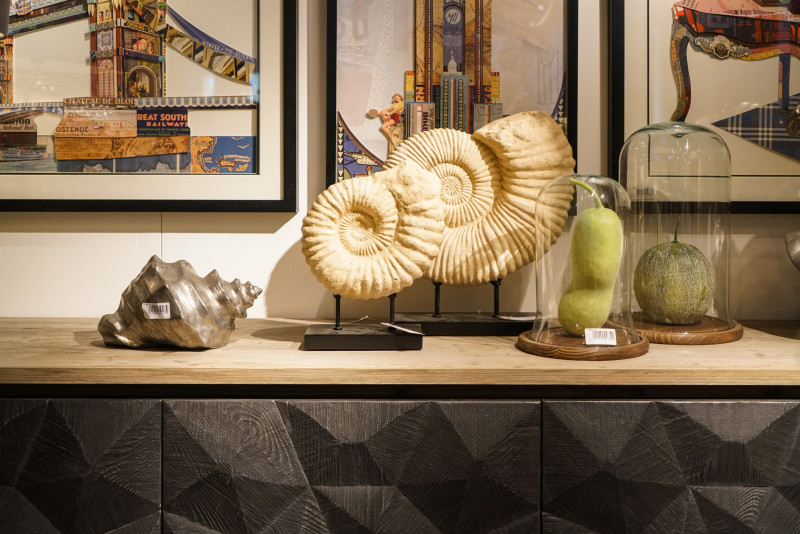
Two ammonite-shaped objects mounted on black metal stands resemble specimens from a natural history collection. Their spiral formations and ridged surfaces give them the appearance of geological artifacts, while a large seashell extends the marine reference across the wooden console. Glass cloches and framed architectural illustrations complete the display.
Objects inspired by fossils can replace conventional tabletop sculptures, particularly on long furniture with enough space around each piece. Their detailed surfaces are easier to appreciate when the stands are separated rather than crowded against other accessories. A single large ammonite form could also work on a bookshelf or an entryway table, where its outline remains visible from the front.
6. Vintage Aviation Artwork Above a Wooden Console
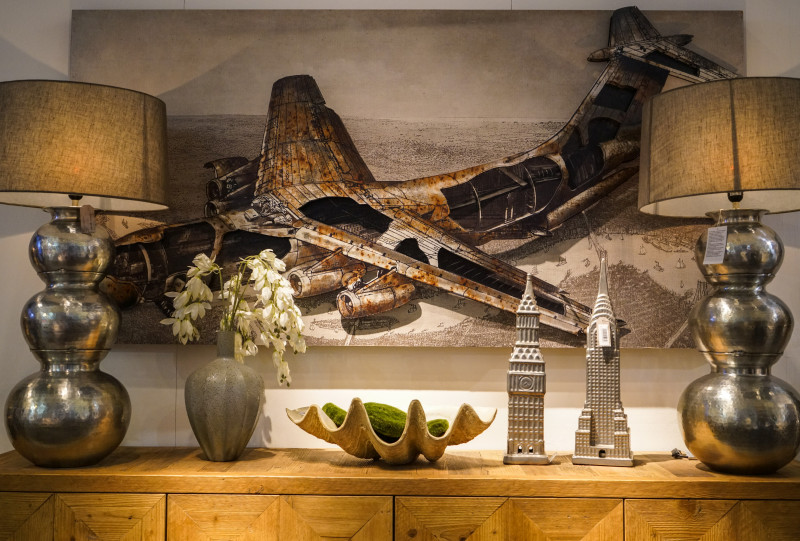
An oversized aircraft illustration dominates the wall above a wooden cabinet, combining the outline of an early airplane with technical drawing details and aged paper tones. Its horizontal format follows the width of the furniture below, while two metallic lamps mark the ends of the arrangement. Small architectural models and a narrow vase occupy the remaining surface.
Large artwork can replace a gallery of smaller frames when the wall has enough width to support a single composition. Above a console, a piece measuring around two-thirds to three-quarters of the furniture’s width is a useful starting point, although the artwork’s proportions matter as much as its measurements. Technical drawings, vintage maps, and architectural illustrations offer alternatives to abstract paintings and landscapes.
7. Decorative Storage Trunks Used as Plant Stands
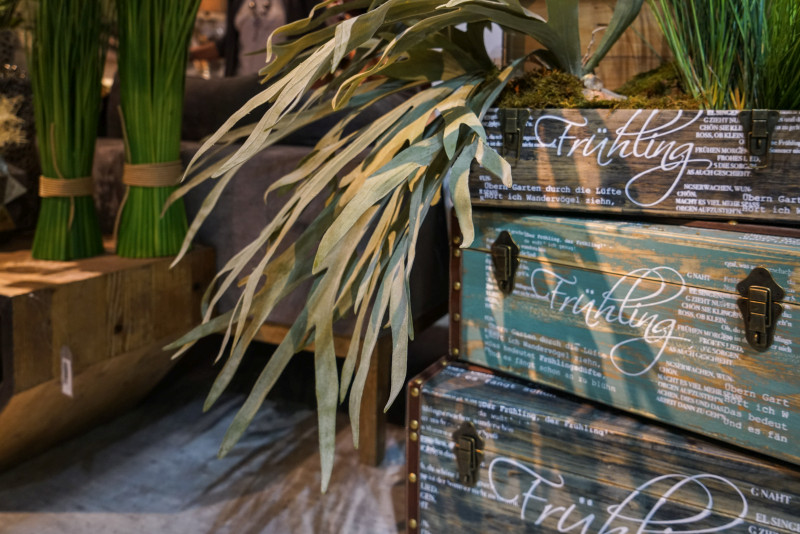
Three distressed blue-green trunks support ornamental grasses and broad fern fronds, with printed lettering and metal fittings visible beneath the foliage. The trunks have the appearance of old storage containers, including dark corner protectors and worn painted surfaces. Their placement at different heights turns the group into a display with several planting levels.
Storage trunks can substitute for standard plant stands when their lids are strong enough to support the weight of the containers. Waterproof trays help prevent moisture damage, while removable pots allow the plants to receive water without soaking the wooden boxes. Trunks that retain their original storage space can also hold seasonal accessories when the plants are removed.
8. Vintage Automobile Artwork Above a Sectional Sofa
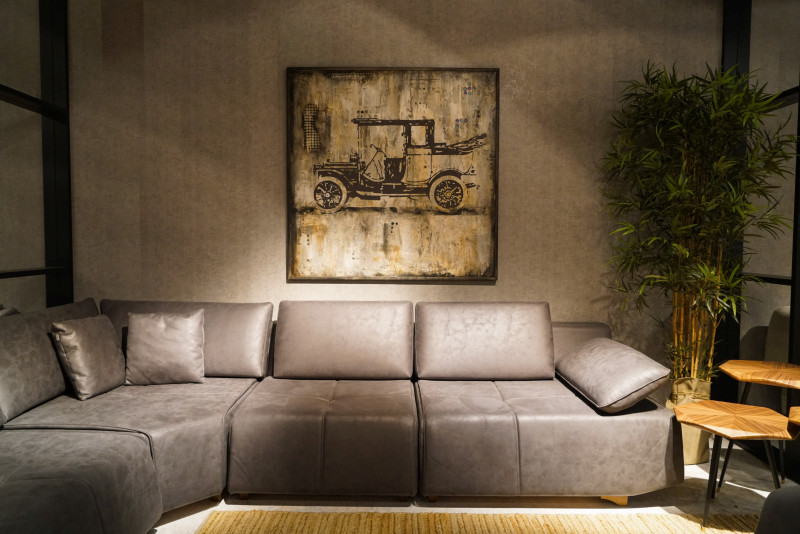
A large print of an early automobile hangs above a gray sectional, showing exposed wheels, a long hood, and an open passenger compartment. The illustration uses a restrained palette of cream, black, and brown, allowing the vehicle’s outline to remain the main subject. Two small wooden tables and a tall plant provide the surrounding accessories.
Automobile illustrations can work outside garages, offices, and dedicated hobby rooms when treated as artwork rather than memorabilia. A single large print avoids turning the room into a themed collection, while a narrow frame can suit furniture with a contemporary profile. Historical vehicles, patent drawings, and engineering sketches provide related subjects for homeowners who prefer technical artwork to conventional wall prints.
9. An Ornate Black Mirror With Metallic Candlesticks
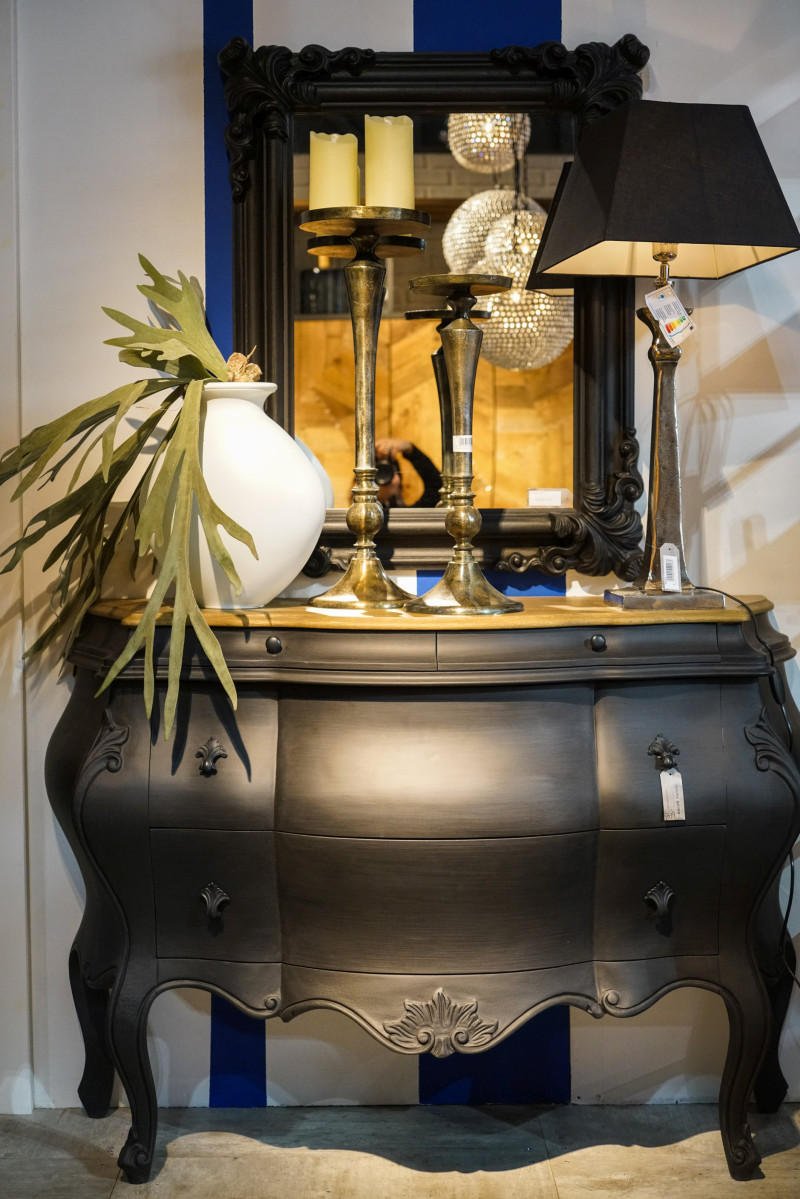
A carved black mirror hangs above a curved chest of drawers with rounded fronts, decorative handles, and cabriole legs. The mirror’s frame includes raised floral details and scrollwork, making it an ornamental object as well as a reflective surface. Tall metallic candlesticks, a white vase with palm-like foliage, and a dark table lamp occupy the wooden top.
An ornate mirror can introduce detailed craftsmanship into a room without requiring every furniture piece to follow a period style. Placing it above a cabinet gives the frame a defined setting, while simple candleholders prevent the surface from becoming crowded with carved objects. For a similar arrangement, choose a mirror narrower than the furniture beneath it and leave enough space between the frame and tabletop accessories.
10. A Turquoise Glass Vase With Metallic Branches
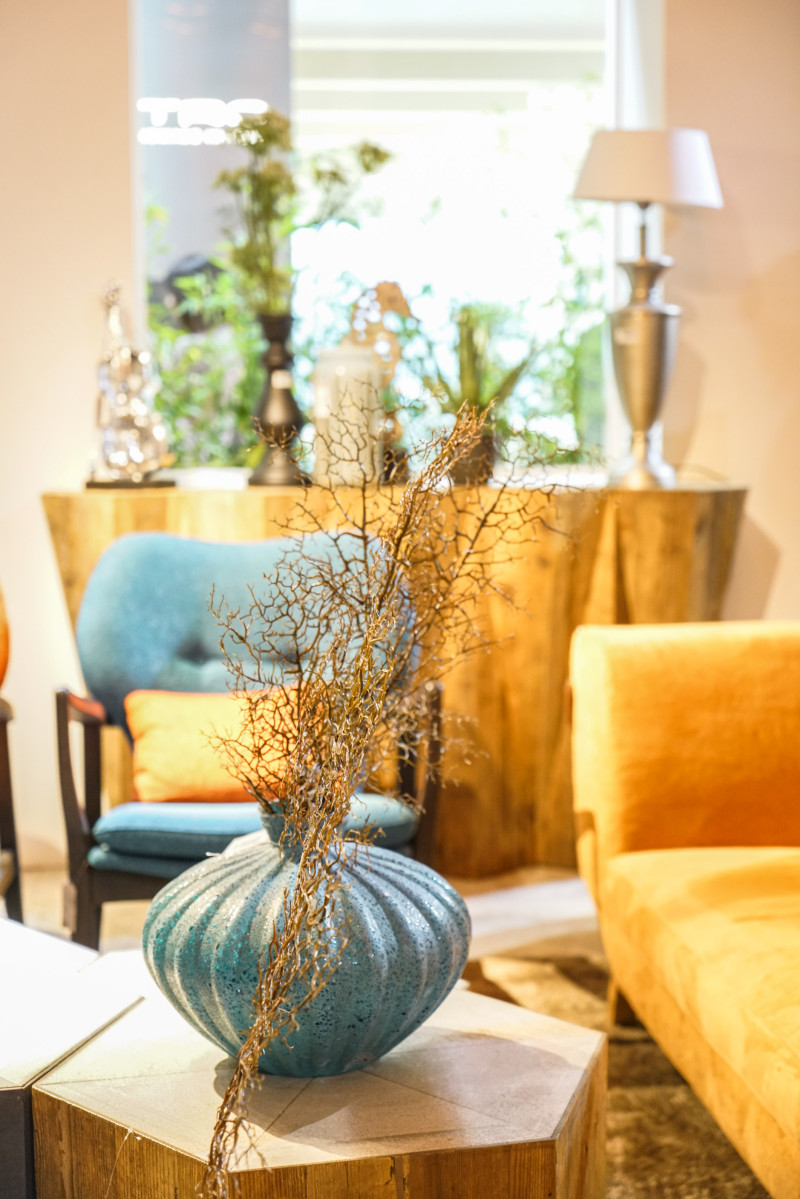
A rounded turquoise glass vase holds an arrangement of thin metallic branches that rise above its narrow neck. The vessel has a ribbed surface and a broad body, while the branching stems create a tall outline without flowers or leaves. Behind it, yellow and blue upholstered chairs introduce colors that connect with the glass and metal.
Decorative branches are an alternative to fresh flowers for a table that doesn’t need frequent changes. A vessel with a wide, weighted base helps support taller stems, especially when the branches extend beyond its edges. Keeping the arrangement below the sightline of seated guests makes it suitable for a dining table, while taller stems can be used on a sideboard or console.
Whether it’s a fossil-inspired sculpture, an industrial clock, or a vintage trunk, an unusual accessory can provide a starting point for decorating without committing to one design style. The important consideration is where the piece will sit, how much space it needs, and whether its material or shape connects with something in the room.
Would you display an unusual vintage find in your living room, or do you prefer accessories that follow one design style?