Putting Half a Lemon in the Microwave With Water: Why People Recommend Doing It and What It’s For


Food splatters inside a microwave can turn into stubborn stains after several rounds of heating. Instead of scrubbing the walls and glass turntable, some people put half a lemon in a bowl of water and heat it for three minutes.
The steam helps loosen dried residue, but the next five minutes matter too. Here’s what the lemon does, why the door stays closed, and what appliance manufacturers say about this cleaning method.
What Lemon Water Does Inside the Microwave
Heating water creates steam that settles on the microwave’s interior surfaces and softens dried residue. Lemon adds a citrus scent, but water does most of the cleaning work.
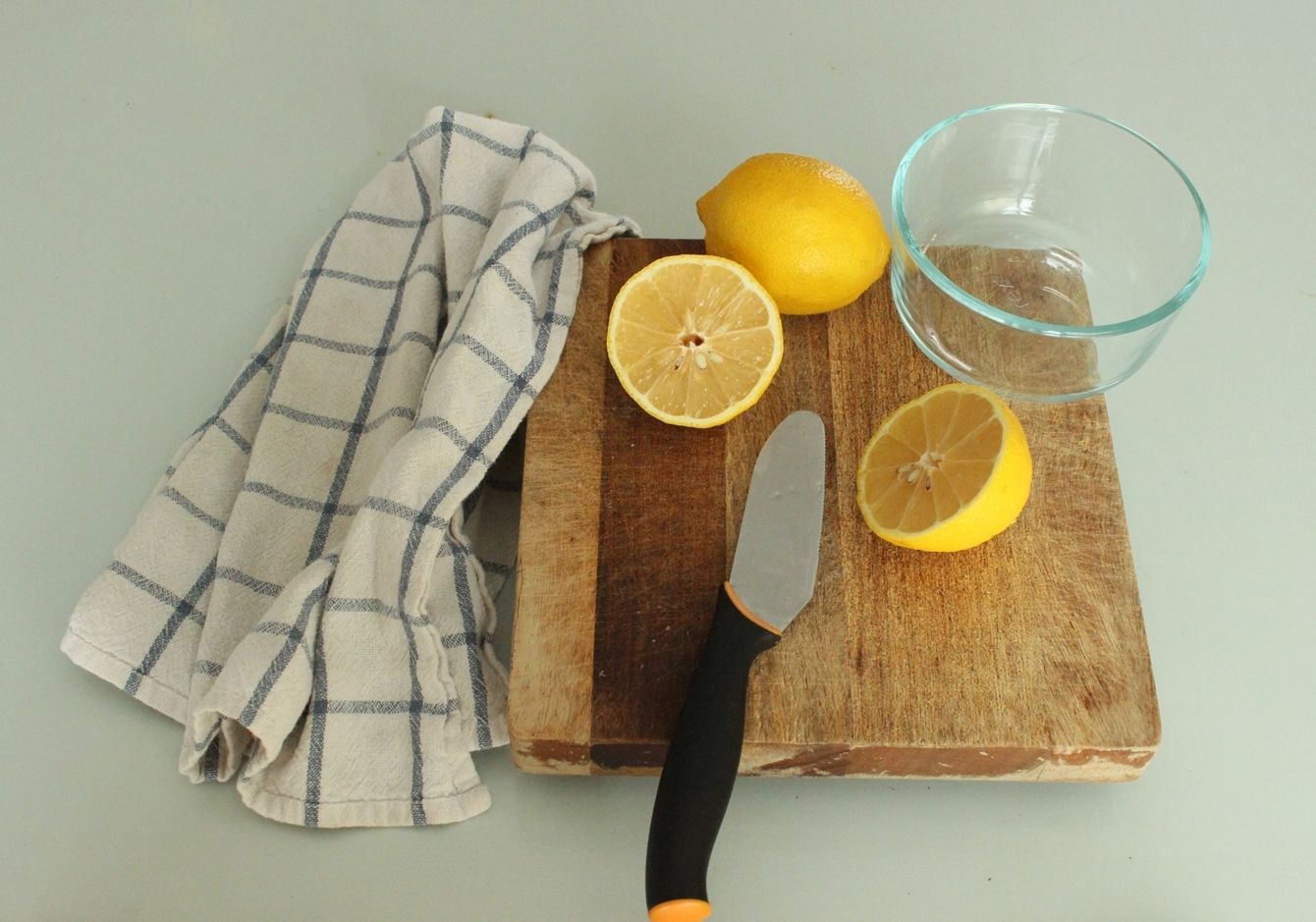
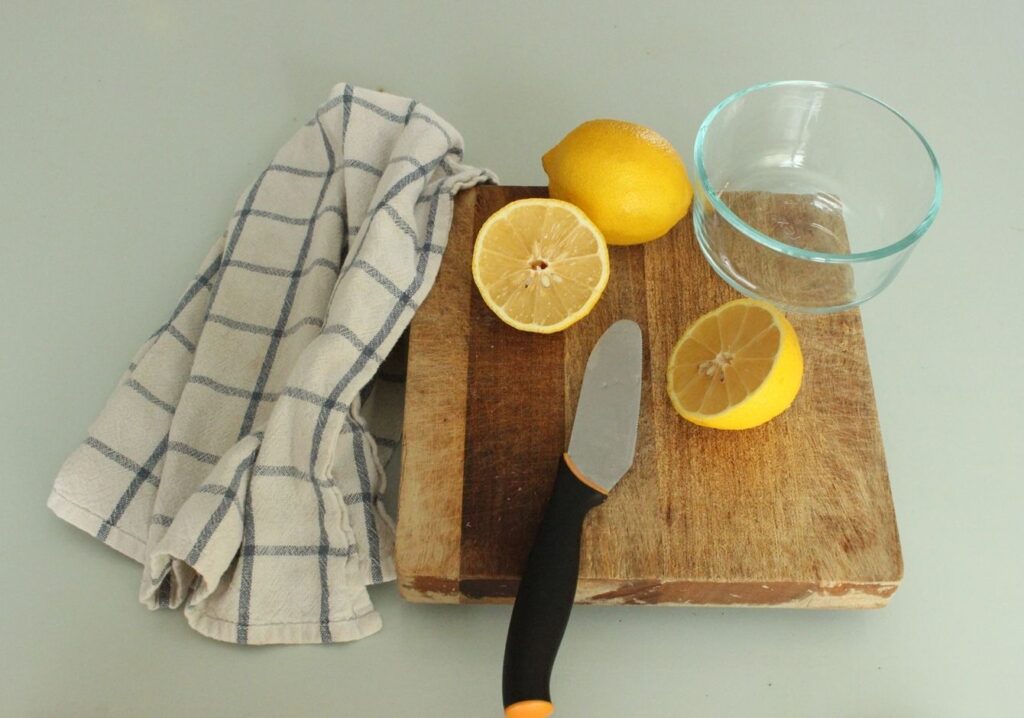
Homedit DIY creator Brittney Smart tested the method on a microwave with food splatters, using one lemon, half a cup of water, and a dish towel.
How to Prepare the Lemon Water
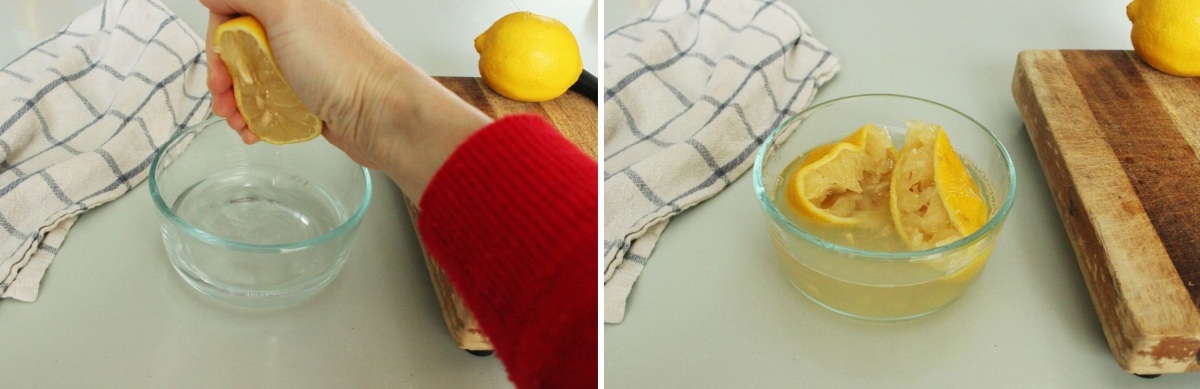
Smart cut the lemon in half and squeezed the juice into a microwave-safe bowl containing half a cup of water.
She added both squeezed halves to the bowl, leaving the rinds in the mixture. A larger bowl is preferable because boiling water can spill over the rim of a small container.
Three Minutes of Heating, Followed by Five Minutes With the Door Closed
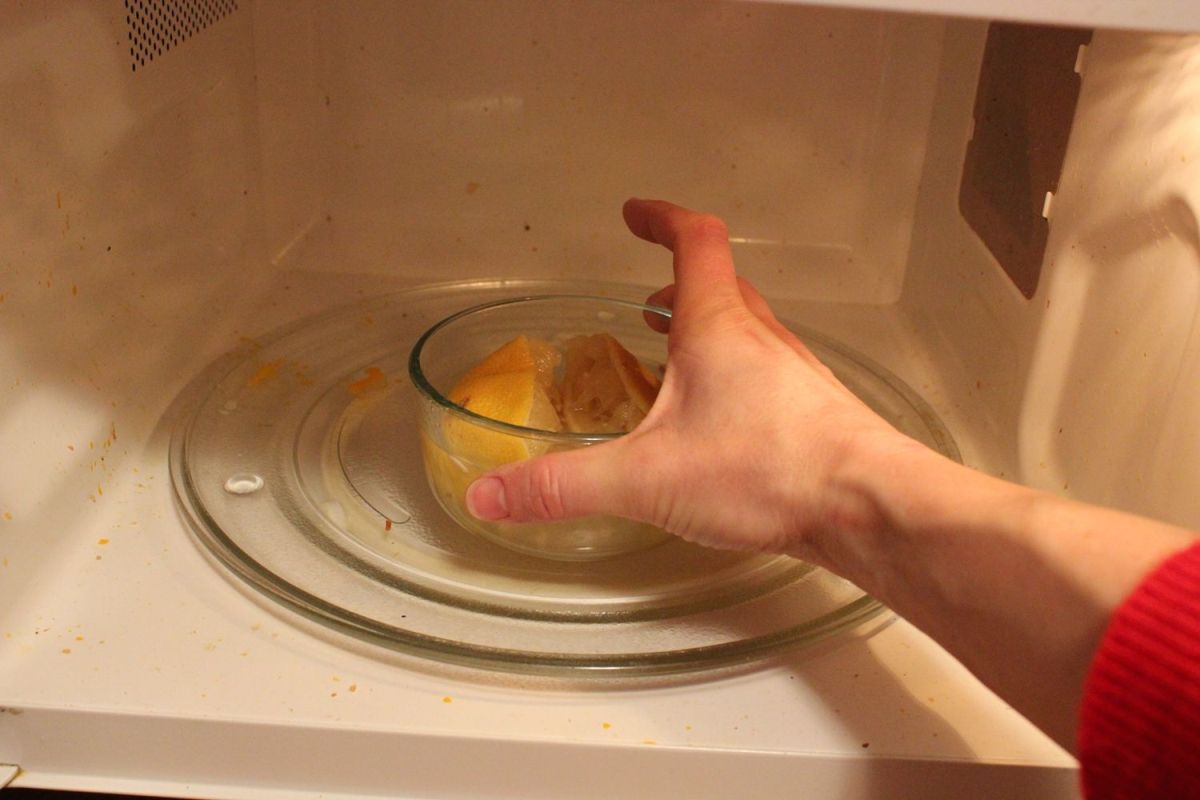
Smart placed the bowl on the microwave’s glass turntable.
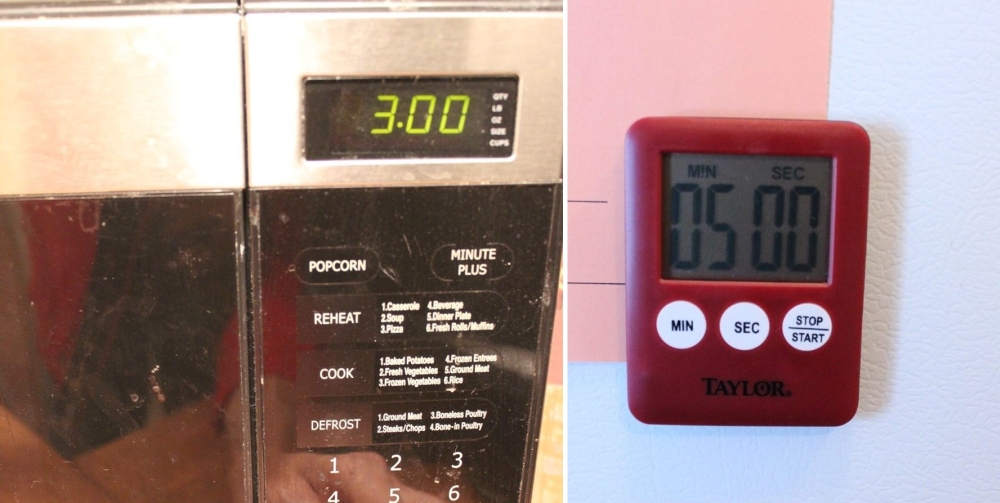
She heated the mixture on high power for three minutes, allowing the water to produce steam.
After the heating cycle, she left the door closed for another five minutes. This gave moisture more time to collect on the dried food deposits.
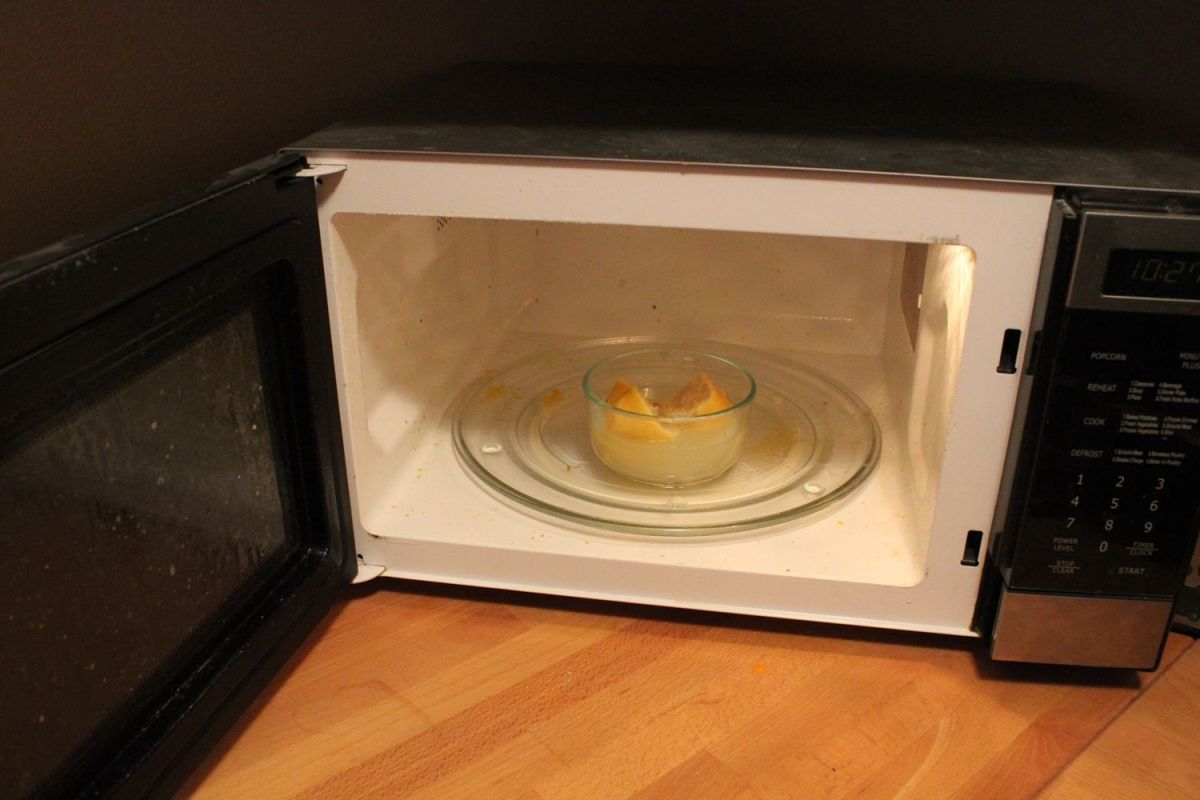
When she opened the door, the interior was damp, although some food spots remained visible.
One Wipe Removed the Food Residue From Half the Turntable
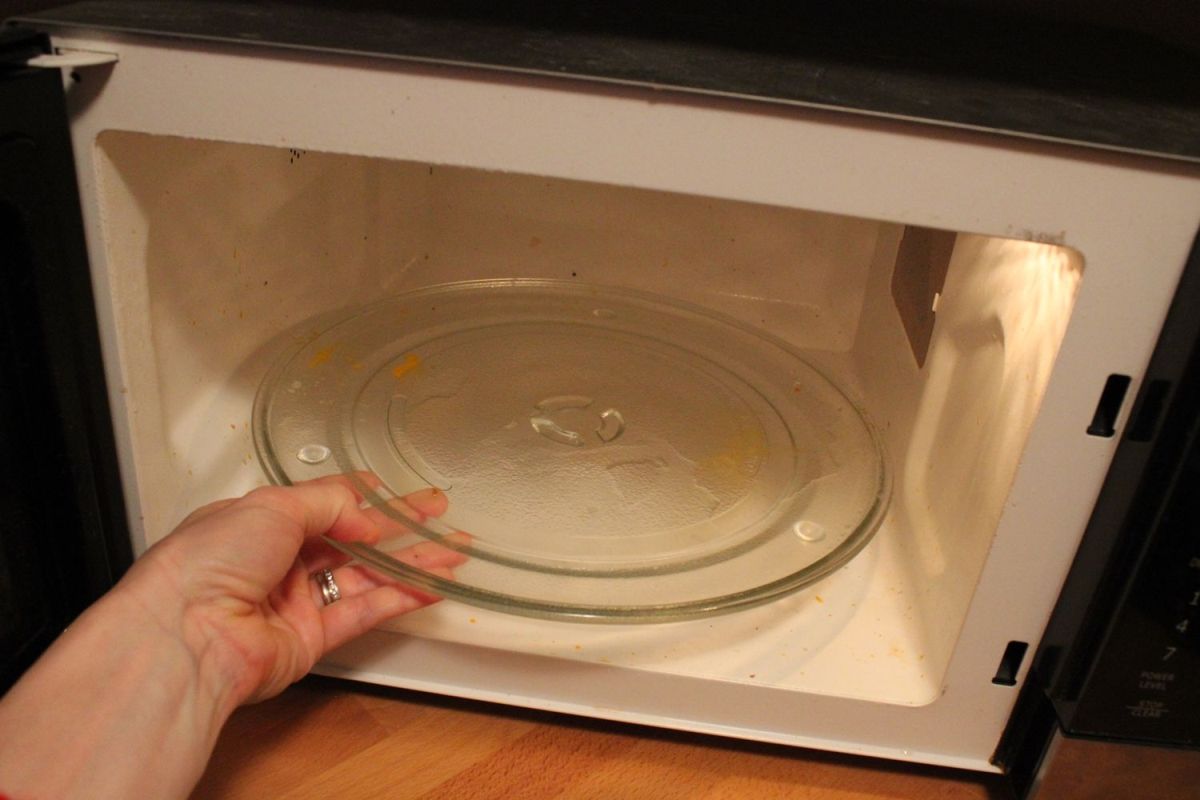
Smart removed the glass turntable after the steam treatment.
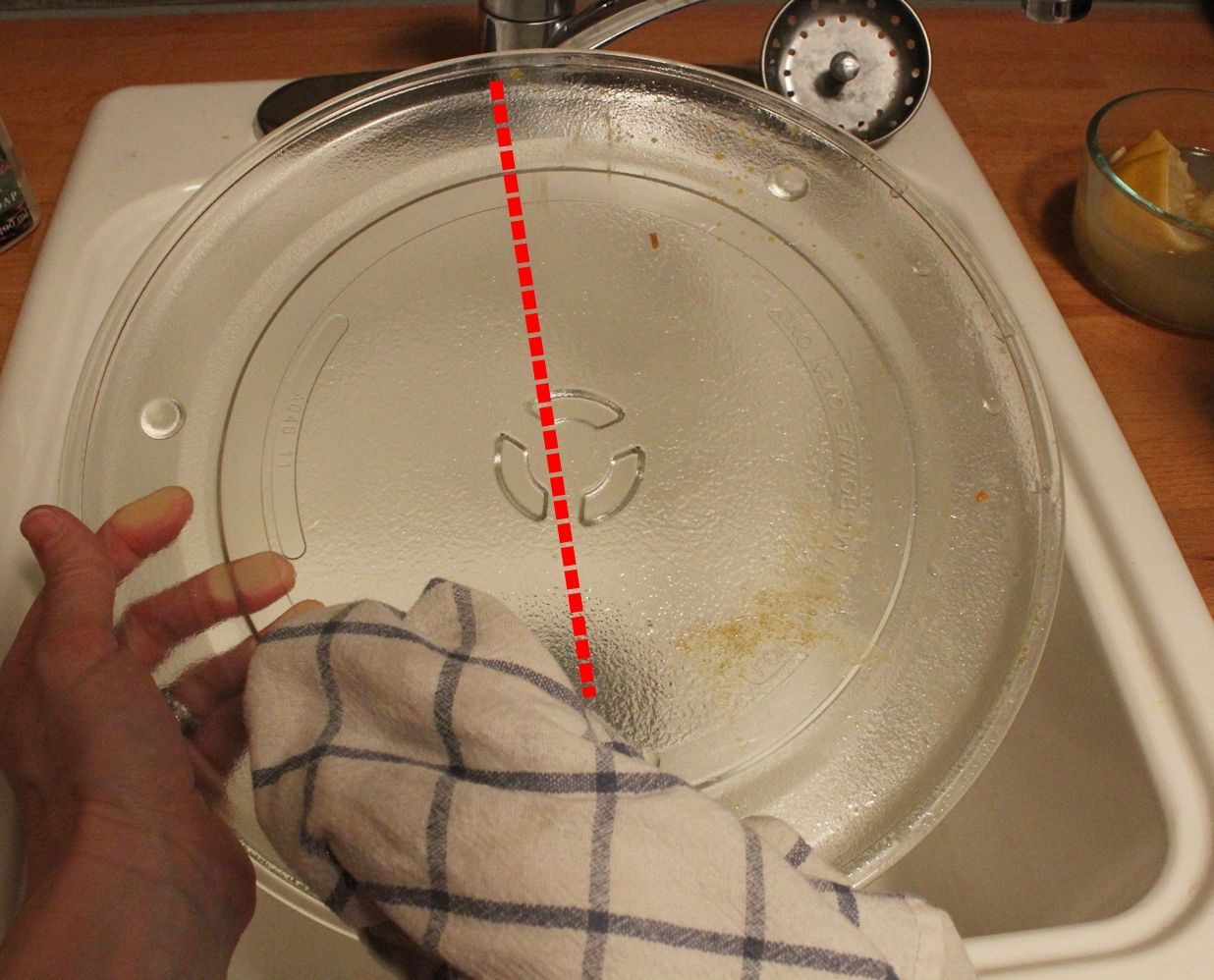
She wiped one section with a dish towel, leaving the other untouched. The photo shows a clean section beside the remaining food residue. No soap was used for this part of the test.
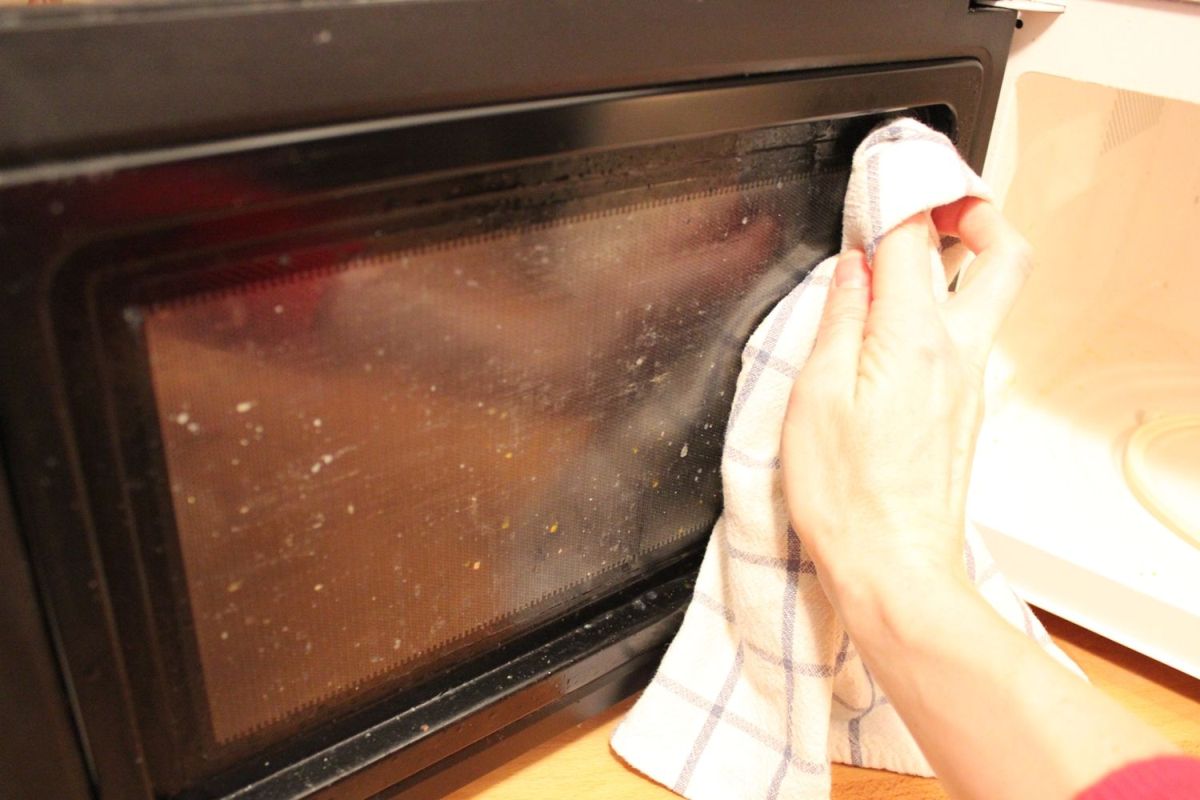
The microwave door also had dried splatters. She passed the towel across the glass to remove the softened deposits.
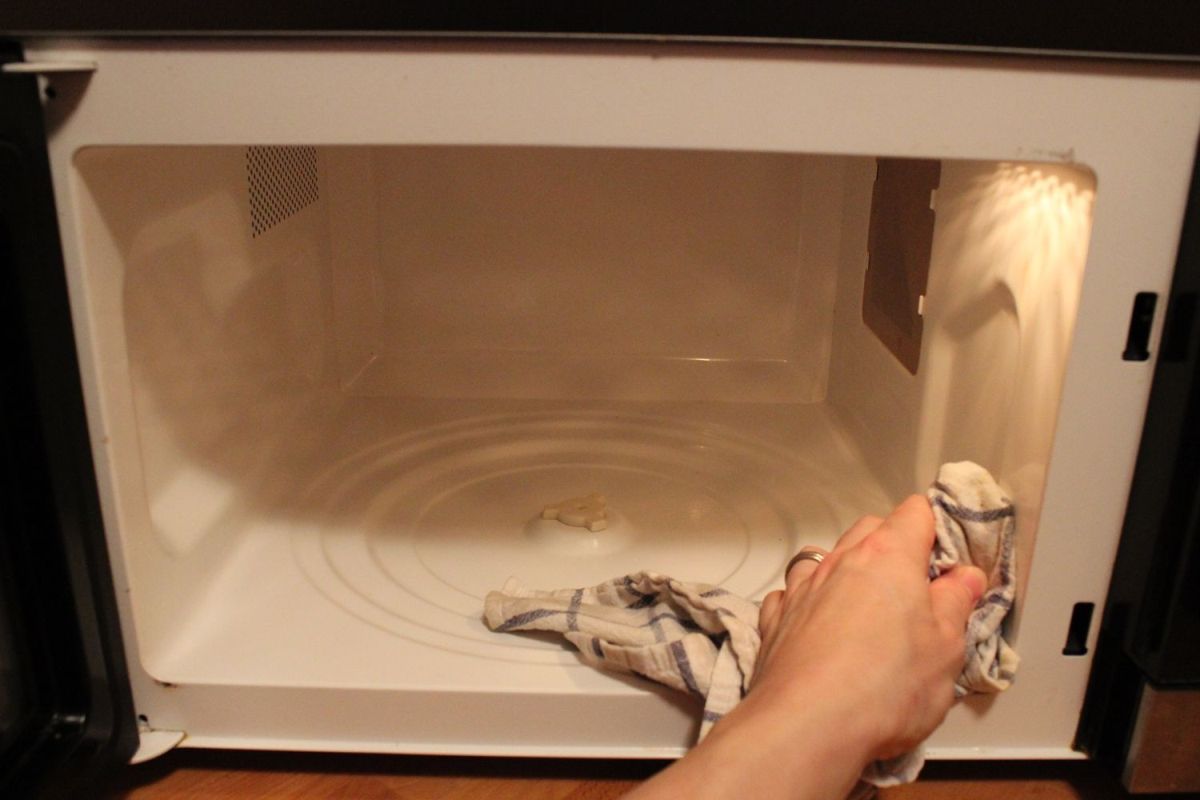
She continued across the interior walls, ceiling, and floor, removing food residue from the white surfaces.
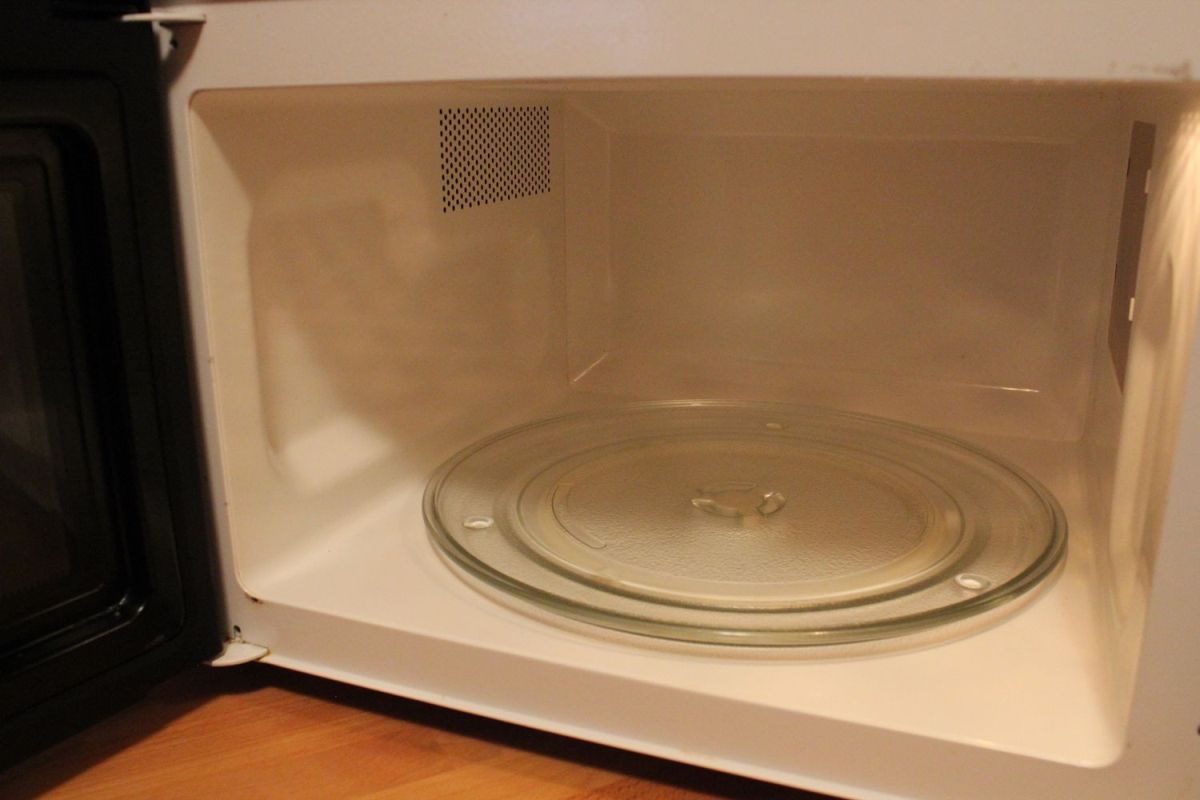
The final photo shows the cleaned microwave with its glass turntable back in place. The process took about 10 to 12 minutes, including heating and waiting.
What Microwave Manufacturers Say
Whirlpool recommends heating water for three to four minutes to loosen food residue before wiping. The manufacturer also suggests adding lemon juice to the water.
Samsung describes a similar method using two cups of water, optional lemon juice, and five minutes of heating, followed by a short wait before wiping.
However, Bosch advises against using lemon to clean its microwaves because the acidity may damage certain surfaces. It recommends mild soapy water instead.
The difference matters because steam does most of the cleaning work, not lemon juice. Plain water can soften dried food deposits without adding an acidic ingredient.
Check the appliance manual before using lemon, choose a microwave-safe bowl, and take care when handling hot water. Stubborn grease may still require dish soap.
Would you try lemon water after seeing the results, or use plain water to clean your microwave?