Not Colorful, Not Plain: These Rooms Let One Bold Accent Do the Work


Beige bedrooms, cream sofas, and dark furniture don’t need colorful walls to make an impression. One red lampshade, an orange upholstered headboard, or a pair of rust-colored velvet sofas can change how a room looks without replacing its neutral foundation.
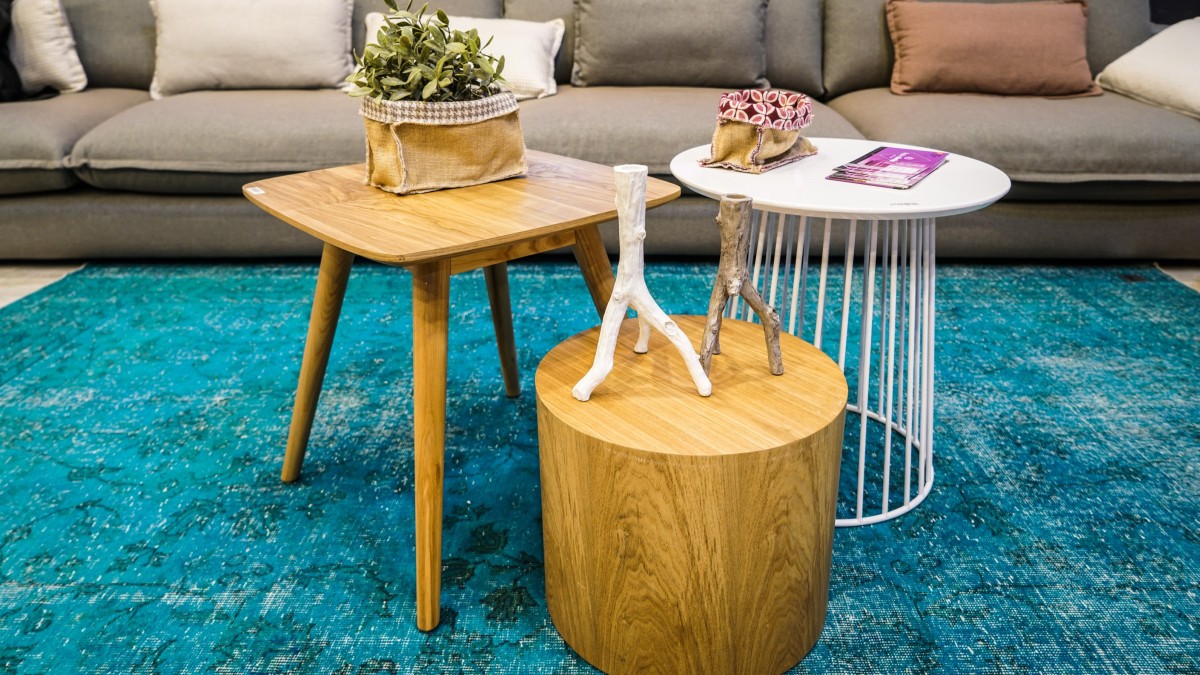
Red and orange stand out against beige, taupe, black, and cream, making even a single piece of furniture or lighting the center of attention. This approach keeps large surfaces neutral while giving saturated colors a defined place in the design.
Color forecasters are also paying attention to these shades. WGSN and Coloro included Energy Orange among their five key colors for spring and summer 2027, while Dutch Boy Paints selected the terracotta-inspired Deep Rooted as its 2027 Color of the Year. The five rooms below show different ways to use these warm accents, from small accessories to upholstered furniture.
A Red Lampshade Against a Beige Bedroom
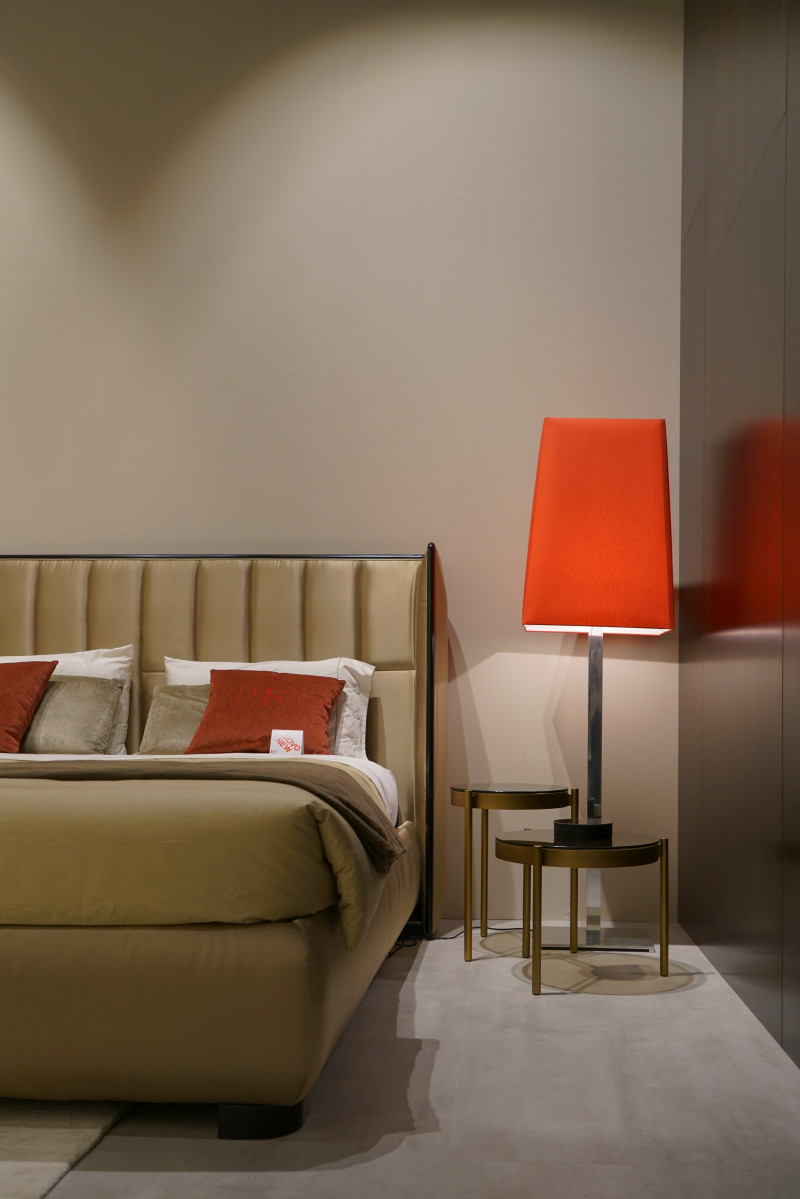
Beige upholstery covers the bed frame and its tall, vertically channeled headboard, while taupe bedding and muted pillows continue the neutral palette. Beside the bed, a floor lamp with an oversized red-orange rectangular shade introduces the strongest color in the room. Its black metal stem connects with the bed frame, while the shade stands out against the pale wall.
Placing the lamp beside the headboard gives the color its own space without competing with the bedding. Two small round tables with slender gold legs sit beneath it, leaving most of the wall free of artwork or decoration. A similar effect can come from replacing a neutral lampshade with a saturated red or orange one, provided the shade fits the lamp and meets its heat-safety requirements.
Orange Display Cabinets Behind a Cream Sofa
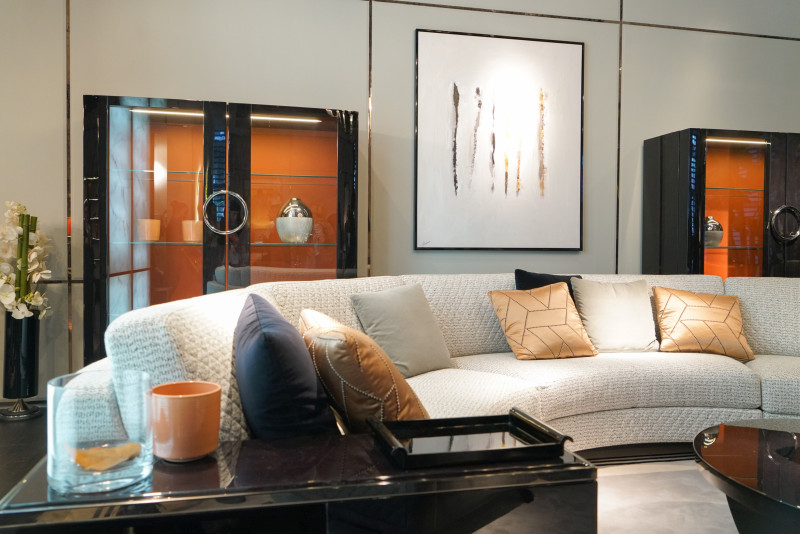
Black lacquered display cabinets feature orange interior panels that remain visible through their glass doors. Built-in lighting illuminates the color and the objects on the shelves, while circular metal handles reinforce the cabinets’ contemporary design. A large cream sectional sits between them, with peach and terracotta cushions repeating portions of the orange palette.
Unlike a painted accent wall, the orange remains contained inside the cabinets. Their black frames separate it from the pale walls, while the sofa provides a neutral foreground. For a comparable result, the back panels of an existing bookcase or display cabinet could receive a saturated paint color, leaving the exterior unchanged.
Rust-Red Velvet Sofas Against Dark Walls
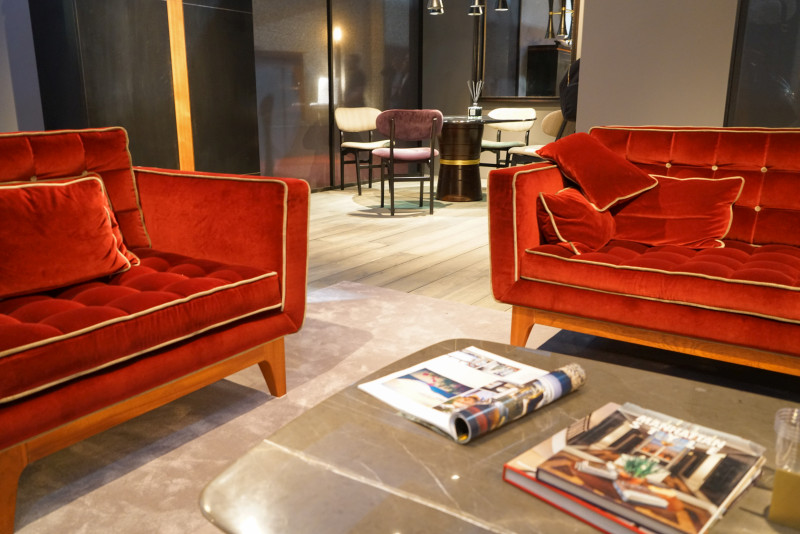
Rust-red velvet covers two facing sofas with square arms, deep tufted seats, and wooden legs. Thin cream piping outlines the cushions and upholstery edges, giving each piece a defined shape against the dark wall panels. The sofas carry most of the room’s color, while a gray stone coffee table and pale rug provide a restrained setting.
Choosing a saturated upholstery color commits more space to the accent than a lamp or cushion would, so the surrounding materials matter. Dark wood and charcoal walls make these sofas stand out, while the light flooring prevents the seating area from becoming dominated by dark finishes. The red upholstery needs few additional accessories because its color occupies both sides of the arrangement.
An Orange Headboard Instead of an Accent Wall
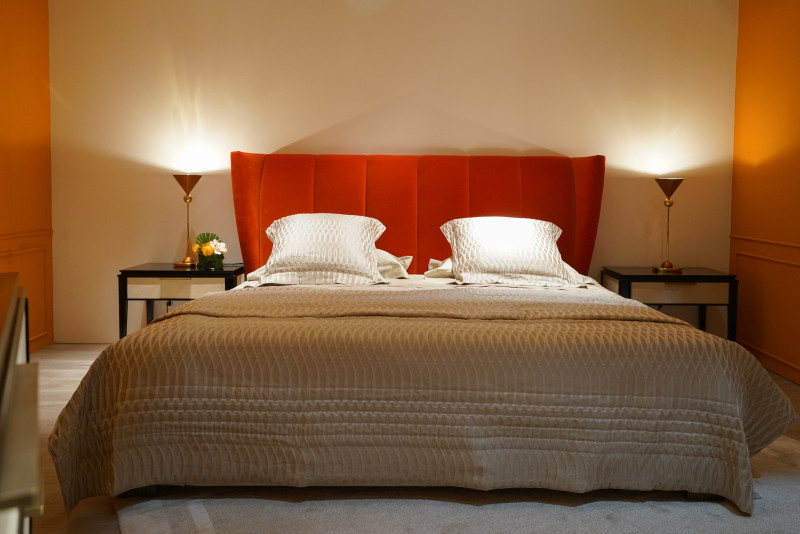
Burnt-orange upholstery covers a tall headboard with vertical channels and short winged sides. The bed sits against a cream wall, framed by matching bedside tables and slender lamps. Pale patterned bedding fills most of the foreground, leaving the headboard as the main block of color between the two light fixtures.
Using the bed as the accent allows the walls to remain neutral, even when the headboard occupies much of the room’s width. The orange side walls repeat the same color family, while black bedside tables provide a sharp border against the pale bedding. This arrangement suits bedrooms where a bold headboard can replace a painted feature wall as the central design element.
A Burnt-Orange Accent Chair Against Black Walls
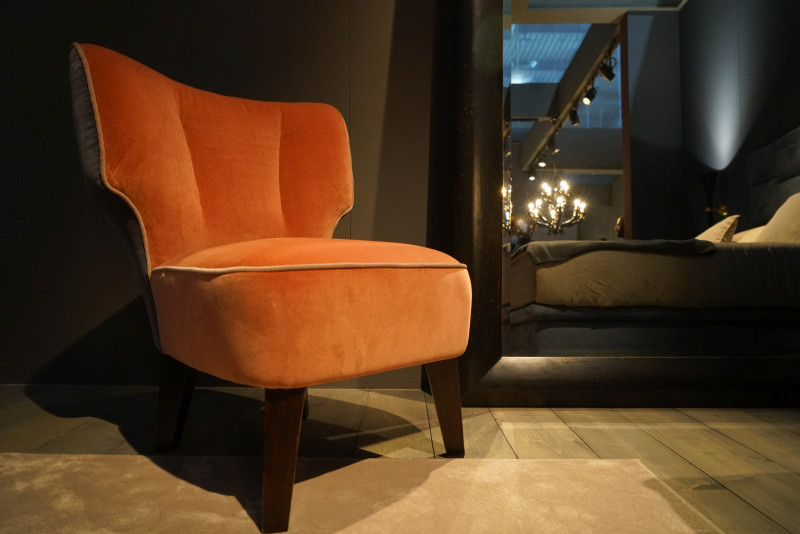
Burnt-orange upholstery gives this compact accent chair its distinct appearance against charcoal walls and dark furniture. Its curved back rises into two rounded wings, while the seat has a broad, padded profile and contrasting edge piping. Four dark wooden legs lift the chair above the pale timber floor.
Positioning a chair with this color against a dark wall makes its outline stand out without additional patterned fabrics or artwork. The chair could serve as a reading seat, a bedroom accent, or an extra place to sit in a living room. Unlike a large sofa, one upholstered chair provides a way to introduce a bold color without making it the dominant finish across the room.
These examples show the difference between using color across an entire room and choosing one place for it. A lampshade or accent chair offers a small commitment, while an upholstered bed or sofa establishes a stronger presence. Neutral walls and surrounding furniture allow those choices to remain the focus.
Would you choose a red or orange accent for your home, or keep the furniture and accessories neutral?
Image credits Homedit.com