Instead of replacing the brown granite, she painted it white and now it looks like quartz


The counters are solid, heavy and in perfect shape, and that’s the frustrating part. Dark brown granite, a dark brown tile backsplash and brown oak cabinets, and the whole kitchen swallows the light. Nobody wants to pay to rip out stone that isn’t broken.
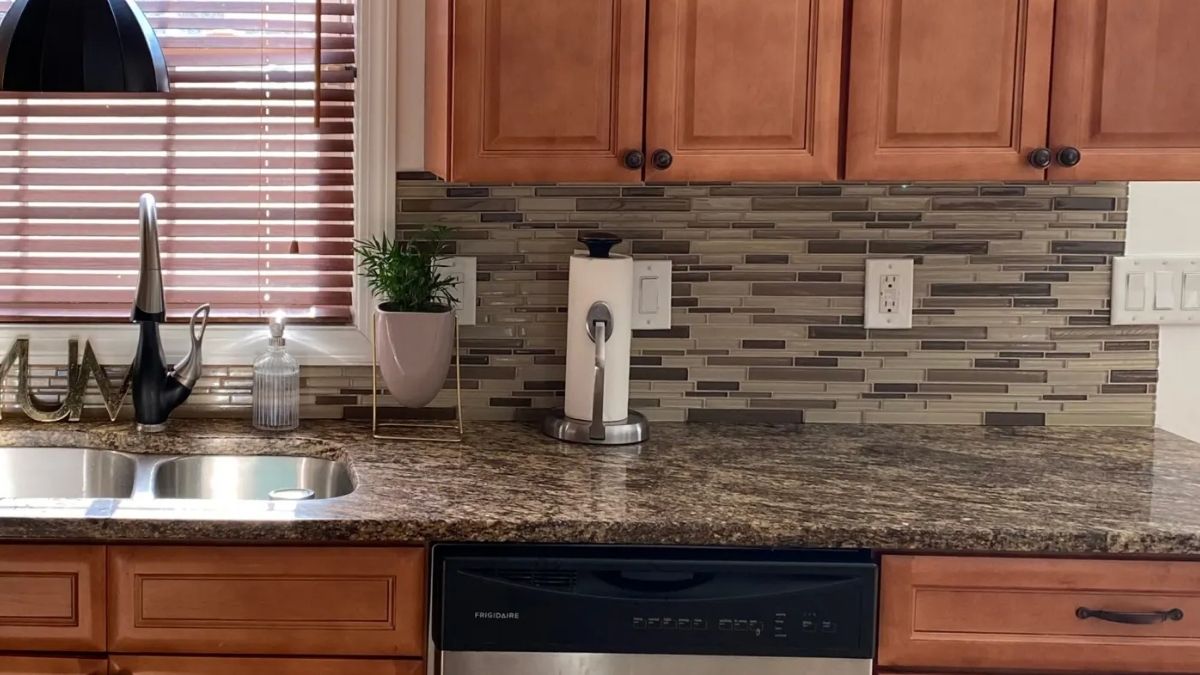
The granite wasn’t the problem, its color was. Tiffany Brown-Barino, who shares her projects as @myeclecticnest, had a kitchen just like that. “I definitely didn’t like how dark they were and how dark they made the kitchen feel,” she says. Instead of replacing the stone, she painted it.
Why dark granite made the whole kitchen feel dark ?
Countertops are the biggest flat surface in a kitchen, right where window light and ceiling light land. When they’re dark brown, sitting between brown cabinets and brown tile, there’s almost nothing left to bounce that light back into the room.
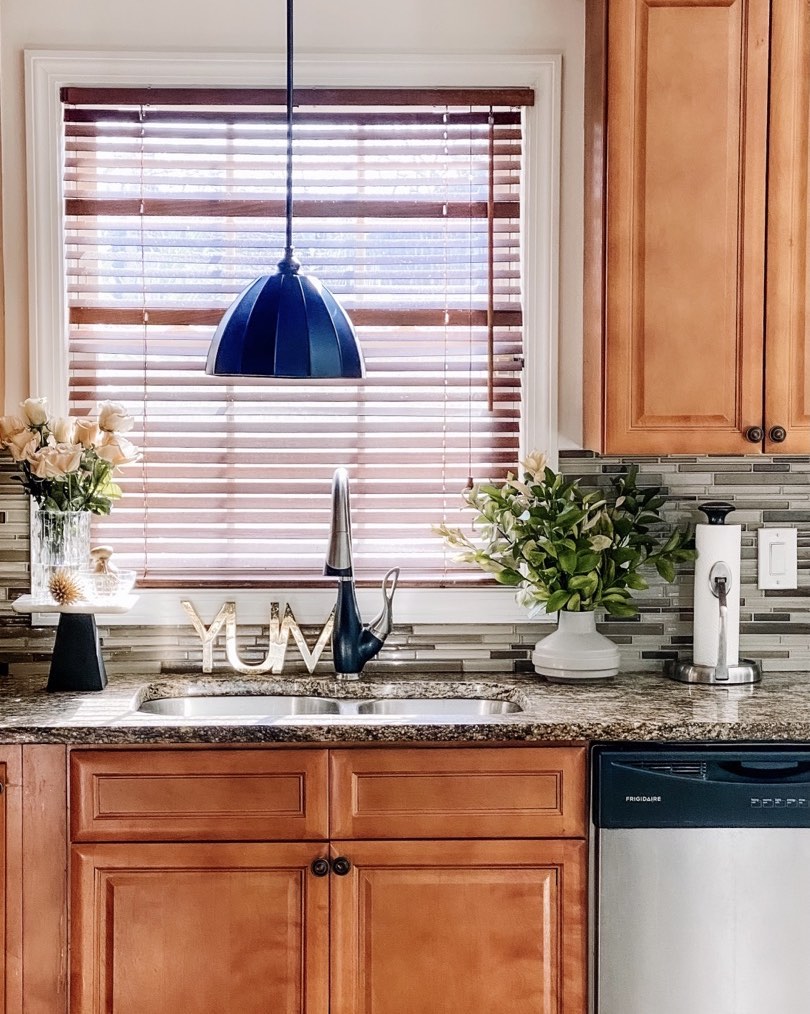
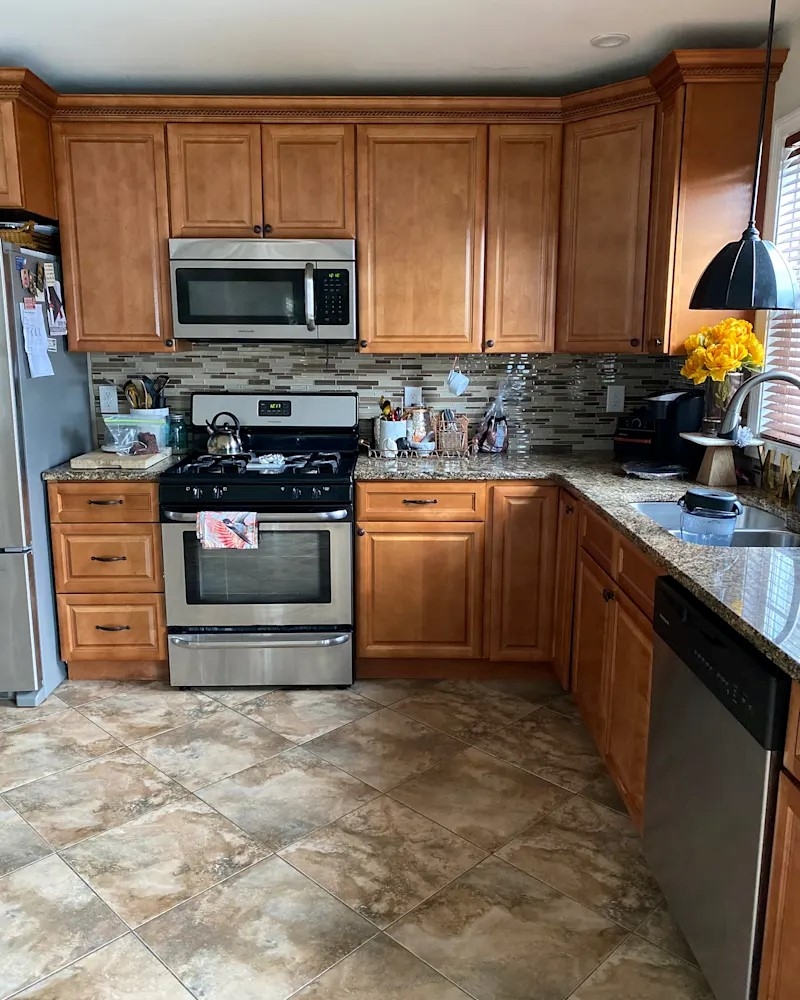
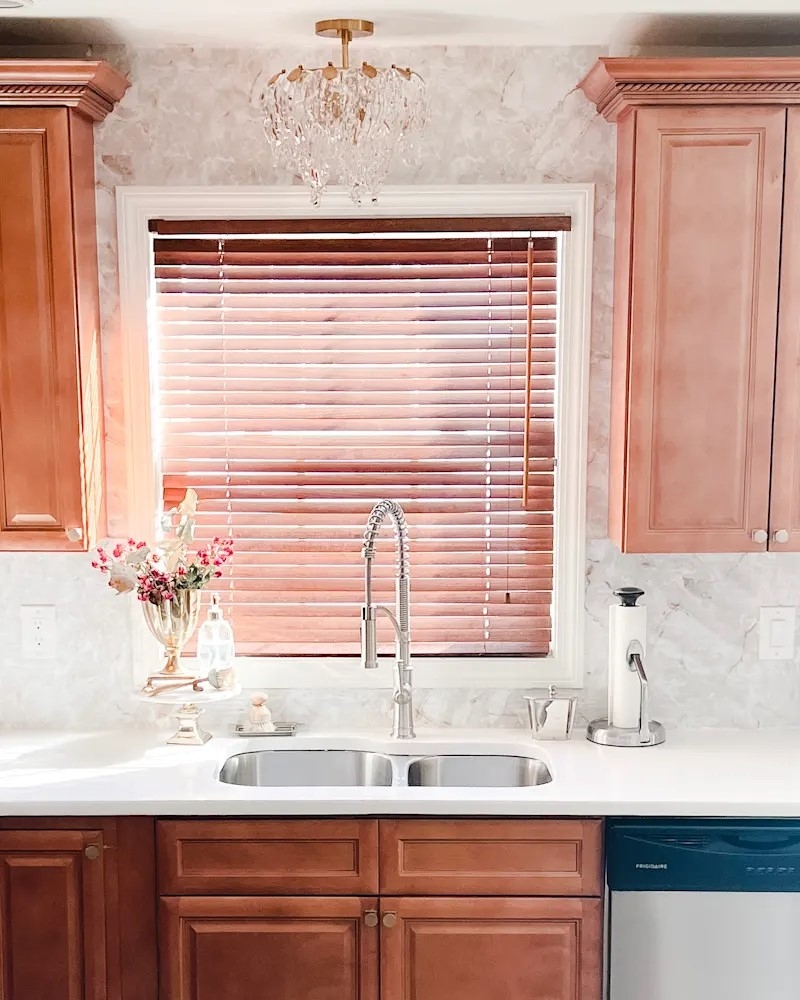
Tiffany used white Rust-Oleum epoxy paint, which she says costs under $30 a quart. “All of the brown granite was painted white, and it really resembles a white quartz which is really pretty,” she says. She kept her ’90s oak cabinets and stainless appliances, and added champagne bronze pulls, a brass and glass chandelier and a new faucet.
Covering a counter instead of tearing it out works on laminate too: a thin concrete-based coating, built up in layers and sealed, can turn beige laminate into something that looks like new concrete.
The countertop paint job, step by step
- Clean and scuff. The data sheet for the white Rust-Oleum Appliance Epoxy says to clean with soap and water, rinse, let the surface dry and lightly sand anything glossy. It does not recommend a primer.
- Pick the right day. The sheet calls for temperatures between 50°F and 90°F and humidity below 85%.
- Work fast between layers. Tiffany found the layers had to go on quickly, one after another, to avoid odd drying or bubbling. That matches the sheet, which says to recoat within 1 hour or after 24 hours.
- Give it time. The sheet lists 2 to 4 hours to dry to the touch, 5 to 9 hours to handle and 24 hours to dry fully.
- Change the wall behind it. She had planned to paint the brown tile, then chose a peel-and-stick faux stone instead. “It’s peel-and-stick, so very low-commitment but high return on style!” she wrote on her blog.
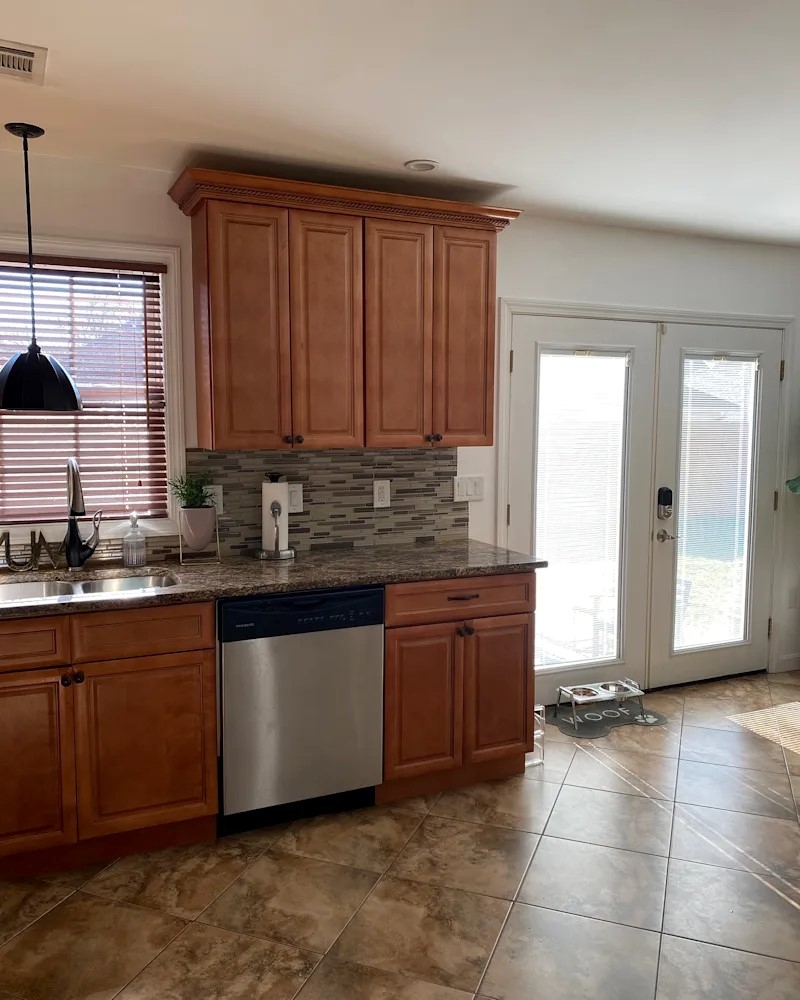
Plan B, if paint on stone feels too permanent: start with the backsplash. It’s the wall your dark counters sit against, and peel-and-stick can come off if you change your mind.
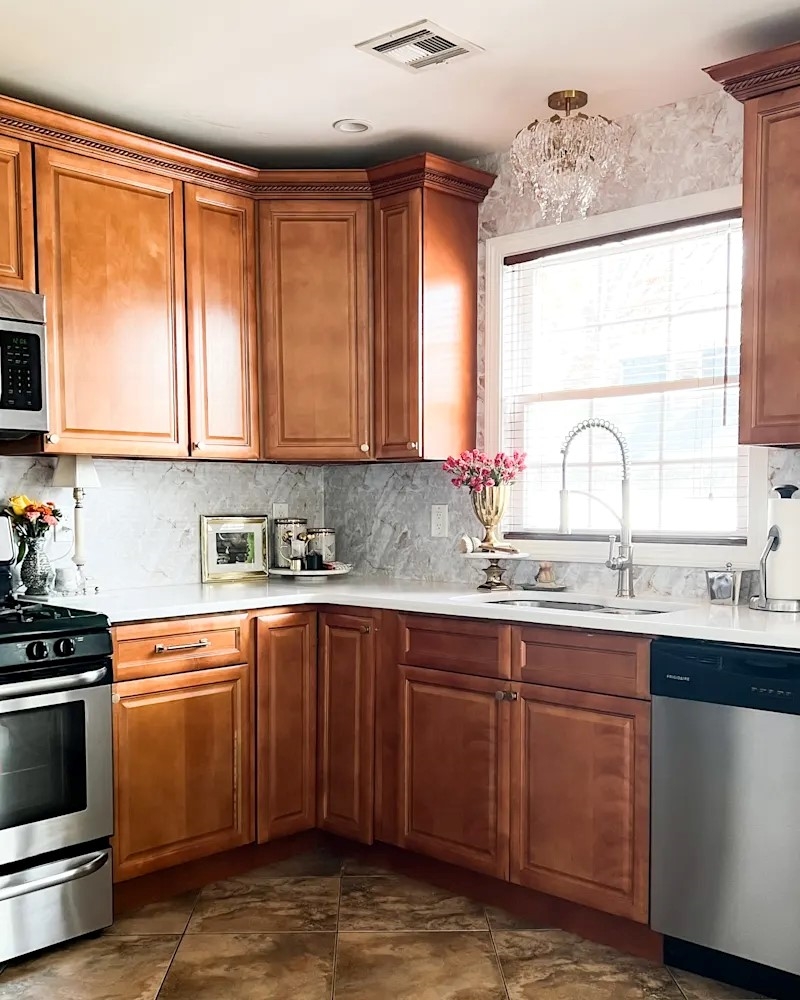
Where this paint job has its limits
Be clear about what this product is. Rust-Oleum says this epoxy is formulated for indoor metal surfaces such as the outside of refrigerators and dishwashers, not for countertops. It isn’t meant for surfaces that heat above 200°F or for continuous water immersion, so keep hot pans on trivets and wipe up standing water around the sink.
The data sheet doesn’t cover food contact either. Use a cutting board and keep food prep off the painted surface.
Ventilation matters too. The sheet says to thin the product only with mineral spirits or acetone, so keep it away from open flames. For paints and solvents that release fumes indoors, the Minnesota Department of Health advises opening doors and windows and using fans to bring in outside air.
Paint on stone is also hard to undo. If you might sell soon or love the look of real stone, test a hidden corner before committing the whole kitchen.
Keep the stone, change its color, and treat the new surface gently. That’s the trick.